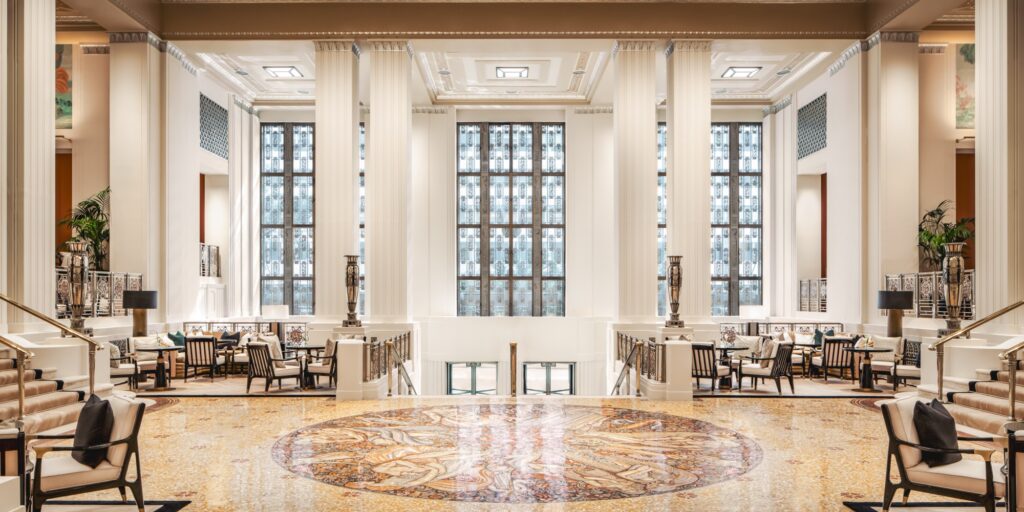
In Midtown Manhattan, Waldorf Astoria New York has returned after eight years of closure. Inside the 1931 building, the grand halls that once welcomed heads of state, artists and high society are lit up once again.
At the Park Avenue entrance, Louis Rigal’s Wheel of Life mosaic extends beneath visitors’ feet, among murals and rows of marble columns. These spaces have undergone a painstaking restoration to continue telling the story of a New York landmark.
The Backstory
The history of Waldorf Astoria began on Fifth Avenue. In 1893, William Waldorf Astor opened the Waldorf Hotel on land formerly owned by his family. Four years later, the Astoria opened next door. Linked by the Peacock Alley corridor, the two hotels became one of New York’s best-known addresses.
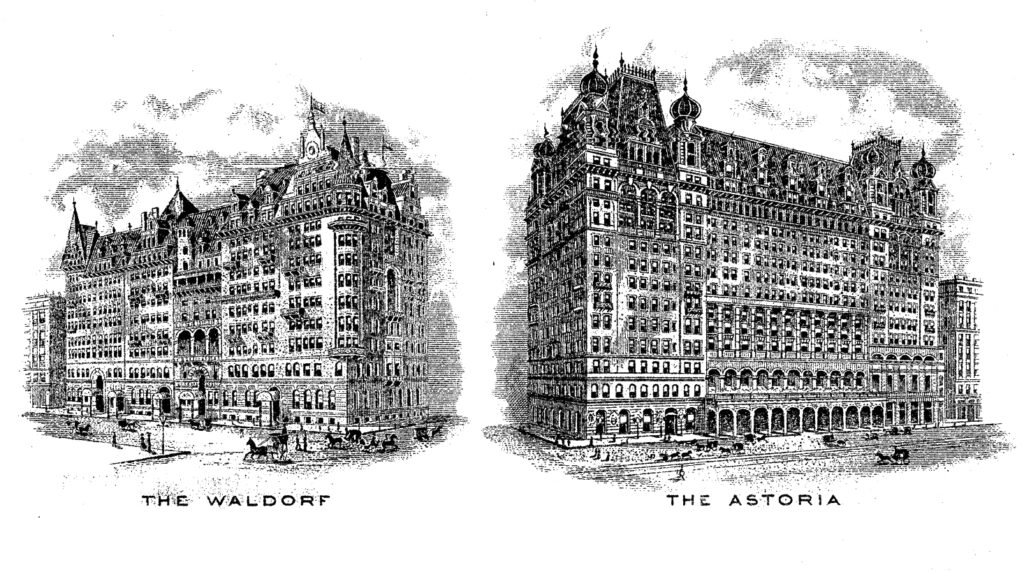
The Waldorf and The Astoria, in an engraving from the 1910s.
In 1929, the original Waldorf Astoria on Fifth Avenue was demolished to make way for the Empire State Building. The Waldorf Astoria name, however, lived on.
In 1931, a new hotel designed by Schultze & Weaver opened on Park Avenue, bringing artefacts and traditions from the former address. Over the decades, it became associated with diplomatic meetings, major events and artists such as Cole Porter, Frank Sinatra and Ella Fitzgerald.
Closed in 2017, Waldorf Astoria underwent an eight-year transformation. SOM oversaw the architecture and restoration, Pierre-Yves Rochon designed the hotel interiors, and Jean-Louis Deniot was responsible for the private residences added within the building. Rochon also designed the interiors of The Peninsula Shanghai, another hotel shaped by Art Deco.
The hotel began reopening in stages in 2025, with fewer guest rooms and restored historic spaces.
The Setting
Waldorf Astoria stands at 301 Park Avenue, between 49th and 50th Streets, in the heart of Midtown Manhattan.
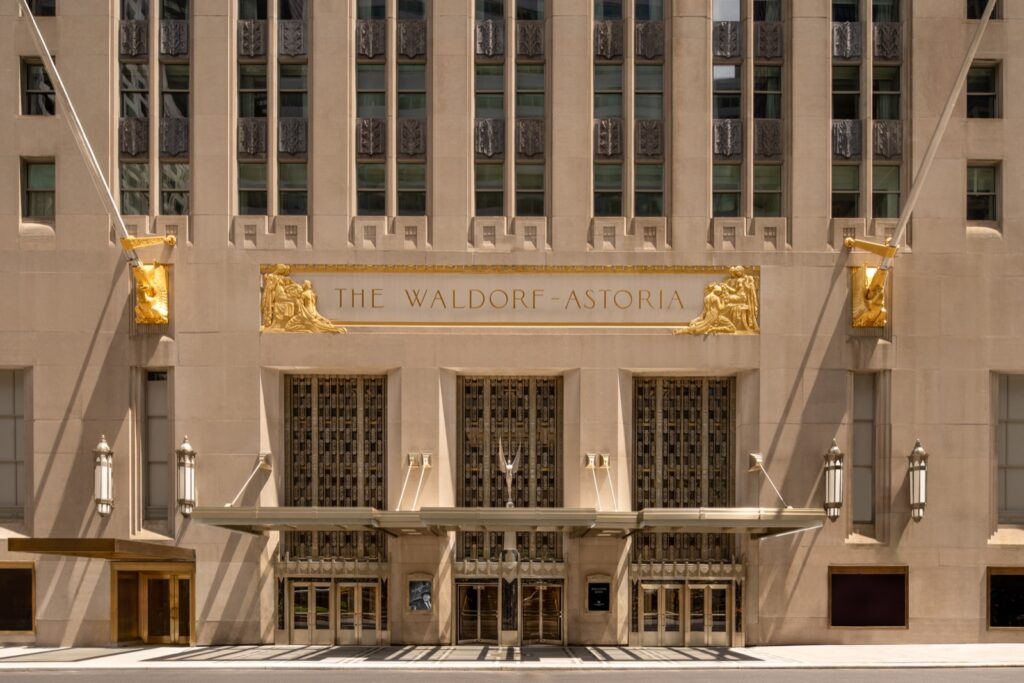
The Park Avenue entrance.
Entrances from Park Avenue, Lexington Avenue and 49th Street lead into spaces with different Art Deco characters, from richly decorated halls to areas for events and receptions.
Architecture & Interior Design
To restore Waldorf Astoria, SOM revisited Schultze & Weaver’s drawings and records, studying the changes the building had undergone over nearly a century.
One detail illustrates the project’s precision. According to architect Frank Mahan, of nearly 5,400 windows, only one original window from 1931 remained. It became the reference for the replacement windows.
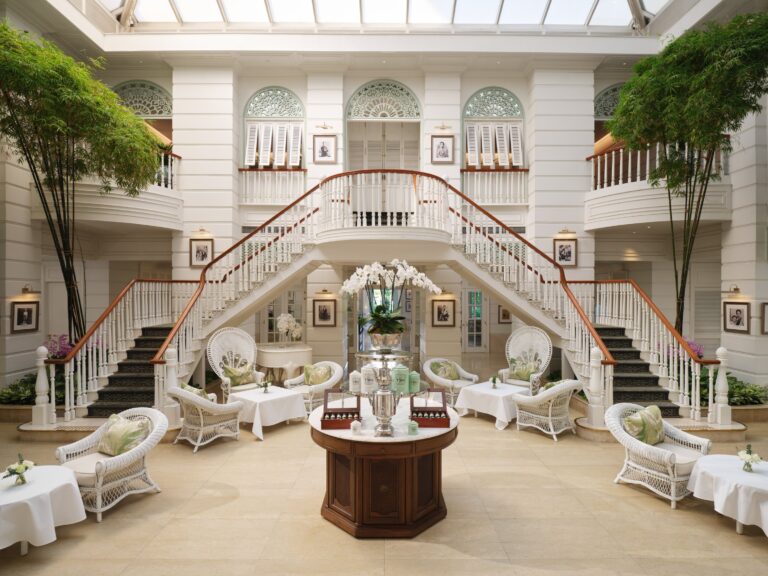
Inside, history is present in each grand hall. The Park Avenue entrance hall retains Louis Rigal’s Wheel of Life mosaic and murals. The Main Lobby has wood panelling and black marble columns. Near Lexington Avenue, a staircase balustrade features a frozen fountain motif, suggesting jets of water suspended in metal.
In the Silver Corridor, Edward Emerson Simmons’s paintings depicting the months of the year remain on display, having made the journey from the original hotel on Fifth Avenue.
During the renovation, the check-in desk was moved away from Peacock Alley, restoring the flow between spaces. The mezzanine above the Park Avenue entrance was removed, allowing natural light to reach further into the lobby.
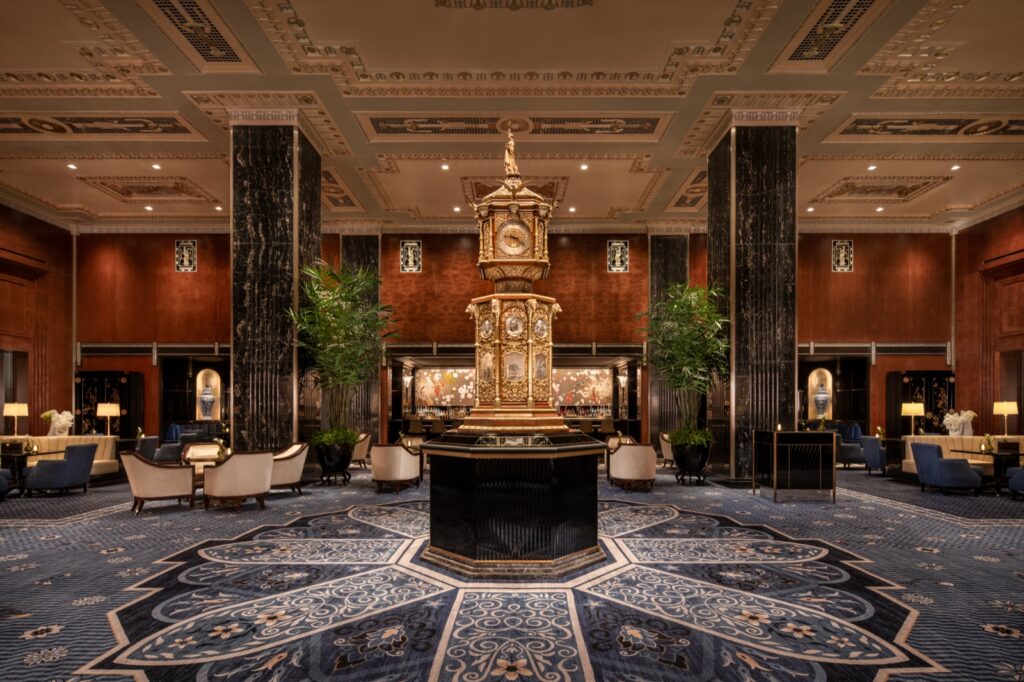
The clock in Peacock Alley.
Concealed lighting was also carefully studied to recreate, using modern technology, the soft glow once characteristic of 1930s interiors.
The Grand Ballroom rises three storeys, with balconies surrounding it, while technical systems for events have been integrated into the restored architecture. In the Basildon Room, a postcard from the 1930s helped the restoration team recover the historic colour palette.
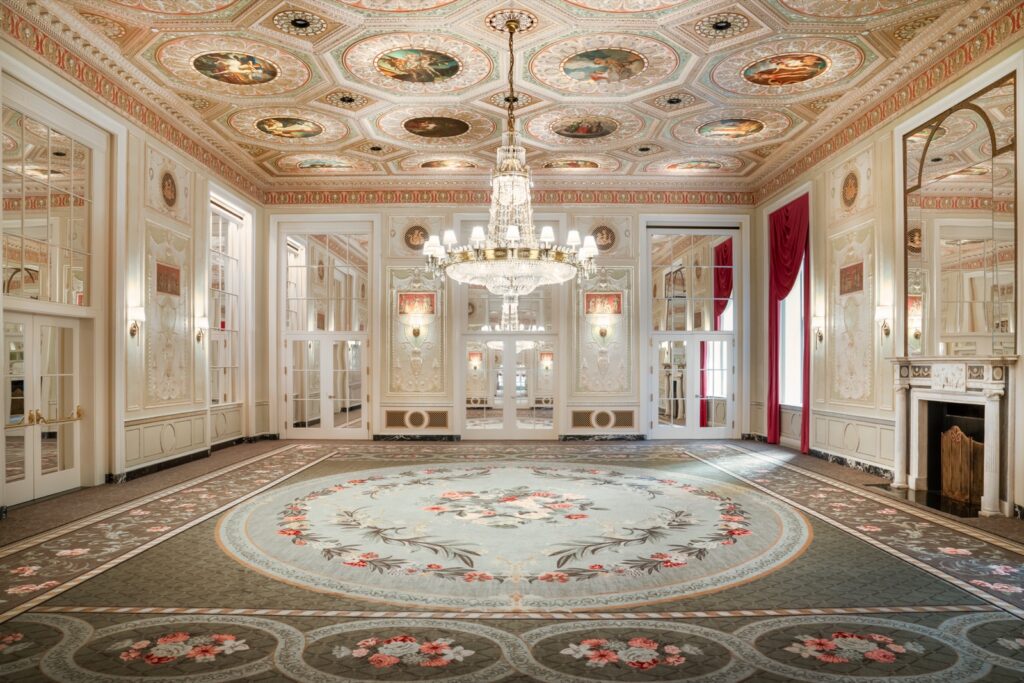
The Basildon Room.
Beyond the grandeur of the public halls, Pierre-Yves Rochon’s guest room interiors adopt a more private rhythm.
He uses a light colour palette, polished wood, soft leather and bespoke furniture. Sleeping, sitting and working areas are arranged with the feel of a contemporary apartment.
That contrast gives the restored Waldorf Astoria its distinct character: Art Deco halls preserve New York’s history, while the guest rooms are designed for life today.
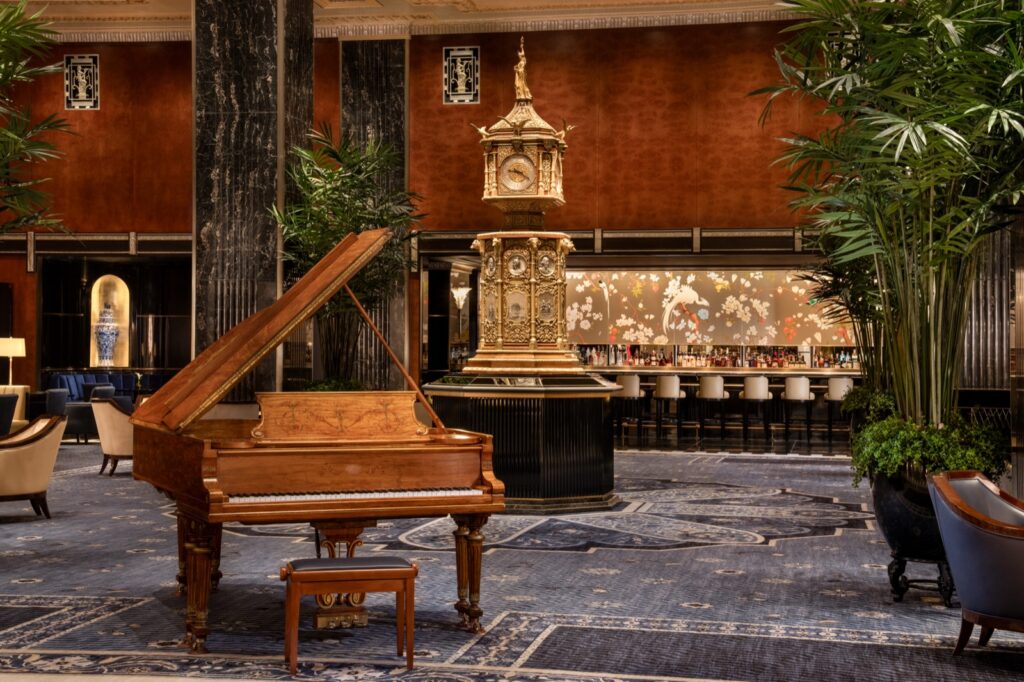
A piano associated with Cole Porter, in Peacock Alley.
Rooms & Suites
Waldorf Astoria New York now has 375 rooms and suites, including 78 suites. Its accommodation has been substantially reduced in scale compared with before the transformation.
Deluxe King
The Deluxe King measures approximately 53 m² and has a sitting area, desk and bathroom with a bathtub and separate shower. It offers a way to explore the new interior style without booking a large suite.
Park Avenue Junior Suite
The Park Avenue Junior Suite measures approximately 59 m² and has a king bed, sitting area and writing desk. Views over Park Avenue connect the room with the Midtown Manhattan streetscape.
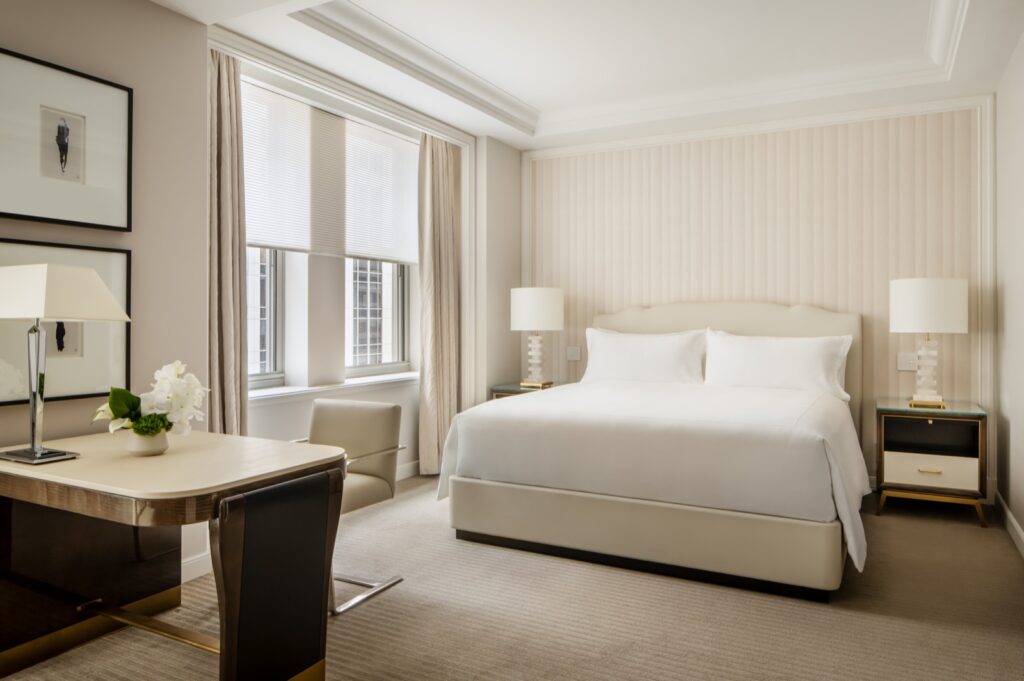
A Park Avenue Junior Suite: the bedroom.
Larger suites are worth considering for guests who need separate living space. Layout, views and floor area should be considered together when choosing.
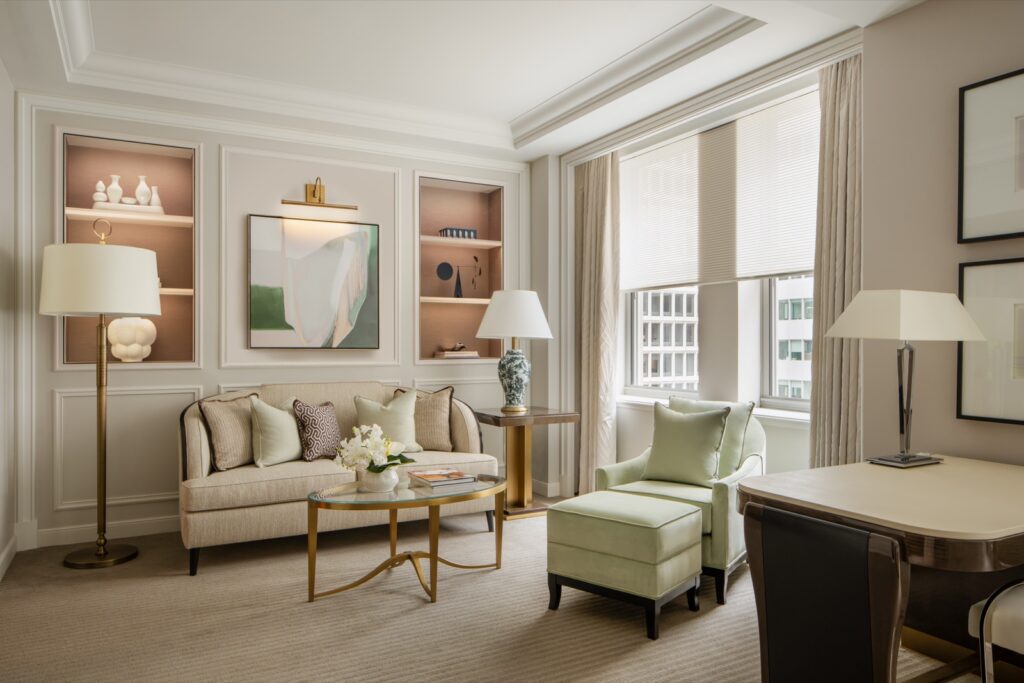
A Park Avenue Junior Suite: the living area.
Dining
Peacock Alley remains one of the hotel’s spaces most closely associated with its history. The clock made for the 1893 Chicago World’s Fair and a Steinway piano associated with Cole Porter are present among the restored interiors.
At Lex Yard, an American brasserie led by Michael Anthony, AvroKO brings images of New York into the interior design. Blue table lamps evoke subway entrances, alongside terrazzo floors, oak and brass details influenced by Art Deco.
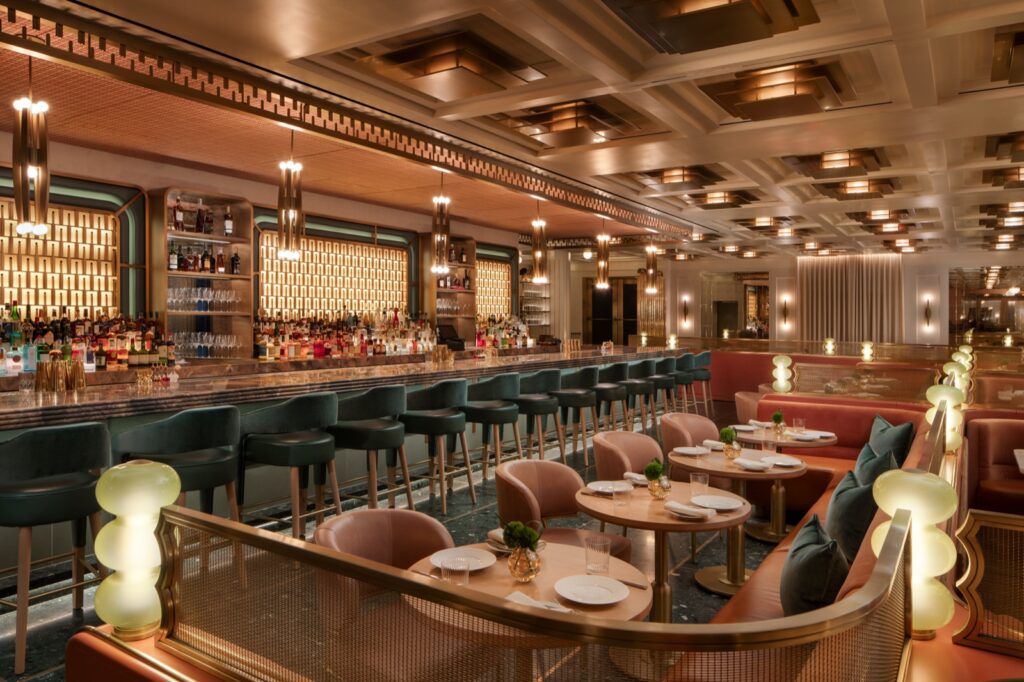
Lex Yard.
Yoshoku adds Japanese dining inspired by kaiseki, close to the area housing the Wheel of Life artwork.
Wellness
Guerlain Wellness Spa occupies the fifth floor, with interiors designed by Wimberly Interiors. The spa has 16 treatment rooms, a hammam, an infrared sauna and an arctic snow cave cooling area.
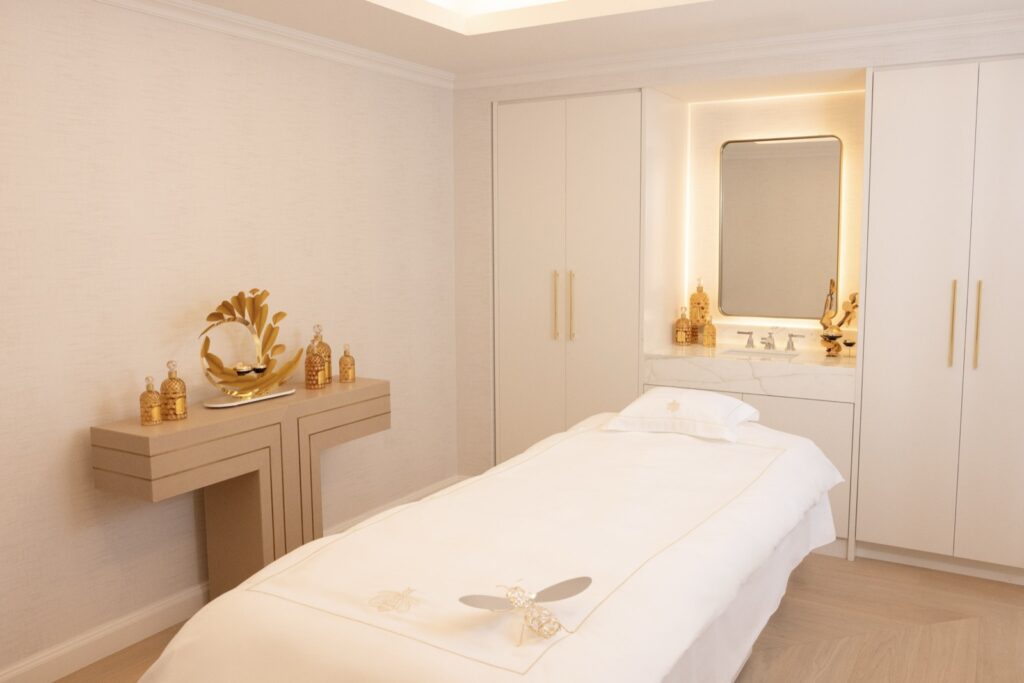
A treatment room at Guerlain Wellness Spa.
Art Deco geometric lines also appear in its design, creating a connection with the hotel’s historic architecture.
Traveleak’s Take
Waldorf Astoria New York suits travellers interested in Art Deco, architectural history and staying in Midtown Manhattan. Its restored grand halls are worth exploring even before entering the guest rooms.
When booking, layout and views deserve consideration alongside floor area. The Deluxe King has a sitting area and desk; the Park Avenue Junior Suite offers a guest seating area and views of Park Avenue. Larger suites are worth considering for those who need separate living space.
Another Waldorf Astoria on Traveleak: Waldorf Astoria Osaka
Image source: Hilton, Waldorf Astoria New York, Wikipedia
Hotel Profile
- Hotel Group
- Hilton
- Hotel Brand
- Waldorf Astoria
- Brand Segment
- LuxuryHilton portfolio
- Loyalty Programme
- Hilton Honors
Essential Information
- Location
- 301 Park Avenue, New York, NY 10022, United States
- Accommodation
- 375 rooms and suites, including 78 suites.
- Dining
- Peacock Alley, Lex Yard and Yoshoku.
- Wellness
- Guerlain Wellness Spa and fitness centre.
Location Map
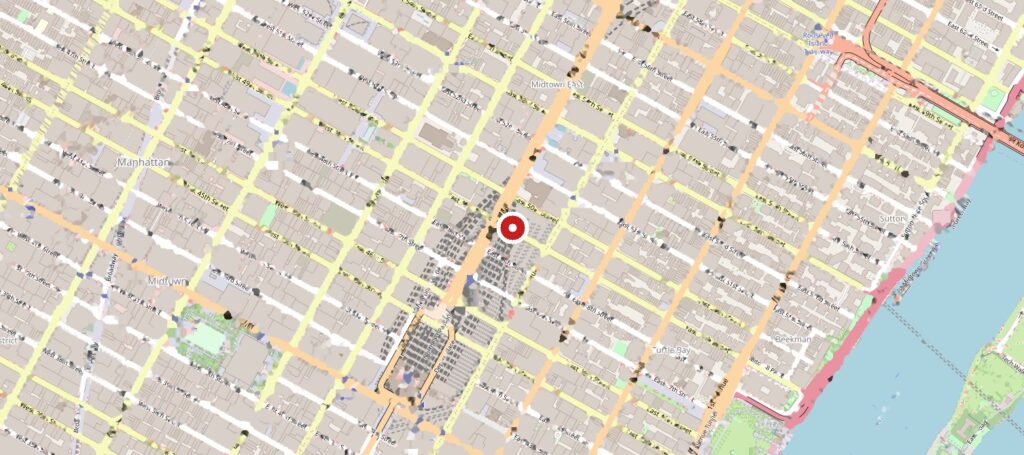 © OpenStreetMap contributors
Contact
301 Park Avenue, New York, NY 10022, United StatesOfficial Website waldorfastorianewyork.com
Rates via Trip.com
Compare rates: Booking.com
Some links on this page are affiliate links. If you make a booking through them, Traveleak may earn a small commission at no additional cost to you.