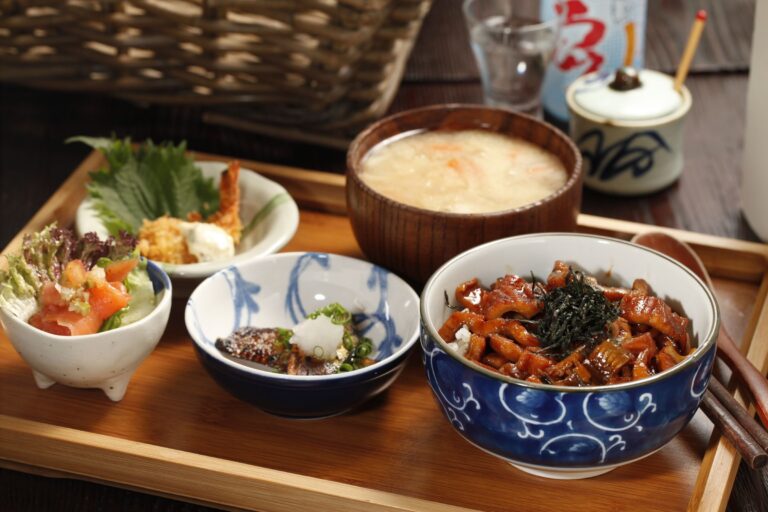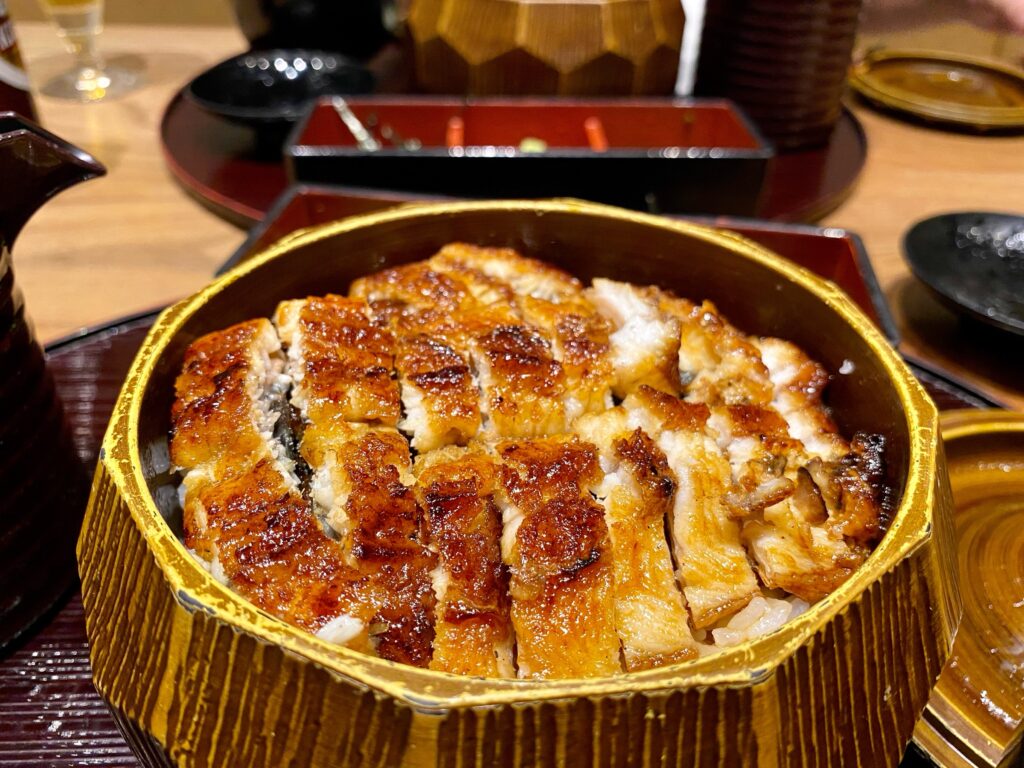
Hitsumabushi is a speciality of Nagoya, Japan, featuring grilled freshwater eel cut into small pieces and served over warm rice. The eel is coated in a sweet and savoury sauce, while the rice is often presented in a wooden container known as an ohitsu, accompanied by a small bowl, condiments and hot broth or tea.
What makes hitsumabushi particularly interesting is how it is eaten. Rather than enjoying the entire serving in one way, diners transfer smaller portions into a bowl and change the flavours as they go. The eel and rice remain the same, but a few additions can make each bowl a different experience.
Grilled Eel over Warm Rice
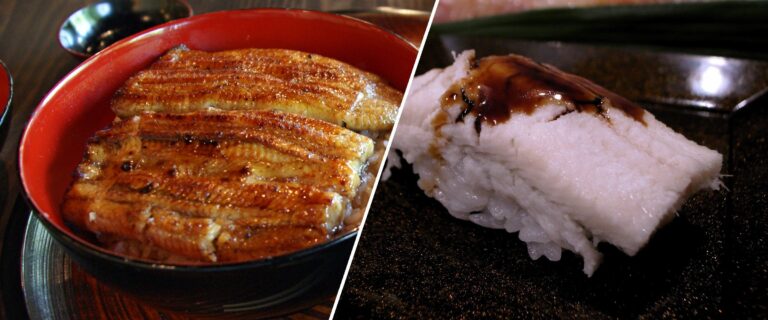
The main ingredient in hitsumabushi is unagi, or freshwater eel. It is commonly prepared in the kabayaki style, grilled with a sweet and savoury glaze known as tare. The sauce typically contains ingredients such as soy sauce, mirin and sugar.
As the eel cooks, the glaze coats its surface, giving it a glossy brown colour and a distinctive aroma. Some areas may become lightly charred or slightly crisp, while the flesh underneath remains tender and rich.
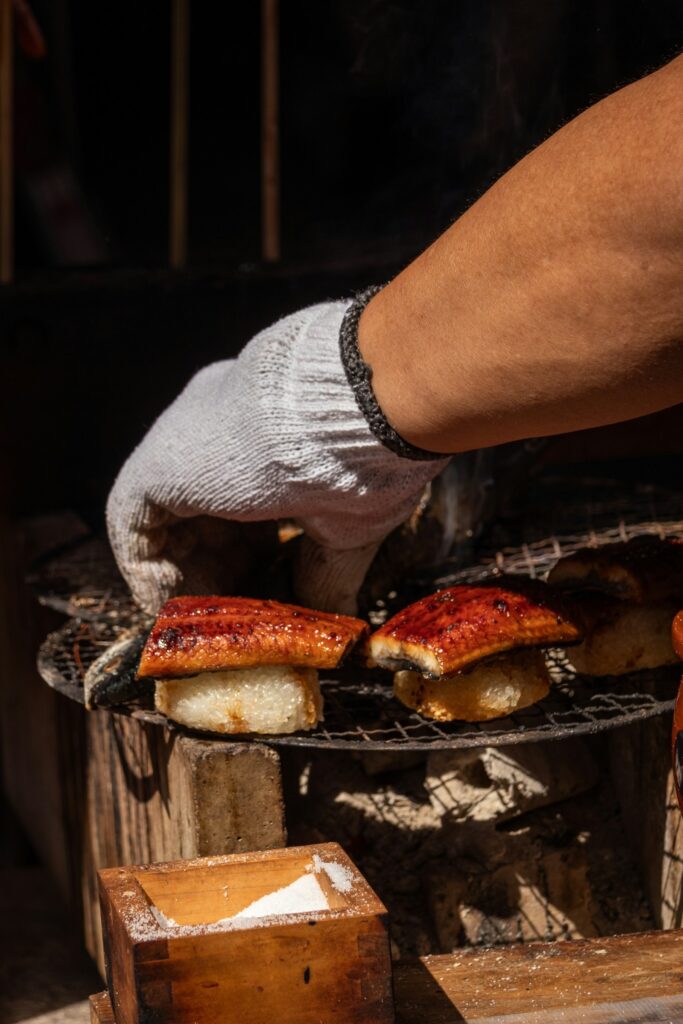
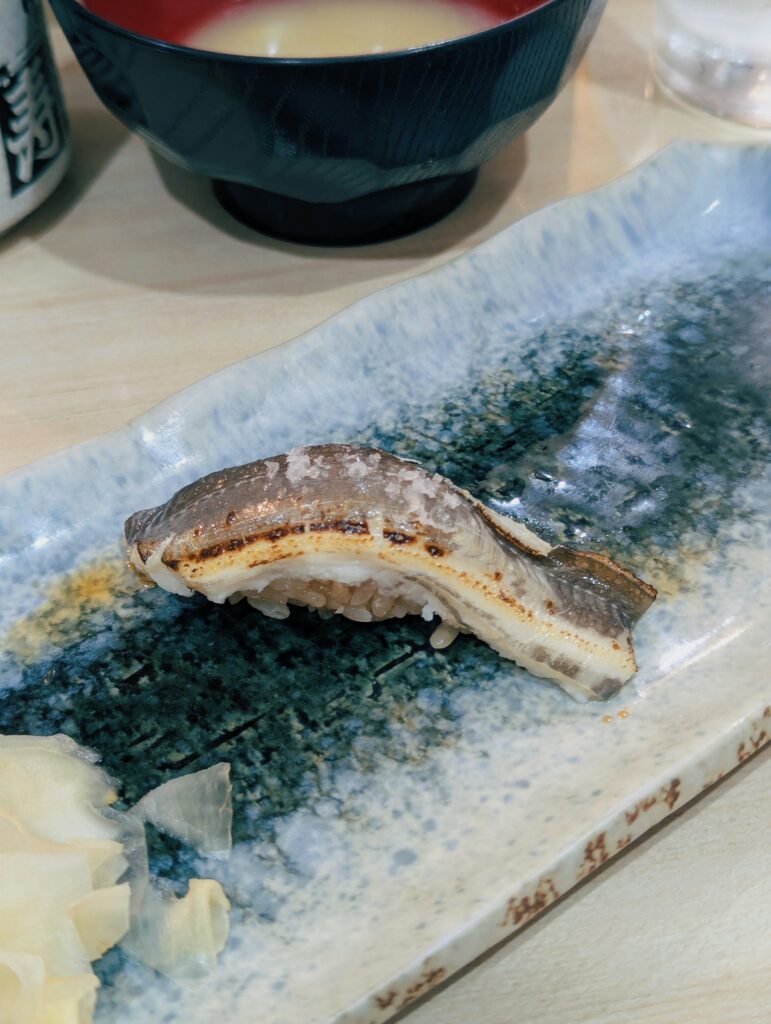
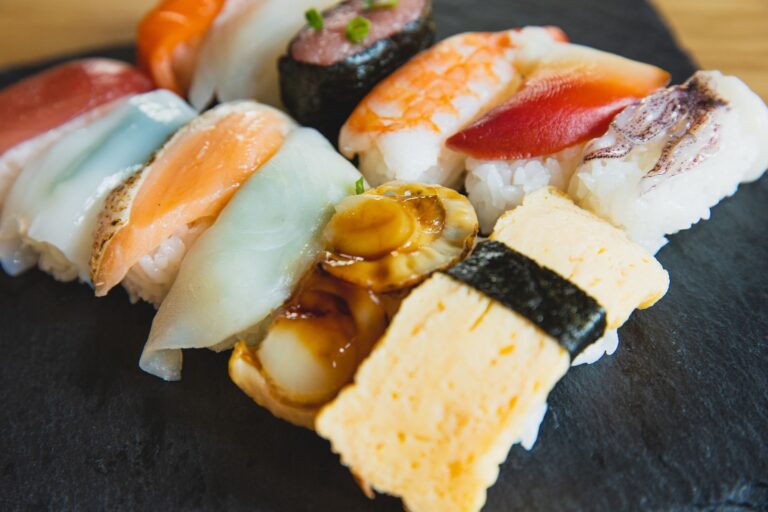
Grilling eel and eel sushi.
Once grilled, the eel is cut into small pieces and arranged over warm rice. Cutting it this way makes it easier to scoop both the eel and rice into individual bowls. The rice takes on some of the flavour of the sauce, while the eel brings its own richness and smoky notes from the grill.
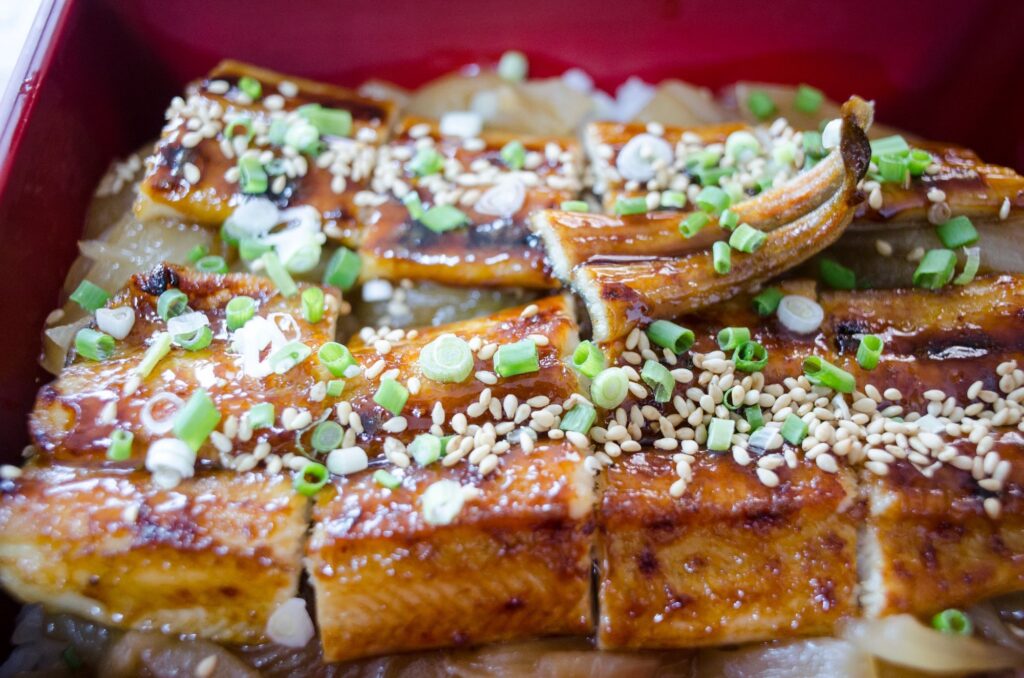
Grilled eel with sesame and spring onion.
This is also the combination you will taste in your first bowl, before adding anything else.
The First Two Bowls: Plain and Seasoned
A familiar way to enjoy hitsumabushi is to divide the rice and eel in the ohitsu into four portions. The first three are eaten in different ways, while the final portion is reserved for whichever you prefer.
For the first serving, simply scoop some eel and rice into the smaller bowl and enjoy it as it comes. Without wasabi, seaweed or broth, the flavours of the grilled eel, its glaze and the warm rice take centre stage.
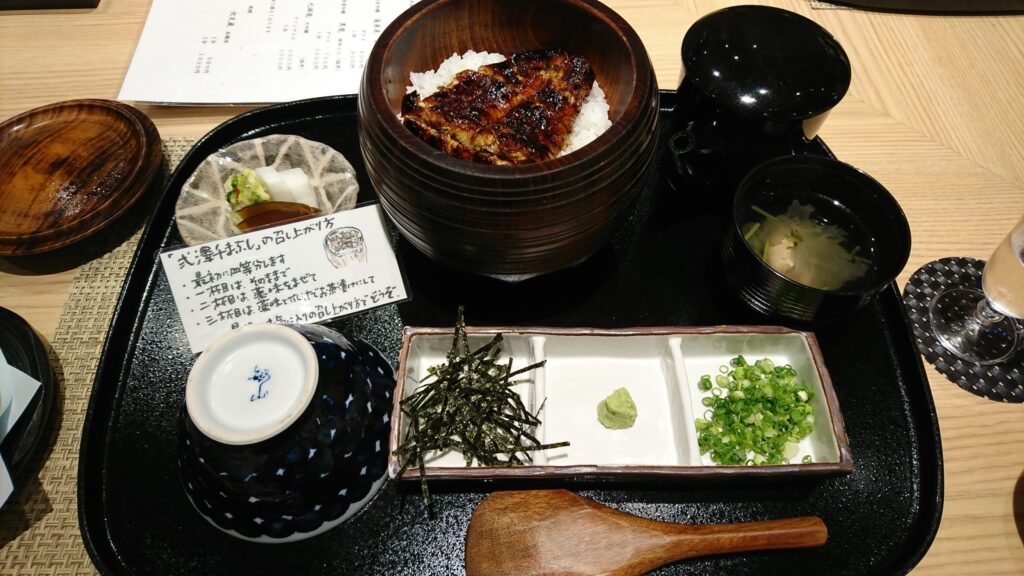
A hitsumabushi set with condiments and broth.
The second serving introduces the condiments. Finely chopped spring onions add a mild sharpness, wasabi brings a pungent kick, and shredded dried seaweed contributes its own aroma. These can be added directly to the bowl according to your taste.
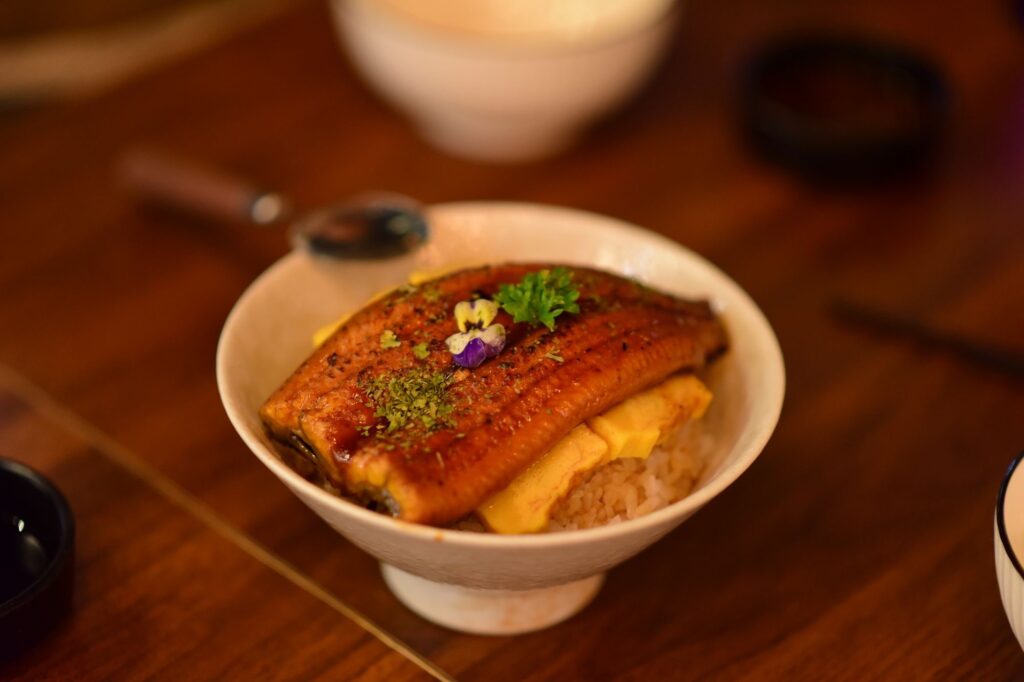
Grilled eel over rice with egg and herbs.
There is no need to add everything at once. You might begin with a little spring onion or seaweed, then introduce wasabi if you like. Even a few small additions can make the second bowl taste noticeably different from the first.
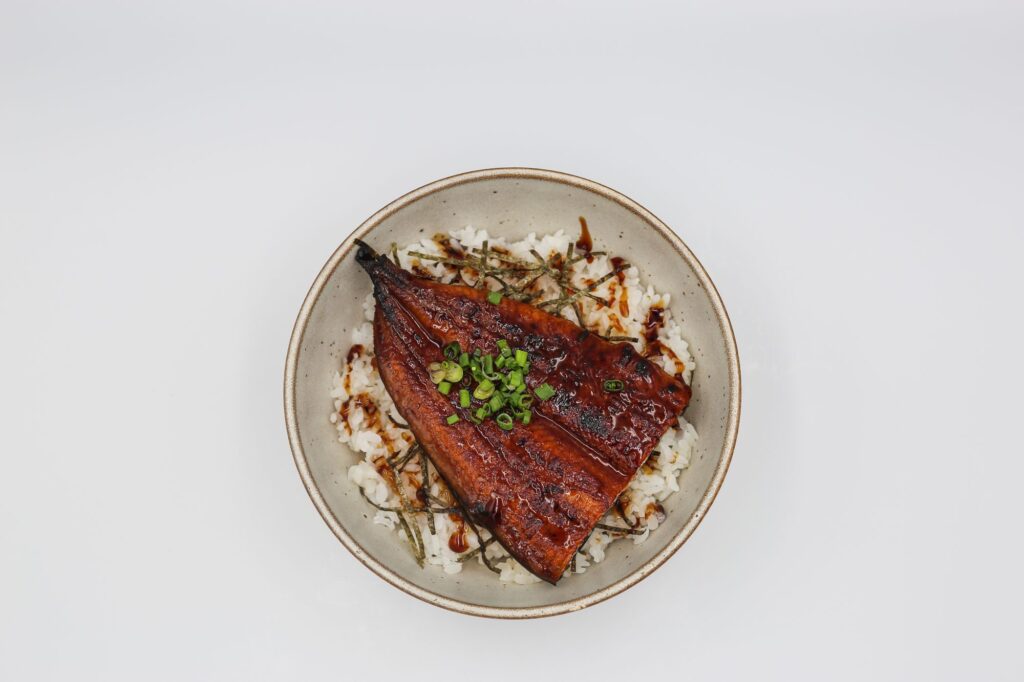
An unagi rice bowl from above.
When the Broth Goes into the Bowl
The third way of eating hitsumabushi brings the most noticeable change. Scoop another portion of eel and rice into your bowl, add any condiments you prefer, then pour over the hot liquid provided. Depending on the restaurant, this may be dashi broth or hot tea.
As the liquid mingles with the rice and eel sauce, the grains soften in the heat. The richness of the glaze becomes more delicate, while the eel retains its grilled aroma. This style of eating resembles ochazuke, a Japanese rice dish served with tea or broth poured over it.
One useful detail: pour the broth only over the portion in your individual bowl, not into the entire ohitsu. This leaves the remaining rice and eel ready to be enjoyed in another way.
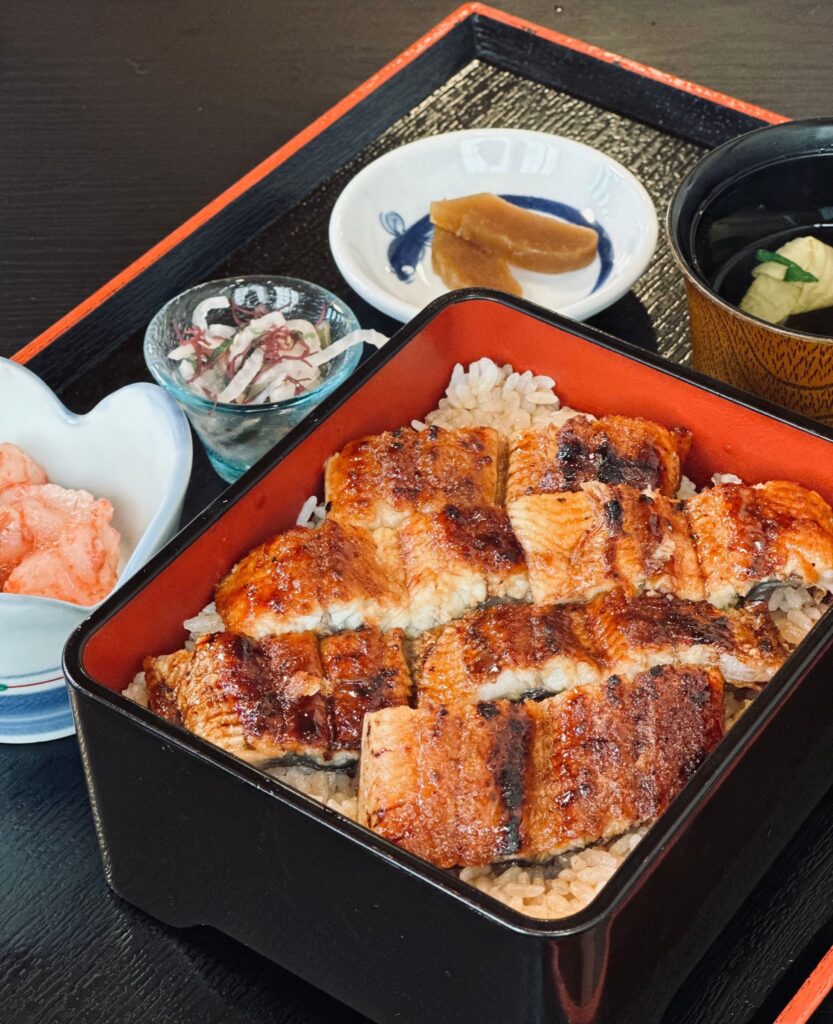
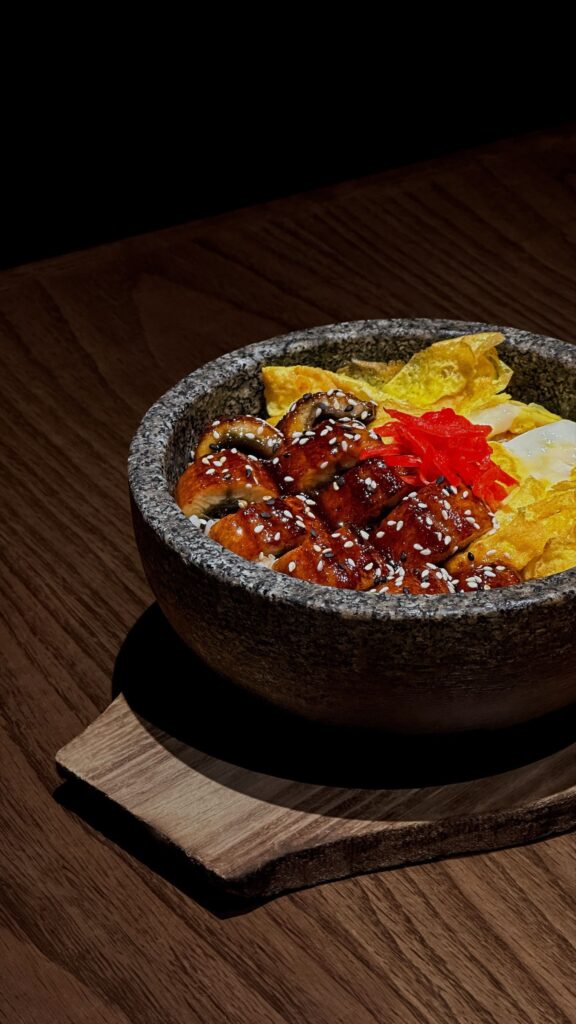
Grilled eel over rice.
After trying all three approaches, the final portion is yours to enjoy however you like. Some diners return to the original flavours of the grilled eel, others prefer extra spring onions and wasabi, while some favour a warm bowl with broth.
By the last serving, you will probably know exactly what you want to add to your bowl.
Image credit: Wikipedia