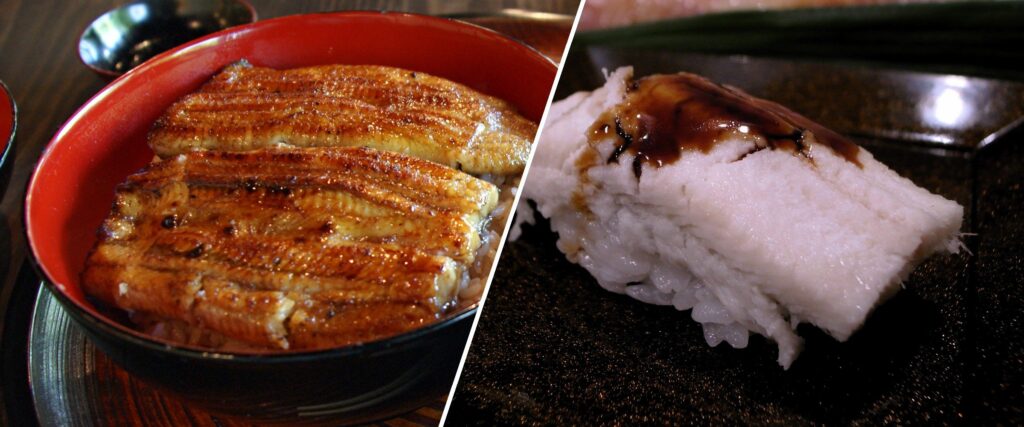
On Japanese menus, unagi and anago are sometimes both translated simply as eel, making them easy to confuse. Although both are eels, they belong to different groups and have distinct places in Japanese cuisine.
Unagi is commonly served grilled with sauce over steamed rice. Anago is more closely associated with sushi counters, where its tender flesh is often prepared through simmering and finished with a light coating of sauce. The differences begin with the eels themselves.
Two Eels, Two Habitats
Unagi is the Japanese term commonly used for freshwater eel, particularly the Japanese eel, Anguilla japonica. Anago refers to marine conger eels, including Conger myriaster, a species frequently used in Japanese cooking.


Freshwater eel and sea eel.
In appearance, unagi generally has a thicker, darker body and a higher fat content. Anago tends to be slimmer and lighter in colour, with leaner flesh.
These characteristics influence how each eel is prepared. Unagi’s richer flesh lends itself to grilling and glazing, while anago is commonly simmered or steamed to produce a tender texture.
Neither preparation is exclusive, however. Both eels appear in a range of dishes, from rice bowls and sushi to other cooked preparations.
Unagi: The Rich Flavour of Kabayaki
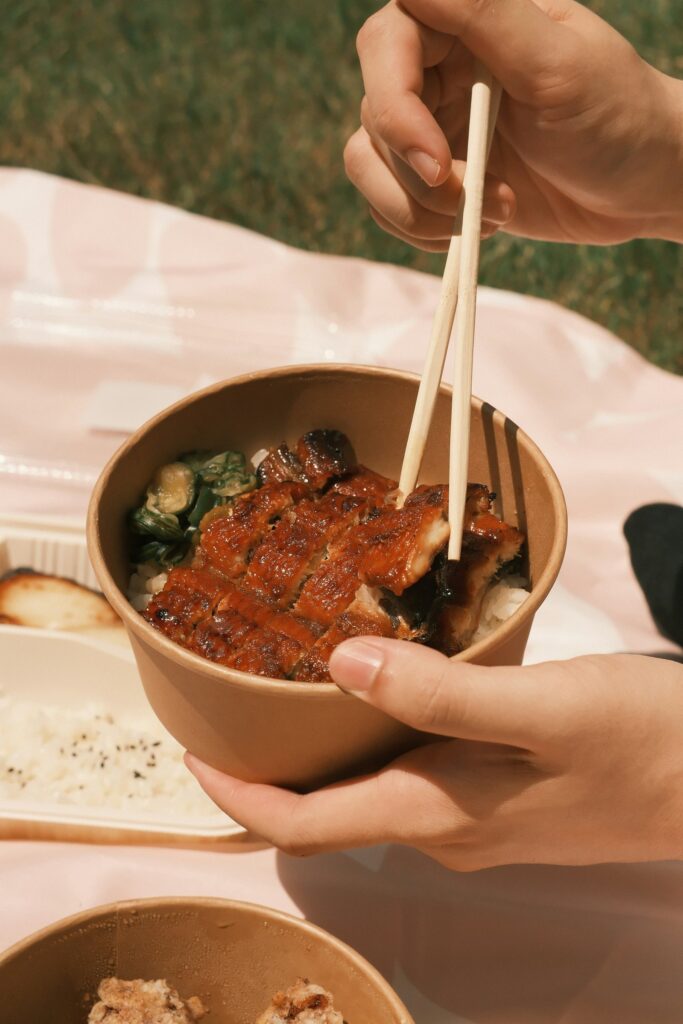
The best-known preparation of unagi is kabayaki. The eel is filleted, deboned, skewered and grilled. During cooking, it is brushed repeatedly with tare, a sauce made from soy sauce and mirin.
As the eel cooks, the sauce gradually reduces, forming a characteristic glossy brown coating. The richness of the flesh combines with the sweet and savoury flavours of tare, giving grilled unagi its distinctive taste.
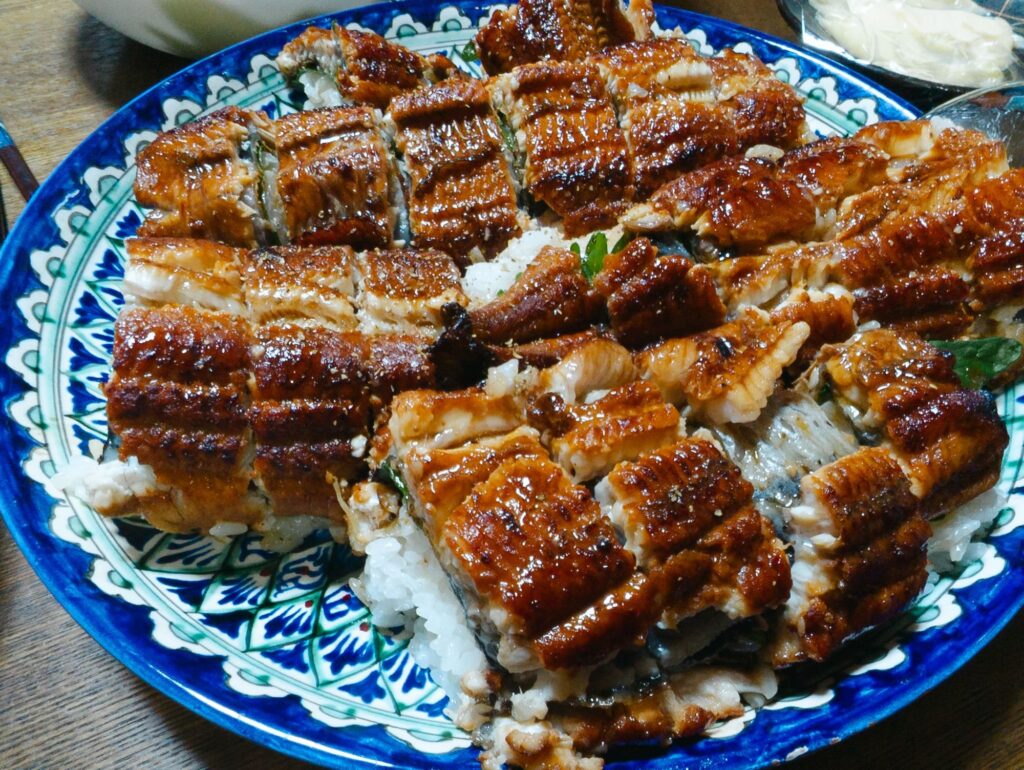
Kabayaki glazed with tare.
Another preparation is shirayaki, in which the eel is grilled without a sauce glaze. Compared with kabayaki, this method allows more of the eel’s natural flavour to come through.
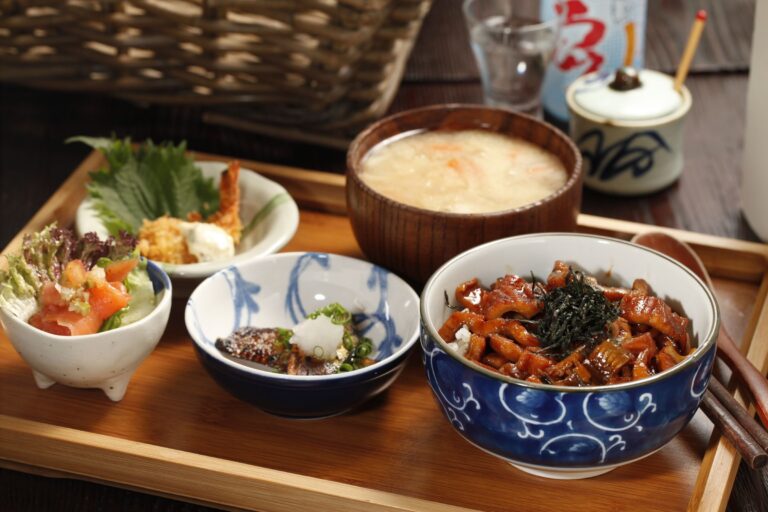
Unagi is frequently served with steamed rice. In unadon, pieces of grilled eel are arranged over rice in a bowl, sometimes accompanied by kimosui, a clear soup containing eel liver.
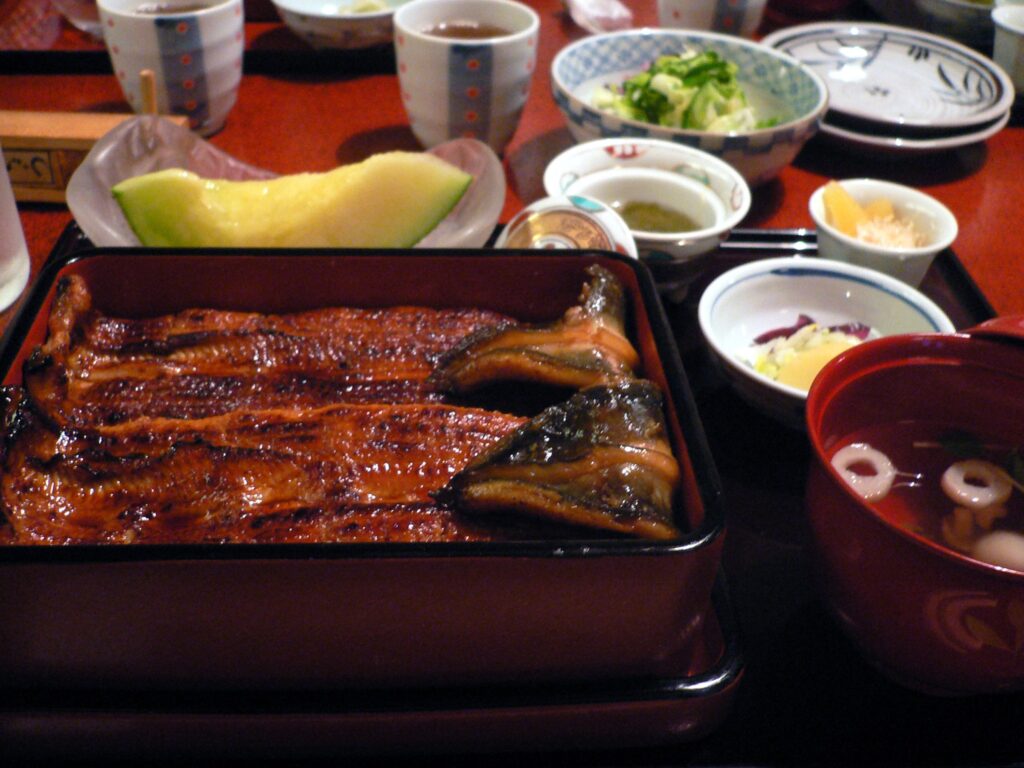
An unaju set with clear soup.
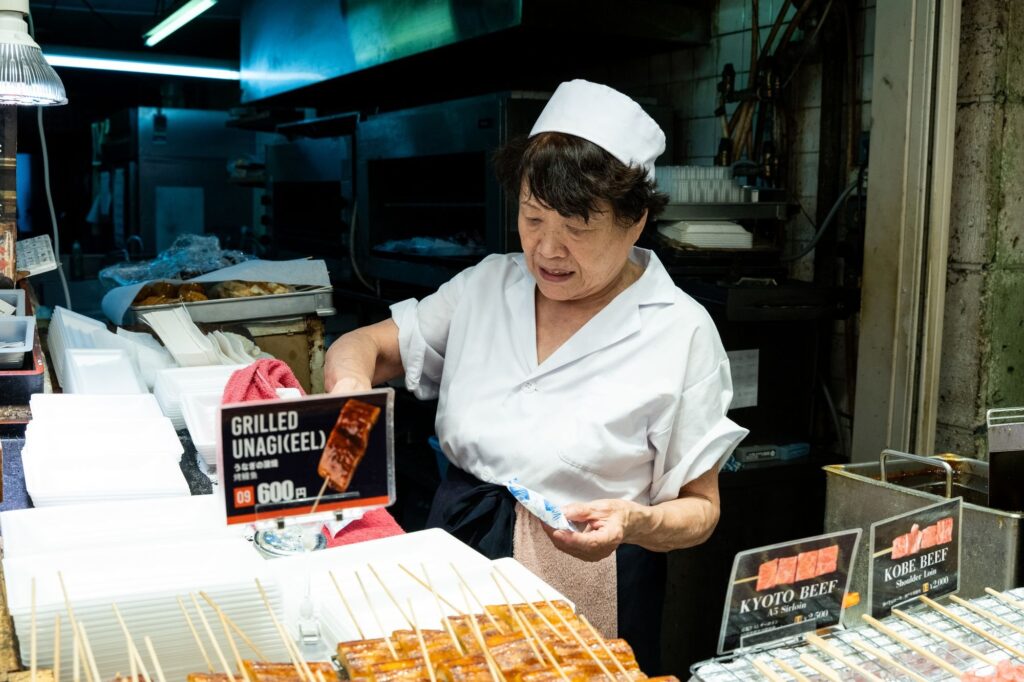
In Nagoya, unagi is also the main ingredient in hitsumabushi. The grilled eel is cut into smaller pieces and served over rice, then enjoyed in stages: first on its own, followed by seasonings, and finally with broth.
Unagi also appears in sushi, including nigiri and unakyu, a roll combining eel and cucumber. Yet kabayaki served over rice remains one of its most familiar forms.
Anago: Tender Eel in Edomae Sushi
Anago is commonly prepared by simmering or steaming. Simmering produces tender flesh that is particularly suited to serving over small portions of sushi rice.
It is a traditional ingredient in Edomae sushi, a style of sushi that developed in Edo, now Tokyo.
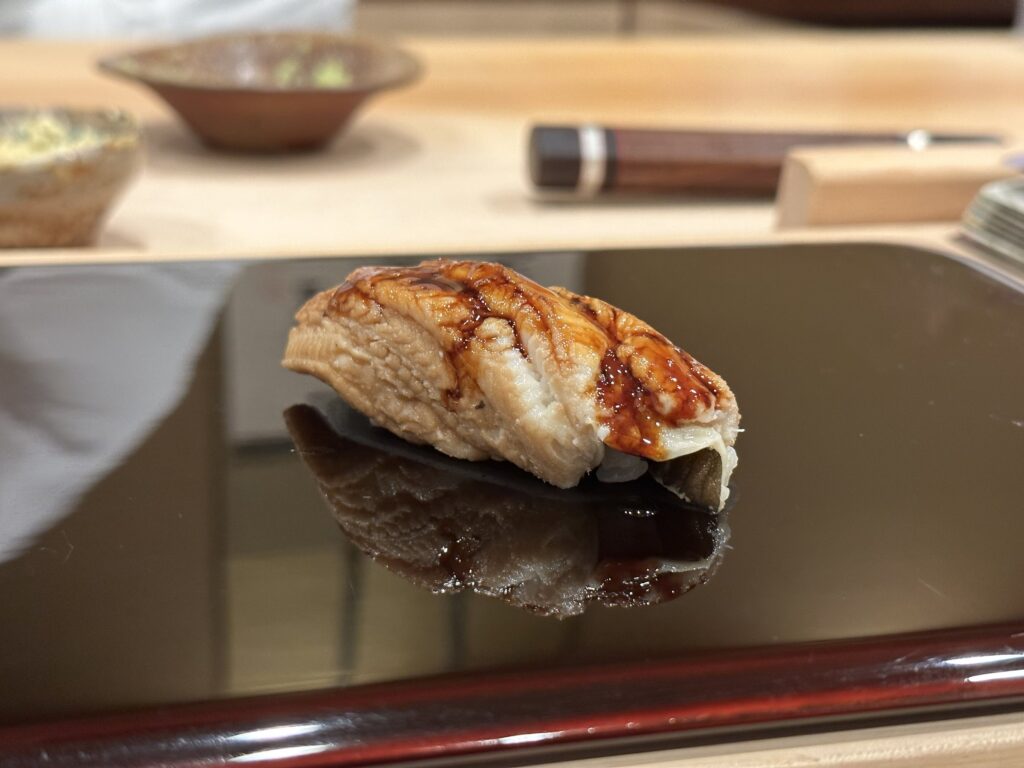
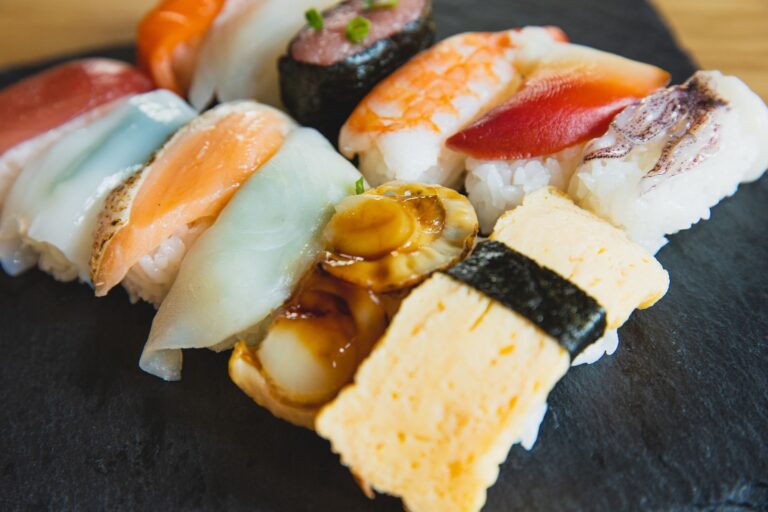
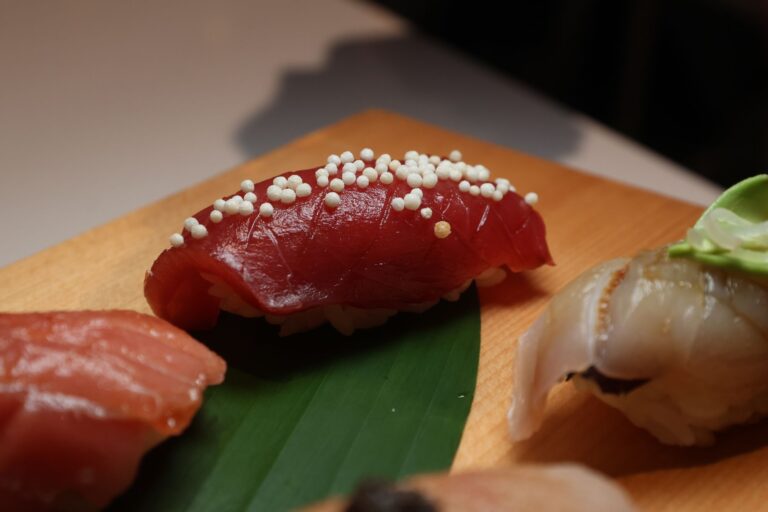
Anago nigiri at the counter.
At sushi counters, anago is often finished with nitsume, a sweet sauce reduced from its cooking liquid. The sauce coats the surface, adding flavour to the tender flesh beneath.
Unlike unagi kabayaki, which is characterised by its richness and pronounced grilled sauce, anago in Edomae sushi usually has a more delicate flavour. Its soft texture is an equally important part of the experience.
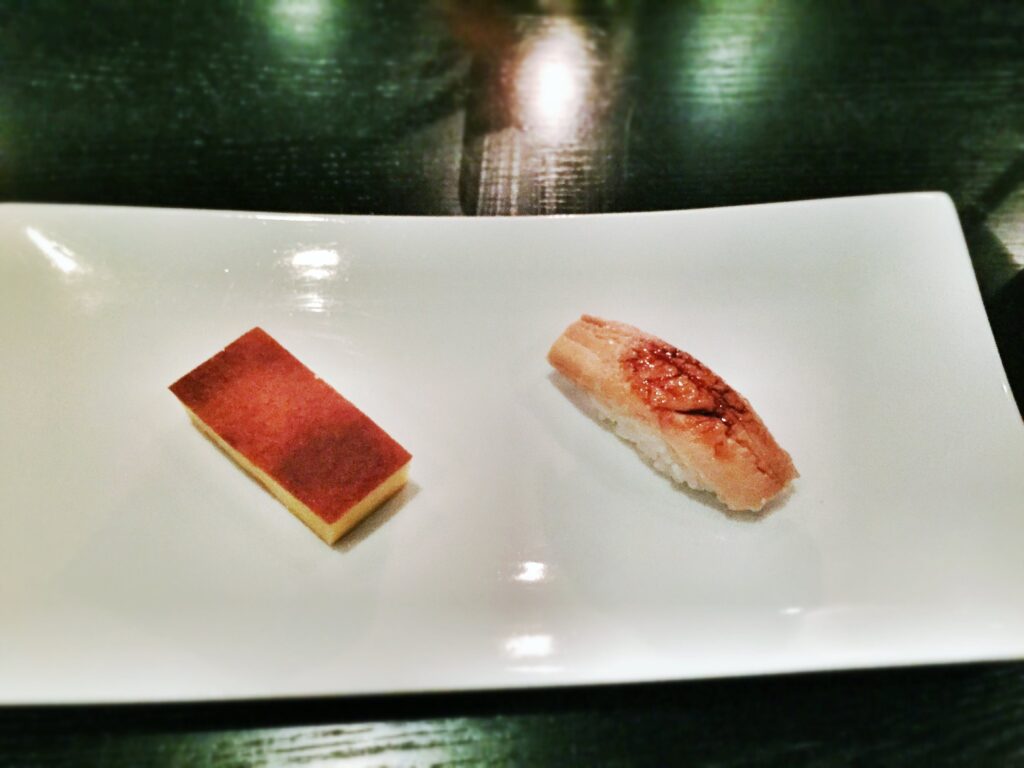
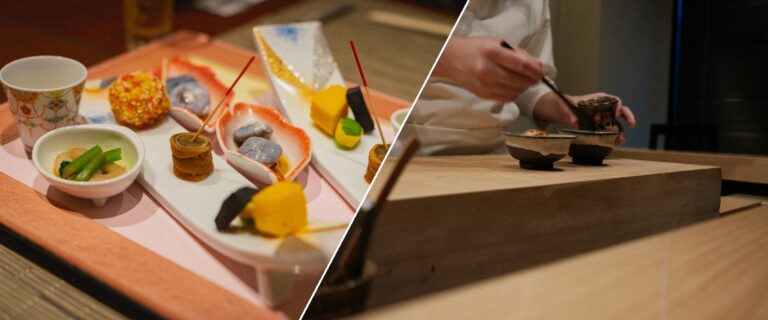
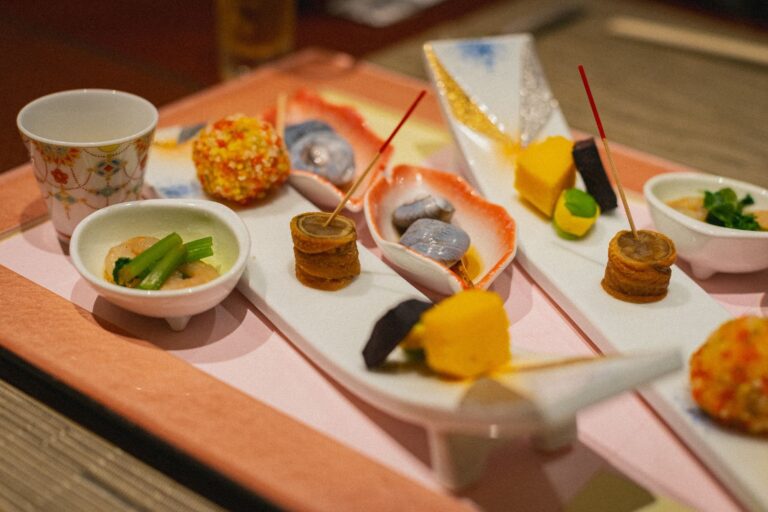
Tamago and anago.
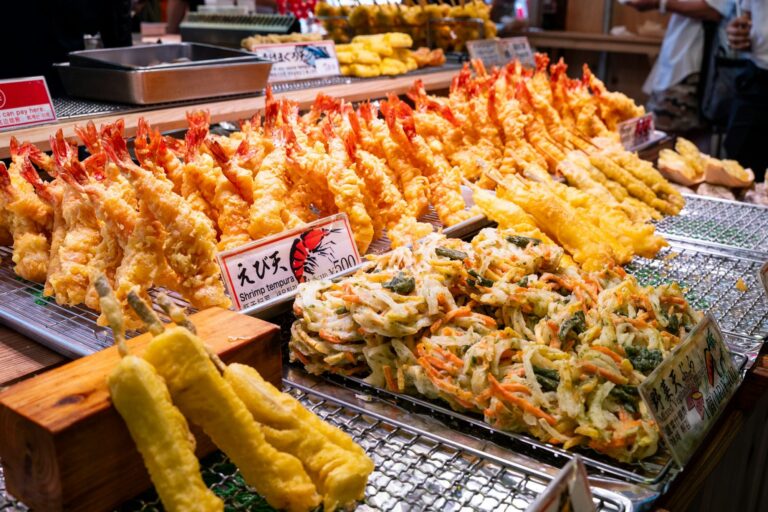
Anago is also served as tempura. The tender flesh is enclosed in a crisp batter, offering a different texture from the traditional simmered preparation.
Differences in Flavour and Texture
The most noticeable difference between unagi and anago is their fat content.
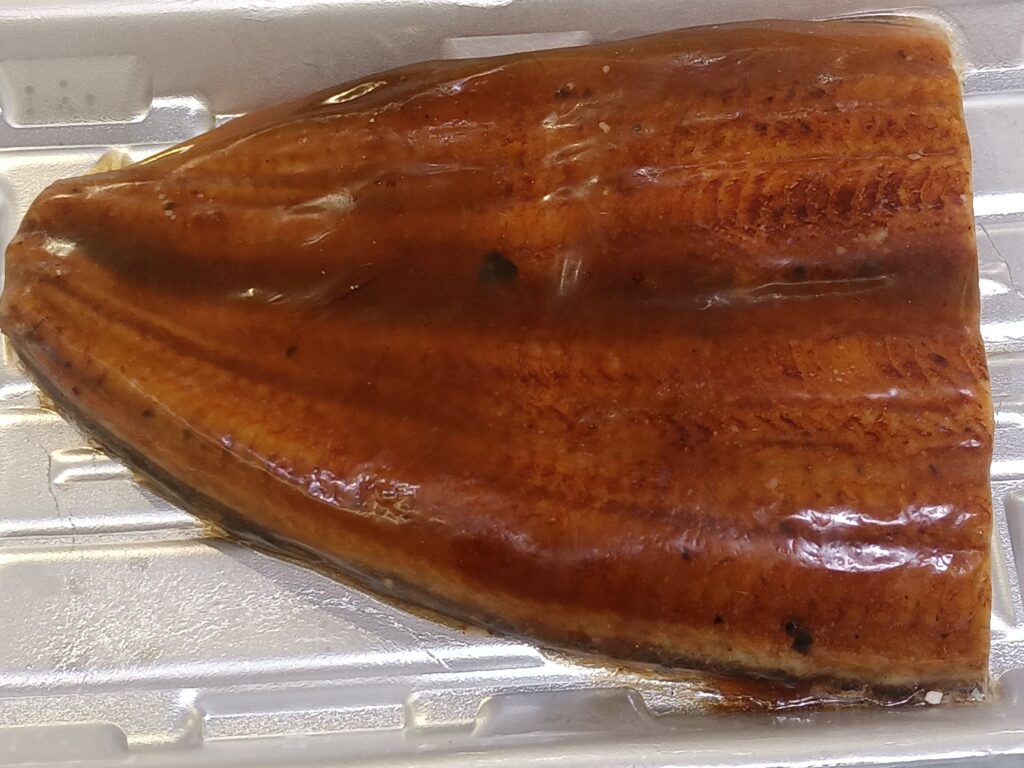
Glossy kabayaki fillet.
Unagi is fattier, giving it a richer, fuller taste. When prepared as kabayaki, its natural oils combine with tare to create pronounced sweet and savoury flavours, particularly well suited to steamed rice.
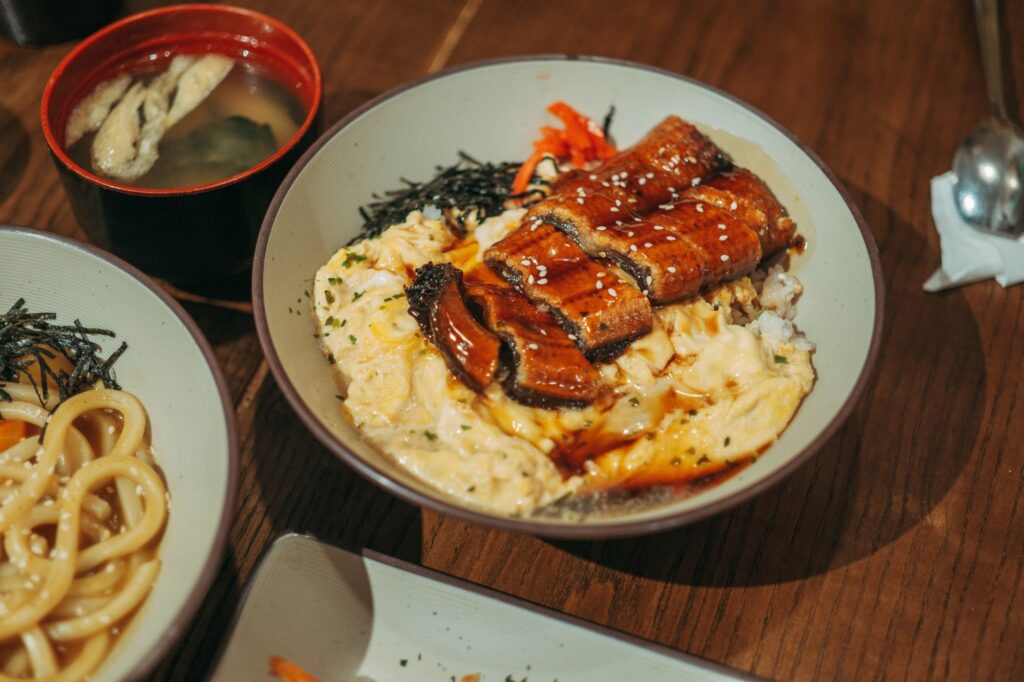
Unadon with udon and miso soup.
Anago has a lighter flavour and leaner flesh. When simmered for sushi, it becomes soft and delicate, with a less substantial texture than grilled unagi.
The final taste also depends on the chef’s preparation and seasoning. Unagi grilled without sauce offers a different experience from kabayaki, just as anago tempura has a different texture from anago nigiri.
Why Do Japanese People Eat Unagi in Summer?
Unagi has a long association with Doyō no Ushi no Hi, commonly known as the Day of the Ox during the summer Doyō period.
In Japanese tradition, this is a time to eat unagi in the belief that the nutritious dish helps maintain strength during hot, humid weather. Unagi is particularly popular during this period, although it is served throughout the year.
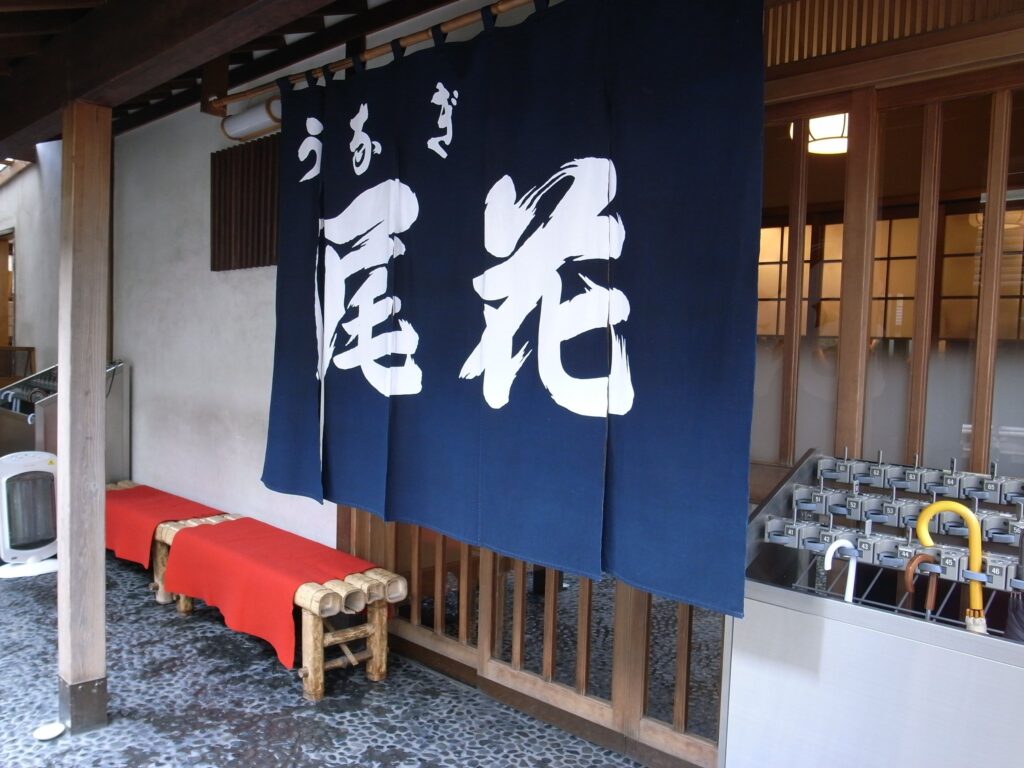
The noren at Obana, Tokyo.
A frequently repeated story involves the eighteenth-century scholar Hiraga Gennai. According to the tale, he helped promote the custom of eating unagi on the summer Day of the Ox to attract customers to eel restaurants. His actual role in establishing the tradition, however, has not been conclusively verified.

Hiraga Gennai, and unagi in summer.
Today, Doyō no Ushi no Hi remains a familiar occasion in Japanese food culture, particularly at restaurants specialising in unagi.
Should You Choose Unagi or Anago?
If you enjoy rich flavours, a pronounced grilled glaze and steamed rice, unagi kabayaki or unadon is a good place to start.
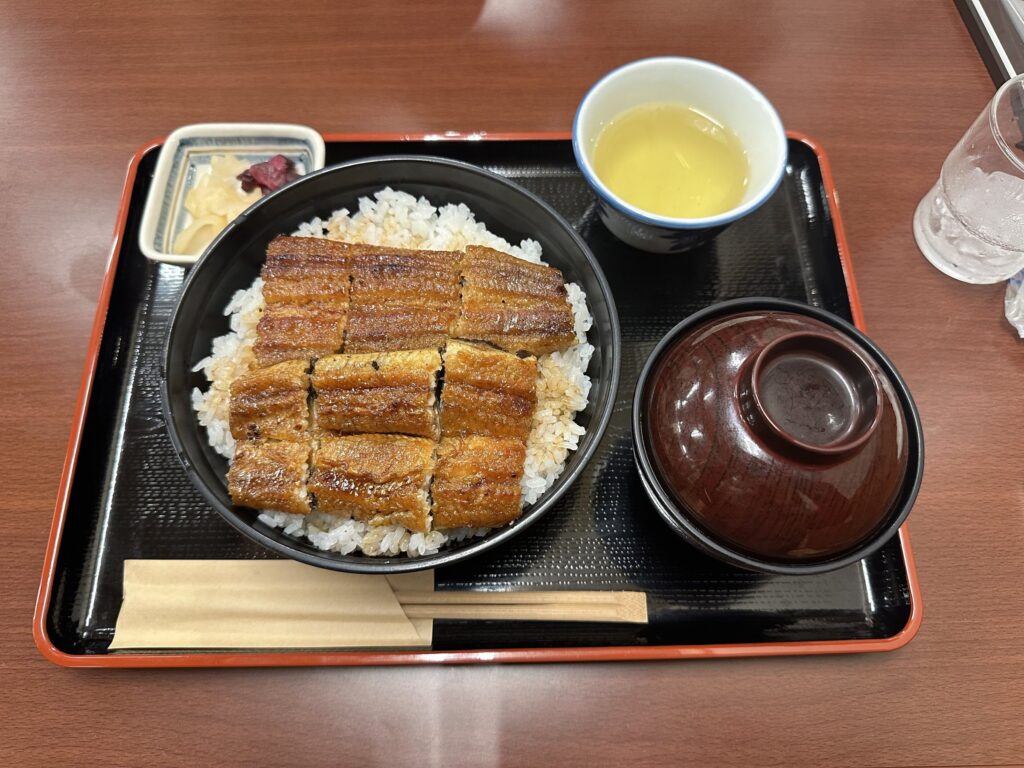
An unadon set.
For those who prefer softer flesh and a more delicate flavour at the sushi counter, anago nigiri is worth trying.
When ordering, the name of the eel and its preparation on the menu are more reliable guides than appearance alone. Unagi is commonly associated with kabayaki, while anago is particularly familiar in Edomae sushi, although both can be prepared in other ways.
Image credit: Wikimedia Commons (663highland; Naotake Murayama; Daiju Azuma; Syohei Arai; Zheng Zhou; T.Tseng; doronko; ノボホショコロトソ)