On a hot iron griddle known as a teppan, Osaka-style okonomiyaki begins with a bowl of batter, cabbage and other ingredients mixed together. In Hiroshima, the cook spreads a thin layer of batter onto the griddle, then adds vegetables, meat, noodles and egg in stages.
The name okonomiyaki combines okonomi, meaning according to one’s preference, and yaki, referring to cooking on a heated surface. Both styles use familiar Japanese ingredients, but their different cooking methods produce distinct textures and eating experiences.
Osaka: Mixing the Ingredients Before Cooking
Osaka-style okonomiyaki, also known as Kansai-style okonomiyaki, is prepared by mixing the ingredients in a bowl before transferring them to the teppan.
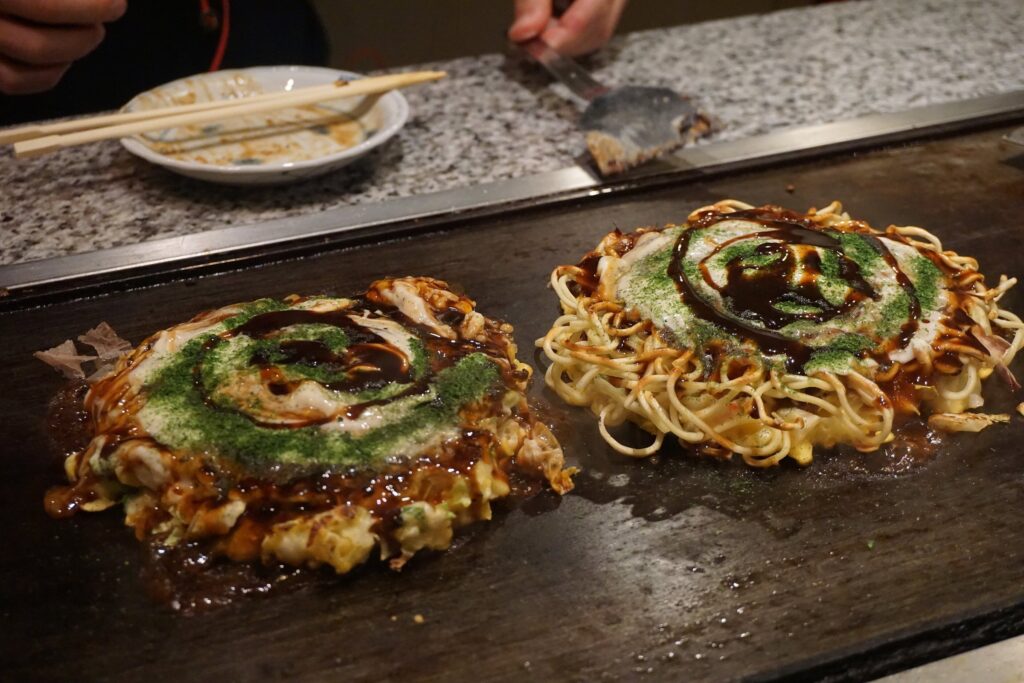
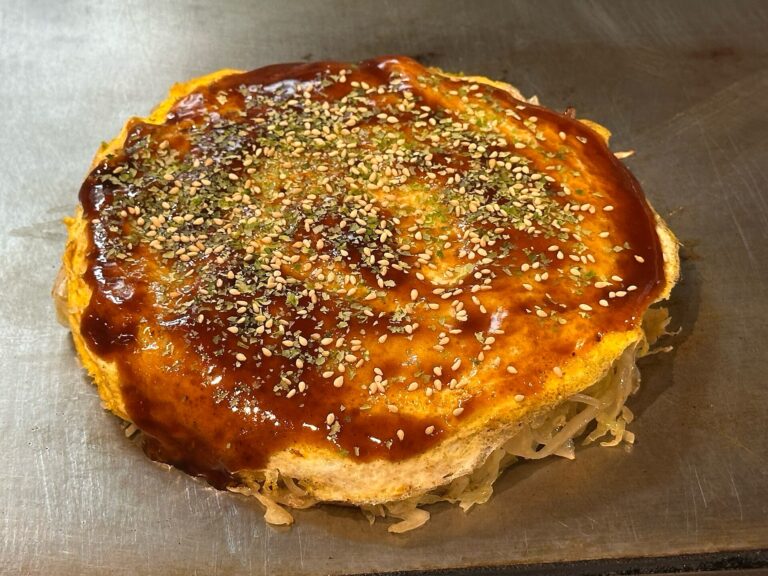
Okonomiyaki on the griddle in Osaka.
The batter typically contains flour, eggs and dashi or water. Some recipes also include grated nagaimo, a type of Japanese yam. Finely chopped cabbage is mixed with pork or seafood, depending on the dish ordered.
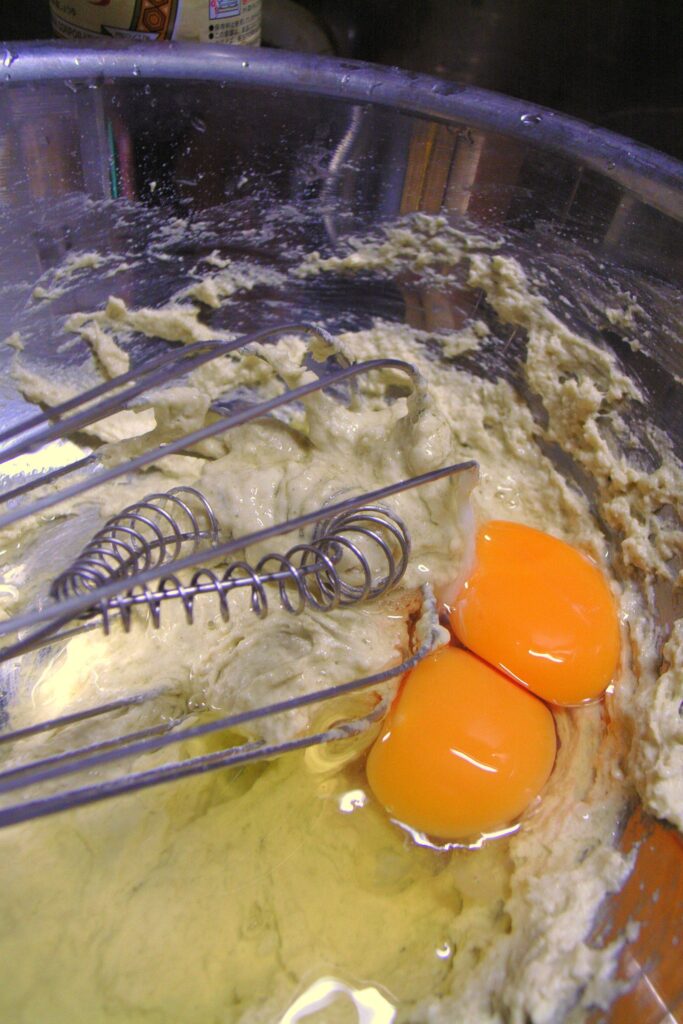
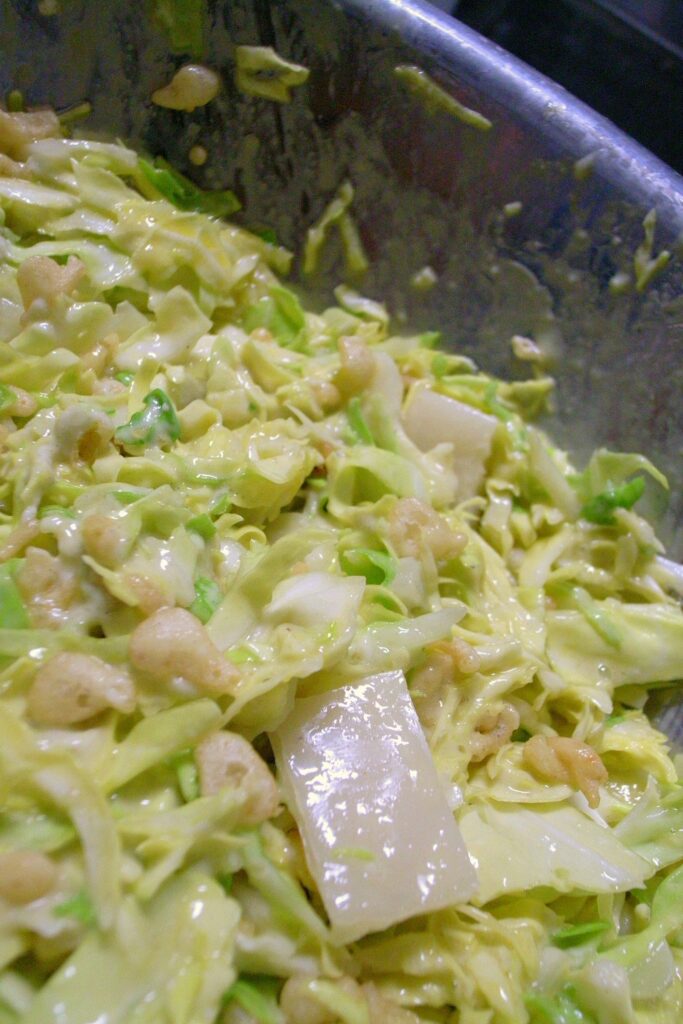
Mixing the batter before cooking.
The cook pours the mixture onto the hot griddle, forming a relatively thick, round pancake that is cooked on both sides. Because the cabbage and other ingredients have already been combined with the batter, the filling is distributed fairly evenly throughout.
Osaka-style okonomiyaki develops a lightly browned exterior while remaining soft and moist inside. Cabbage, meat or seafood is embedded in the cooked batter, giving the pancake a relatively uniform texture.
One variation is modan-yaki, which combines okonomiyaki with noodles. Negiyaki contains a generous amount of spring onions and is usually thinner.
Hiroshima: Building the Pancake in Layers
Hiroshima-style okonomiyaki begins with a thin layer of batter spread across the hot griddle. Shredded cabbage, bean sprouts and pork are placed on top in succession, remaining in separate layers rather than being mixed into the batter as in Osaka. As they cook, the cabbage softens and reduces in volume.
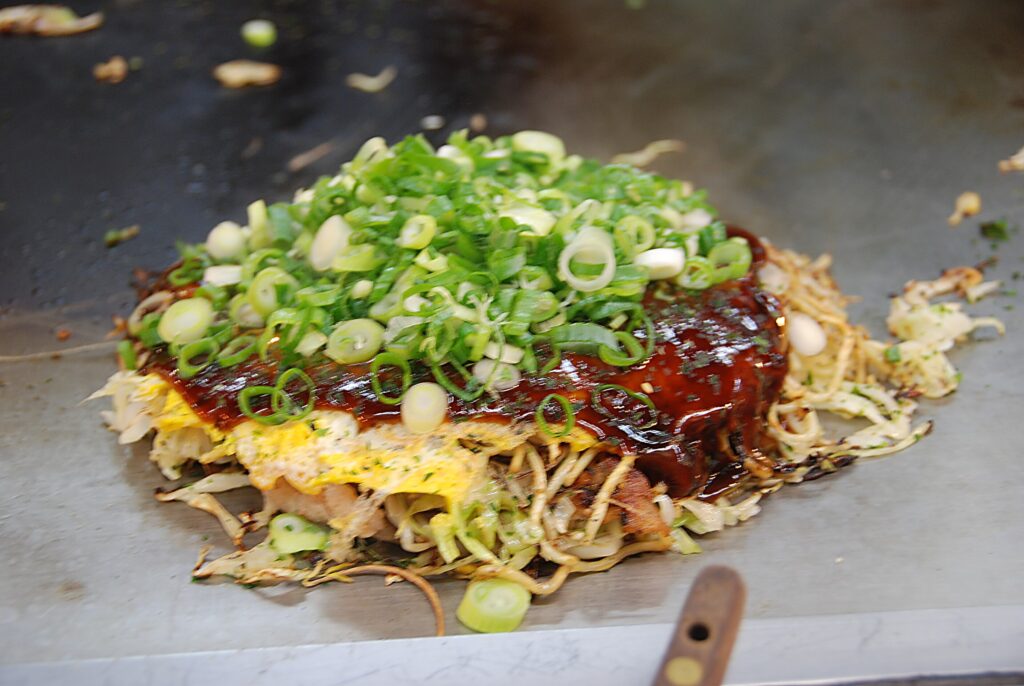
Okonomiyaki topped with spring onions.
Yakisoba or udon noodles are prepared separately, then combined with the pancake, vegetables, meat and a thin layer of egg. The finished dish has a layered structure, with noodles providing a notable difference from the Osaka style. The cooking process is explored in more detail in Traveleak’s guide to Hiroshima okonomiyaki.
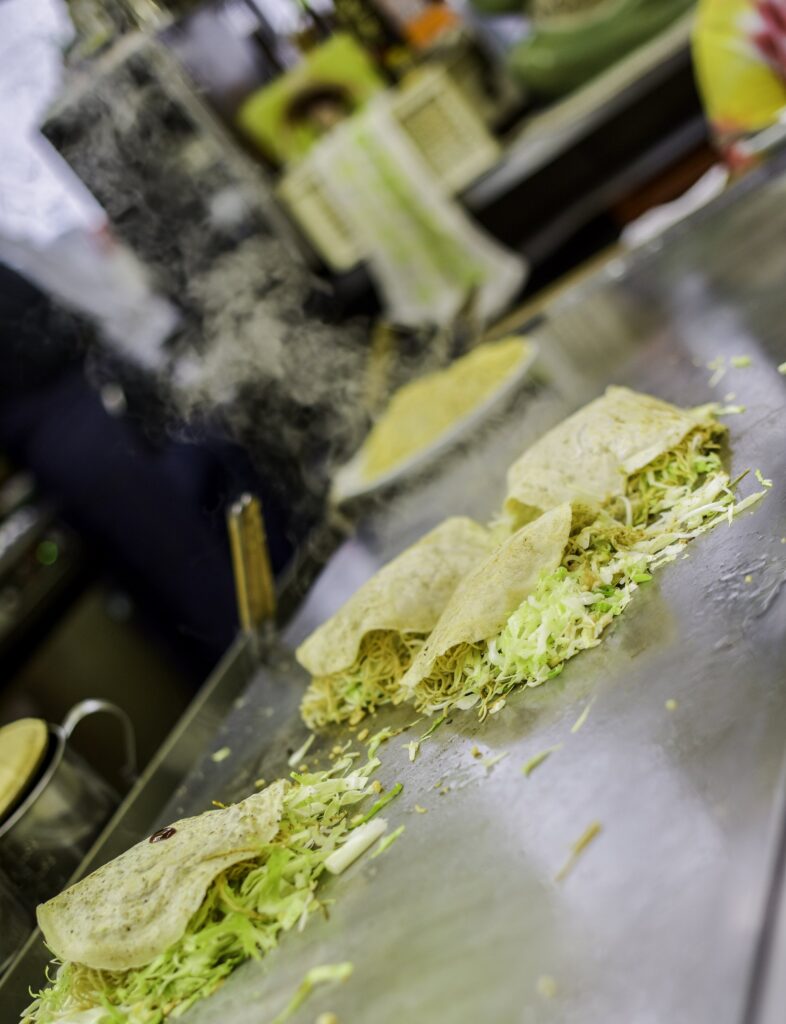
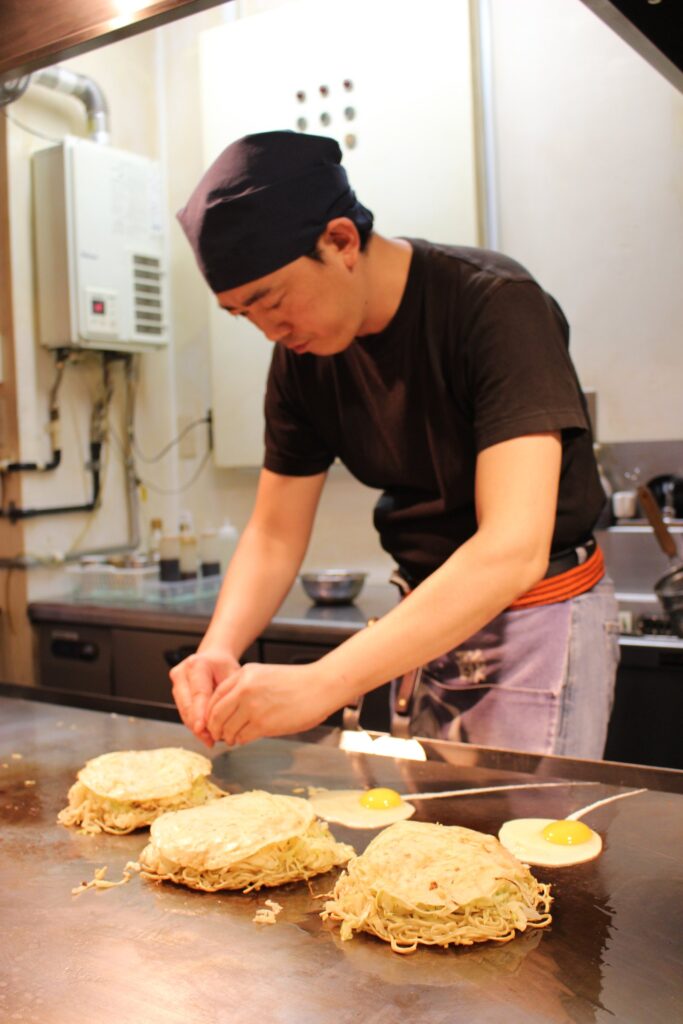
Building the pancake in layers in Hiroshima.
Differences in Flavour and Texture
The contrast between the two styles becomes most apparent when the pancake is cut.
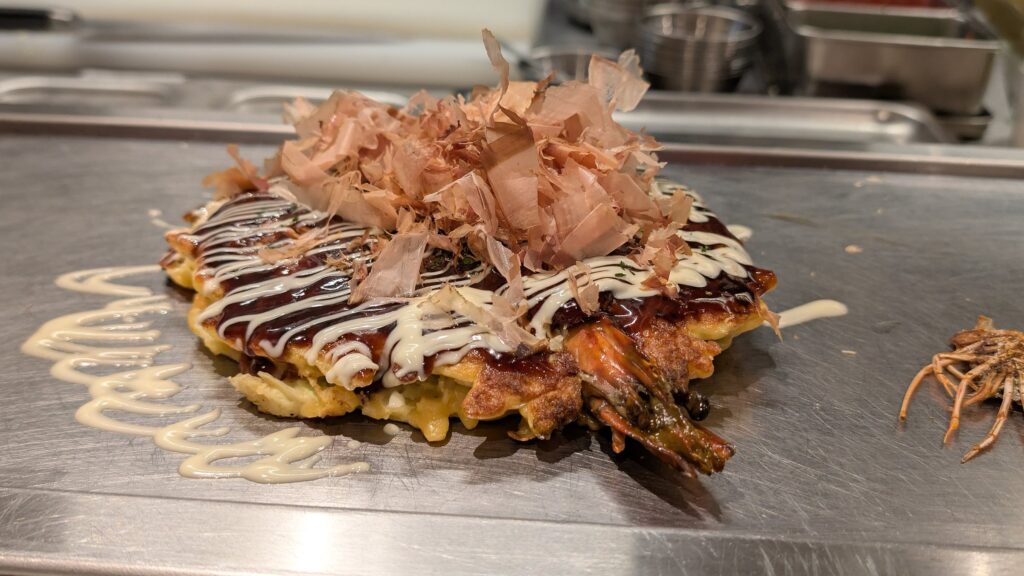
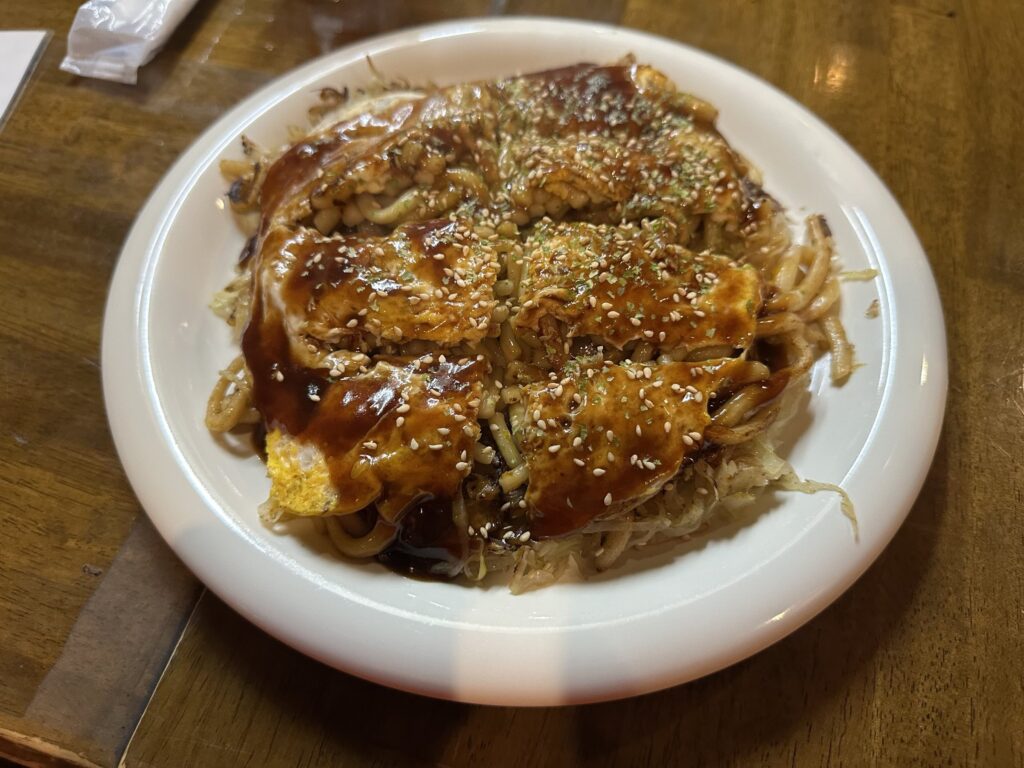
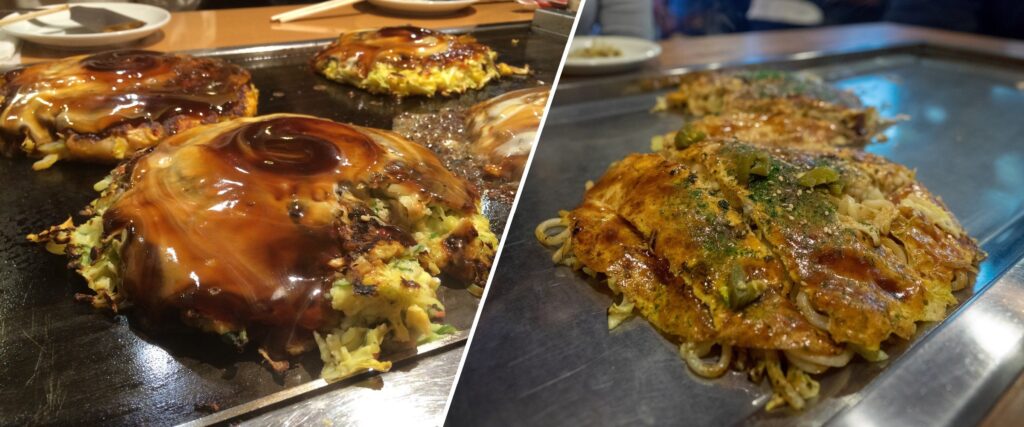
Osaka style on the left, Hiroshima style on the right.
In Osaka, the ingredients are cooked together within the batter. Each piece generally contains a fairly even combination of soft batter, cabbage and filling, producing a consistent texture with every bite.
Hiroshima-style okonomiyaki offers more variation in texture through its layers of noodles, vegetables, meat and egg. The softened cabbage, noodles and thin batter can be distinguished within the same piece.
The noodles also make the dish more substantial. While Osaka-style okonomiyaki centres on the mixture of batter and cabbage, the Hiroshima version incorporates a separate portion of cooked noodles.
The final flavour depends on the ingredients, amount of sauce and cooking techniques used at each restaurant. Even two pancakes prepared in the same regional style may differ in softness, thickness and seasoning.
Sauce and Familiar Toppings
Despite their different cooking methods, Osaka- and Hiroshima-style okonomiyaki are commonly finished with a dark brown sauce that is sweet, savoury and slightly tangy, sharing characteristics with Worcestershire-style sauces.
Otafuku, a brand based in Hiroshima, is among the best-known names associated with okonomiyaki sauce. The sauce is brushed over the finished pancake, often accompanied by toppings chosen to suit individual tastes.
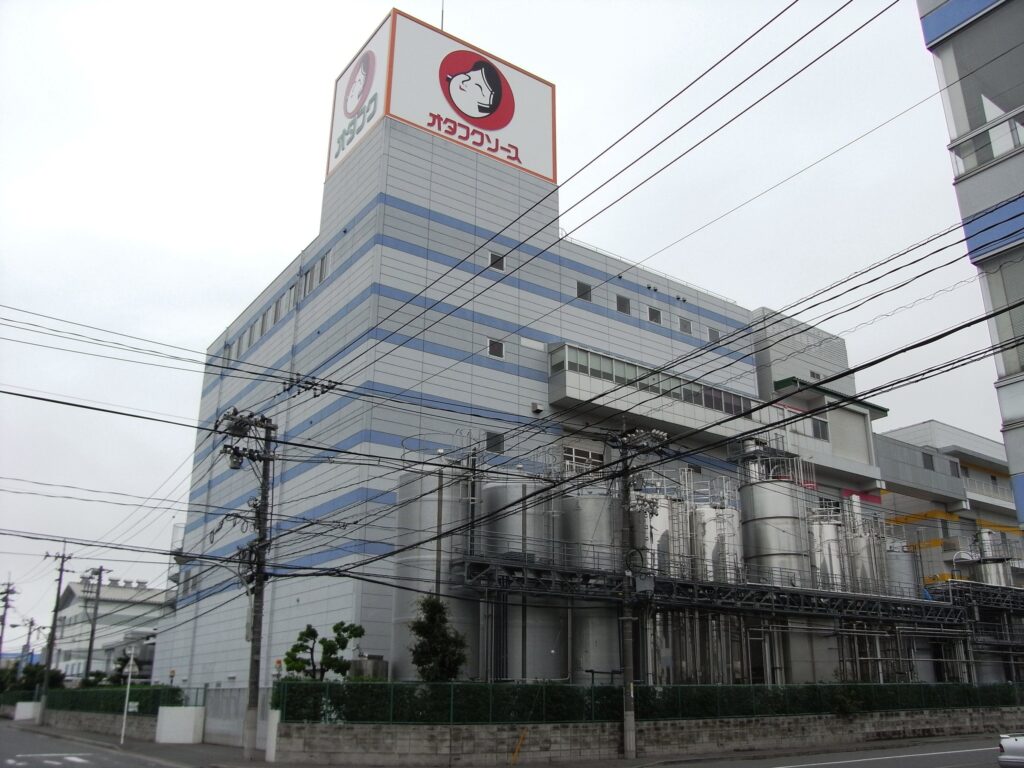
Otafuku’s head office in Hiroshima.
Common additions include aonori, finely crumbled dried seaweed; katsuobushi, thinly shaved bonito flakes; Japanese mayonnaise; and pickled ginger.
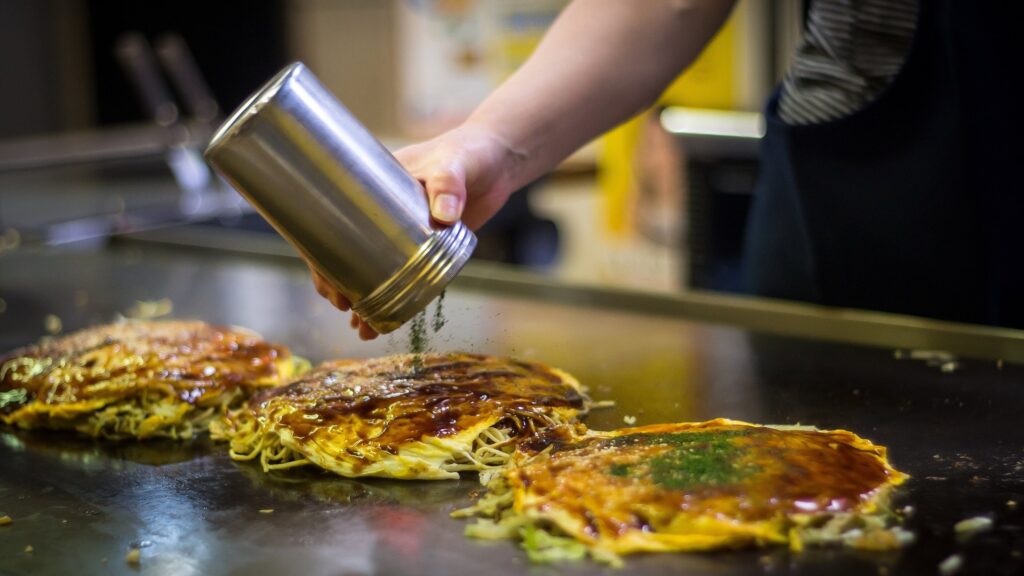
A sprinkle of aonori.
At many restaurants, okonomiyaki is served directly on the teppan to keep it hot. Diners use a small metal spatula to divide the pancake into pieces or transfer portions to individual plates.
From Everyday Food to Regional Speciality
The history of okonomiyaki is connected to various flour-based dishes cooked on griddles in Japan. Earlier preparations such as funoyaki and issen yoshoku are often mentioned in accounts of its origins.
Issen yoshoku was an inexpensive snack made from a thin layer of batter and simple ingredients. Dishes based on flour and vegetables were also part of everyday life during periods of food shortages, particularly in the years following the Second World War.
In Hiroshima, okonomiyaki developed through local food stalls and restaurants, gradually taking on its characteristic layered form. Osaka established its own tradition of mixing the ingredients before cooking.
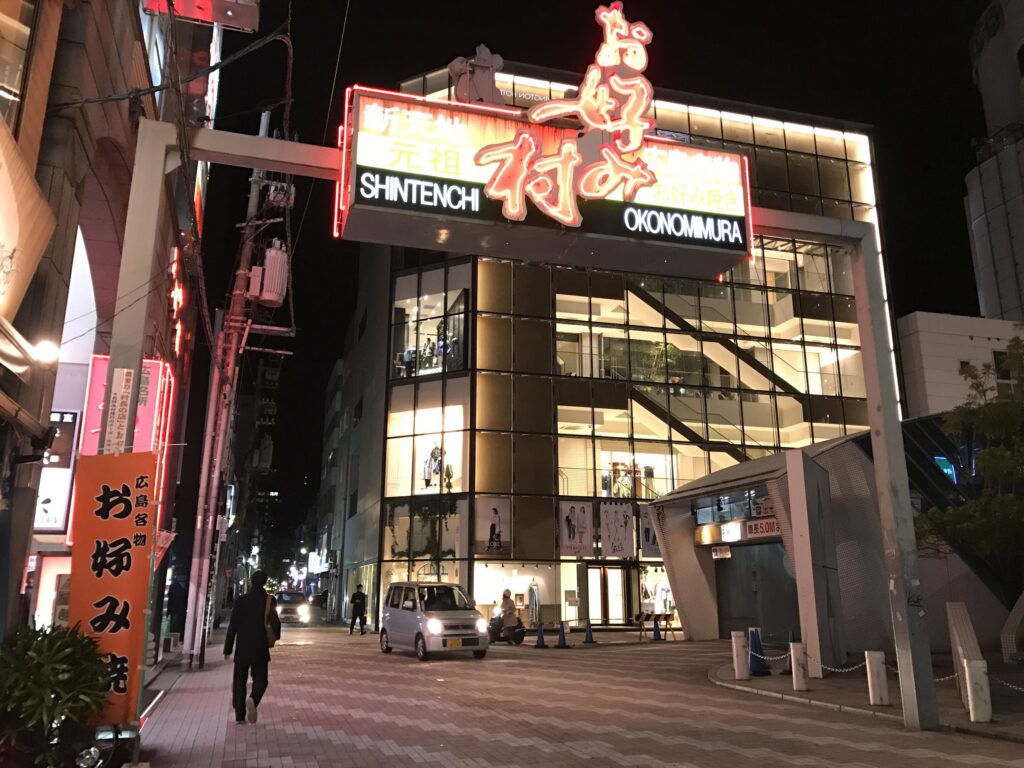
Okonomimura in Hiroshima.
Beyond these two well-known styles, Japan has numerous regional variations. In Hinase, Okayama Prefecture, kaki-oko features oysters as its distinctive ingredient. Tokyo is also known for monjayaki, another dish cooked on a teppan, but with a thinner batter and a different texture from okonomiyaki.
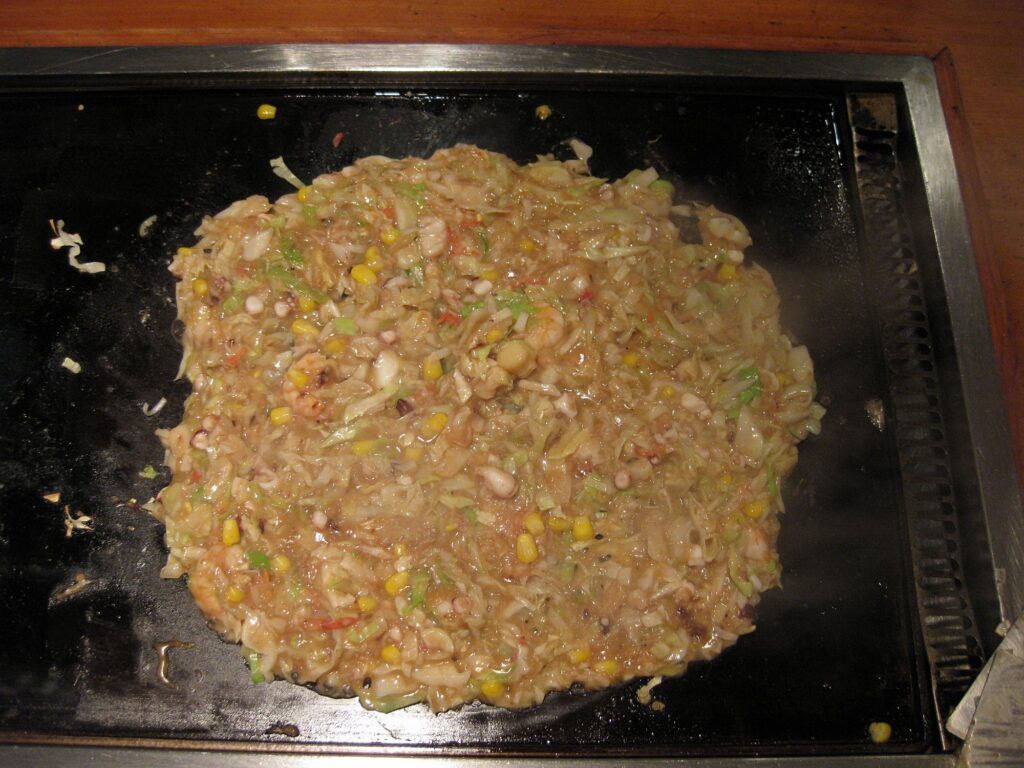
Monjayaki on the teppan.
Should You Try Osaka or Hiroshima Okonomiyaki?
If you prefer a soft pancake with cabbage and other ingredients mixed evenly into the batter, Osaka-style okonomiyaki is a good choice. Variations with noodles or generous amounts of spring onions offer further options.
For those who enjoy noodles and want to experience the contrast between separate layers of ingredients, Hiroshima-style okonomiyaki offers a different experience. Softened cabbage, noodles and egg give the pancake a more varied texture.
When ordering, diners can choose pork, seafood or other ingredients depending on the restaurant’s menu. Some establishments serve both regional styles, while those specialising in one often have their own recipes and finishing methods.
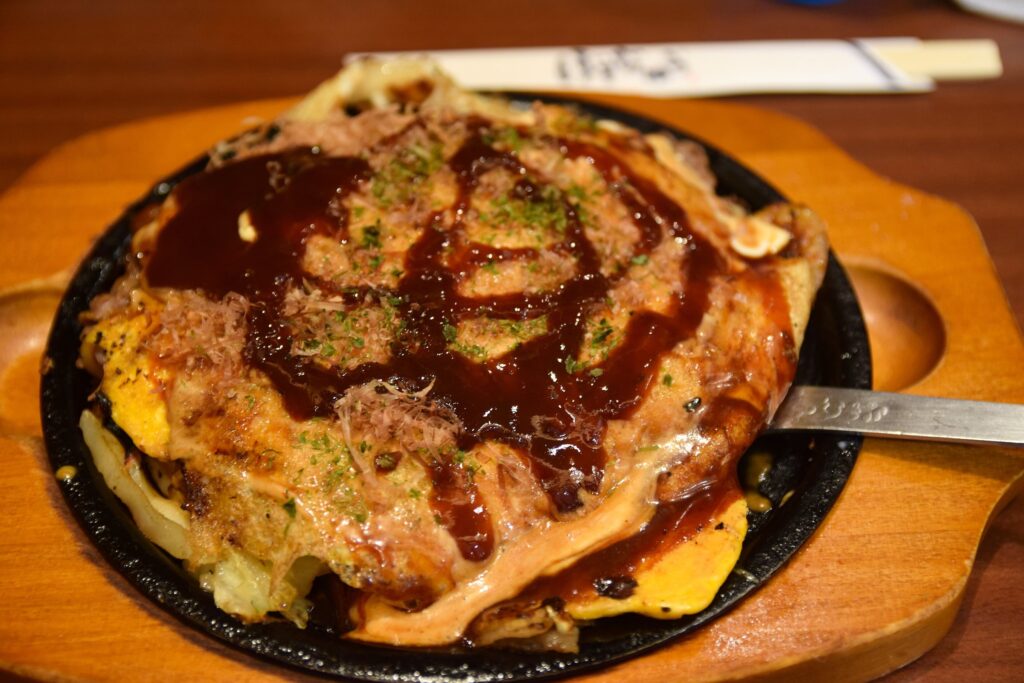
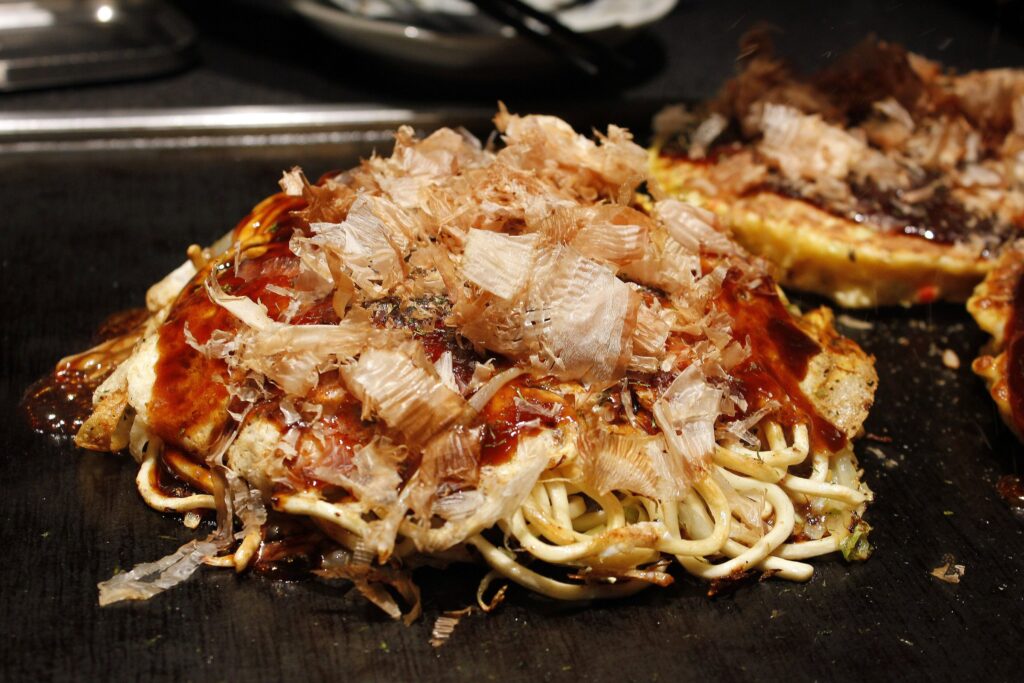
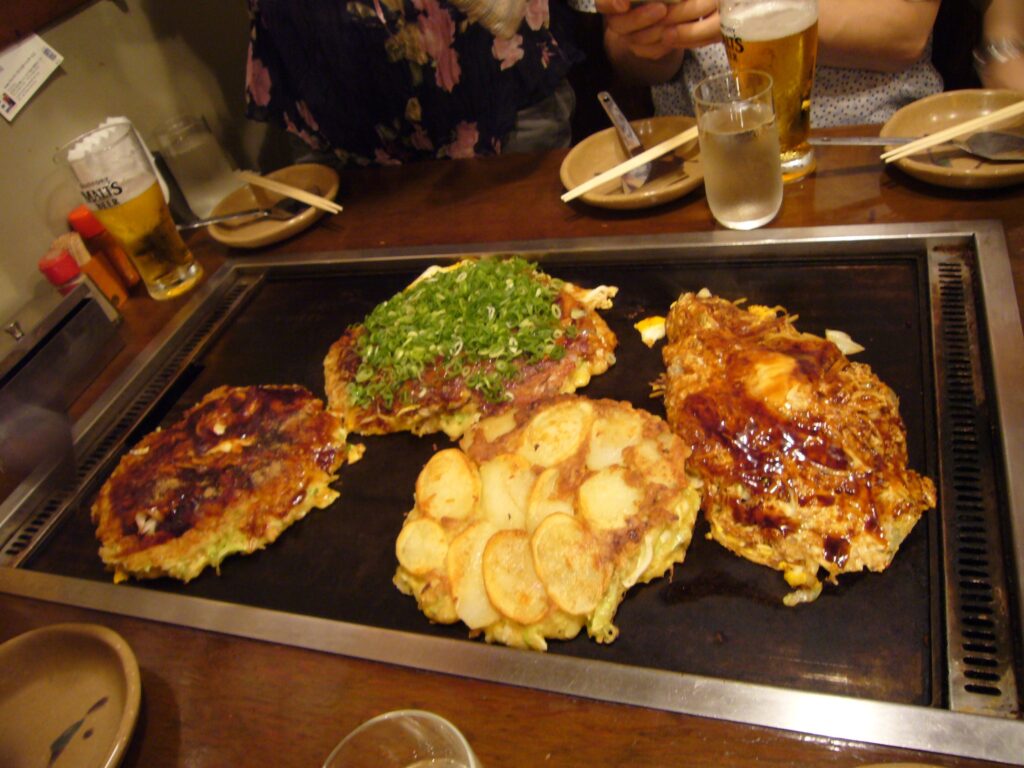
Image credit: Wikimedia Commons (Fresh Marv; Ajay Suresh; Lianguanlun; yoppy; Maarten Heerlien; Rachelle Haun; EllieBellie25; Joli Rumi; ノボホショコロトソ; Taisyo; Zhao !; そらみみ; Douglas P Perkins; Raita Futo; Minseong Kim; S_e_i)