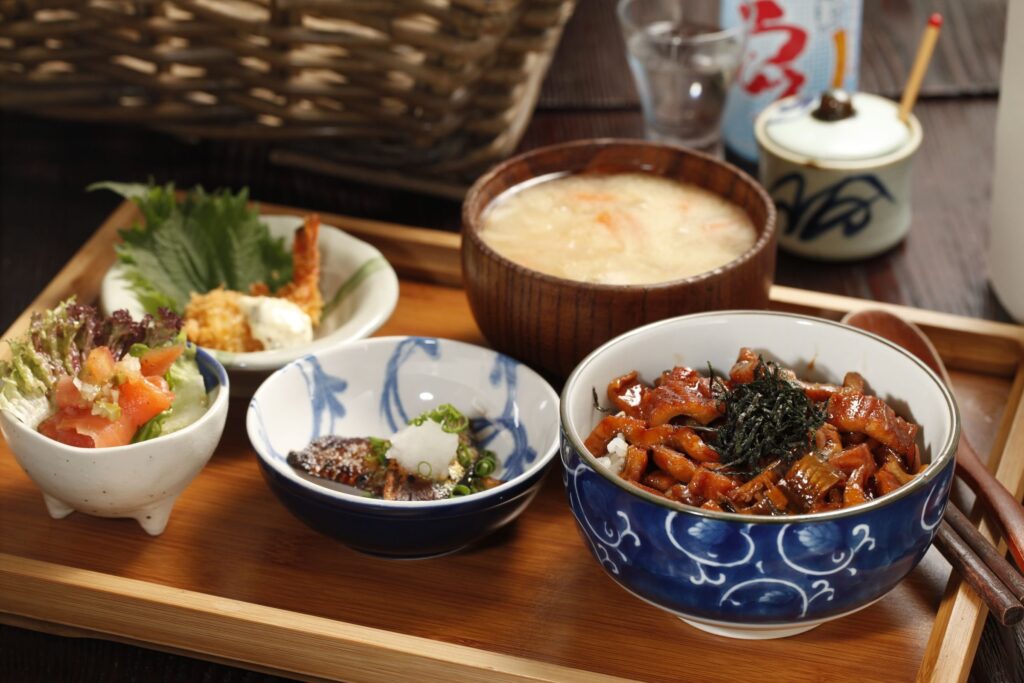
What defines Japanese food culture is not any single dish. It is also the way a meal is arranged, how ingredients are chosen according to the season, the use of tableware and the customs maintained in everyday life.
A meal may begin with rice, soup and a few accompanying dishes. On special occasions, the ingredients, presentation and even the dining setting may change according to the season or the significance of the celebration. These elements form part of washoku, Japan’s traditional food culture.
Washoku Is a Practice, Not a Menu
The word washoku combines wa, meaning Japan, and shoku, meaning eating. In 2013, UNESCO inscribed “Washoku, traditional dietary cultures of the Japanese, notably for the celebration of New Year” on its Representative List of the Intangible Cultural Heritage of Humanity.
What UNESCO recognised was not a list of dishes, but the knowledge, skills and customs associated with producing, preparing, cooking and consuming food. Washoku is rooted in respect for nature and the use of local ingredients such as rice, fish, vegetables and edible wild plants.
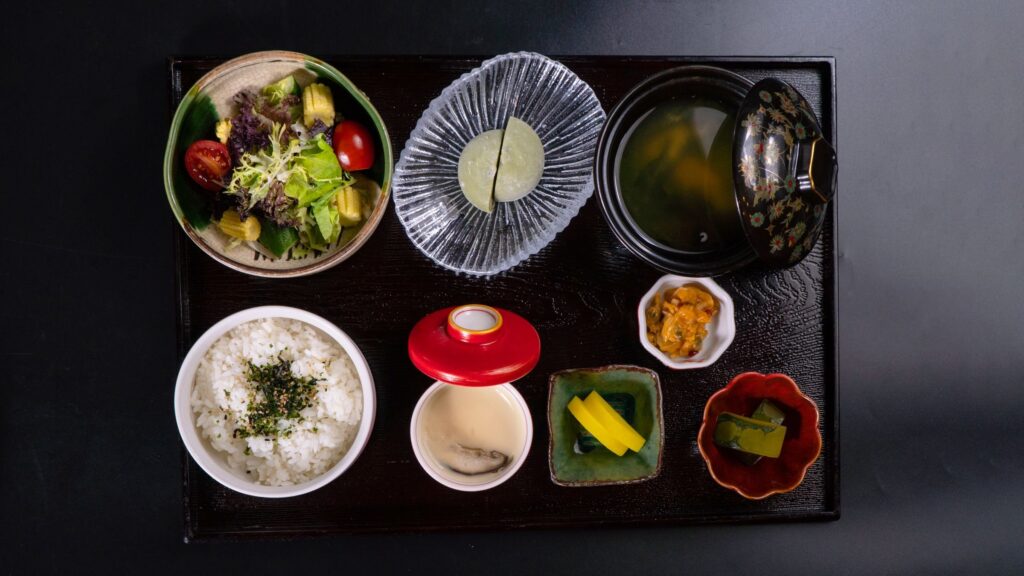
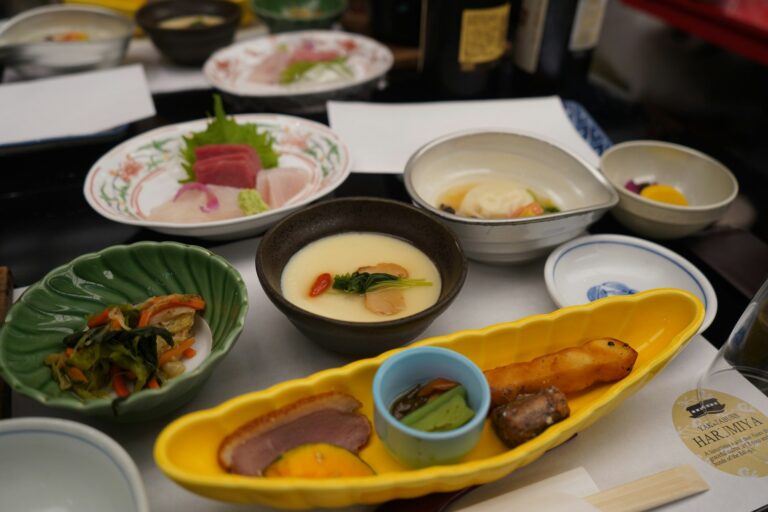
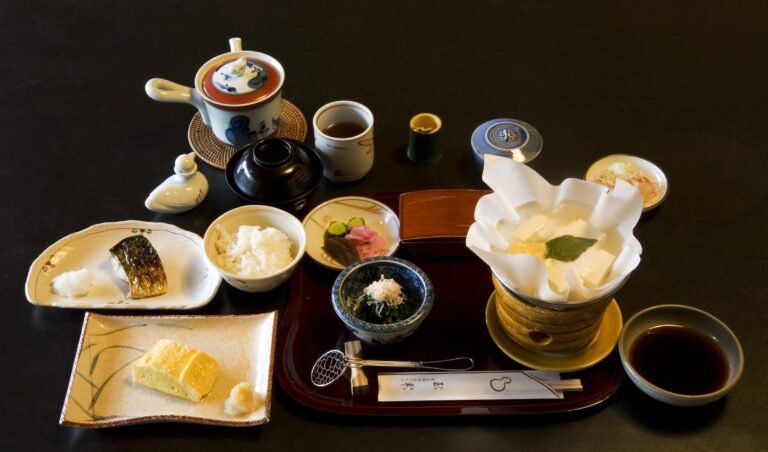
A set meal seen from above.
UNESCO highlights New Year celebrations as a representative example. Families prepare special dishes to welcome the deities of the new year, decorate them carefully, arrange them on tableware reserved for the occasion and share them at home.
Beyond festive meals, knowledge of washoku is passed down through cooking and eating within families, including the everyday practice of seasoning food.
Japan’s Ministry of Agriculture, Forestry and Fisheries (MAFF) identifies four defining characteristics of washoku: the use of diverse ingredients and respect for their natural flavours; a balanced composition that supports a healthy diet; the expression of nature’s beauty and the changing seasons; and the relationship between food and annual celebrations.
One Soup, Three Dishes
Geography contributes to the diversity of Japanese cuisine. Stretching from north to south, with seas, mountains and agricultural plains, Japan has distinct regional ingredients. Traditional cooking methods often seek to bring out the natural flavours of these foods.
A familiar structure in everyday dining is ichiju-sansai, meaning “one soup, three dishes”. A meal consists of rice and soup, accompanied by a main dish of meat or fish and one or two side dishes made with vegetables, mushrooms or seaweed.
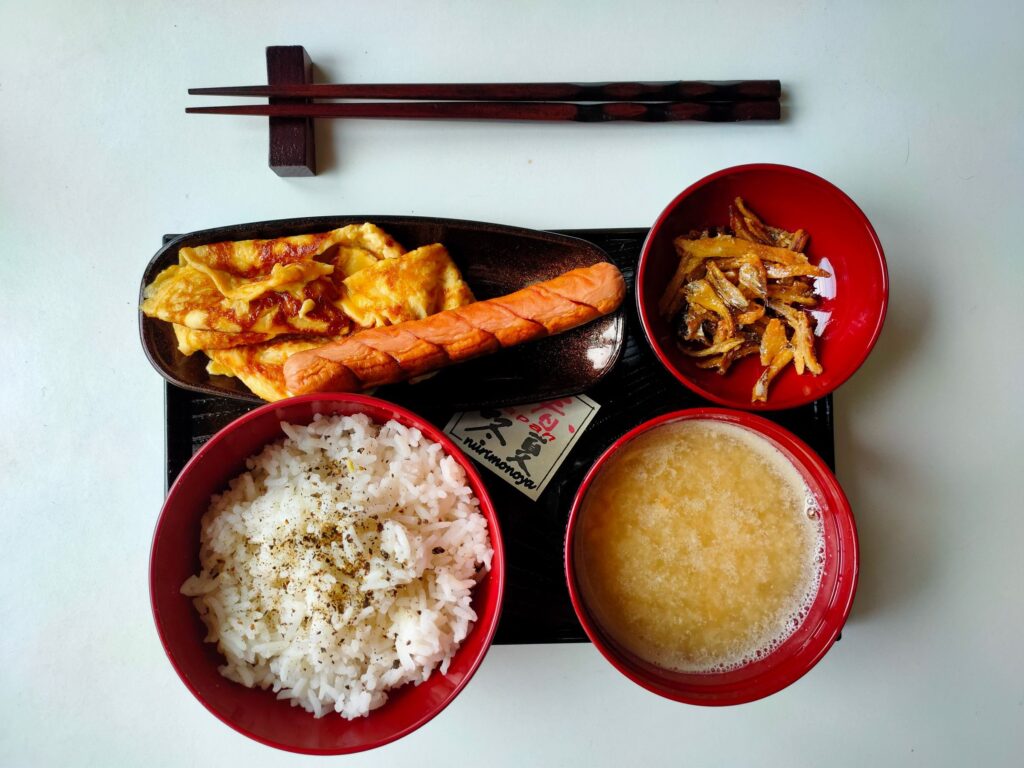
Rice, miso soup and egg in lacquer bowls.
This arrangement also appears in the traditional Japanese breakfast, where rice and soup are served alongside small dishes.
Another important element is dashi, a stock that contributes umami to many Japanese dishes. Umami is generally regarded as the fifth basic taste, alongside sweetness, sourness, saltiness and bitterness.
According to Japan’s Agency for Cultural Affairs, dashi helps bring out the umami of individual ingredients. The agency also emphasises the role of fermented foods, including miso and soy sauce, which may undergo fermentation and ageing for months or years.
The Seasons on the Plate
The changing seasons have a considerable influence on how food is selected and presented in Japan.
One important concept is shun, the period when an ingredient is at its characteristic seasonal best. There are also hashiri, ingredients appearing at the beginning of their season, and nagori, produce remaining as the season draws to a close.
These distinctions help explain why menus may change throughout the year.
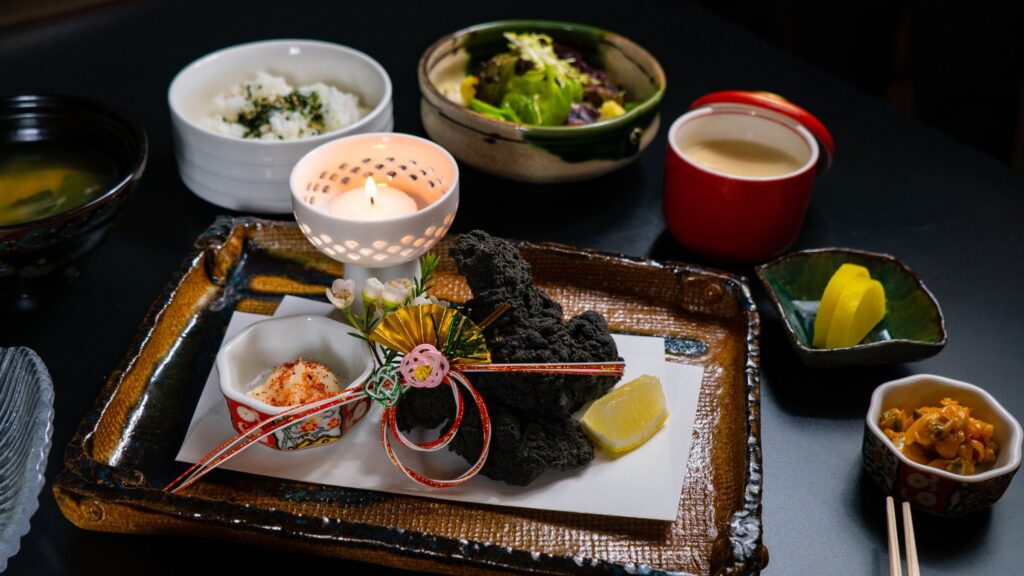
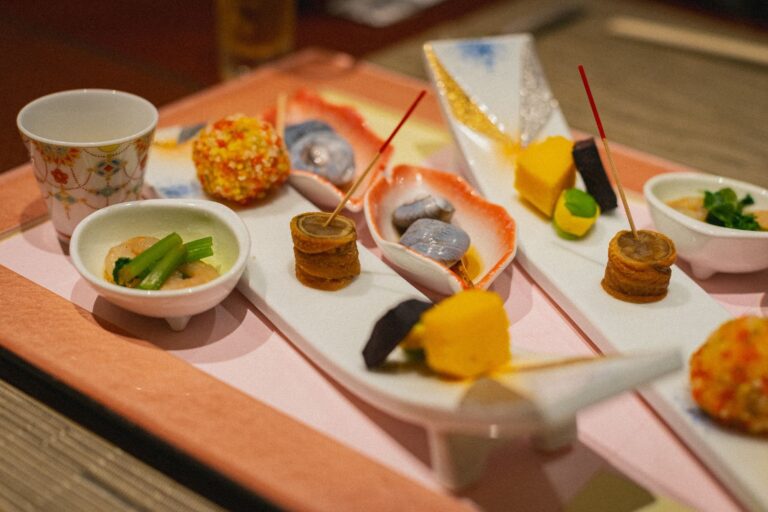
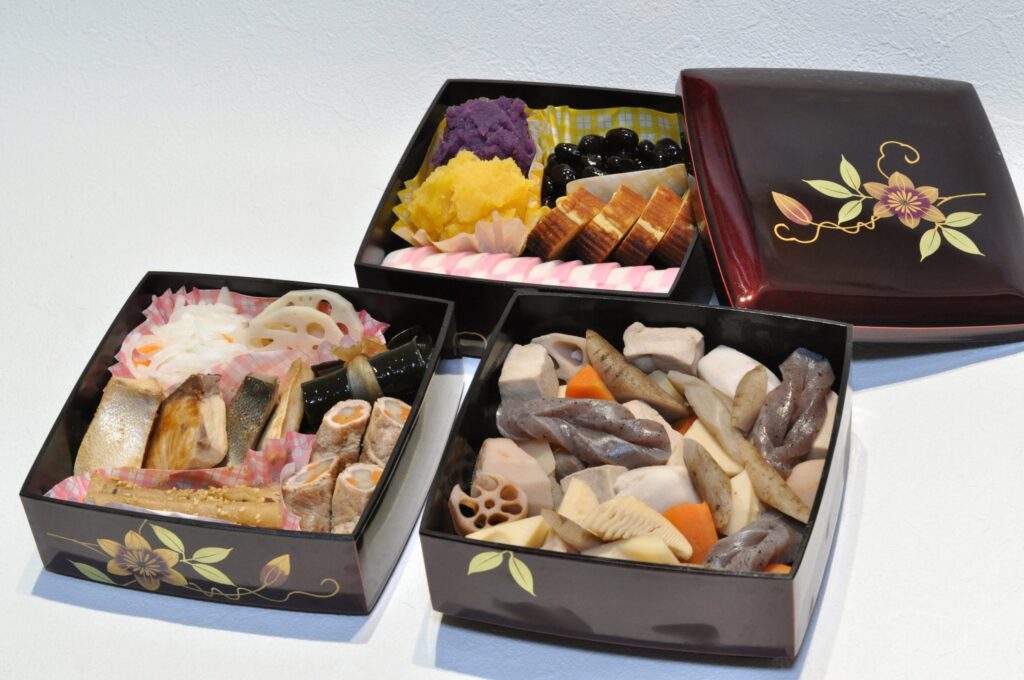
A decorated tray for a festive meal.
Seasonality is also reflected in decoration. Flowers and leaves may be used to garnish dishes, while tableware and other objects on the table are selected to suit the time of year.
Traditional Japanese confectionery, or wagashi, offers an example. Cherry blossoms and rapeseed flowers appear in spring creations, while morning glories and Tanabata motifs are associated with summer. Autumn brings red maple leaves and chestnuts, while camellias and narcissus flowers are often used to evoke winter.
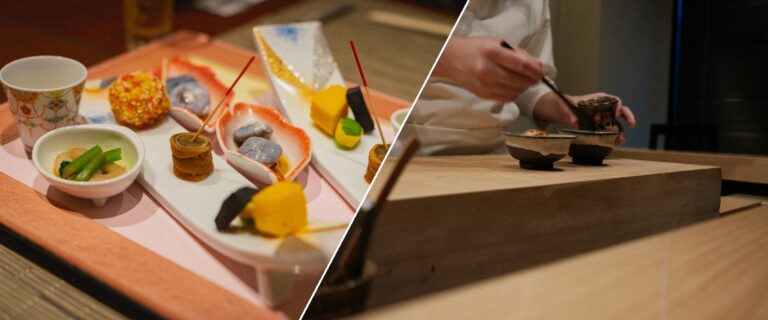
This seasonal sensibility is particularly evident in kaiseki, a multi-course dining tradition in which ingredients, the sequence of dishes and their presentation are considered together. Omakase, where the diner leaves the choice of dishes to the chef, is a different idea; Kaiseki vs Omakase explains how the two differ.
Kaiseki also has a connection with the Japanese tea ceremony. The Agency for Cultural Affairs acknowledges the influence of the spirit of hospitality associated with tea gatherings on the development of this form of cuisine. How these ideas appear in one city’s cooking, from kaiseki to everyday obanzai, is covered in What to Eat in Kyoto.
Tableware and the Dining Setting
Japan’s Agency for Cultural Affairs records a comparison in which tableware is described as the “clothing” of Japanese cuisine.
Bowls and plates may be made from lacquerware, pottery or porcelain, in a wide variety of shapes and patterns. Some feature plants, flowers or landscapes associated with particular seasons.
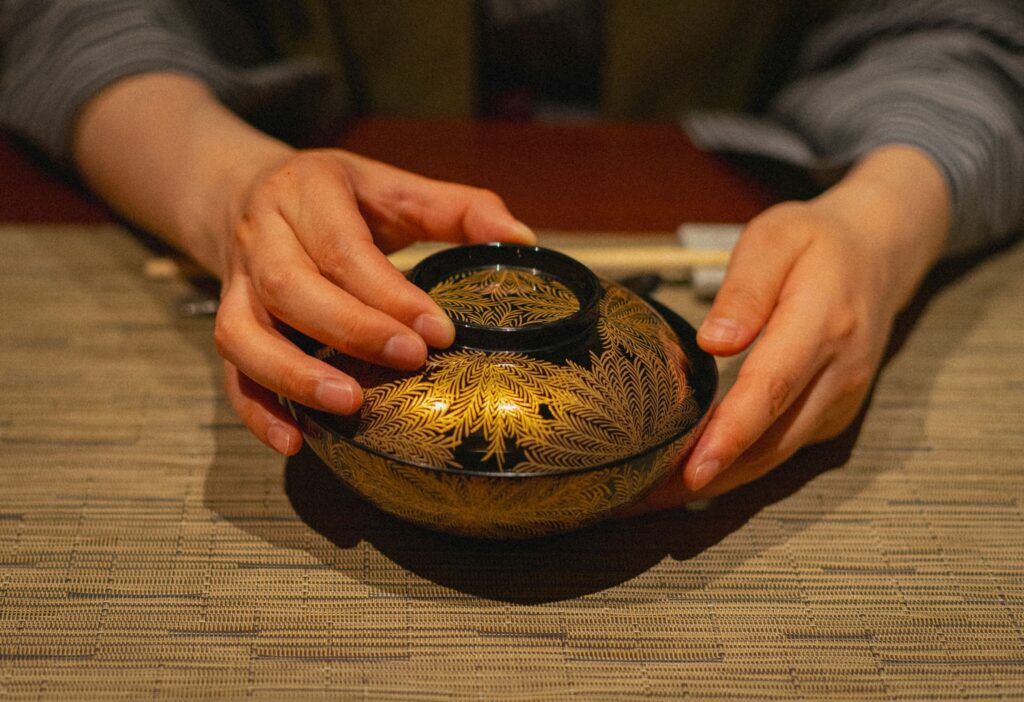
Lifting the lid of a lacquer bowl.
The choice of vessels is therefore connected to both the food and the time at which it is served. Alongside ingredients and cooking methods, tableware contributes to the presentation of a meal.
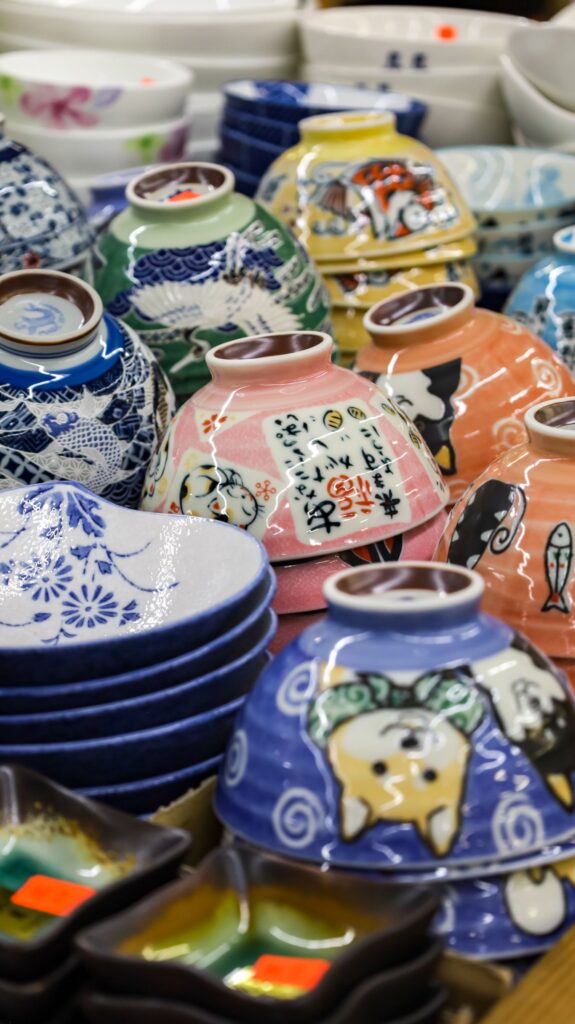
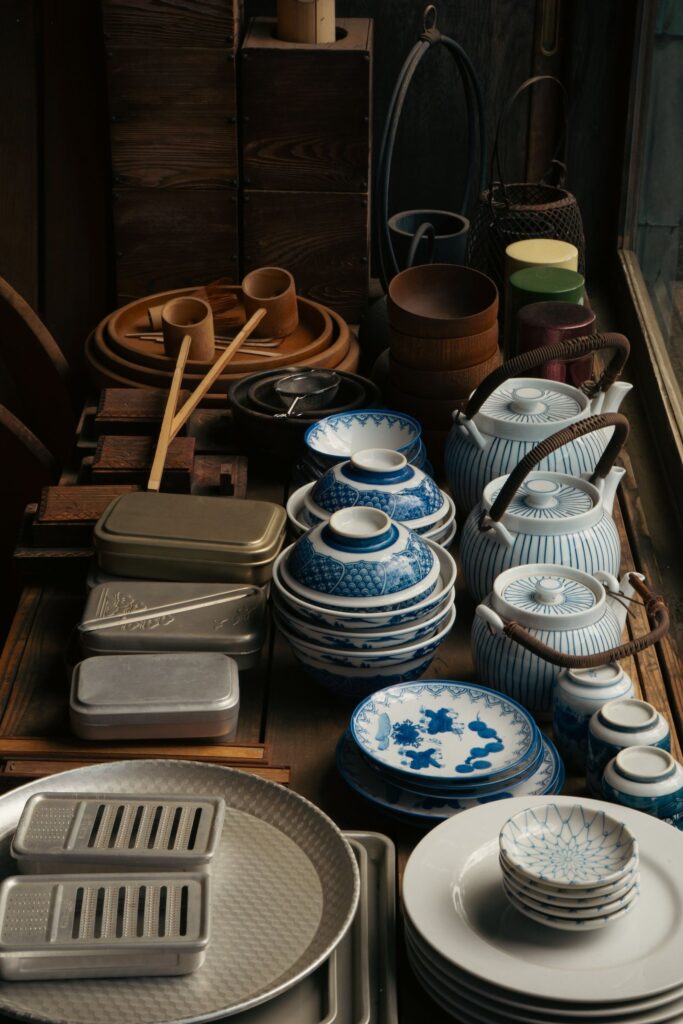
Patterned ceramic bowls.
In traditional dining settings, preparation extends to the decoration of the room. Flowers are arranged according to the art of ikebana, hanging scrolls are displayed on the walls, and seasonal flowers and leaves may appear alongside the food.
As described by the Agency for Cultural Affairs, these choices also express consideration for the guest. The preparation of a meal encompasses the food, the tableware and the setting in which it is served.
Food for Festivals and Life’s Milestones
Washoku is also closely connected to the calendar of festivals and important occasions in family life.
Foods prepared for particular celebrations are known as gyoji-shoku. They vary according to the occasion, with their own ingredients, cooking methods and forms of presentation.
At New Year, osechi-ryori consists of an assortment of dishes prepared specifically for the celebration. Tosozake, a type of spiced sake, is also associated with New Year customs.
On 3 March, the Hinamatsuri Doll Festival features traditional foods such as clam soup and diamond-shaped rice cakes in three colours: pink, white and green.
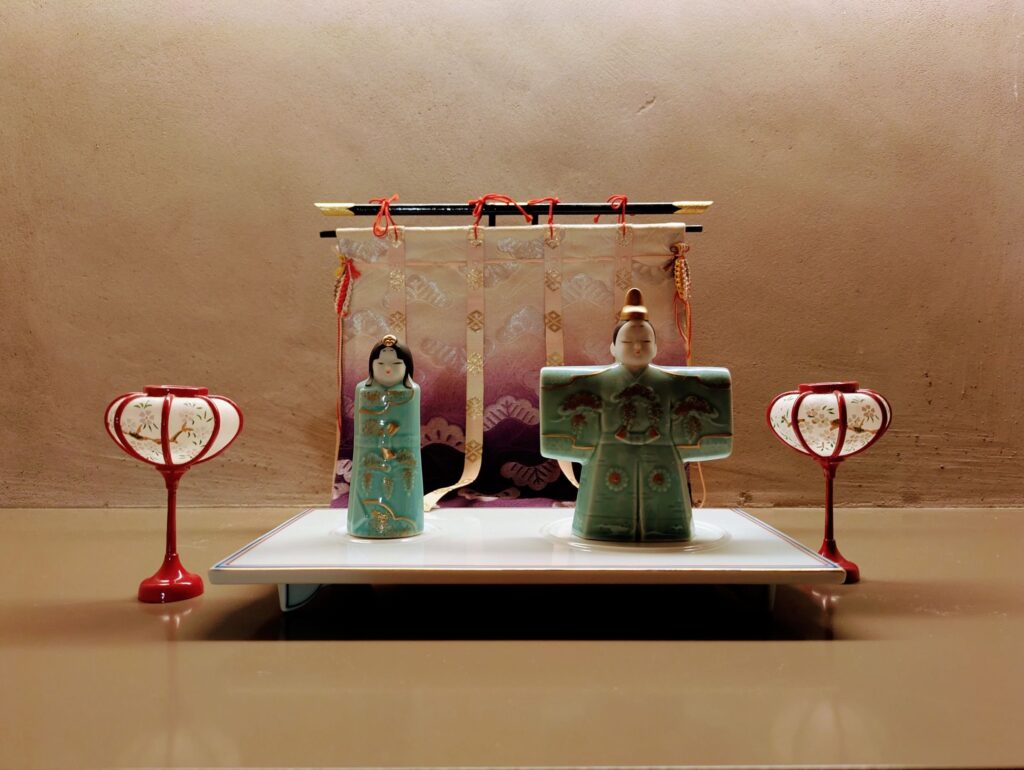
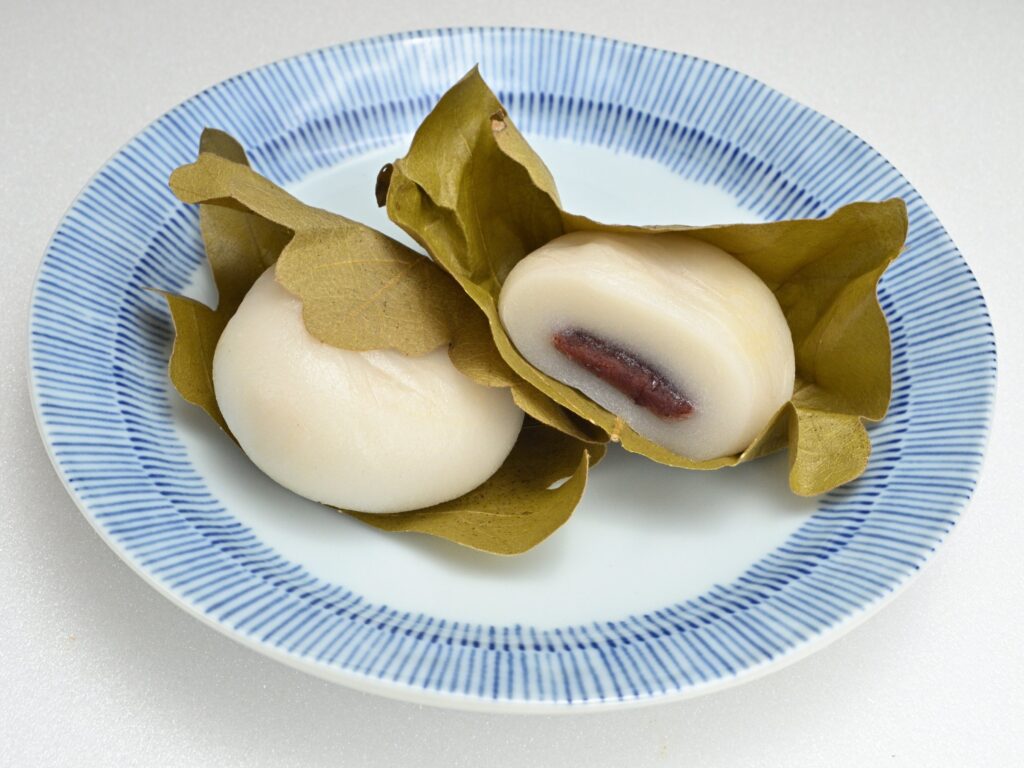
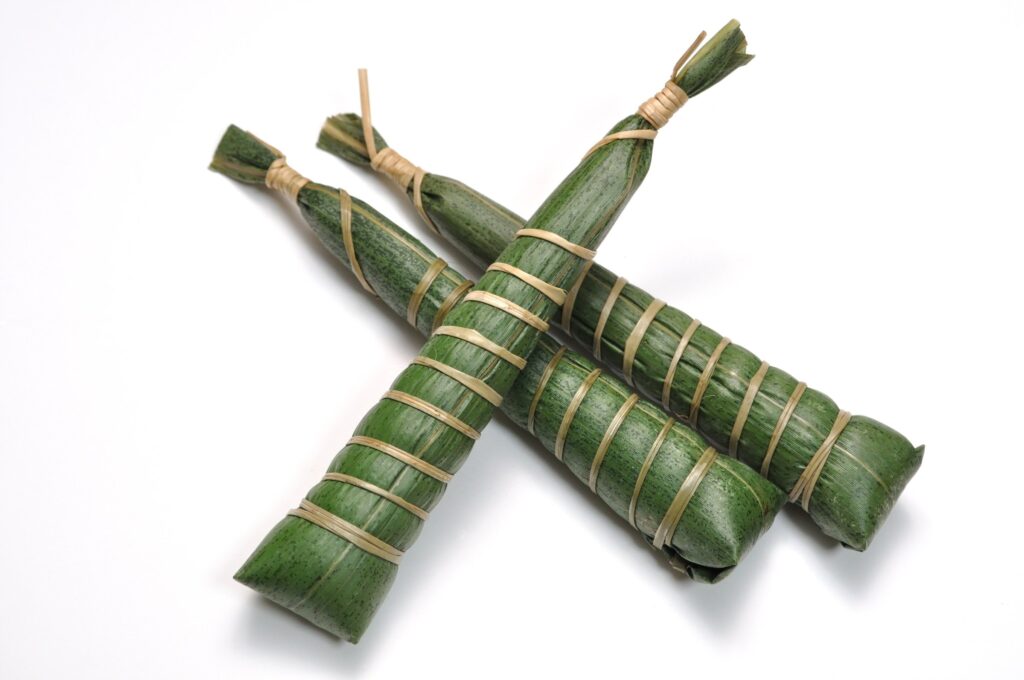
For Children’s Day on 5 May, customary foods include chimaki, glutinous rice wrapped in leaves, and kashiwa mochi, rice cakes filled with sweet bean paste and wrapped in oak leaves.
Life’s milestones also have their own food traditions. When a baby reaches approximately 100 days of age, the family may hold okuizome, a ceremony symbolising the child’s first meal.
At celebrations such as weddings, the menu may include a whole fish served with its head and tail intact, or sekihan, glutinous rice cooked with red adzuki beans.
Japan’s Agency for Cultural Affairs observes that, in a country where dining customs are closely associated with particular occasions, sharing meals helps strengthen family and community bonds while passing traditions from one generation to the next.
At the Table
Some Japanese dining customs are observed even before the meal begins.
Two familiar expressions are itadakimasu, said before eating and roughly meaning “I am glad to receive this meal”, and gochisosama-deshita, said afterwards and loosely translated as “thanks for the food”.
The Japan National Tourism Organization (JNTO) also offers guidance on dining customs for visitors. When eating in a group, people generally wait until everyone has been served before beginning. When sharing dishes, asking before taking the last portion is considered polite.
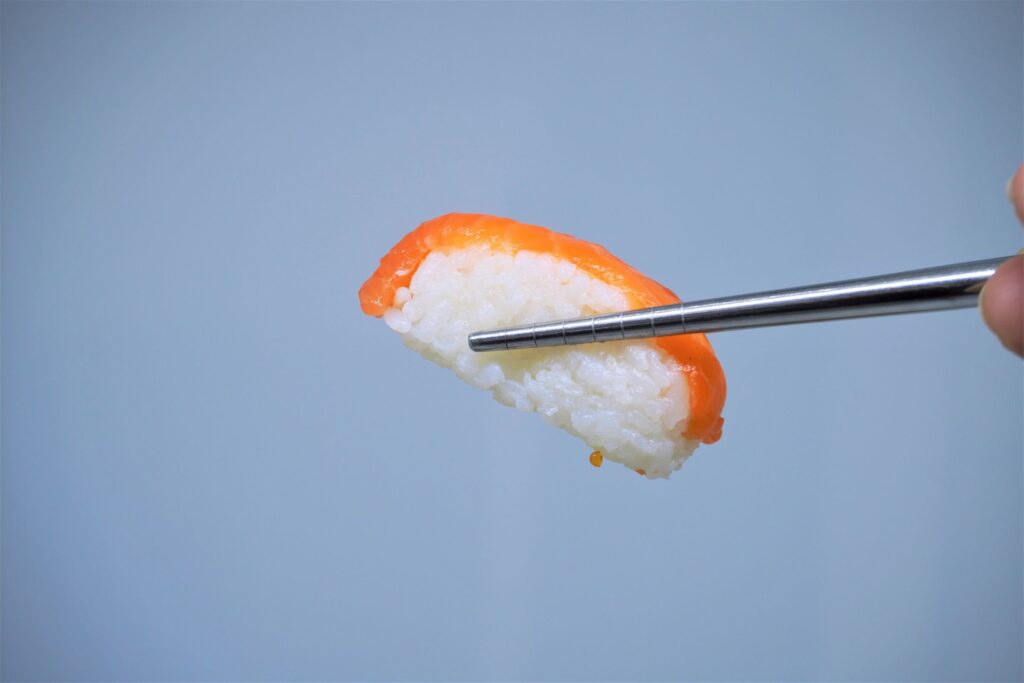
Leaving food uneaten is generally frowned upon, and asking to take leftovers away is not usually accepted.
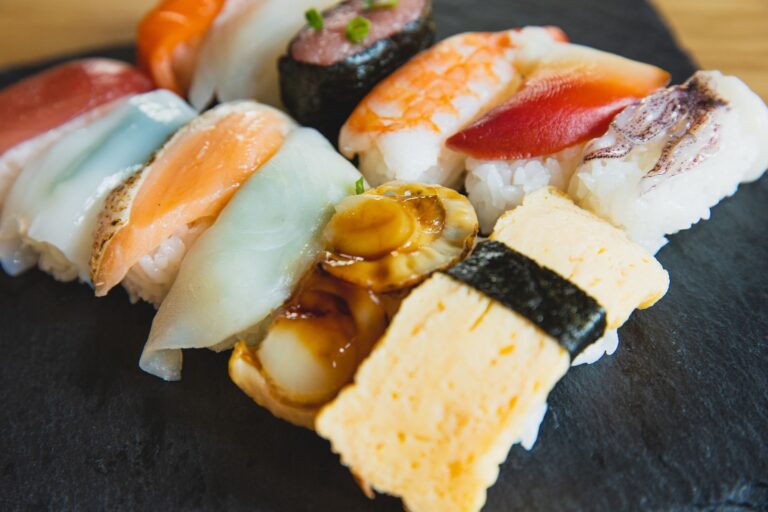
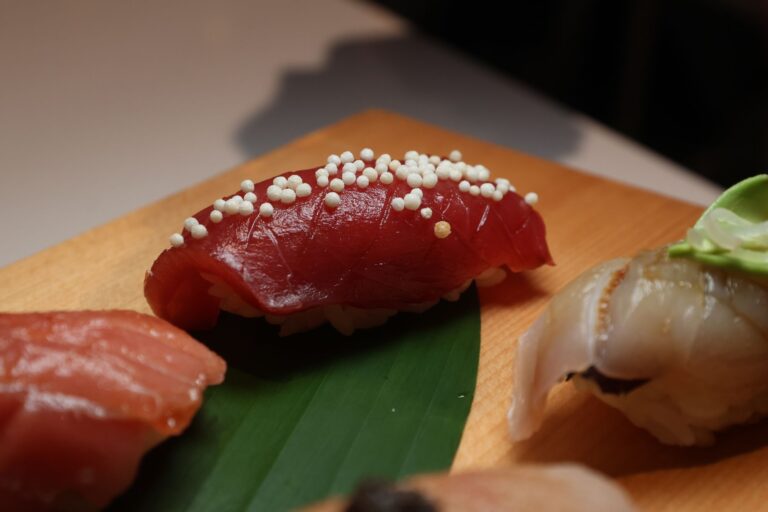
Sushi, including Edomae sushi, can be eaten either by hand or with chopsticks. Generally, only the fish is dipped into soy sauce, rather than the rice, and wasabi is not mixed directly into the soy sauce. Edomae points to Edo, the former name of Tokyo; other dishes tied to Edo’s history are covered in What to Eat in Tokyo.
These conventions may be observed more strictly at high-end sushi restaurants, while conveyor-belt sushi venues and restaurant chains tend to offer a more relaxed dining experience.
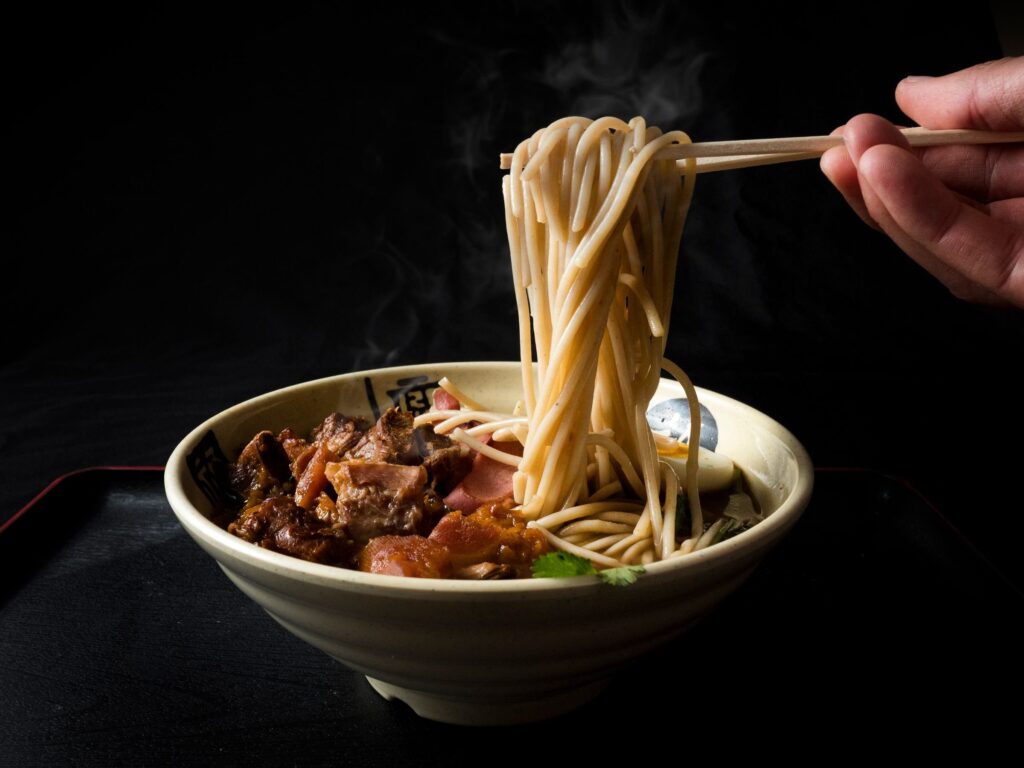
At noodle restaurants, slurping is not necessarily considered impolite. JNTO describes it as an accepted way of eating in Japan, while noting that visitors need not imitate the practice if they are uncomfortable doing so.