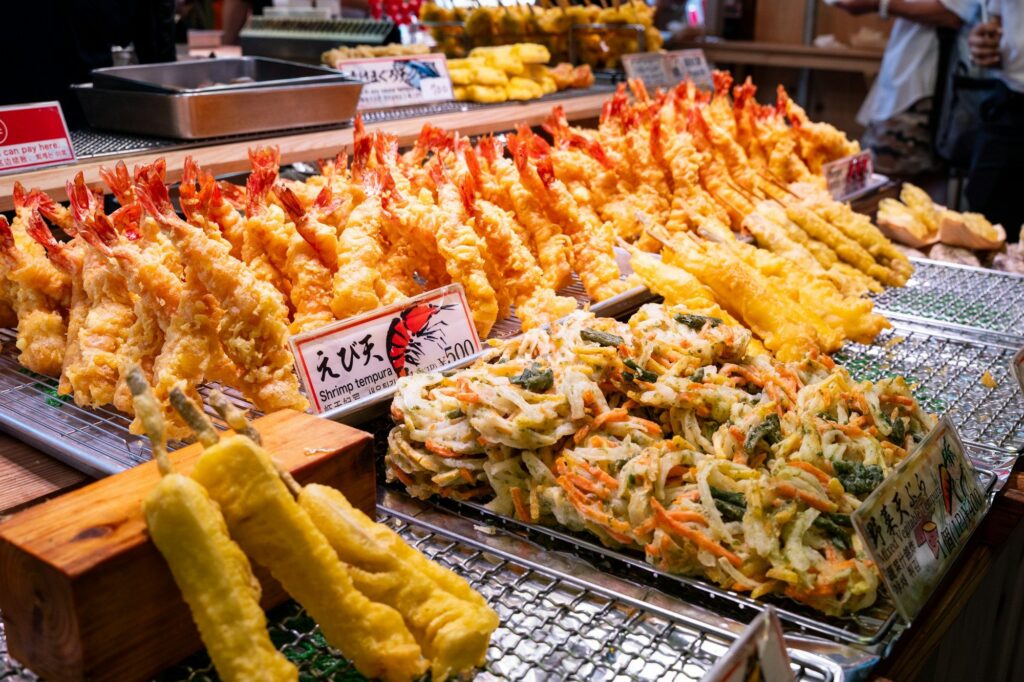
Tempura can be made with prawns, squid, fish and a wide variety of vegetables. The ingredients are coated in a thin batter and deep-fried, creating a crisp exterior around the seafood or vegetables inside.
Unlike breaded fried dishes that use breadcrumbs, tempura is coated in a batter made from flour, water and sometimes egg. The way the batter is prepared, the oil temperature and the frying time all contribute to the dish’s distinctive texture.
From Portugal to Nagasaki
The history of tempura is often linked to Portuguese missionaries and merchants who arrived in Japan during the sixteenth century. Through this period of trade, new cooking methods, including battering and deep-frying, were introduced in Nagasaki.
One Portuguese dish frequently mentioned in accounts of tempura’s origins is peixinhos da horta, meaning “little fish from the garden”. Made from green beans coated in batter and fried, it bears a resemblance to vegetable tempura.
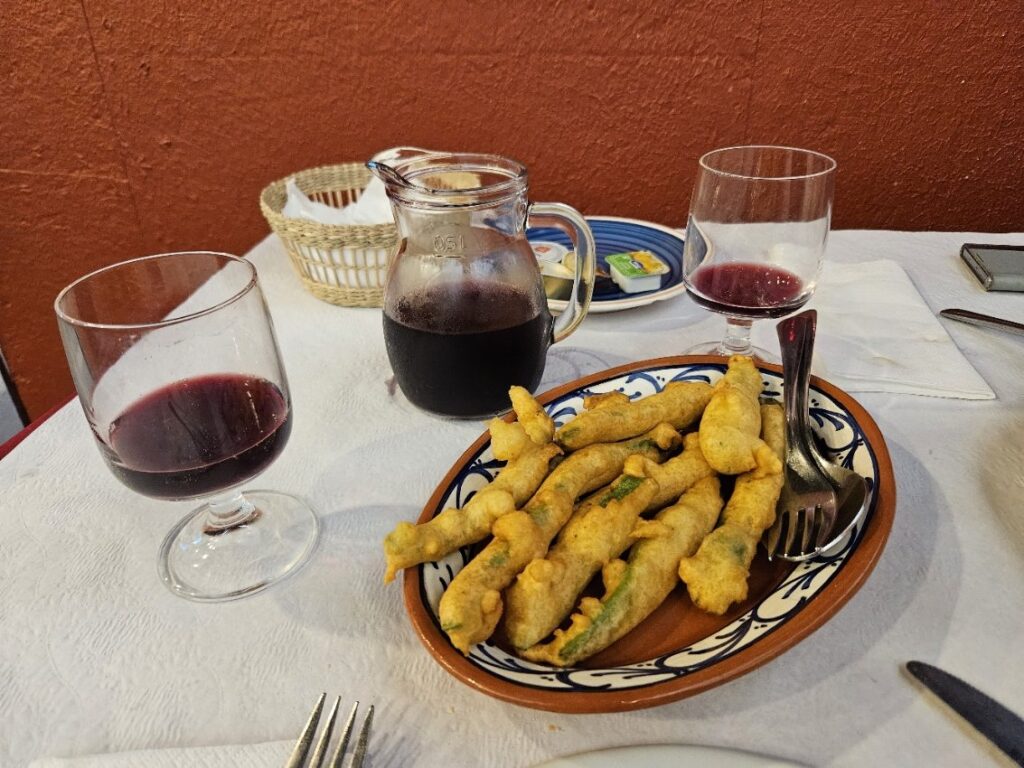
Peixinhos da horta in Portugal.
Some accounts of early fried preparations in Japan describe a thicker batter containing sugar and sake, fried in pork fat and eaten without dipping sauce. Over time, the cooking methods changed to reflect local ingredients and dining customs.
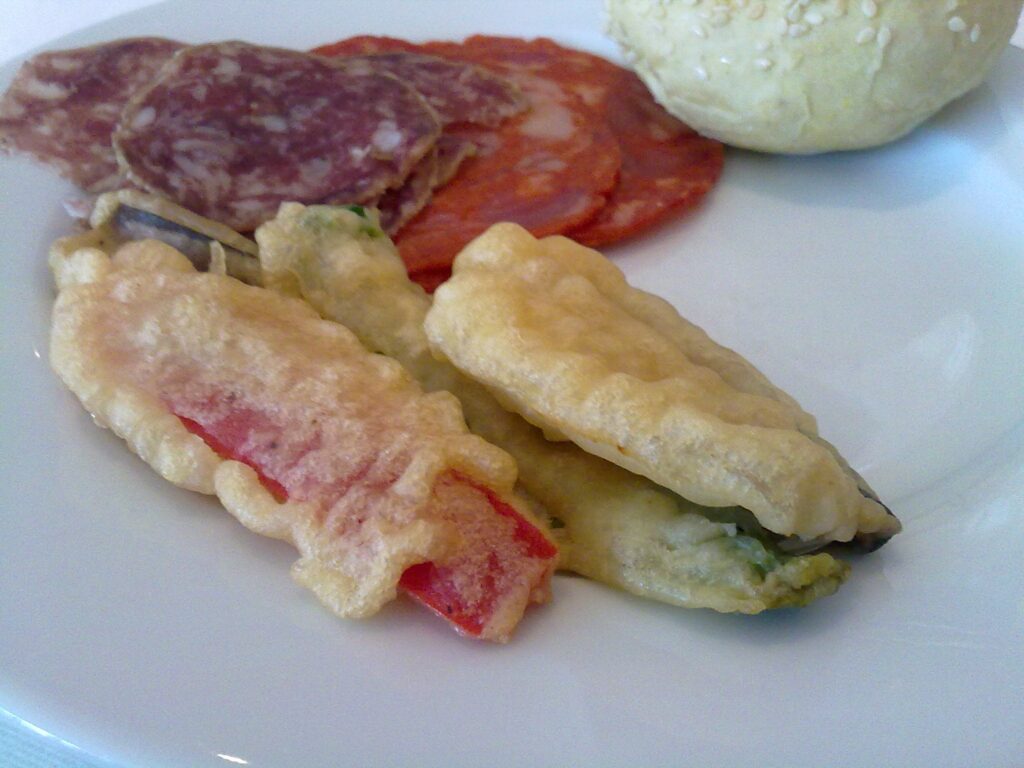
Green beans fried in batter.
The origin of the word tempura remains debated. One theory connects it to the Latin tempora, associated with periods of fasting in the Christian calendar. Another traces it to the Portuguese word tempero, which relates to seasoning or flavouring.
From Edo Street Stalls to Tempura Restaurants
Edo, now known as Tokyo, played an important role in the development of the tempura style familiar today.
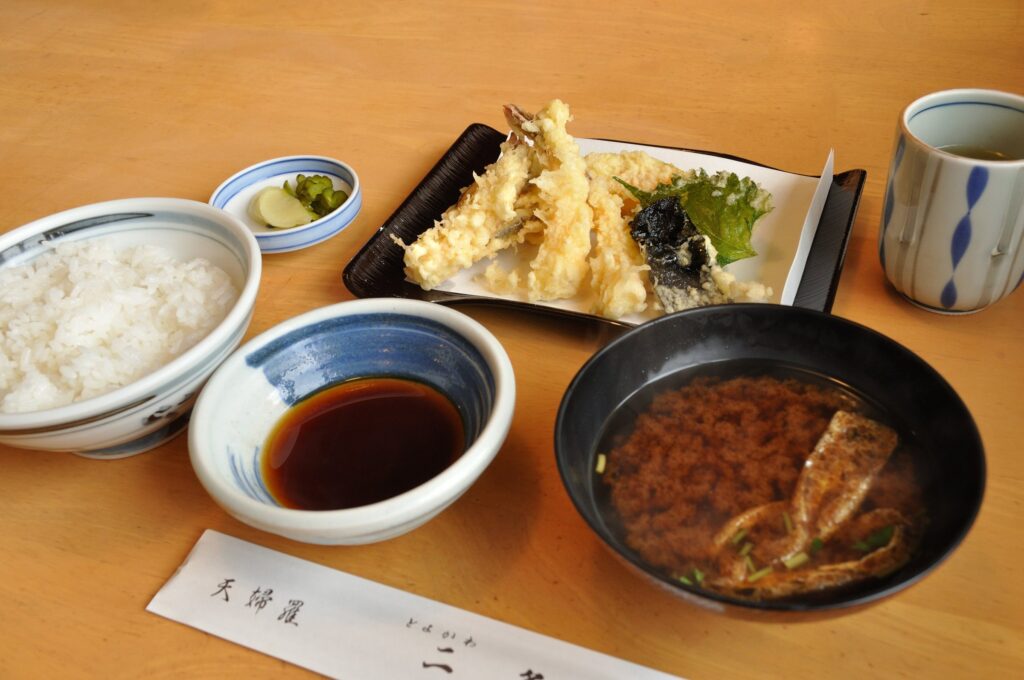
A tempura set meal.
Here, tempura became a popular street food, prepared at stalls and served immediately after frying. Accounts of Edo’s food culture often mention stalls near fish markets, where seafood from the surrounding bay was used as an ingredient. Tempura was also served on skewers, making it convenient to eat at the stall.
The use of hot oil in a city with many wooden buildings is often cited as one reason outdoor frying stalls became common.
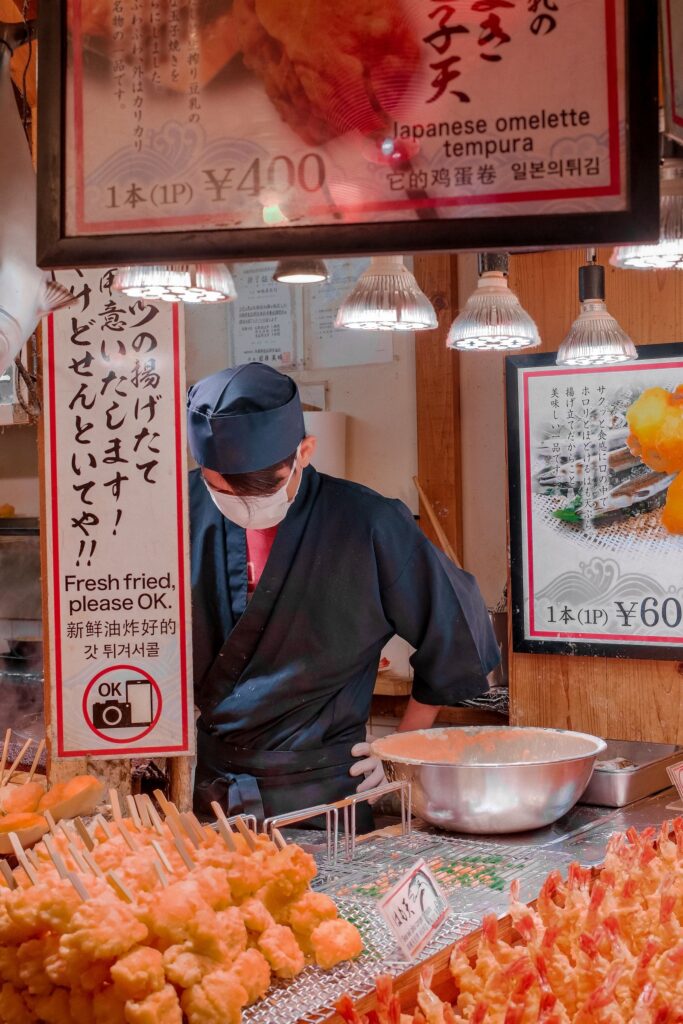
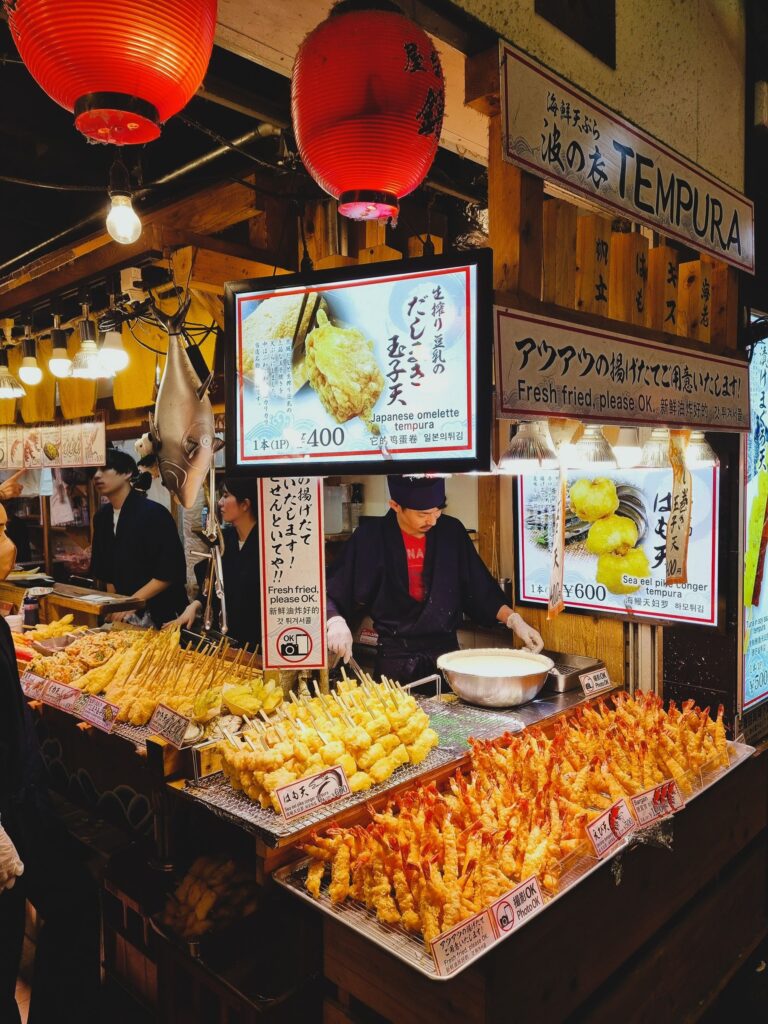
Tempura fried to order at the stall.
Over time, tempura developed a thinner batter and a style of service that placed greater emphasis on individual ingredients. It gradually found a place in specialist restaurants rather than remaining exclusively a street food.
Today, specialist tempura restaurants, commonly called tempura-ya, serve seafood and vegetables fried in successive batches. Tempura is also found in everyday set meals, bento boxes, and Japanese rice and noodle dishes.
Why Is Tempura Batter So Light and Crisp?
One of tempura’s defining features is the batter surrounding each ingredient.
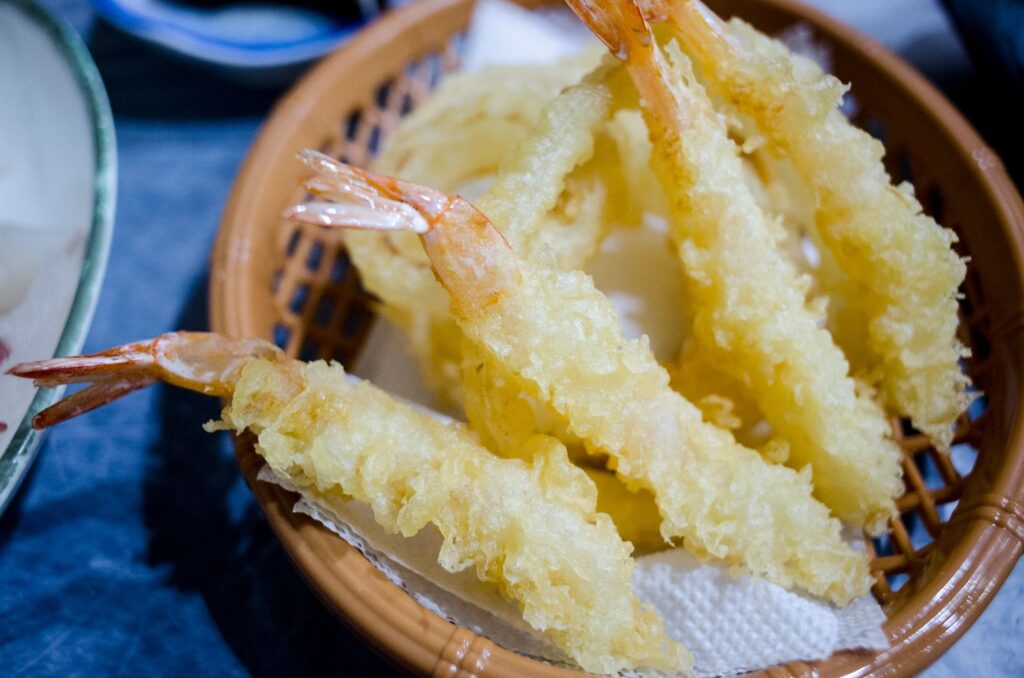
Prawn tempura.
The mixture typically contains flour, cold water and egg, although the precise ingredients vary between recipes. Rather than being whisked until completely smooth, tempura batter is usually mixed briefly, just enough to combine the ingredients.
This helps limit gluten development, which can otherwise make the coating tough and heavy. As a result, the batter may retain small lumps of flour instead of having a perfectly smooth consistency.
Cold water is also commonly used when preparing the batter. At some restaurants, the mixing bowl is kept chilled while the chef prepares and fries the ingredients.
Seafood and vegetables are generally dried before being coated in a thin layer of batter and placed in hot oil. During frying, small pieces of batter that separate from the ingredients are known as tenkasu. Chefs usually remove them from the oil to prevent burning and to avoid affecting subsequent batches.
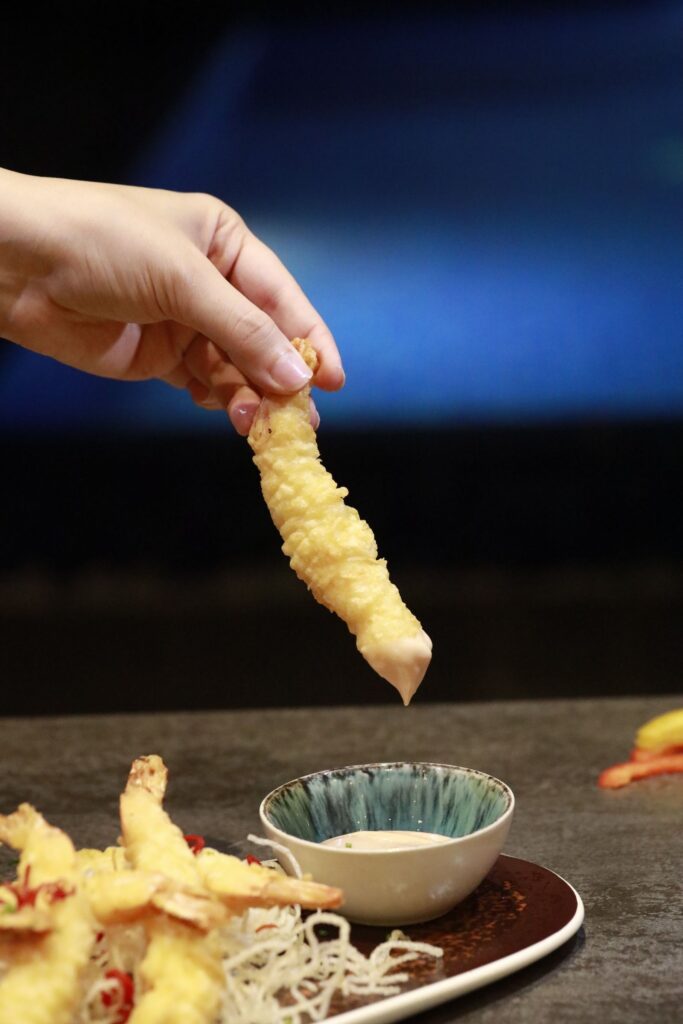
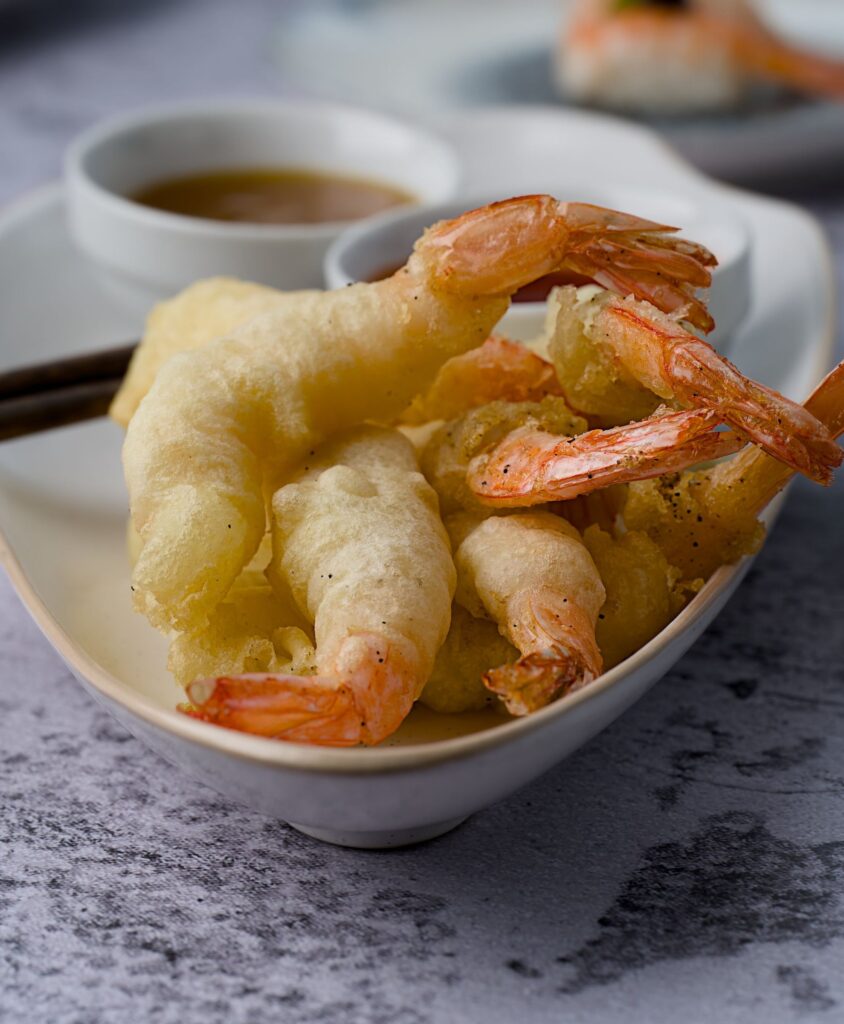
A thin, crisp coating.
Sesame oil has a long history in tempura preparation, and some specialist restaurants continue to use it. Other vegetable oils are also widely used.
The thin coating gives tempura its light, crisp texture, distinguishing it from the crust made with panko, Japanese breadcrumbs. However, a light texture does not mean that tempura is low in fat.
Common Tempura Ingredients
Tempura can be prepared with many types of seafood and vegetables.
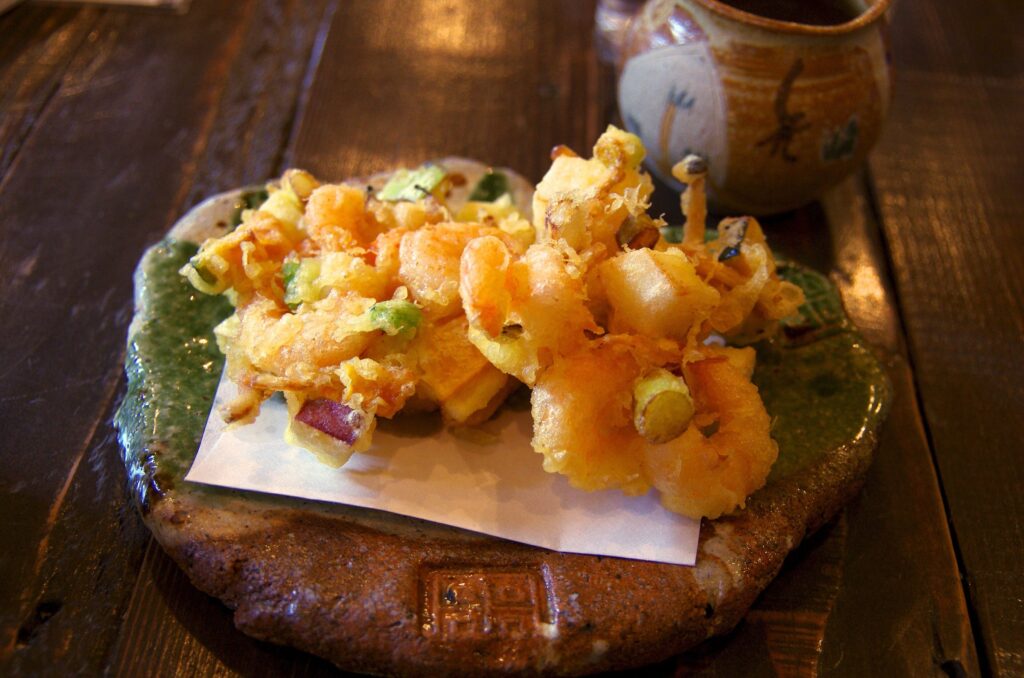
Kakiage.
Prawns are among the most familiar seafood choices, alongside squid, fish and other varieties. Each ingredient has its own texture and requires a different cooking time.
Vegetable tempura is equally varied. Common ingredients include aubergine, sweet potato, kabocha squash, lotus root, shiitake mushrooms, shiso leaves and shishito peppers. At specialist tempura restaurants, menus may change according to seasonal availability.
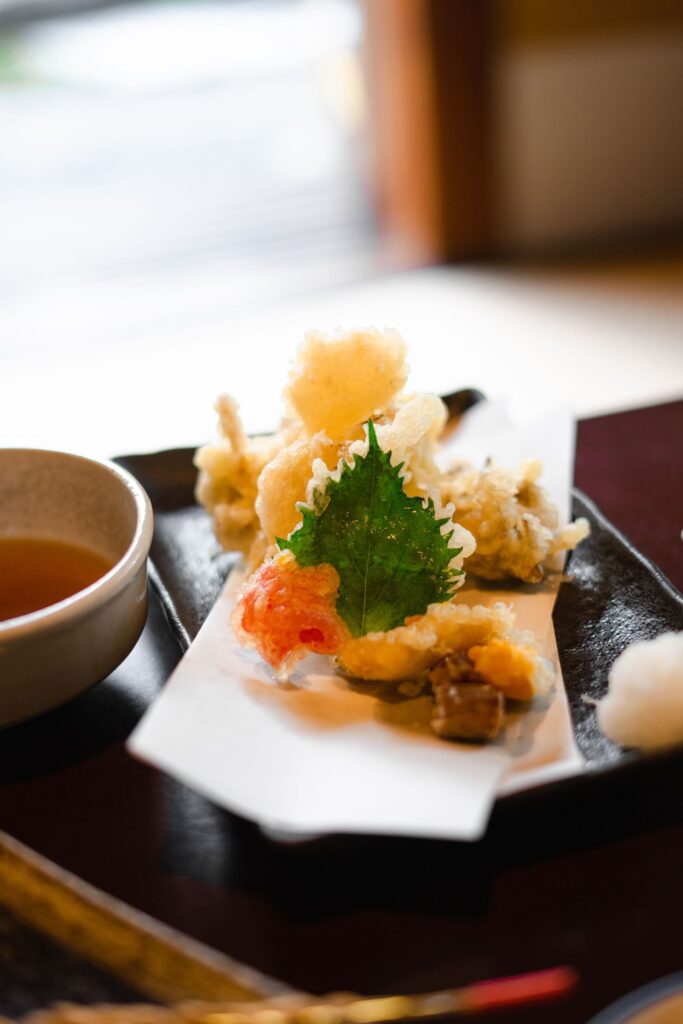
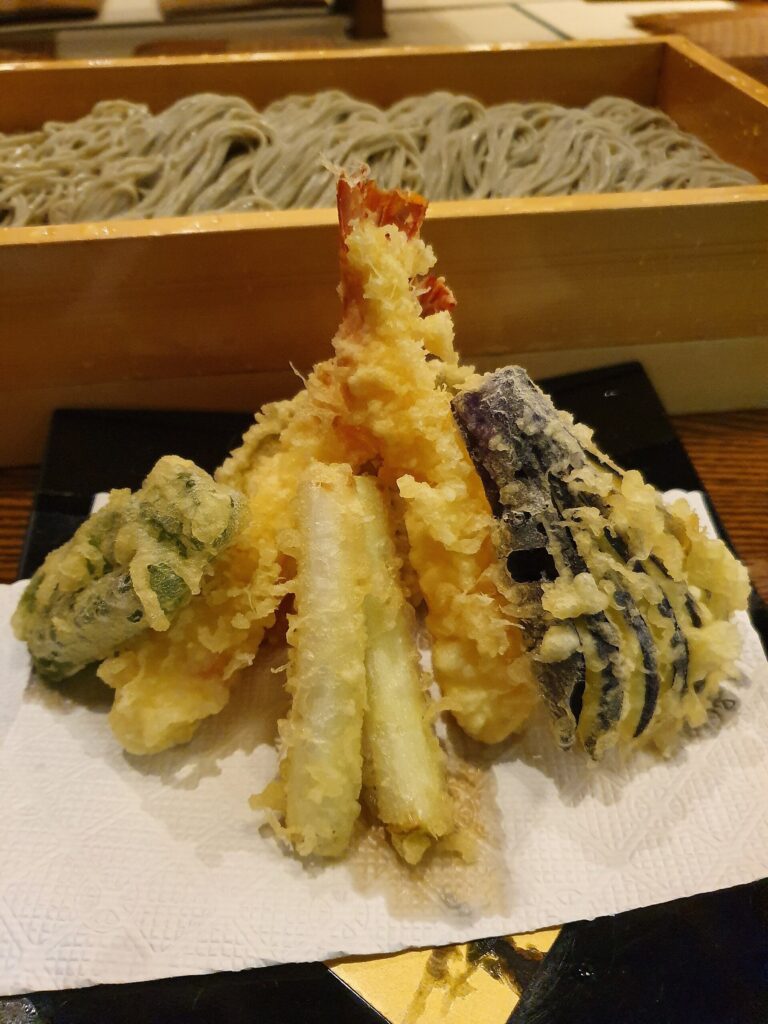
Seafood and seasonal vegetables.
Another preparation is kakiage. Instead of frying each ingredient separately, the chef combines thinly sliced vegetables such as onion, carrot and burdock root, sometimes adding prawns or squid, before frying the mixture together into a round fritter.
How Is Tempura Eaten?
Tempura is usually eaten immediately after frying, while the batter remains crisp and the ingredients inside are still hot.
A common accompaniment is tentsuyu, a dipping sauce made from dashi, soy sauce and mirin. Grated daikon radish is often served alongside it and can be added to the sauce according to preference.
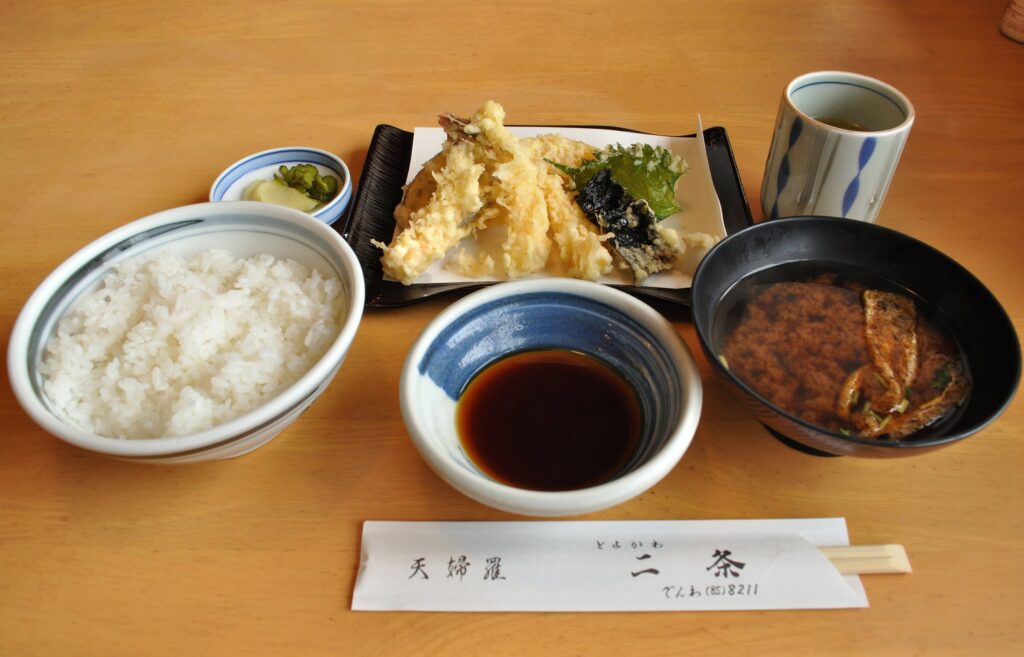
Tempura with tentsuyu.
Salt is another option, particularly at specialist tempura restaurants. Alongside plain salt, some establishments offer varieties flavoured with green tea or yuzu. Lemon may also be served to add a touch of acidity.
At restaurants with counter seating, the chef often serves each piece as soon as it has been fried. Diners can enjoy it with salt or dipping sauce, depending on the ingredient and the restaurant’s approach.
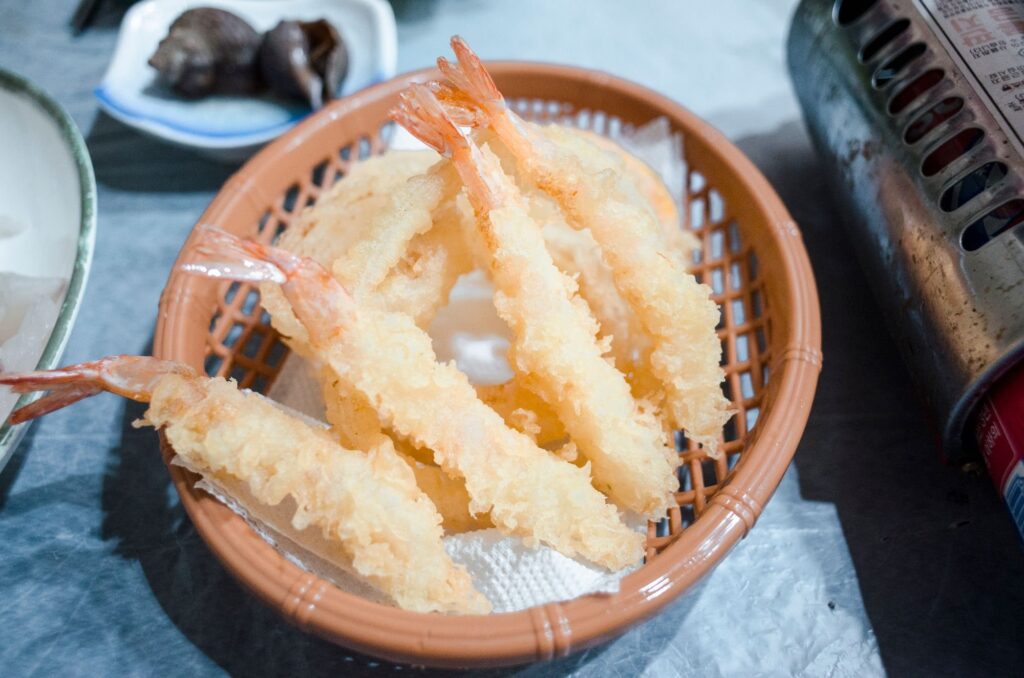
Served straight from the fryer.
Tempura in Japanese Rice and Noodle Dishes
Beyond being served as individual pieces, tempura is also combined with rice and noodles in many everyday Japanese meals.
Tendon is a rice bowl topped with tempura, usually accompanied by a sauce. It may feature prawns, vegetables or a combination of different fried ingredients.
Tempura also appears in noodle dishes such as tempura soba and tempura udon. Fried prawns or vegetables are served with noodles and broth, sometimes placed on top of the bowl just before serving.
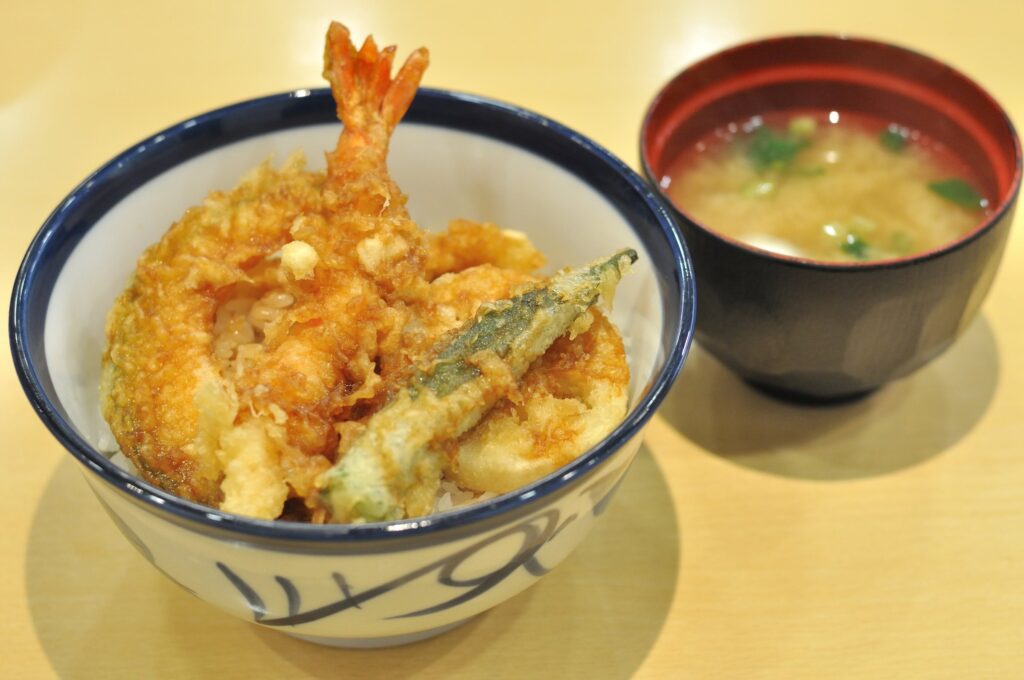
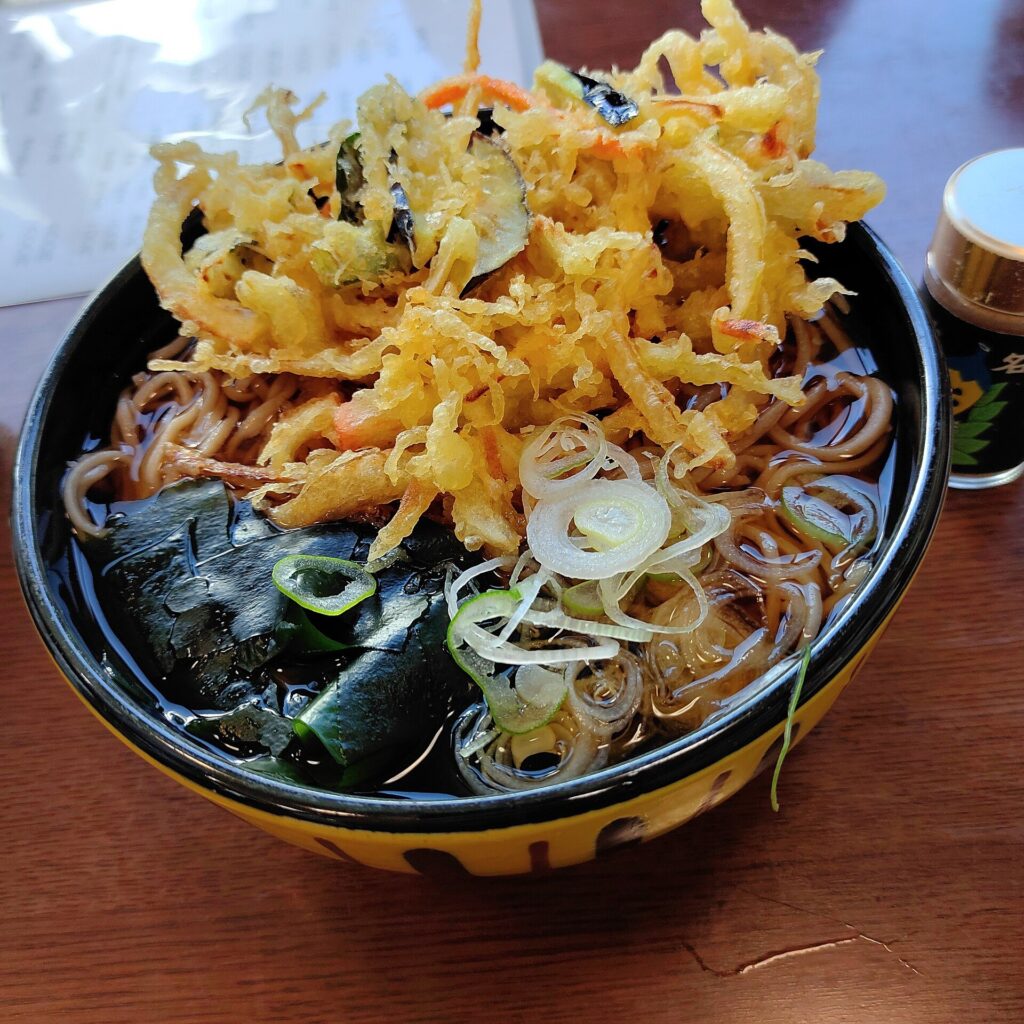
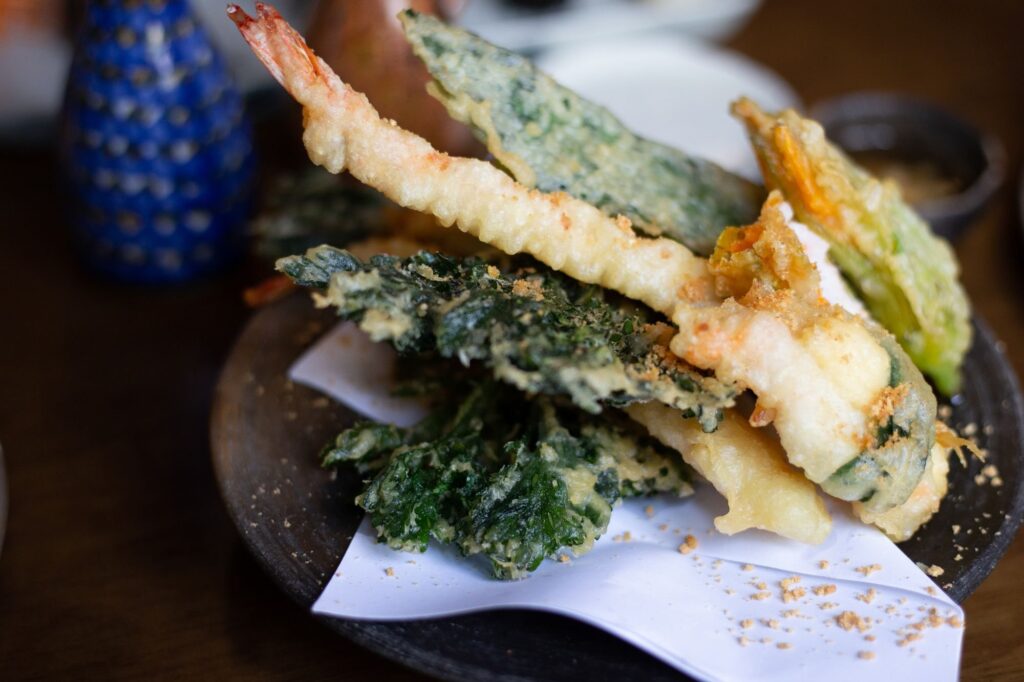
When served with noodle soup, the tempura coating gradually absorbs the broth, developing a different texture from that of tempura eaten immediately after frying.
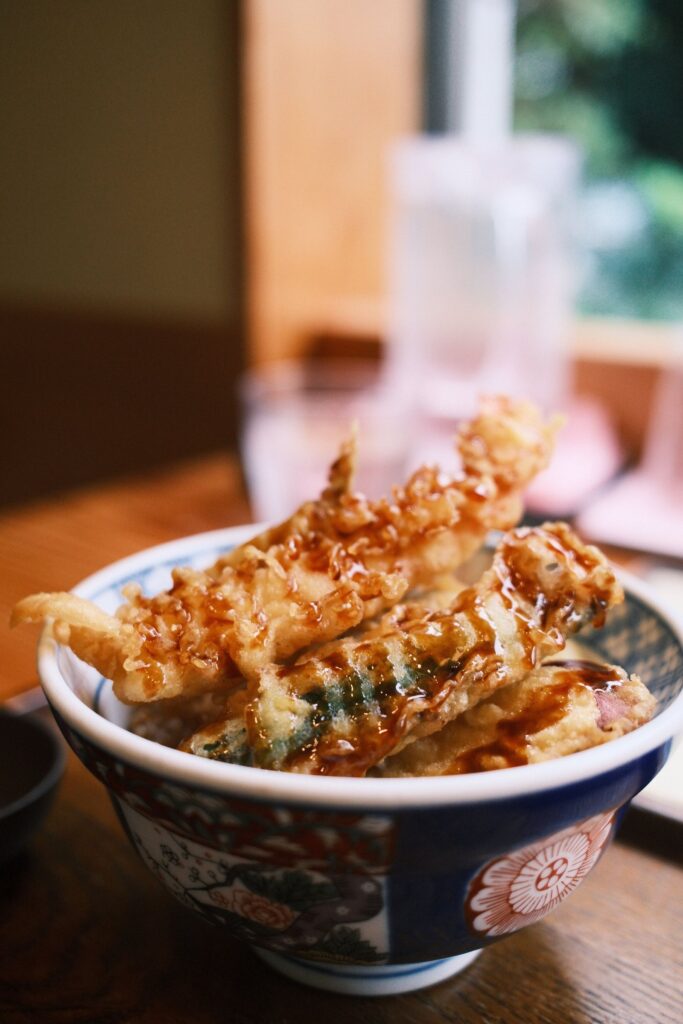
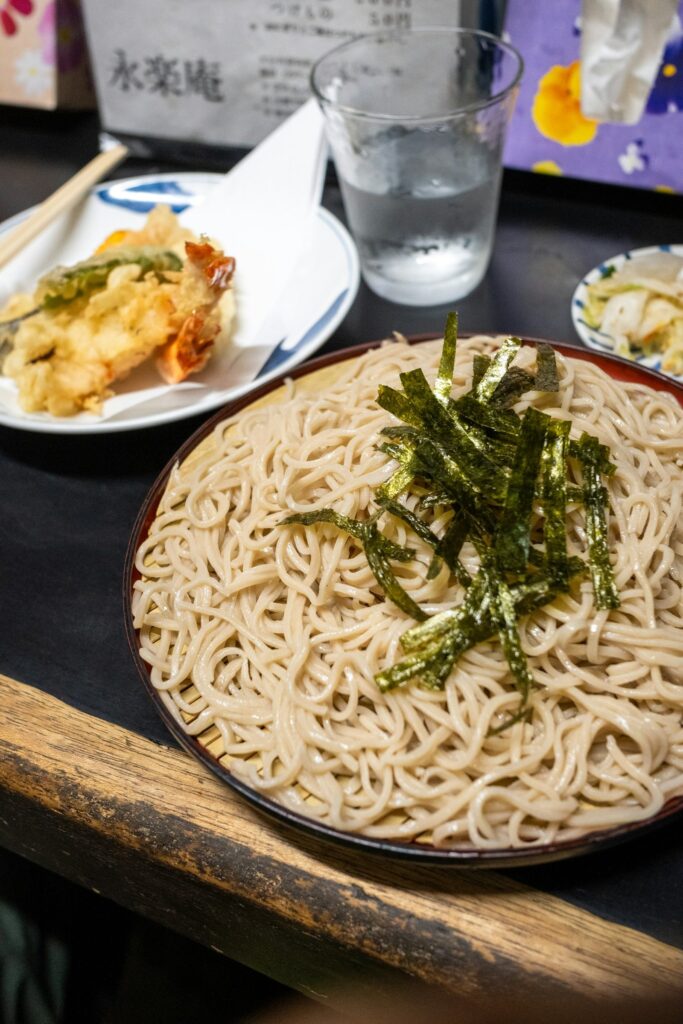
Tendon and soba with tempura.
Image credit: Wikimedia Commons (GualdimG; Adriao; pelican; Komoro no kaze)