Kyoto served as Japan’s capital for more than a thousand years. The long presence of the imperial court, aristocratic families and Buddhist temples helped shape a culinary tradition attentive to seasonal ingredients, cooking methods and presentation.
The city’s cuisine is often referred to as kyo-ryori. Alongside elaborate multi-course meals at traditional restaurants, Kyoto is known for tofu, vegetables, pickles and simply prepared home-style dishes.
Kaiseki: Kyoto’s Seasonal Dining Tradition
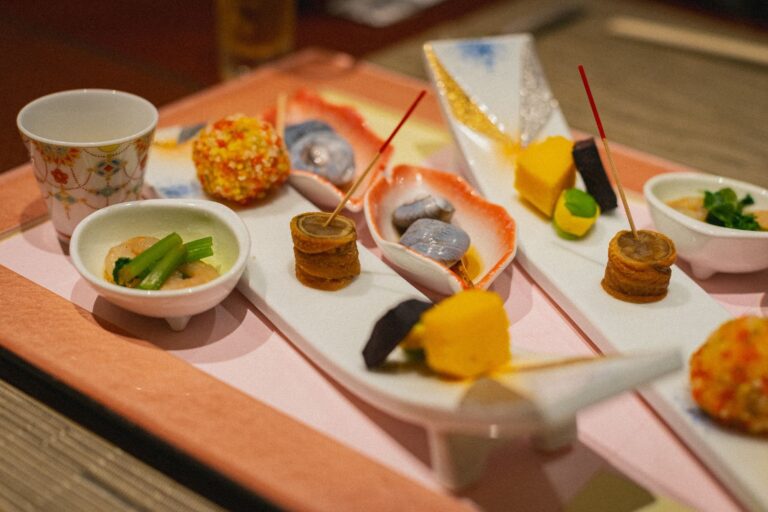
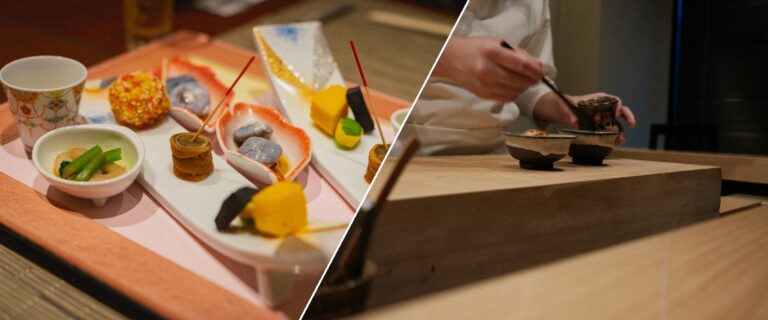
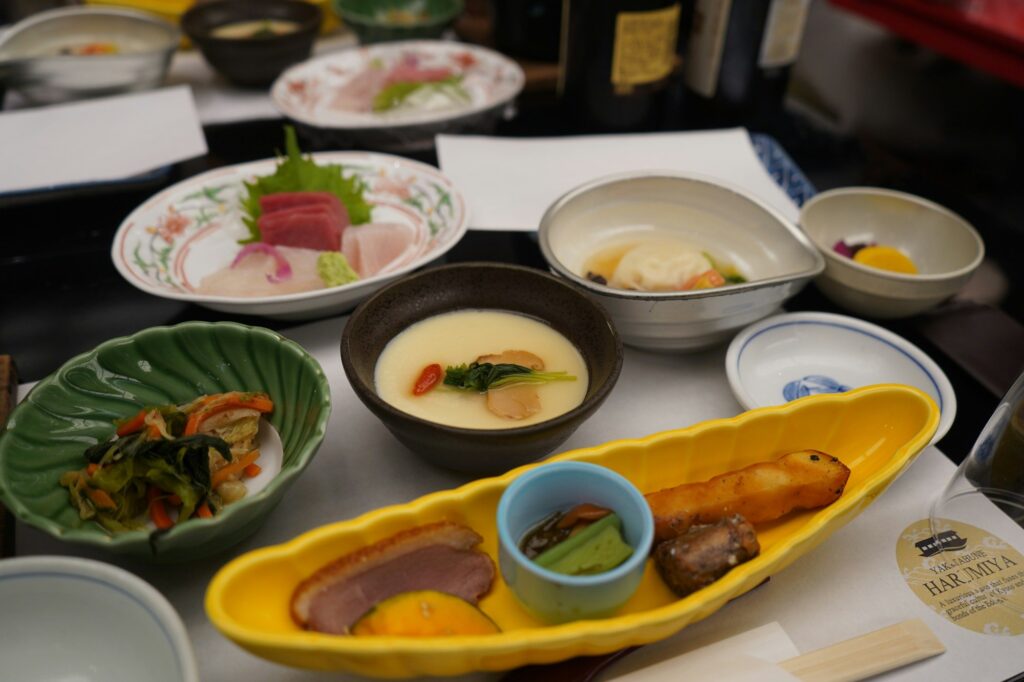
Kaiseki is one of the culinary traditions most closely associated with Kyoto. A meal consists of several small dishes served in a considered sequence, with ingredients, cooking methods and tableware often changing according to the season.
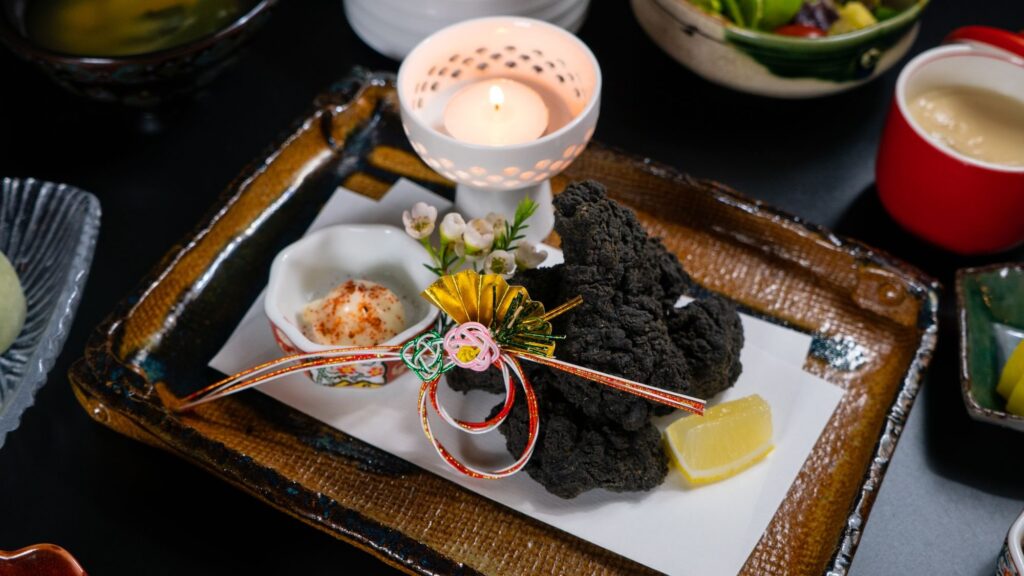
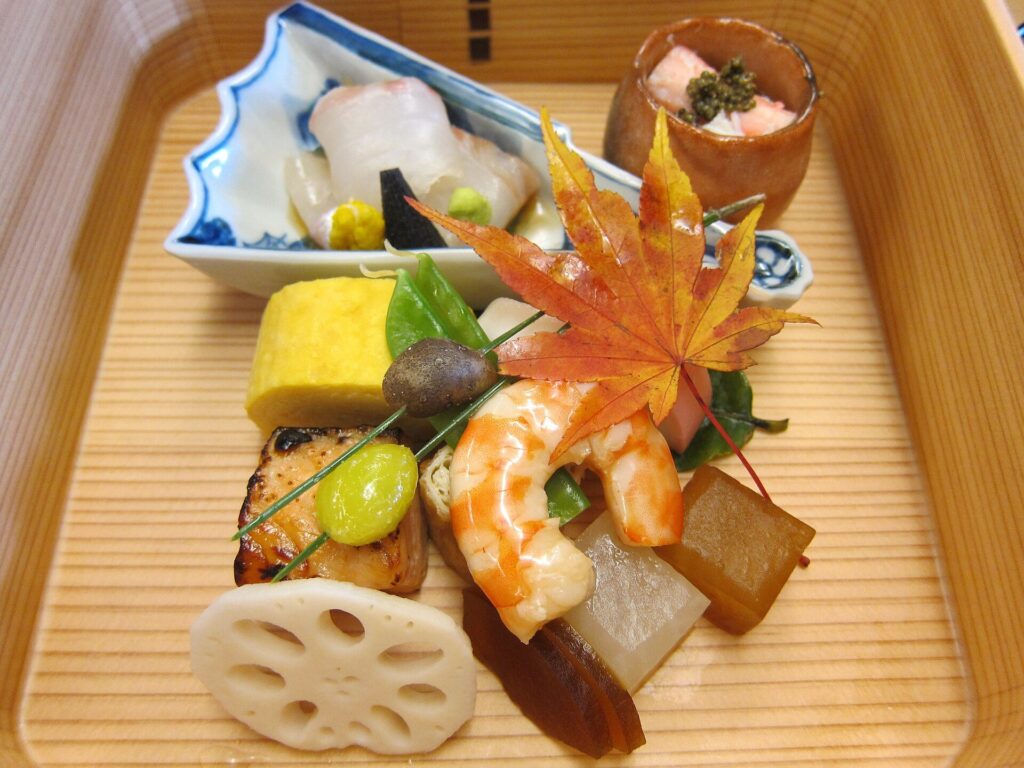
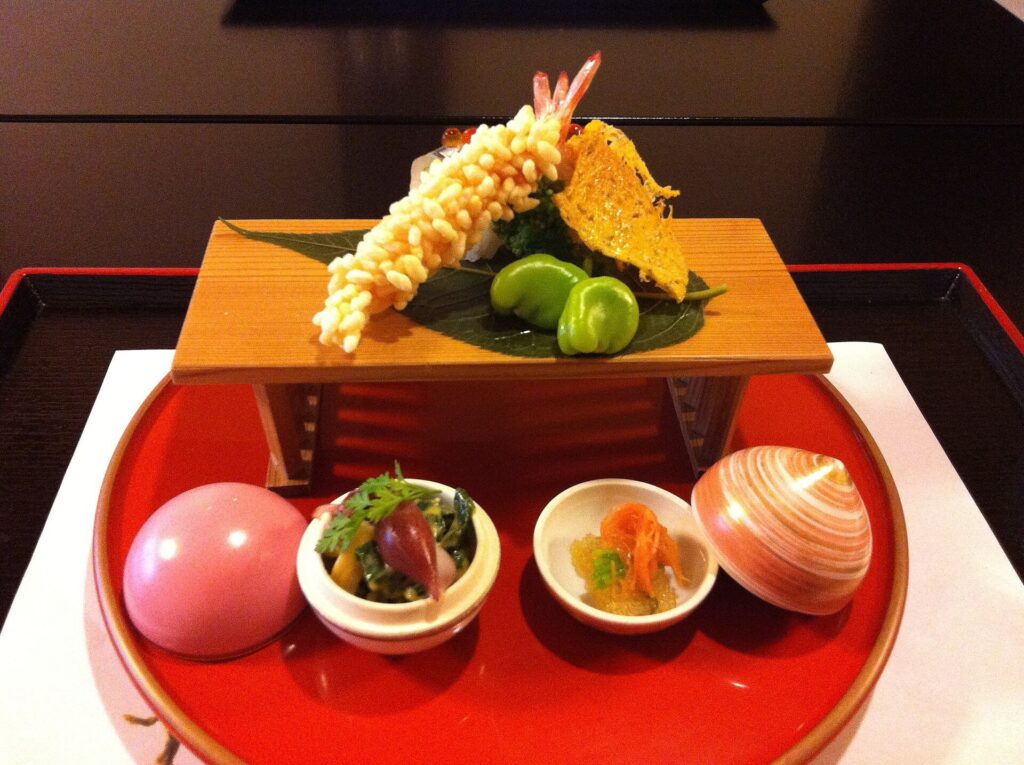
Kaiseki’s development draws on several traditions, including imperial court cuisine, Buddhist temple cooking, samurai banquets and the Japanese tea ceremony.
Today, visitors can experience kaiseki at traditional restaurants known as ryotei, as well as at some ryokan, Japan’s traditional inns. Menus may combine different cooking techniques, with each course presented in a small portion.
The sequence of courses, different forms of kaiseki and associated customs are explored in more detail in Traveleak’s article on kaiseki.
Obanzai: Kyoto’s Home-Style Cooking
While kaiseki is associated with formal dining, obanzai represents Kyoto’s tradition of everyday home cooking.
Obanzai typically consists of several small dishes prepared with vegetables, beans and seasonal ingredients. Cooking methods tend to be straightforward, with an emphasis on combining ingredients thoughtfully and reducing food waste.
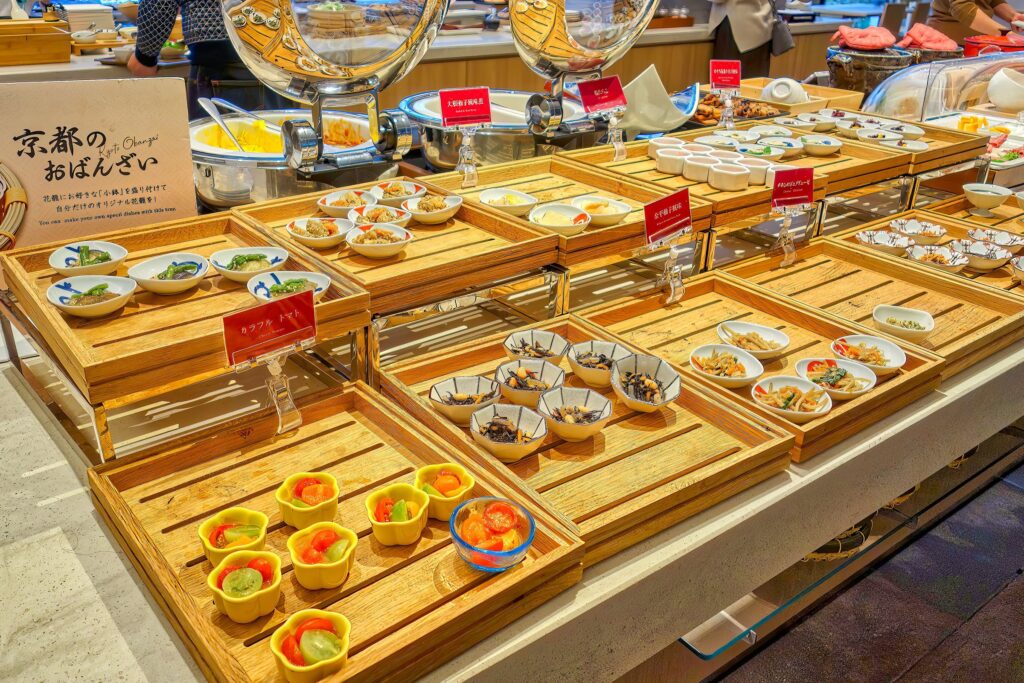
Obanzai in small bowls.
The term obanzai became widely known in 1964, when it appeared in a newspaper article describing traditional home cooking in Kyoto. Under a stricter definition of this tradition, at least half the ingredients should be produced or processed in Kyoto and appropriate to the season.
Principles commonly associated with obanzai include ambai, the balance of ingredients and seasoning, and shimatsu, the careful use of ingredients to avoid waste.
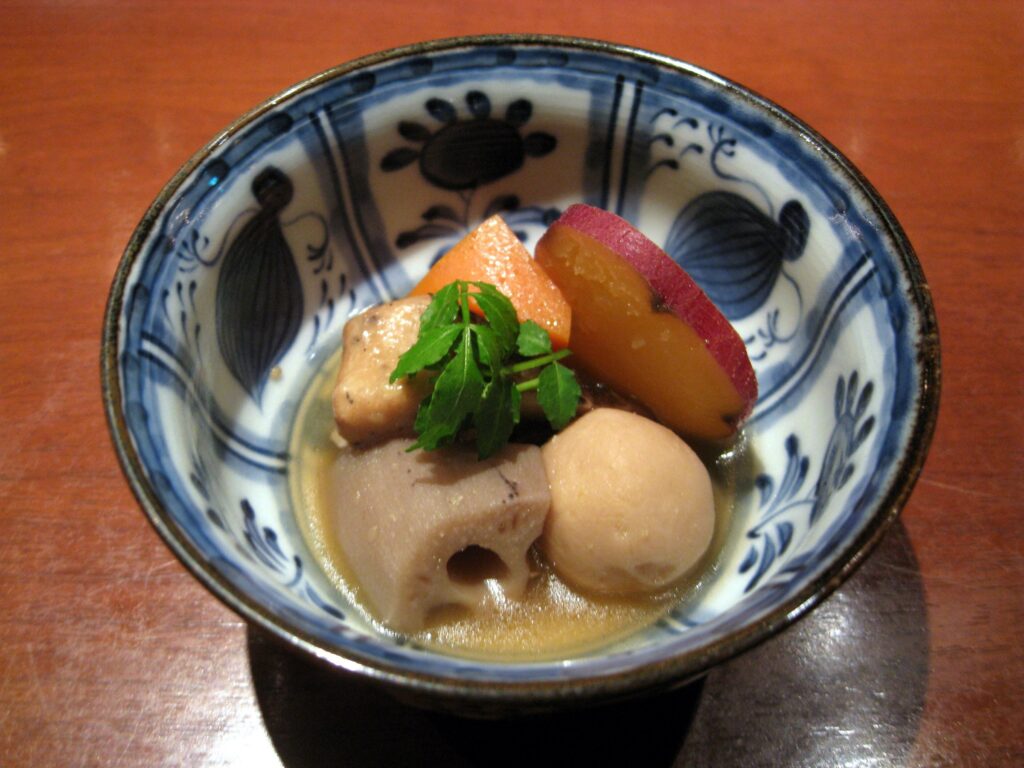
Simmered vegetables.
At restaurants serving obanzai, diners may find small plates of cooked vegetables, bean dishes and other preparations based on available ingredients. Unlike a kaiseki menu with a defined course sequence, obanzai is closer to the arrangement of an everyday family meal.
Yudofu and Yuba: Two Soybean Specialities
Soybeans play an important role in Kyoto’s cuisine, particularly in dishes associated with Buddhist culinary traditions.
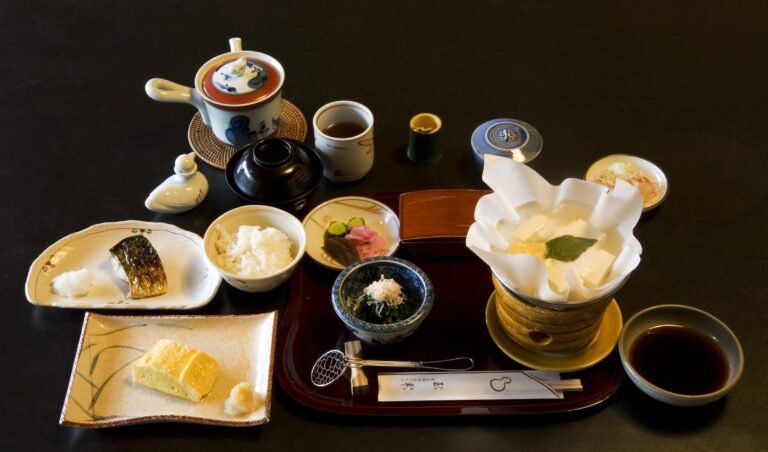
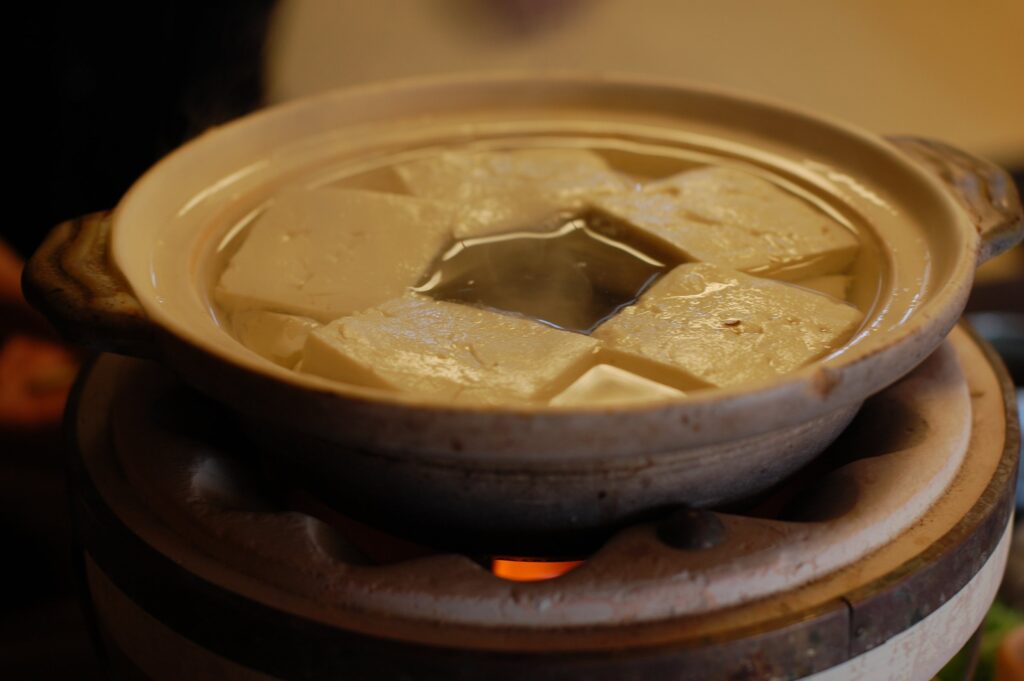
Yudofu is a dish of tofu gently heated in kombu broth, often served in an earthenware pot. The tofu may be cooked with Chinese cabbage or spring onions, producing a delicately flavoured dish particularly suited to colder days.
The dish is believed to have originated around the Zen Buddhist temples near Nanzenji.
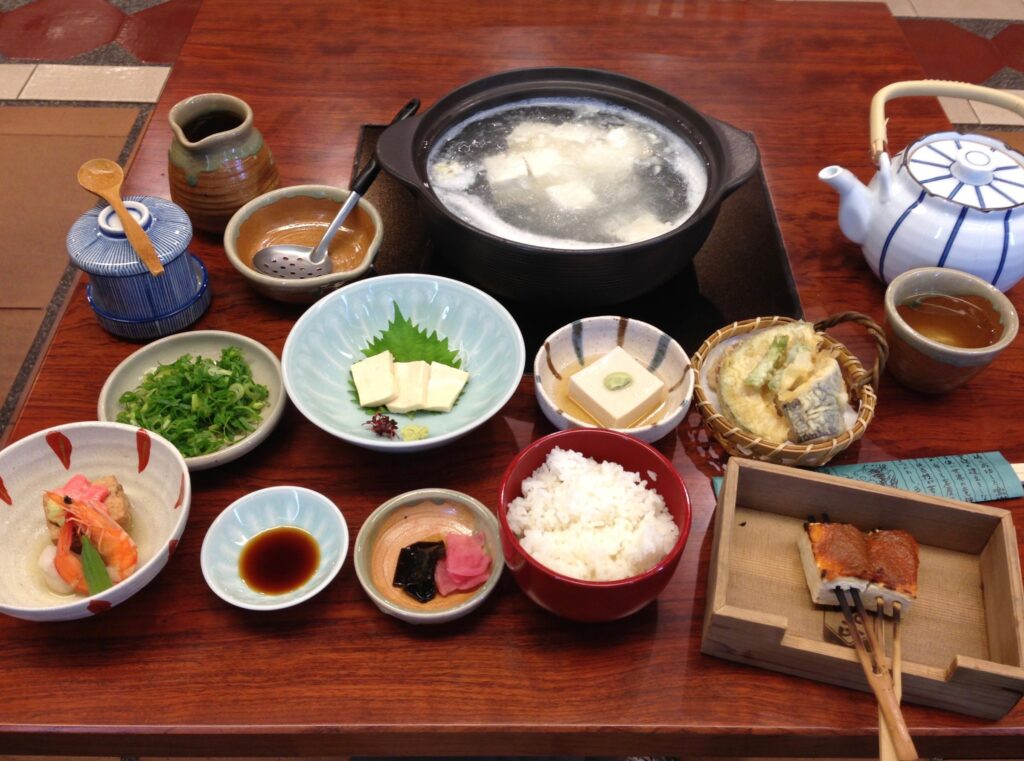
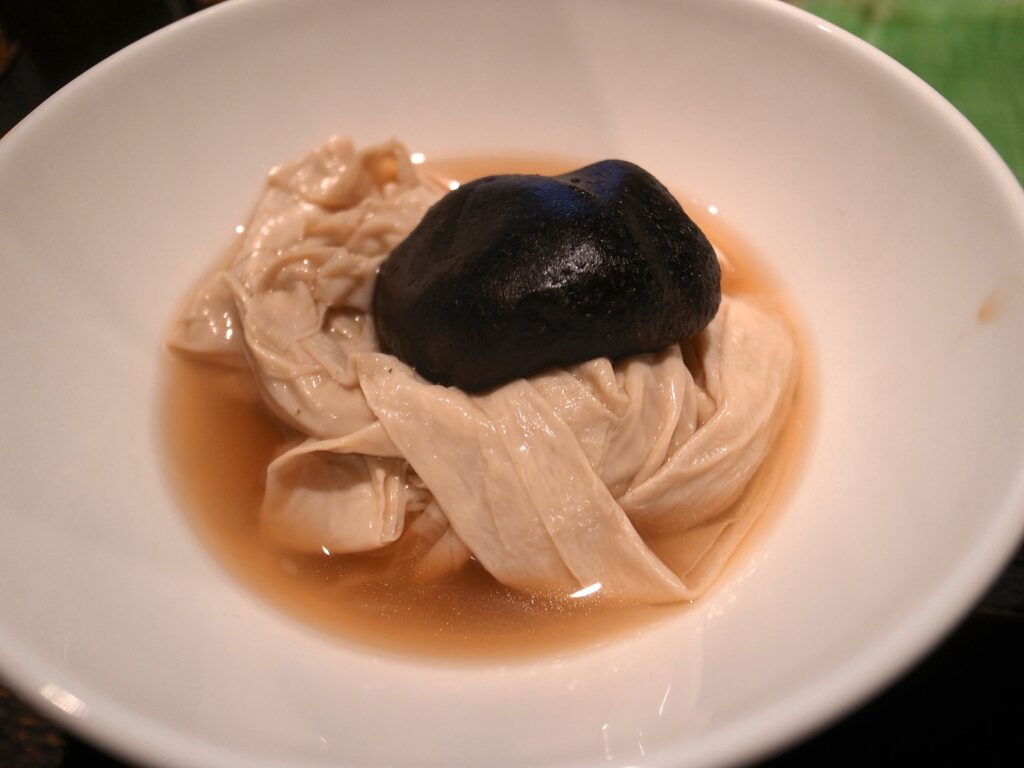
Another Kyoto speciality is yuba, the thin skin that forms on the surface of heated soya milk. This skin is carefully lifted off and eaten fresh or dried into sheets.
Yuba has a mild richness and a texture distinct from ordinary tofu. Because it is formed from the surface of soya milk without the use of a coagulant, it is not tofu in the conventional sense.
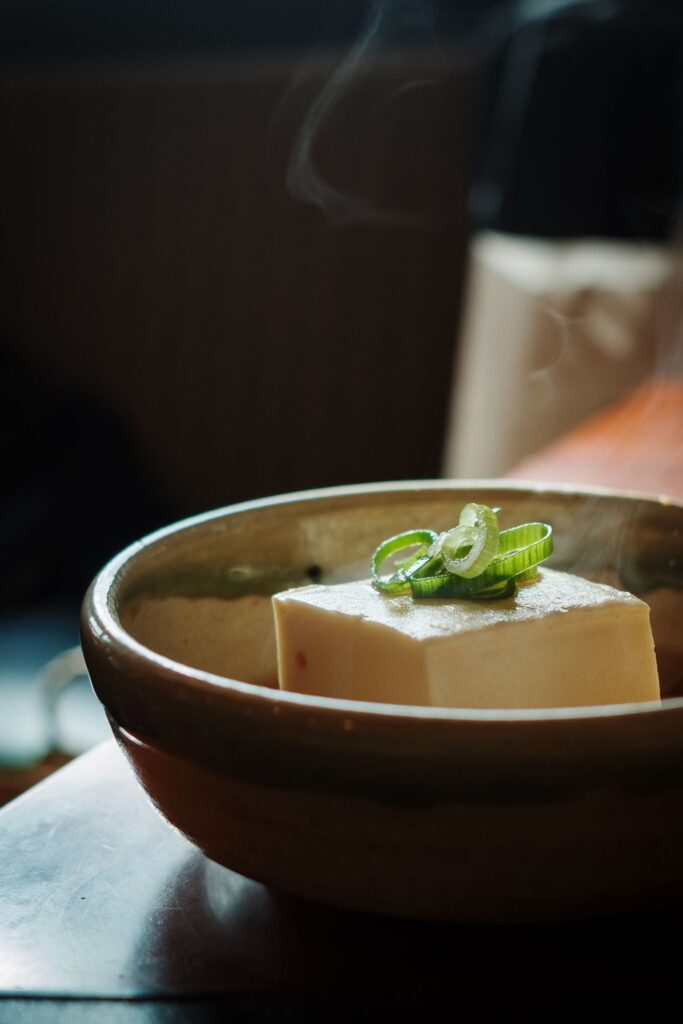
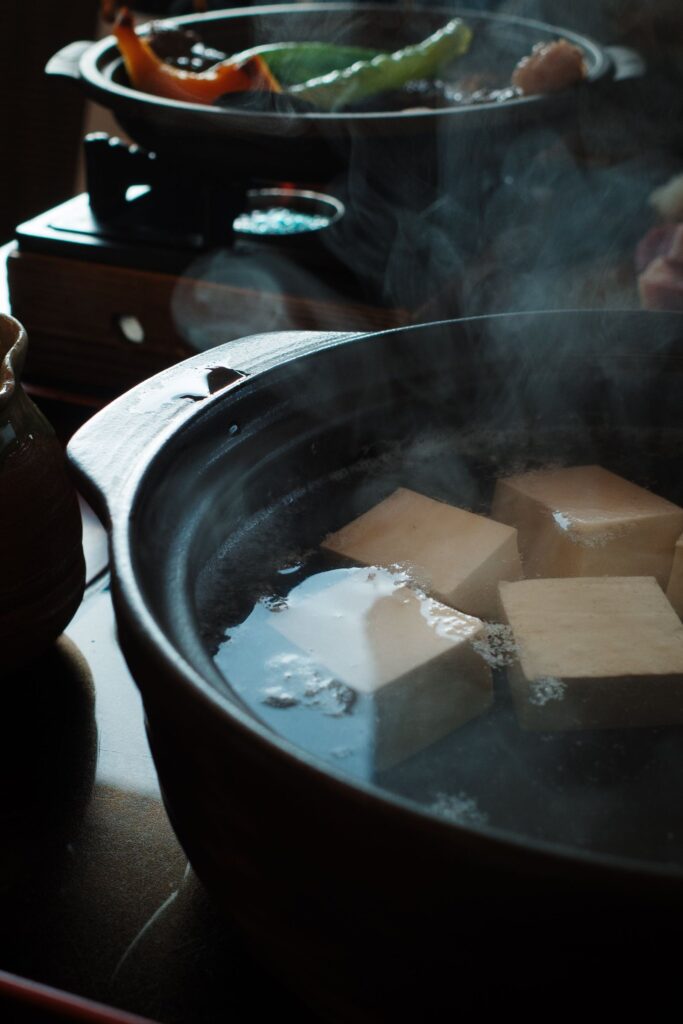
Hot tofu.
The food has a long history in Japanese Buddhist temple cuisine, with records dating back to the late sixteenth century.
Tsukemono: Pickles in Kyoto’s Cuisine
Tsukemono is the general term for vegetables pickled or preserved using traditional Japanese methods. Kyoto is particularly known for its pickles, which are served in family meals and at traditional restaurants.
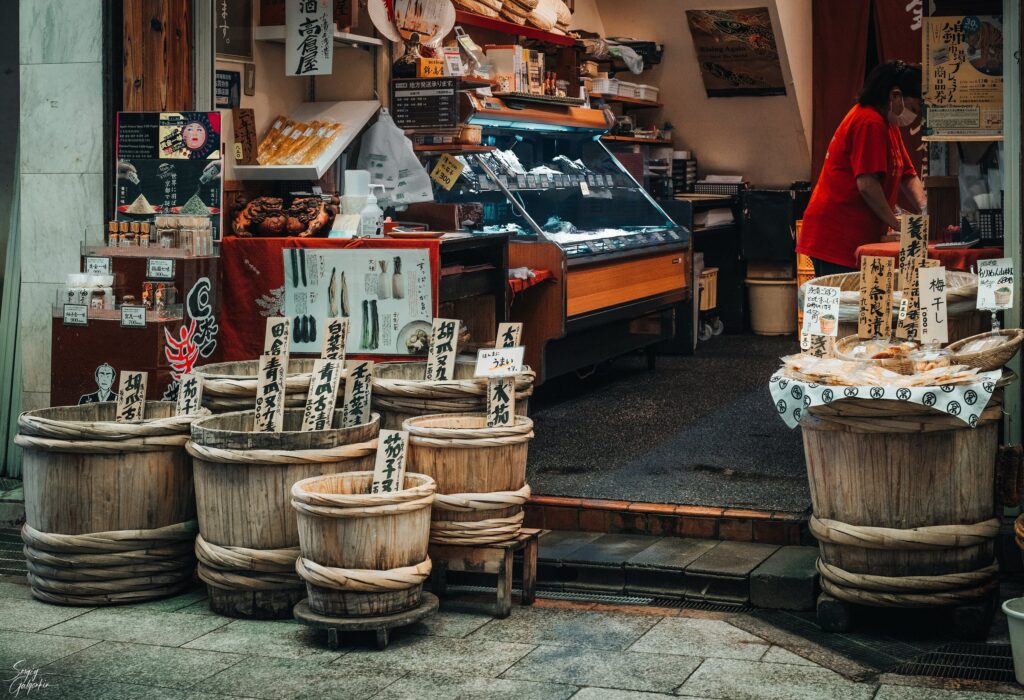
A pickle shop in Kyoto.
Pickles are usually eaten in small quantities alongside rice. In a kaiseki meal, rice, soup and pickles are commonly served towards the end of the course sequence.
Kyoto’s specialist pickle shops offer an opportunity to explore local varieties. Nishiki Market is home to businesses associated with these products, including Nishiki Takakuraya and Uchida Tsukemono.
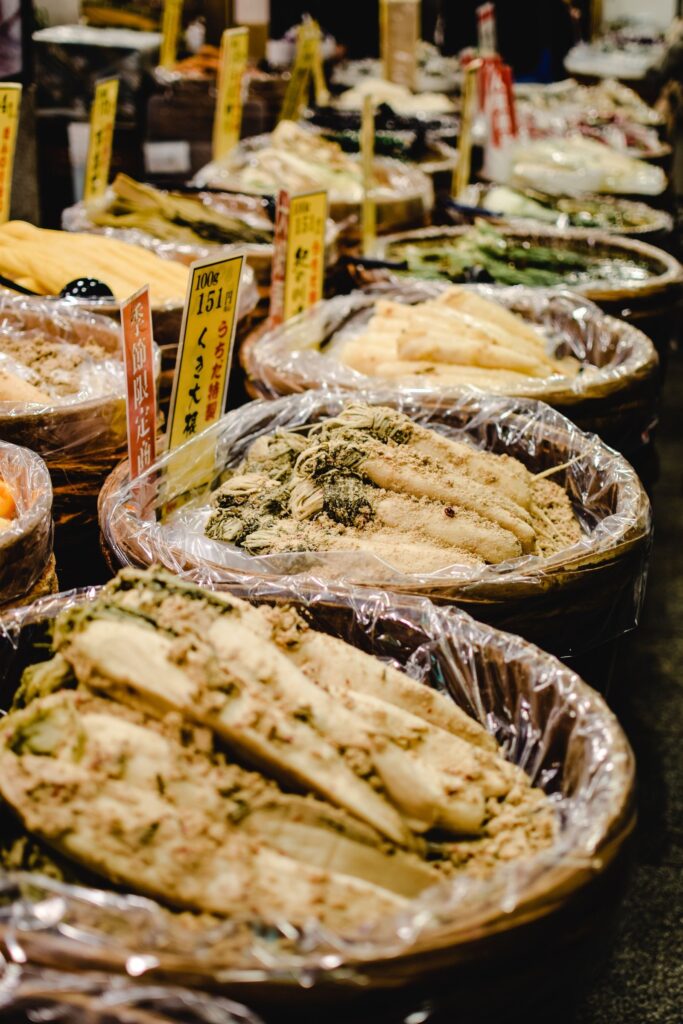
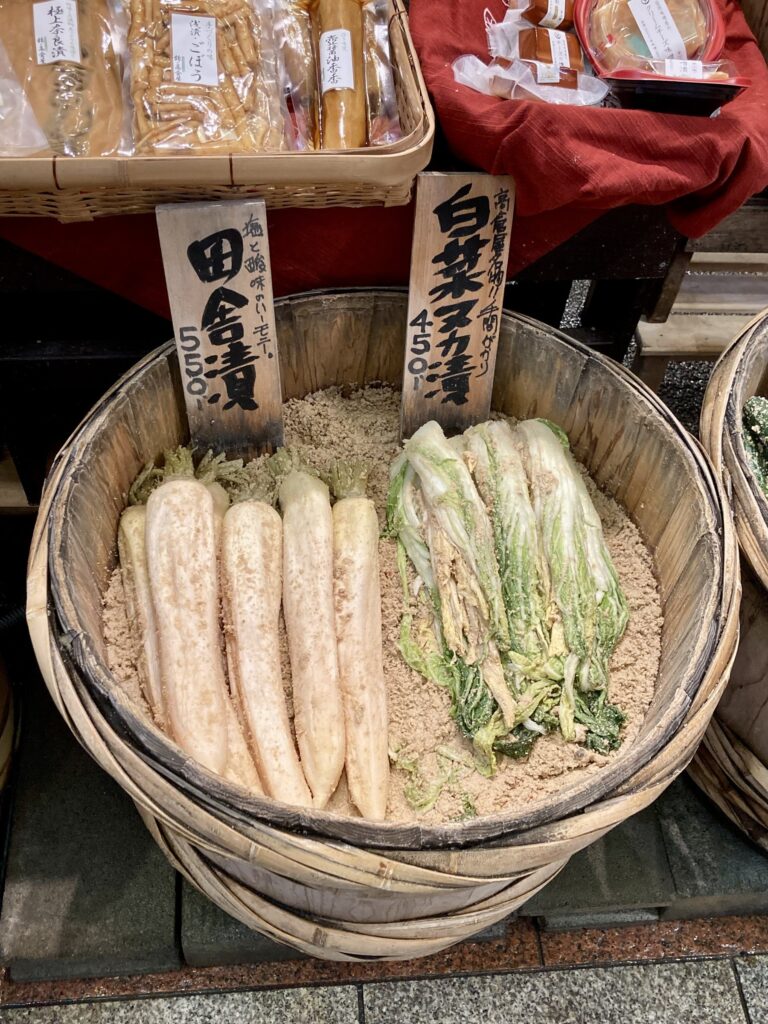
Pickles at Nishiki Market.
Nishiki Market: Exploring Kyoto’s Ingredients
Nishiki Market is a well-known food market in central Kyoto, often called “Kyoto’s Kitchen”.
The market occupies a narrow, covered shopping street approximately 400 metres long, with around 130 shops. Its stalls sell vegetables, fish, dried foods, pickles and a wide range of ingredients used in local cooking.
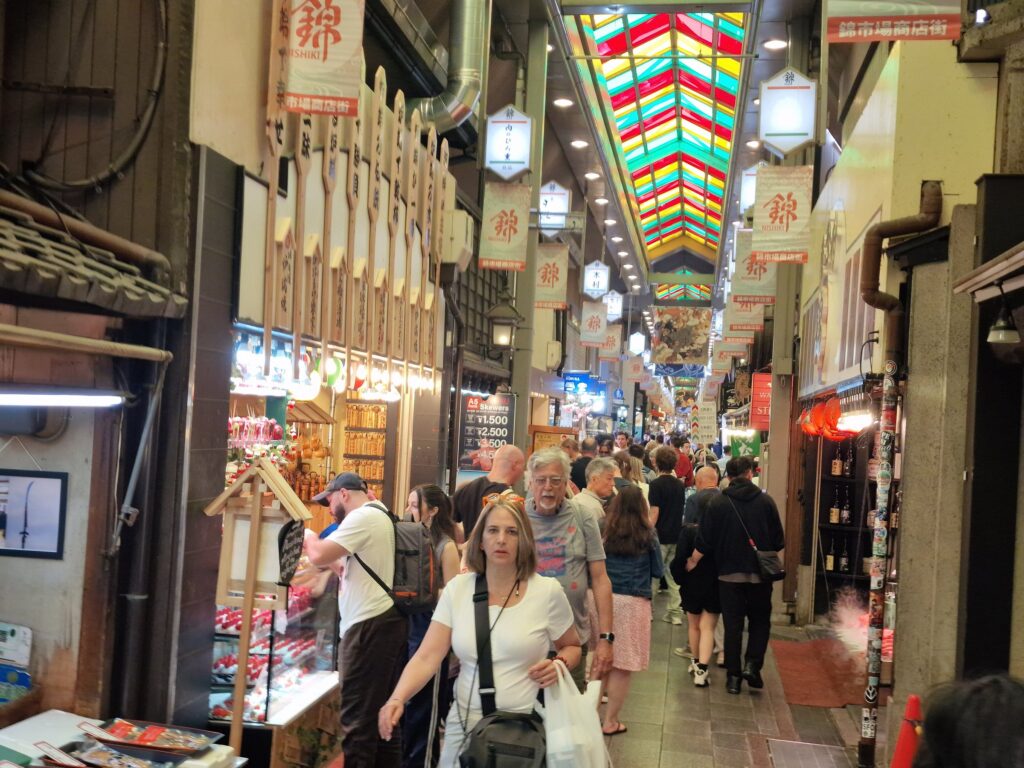
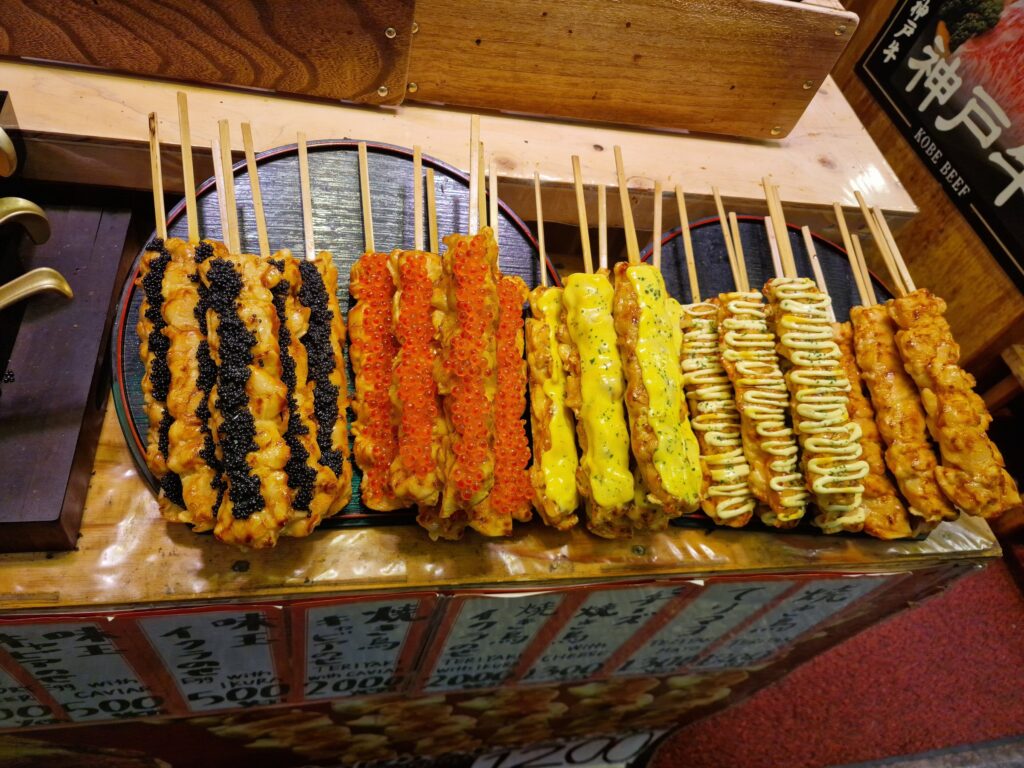
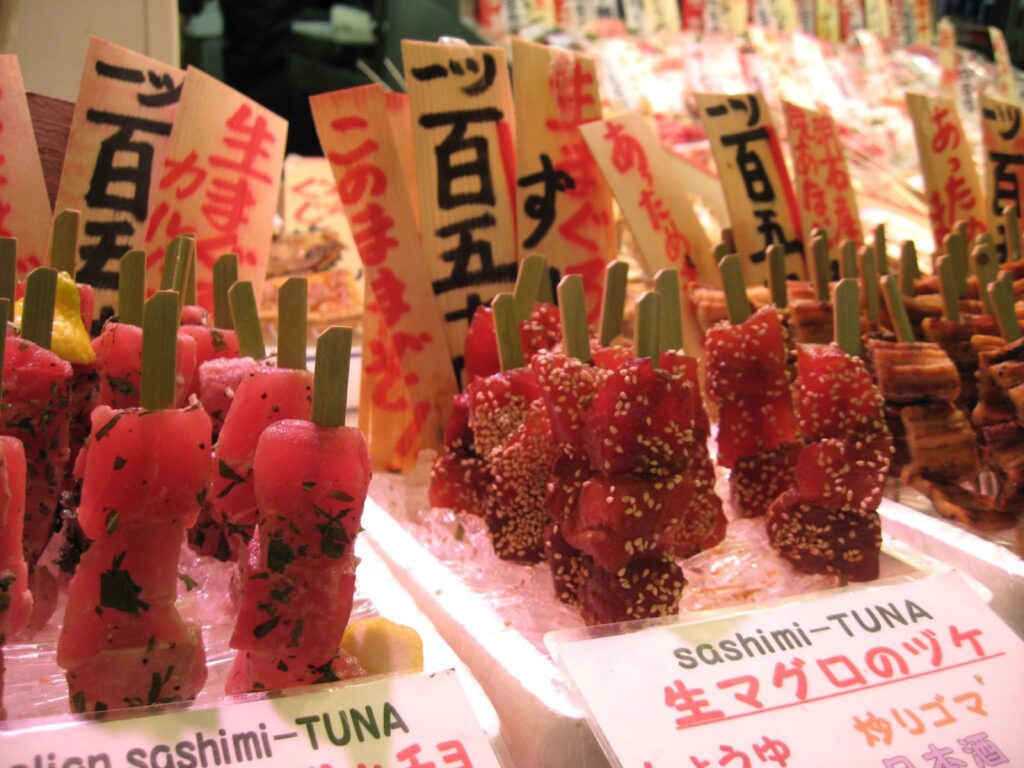

Food trading in the Nishiki area is believed to date back to 782. Cool underground water once helped preserve fresh fish, supporting the development of the area’s seafood trade. In 1615, the market received official permission to sell fish.
Alongside food retailers, Nishiki is home to long-established businesses. Aritsugu is a knife maker whose history dates to 1560, while Tsunori is known for selling fresh and charcoal-grilled fish, with roots in the late Edo period.
Sake: Fushimi’s Brewing Tradition
Kyoto also has a long tradition of sake production, particularly in Fushimi, an area associated with historic breweries.
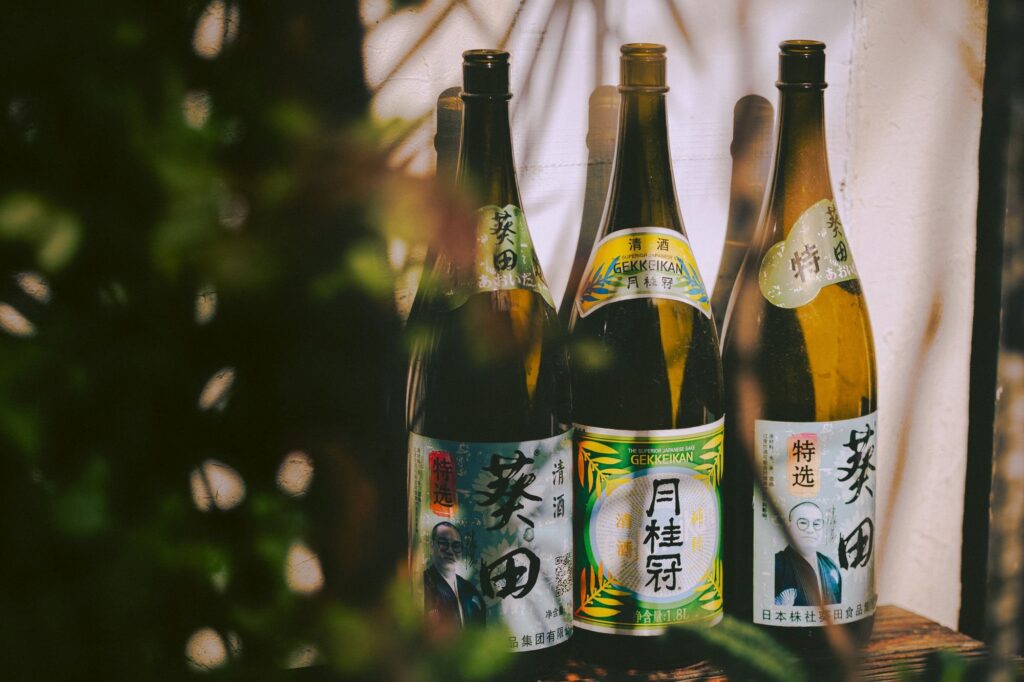
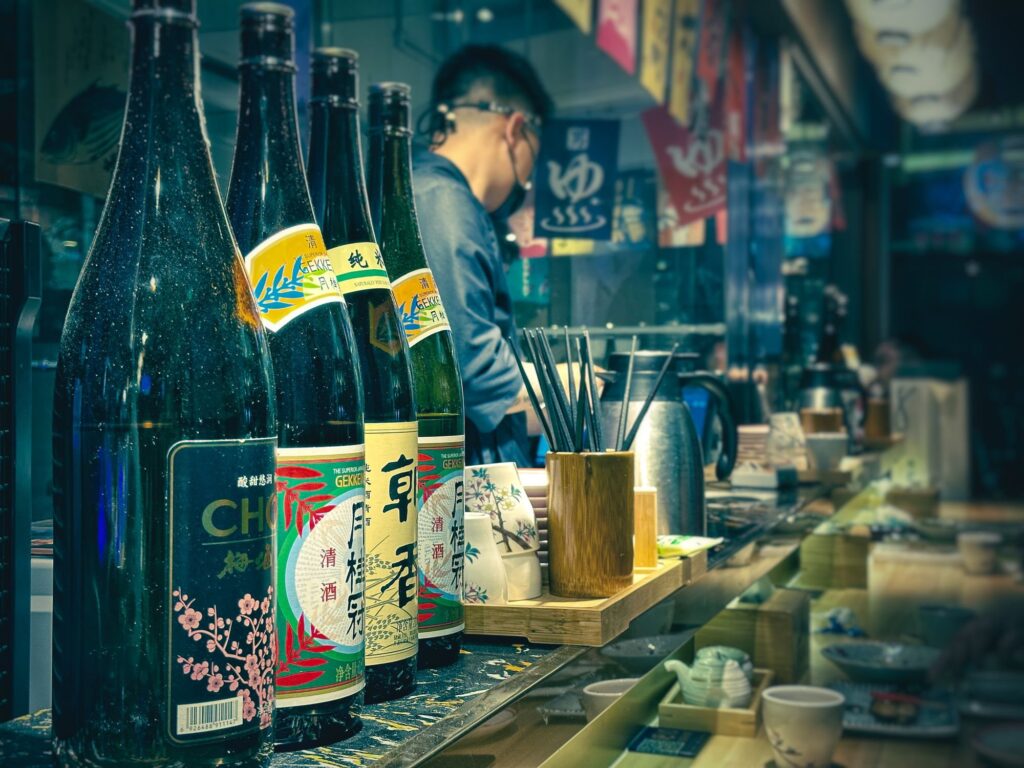
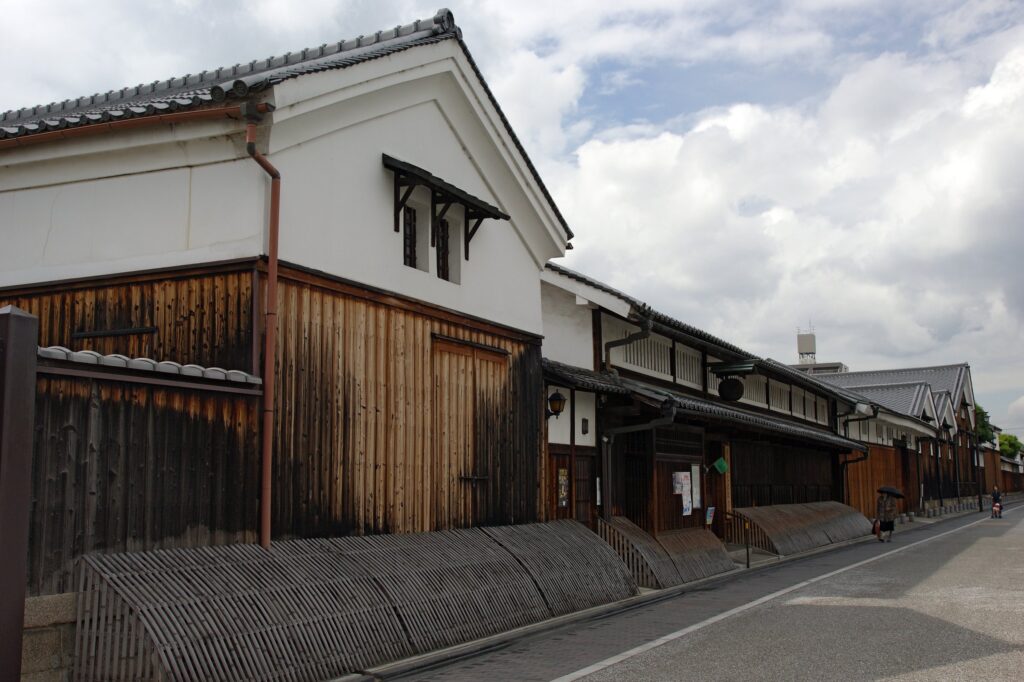
Gekkeikan, one of Japan’s well-known sake brands, was established in 1637 and is headquartered in Fushimi. Takara Holdings, a company operating in the alcoholic beverages industry, is also headquartered in Kyoto.
Image credit: Wikimedia Commons (Yuya Tamai; Donatingpictures; J o; Takoradee; ZhengZhou; cobacco (hiro kobashi); pelican; Sergiy Galyonkin; Anagoria; jmsuarez; Paul Asman and Jill Lenoble; 663highland)