Bun Bo Hue is a good place to begin exploring the food of Huế, Vietnam’s former imperial capital. This noodle soup brings together fragrant lemongrass, a savoury broth and the distinctive heat of central Vietnamese cooking.
In Huế, you’ll find bun bo served everywhere from modest local eateries to restaurants welcoming visitors. Each kitchen has its own approach to seasoning, but lemongrass, fermented shrimp paste and a slow-simmered bone broth remain familiar elements of the dish.
What Gives Bun Bo Hue Its Flavour?
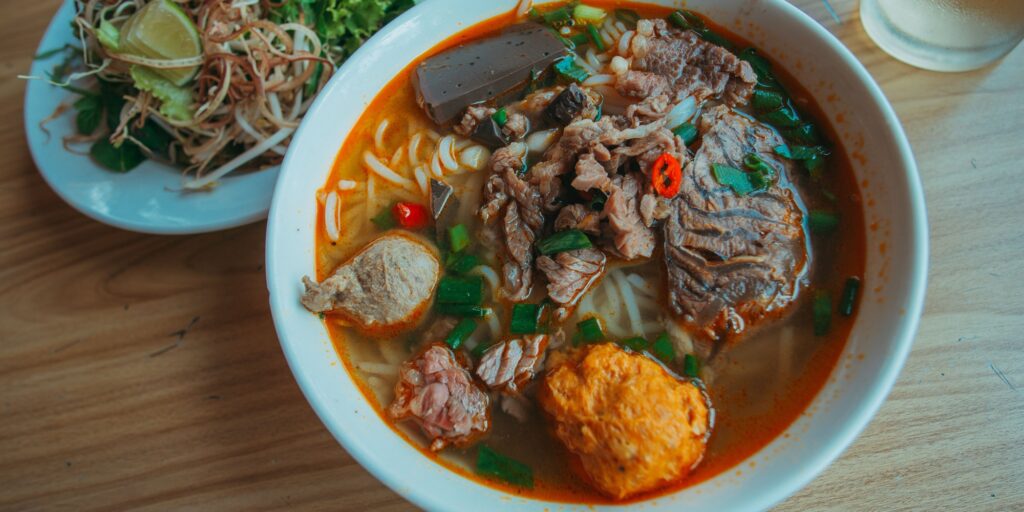
The broth is at the heart of Bun Bo Hue. Beef bones, sometimes combined with pork bones, are simmered to develop a natural savoury richness. Lemongrass provides its recognisable fragrance, while fermented shrimp paste gives the broth much of its distinctive character.
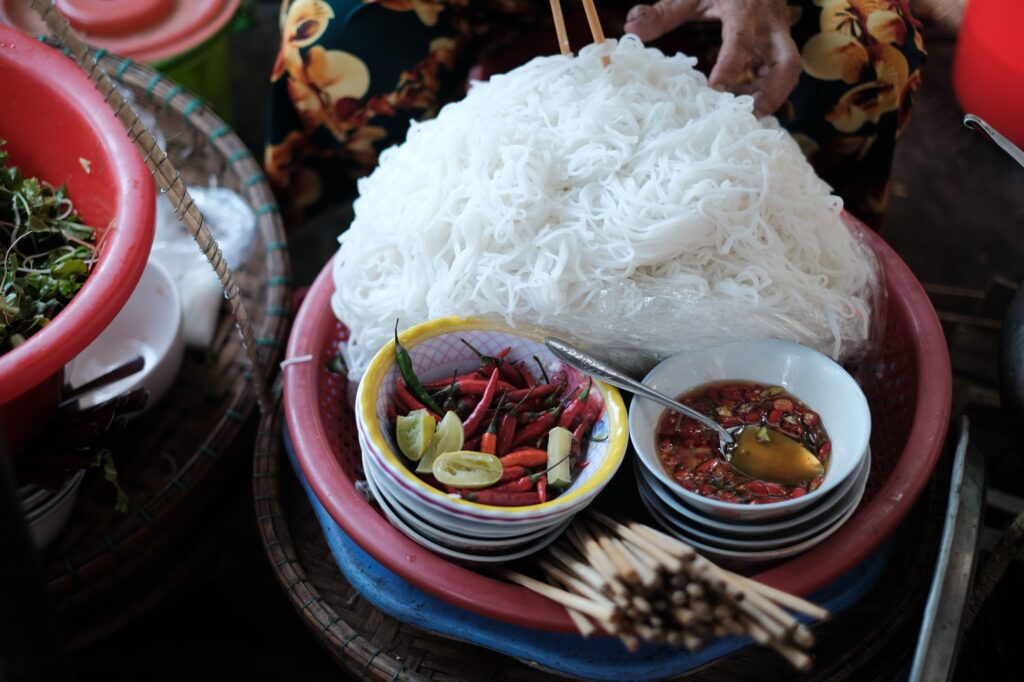
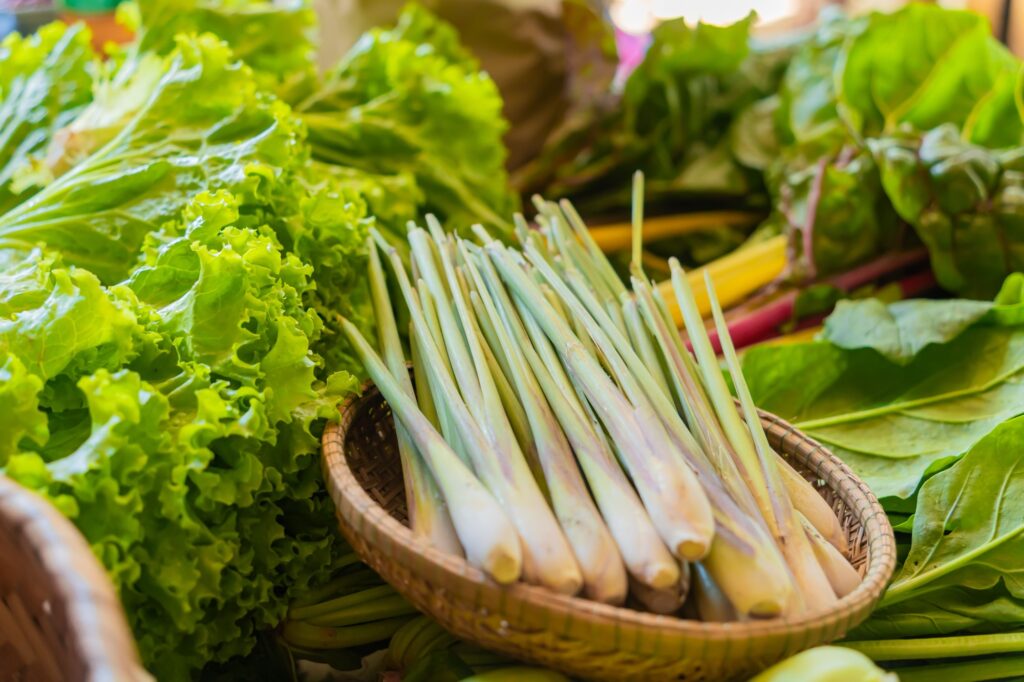
Noodles and lemongrass at a market stall in Huế.
Fermented shrimp paste has a strong aroma on its own, but when used in the right amount, it adds depth to the finished soup. Chilli oil or a prepared chilli mixture gives the broth its inviting reddish-orange colour. Depending on the kitchen, the result can range from gently warming to decidedly spicy.
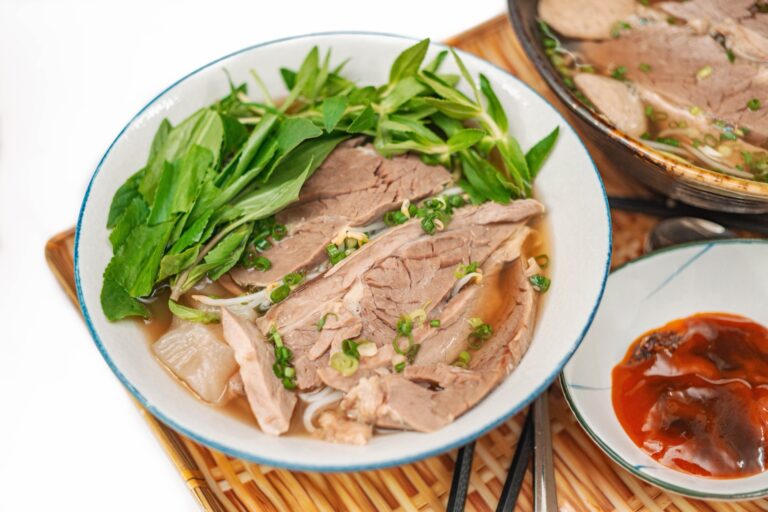
A typical bowl contains slices of beef, pork hock, cubes of coagulated pork blood and spring onions. Many versions also include a soft crab cake that has become a popular addition.
The rice noodles are another important part of the dish. In Huế, bowls may be served with thinner or thicker strands, depending on the establishment. Either way, the soft noodles, hot broth and generous assortment of meat make for a substantial meal.
How to Enjoy Bun Bo Hue
Bun Bo Hue is commonly served with a plate of fresh accompaniments, including bean sprouts, shredded banana blossom and aromatic herbs. Lime wedges, fresh chillies and other condiments are usually available so diners can adjust the flavours to their liking.
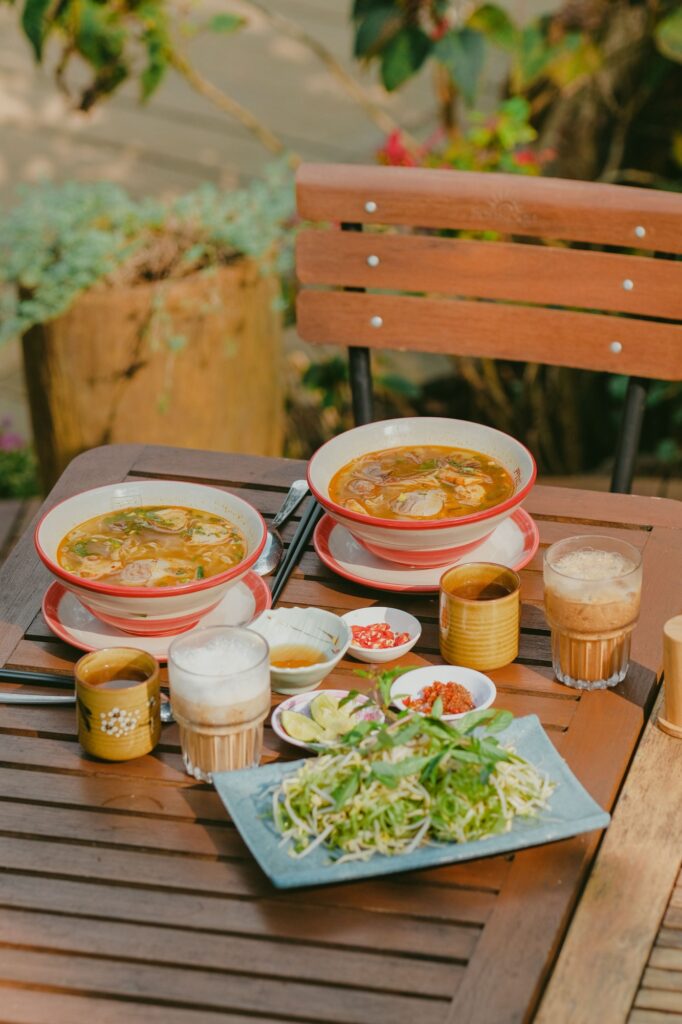
A table set with noodle soup, herbs, bean sprouts, chili and lime.
If you’re unfamiliar with spicy food, taste the broth before adding more chilli. The lemongrass and fermented shrimp paste already bring plenty of character to the soup, so there’s no need to turn up the heat to appreciate it.
A squeeze of lime can add a little acidity, while the fresh vegetables can be added to the hot broth as you eat. These small adjustments make it easy to enjoy the dish according to your own preferences.
Bun Bo Hue can be enjoyed at any time of day, making it an easy choice whether you’re looking for a morning meal or something more substantial later on. With pork hock, beef and perhaps a piece of crab cake, a bowl can easily make a filling main meal.
Trying Bun Bo Hue in Huế
Today, bun bo is found across Vietnam and in Vietnamese restaurants overseas. Recipes, noodle sizes and accompaniments can vary from place to place.
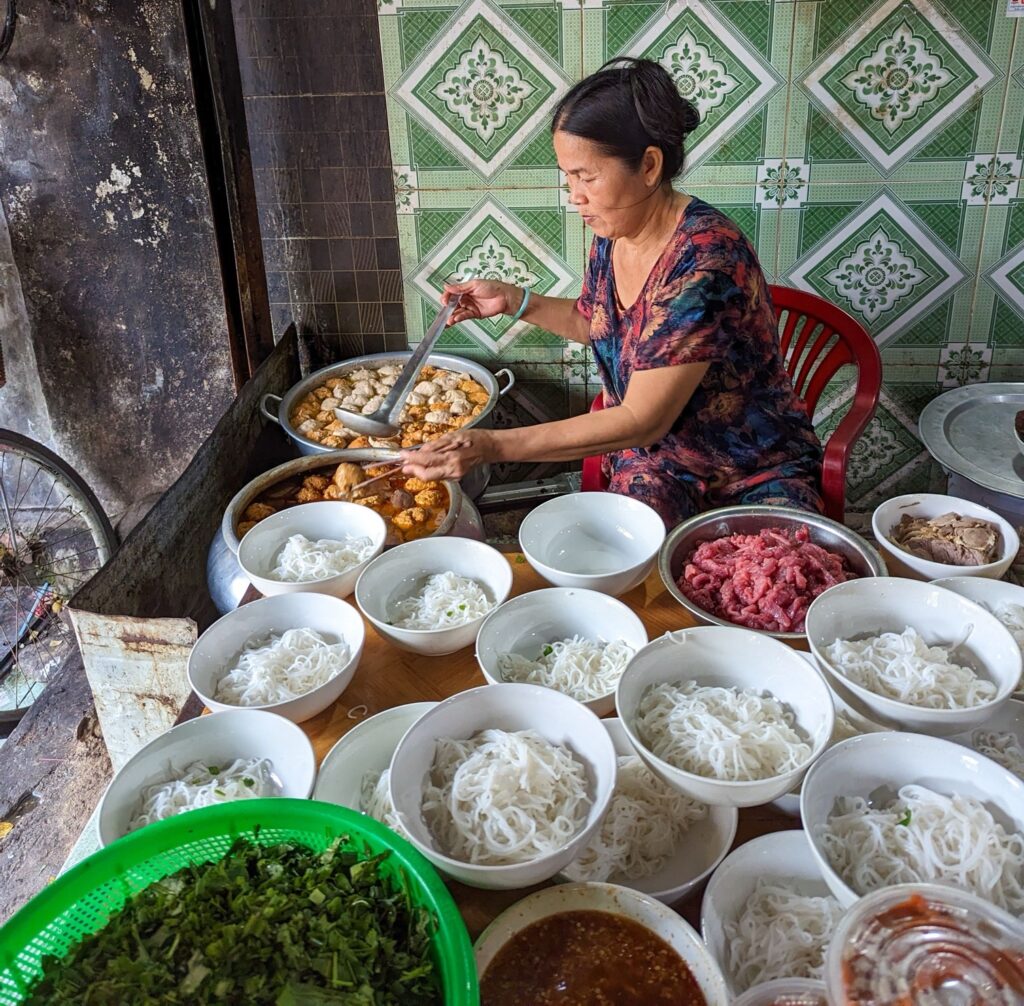
A food stall in Huế, with bowls of rice noodles ready to be filled.
In Huế itself, local eateries offer plenty of opportunities to discover those differences. One cook may favour a stronger note of fermented shrimp paste, while another prefers a different balance of lemongrass and chilli. Trying more than one bowl is a perfectly reasonable way to explore the city’s food.
For a first taste, begin with a bowl containing the familiar ingredients, try the broth as it comes, then add herbs and condiments as you prefer. You may discover that you enjoy a generous helping of chilli, or that the original balance of lemongrass and shrimp paste suits you just fine.
Either way, a hot bowl of bun bo is a satisfying introduction to the flavours of Huế.
Image source: Pexels