A Town Shaped by Trade
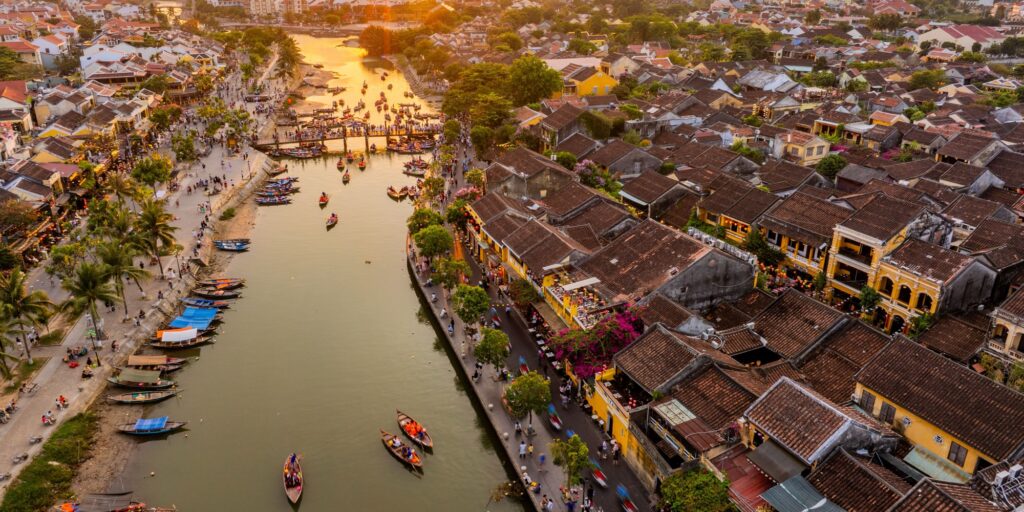
Hoi An developed beside the Thu Bon River, which connected inland communities with maritime trading routes across Asia. From the 15th to the 19th century, the town served as an international trading port, attracting merchants from China, Japan and elsewhere.
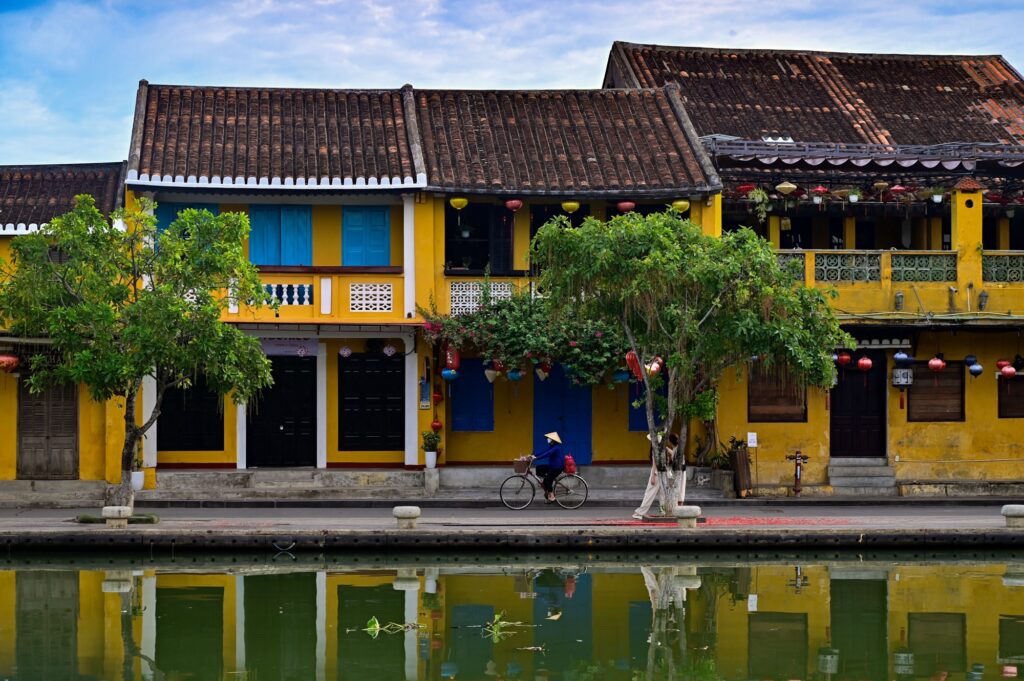
Yellow townhouses beside the river in Hoi An.
Trade shaped the town's buildings as well as its economy. Merchants established homes, places of worship and communal institutions, leaving an architectural legacy that remains visible throughout the old town.
Inscribed on the UNESCO World Heritage List in 1999, Hoi An is recognised for its surviving historic street plan and buildings. Many of its traditional houses accommodated commercial activity alongside everyday family life.
The Japanese Covered Bridge
The Japanese Covered Bridge, known locally as Chua Cau, spans a small waterway in Hoi An's historic quarter. Associated with the Japanese merchant community, the covered bridge includes a small temple within its structure.
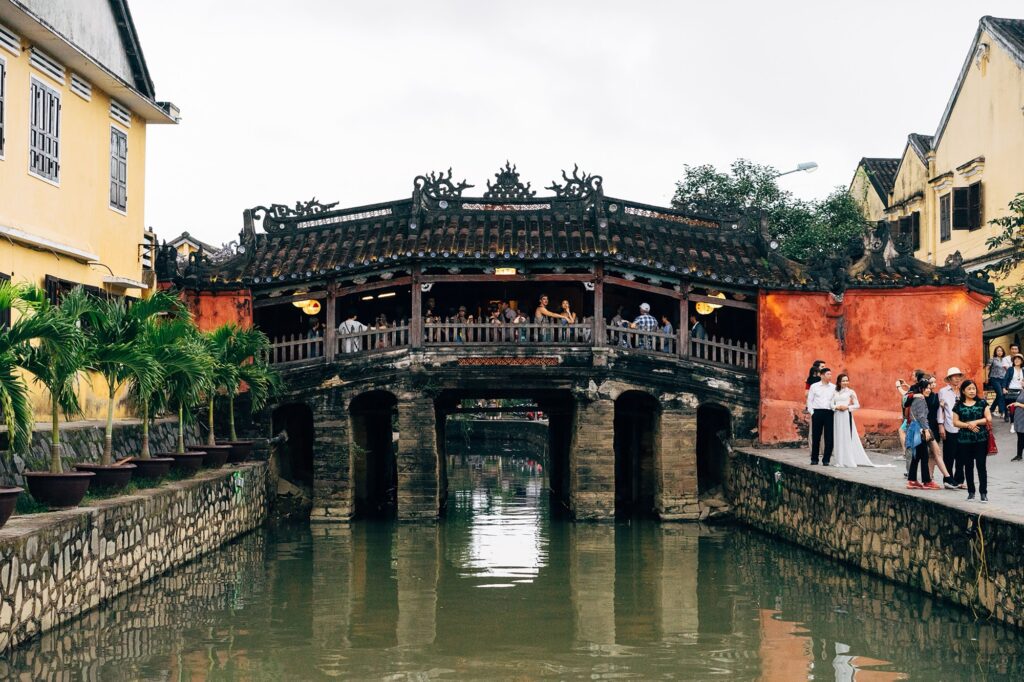
The Japanese Covered Bridge in Hoi An.
The monument has undergone several restorations. Its most recent major conservation project began in December 2022 and was completed in August 2024, when the restored bridge was formally reopened.
The bridge's timber structure and tiled roof distinguish it from the surrounding merchant houses. Its association with Japanese traders also reflects a period when several international communities maintained a presence in Hoi An.
Merchant Houses and Everyday Life
Traditional merchant houses reveal how business and domestic life occupied the same buildings.
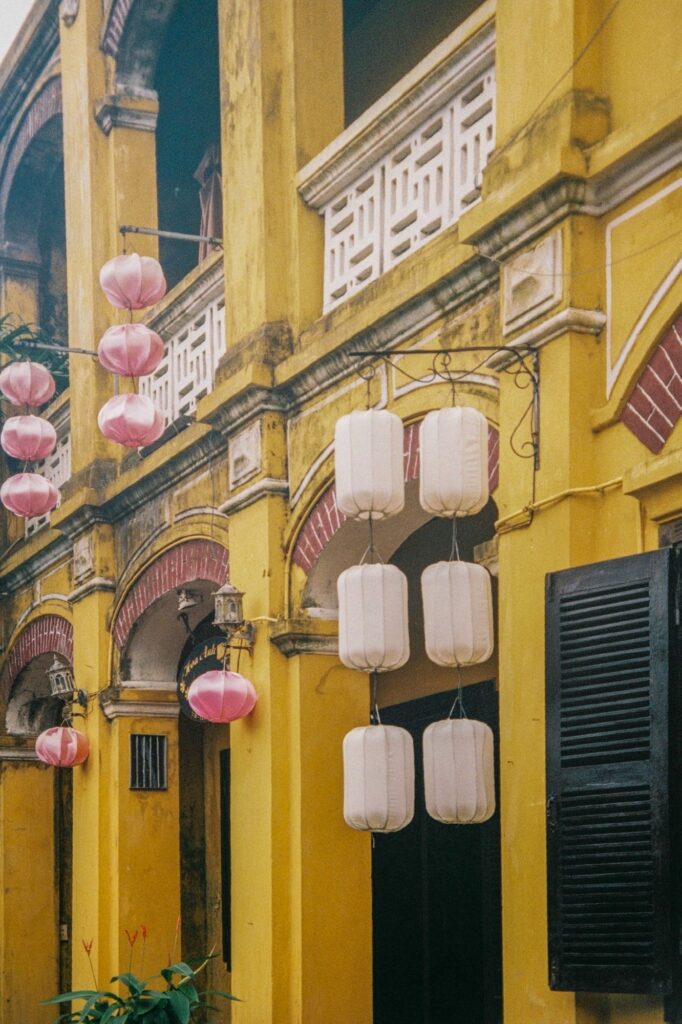
A yellow-walled building hung with lanterns in Hoi An.
Many stand on narrow plots extending deep behind their street-facing entrances. Front rooms served commercial or reception functions, while living quarters, storage areas and internal courtyards occupied spaces farther inside.
Tan Ky Old House, traditionally dated to 1741, is associated with the Le family, whose trading activities included agricultural products. Its timber framework, interior arrangement and decorative details illustrate the construction and domestic organisation of a merchant household.
An internal courtyard brings daylight and ventilation into rooms beyond the street frontage, a practical arrangement in a deep building where exterior openings are limited.
Assembly Halls and Community
Chinese merchant communities established assembly halls that served religious and social purposes.
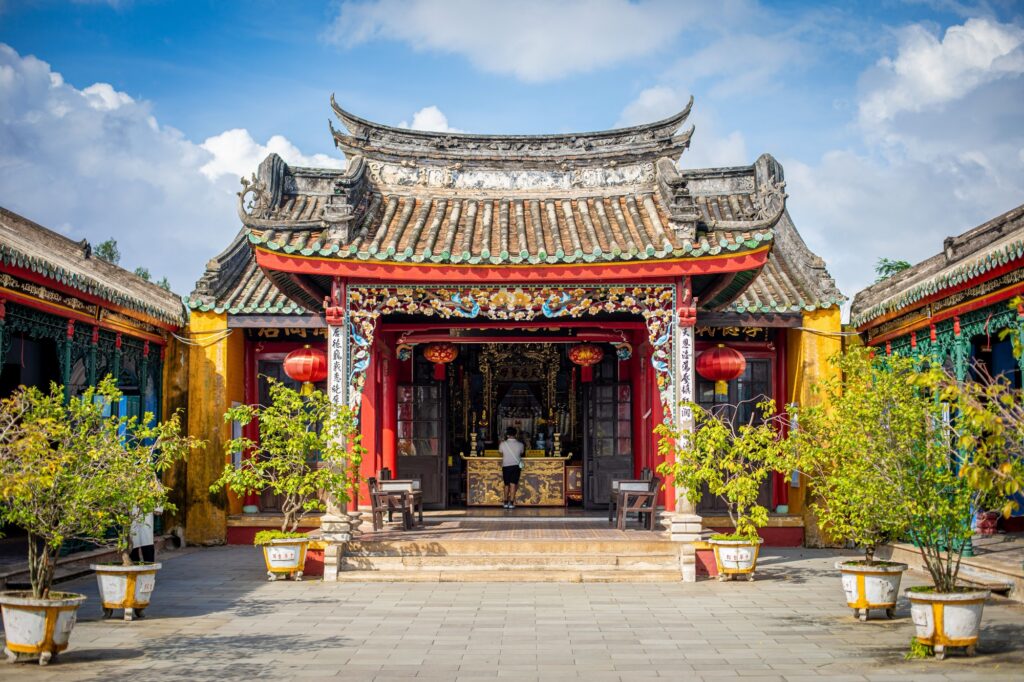
A hall and courtyard in Hoi An.
The Fujian Assembly Hall, or Hoi Quan Phuc Kien, is associated with the Fujian community and the worship of Thien Hau, a deity linked to the protection of those travelling by sea.
The complex is arranged through successive spaces, including a front hall, main sanctuary and rear sanctuary, with additional buildings along its sides. This organisation differs from the narrower domestic buildings found elsewhere in the old town.
Historical accounts associate the assembly hall with the year 1697. The site was recognised as a national heritage monument in 1990.
The Thu Bon River
The Thu Bon River supported Hoi An's commercial development by connecting the port with surrounding settlements and inland markets. Streets leading towards the waterfront still reflect the town's relationship with the water.
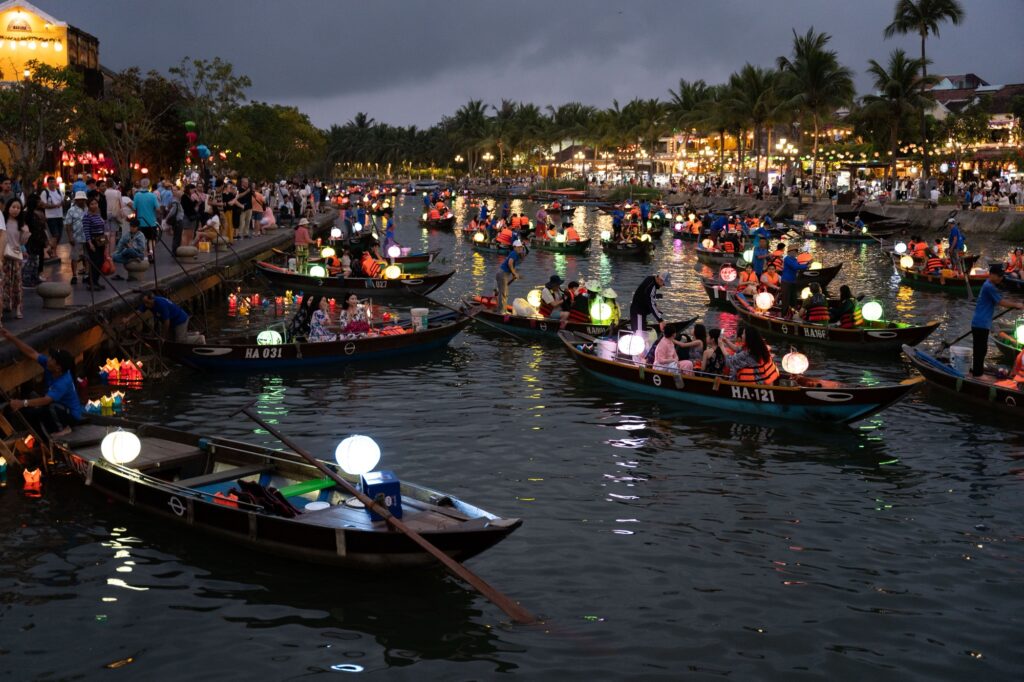
Lantern-lit boats on the river at Hoi An.
Today, boat trips, restaurants and lantern displays draw visitors to the riverfront, particularly in the evening. The waterfront has become an important part of Hoi An's visitor economy, occupying spaces once closely connected with the movement of goods and merchants.
The river also remains a practical consideration. Parts of Hoi An's low-lying historic quarter are vulnerable to seasonal flooding during periods of heavy rain in central Vietnam.
Food and the Surrounding Landscape
Hoi An's food reflects the wider culinary traditions of Quang Nam province.
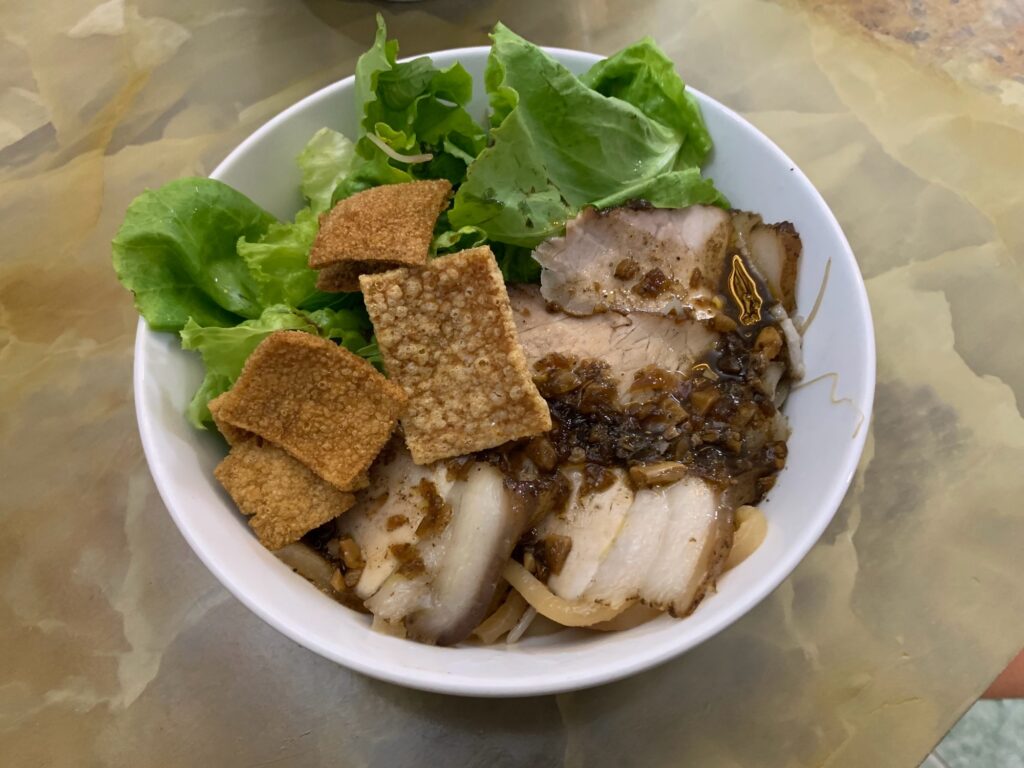
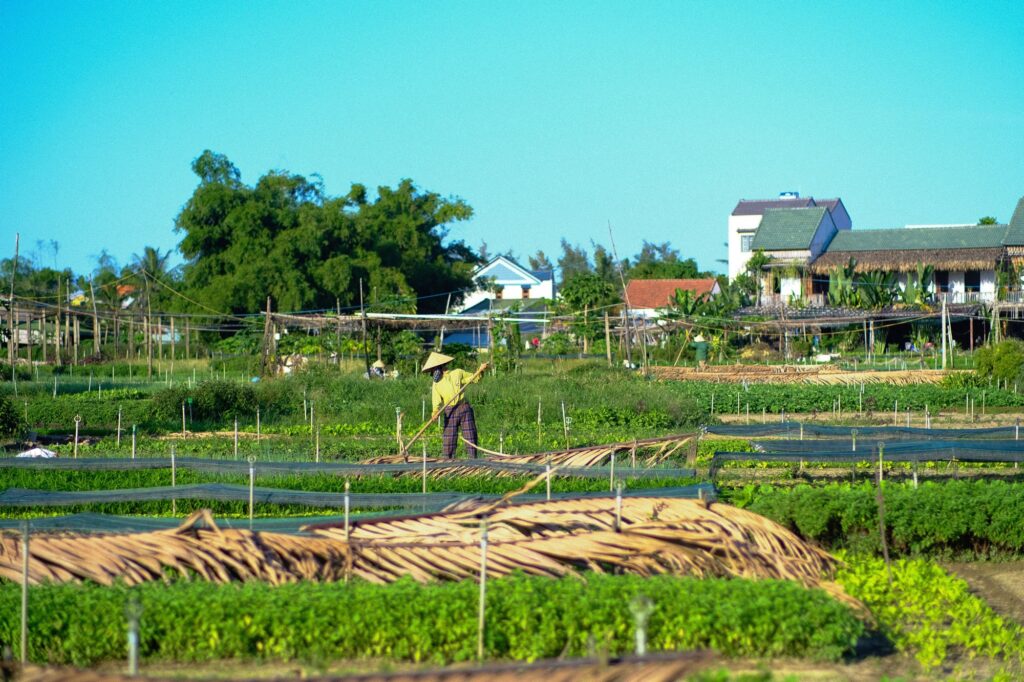
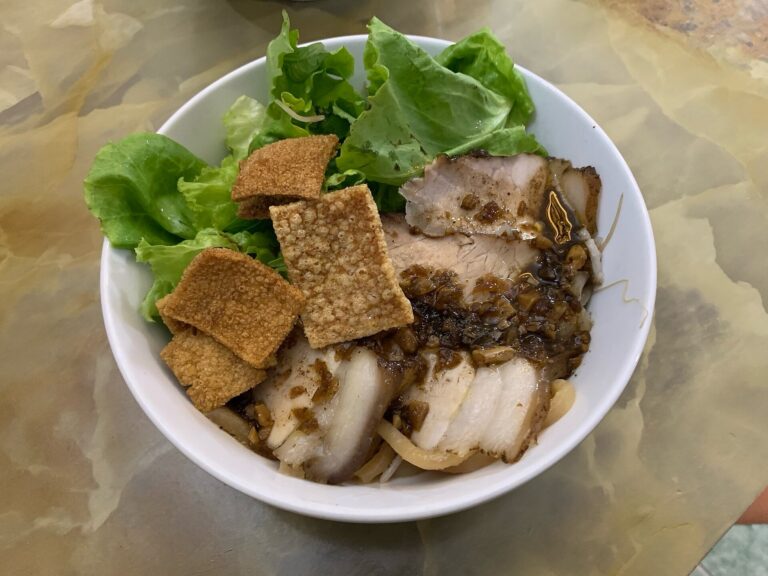
Cao lau and the fields around Hoi An.
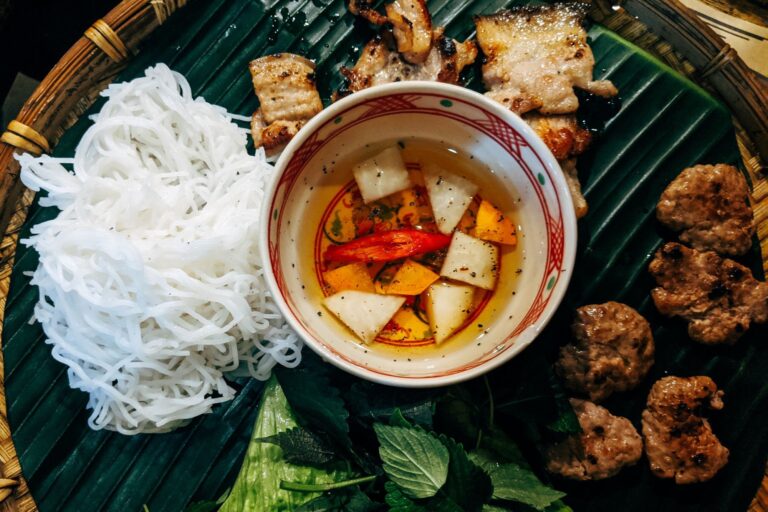
Cao lau combines thick, chewy noodles with pork, greens and a small amount of sauce or broth. Mi Quang, another regional noodle dish, is prepared in several variations and typically served with herbs and a ladle of broth.
Beyond the old town, agricultural land, villages and coastline form part of the surrounding landscape. Tra Que, a village known for vegetable cultivation, lies approximately three kilometres from the historic centre. An Bang Beach, around four kilometres to the east, offers a coastal setting within easy reach of the town.
Visitors spending two or three days in Hoi An can explore the historic quarter alongside these nearby areas, rather than limiting their stay to the main streets.
Beyond the Familiar Image
Lanterns and yellow-painted facades have become familiar symbols of Hoi An. Yet much of the town's history remains visible in the Japanese Covered Bridge, the layout of its merchant houses and the communal buildings established by Chinese traders.
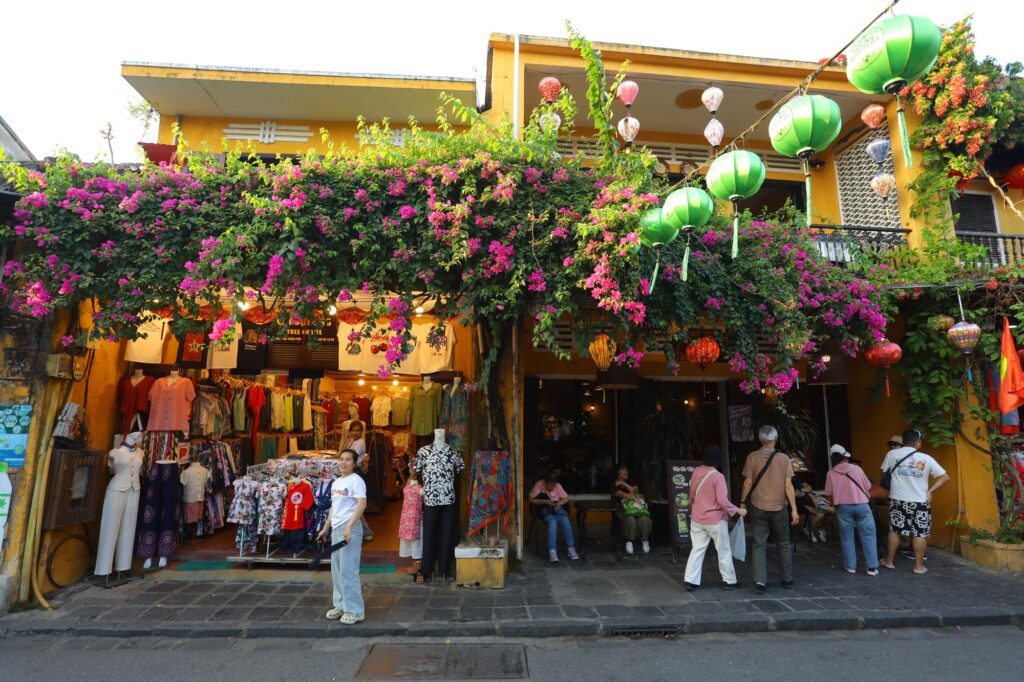
A yellow shophouse hung with lanterns and bougainvillea in Hoi An.
The surviving architecture offers a record of how commerce, religious life and family households occupied the same historic town.
Image source: Pexels and Wikimedia Commons