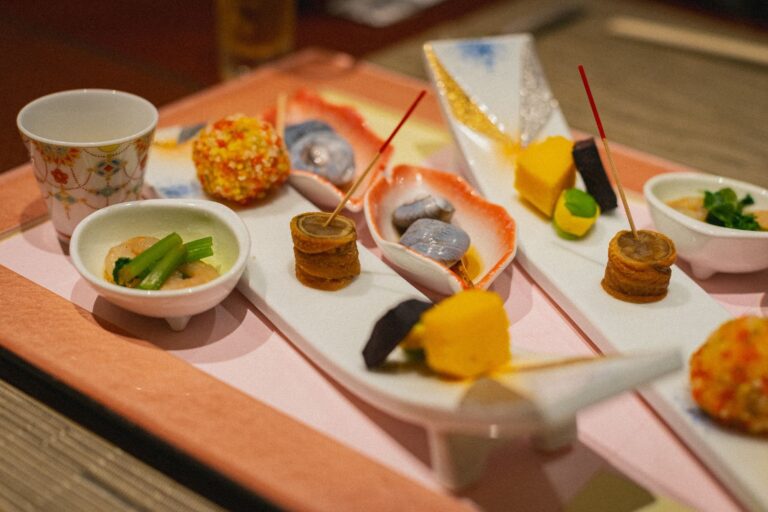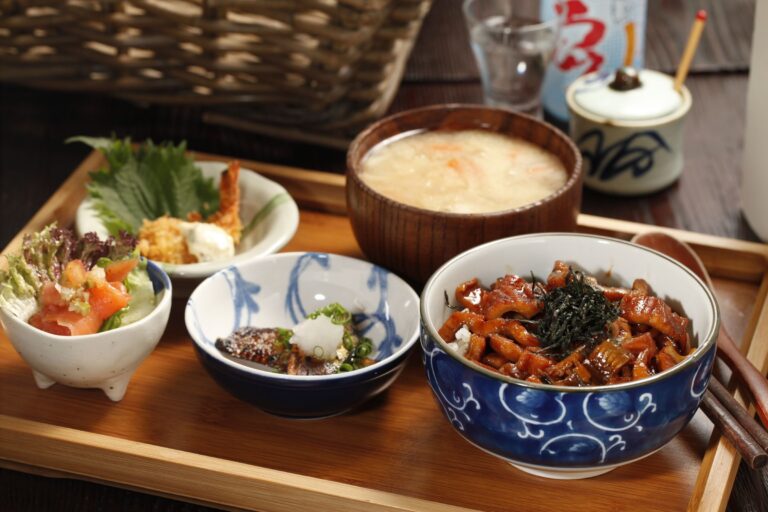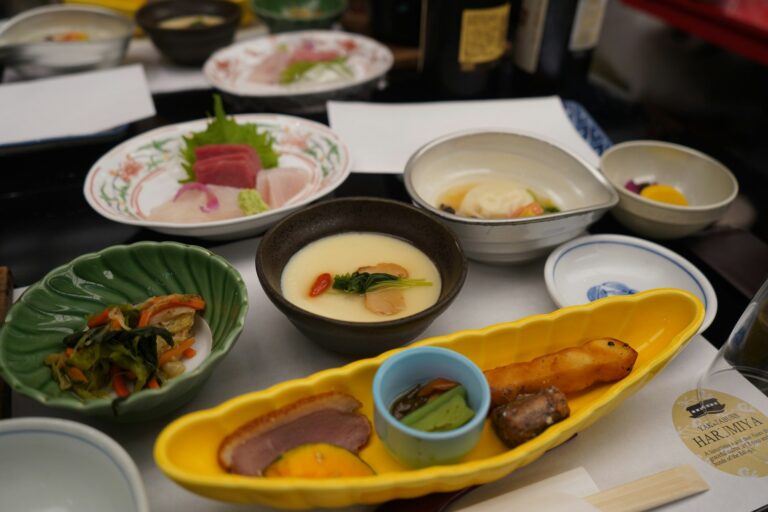
A traditional Japanese breakfast tray typically holds several small bowls and plates containing steamed rice, miso soup, grilled fish, vegetables and pickles. Each dish is served separately, allowing diners to enjoy it on its own or alongside the rice.
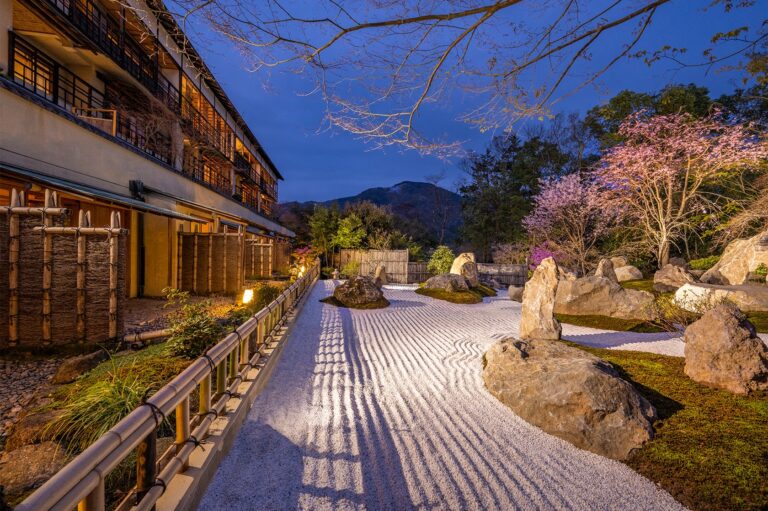
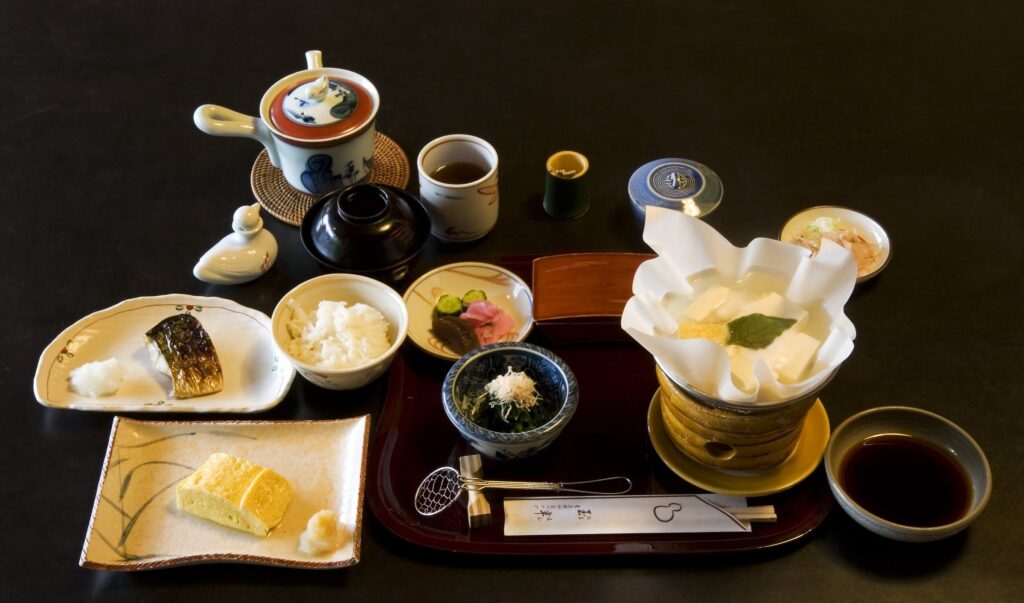
At traditional Japanese inns known as ryokan, breakfast may be more elaborate, featuring rolled omelettes, tofu, vegetables and fermented foods. Despite variations in presentation, many meals follow a familiar principle of Japanese cuisine: ichiju-sansai.
Ichiju-Sansai: One Soup, Three Dishes
Ichiju-sansai means “one soup, three dishes”. In this traditional arrangement, a meal consists of rice, one soup, a main dish and two side dishes.
Rice is not counted among the three dishes, while pickles are usually served separately. On the tray, the rice bowl is traditionally placed to the diner’s left and the soup bowl to the right.
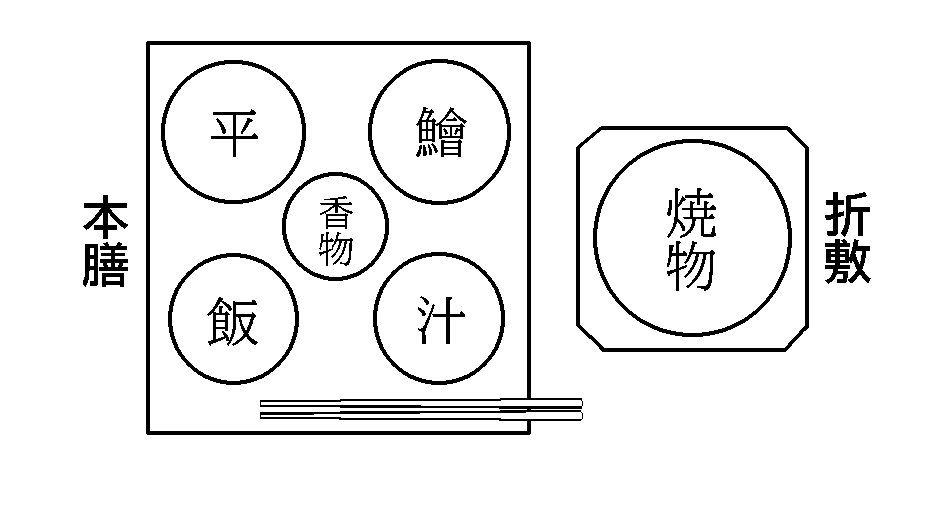
How the dishes are set on the tray.
The main dish may be grilled fish or another source of protein. The two side dishes commonly feature vegetables or tofu.
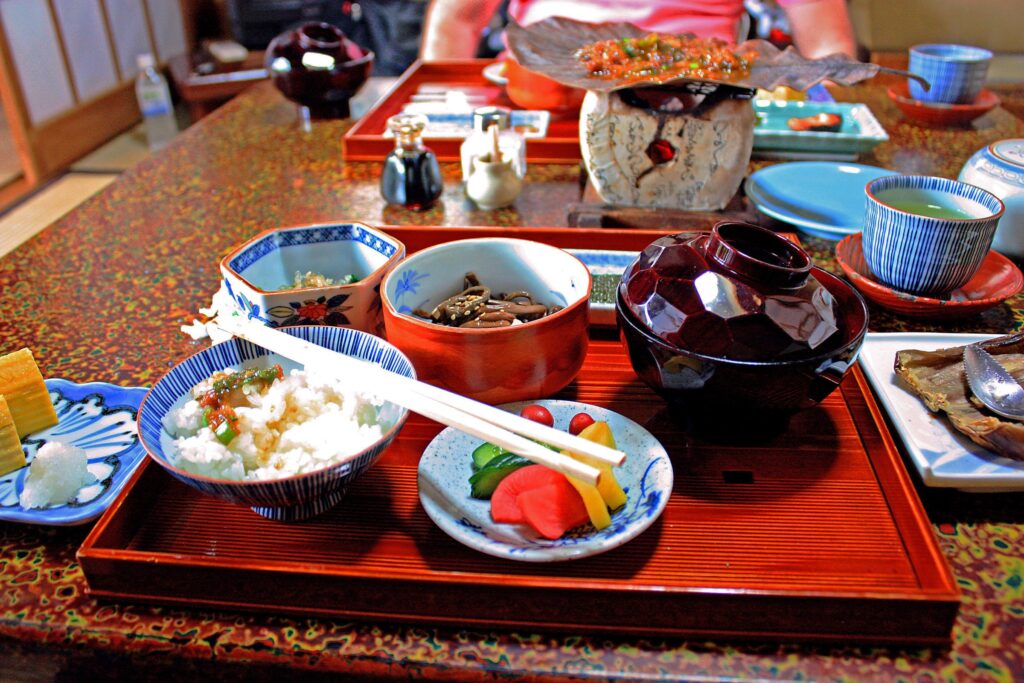
Breakfast at a ryokan on a lacquer tray.
This arrangement has a long history and is often associated with simple meals served at Zen Buddhist temples during the Kamakura period, as well as dining traditions that developed over subsequent centuries. It forms part of the broader tradition of washoku, Japan’s traditional dietary culture, which was inscribed on UNESCO’s Intangible Cultural Heritage list in 2013.
Rice, Miso Soup and Grilled Fish
Steamed white rice, known as gohan, holds an important place in a traditional Japanese breakfast. The dishes eaten alongside rice are collectively called okazu, usually served in modest portions with different flavours.
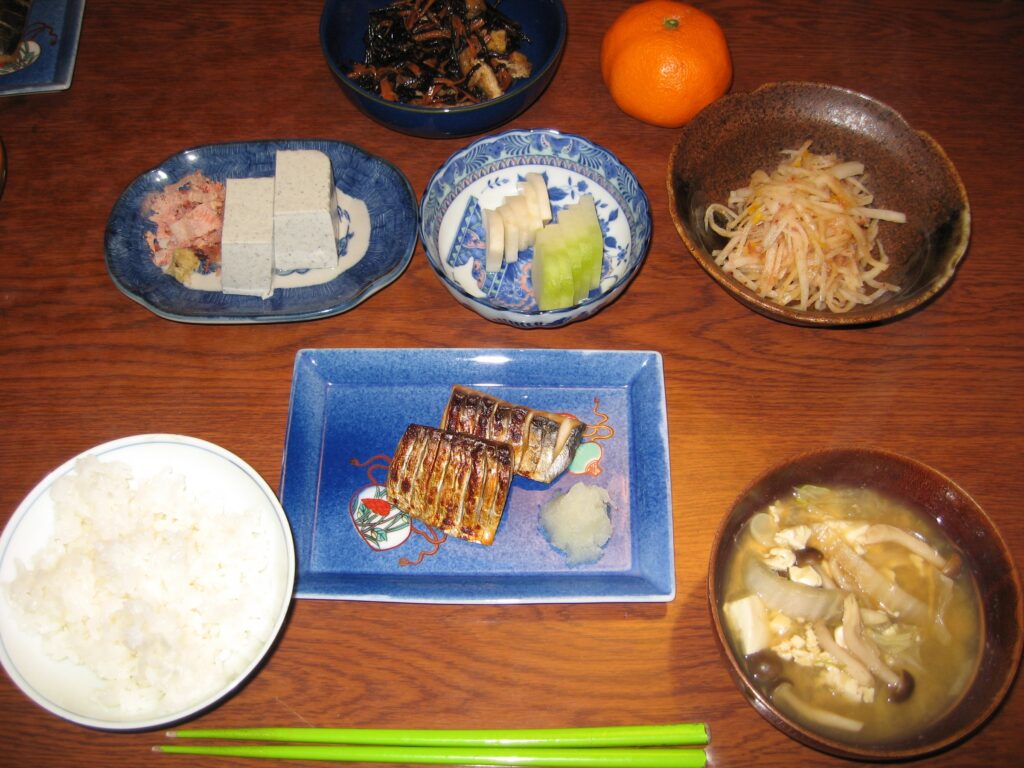
Rice, miso soup and grilled mackerel.
Miso soup is a familiar accompaniment, prepared with dashi and miso. It may contain small cubes of tofu, wakame seaweed or other ingredients, depending on the recipe.
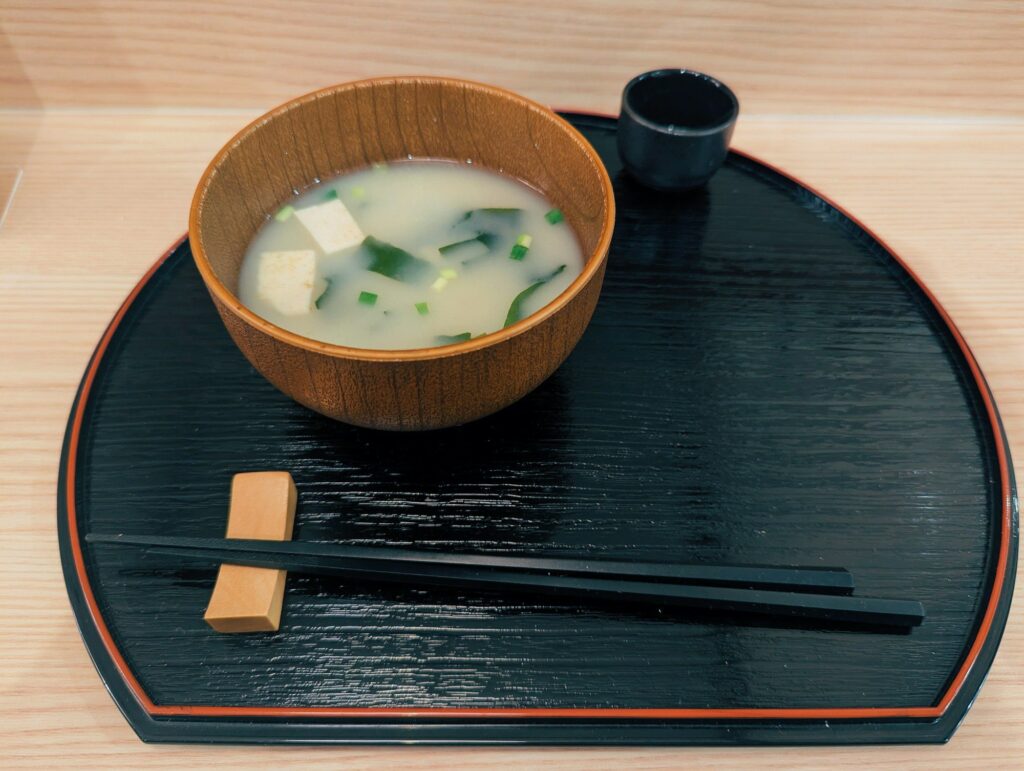
Miso soup with tofu.
Grilled fish often serves as the main dish. Salmon and mackerel are two common choices, sometimes accompanied by grated daikon radish and a slice of lemon.
Eggs, Vegetables and Small Side Dishes
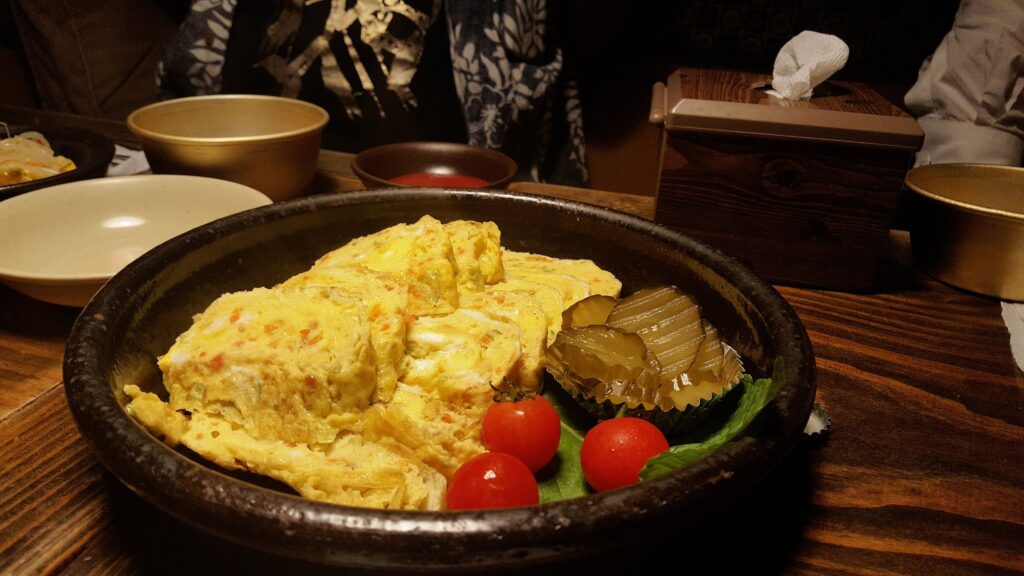
Eggs are another common feature of a Japanese breakfast tray.
Tamagoyaki is a rolled omelette made in several layers, sometimes with a slightly sweet flavour. In the Kansai region, a familiar variation is dashimaki tamago, which incorporates dashi into the egg mixture.
Another option is onsen tamago, a gently cooked egg with softly set white and yolk. Some breakfasts also include a raw egg to be mixed directly into hot rice.
Side dishes may include chilled tofu served with ginger and spring onions, small portions of prepared vegetables or chawanmushi, a savoury steamed egg custard with a delicate texture.
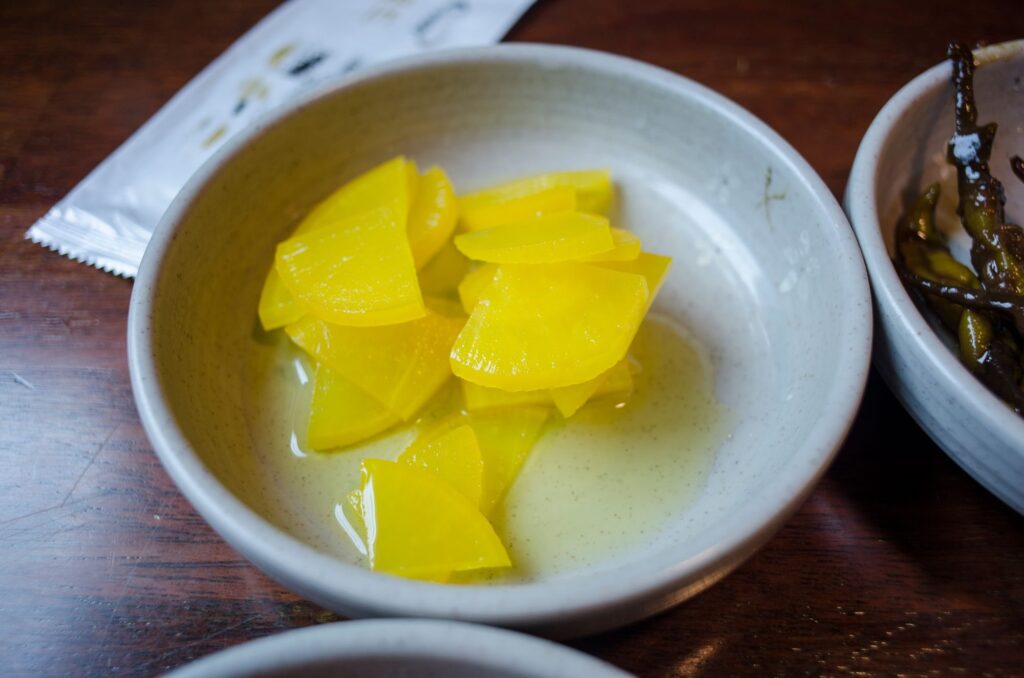
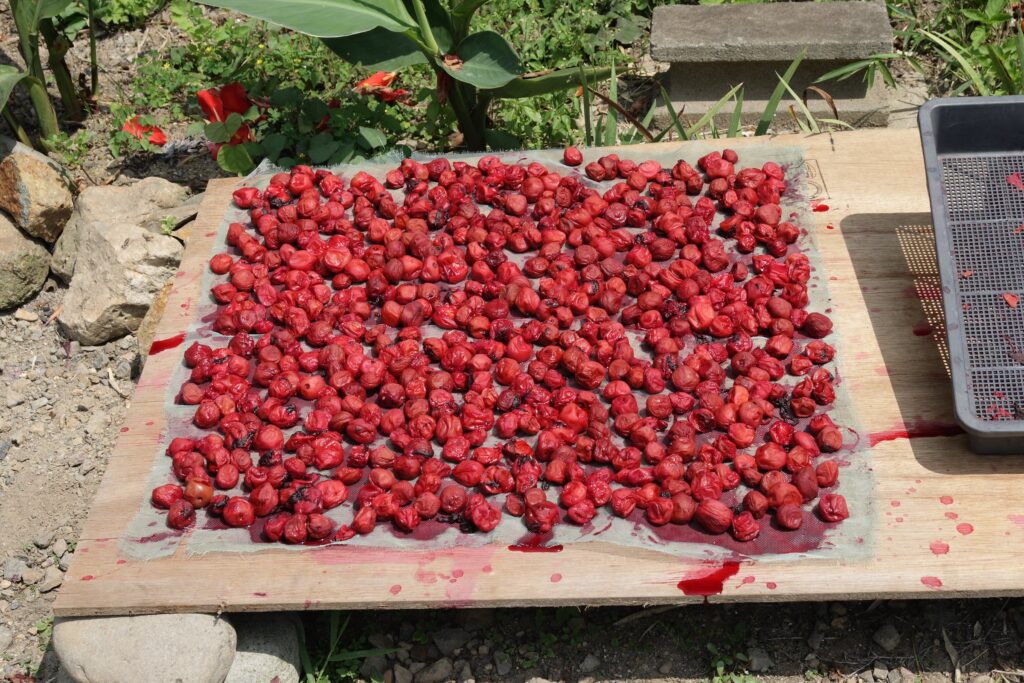
Japanese pickles, collectively known as tsukemono, are also common. Two familiar examples are takuan, pickled daikon radish, and umeboshi, salted Japanese plums with a distinctly sour and salty flavour.
Nori seaweed may be served in thin sheets to accompany the rice. Some breakfast trays also include fruit at the end of the meal.
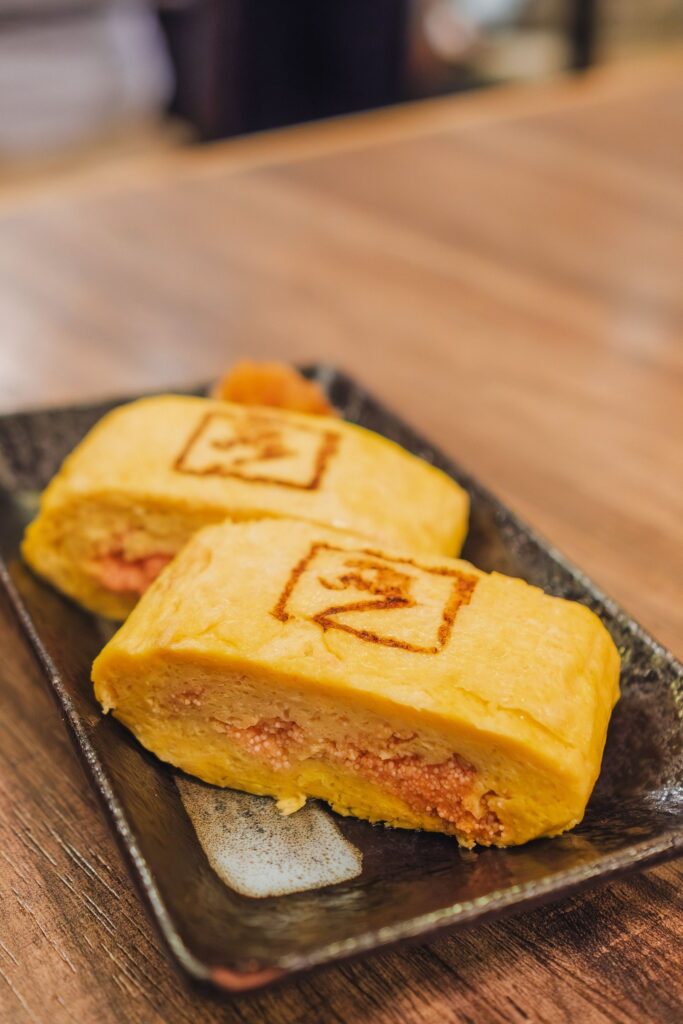
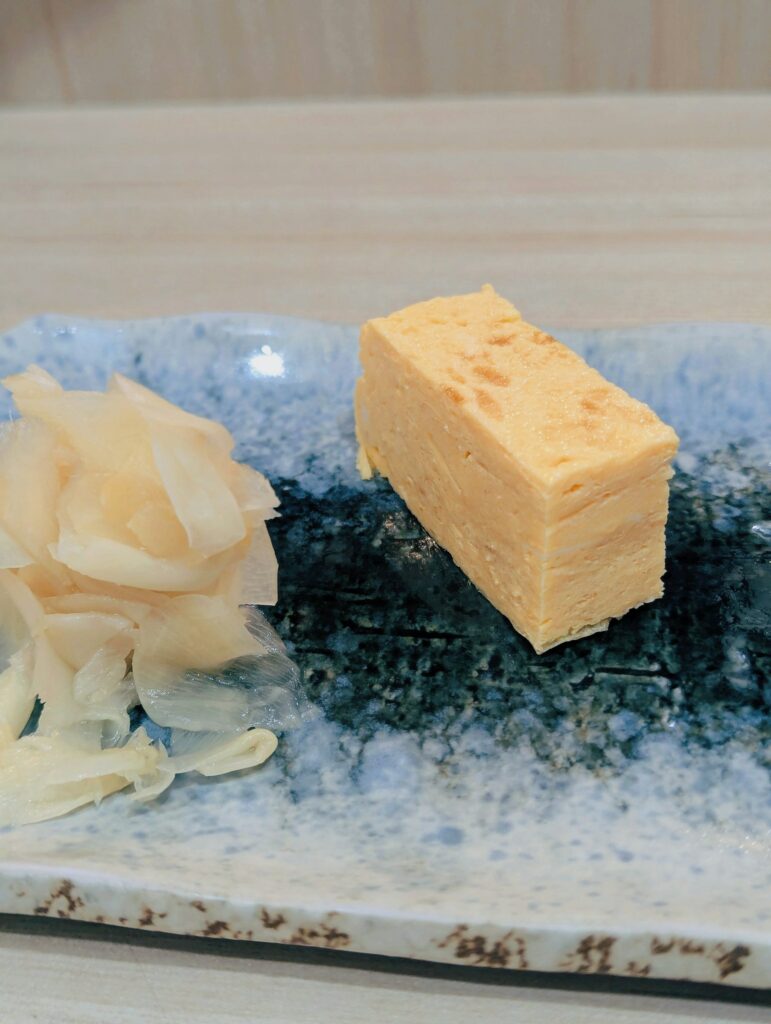
Tamagoyaki, sliced to serve.
Natto: Fermented Soybeans at Breakfast
Natto is a familiar Japanese breakfast food made from soybeans fermented with bacteria.
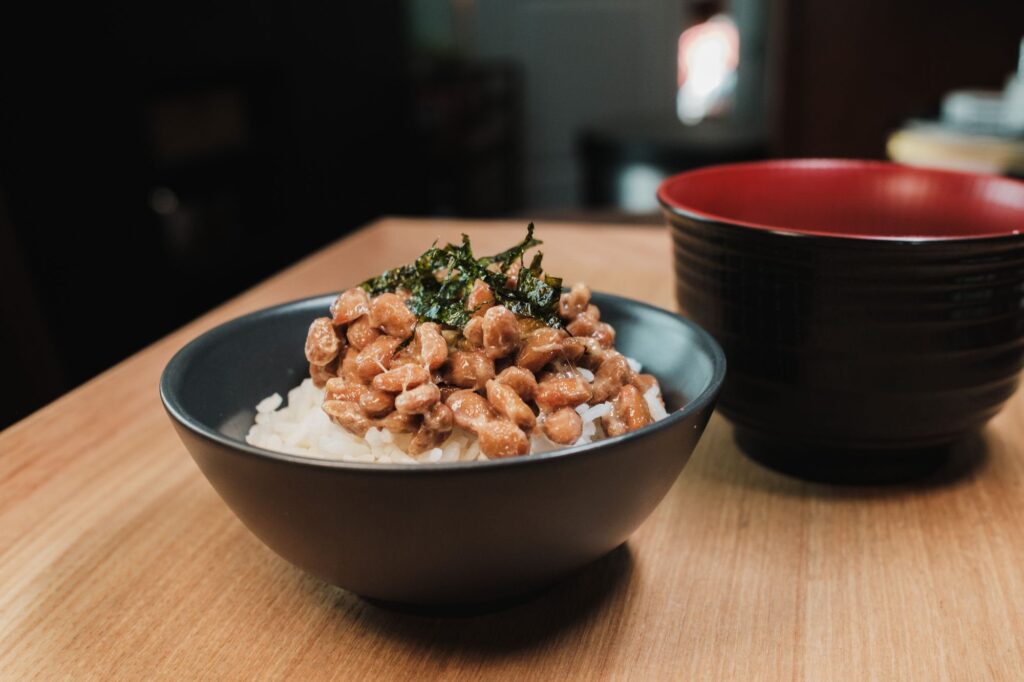
Natto on rice.
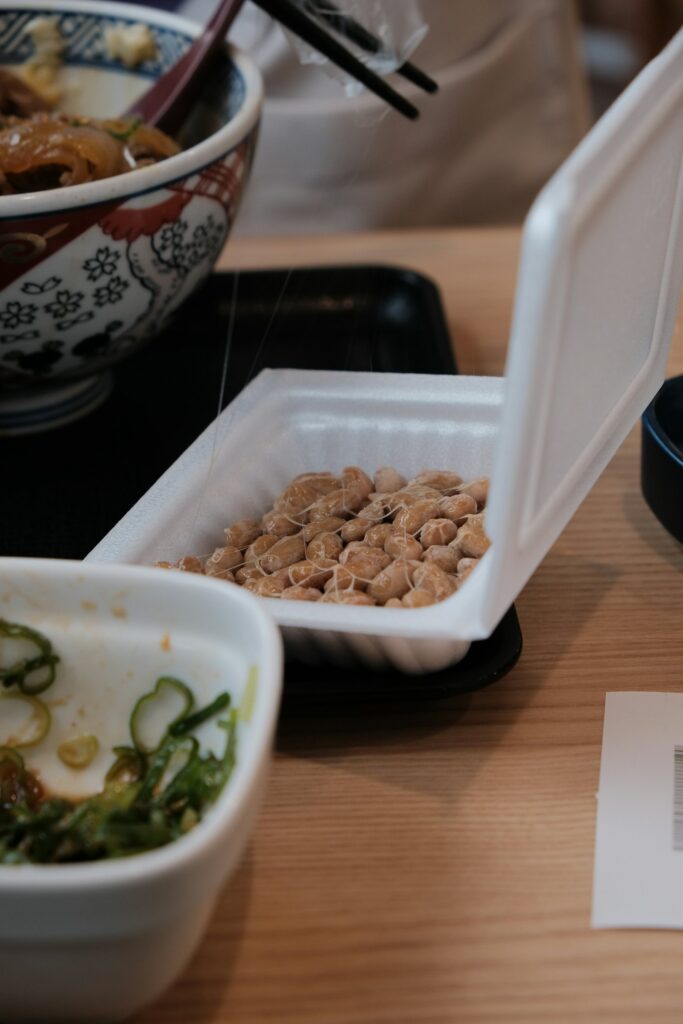
The beans retain their shape but develop a distinctive sticky texture. When stirred, natto produces fine, stretchy strands between the beans. Its fermented aroma and unusual consistency can take some getting used to.
Natto is commonly eaten with steamed rice, mixed with soy sauce, karashi (Japanese mustard) and sometimes finely chopped spring onions.
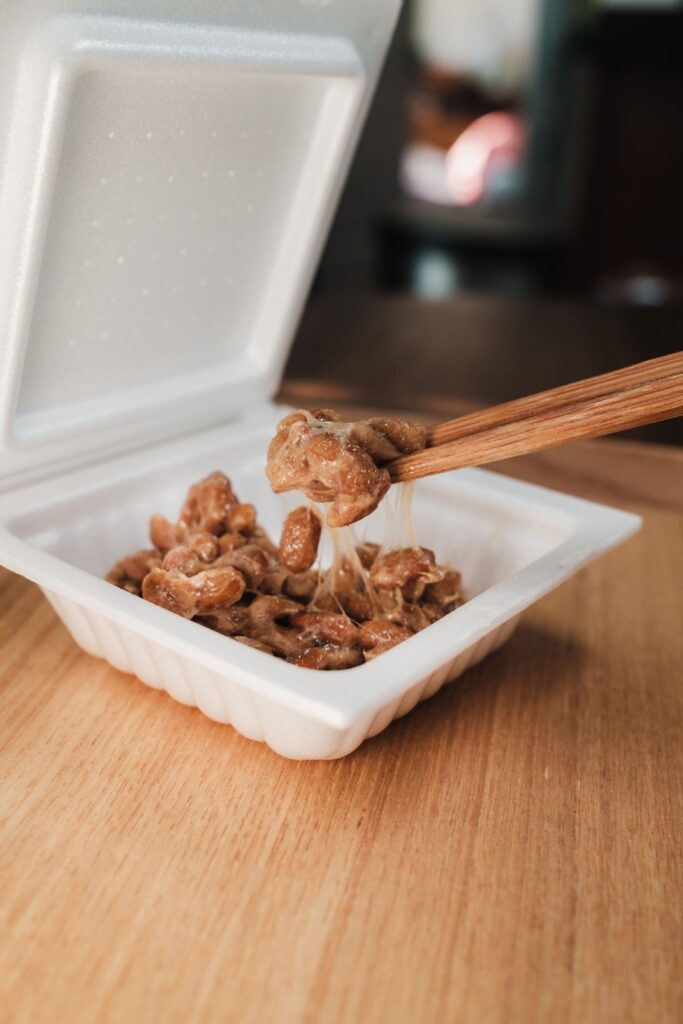
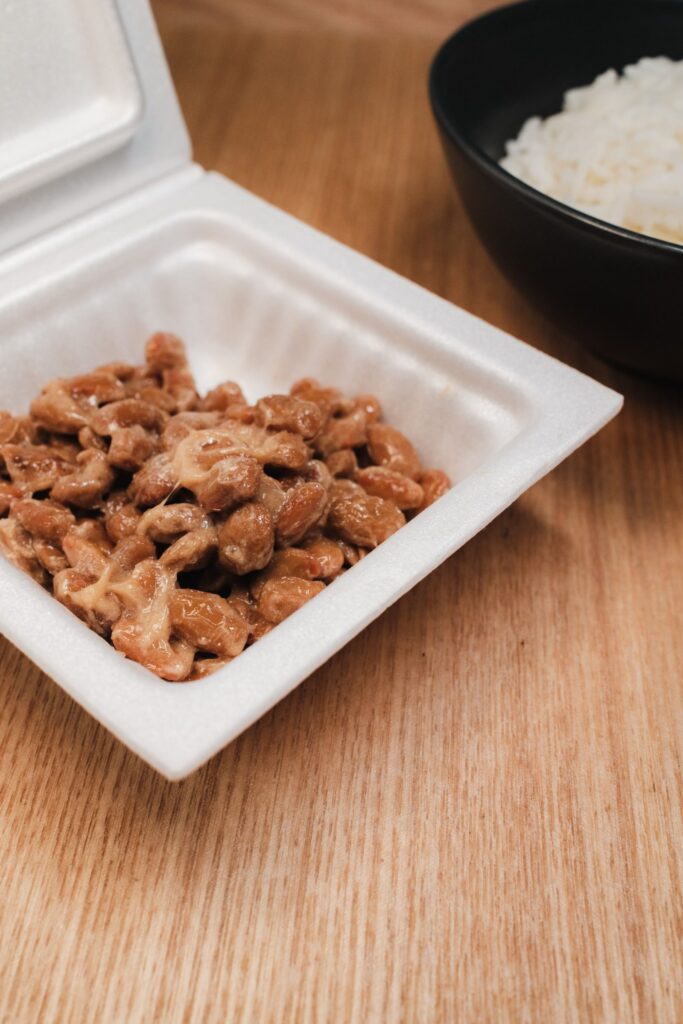
Natto from the pack.
It is more popular in eastern and northern Japan, particularly Kanto, Tohoku and Hokkaido, while consumption is generally less widespread in Kansai.
What Makes Breakfast at a Ryokan Different?
A ryokan is a traditional Japanese inn where breakfast is often part of the overall stay.
Compared with the one-soup, three-dish arrangement, a ryokan breakfast may feature a greater number of small plates. Alongside rice, miso soup and grilled fish, guests may be served eggs, tofu, vegetables, pickles and other accompaniments.
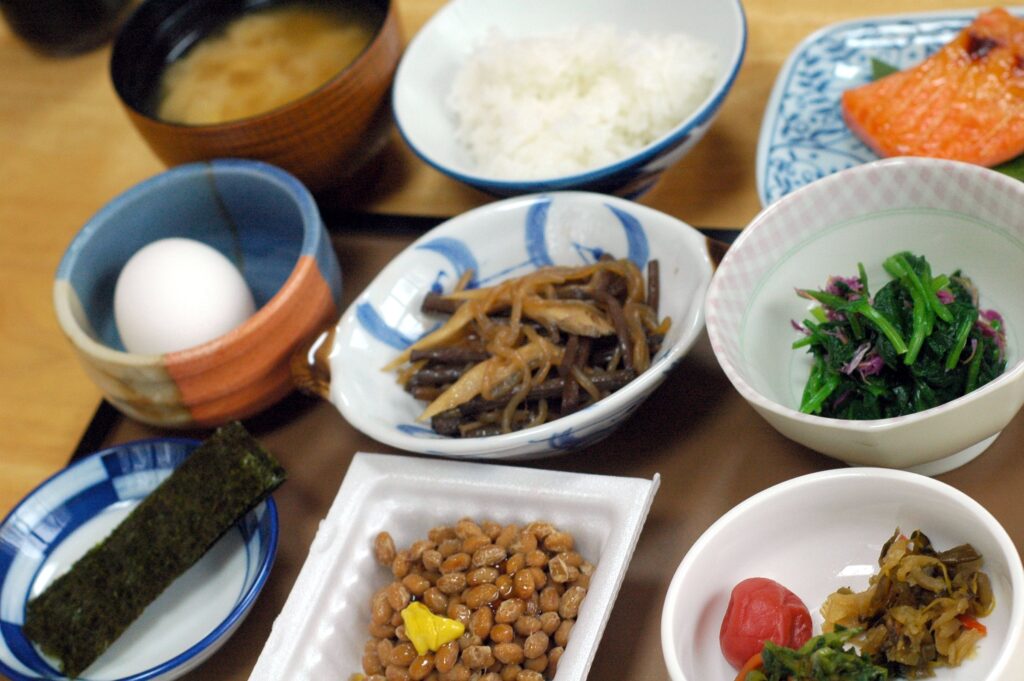
A ryokan breakfast of many small dishes.
Rice is sometimes brought to the table in a covered bowl to keep it warm. Smaller dishes may be arranged on an individual tray or presented as a complete meal for each guest.
Service varies between ryokan. Some serve breakfast in guest rooms, while others provide it in a communal dining room.
Breakfast is usually served at designated times, which guests may be able to select when checking in.
Regional Differences and Japanese Breakfast Today
Seasoning preferences can vary between regions of Japan.
In some preparations in Kanto, the region around Tokyo, darker-coloured soy sauce is commonly used. In Kansai, which includes Kyoto and Osaka, lighter-coloured soy sauce features in many dishes. However, the colour of soy sauce does not necessarily indicate whether a dish will taste more or less salty.
Modern Japanese breakfasts are also more varied than the traditional arrangement. Bread and Western-influenced options have become familiar parts of everyday life, alongside breakfasts built around rice, miso soup and side dishes.
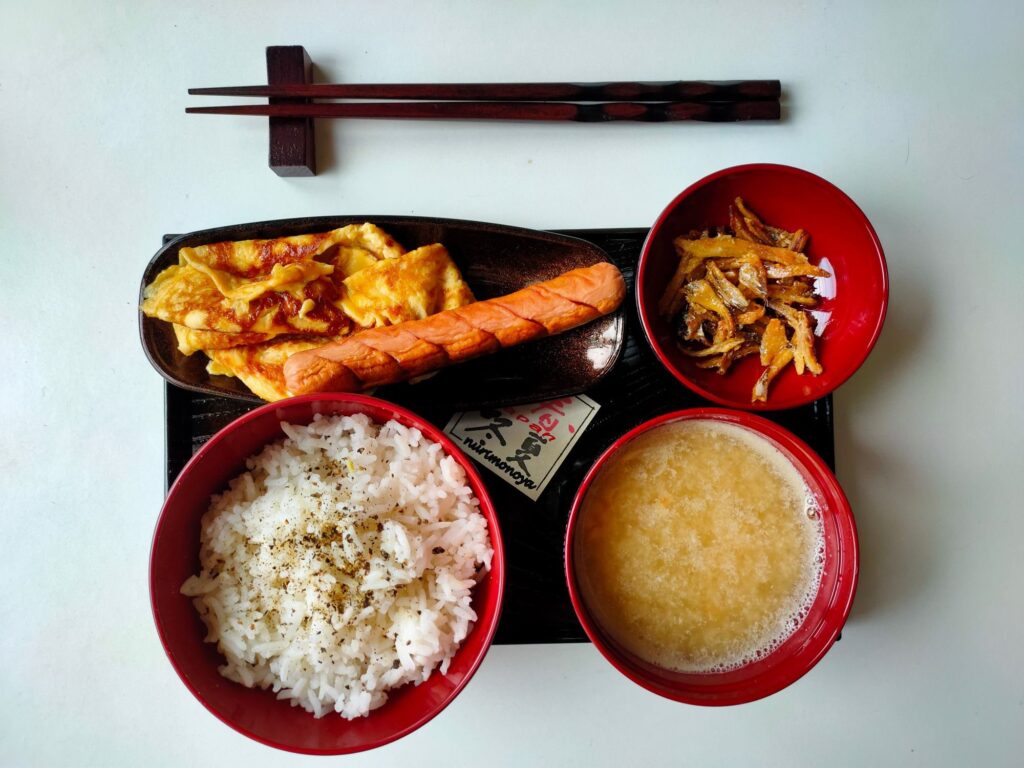
A breakfast with Western touches.
How to Eat a Traditional Japanese Breakfast
There is no compulsory order in which to eat the dishes on the tray.
Diners may begin with miso soup, then enjoy rice with grilled fish or the side dishes. Plain rice is often eaten between more strongly flavoured foods, helping balance the meal.
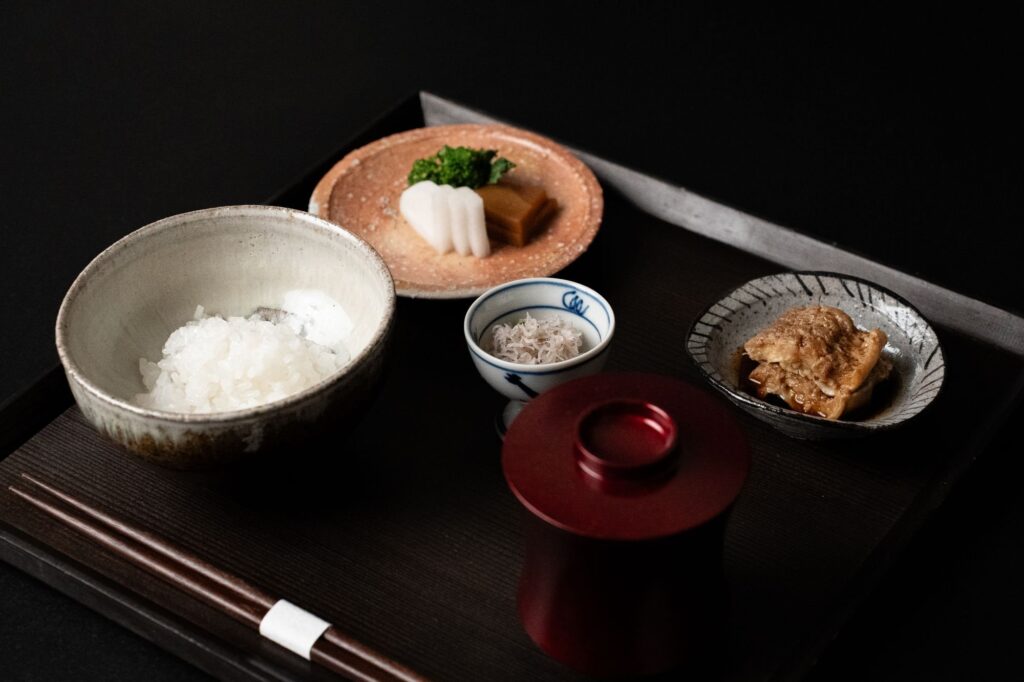
A breakfast tray, ready to begin.
Natto, eggs and pickles can be combined with rice according to personal preference. Sheets of nori are also commonly used to wrap small portions of rice.
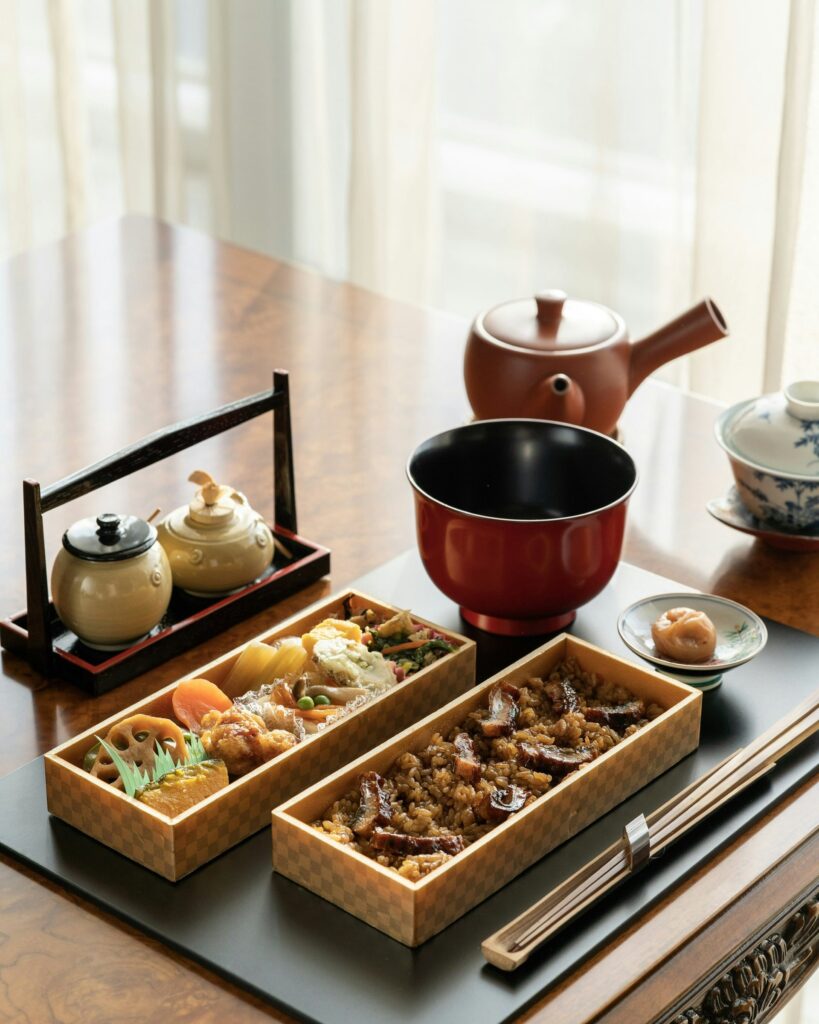
Rice with side dishes, natto and tea.
Green tea may be served with breakfast and is often topped up throughout the meal.
Image credit: Wikimedia Commons (MichaelMaggs; 煮凝り; Andrea Schaffer; サフィル; CYAN; Σ64; Jpatokal)