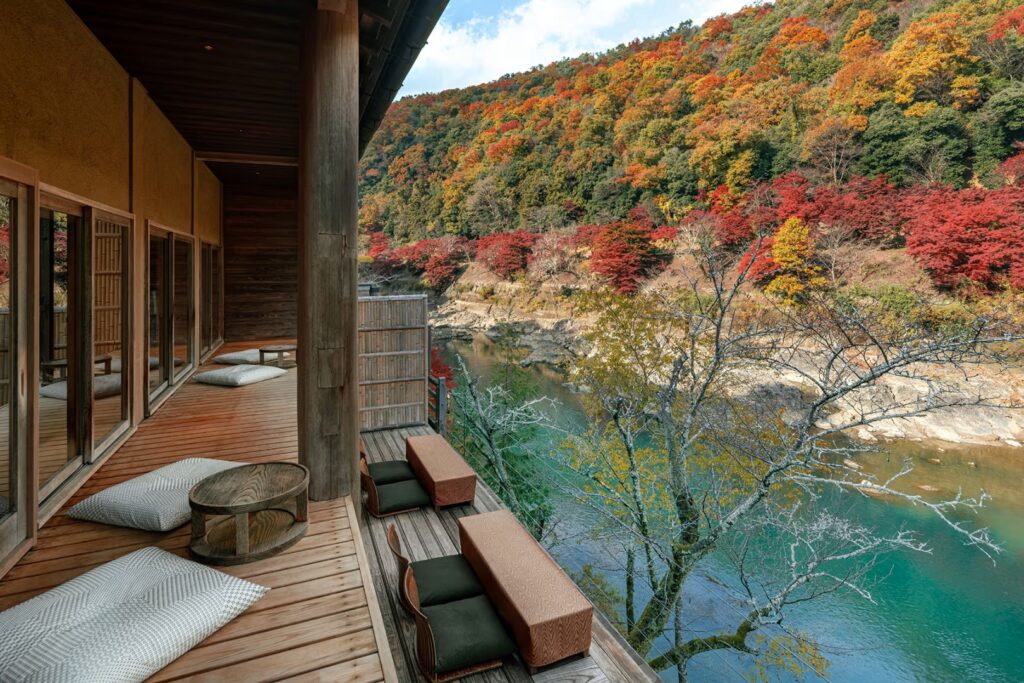
The way in is by water. From Arashiyama, a private boat travels along the Oi River for around 15 minutes towards HOSHINOYA Kyoto. The crossing marks the beginning of the stay, taking guests from Arashiyama to the riverside property.
Opened in 2009, the hotel was developed from a former Meiji-era inn, whose history stretches back roughly a century. Its story also draws on an older chapter of Kyoto, when Heian-period aristocrats built villas in the Ran-kyo Gorge to enjoy the changing seasons.
The Backstory
Arashiyama has long been associated with the pleasures of retreating into nature. Members of the Heian court once built villas in the gorge, drawn by its seasonal scenery.
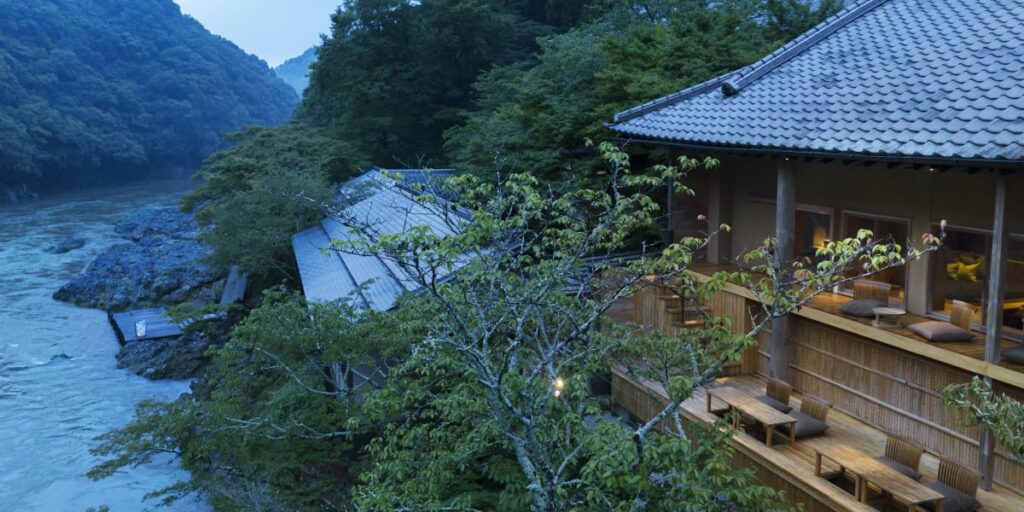
A terrace by the river
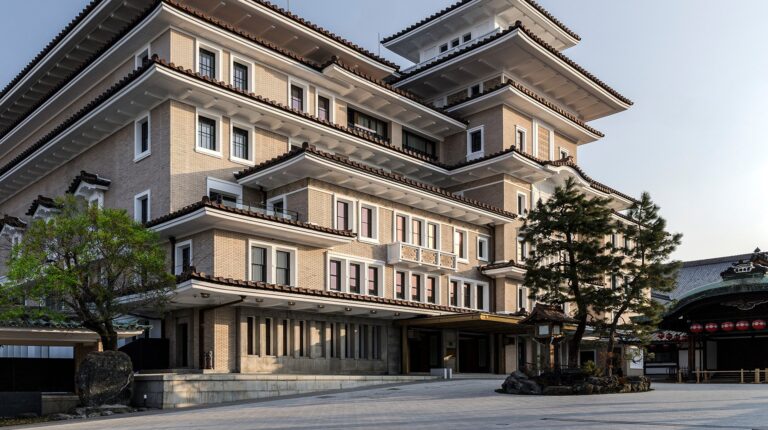
The building inherited by the hotel was a Meiji-era inn. Architect Rie Azuma’s work went beyond restoration. The aim was to create a ryokan for the present while preserving rare materials and craft techniques, some of which would be difficult to reproduce today. The hotel itself opened in 2009, but its architectural story reaches much further back.
The Setting
HOSHINOYA Kyoto sits beside the Oi River in Arashiyama, western Kyoto, looking towards Mount Ogura. Its secluded setting is part of its identity, although arriving and departing require more planning than at a conventional city hotel.
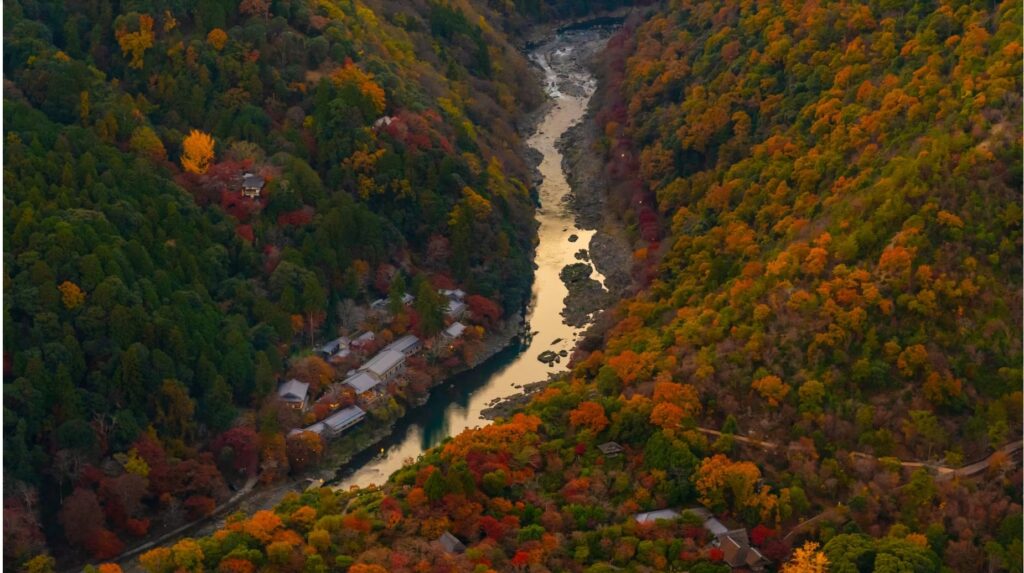
The Oi River gorge in autumn
Guests travel by private boat from Arashiyama, with arrangements made in advance. The first departure is at 14:30 and the last at 17:45. When weather conditions prevent boat travel, the hotel arranges transport by car. There is no guest parking on site, and pets are not permitted.
Architecture & Design
Rie Azuma of Azuma Architect & Associates led the architectural design, and also designed the interiors of HOSHINOYA Tokyo. In Kyoto, the landscape was conceived by Hiroki Hasegawa with Ueyakato Landscape, while lighting was designed by Masanobu Takeishi, incorporating fixtures crafted by Miura Shomei.
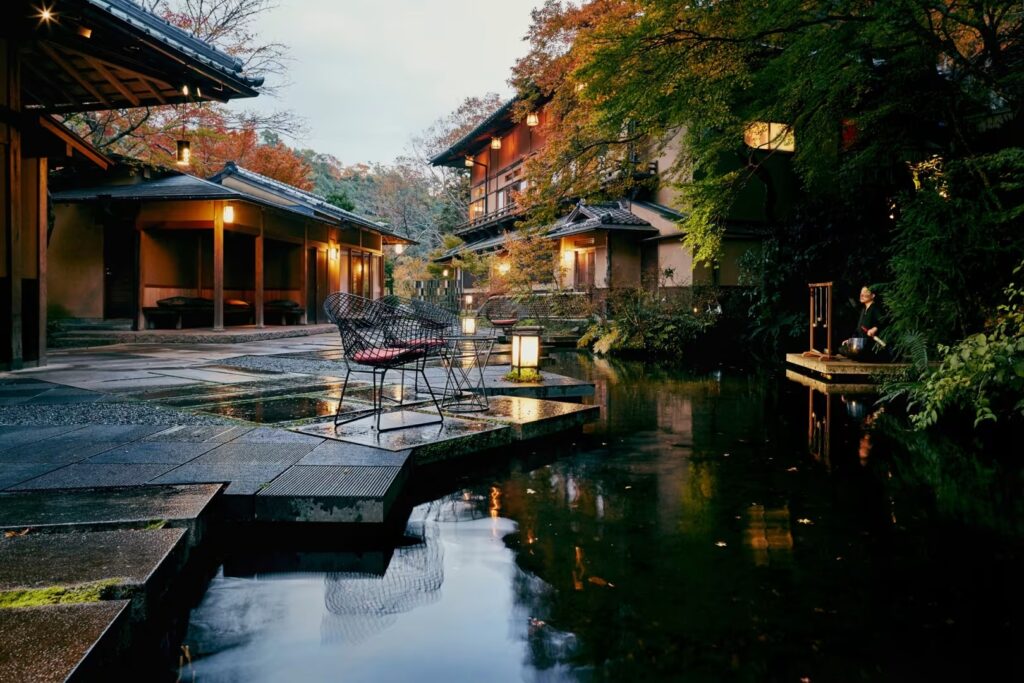
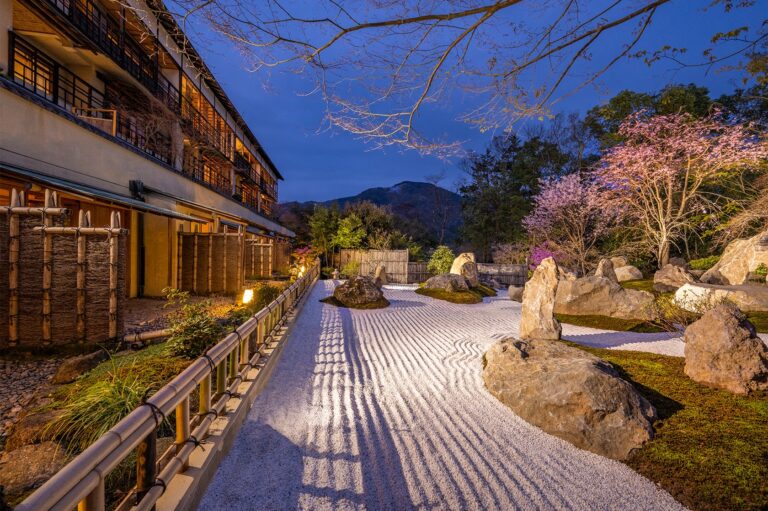
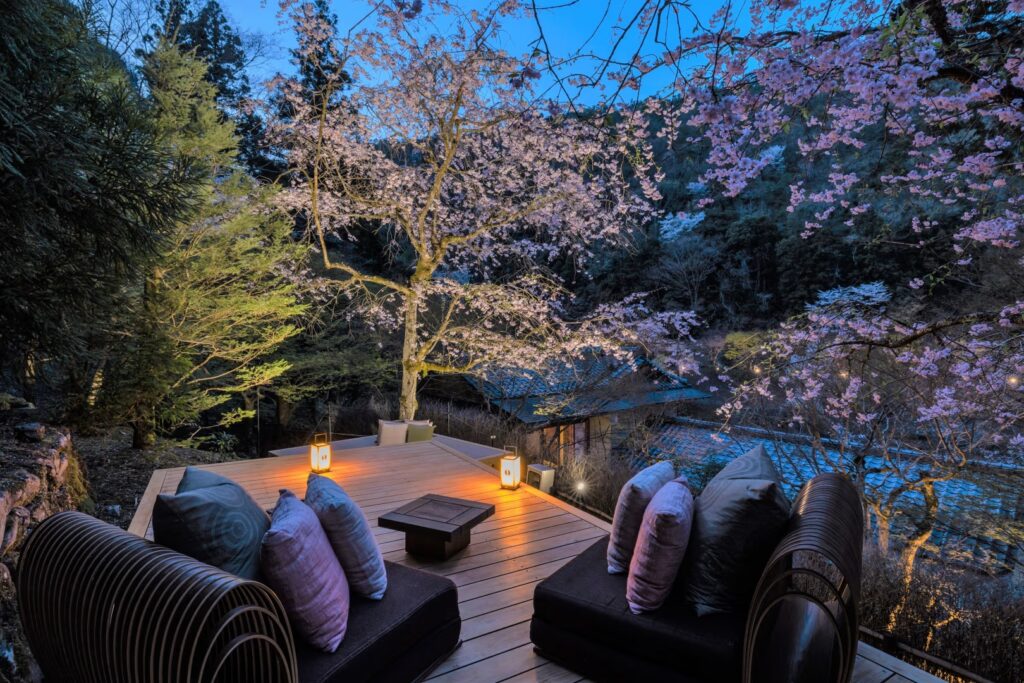
The water garden at dusk
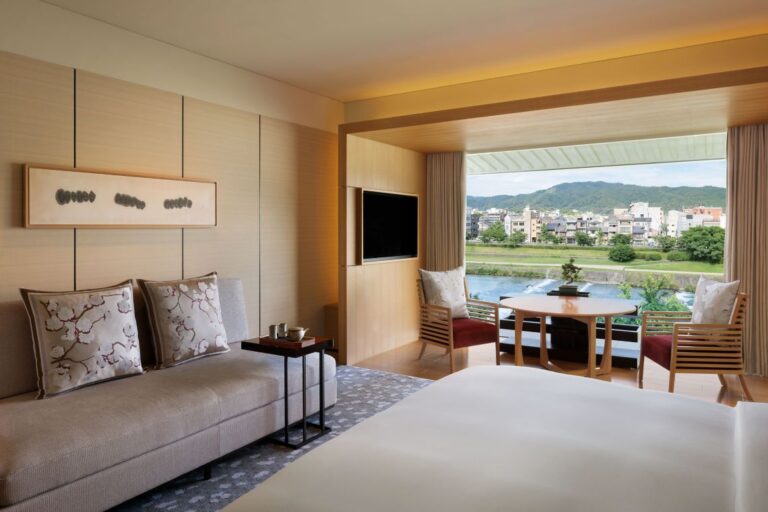
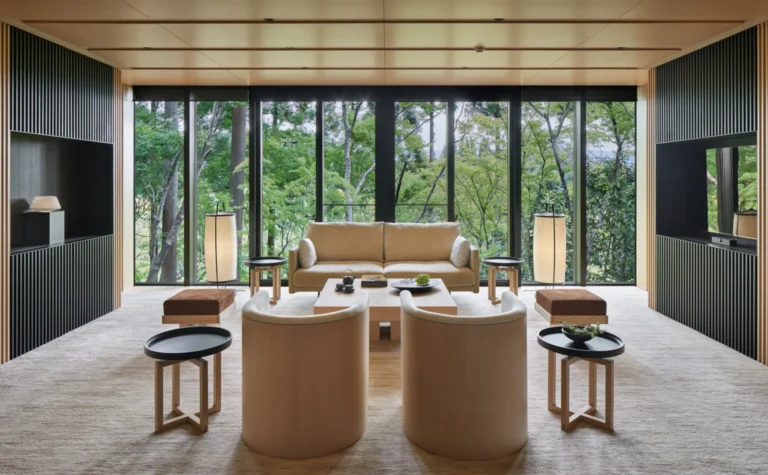
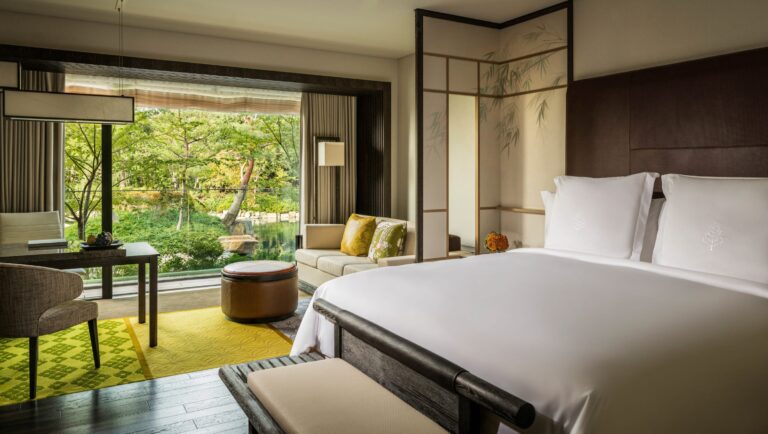
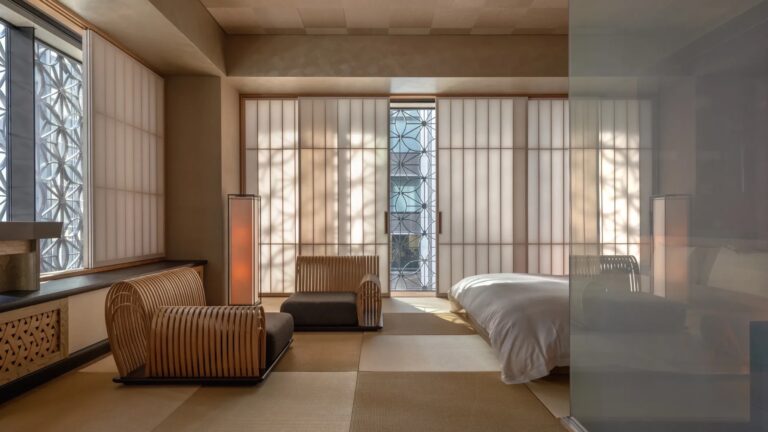
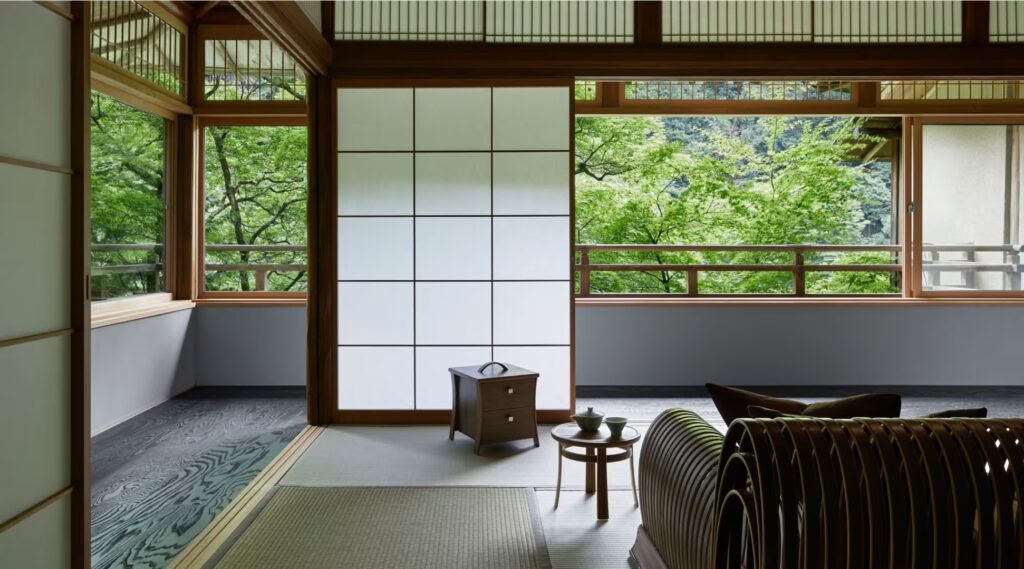
Much of the building’s character lies in its finishes. Kyoto craftspeople treated the timber columns and ceilings with arai, a traditional washing technique that removes dirt and surface discolouration. In each room, a bespoke, low-set tatami sofa allows guests to take in the view while sitting close to floor level.
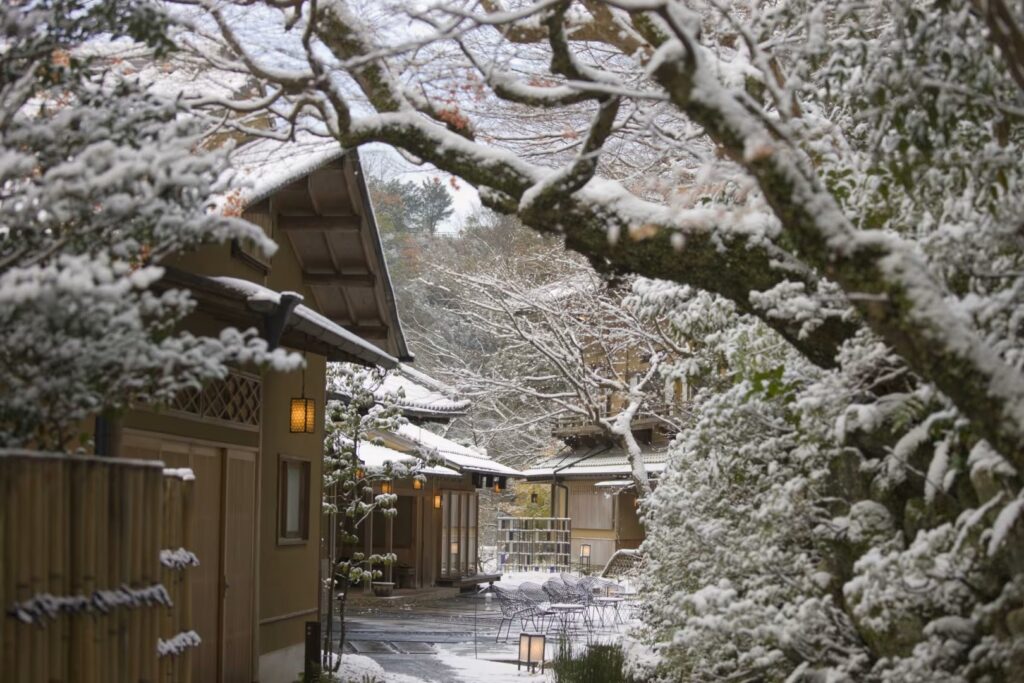
The courtyard in snow
Bedroom walls are finished in Kyo-karakami paper by Kyo Karakami MARUNI, one of Kyoto’s remaining long-established workshops. Its handcrafted surfaces have a texture and character that conventional printing cannot replicate.
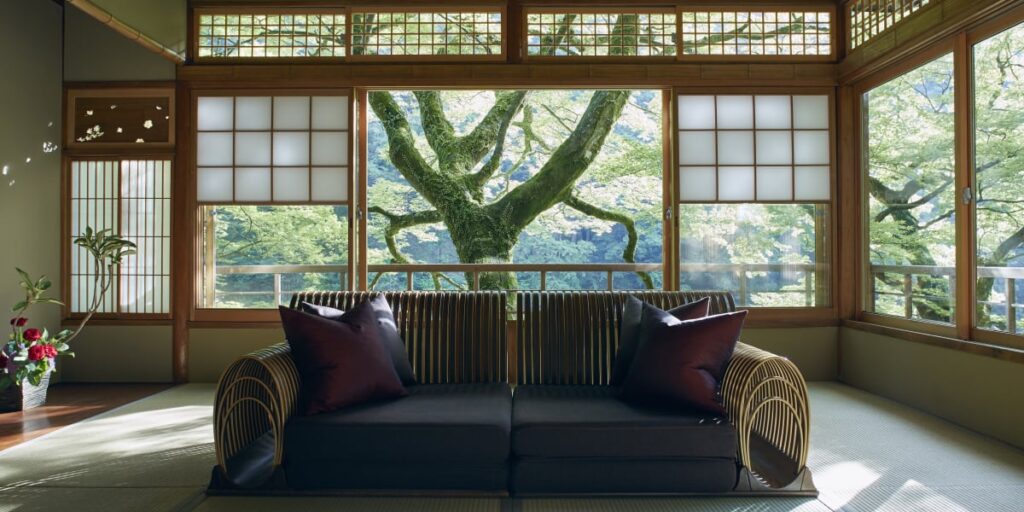
A tatami room with a sofa
Outside, the Floating Tea Room extends out over the Oi River on a timber platform. The Hidden Garden offers a different expression of Japanese landscape design, using smoked roof tiles and white sand in the spirit of a karesansui dry garden. Together, the interiors and gardens give the former inn a distinctly contemporary identity without losing its connection to Kyoto’s craft traditions.
Rooms & Suites
The hotel has 25 rooms across four categories: Tsukihashi, Yamanoha, Tanigasumi and Mizunone. Each is an individual guest pavilion for one to three people, depending on the room.
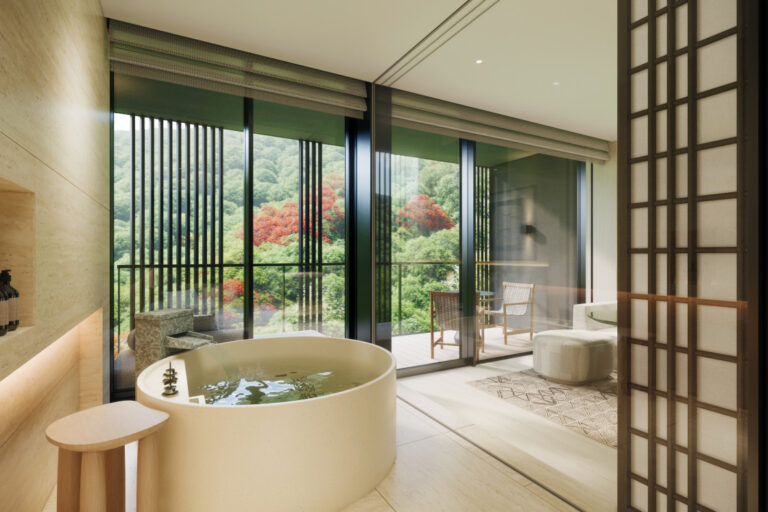
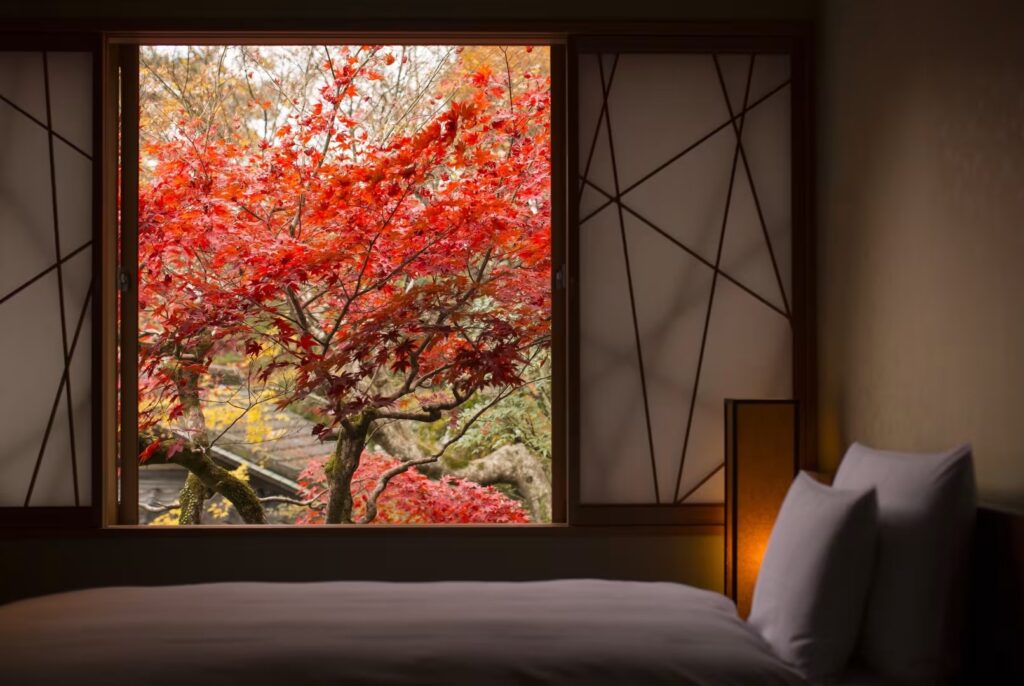
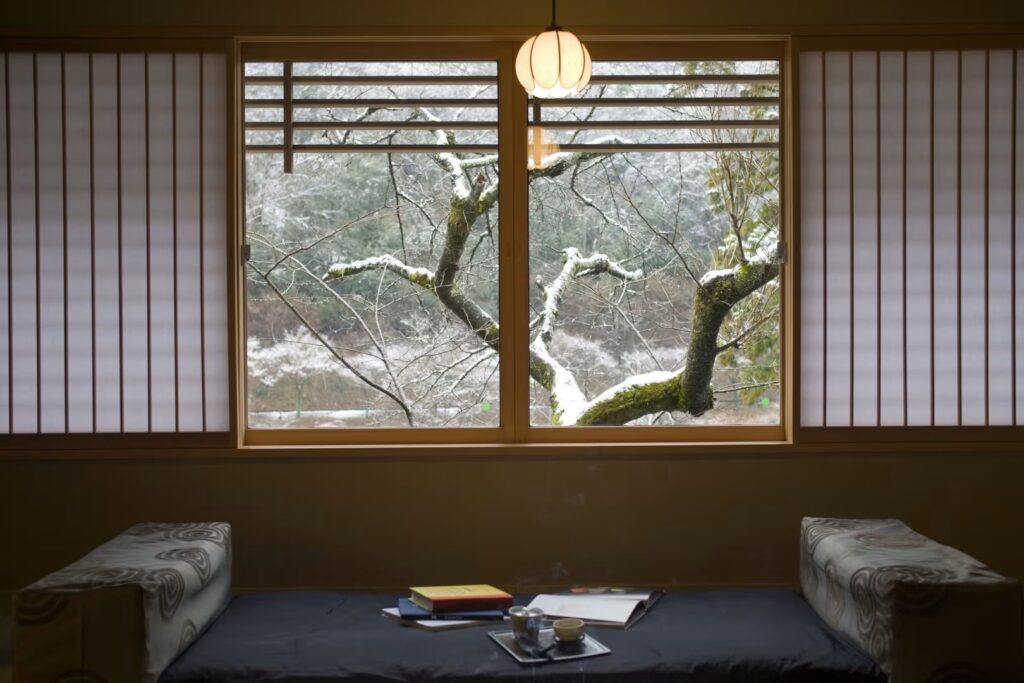
Each looks towards the Oi River and Mount Ogura. Windows frame a landscape whose colours change with the seasons, though the layout and perspective vary between categories. Guests with a particular view in mind should check the room details before booking.
Dining
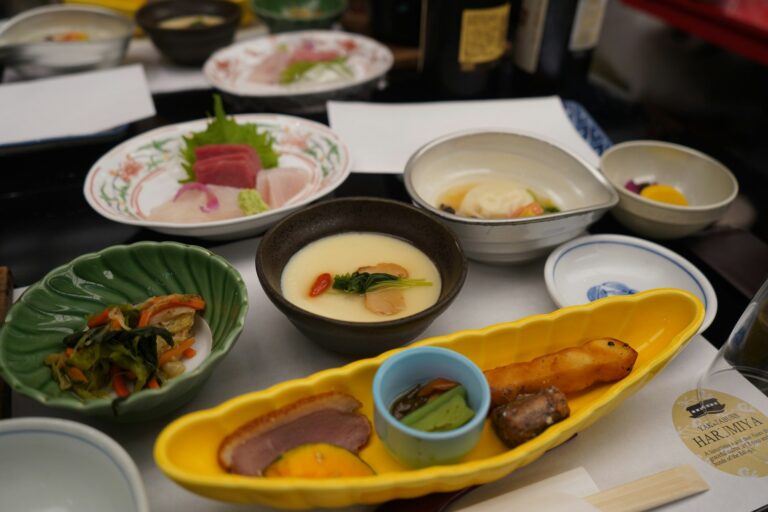
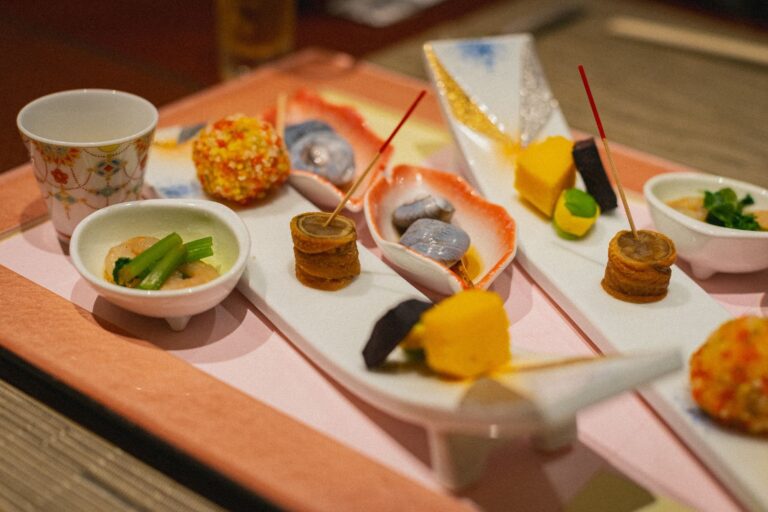
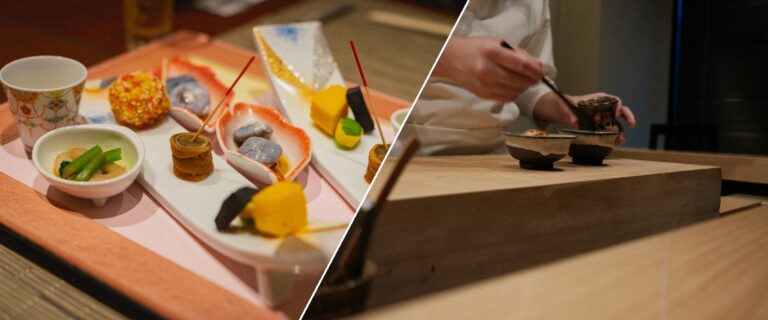
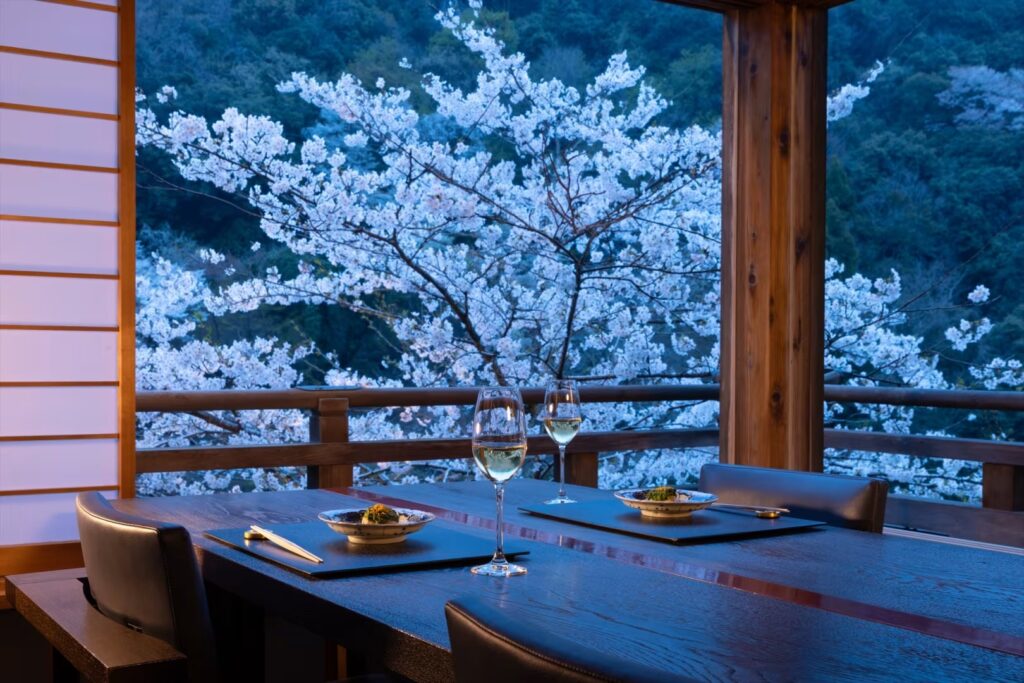
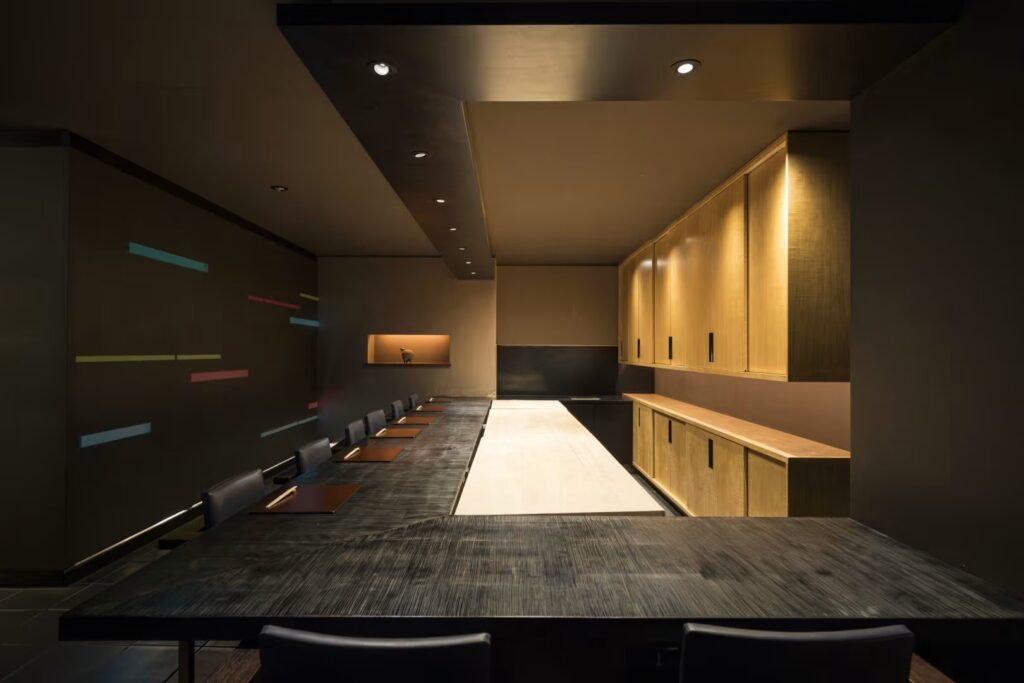
Dinner centres on Savor of SHINMIJIZAI, HOSHINOYA Kyoto’s interpretation of Japanese cuisine, bringing traditional ideas together with a more contemporary approach.
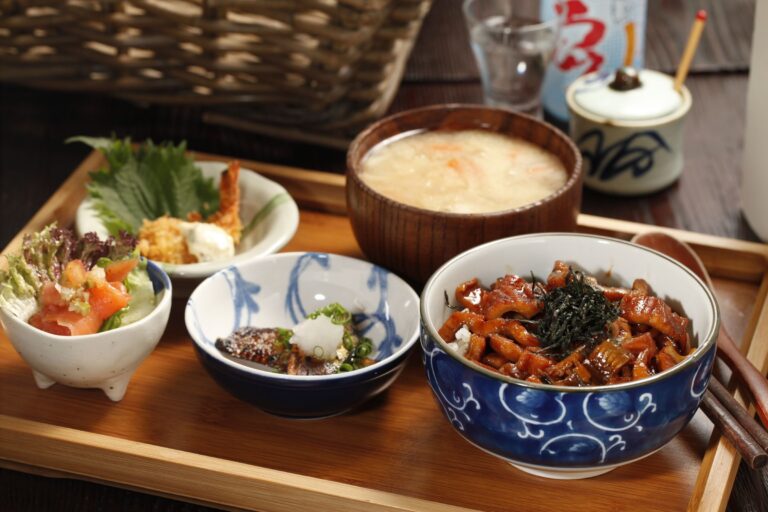
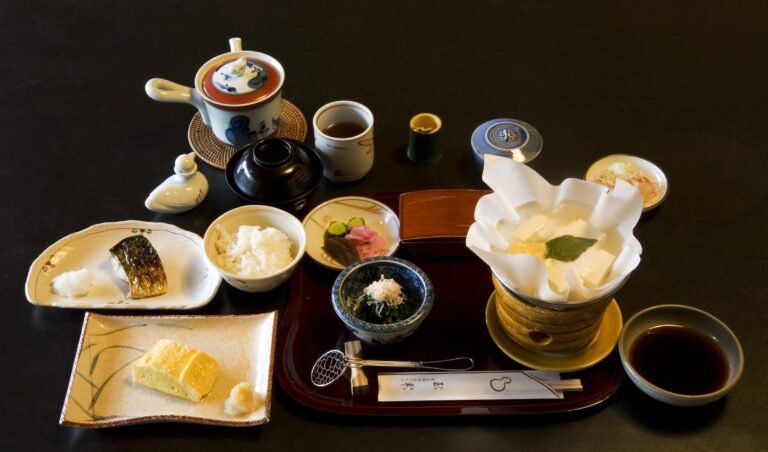
Breakfast is served in the privacy of the guest room. The Japanese-style meal features seasonal vegetables in a delicate broth. Other dining options include lighter Kyoto dishes such as yuba udon and seasonal vegetables.
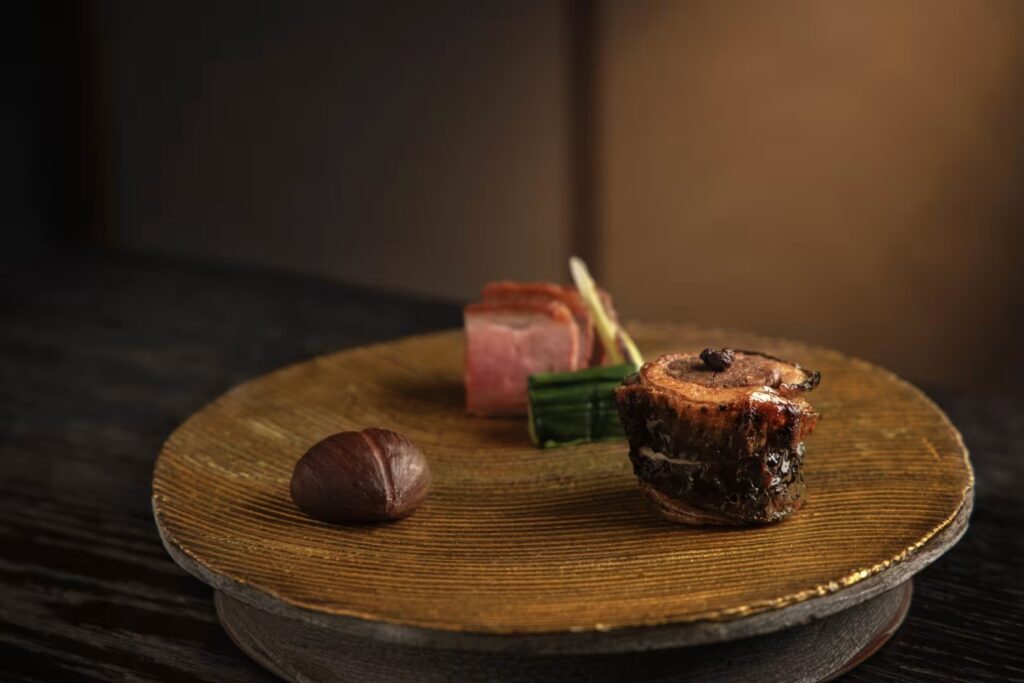
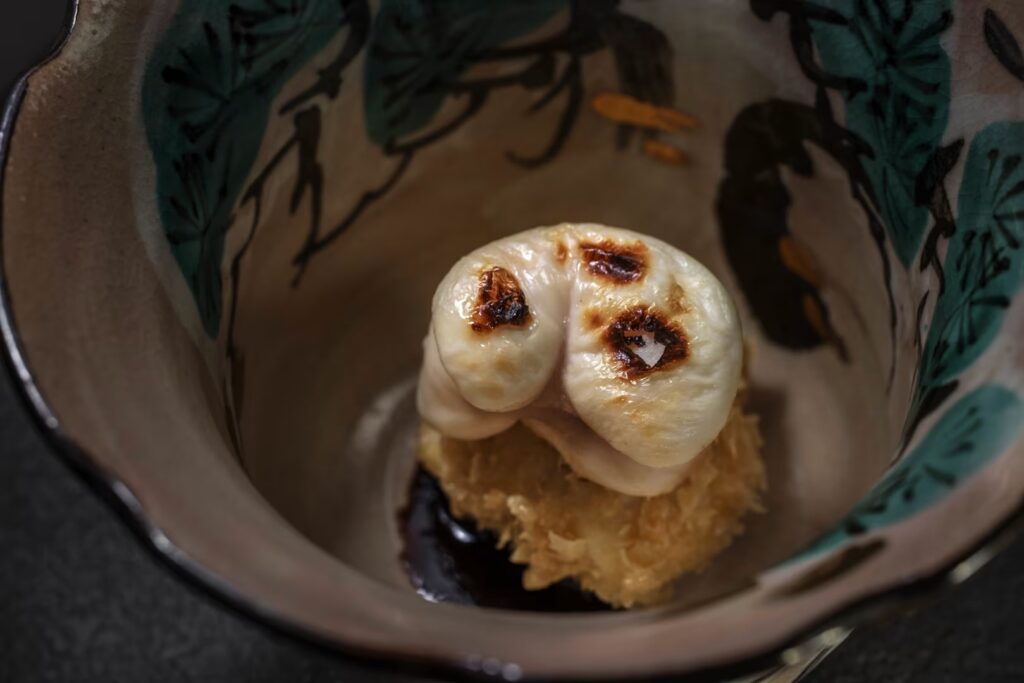
At certain times of year, guests may also be able to order an in-room shabu-shabu dinner featuring beef or yuba. Menus vary, and dietary requirements should be discussed with the hotel in advance.
Wellness
In-room spa treatments are complemented by gentle activities such as morning outdoor stretching and Zen meditation. The spa is closed on Tuesdays, Saturdays and Sundays, although guests should confirm opening days before booking. The hotel also offers experiences centred on digital detox and quieter moments in the evening.
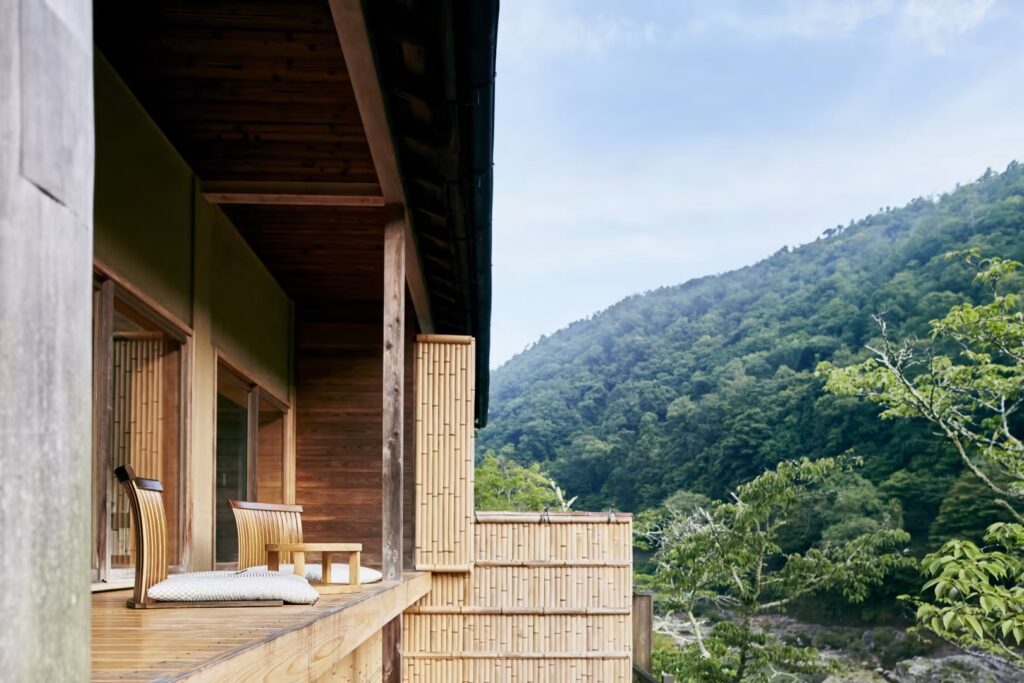
A veranda in the green season
Schedules and availability may change, so spa treatments and organised activities are best confirmed before arrival.
Services & Experiences
The boat journey is only one introduction to Kyoto’s traditions. On the private boat Hisui, guests can take part in a matcha-making experience. Back at the hotel, Kado offers an introduction to ikebana with Ryuho Sasaoka, while other activities explore kimono dressing, traditional incense ceremonies and games enjoyed by Kyoto’s aristocracy from the 14th century.
There are opportunities to discover Kyoto’s teahouse culture, including the traditions associated with geiko and maiko. A fragrance bar for adults, housed in a 130-year-old kura storehouse, offers another, more contemporary encounter, pairing Japanese whisky with aromatic elements.
Seasonal experiences may include an aperitif beneath a 400-year-old maple tree. For winter 2026 to 2027, programmes include Kyoto Spice Stay, with a personalised spice blend and moxibustion, and a New Year stay featuring early-morning private prayers at Horin-ji Temple. Another cultural experience explores shell paintings associated with The Tale of Genji. These programmes are time-specific, so dates and availability should be checked directly.
For practical arrangements, the hotel can organise luggage transfers from Kyoto Station or Kansai International Airport, as well as flowers or a cake for special occasions.
Traveleak’s Take
What distinguishes HOSHINOYA Kyoto is not simply its riverside location, but the way arrival, architecture and local craftsmanship form one continuous experience. The boat crossing sets the tone; inside, the old inn’s materials and Kyoto’s artisanal techniques carry that sense of place into the rooms.
It is particularly appealing to travellers who want to spend time at the property itself and engage with Kyoto’s cultural traditions. The trade-off is flexibility: boat schedules and transport arrangements make spontaneous arrivals and departures less straightforward than at a hotel with direct road access. Aman Kyoto offers another secluded setting, in a valley in Takagamine rather than beside the Oi River.
More hotels in Kyoto on Traveleak:
Four Seasons Hotel Kyoto · The Ritz-Carlton, Kyoto
Park Hyatt Kyoto · Aman Kyoto
The Imperial Hotel, Kyoto
Image source: HOSHINOYA Kyoto
Essential Information
- Location
- 11-2 Arashiyama Genrokuzan-cho, Nishikyo-ku, Kyoto 616-0007, Japan
- Accommodation
- 25 rooms in four categories.
- Dining
- Savor of SHINMIJIZAI, in-room breakfast, other dining options.
- Wellness
- In-room spa treatments, morning stretching and meditation.
- Getting there
- Private boat from Arashiyama, approximately 15 minutes; first departure 14:30, last 17:45; alternative car transfer in unsuitable weather; no on-site guest parking.
Location Map
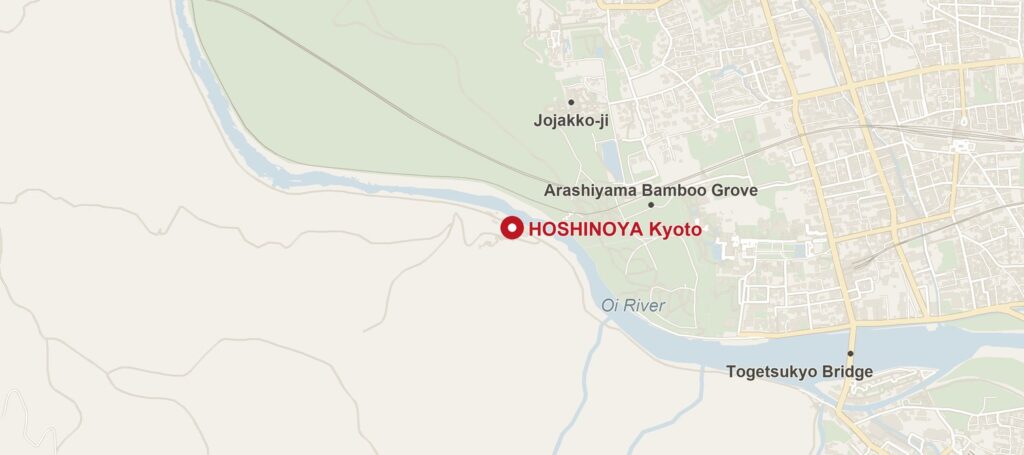 © OpenStreetMap contributors
Contact
11-2 Arashiyama Genrokuzan-cho, Nishikyo-ku, Kyoto 616-0007, JapanOfficial Website hoshinoresorts.com/en/hotels/hoshinoyakyoto
Rates via Trip.com
Some links on this page are affiliate links. If you make a booking through them, Traveleak may earn a small commission at no additional cost to you.