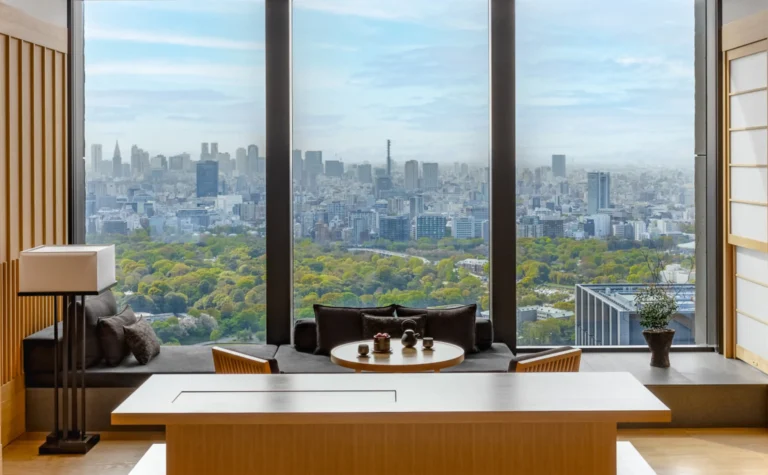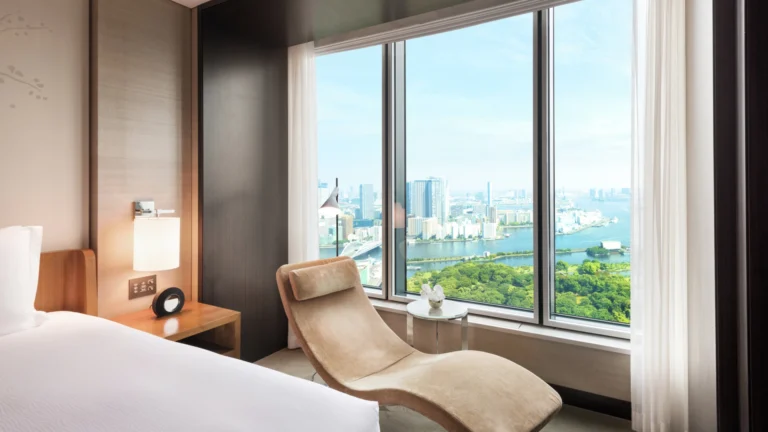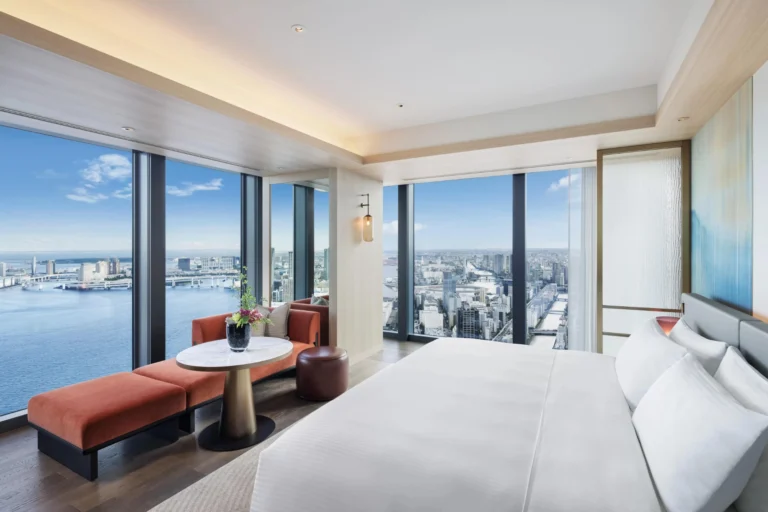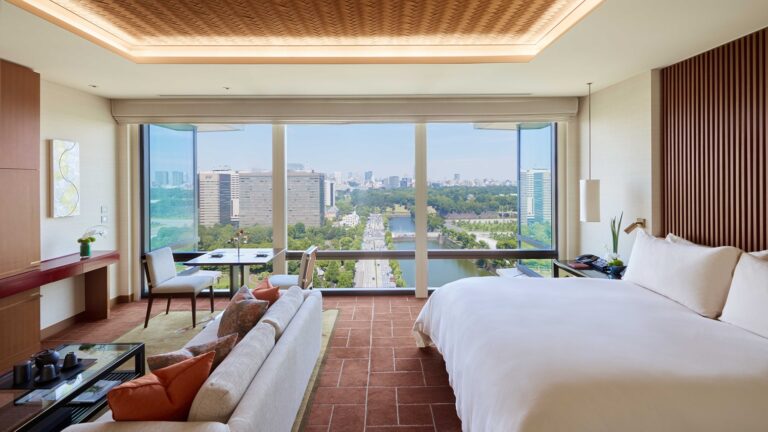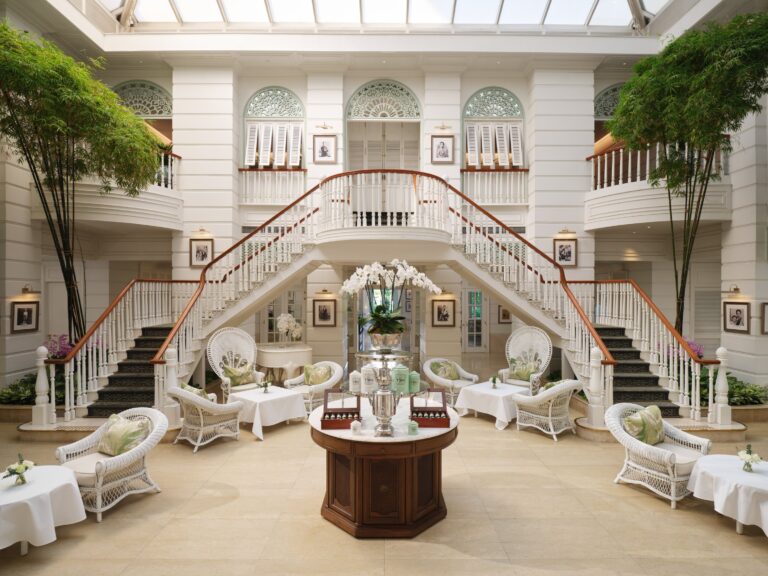
Among the office towers of Otemachi, HOSHINOYA Tokyo welcomes guests with a simple ritual: taking off their shoes before entering.
Guests then step into the ryokan’s tatami-lined interiors. The hotel does not provide indoor slippers. The pace of life outside seems to be left behind with one’s shoes, giving way to spaces shaped by the customs of a Japanese inn.
But HOSHINOYA Tokyo is not an old ryokan. Opened in 2016, the hotel is Hoshino Resorts’ way of bringing Japan’s traditional accommodation culture into a contemporary building in the capital.
The Backstory
Ryokan have long been part of Japan’s hospitality culture, where architecture, the welcome, meals and everyday rituals form a whole. This form of lodging often evokes low-rise buildings, gardens and spaces close to nature.
HOSHINOYA Tokyo poses another question: can those qualities be preserved in a high-rise building in the heart of the financial district?
The chosen site was Otemachi, near an area once within Edo Castle. The name Otemachi comes from Otemon, the castle’s main gate, although the district today is known for corporate headquarters and large commercial buildings.
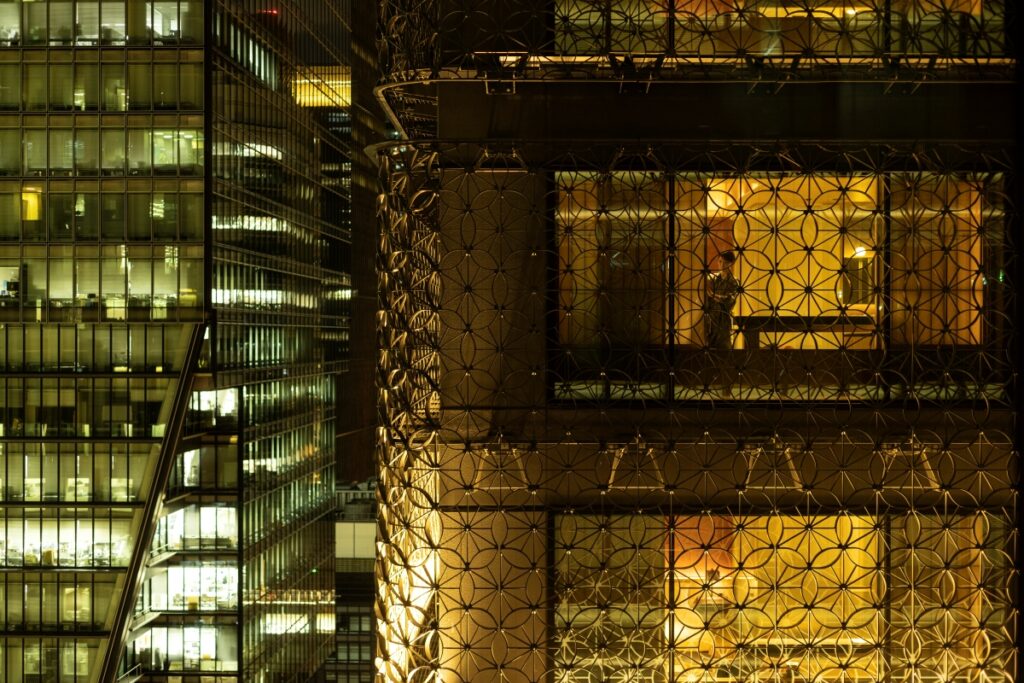
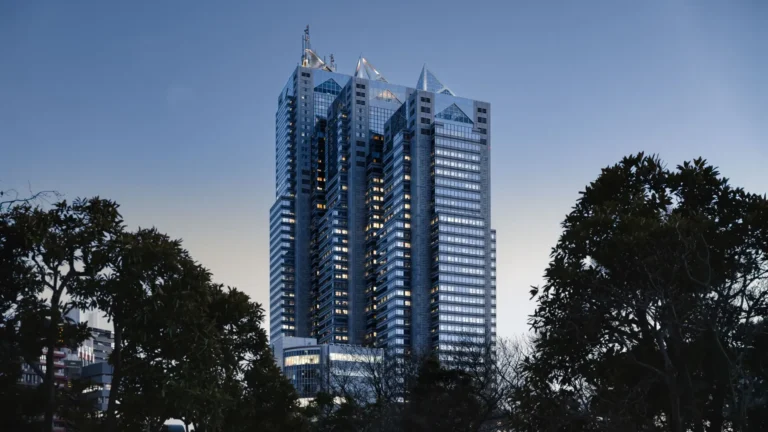
The façade at night.
As part of the Otemachi redevelopment alongside Grand Cube, Hoshino Resorts developed an 84-room hotel, which officially opened on 20 July 2016.
The design team arranged each accommodation floor like a small ryokan, with six rooms sharing a communal lounge called Ochanoma. Tatami and the rituals of Japanese hospitality connect the building throughout.
The Setting
The hotel stands at 1-9-1 Otemachi, Chiyoda, about a ten-minute walk from Tokyo Station’s Marunouchi North exit.
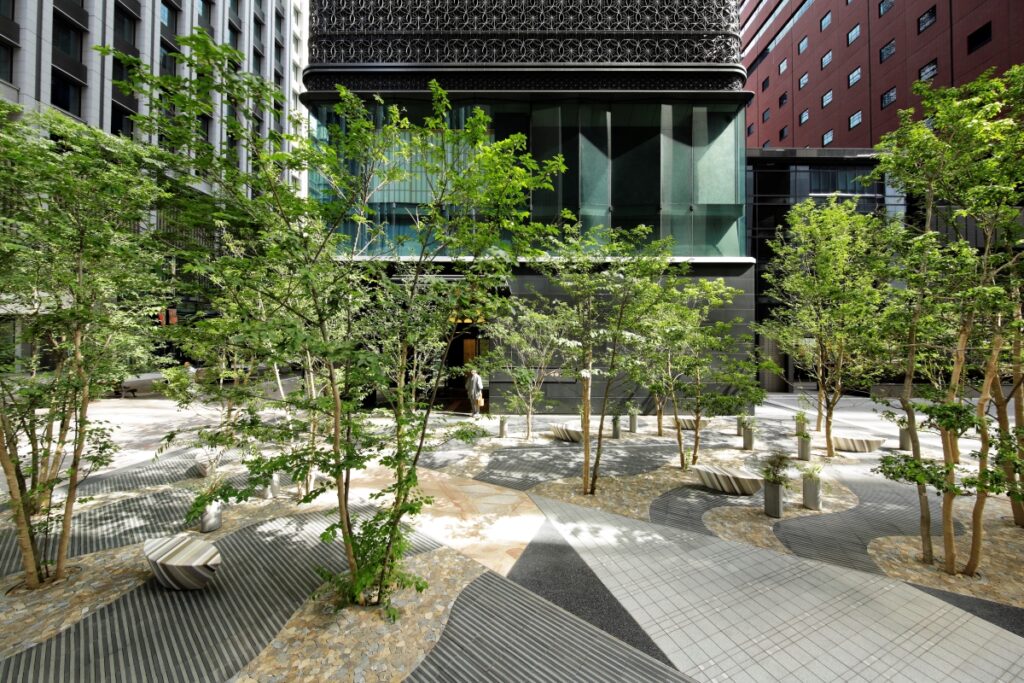
HOSHINOYA Tokyo in Otemachi.
The location is convenient for exploring central Tokyo. Outside are the busy streets of a business district; inside, much of the space is organised around tatami, quiet corridors and shared living areas close to the rooms.
Architecture & Interior Design
Seen from the street, HOSHINOYA Tokyo appears as a dark building, contrasting with Otemachi’s glass façades.
Up close, a three-dimensional pattern around the windows becomes apparent. The design references Edo komon, a traditional Japanese pattern, while rounded corners recall stacked lacquerware boxes.
During the day, light passes through the façade, creating shifting areas of light and shade across the interior surfaces.
The project involved Mitsubishi Jisho Design, NTT Facilities, and Rie Azuma together with Azuma Architect & Associates. Rie Azuma was responsible for planning the ryokan spaces and interiors, and collaborated on the exterior design.
While the exterior gives the building its identity on the street, tatami shapes life inside.
Tatami runs through most of the interior, including the corridors, which in urban hotels are usually finished with hard flooring. Removing shoes at the entrance is therefore closely tied to how the building is used.
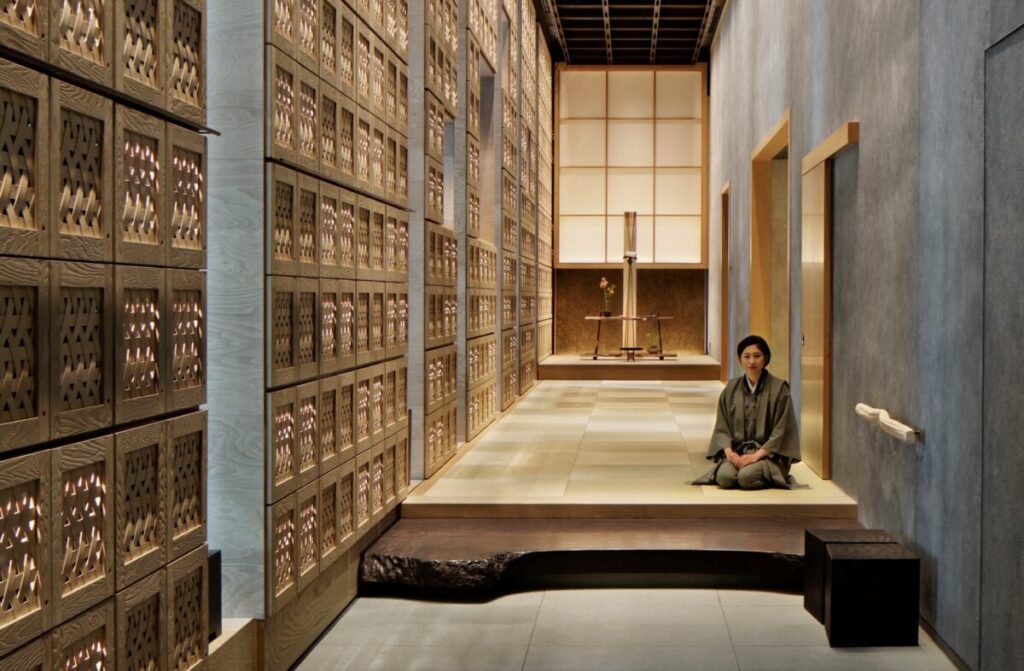
The entrance, where shoes come off.
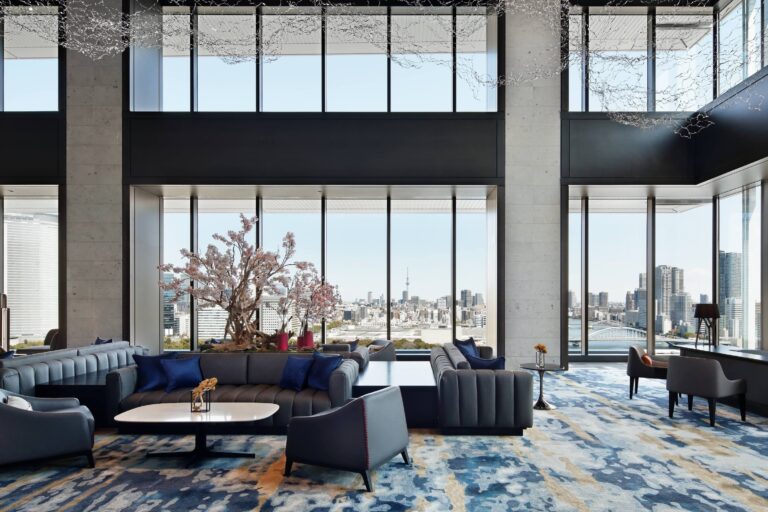
On each guest floor is Ochanoma, a shared lounge for six neighbouring rooms.
Here, guests can rest, enjoy a selection of seasonal snacks or spend time outside their private rooms. Shared space is brought close to the accommodation.
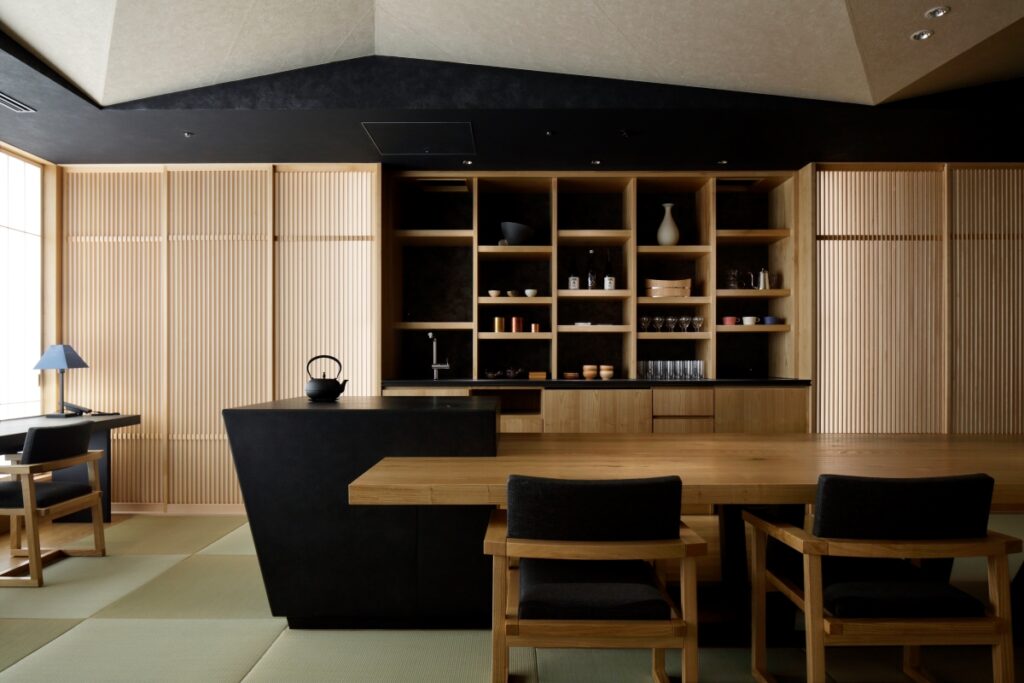
A shared lounge.
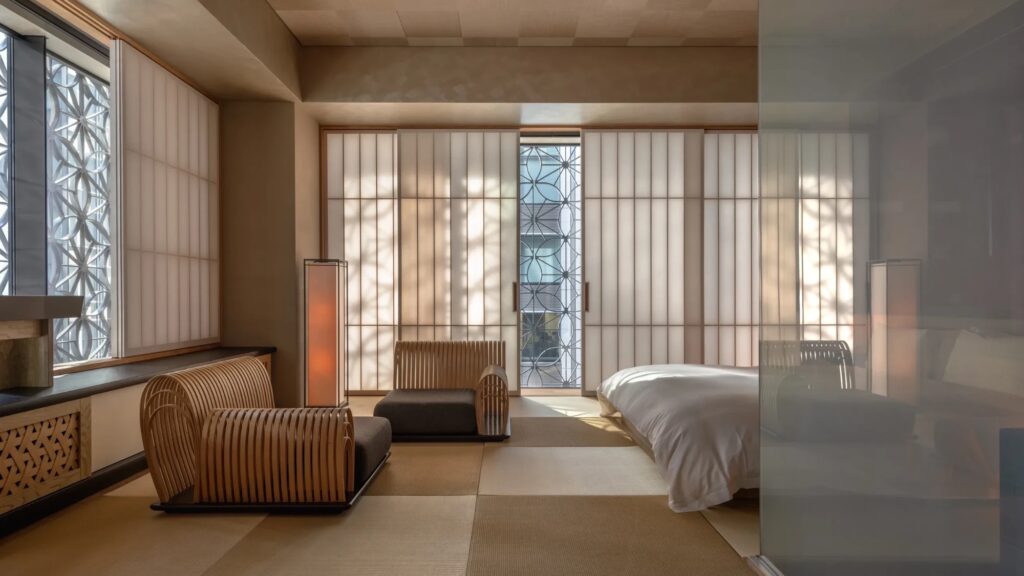
In the rooms, tatami is combined with washi paper, bamboo, chestnut wood and low furniture. Open space is left around the seating area, while the façade pattern changes the colour and light inside the room.
The design pays attention to seated posture, sightlines and the open space needed for daily activities. Guests can move from their rooms to the Ochanoma across the same tatami surface without needing to change their habits between spaces.
On the top floor, the story of the ryokan continues in a very different space: an onsen in central Tokyo.
Natural hot spring water is drawn from approximately 1,500 metres below Otemachi. The bathing area has an indoor section and an outdoor bath open to the sky, enclosed by high walls.
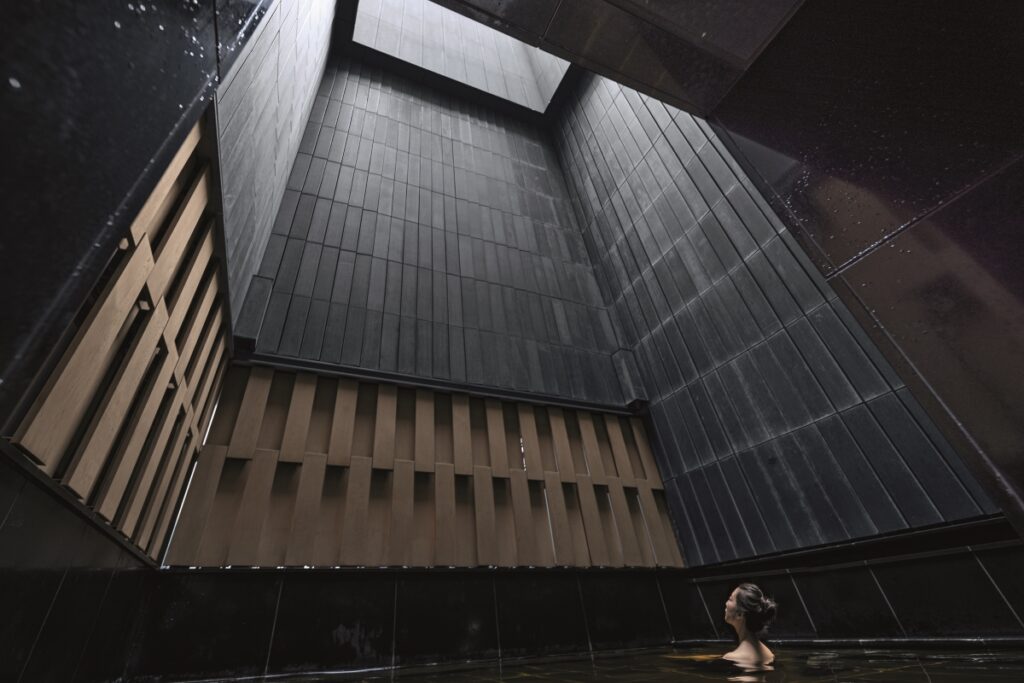
The onsen.
The design limits the view to the sky above. Light, wind and weather become things to observe while bathing.
Rooms
HOSHINOYA Tokyo has 84 rooms across three main categories, with layouts designed around life on tatami.
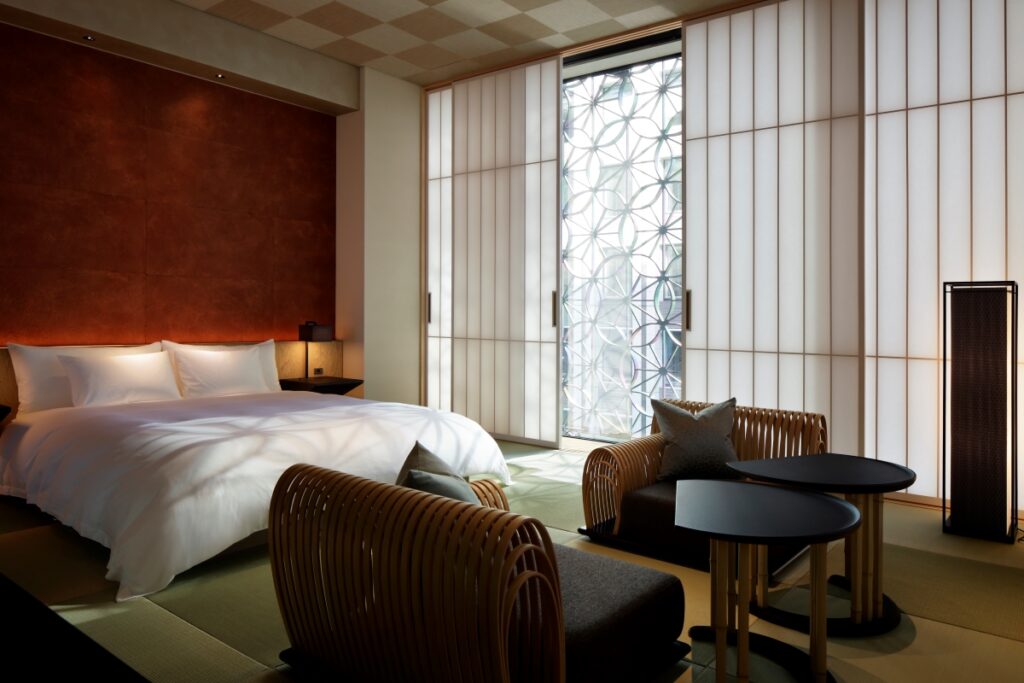
A guest room.
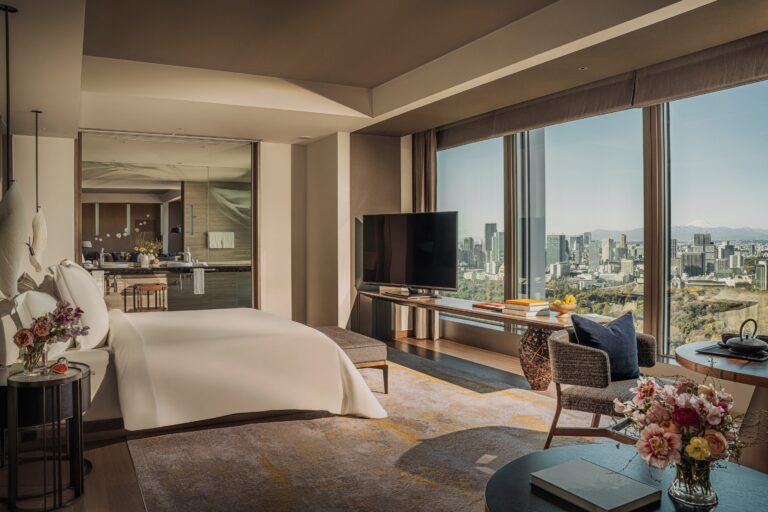
Yuri (Deluxe King) and Sakura (Deluxe Twin) both measure about 45 m². Yuri has a king-size bed for two guests, while Sakura has two separate beds. Both retain a Japanese interior language, with low seating and natural materials.
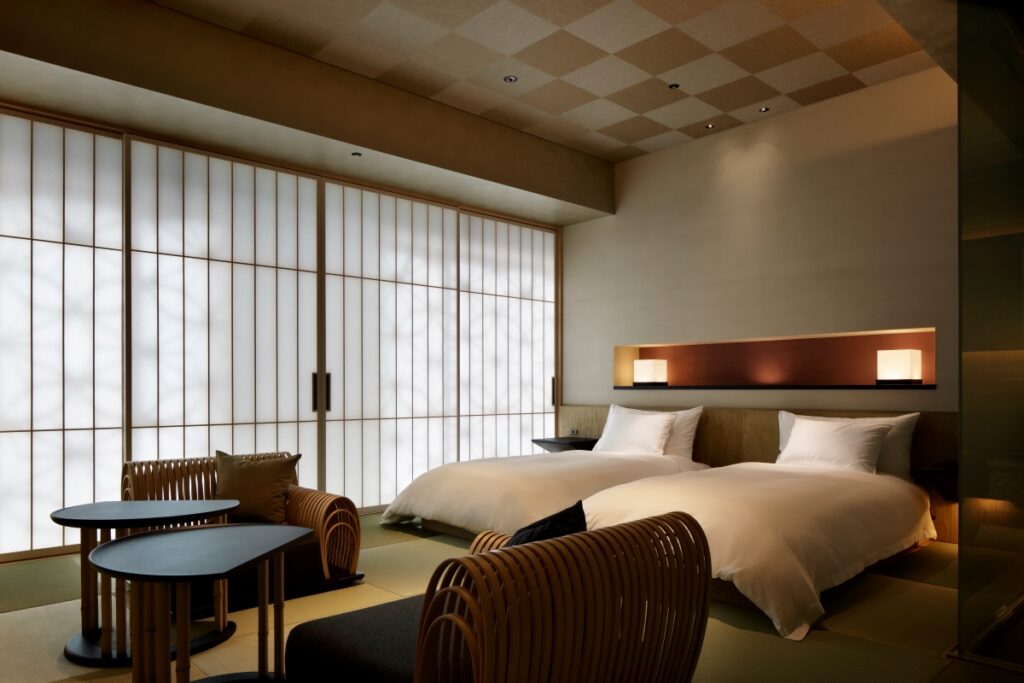
A twin room.
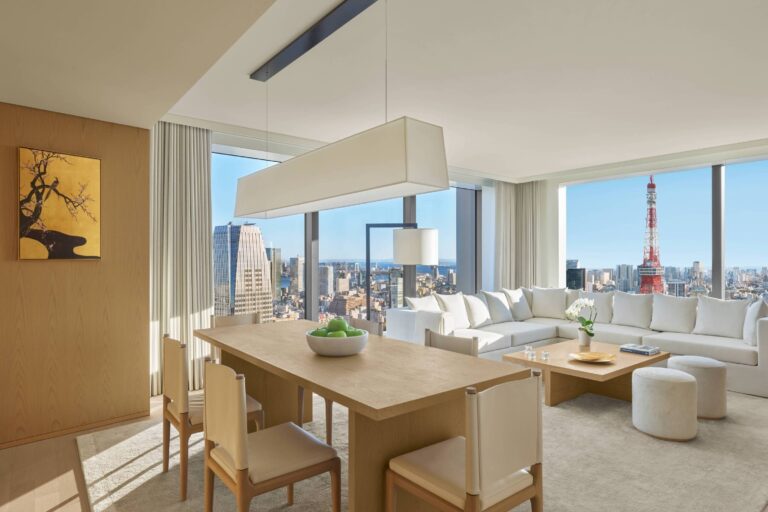
Kiku (Executive Triple) measures about 80 m², occupies a corner of the floor and can accommodate up to three guests. The larger floor area allows for a dining table and dressing area, suited to guests who need more room for daily activities.
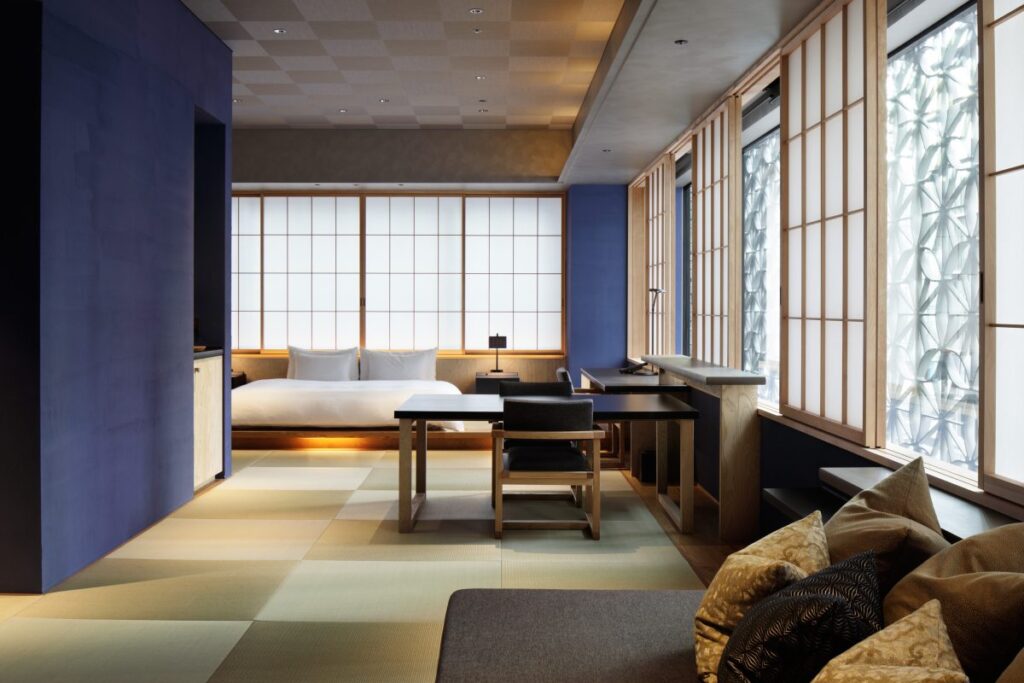
A guest room with a blue wall.
The main distinctions between room categories lie in their sizes, bed configurations and arrangement of living spaces.
Dining
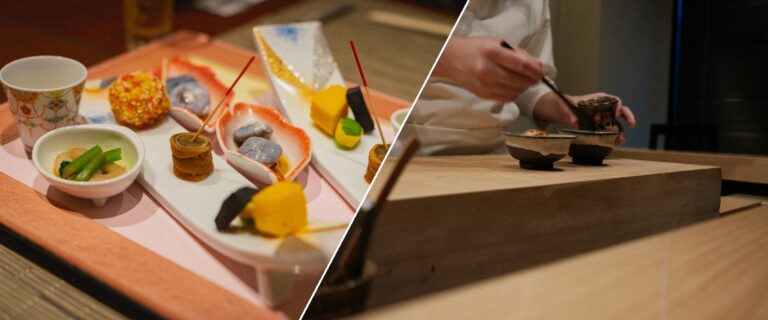
Dining at HOSHINOYA Tokyo continues to explore Japanese traditions through contemporary interpretations.
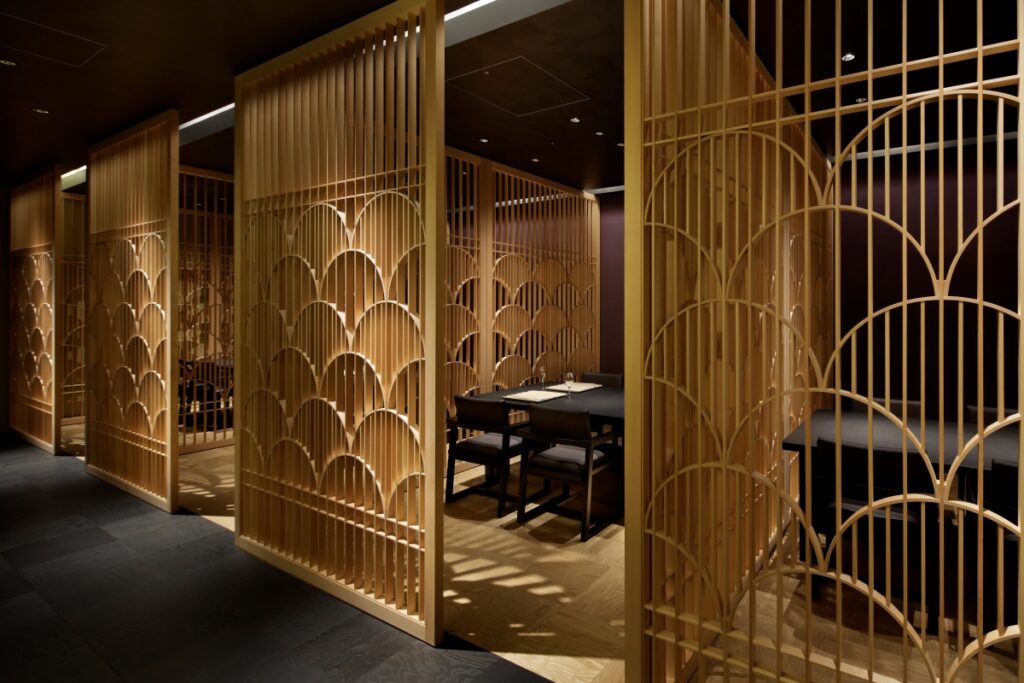
A dining room.
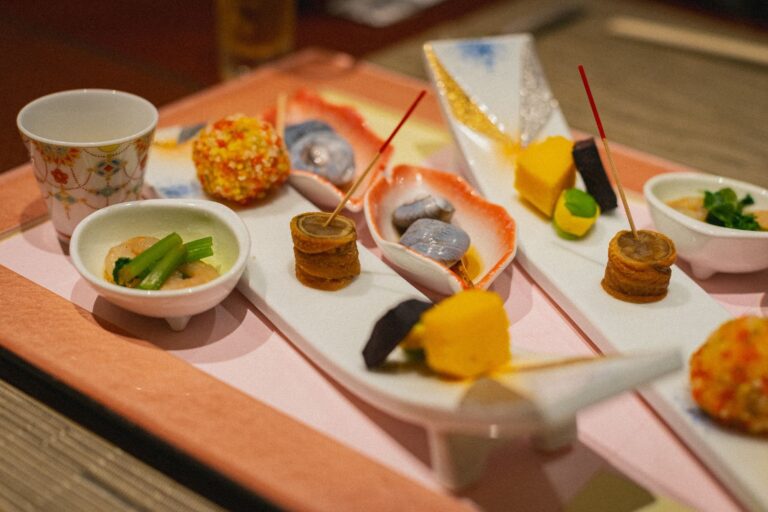
Lost Flavors of Japanese Home Recipes draws inspiration from home-cooked dishes that are becoming less common in everyday life, developing them into a multi-course menu.
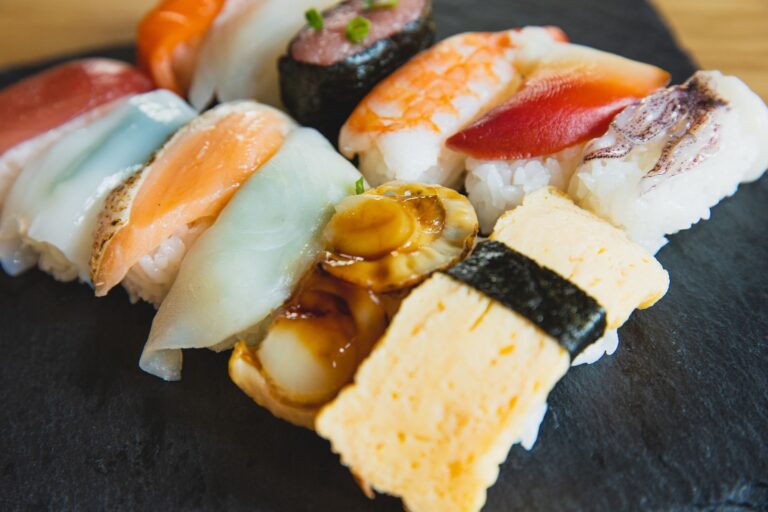
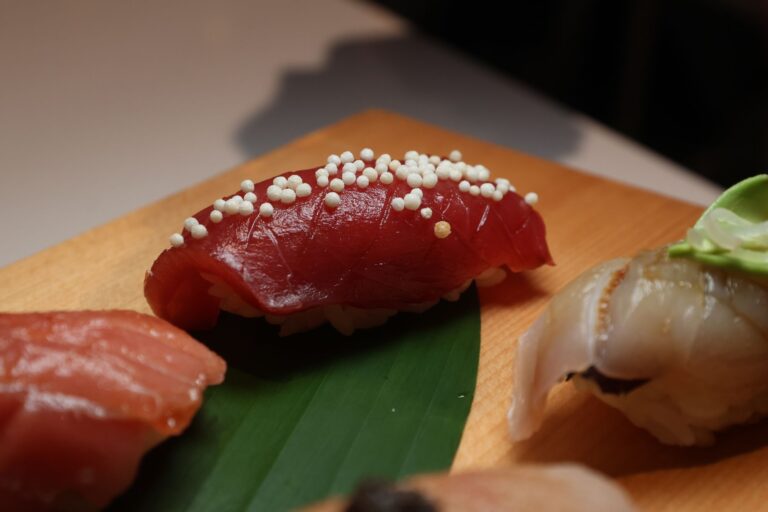
Meanwhile, Sushi Otemon focuses on Edomae techniques while also drawing on sushi traditions from other regions of Japan.
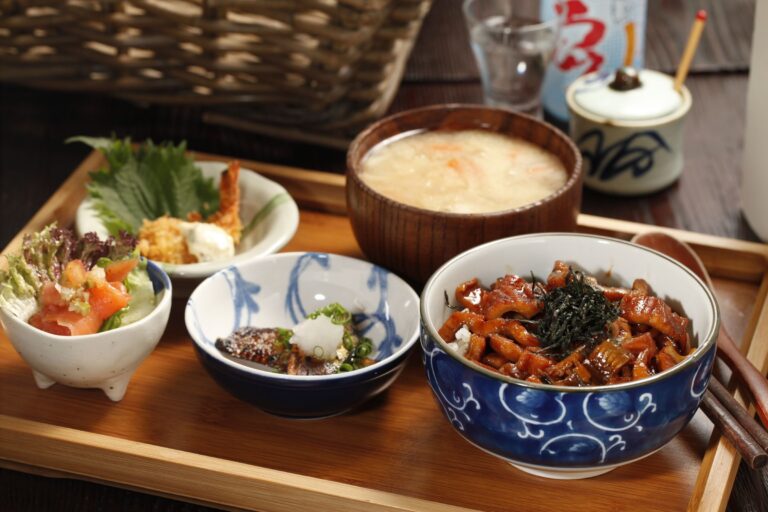
Guests can also choose in-room dining, continuing the private way of life associated with a ryokan.
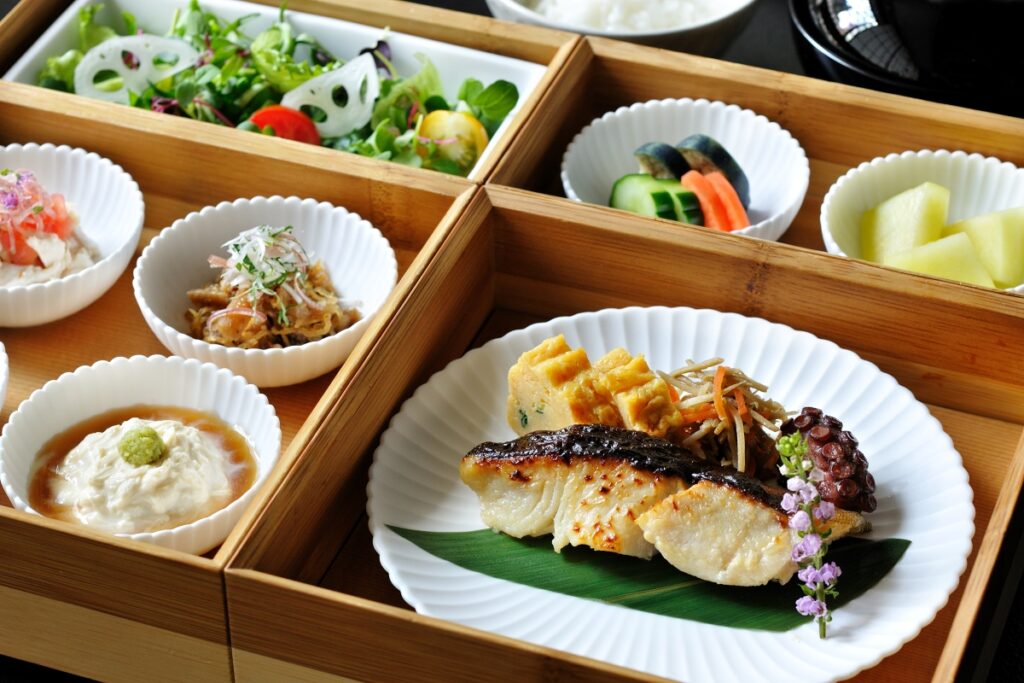
Breakfast in wooden boxes.
Wellness
The onsen on the top floor is the main feature of the wellness area, using natural hot spring water drawn from beneath Otemachi. The hotel also offers treatments and body care options.
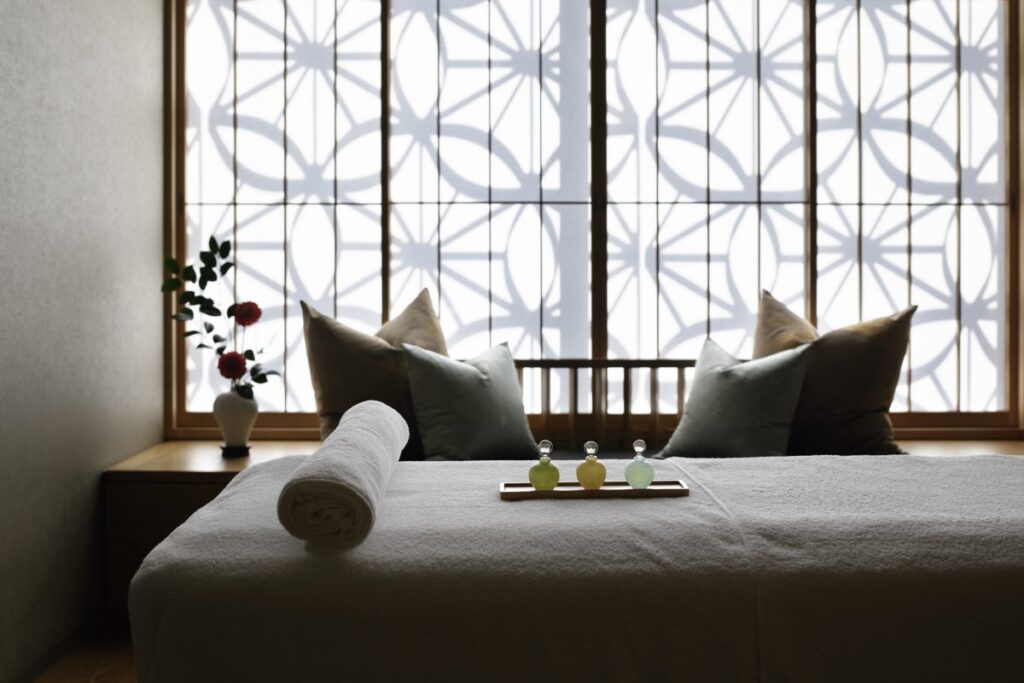
A treatment room.
Culture & Experiences
Beyond time spent in the Ochanoma and onsen, HOSHINOYA Tokyo offers cultural activities involving tea ceremony, morning kenjutsu practice, miniature gardening and Japanese music performances.
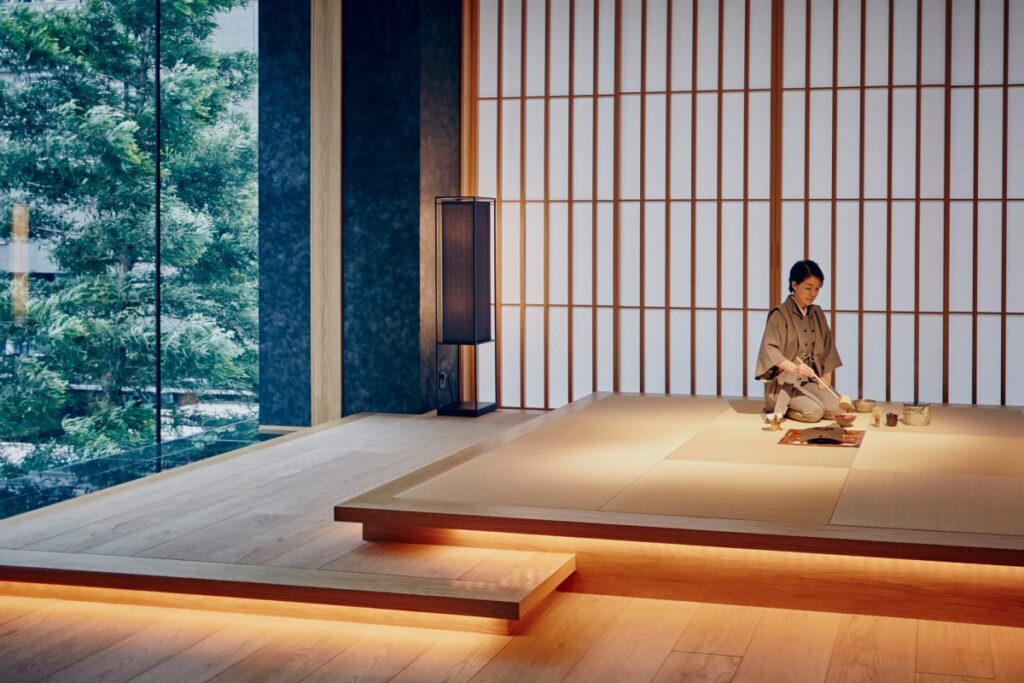
A tea ceremony.
Schedules and content vary by programme, and some activities require advance booking, giving guests more ways to explore culture without leaving the hotel.
Traveleak’s Take
HOSHINOYA Tokyo suits travellers who want to explore ryokan culture while staying in the centre of Japan’s capital.
Tatami floors, the ritual of removing shoes, Ochanoma and the onsen high above the city together shape how guests use the spaces in the hotel.
It is a choice worth considering for those who want to devote a substantial part of their trip to the place where they stay. Conversely, travellers who only need a room in a conventional international-style hotel may not make full use of those features.
Another HOSHINOYA on Traveleak: HOSHINOYA Kyoto
More hotels in Tokyo on Traveleak:
The Peninsula Tokyo · Fairmont Tokyo
Conrad Tokyo · Aman Tokyo
Park Hyatt Tokyo · Bulgari Hotel Tokyo
Palace Hotel Tokyo · Janu Tokyo
Image source: HOSHINOYA Tokyo
Essential Information
- Location
- 1-9-1 Otemachi, Chiyoda-ku, Tokyo 100-0004, Japan
- Accommodation
- 84 rooms across Yuri, Sakura and Kiku; each guest floor has its own Ochanoma.
- Dining
- Lost Flavors of Japanese Home Recipes, Sushi Otemon and in-room dining.
- Wellness
- Natural hot spring onsen and spa treatments.
- Getting there
- About ten minutes on foot from Tokyo Station's Marunouchi North exit.
Location Map
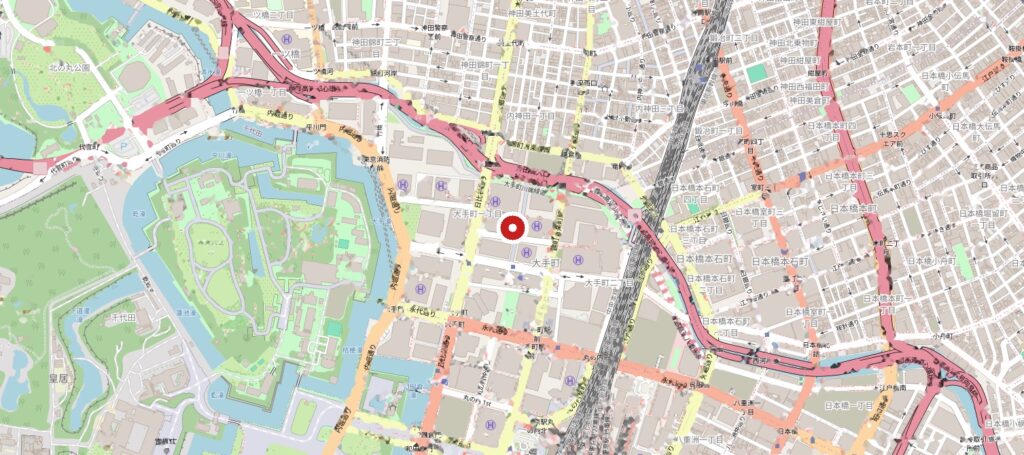 © OpenStreetMap contributors
Contact
1-9-1 Otemachi, Chiyoda-ku, Tokyo 100-0004, JapanOfficial Website hoshinoya.com/tokyo/en
Rates via Trip.com
Some links on this page are affiliate links. If you make a booking through them, Traveleak may earn a small commission at no additional cost to you.