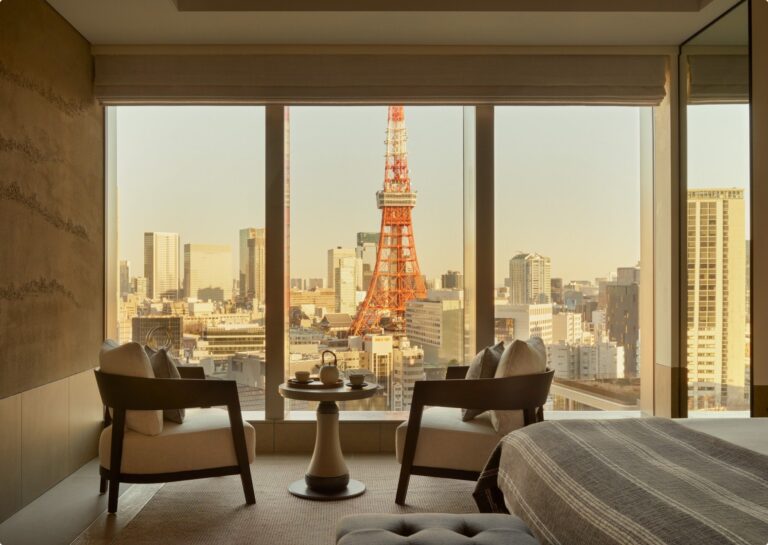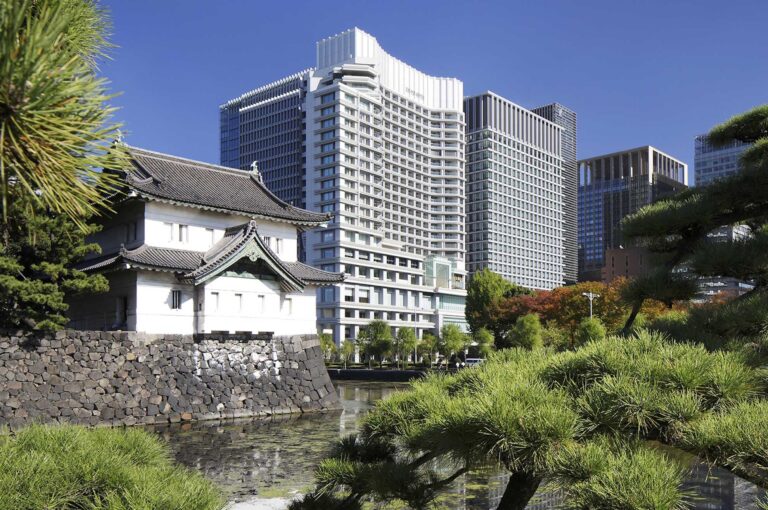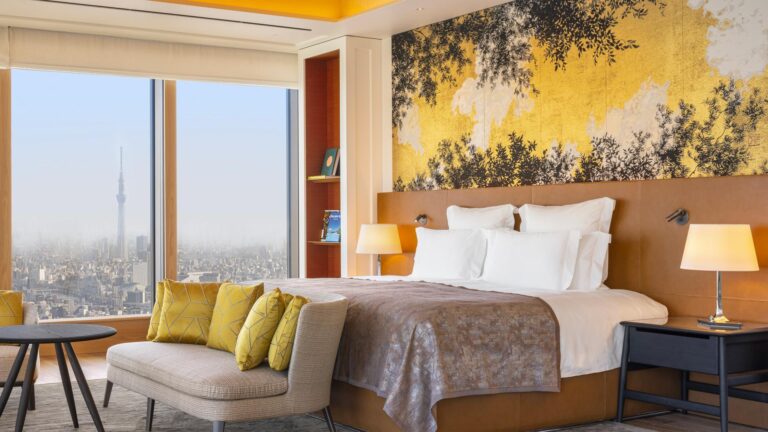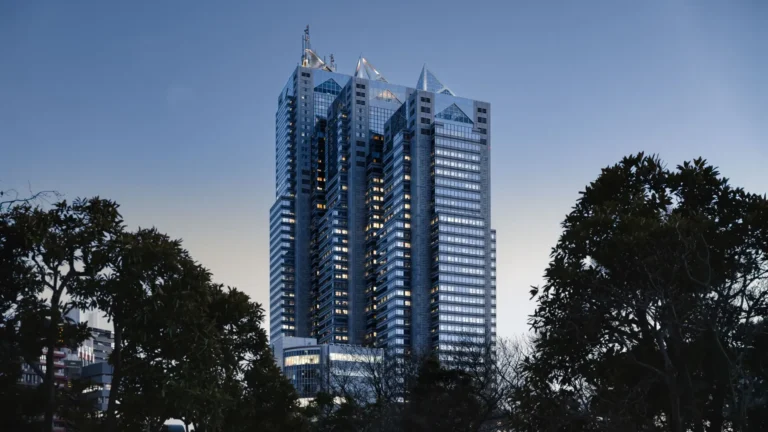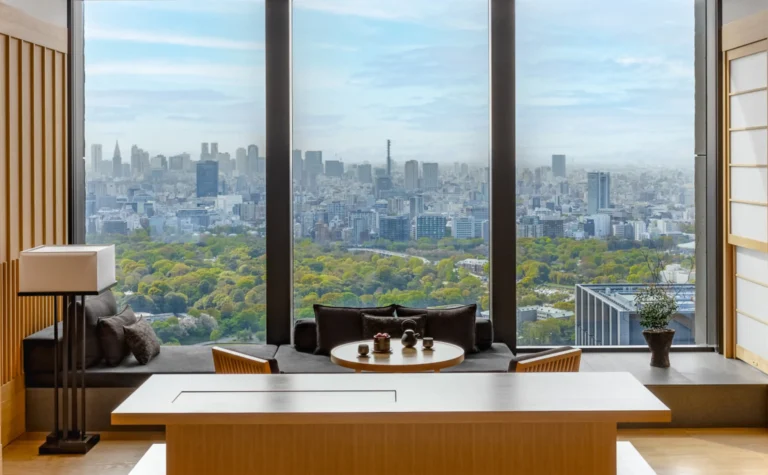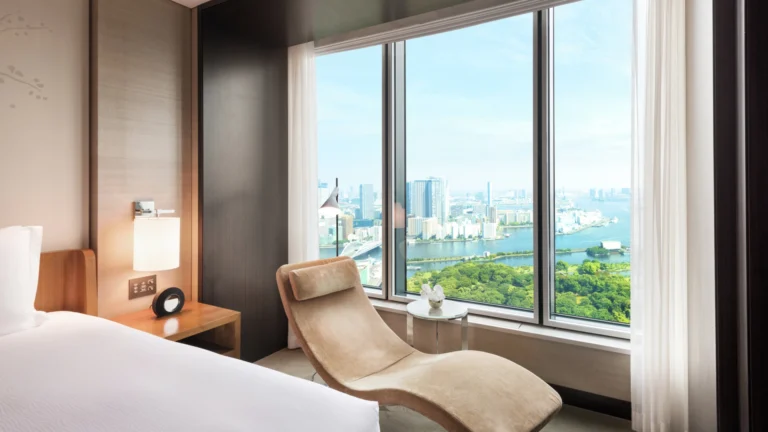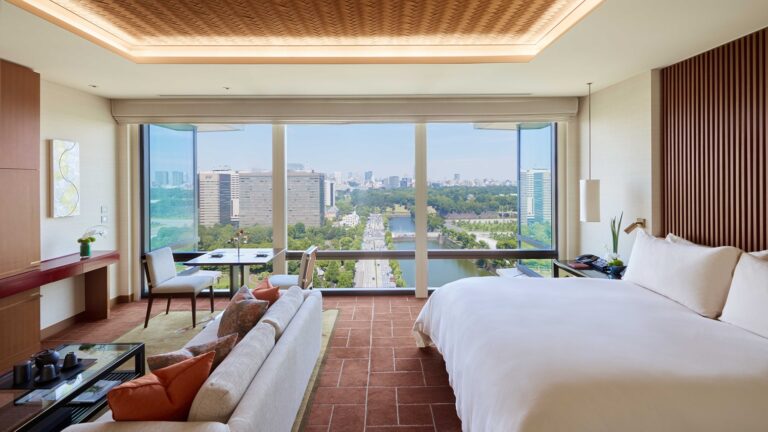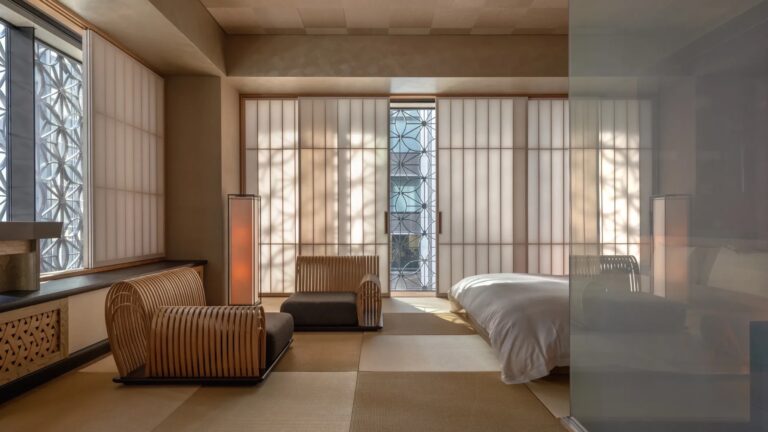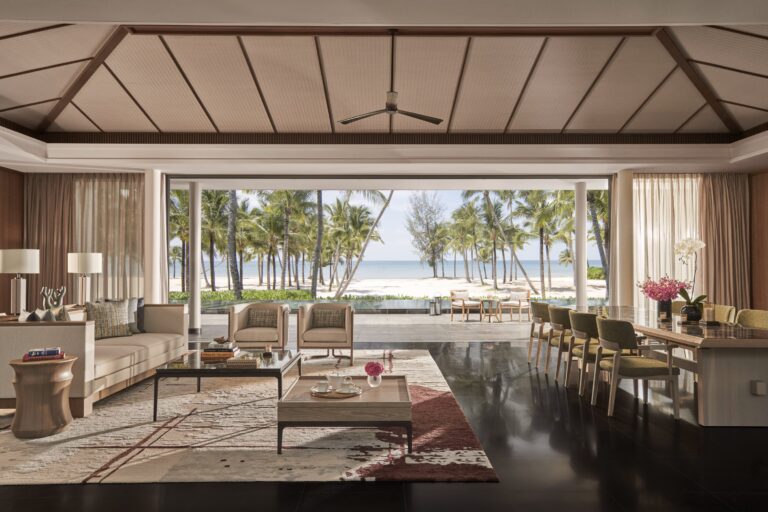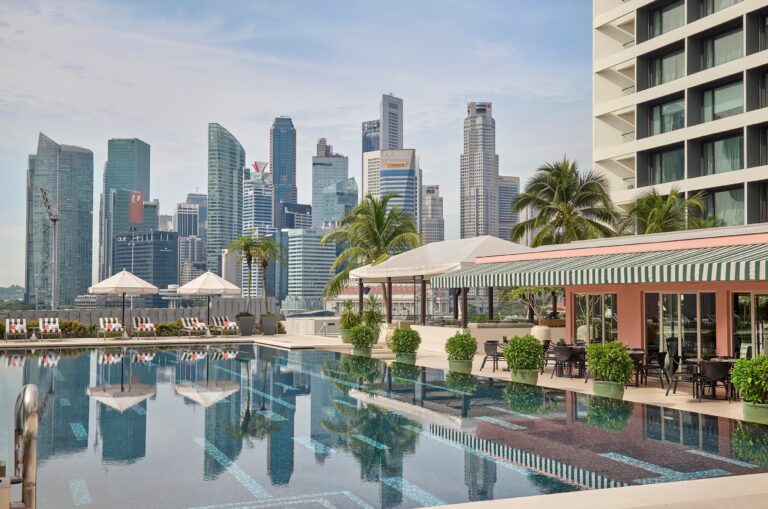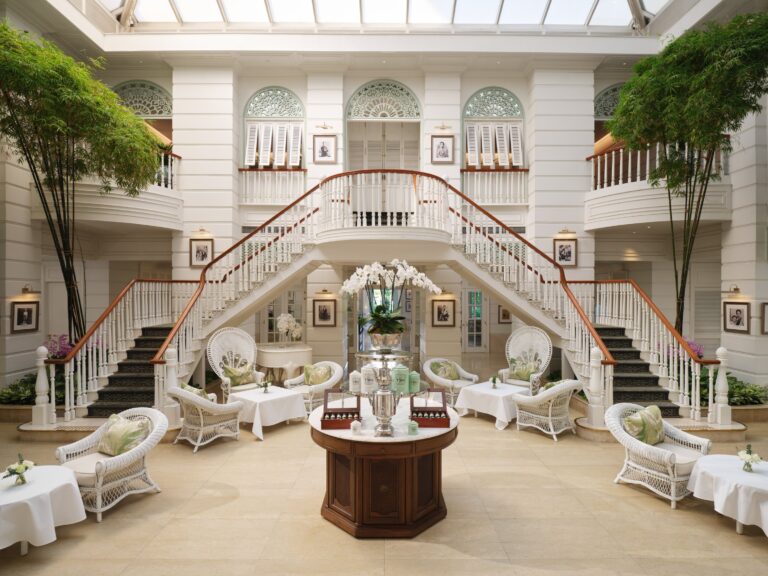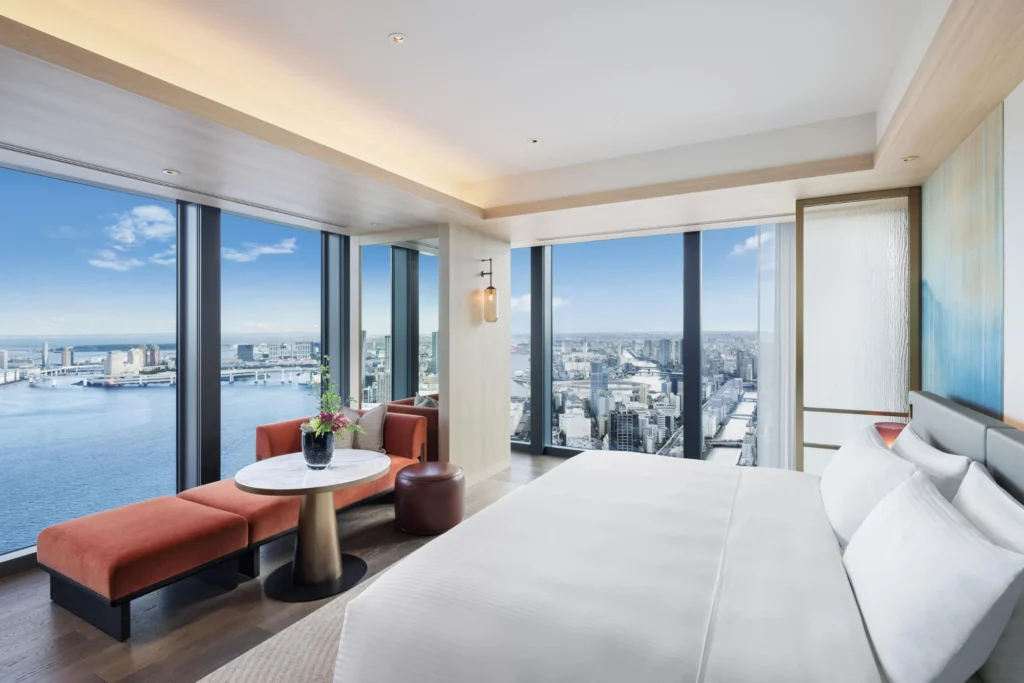
At Fairmont Tokyo, choosing a room also means choosing a view of the city. To the west is Tokyo Tower, and to the east Tokyo Bay opens out. From the upper floors of Tower S in Shibaura, the two outlooks become part of how the hotel organises its space.
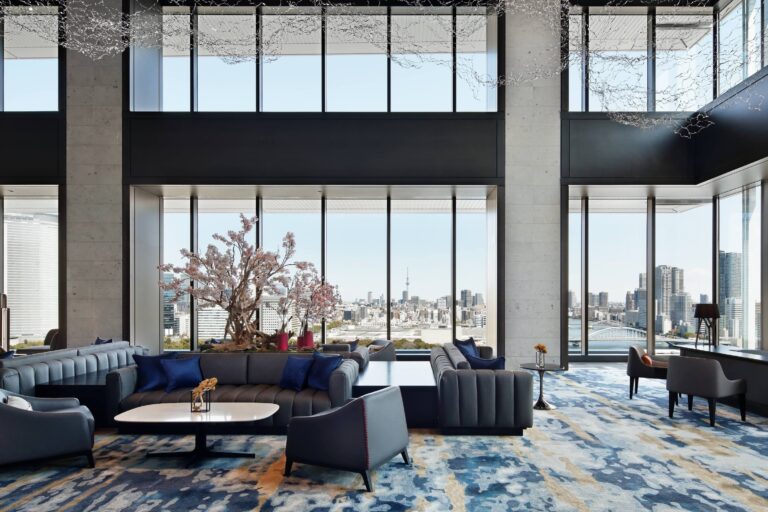
In the 35th-floor lobby, greenery and terraces open to both sides. BAR Studio took the place where city meets bay as the starting point for the interiors, combining materials, light and modern interpretations of Japanese weaving and kintsugi.
The Backstory
Fairmont Tokyo opened on 1 July 2025 and is the first Fairmont hotel in Japan. It occupies floors 35 to 43 of Tower S in BLUE FRONT SHIBAURA, a new development by Nomura Real Estate Development.
Shibaura was once a fishing village. The development now looks over Tokyo Bay through the Shibaura Canal and Hinode Pier.
BLUE FRONT SHIBAURA is not only Fairmont’s project. At the scale of the whole development, Fumihiko Maki was design advisor and Shimizu Corporation is architect of record. The project seeks to extend the legacy of the nearby Edo-period Kyu Shiba Rikyu Garden into a contemporary setting.
In that context, Fairmont Tokyo does not appear as a freestanding hotel building. Its own identity comes mainly from the interiors designed by BAR Studio, from the arrival lobby and guest rooms to the restaurants and wellness areas.
The Setting
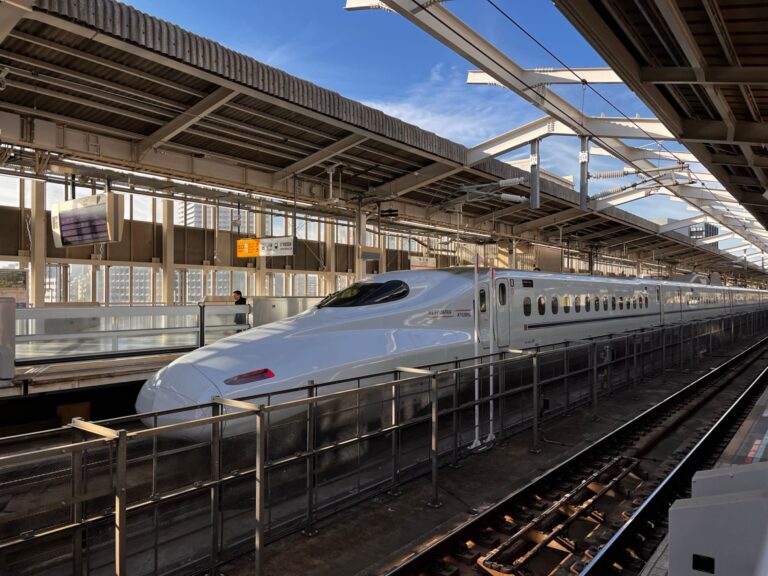
Fairmont Tokyo is at 1-1-1 Shibaura in Minato. Hamamatsucho Station is about a six-minute walk away, 550 metres from its south exit.
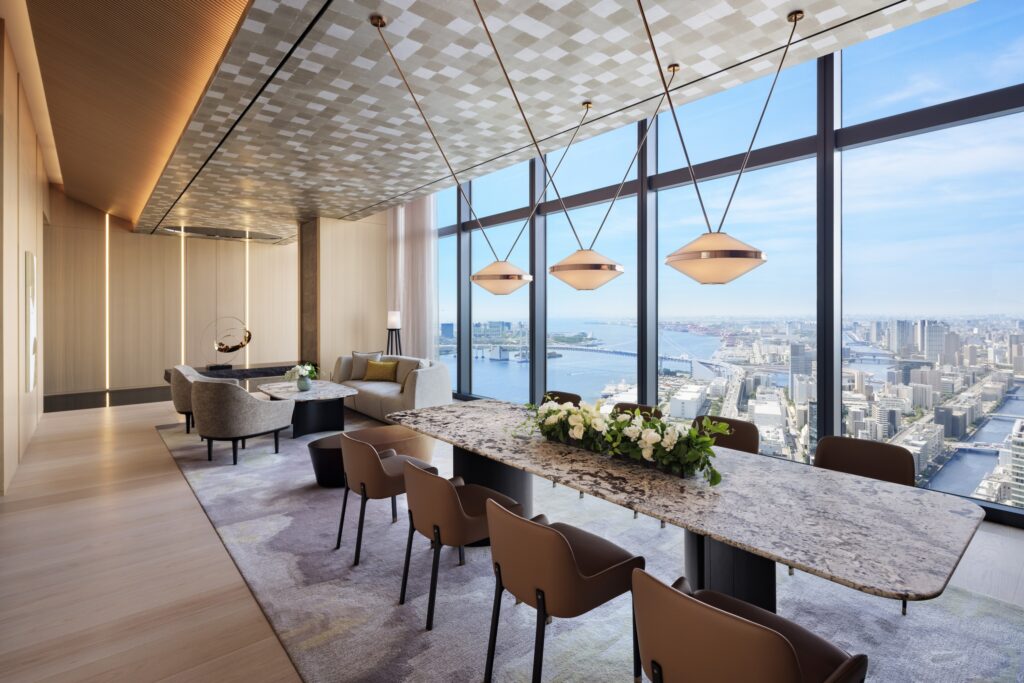
A table above the bay
From Haneda Airport, the Tokyo Monorail to Hamamatsucho takes about 13 minutes, not counting the walk from the station to the hotel.
Kyu-Shiba-rikyu Gardens, Hama-rikyu Gardens, Zojoji Temple and Tokyo Tower are all nearby. Guests who want to explore the waterfront can also take the Blue Ferry between Shibaura and Harumi, which takes about five minutes.
The hotel is not, however, at the door of a station. The walk between Hamamatsucho and the development is worth allowing for when travelling with heavy luggage.
Architecture & Design
BAR Studio designed the interiors of Fairmont Tokyo, including the 217 rooms and suites, the arrival lobby, restaurants, bars, spa, fitness centre, pool and event spaces.
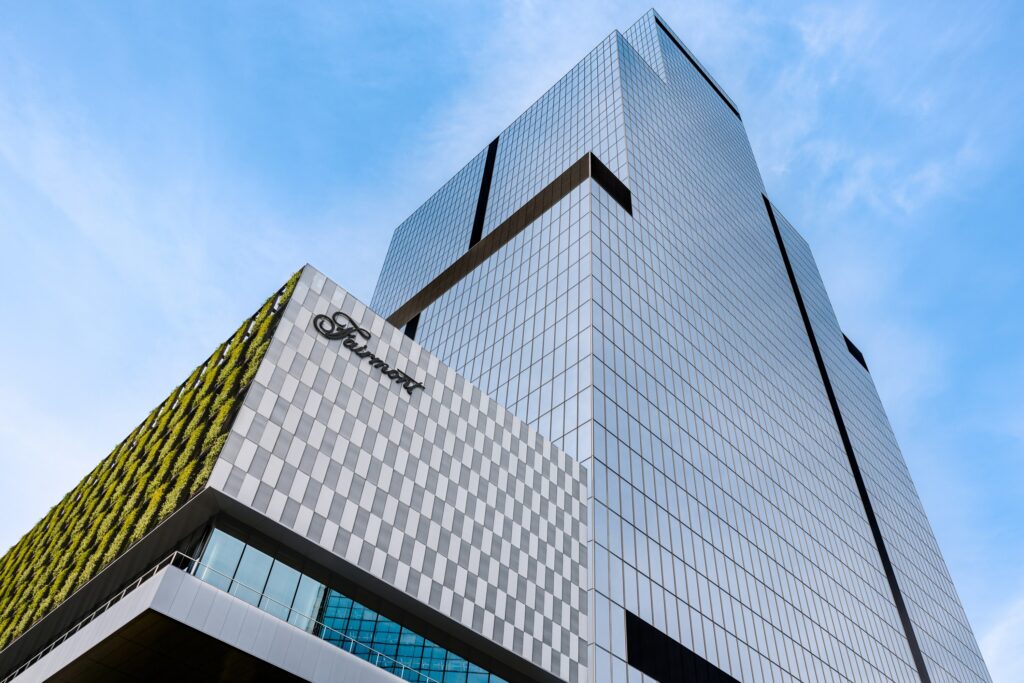
The tower from below
The central idea begins with the hotel’s position where the city meets Tokyo Bay. Spaces are arranged to frame views of both the city and the bay.
The interiors use a warm, restrained palette, with tactile materials and atmospheric lighting. The finishes are locally sourced.
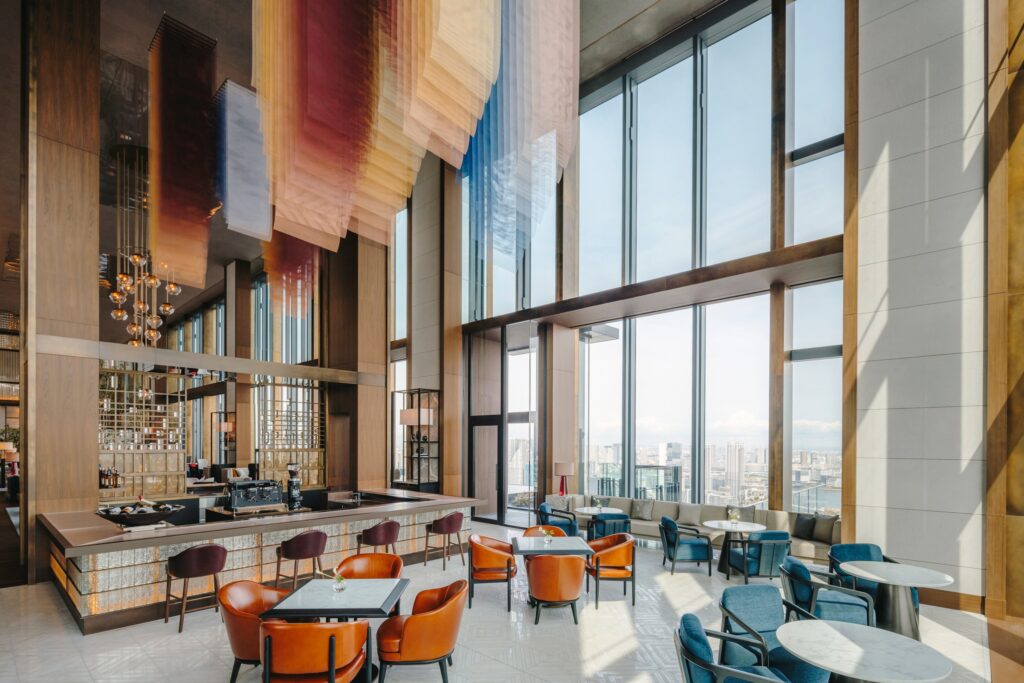
Woven art above the bar
Weaving and kintsugi are the two most prominent craft references. They are modern interpretations of traditional techniques, layered through the interiors as a nod to Japanese craft. The curated artworks also include pieces inspired by the same two techniques.
Some seating areas draw on the engawa, the traditional Japanese veranda that forms a transitional space between inside and outside.
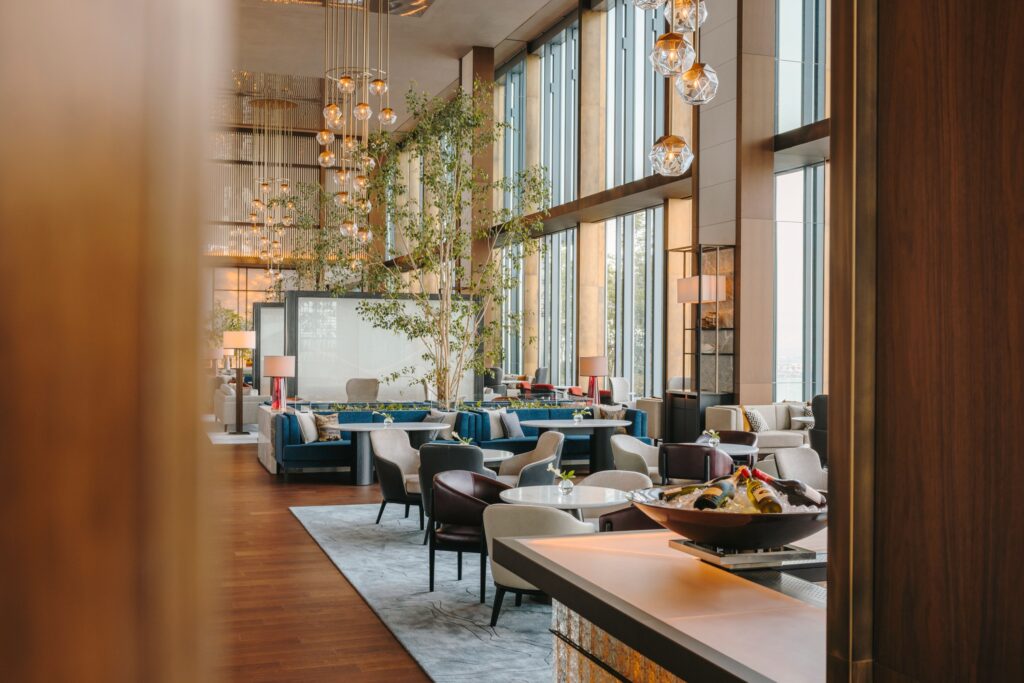
A dining room among greenery
These references link a hotel in a new urban development to Japanese craft culture.
Rooms & Suites
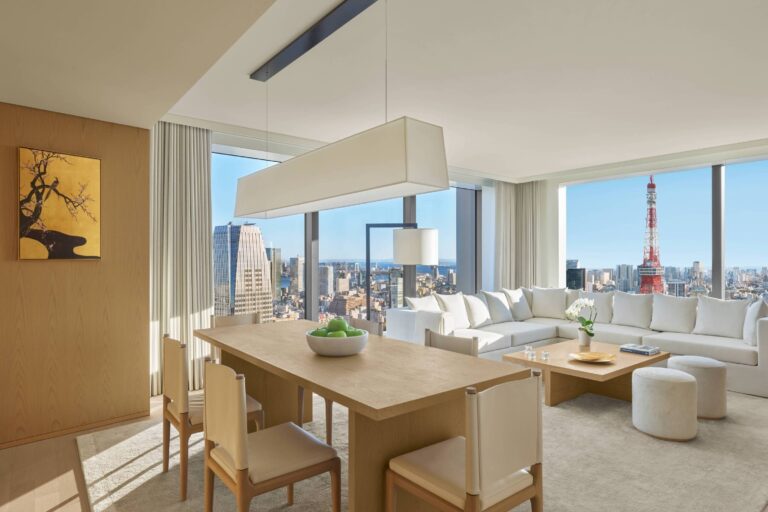
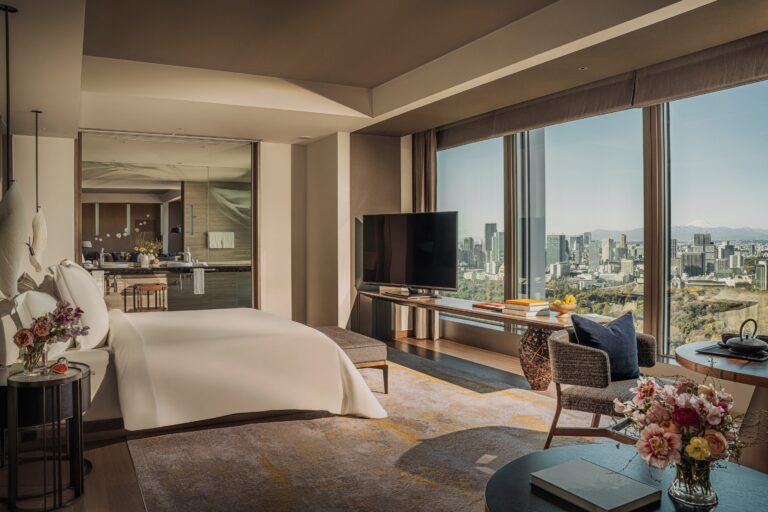
Fairmont Tokyo has 217 rooms and suites, 29 of them suites, on floors 36 to 42, with sizes of about 52 to 278 square metres, and each room has floor-to-ceiling windows.
The difference between rooms shows most clearly in the outlook. Beside the Fairmont category, guests can choose Bay View, facing Tokyo Bay, or Tokyo Tower View, facing the tower. These categories come as King or Twin, and the Signature King measures 59 square metres.
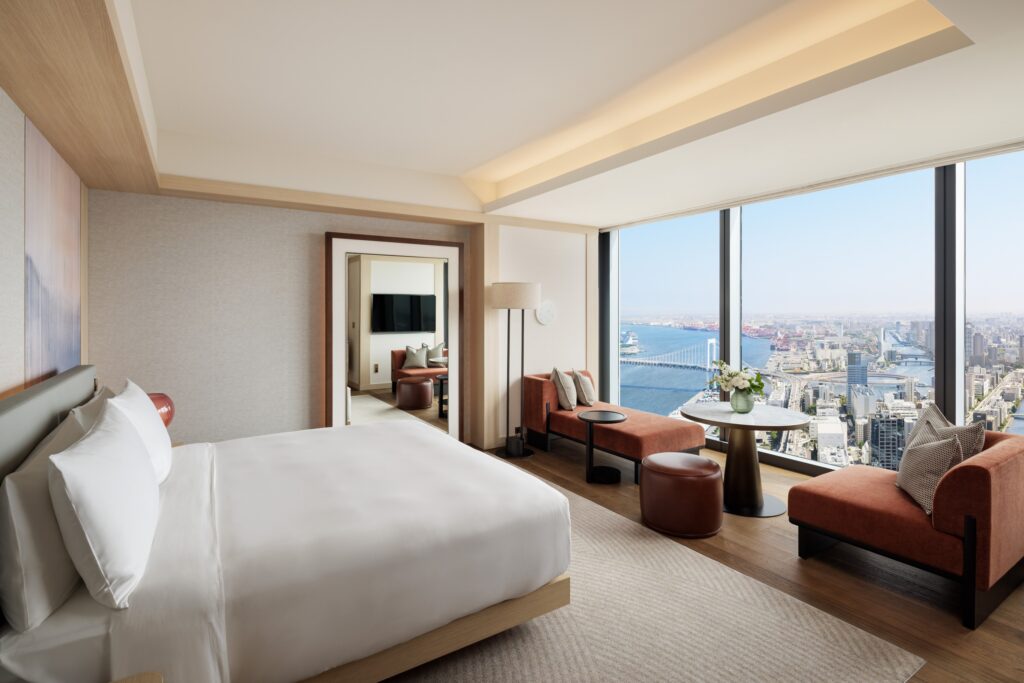
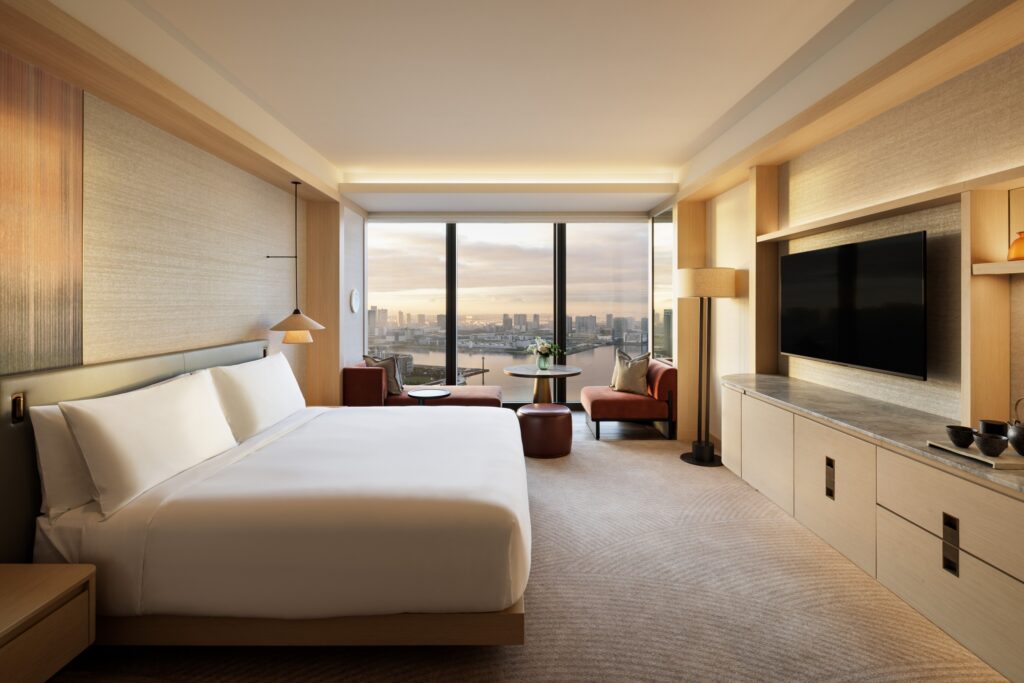
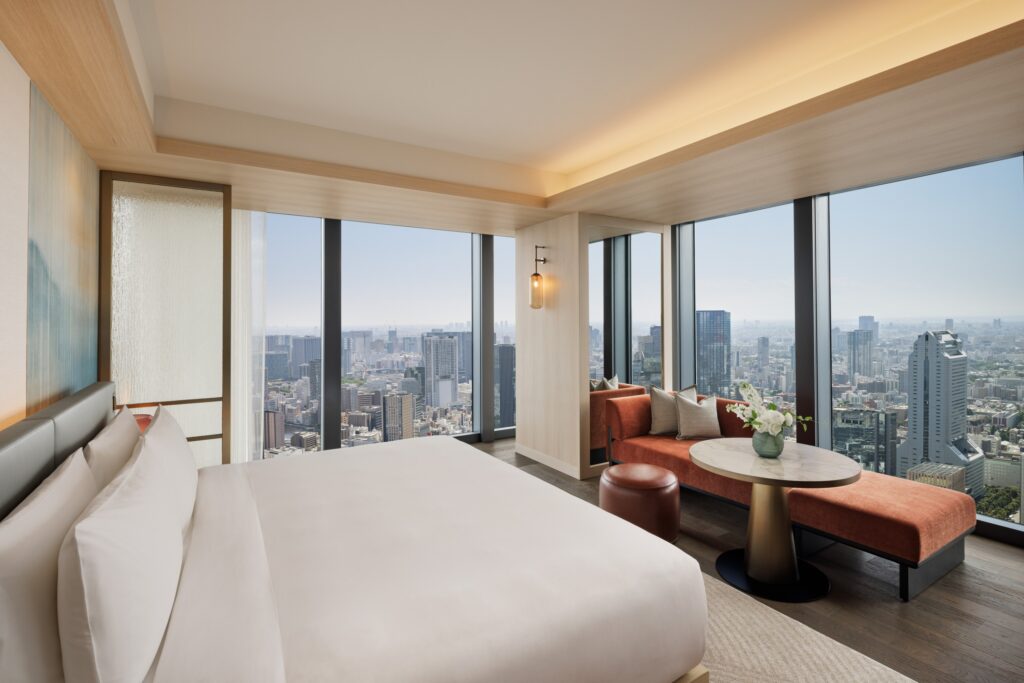
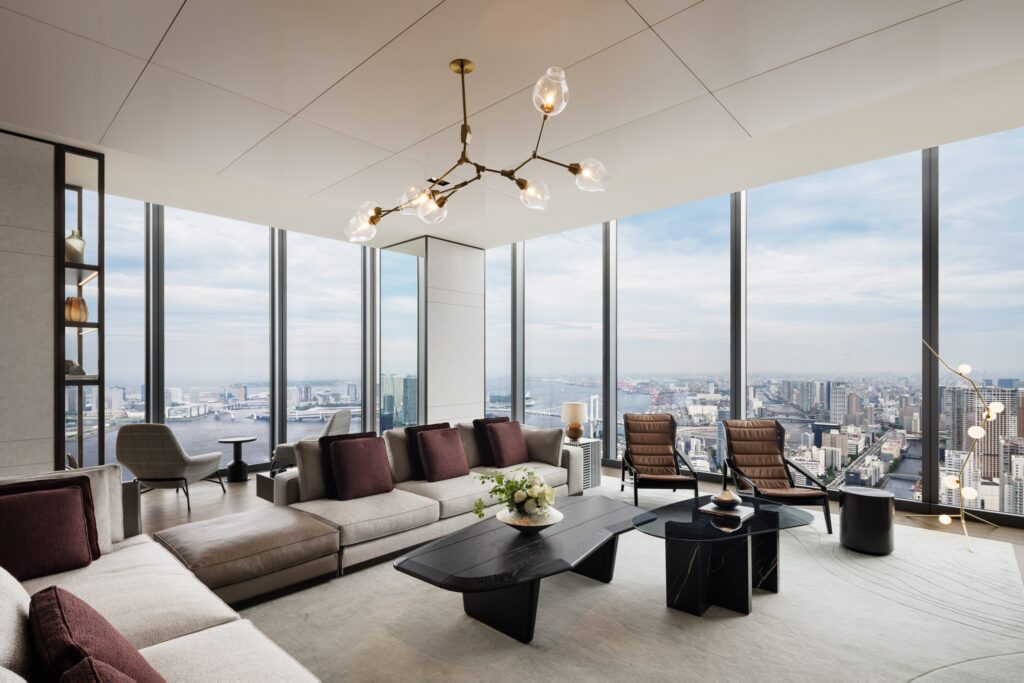
The suites are The View, Shibaura and Presidential one-bedroom suites. The three top Signature suites have bespoke furnishings and curated artworks.
Fairmont Gold works as a hotel within the hotel, with a lounge for guests in this category serving breakfast, afternoon tea and an evening cocktail. Service also includes a dedicated concierge and evening turn-down. Some categories offer connecting rooms on request.
Dining
The hotel’s restaurants and bars are spread over three floors.
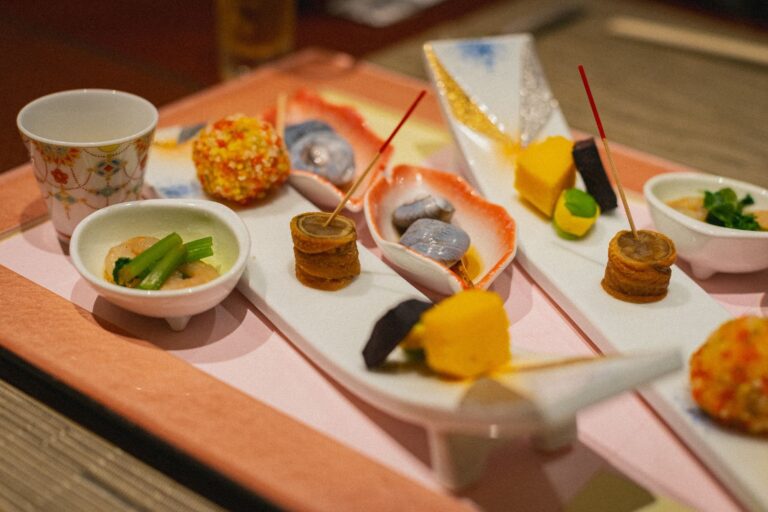
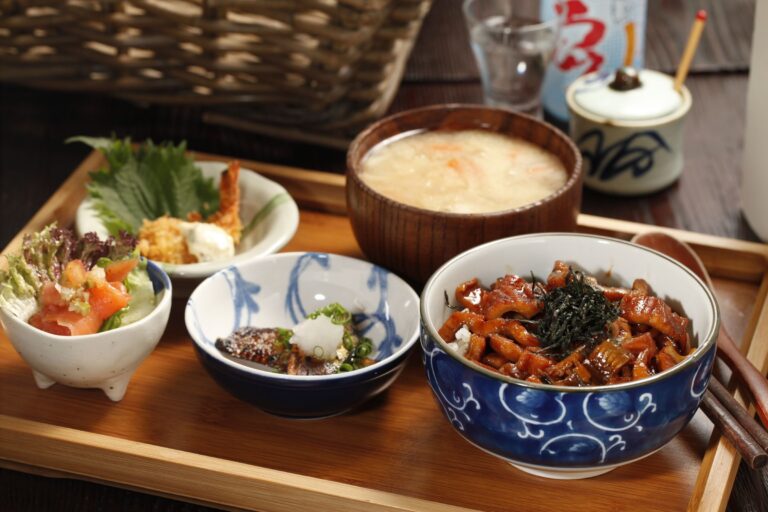
On the 35th floor, Kiln & Tonic is a coastal-style brasserie with wood-fired pizzas and grilled seafood, and its terrace faces Tokyo Tower. On the same floor, Vue Mer blends French and Japanese café culture, serving afternoon tea and seasonal cocktails, with a terrace of its own.
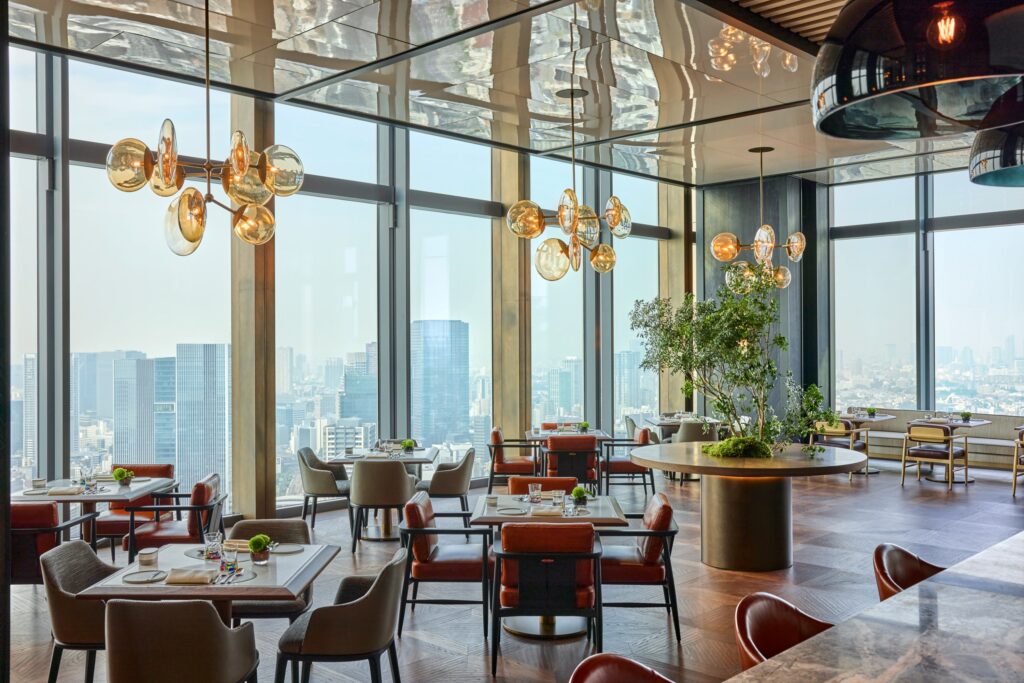
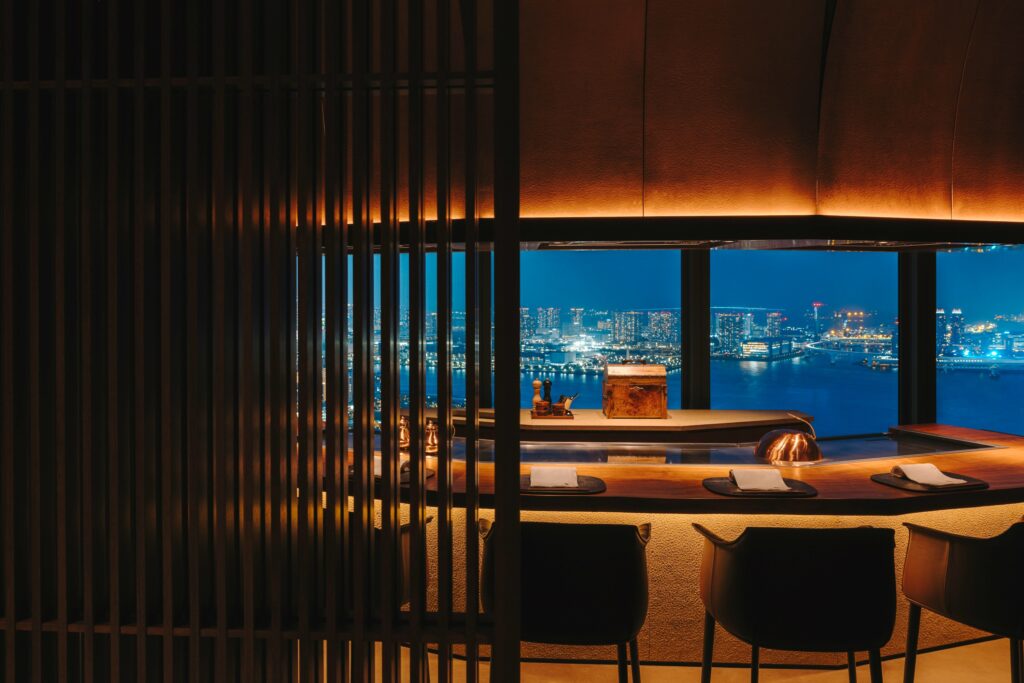
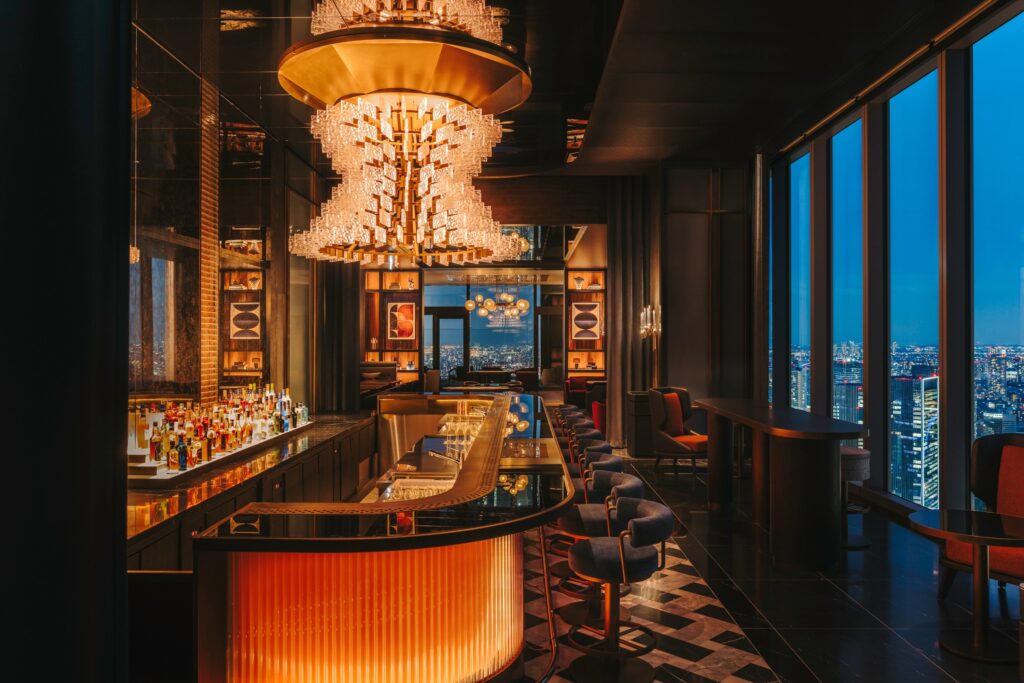
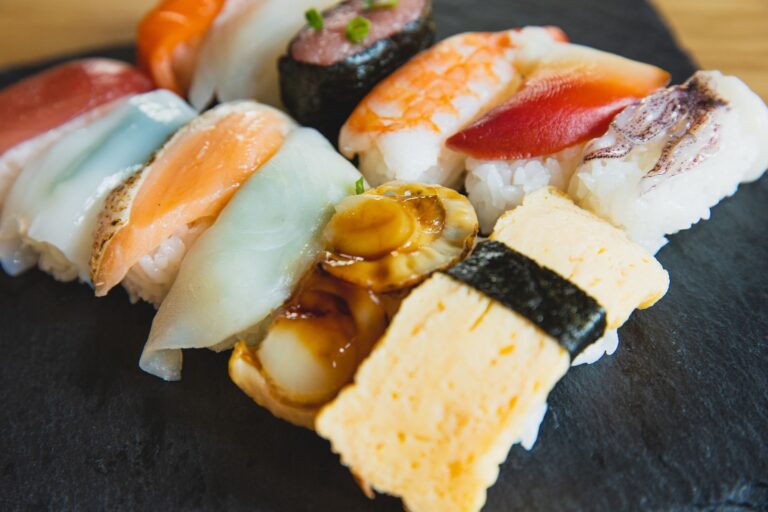
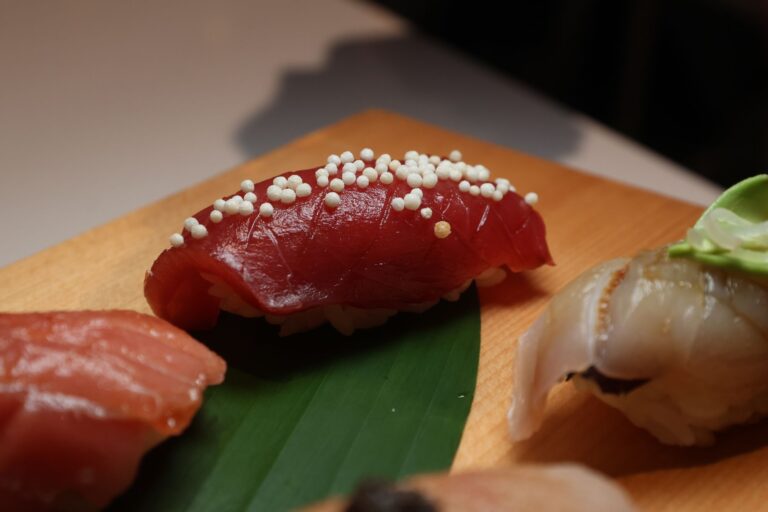
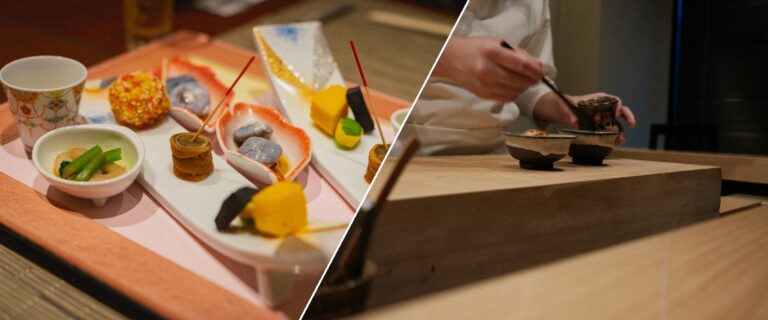
The 36th floor is devoted to Japanese dining. Migiwa focuses on sushi with seasonal ingredients, while Totsuji serves teppanyaki. Both bring contemporary interpretations to traditional ways of eating.
On the 43rd floor, DRIFTWOOD BAR & GRILL offers yoshoku, Japanese Western-style cooking, with seasonal ingredients and views of Tokyo Tower. It also serves a Sunday brunch.
DRIFTWOOD BAR focuses on cocktails, while OFF RECORD is a listening bar where vinyl is part of the experience beside drinks and small bites. LAB is the bar’s research-and-development space, where ideas are tested and refined.
Wellness
The wellness area is on the 35th floor, with views of Tokyo Tower and the skyline.
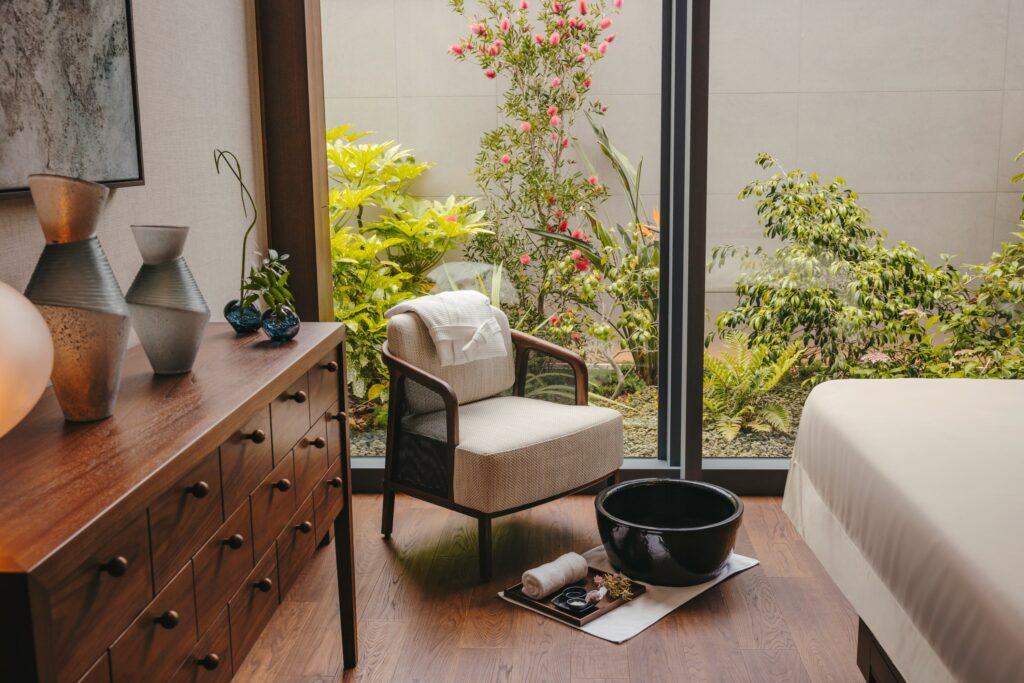
A treatment room and garden
The 20-metre indoor infinity pool is the centrepiece, joined by a relaxation pool and sundeck outdoors and a private cabana where drinks can be ordered. Facilities also include dry and mist saunas.
The spa has four treatment rooms, including one for couples. Three signature treatments are called Legacy, Destination and Serenity, alongside four Wellness Journey programmes built on nutrition, movement and sleep.
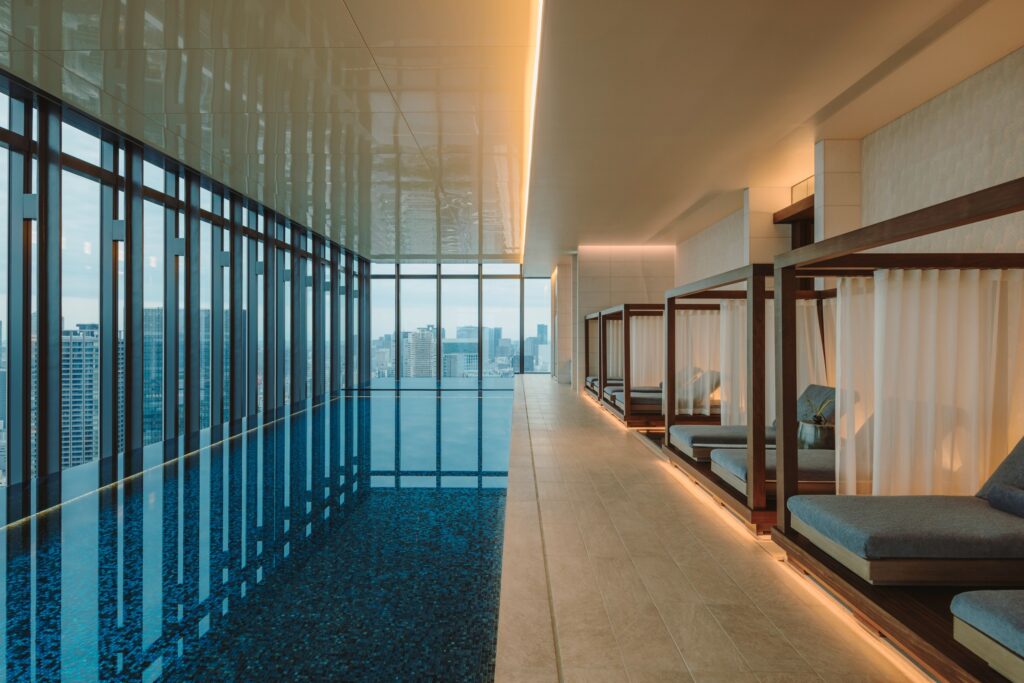
The pool and cabanas
The gym is open 24 hours, with Technogym equipment and two movement studios. The pool and fitness facilities are reserved for registered hotel guests.
Services & Experiences
One unusual touch is Serene, a Labrador Retriever with the title Chief Happiness Officer, who greets guests in the first-floor lobby.
The hotel also has a Canine Program, which allows one dog of up to 15 kilograms per room, subject to the programme’s conditions.
For events, the 43rd floor has two spaces called THE SKY and THE SEA. THE SKY has natural light, an outdoor terrace and panoramic views, suited to weddings. THE SEA has an open kitchen, for smaller gatherings. The Fairmont Grand Ballroom adds an option for larger events.
Traveleak’s Take
Fairmont Tokyo is appealing first for the way it joins outlook and interior design. Tokyo Tower and Tokyo Bay are not just two views from the hotel; they also shape how the room categories are divided.
The references to weaving, kintsugi and the engawa give BAR Studio’s interiors a link to Japanese craft, even though the hotel sits in a modern tower. It suits travellers who like contemporary space but still want to recognise details tied to Japan.
The location, however, shapes the stay. Fairmont Tokyo is in a new waterfront development rather than an old neighbourhood, and there is still a walk from Hamamatsucho Station. With dining spread over three floors, guests should also check where each restaurant is before booking.
For Fairmont Tokyo, the most useful decision when choosing a room may be which view to wake up to: Tokyo Tower to the west, or the water of Tokyo Bay to the east.
Another Fairmont on Traveleak: Fairmont Peace Hotel, Shanghai
More hotels in Tokyo on Traveleak:
Conrad Tokyo · Aman Tokyo
Park Hyatt Tokyo · Bulgari Hotel Tokyo
Palace Hotel Tokyo · Janu Tokyo
Four Seasons Hotel Tokyo at Otemachi · The Tokyo EDITION, Toranomon
Image source: Fairmont Tokyo
Hotel Profile
Essential Information
- Location
- 1-1-1 Shibaura, Minato-ku, Tokyo 105-0023, Japan
- Accommodation
- 217 rooms and suites, including 29 suites.
- Dining
- Kiln & Tonic, Vue Mer, Migiwa, Totsuji, DRIFTWOOD BAR & GRILL, DRIFTWOOD BAR, OFF RECORD, LAB.
- Wellness
- Spa, 20-metre indoor infinity pool, 24-hour gym.
- Getting there
- About six minutes on foot from Hamamatsucho Station; about 13 minutes by Tokyo Monorail from Haneda Airport to Hamamatsucho.
Location Map
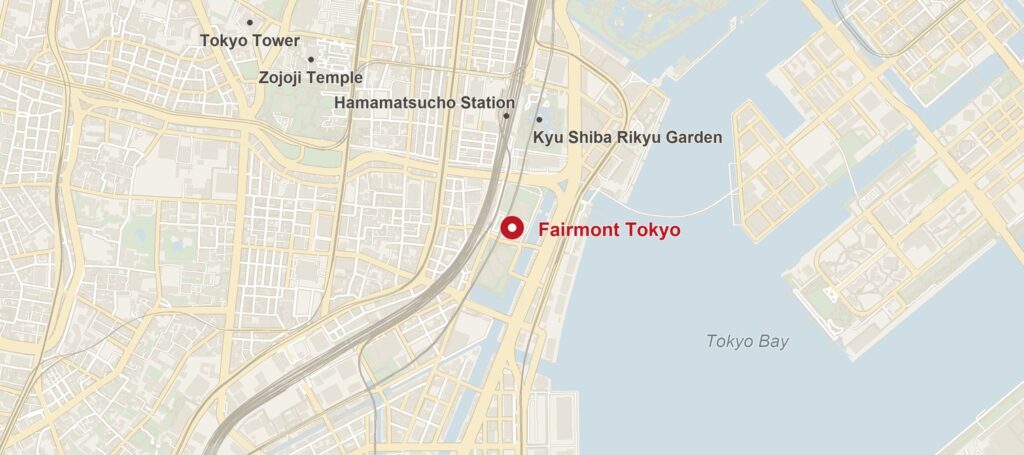 © OpenStreetMap contributors
Contact
1-1-1 Shibaura, Minato-ku, Tokyo 105-0023, JapanOfficial Website fairmont.com/en/hotels/tokyo/fairmont-tokyo.html
Rates via Trip.com
Some links on this page are affiliate links. If you make a booking through them, Traveleak may earn a small commission at no additional cost to you.