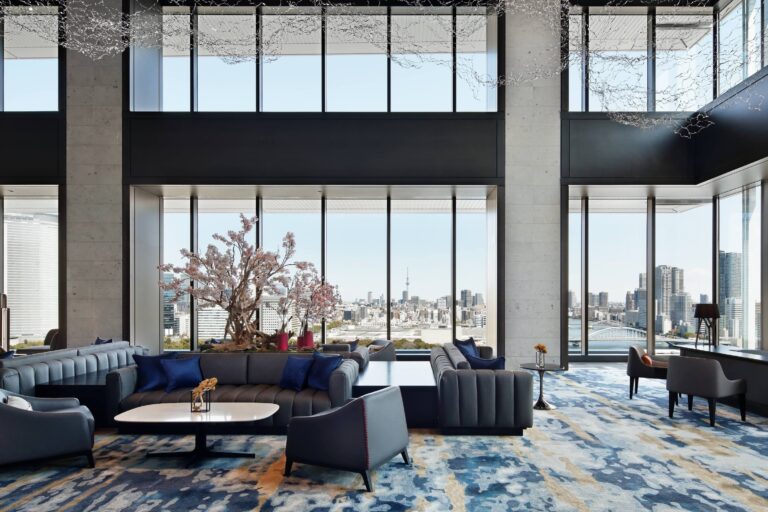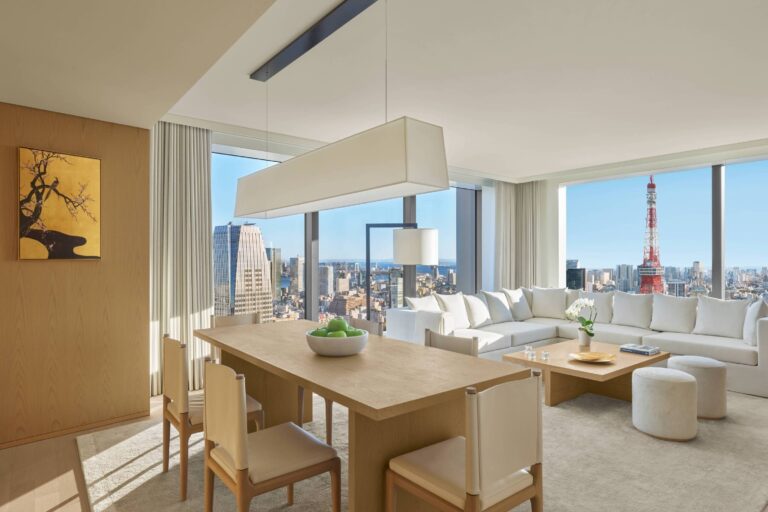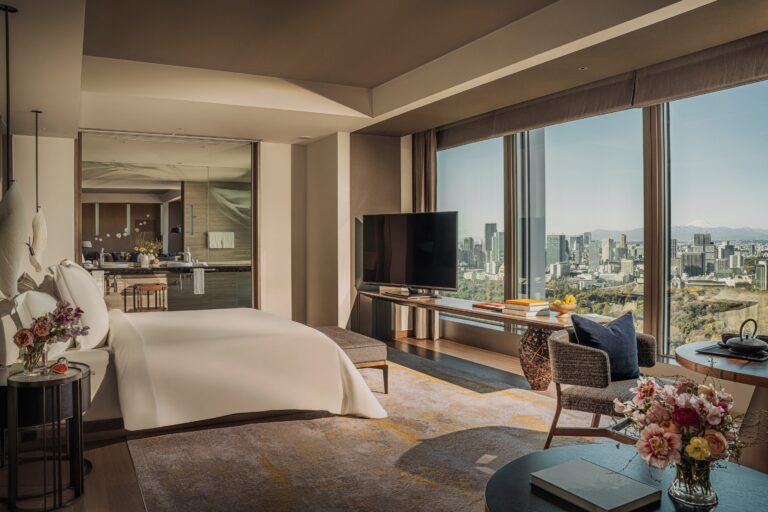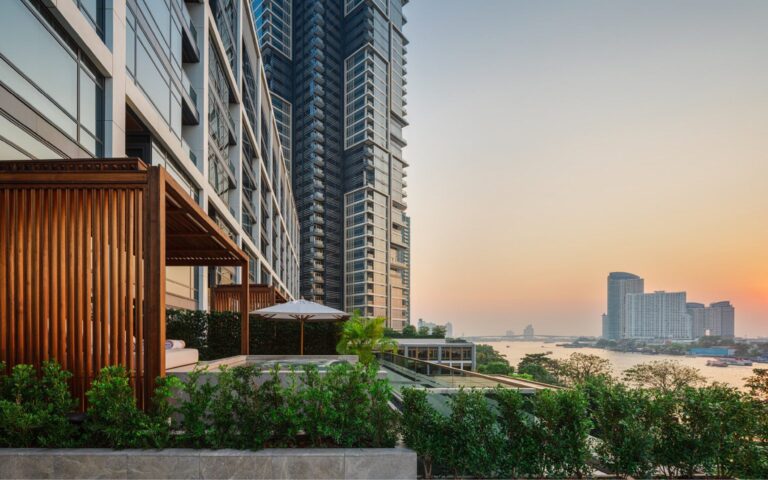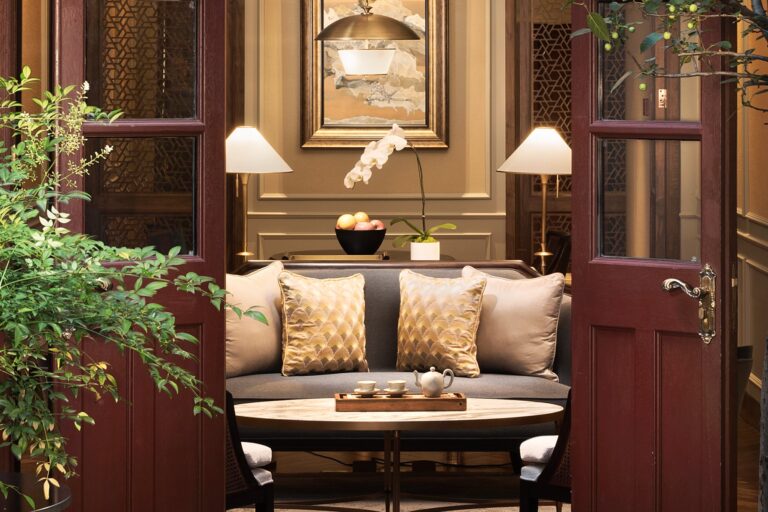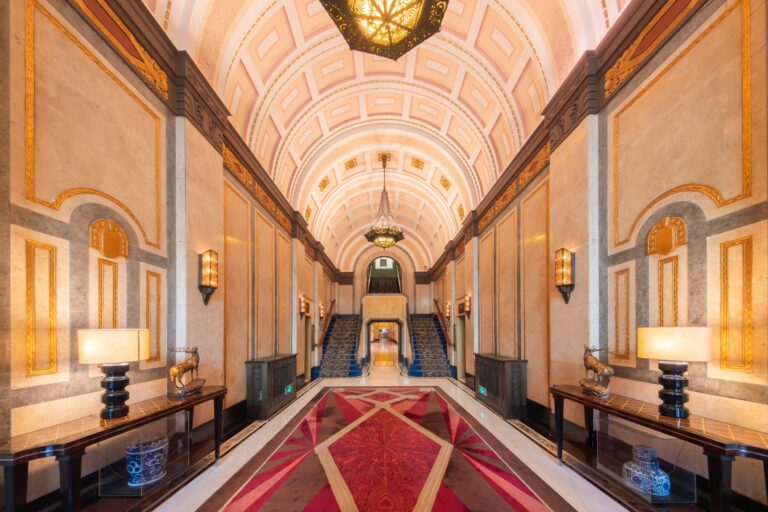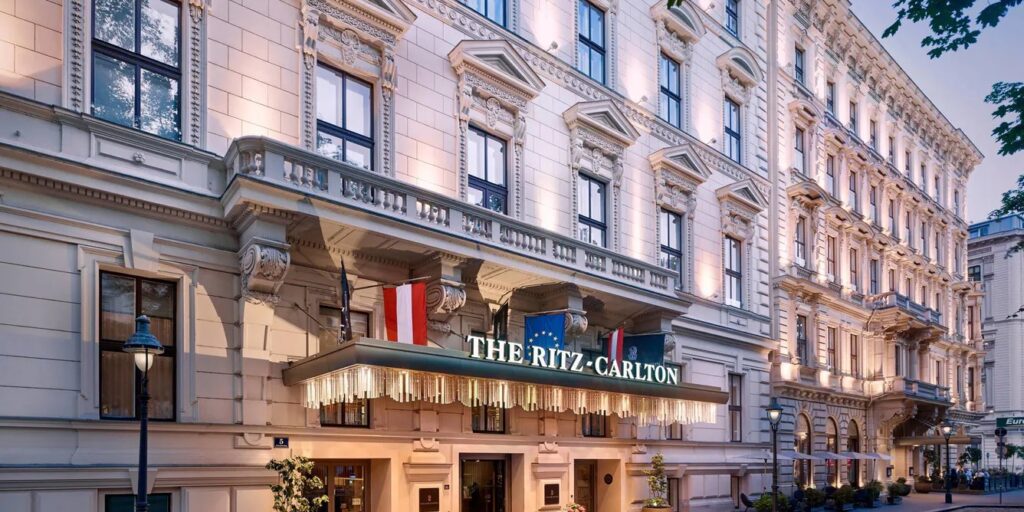
Along the Ringstrasse, stone façades, columns and tall windows still evoke Vienna’s imperial past. The Ritz-Carlton, Vienna occupies four historic mansions that once belonged to different owners before being connected to form a hotel.
Inside, changes in ceiling heights, staircases and room layouts still bear traces of the past. One space preserves a 19th-century ceiling painting; another features contemporary interiors inspired by Vienna itself.
The Backstory
In 1857, Emperor Franz Joseph decided to dismantle the fortifications surrounding central Vienna. The Ringstrasse gradually took shape on the land that was freed up, ushering in an ambitious period of architectural development for the city.
Alongside theatres, museums and public buildings, aristocrats and wealthy industrial families built palais, urban mansions that served both as homes and as expressions of social standing.
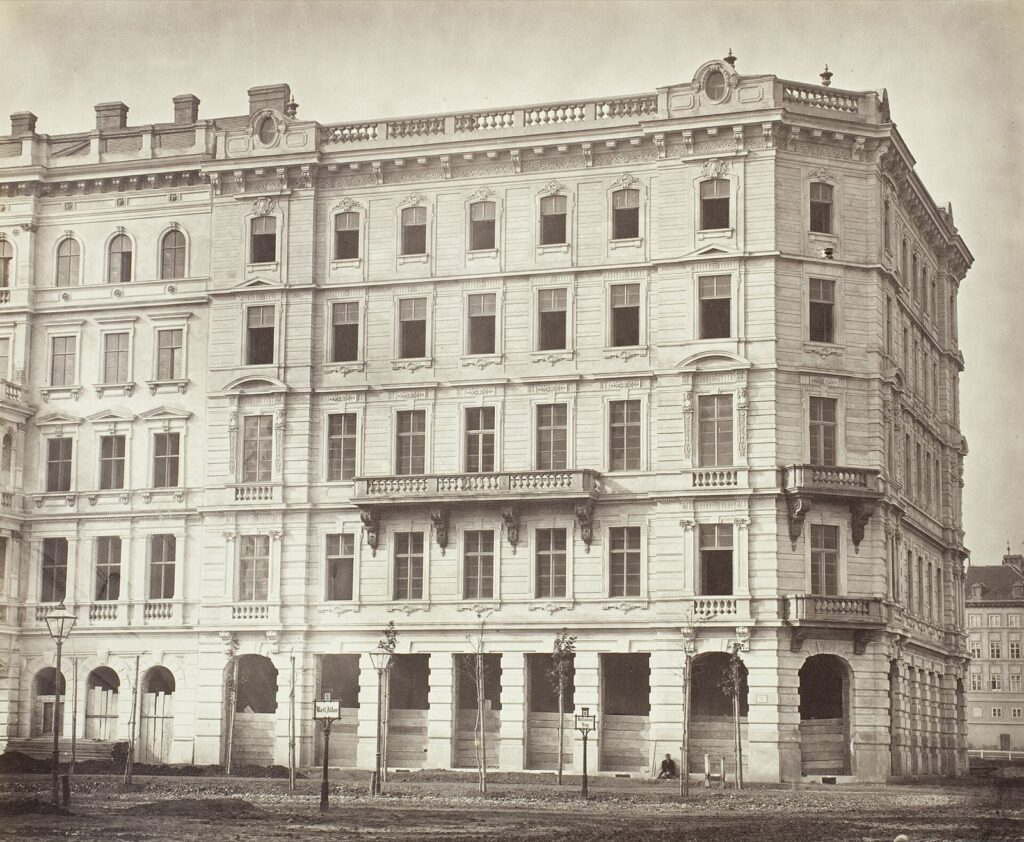
A mansion on the Schubertring, around 1864.
The four buildings that make up The Ritz-Carlton today were constructed between 1865 and 1871, but each had a different origin.
Adels Casino was once a meeting place for the aristocracy. Palais Ölzelt was associated with the architect of the same name, while Palais Borkenstein was built as a multi-apartment residential building. Palais Gutmann belonged to a family in the coal business, representing Vienna’s growing industrial class.
Over time, the buildings were connected and used for banking operations before being converted into a hotel that opened in 2012.
The Ritz-Carlton, Vienna brings together four urban mansions with distinct histories, reflecting the lives of aristocrats and merchants and the changes Vienna underwent in the 19th century.
The Setting
The hotel stands at Schubertring 5-7, directly on the Ringstrasse, near Stadtpark, Musikverein and Vienna State Opera.
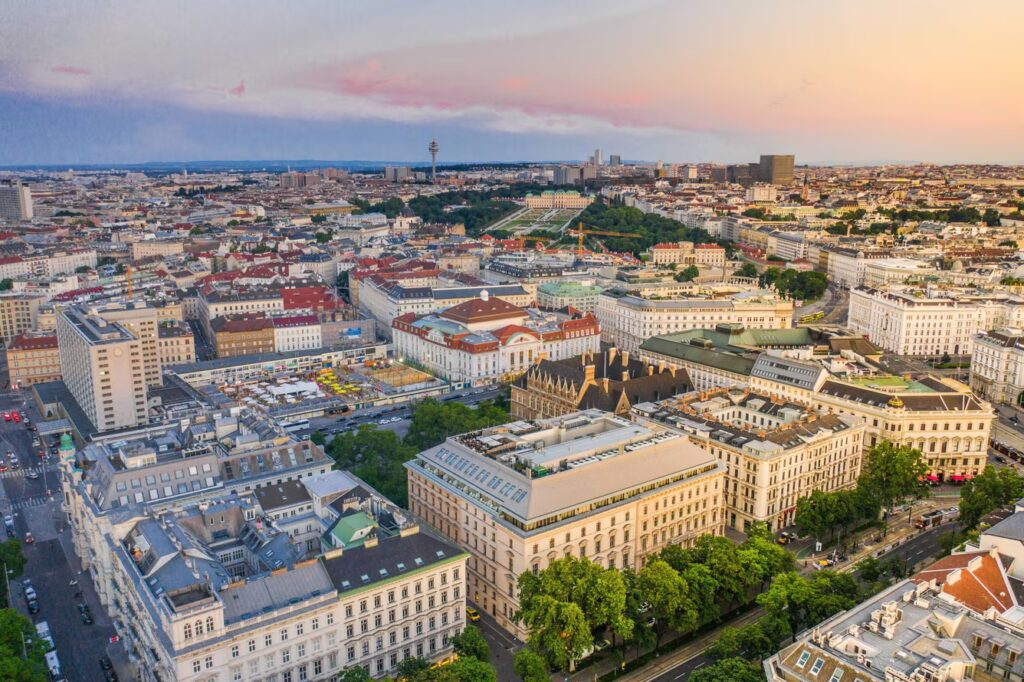
Central Vienna at dusk.
Its location makes it convenient to explore central Vienna on foot, from concert halls to museums and historic architecture. Just outside the hotel, the Ringstrasse itself offers a journey through several periods of the city’s artistic history.
Architecture & Interior Design
Connecting four mansions into a modern hotel meant addressing differences in staircases, floor levels and the original layouts of each building. F+P Architekten took part in the project, refurbishing and extending the top floor. Historic architectural elements were retained during the conversion.
The differences between the buildings have not disappeared entirely. Transitions and shifts in spatial proportions remain part of the hotel’s architectural character.
Interior designer Peter Silling drew inspiration from Vienna itself. He used curves recalling the shape of the Ringstrasse, natural colours inspired by the avenue’s trees and imagery connected to the city’s equestrian culture.
Paintings of horses, fluted columns with a bronze-toned finish and contemporary lines appear alongside staircases, carved details and historic surfaces. They recall Vienna’s Fiaker horse-drawn carriages and riding traditions without turning the hotel into a recreation of the past.
One of the most distinctive details, however, is found on the ceiling of the Presidential Suite, within the historic spaces of Palais Gutmann.
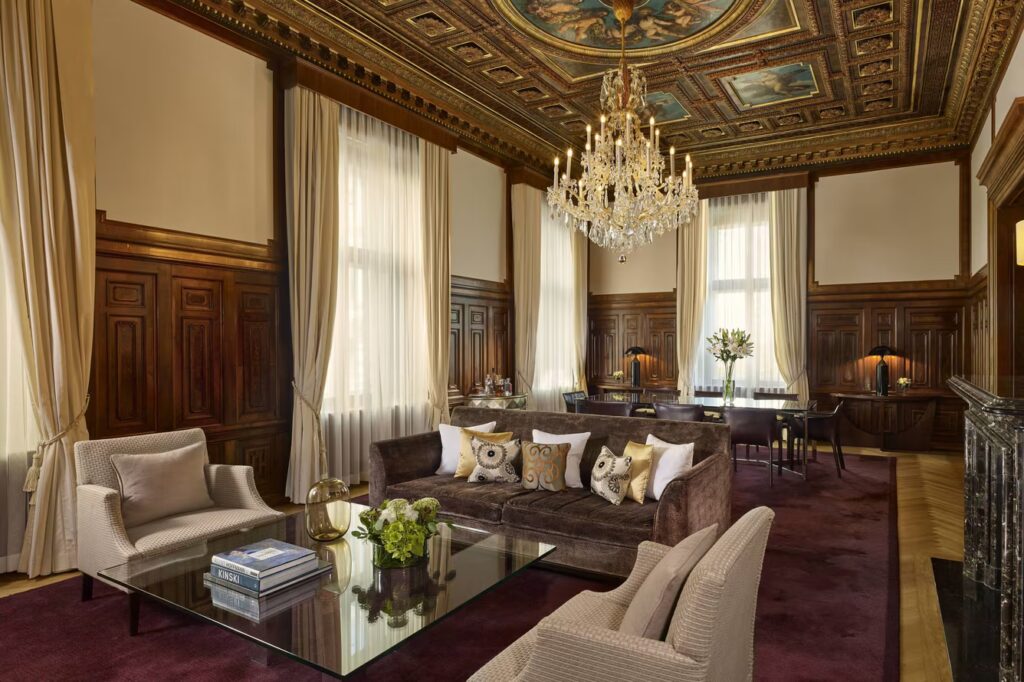
The Presidential Suite living room.
August Eisenmenger’s painting The Twelve Months depicts the twelve months of the year through angelic figures surrounding the living room chandelier. Eisenmenger also painted the ceiling of the Golden Hall at Musikverein, Vienna’s celebrated concert hall.
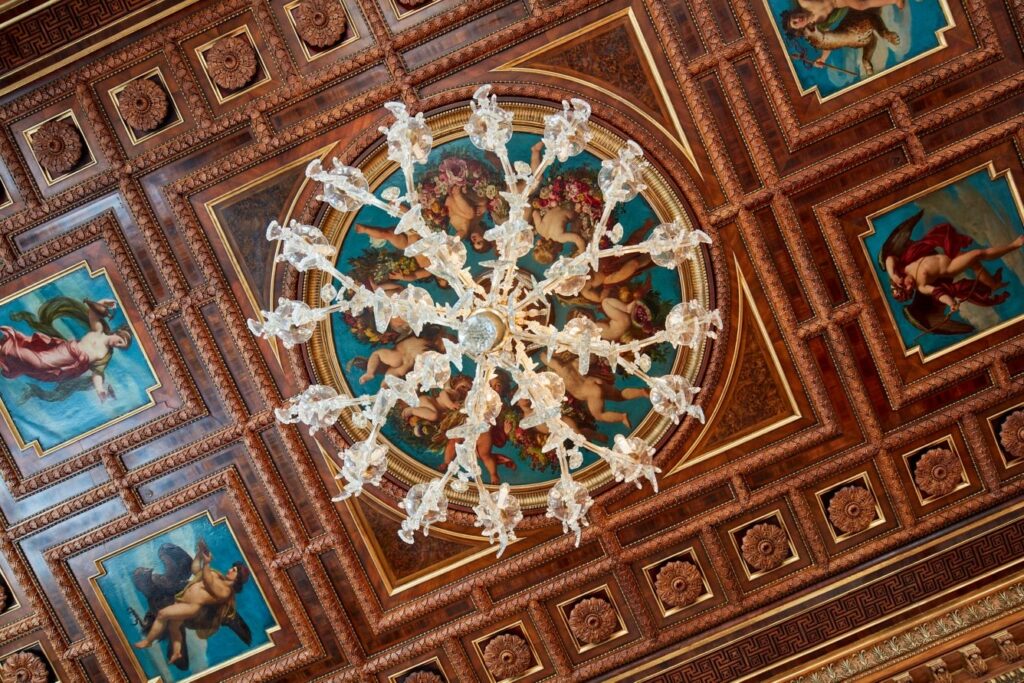
A painted ceiling.
The work remains in a space that once formed the Bel Étage of Palais Gutmann. Amid furnishings designed for modern hotel stays, the ceiling preserves a part of Vienna’s 19th-century artistic life.
The Ritz-Carlton, Vienna connects the four mansions through a consistent interior design language while retaining differences in their spaces and traces of their history.
Rooms & Suites
The Ritz-Carlton, Vienna has 202 rooms and suites, including 43 suites. Beyond their size, certain room categories have their own stories connected to art and music.
Deluxe Room
The Deluxe Room combines contemporary interiors with a marble bathroom, a bathtub and a separate shower. It suits a stay spent largely exploring the city.
The Ritz-Carlton Symphony Suite
Facing Beethovenplatz, the Symphony Suite was developed in collaboration with the Wiener Symphoniker orchestra.
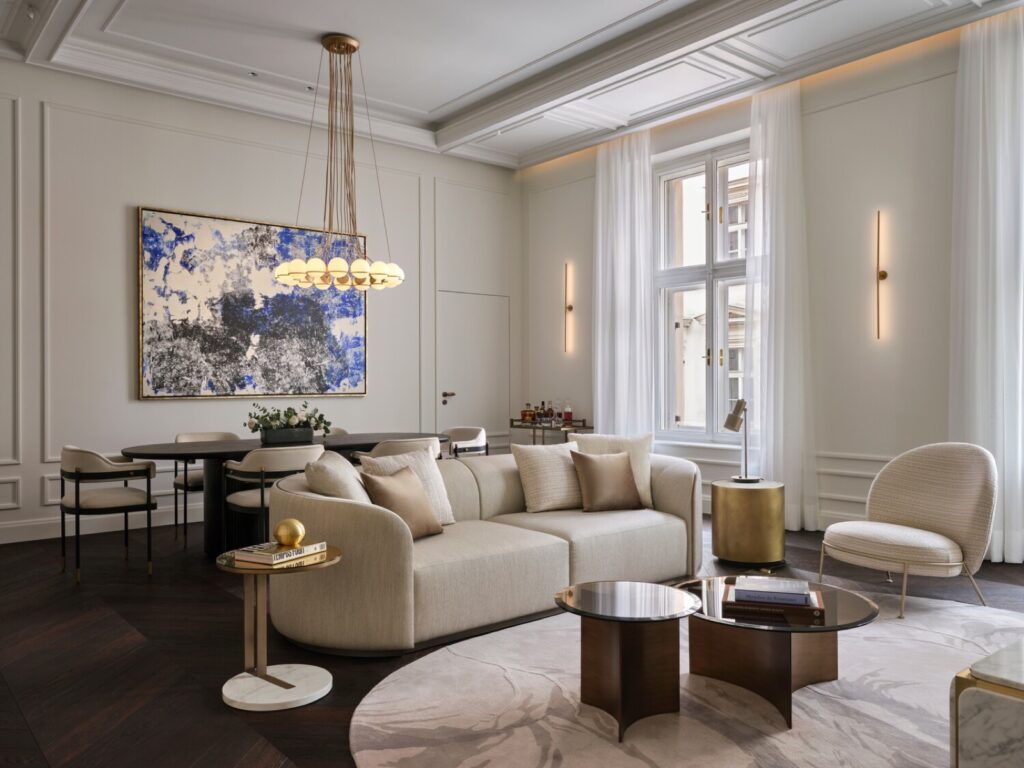
The Symphony Suite.
According to the hotel, the sequence of spaces draws inspiration from the structure of a sonata, bringing music into the room’s design concept. It is worth considering for guests interested in Vienna’s concert life.
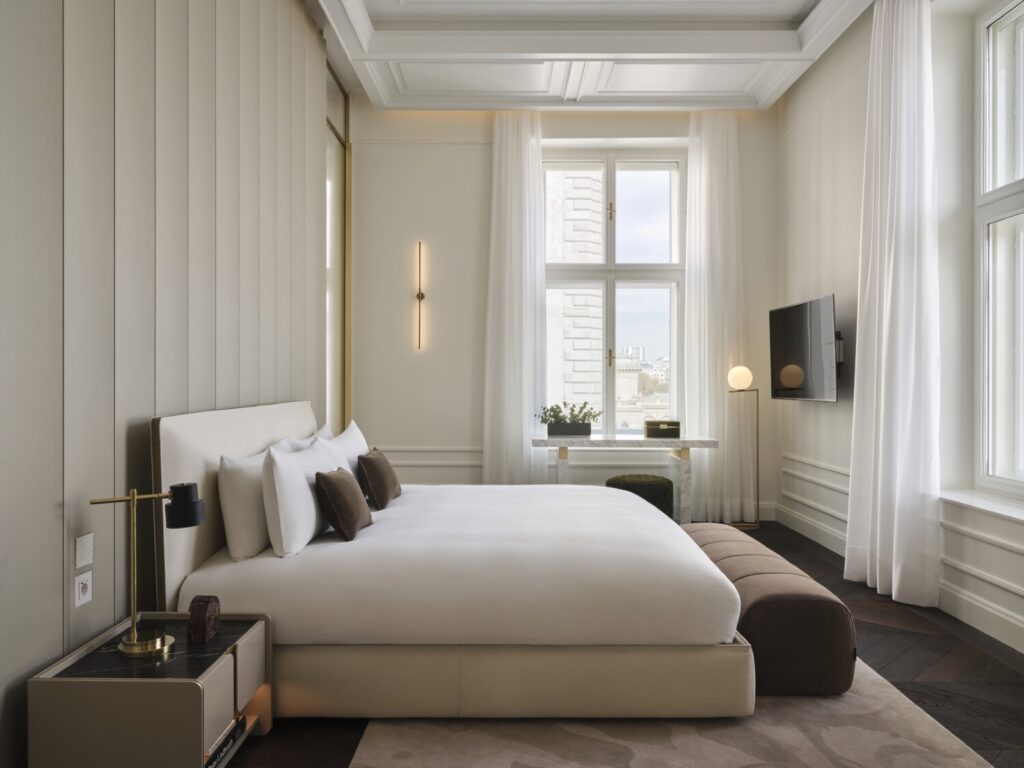
The Symphony Suite bedroom.
Presidential Suite
Measuring approximately 190 m², the Presidential Suite has two bedrooms, a living area and a private library.
Its living room still retains August Eisenmenger’s ceiling painting from Palais Gutmann.
Dining
Dstrikt Steakhouse focuses on beef and charcoal grilling with a Josper oven, while Pastamara (Bar con Cucina) brings Sicilian flavours into a setting shaped by contemporary design.
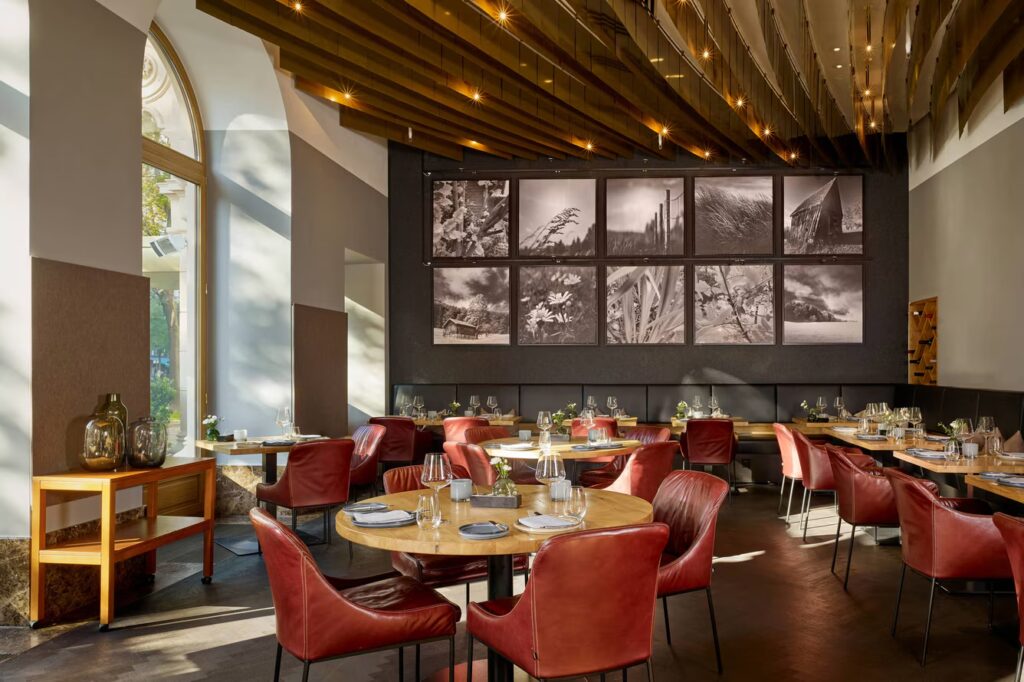
Dstrikt Steakhouse.
Opened in late 2018, Pastamara has interiors by Sandra Tarruella Interioristas. A backdrop of pale olive green, handmade terracotta tiles, natural oak and Calacatta marble at the bar and tables evokes a Mediterranean atmosphere in the heart of Vienna.
Because the floor plan limits natural light, the design places a large bar at its centre, alongside a backlit wall and an artificial skylight in the bar area.
D-bar provides another option for cocktails.
Wellness
ANGATI Spa has a sauna and steam room. The hotel also has an 18-metre indoor pool and The Ritz-Carlton Fitness Center.
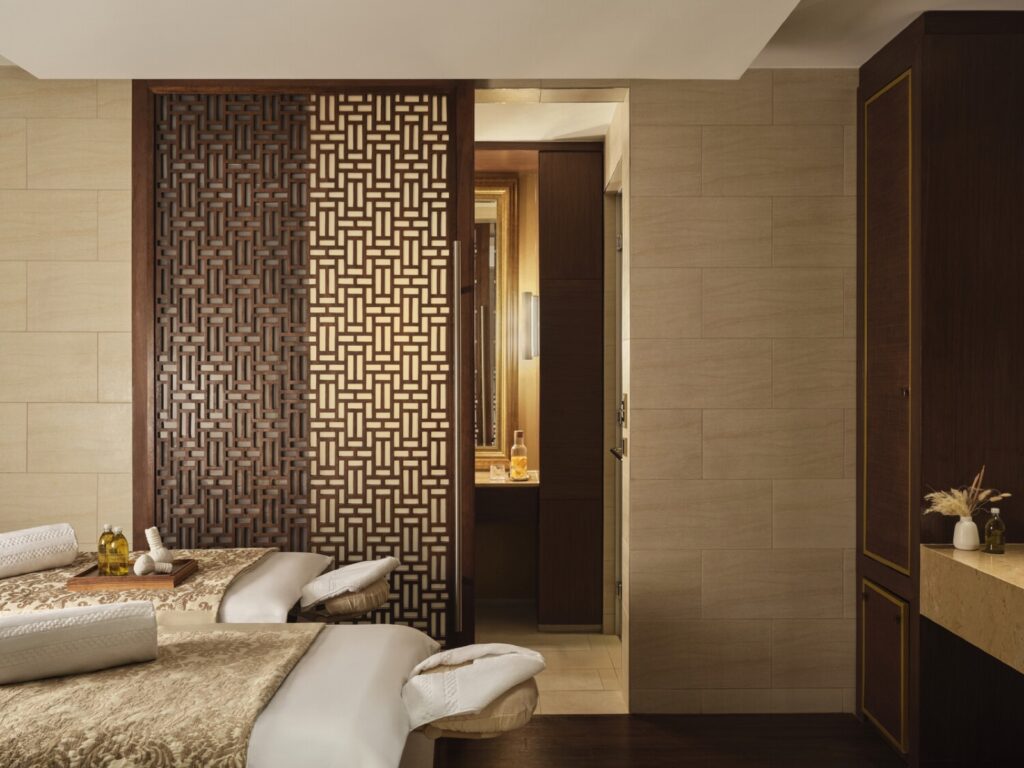
A treatment room at the spa.
Traveleak’s Take
The Ritz-Carlton, Vienna suits travellers interested in 19th-century European architecture, decorative arts and the city’s musical life. The four mansions, each with a different background, create a layered experience of space, from historic staircases to guest rooms redesigned for contemporary needs.
For music lovers, the Symphony Suite has its own design story through the collaboration with Wiener Symphoniker. The Presidential Suite, meanwhile, draws its appeal from the artistic heritage preserved in its living room.
Another Ritz-Carlton on Traveleak: The Ritz-Carlton, Kyoto
Image source: The Ritz-Carlton, Vienna, Wikipedia
Hotel Profile
- Hotel Group
- Marriott International
- Hotel Brand
- The Ritz-Carlton
- Brand Segment
- LuxuryMarriott portfolio
- Loyalty Programme
- Marriott Bonvoy
Essential Information
- Location
- Schubertring 5-7, 1010 Vienna, Austria
- Accommodation
- 202 rooms and suites, including 43 suites.
- Dining
- Dstrikt Steakhouse, Pastamara and D-bar.
- Wellness
- ANGATI Spa; 18-metre indoor pool, sauna, steam room and The Ritz-Carlton Fitness Center.
Location Map
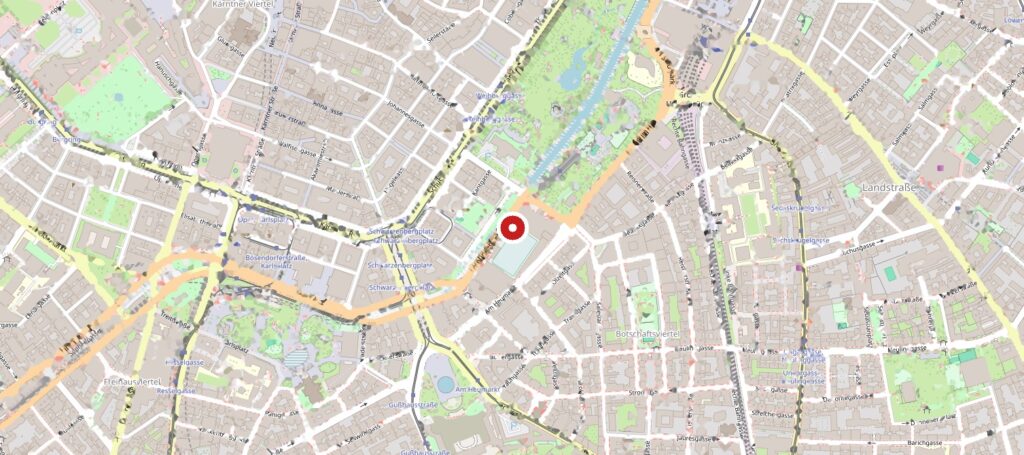 © OpenStreetMap contributors
Contact
Schubertring 5-7, 1010 Vienna, AustriaOfficial Website ritzcarlton.com/en/hotels/vierz-the-ritz-carlton-vienna
Rates via Trip.com
Compare rates: Booking.com
Some links on this page are affiliate links. If you make a booking through them, Traveleak may earn a small commission at no additional cost to you.