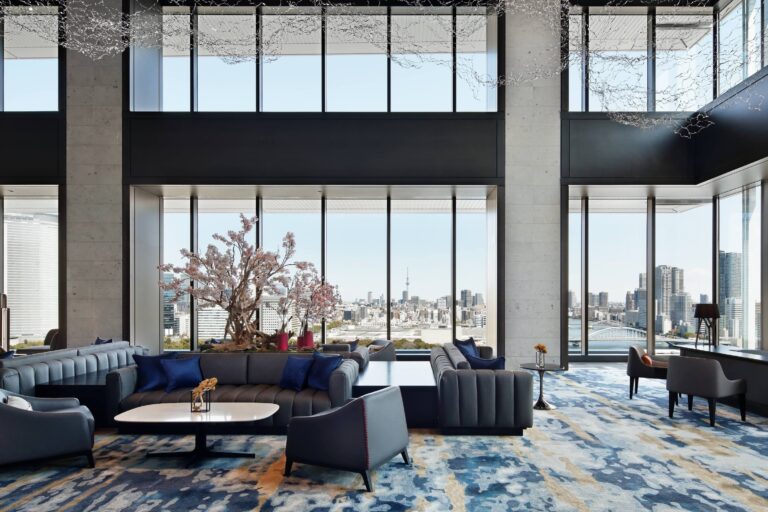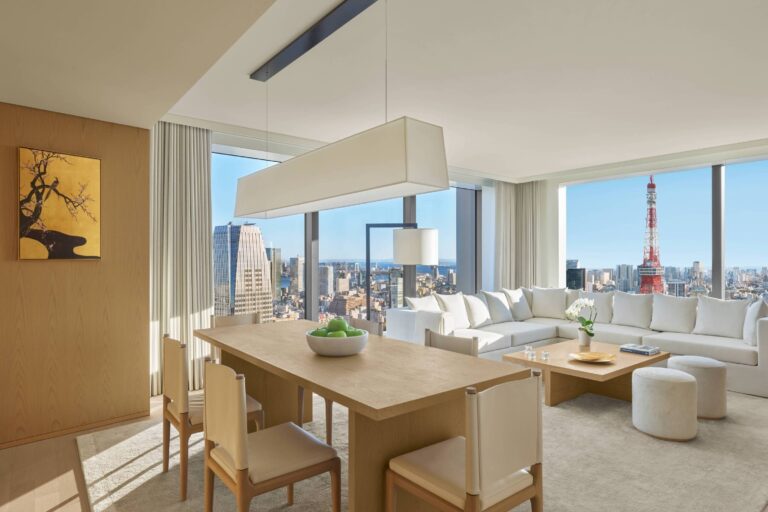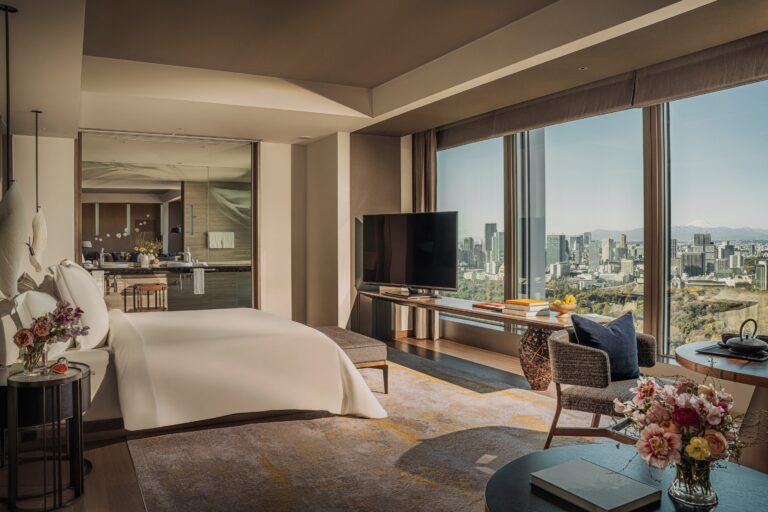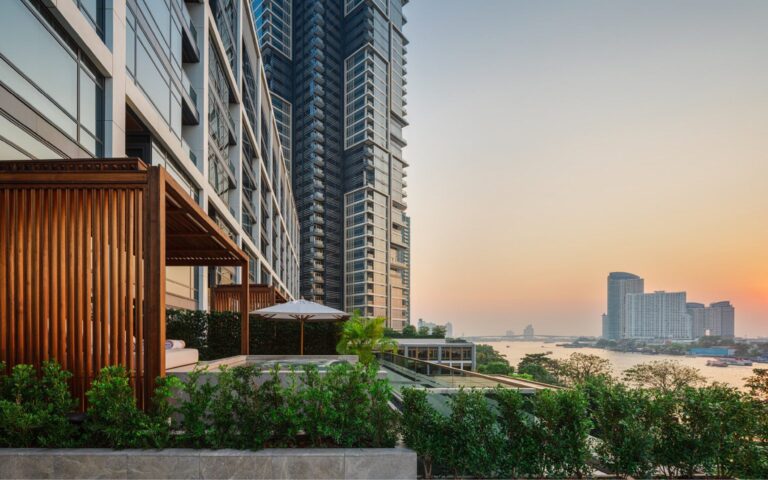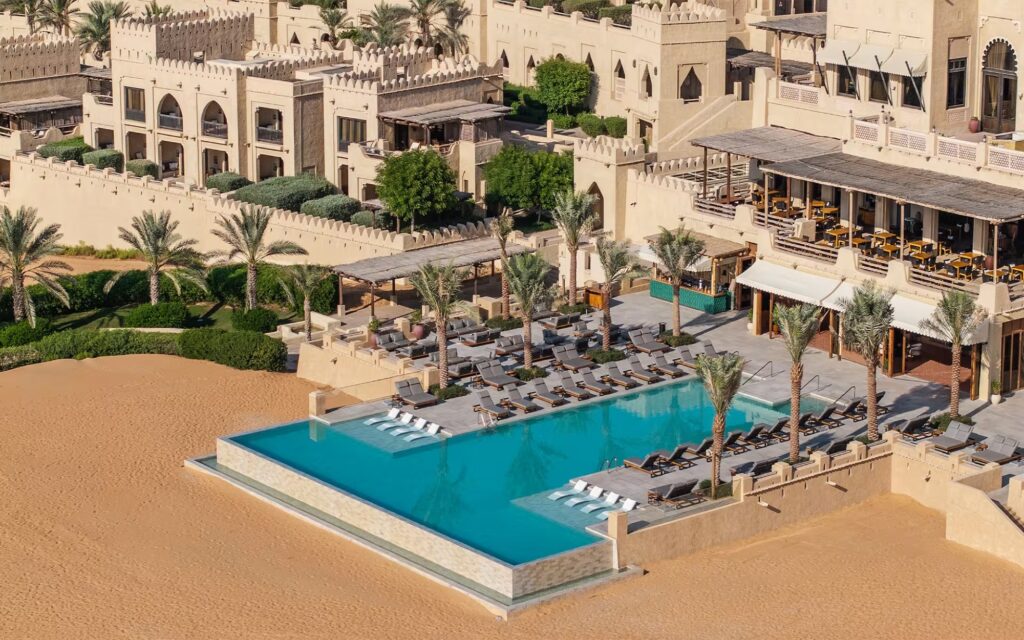
The road to Qasr Al Sarab passes dune after dune, stretching towards the horizon. Then towers and fortified walls appear in the desert, as though they have stood there for a very long time.
Yet Qasr Al Sarab is not a restored historic fort. The Anantara resort was newly built and opened in 2009. Its historical appearance is a deliberate design choice, creating a retreat amid the vast sands of Liwa.
The Backstory
Qasr Al Sarab was developed by Tourism Development & Investment Company (TDIC) as part of Abu Dhabi’s plans to expand its tourism destinations. Rather than being located on the coast or in the city, the resort was built deep in Liwa, near the edge of Rub’ al Khali, the desert also known as the Empty Quarter.
Northpoint and Dubarch were involved in the architecture, while HBA was responsible for the interiors. The fortress-like concept draws on historic forts in the region, which the design team studied with the Abu Dhabi Authority for Culture and Heritage to develop a local architectural language.
The Setting
The resort lies beyond the village of Hameem, on the edge of the Liwa oasis in Al Dhafra, Abu Dhabi. According to Anantara, the journey from the capital takes around two and a half hours by road, or approximately 50 minutes by helicopter.
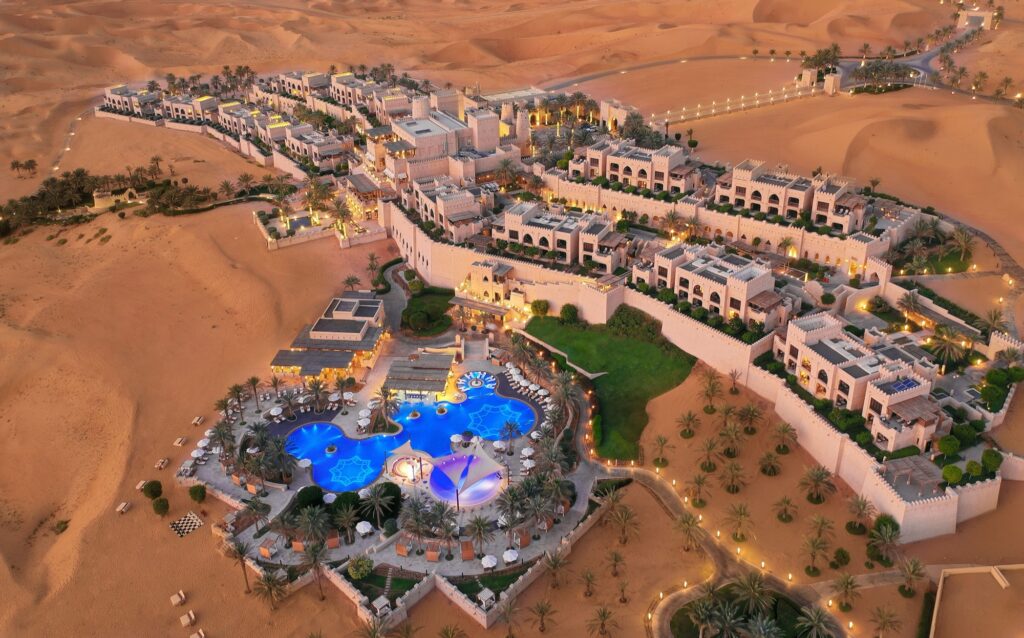
The resort at sunset.
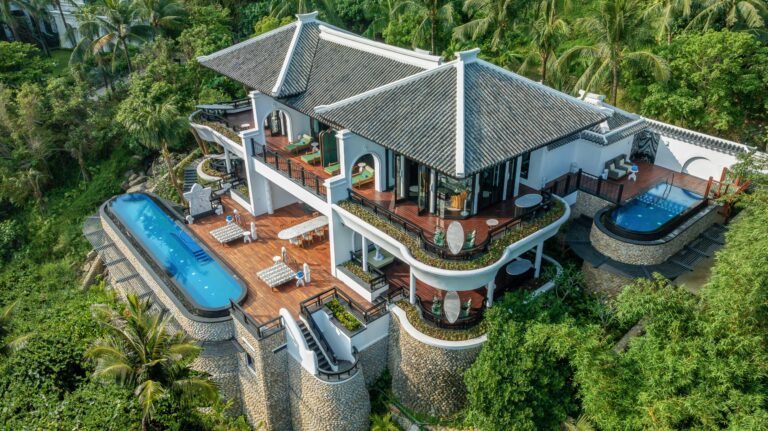
Rooms and suites are grouped in the main complex; pool villas have their own courtyards and private pools; and the Royal Pavilion sits about half a kilometre away, offering different degrees of privacy.
Nearby is the Qasr Al Sarab Protected Area, a protected desert ecosystem that includes Arabian oryx conservation programmes. It is part of the natural setting worth learning about, although sightings of wildlife during a stay cannot be guaranteed.
Architecture & Design
Round towers, crenellated walls and large gateways give Qasr Al Sarab its recognisable outline. From outside, the sand-coloured walls seem to extend the tones of the surrounding desert. Beyond them are courtyards, shaded corridors and pools of water that reflect the light.
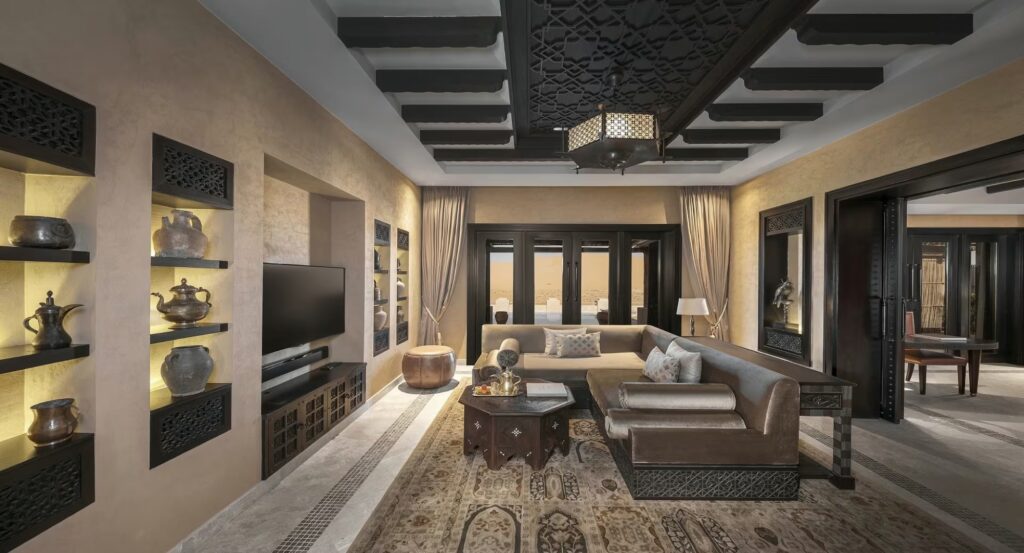
A villa living room.
The fortress-like design extends beyond the façade. Moving through gates and passageways, views narrow into enclosed courtyards before opening towards the dunes in the distance. Against the scale of the surrounding landscape, the architecture creates smaller, more intimate spaces for sitting, walking and resting.
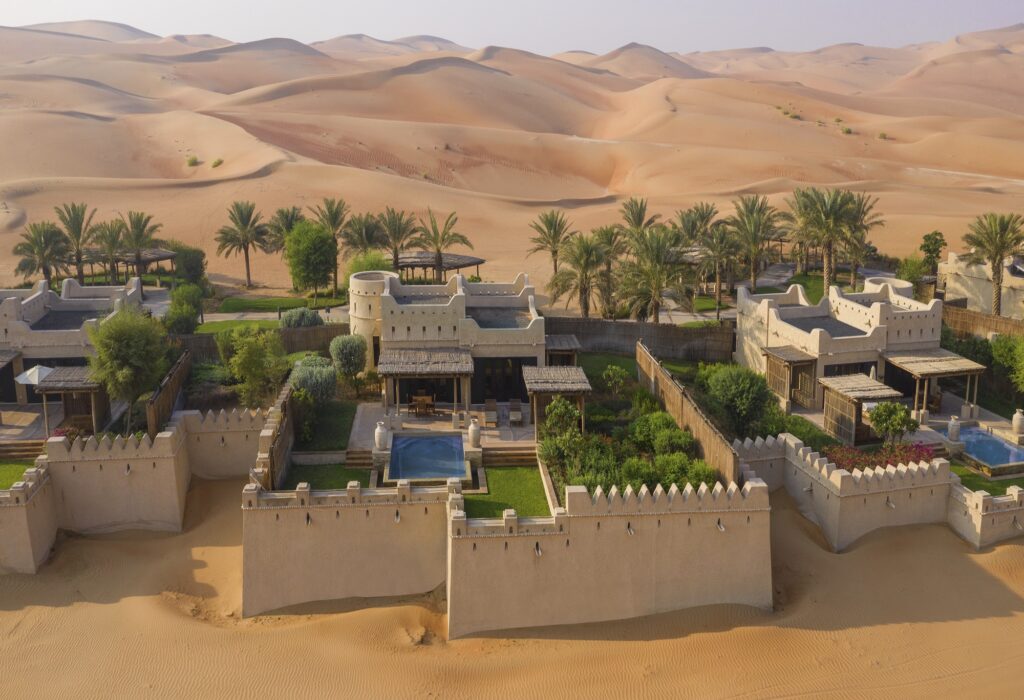
Villas behind crenellated walls.
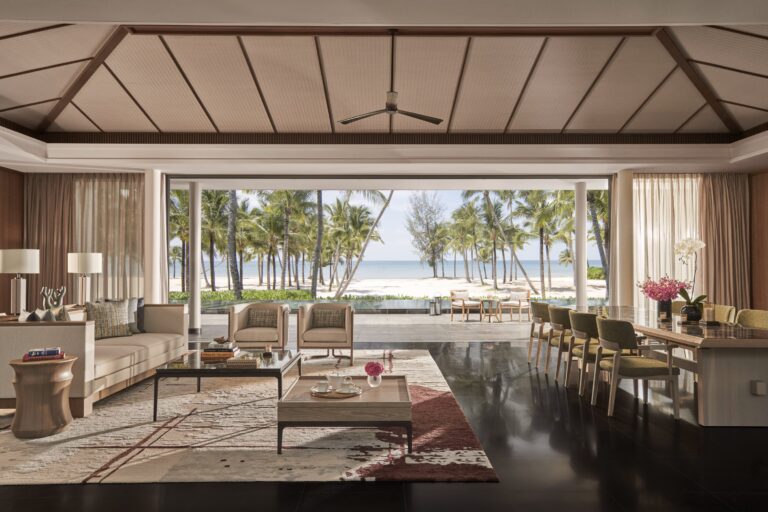
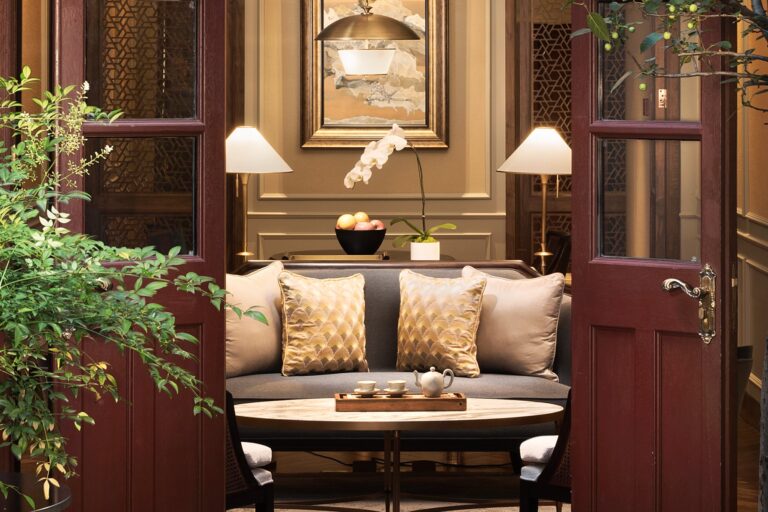
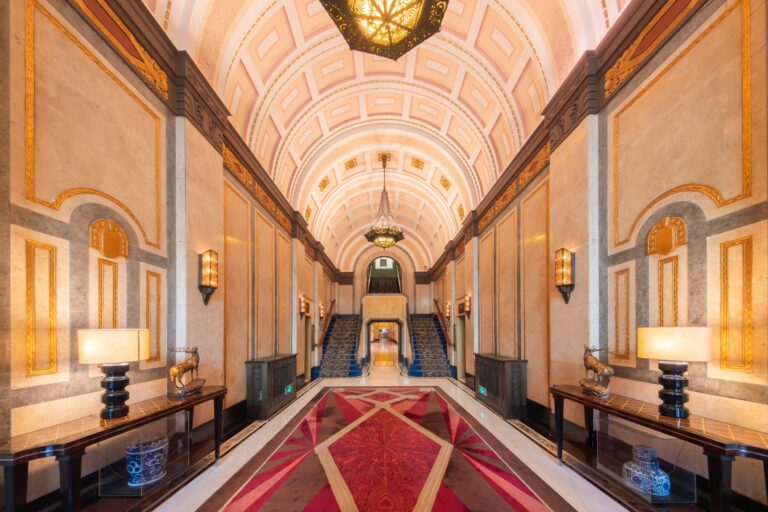
Inside, HBA continues this local architectural language through patterns, wooden furnishings, rugs and decorative details inspired by the UAE. The interiors do not attempt to recreate an original fort. Instead, they interpret familiar materials and forms within a contemporary resort.
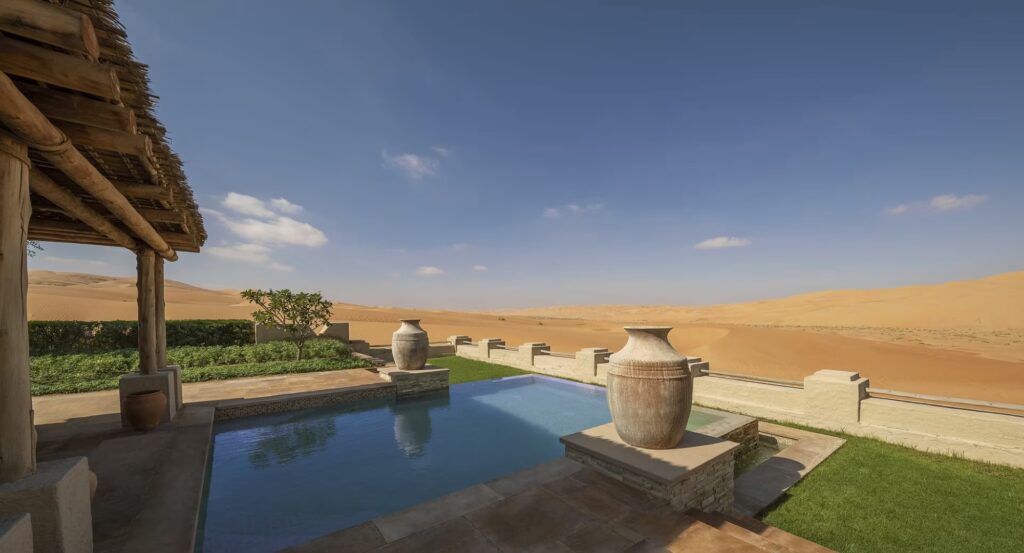
A private pool terrace.
Rooms, Suites & Villas
Qasr Al Sarab has 140 rooms, 14 suites and 53 pool villas. The three options below offer different ways to stay.
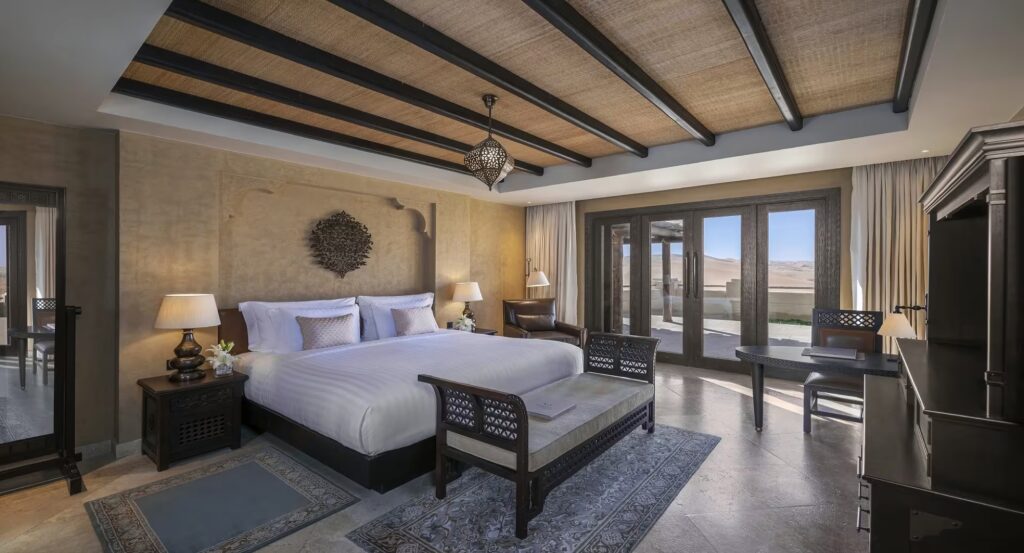
A king bedroom.
Deluxe Terrace Room
The Deluxe Terrace Room is located in the main complex, with a terrace overlooking the dunes. It suits guests who want to enjoy the landscape while staying close to shared facilities.
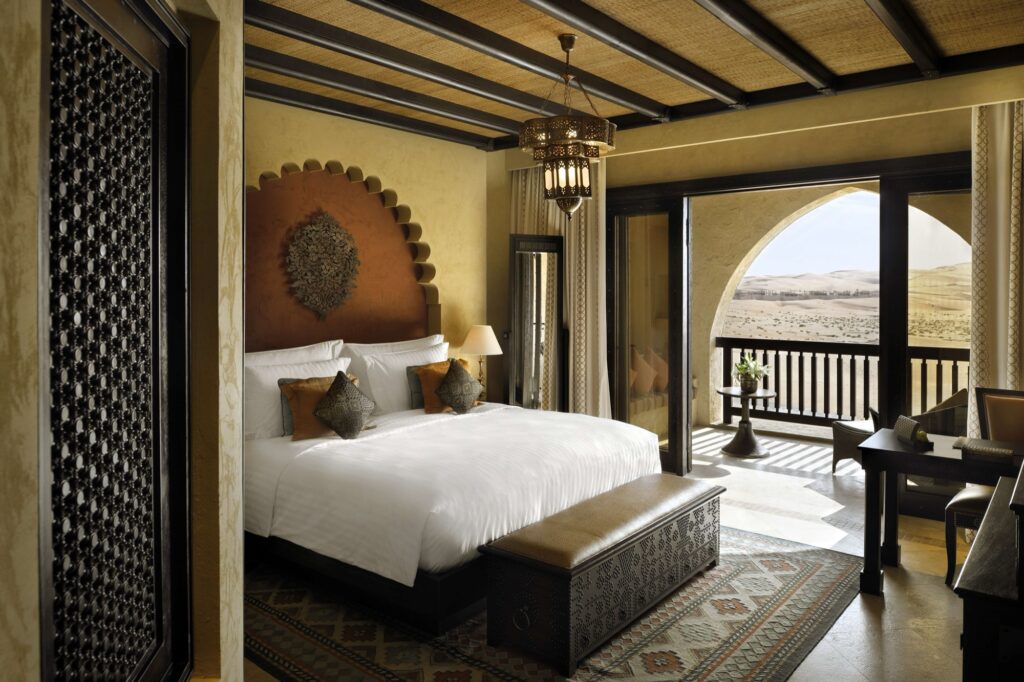
A Deluxe room with a balcony.
One Bedroom Pool Villa
The One Bedroom Pool Villa has its own pool, with living spaces indoors and outdoors. The courtyard and pool provide added privacy for days spent largely at the resort.
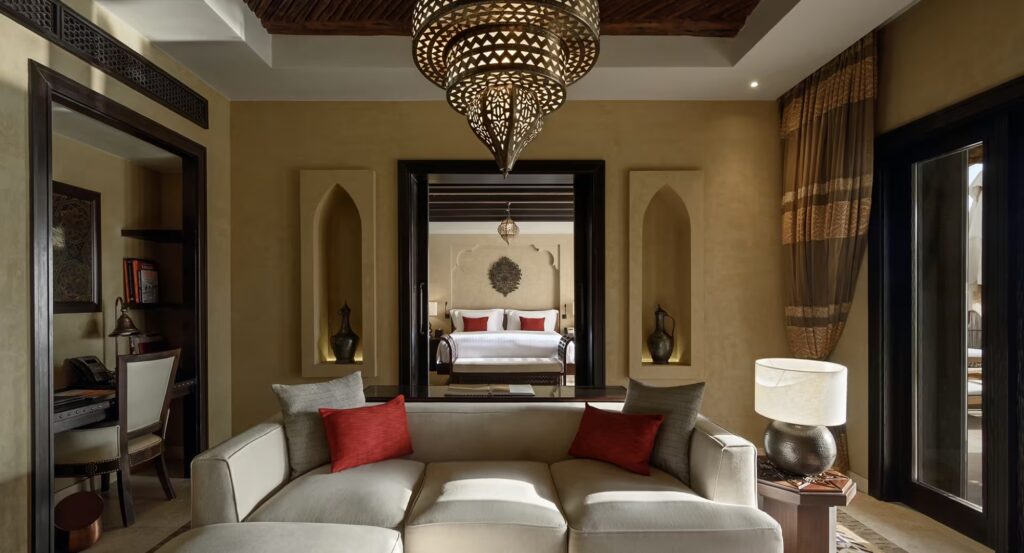
A One Bedroom Pool Villa.
Royal Pavilion Villa
The Royal Pavilion Villa is part of a separate villa area away from the main complex. Its location and sense of seclusion, rather than floor space alone, are what set it apart. Age restrictions and included benefits should be confirmed when booking.
Dining
Al Waha serves breakfast; Suhail is set on higher ground and serves grilled dishes, while Ghadeer, Naseem and Al Liwan provide further options by the pool and in the lobby areas.
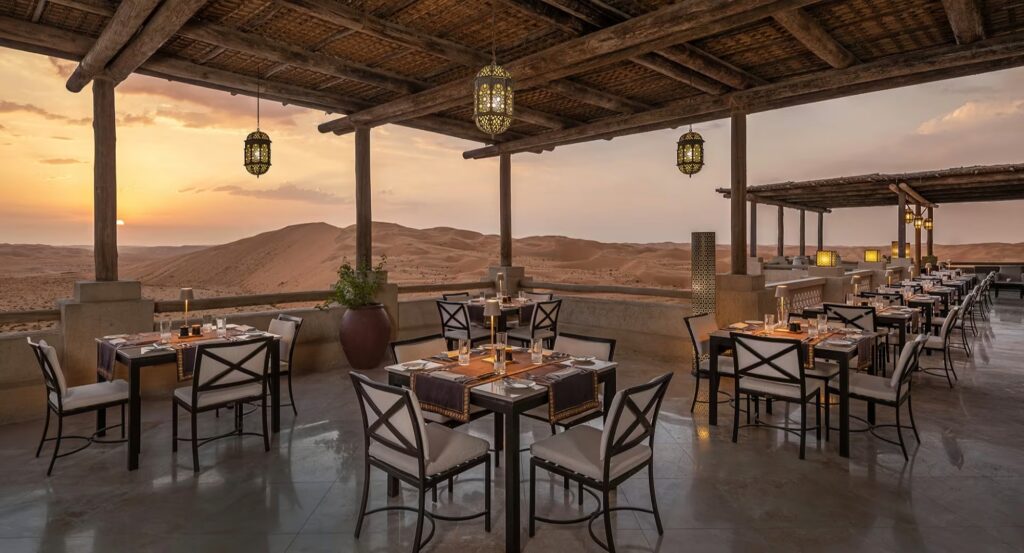
Suhail.
Al Falaj offers something different, with Bedouin-style outdoor dinners featuring Middle Eastern cuisine. The venue operates seasonally, depending on its schedule and weather conditions.
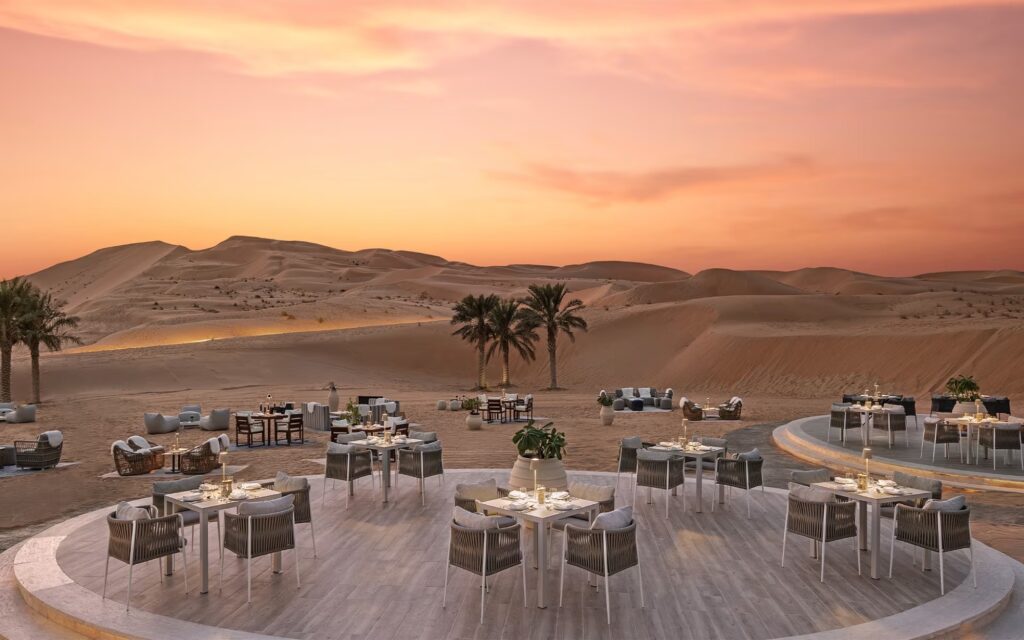
Al Falaj.
Wellness
Anantara Spa has a hammam, sauna, steam room, Jacuzzi, ice room and a space for meditation and yoga.
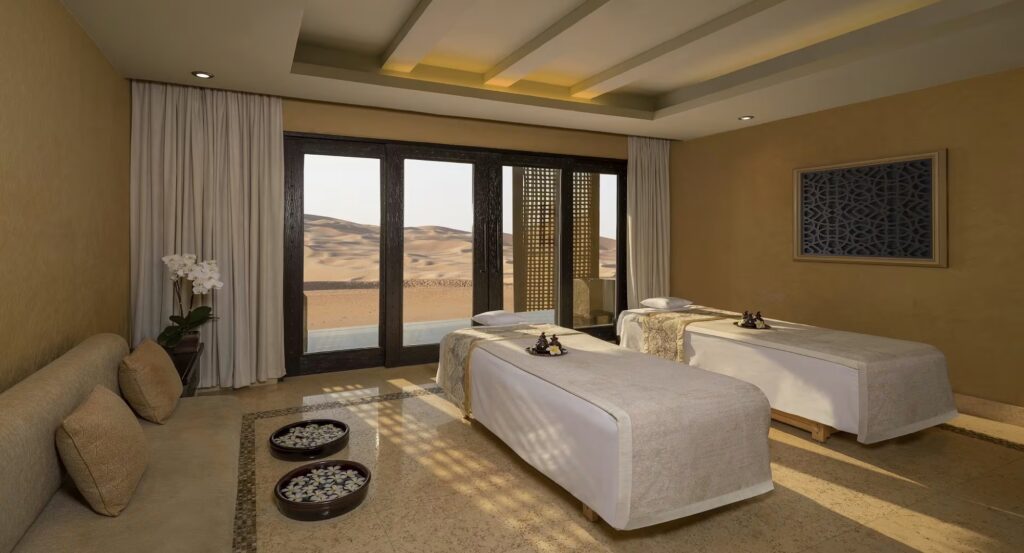
A treatment room at the spa.
Desert Experiences
Activities on offer include camel and horse riding, desert walks, fat biking and driving Polaris buggies across the sand.
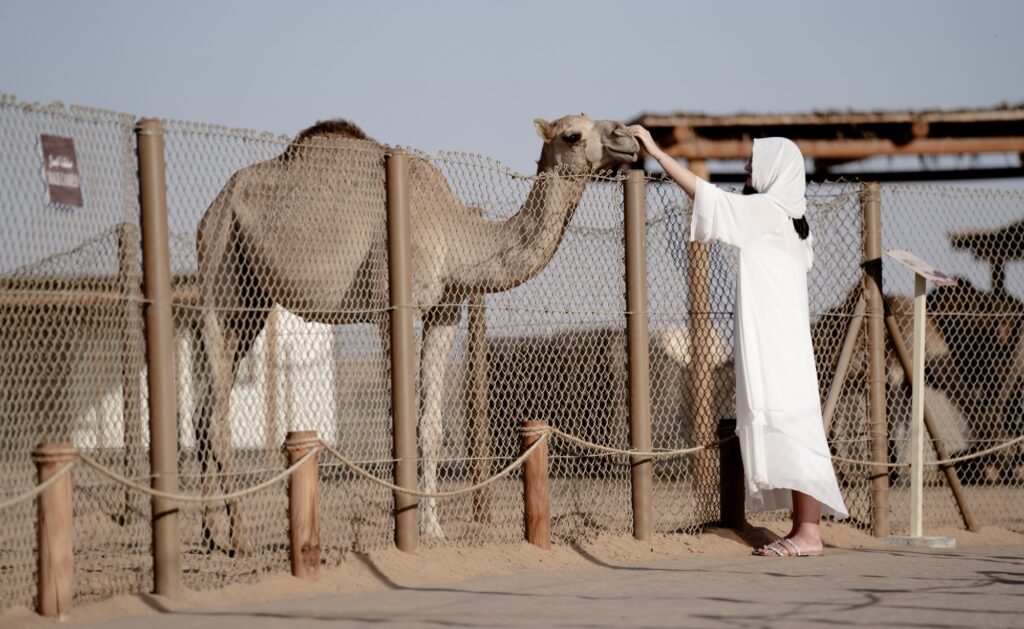
A camel in the desert.
The resort’s desert experience centre introduces the surrounding environment, giving the landscape beyond the property a story of its own rather than leaving it simply as a backdrop for desert photographs.
Traveleak’s Take
Qasr Al Sarab is worth exploring for the way its architecture creates a place to rest amid the dunes. Shaded courtyards, pools of water and terraces facing the desert set enclosed spaces beside wide-open views, and this contrast is one of the resort’s defining features.
The resort suits a stay spent largely on the property. Guests who prioritise shared facilities may prefer rooms in the main complex; those looking for a private pool and courtyard may find the pool villas more appealing. The remote location also means that trips beyond the resort need to be arranged in advance.
Image source: Anantara Qasr Al Sarab
Hotel Profile
- Hotel Group
- Minor Hotels
- Hotel Brand
- Anantara
- Brand Segment
- LuxuryMinor portfolio
- Loyalty Programme
- Minor DISCOVERY
Essential Information
- Location
- Liwa, Al Dhafra, Abu Dhabi, UAE
- Accommodation
- Rooms, suites and pool villas, including the secluded Royal Pavilion area.
- Dining
- Al Waha, Suhail, Ghadeer, Naseem, Al Liwan and the seasonal Al Falaj.
- Wellness
- Spa, with desert excursions and outdoor activities.
- Getting there
- Around two and a half hours by car from Abu Dhabi. Transport should be arranged in advance.
Location Map
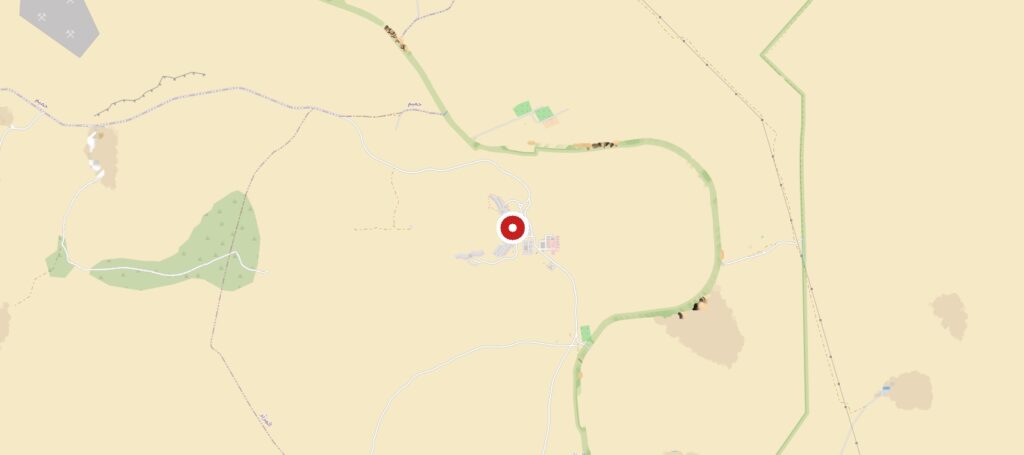 © OpenStreetMap contributors
Contact
Liwa Desert, Al Dhafra, Abu Dhabi, United Arab EmiratesOfficial Website anantara.com/en/qasr-al-sarab-abu-dhabi
Rates via Trip.com
Compare rates: Booking.com
Some links on this page are affiliate links. If you make a booking through them, Traveleak may earn a small commission at no additional cost to you.