During a careers event at his secondary school, Bill Bensley listened to landscape architect Rocco Campanozzi speak and watched slides showing work Campanozzi had undertaken at Knott’s Berry Farm, an amusement park near the school. As Bensley recounts on his studio’s biography page, that was the moment he knew he had to become a landscape architect.
Years later, Bensley’s name would become associated with hotels inspired by temples, palaces, theatrical performance and natural landscapes. His projects do not follow a single architectural style. What connects them is his search for a story on which to build a design concept.
At a Glance
- Name
- Bill Bensley
- Role
- Architect and interior designer
- Studio
- BENSLEY
- Based in
- Bangkok and Bali
- Specialisation
- Hospitality architecture, interiors and landscape
- Official Website
- bensley.com
From a Small California Farm to Bangkok
Bensley was born in California to British parents. In an interview with SPACE magazine, he recalled growing up on a small farm, where he learnt from an early age to keep bees, care for poultry and rabbits, grow vegetables and make compost. Family holidays were spent camping.

Bill BensleyImage source: InterContinental Danang Sun Peninsula Resort
He later studied at Cal Poly Pomona and Harvard. In the early 1980s, he moved to Asia, working for several years in Hong Kong and Singapore. He established his studio in Bangkok in 1989, followed by a Bali office in 1990.
Speaking to World Travel Magazine, Bensley recalled some of the people who had guided him, including Lek Bunnag, a fellow student at Harvard whom he regards as a mentor in architecture. The magazine described his approach to work as the pursuit of a full-time hobby. Asked where that approach began, Bensley answered with a single word: gardening.
The Story Before the Drawing
“I’ve always believed that a hotel without a story is just a building with beds,” Bensley told Lifestyle Collection in 2025. In his view, the story often emerges from the land, culture and history of a place.
Finding that story requires being there. In a 2026 conversation with Tatler Asia, Bensley explained that when seeking inspiration in a destination, he often begins with places of worship, where communities have invested considerable effort in architecture and art. “If I design for a place, I have to stand there; I have to feel it,” he said.
Bensley regards hotel design as a form of storytelling, with guests as the listeners. In his interview with SPACE, he explained that a hotel provides a story with an audience already staying there, whether or not every guest chooses to listen. He sees that as part of its appeal. He wants each new project to teach guests something interesting and compares building a hotel to making a film.
One Studio, Many Disciplines
BENSLEY brings architecture, interior design, landscape design, art and graphic design together under one roof, with studios in Bangkok and Bali. According to figures published by the studio, its team comprises 150 people and has completed more than 200 resorts, hotels and palaces across over 30 countries.
Bringing these disciplines together allows a design concept to extend from the landscape and architecture to interiors and the smallest details within a hotel.
Bensley also enjoys creating buildings whose age is difficult to judge. He told World Travel Magazine that guests visiting some of his newly built, historically styled projects have asked how long the renovations took. He has said that he enjoys receiving such compliments.
Three Places, Three Stories
InterContinental Danang Sun Peninsula Resort: An Opera on the Mountainside
On the Son Tra Peninsula, the resort, which opened in June 2012, is arranged across four levels of terrain named Heaven, Sky, Earth and Sea, within a 39-hectare site. A boat-shaped cable-drawn funicular known as the Nam Tram connects the levels.
Before developing his concept, Bensley travelled extensively through Vietnam, visiting temples and palaces. Temples informed the architecture and interiors, while palaces inspired gateways and gardens. Village houses influenced the character of the Barefoot restaurant, while colonial-era Indochinese design shaped the original interiors of La Maison 1888.
According to the resort’s design documentation, Bensley’s team selected the elements that most appealed to them during their research and developed the design around these references with a contemporary interpretation.
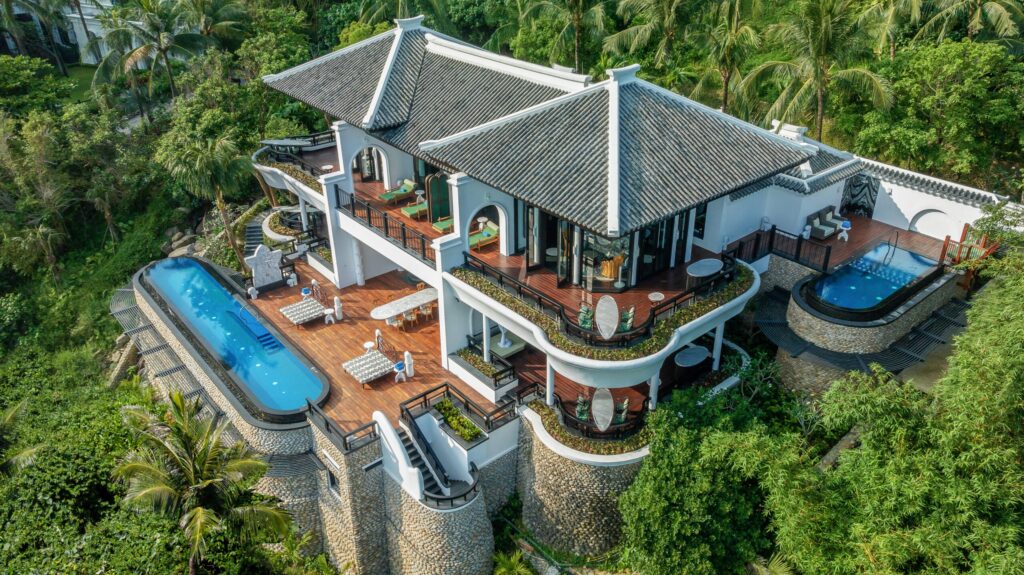
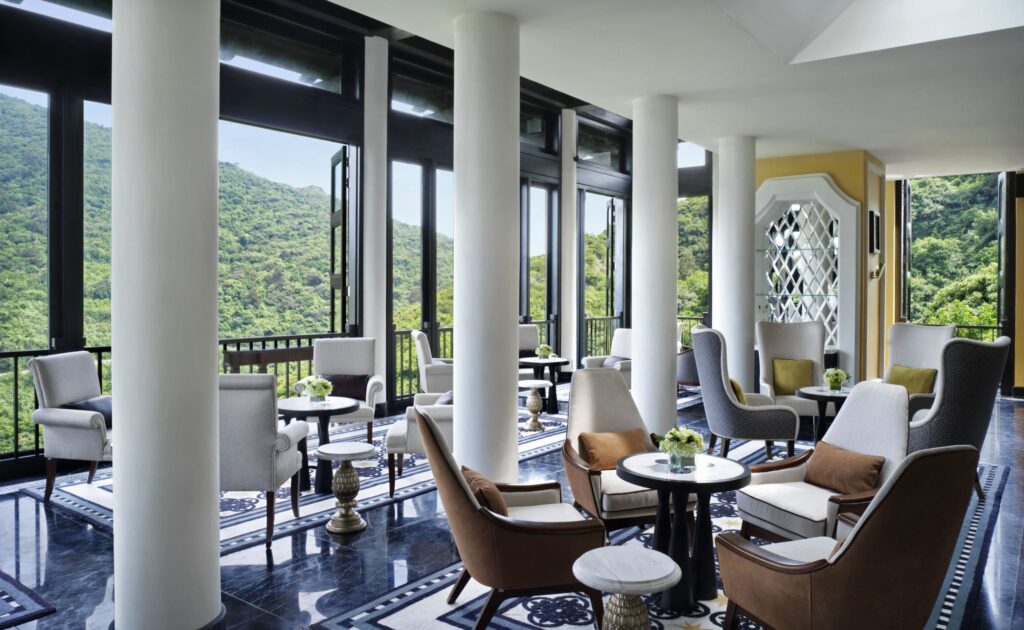
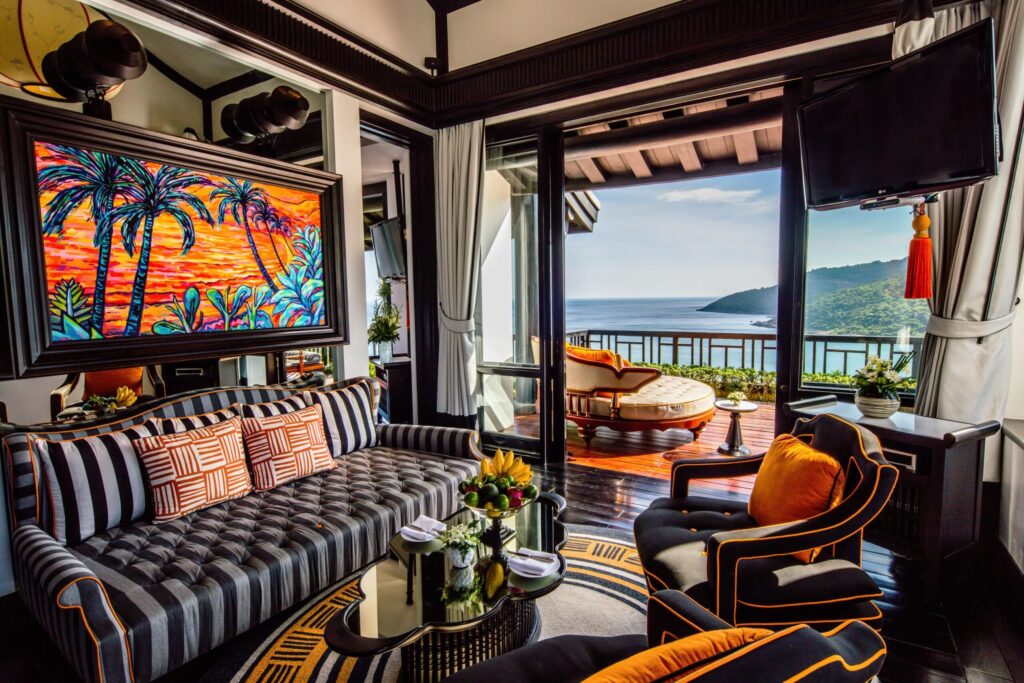
“I imagined the place as a series of acts in a grand opera,” he told Lifestyle Collection. The arrival, the journey upwards and the discoveries along the way were conceived as successive chapters, with each level telling part of the story. He wanted guests to enter a narrative rather than simply a hotel lobby.
Alongside its architectural concept, the resort’s design also took account of the Son Tra Peninsula’s terrain and natural environment. According to the resort, the buildings follow the topography, tree removal was limited, certain spaces were designed for natural ventilation, and elevated bridges were built to allow monkeys to move between areas. Monkeys also became a recurring decorative motif. Even the public toilets were individually designed, with some incorporating Bat Trang ceramics.
Read more: InterContinental Danang
Capella Hanoi: An Imaginary Inn for Opera-Goers
A short distance from the Hanoi Opera House, Capella Hanoi opened in 2021 with 47 rooms and suites, each individually designed by Bensley. The hotel was developed by Sun Group.
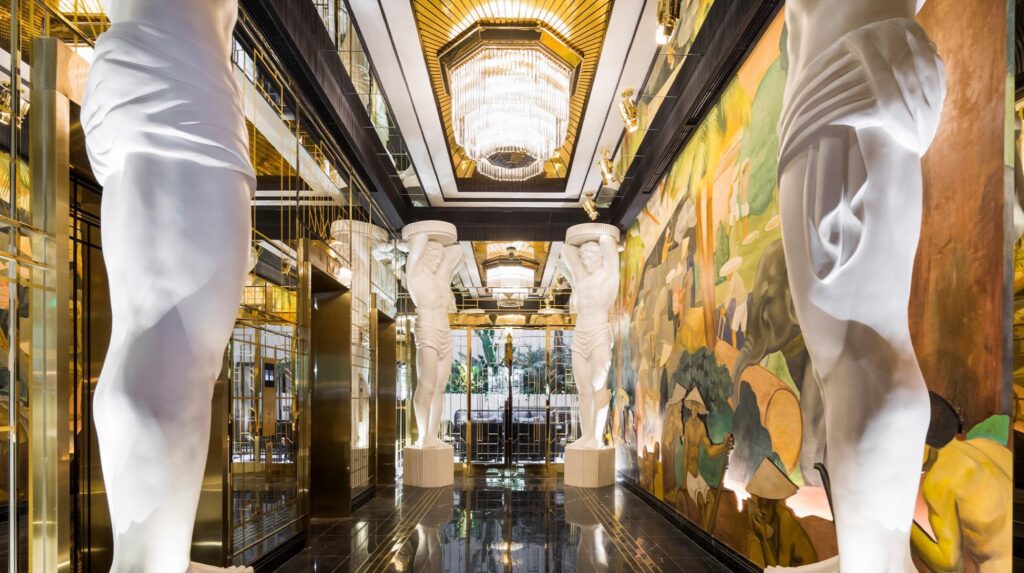
The story here is fictional. The studio imagined that, decades earlier, the site had been home to “une petite auberge”, a small inn for visitors coming to Hanoi to attend the opera. From this invented history came rooms named after, and filled with memorabilia celebrating, performers, composers, designers and productions from the world of theatre.
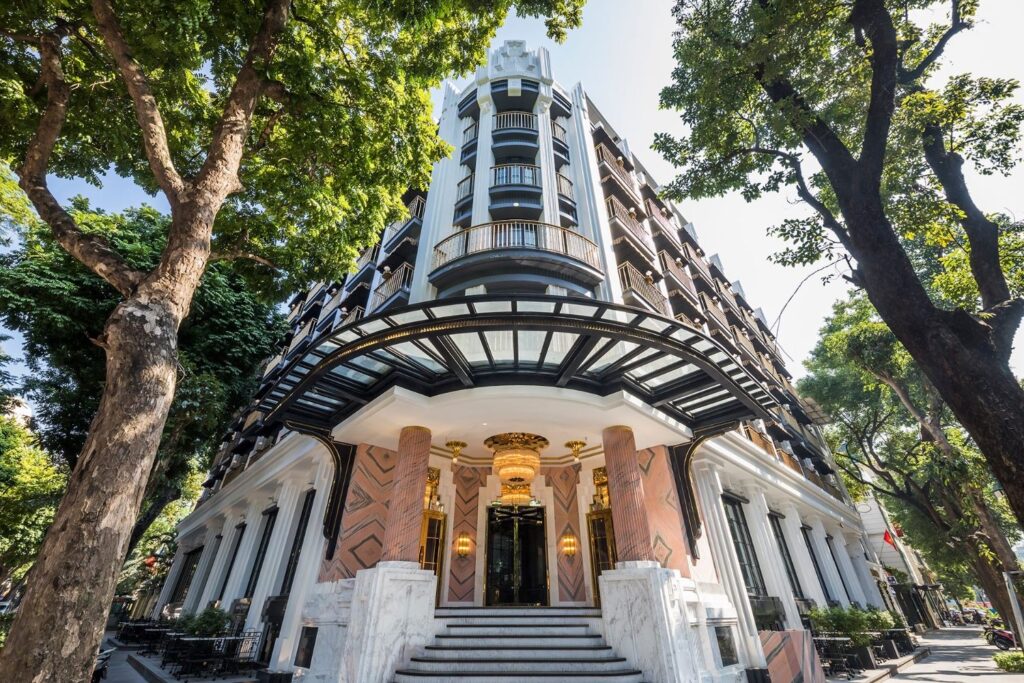
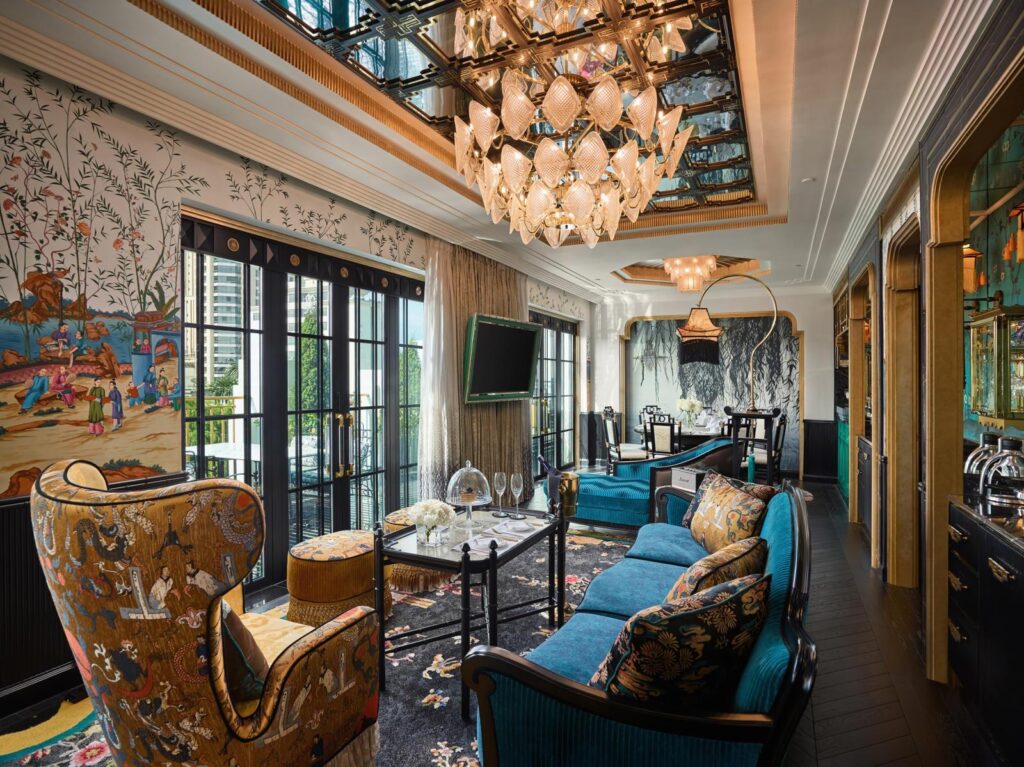
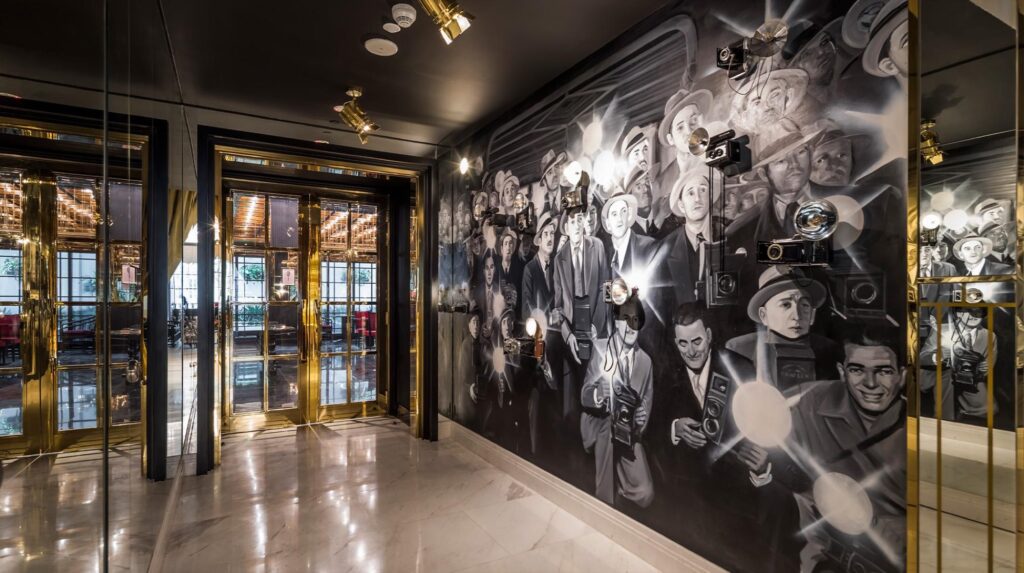
According to BENSLEY, the hotel displays more than a thousand artefacts, including costumes, performance programmes, photographs and stage-set designs, alongside portraits by artist Kate Spencer. The studio designed bespoke furniture and lighting, while tableware for the Backstage restaurant was created in collaboration with Spencer.
The design narrative therefore extends beyond the architecture and guest-room interiors into the dining spaces and the objects used to serve a meal.
Shinta Mani Wild: A Story That Begins with the Forest
In Cambodia’s Cardamom Forest, the project’s concept is closely connected to protecting the land and its forest ecosystem. According to BENSLEY, he and his friend Sokoun Chandpreda purchased the property to protect it from poaching and deforestation.
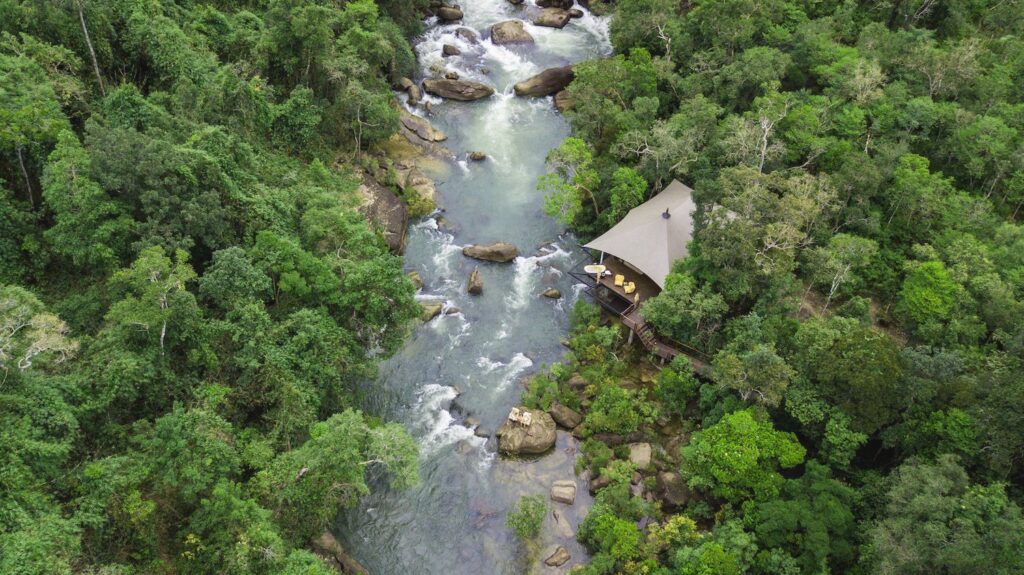
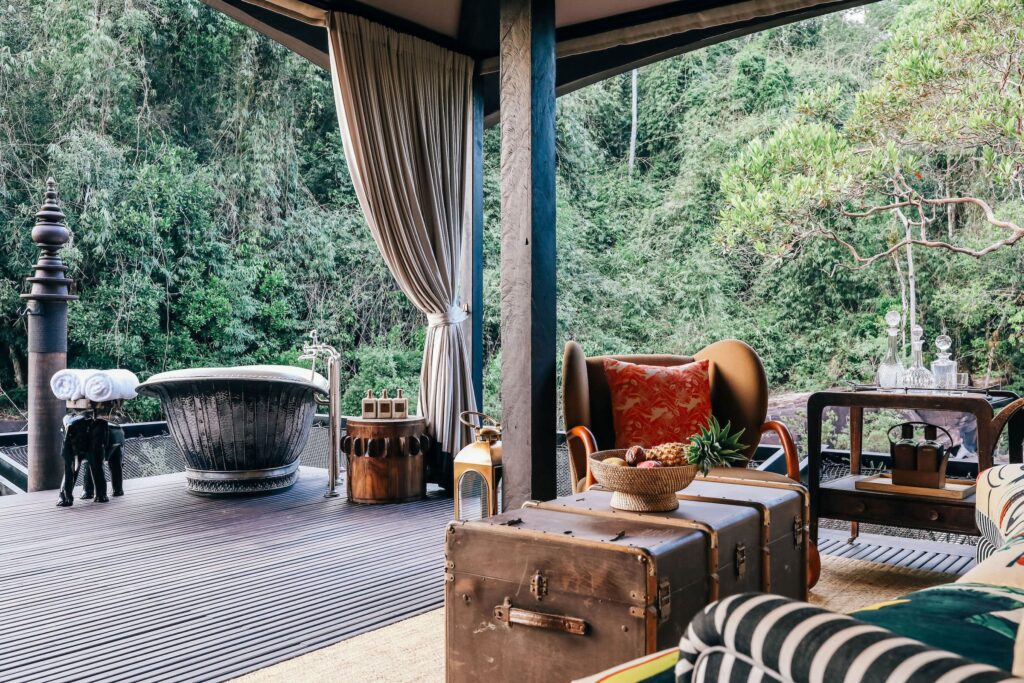
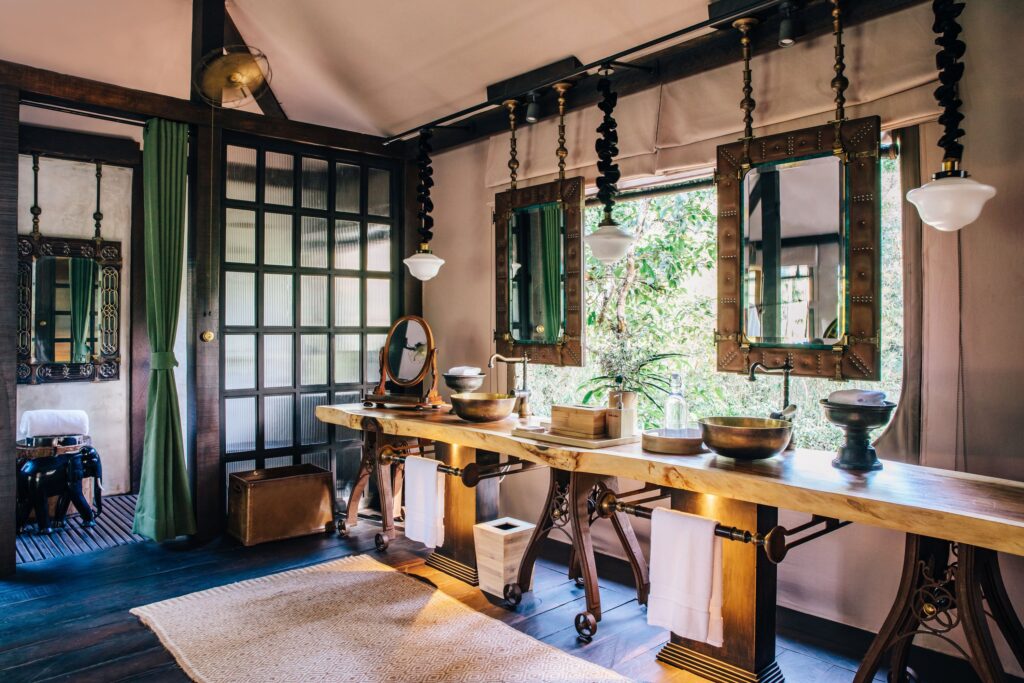
The camp comprises 15 individually designed tents and works alongside the conservation organisation Wildlife Alliance. The studio also states that many of the project’s employees were formerly involved in poaching before taking up work there.
In 2018, before the project had opened, Bensley described to World Travel Magazine an arrival “script” he had written: travelling by off-road vehicle along a narrow forest track, climbing a tree and taking a zipline approximately 400 metres across the forest and a waterfall. The opening act required no lobby.
Hotel Design and Conservation Responsibility
Of the three projects discussed, Shinta Mani Wild demonstrates the clearest connection between hotel design and nature conservation. According to the studio, the project links hospitality operations with forest protection and long-term employment for local people.
These are objectives and activities reported by BENSLEY. Assessing the project’s long-term conservation outcomes would require data and independent research into its impact.
Traveleak’s Take
The three projects in Da Nang, Hanoi and Cambodia illustrate different ways in which Bill Bensley brings storytelling into hotel design. At InterContinental Danang, the concept unfolds through the terrain, architecture and movement across the resort. At Capella Hanoi, a fictional story centred on the world of opera becomes the foundation for its interiors. At Shinta Mani Wild, the aim of protecting the forest is directly connected to the project’s origins.
A defining feature of Bensley’s approach is his ability to develop a single theme across multiple scales, from landscape and architecture to interiors and individual objects. His visual language, rich in detail, colour and theatrical elements, can be far removed from more restrained design traditions, but it is also part of what makes his projects so recognisable.
Across these three examples, the notable achievement lies not only in creating distinctive spaces but also in translating an initial idea into specific design decisions. For Bensley, the story is not something added to the architecture; it becomes part of the process through which the building takes shape.
Explore Bill Bensley’s Work on Traveleak
- Capella Hanoi: When Opera Steps Off the Stage
- InterContinental Danang: Bill Bensley’s Stage Set on the Son Tra Peninsula
- La Maison 1888, Da Nang: French Dining on Son Tra Peninsula
Sources: BENSLEY; InterContinental Danang; Capella Hanoi.