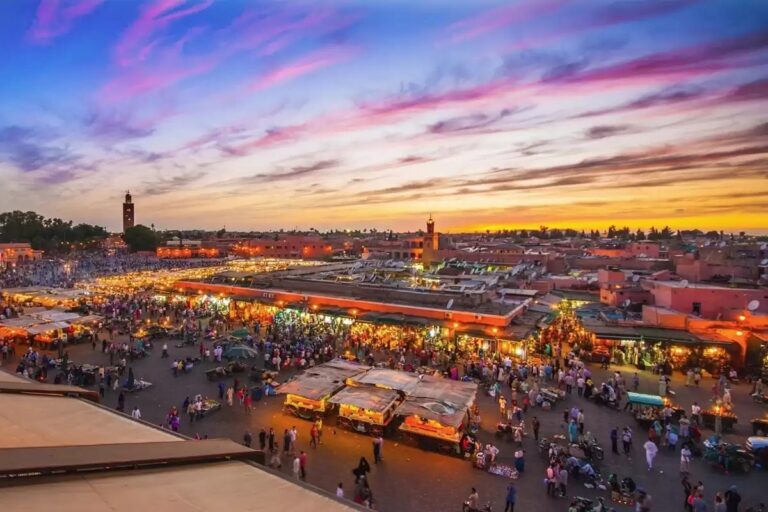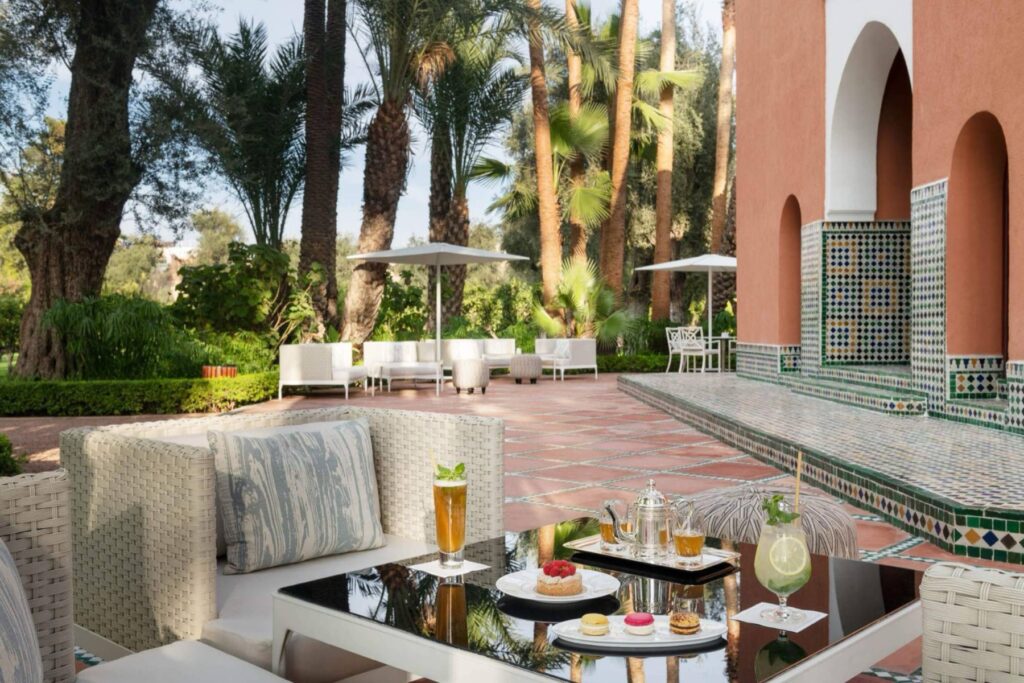
In the heart of Marrakech, behind La Mamounia’s walls, lies a garden of olive trees, palms and shaded paths. Beyond it, the Koutoubia tower rises against the skyline, a reminder that the bustling medina is just outside.
But La Mamounia’s story did not begin with a hotel. The garden predates the building by more than a century and once belonged to a Moroccan prince. Over time, the site became a historic hotel, shaped by the work of several architects and craftspeople.
The Backstory
In the eighteenth century, Sultan Mohammed Ben Abdallah gave the garden to his son, Prince Al-Mamoun. It became a setting for receptions and outdoor gatherings.
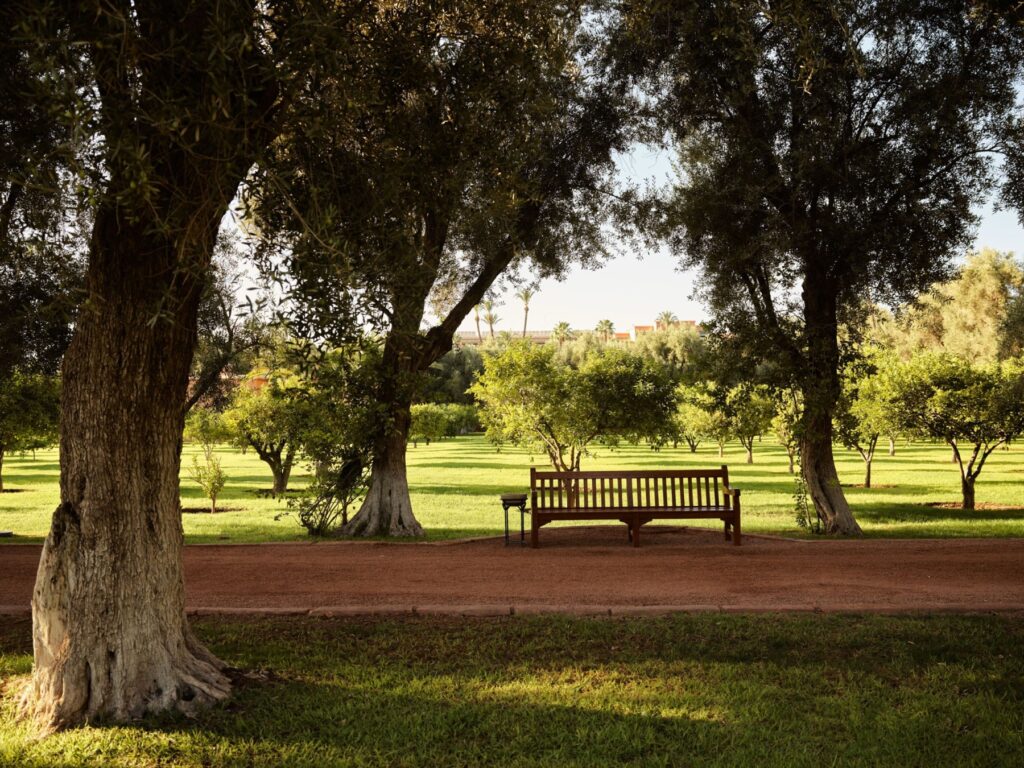
The garden.
More than a century later, Compagnie des Chemins de Fer du Maroc decided to build a hotel on the site.
La Mamounia opened in 1923, with architecture developed by Henri Prost and Antoine Marchisio, combining Moroccan traditions with Art Deco.
Over the decades, the hotel continued to change. From 2006 to 2009, French designer Jacques Garcia undertook a major refurbishment, bringing Arab-Andalusian references into the interiors. Jouin Manku later refreshed the restaurants, bars and public spaces in two phases, in 2020 and 2023.
In 2023, La Mamounia celebrated its centenary. Al-Mamoun’s garden remains the oldest part of its heritage, while the interiors bear the marks of different periods.
The Setting
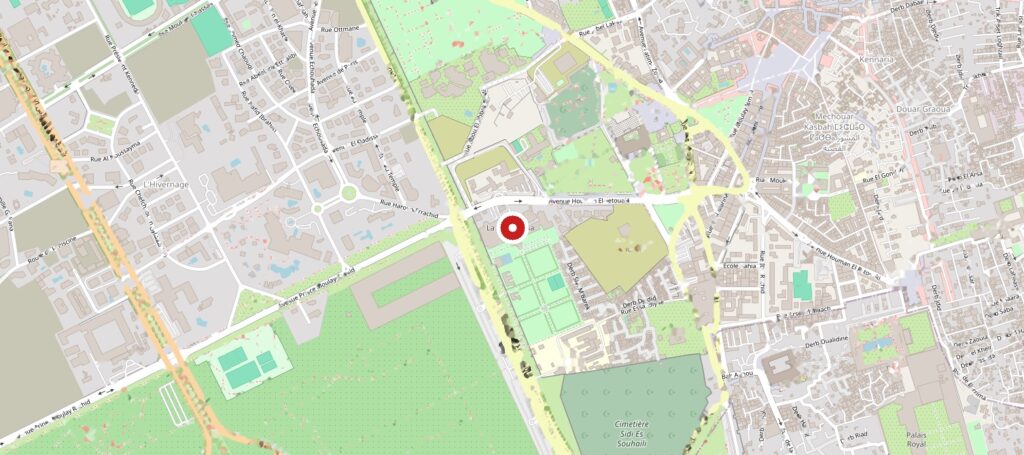
La Mamounia stands on Avenue Bab Jdid, near the historic medina and the Koutoubia tower.
The garden separates the hotel from the bustle of the streets outside. Rows of olive trees, palms, fruit trees and flowers line the paths, interspersed with areas of more naturalistic planting.
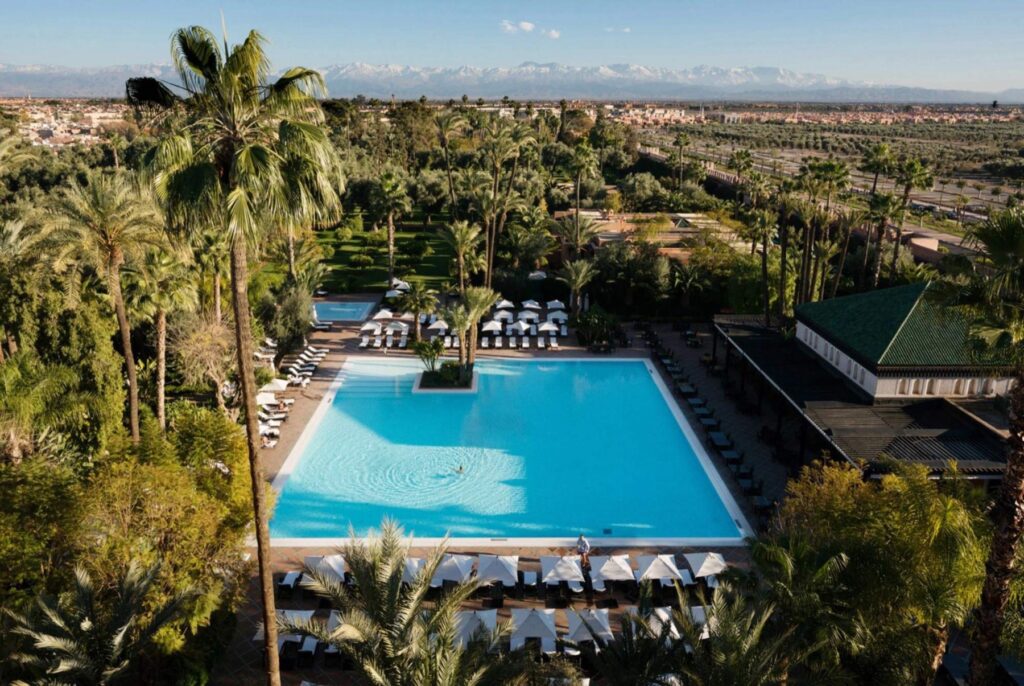
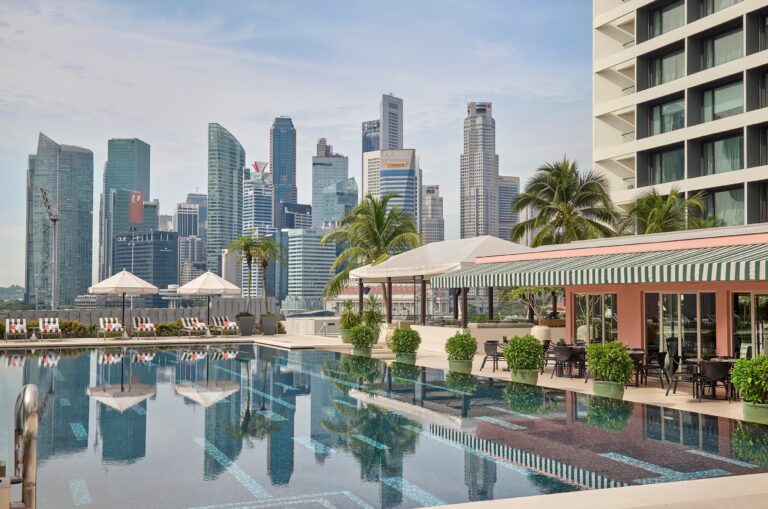
The pool and gardens, with the Atlas Mountains beyond.
From lounges to terraces, greenery is present in many of the hotel’s spaces. Walks through the garden, tea or a rest beneath the trees become part of the stay.
Architecture & Interior Design
From its opening in 1923, La Mamounia combined Moroccan architecture with Art Deco. Zellige tilework and Berber textiles brought a local identity to a building created during a period of growing international tourism.
Successive refurbishments have shaped the hotel’s present appearance. Jacques Garcia’s interiors drew on Arab-Andalusian references and contrasts between light and shade.
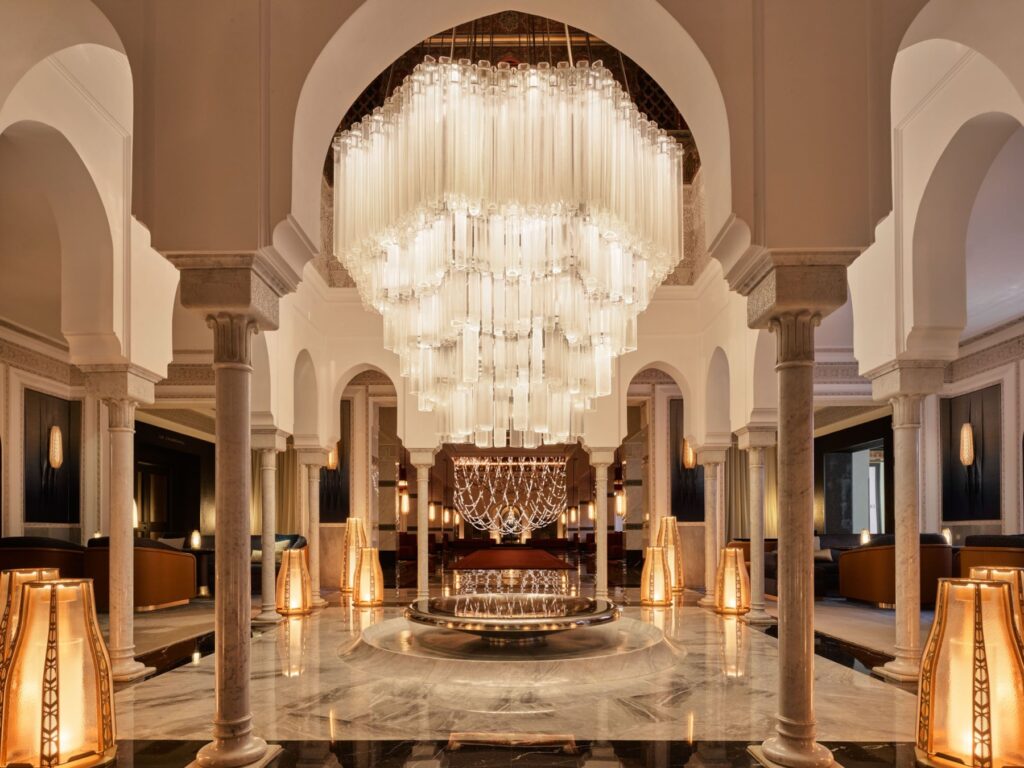
A hall with a glass chandelier.
Artist Yahya contributed hand-cut patterned bronze panels, lamps and decorative details in corridors, at room entrances and in the spa. Light passing through the metal casts shadows on the walls, bringing Moroccan craftsmanship into the architectural spaces themselves.
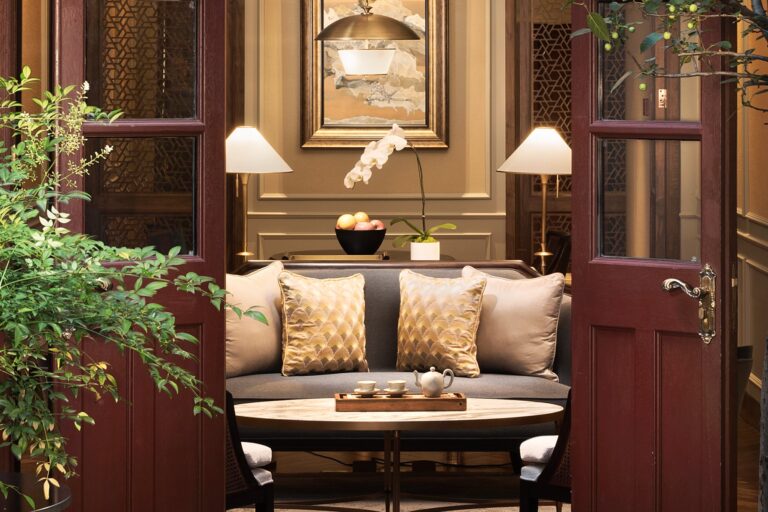
In 2023, Jouin Manku refreshed the public areas. At Alcôves, six seating areas are defined by glass, curtains and mashrabiya-patterned ceilings, with low seating inspired by traditional Moroccan salons.
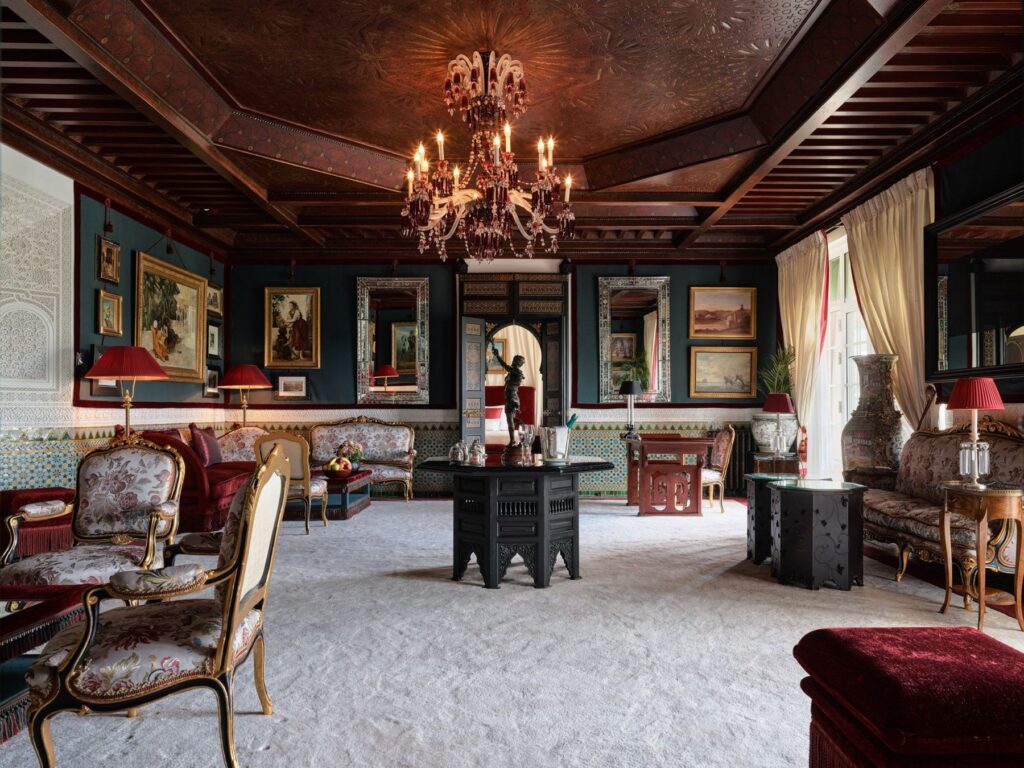
A suite salon.
In the Grand Hall, the Centenary Chandelier is a particular focal point, designed to mark the hotel’s hundredth anniversary.
Inspired by Amazigh jewellery, the chandelier brings together 3,572 Bohemian glass elements made by Lasvit, red cords and handcrafted Moroccan metal details. Water and reflective surfaces beneath it change the appearance of the work from different angles, like a giant piece of jewellery in the Grand Hall.
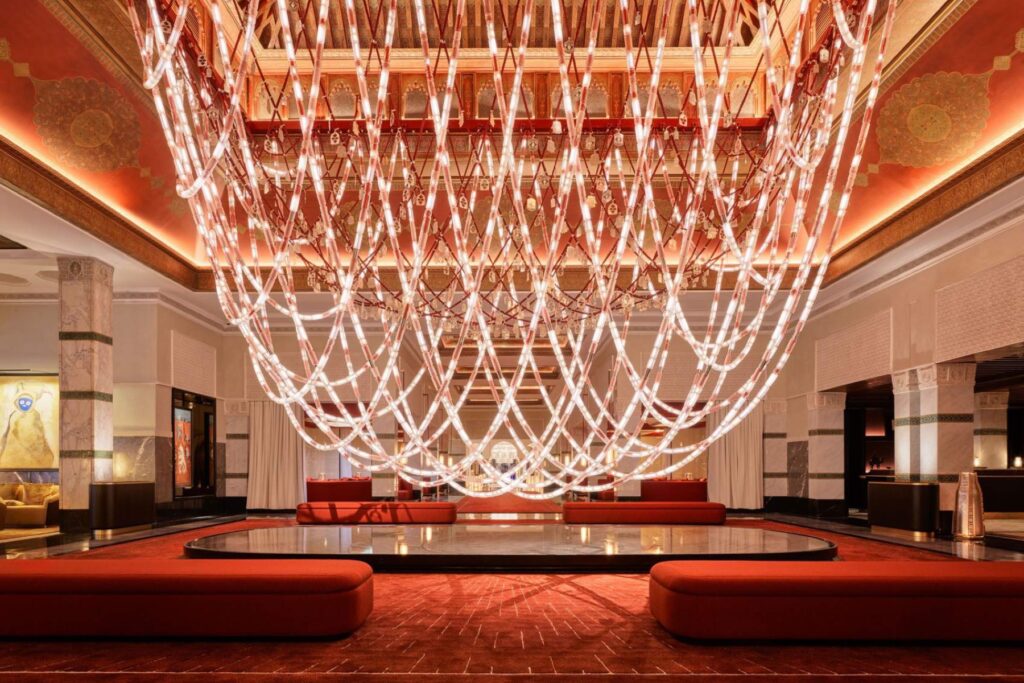
The Centenary Chandelier.
The garden also remains present in the newer design. At Salon Majorelle, coloured glass was replaced with clear glass to open up views of the greenery. The Italian restaurant is arranged like a winter garden, with large windows connecting the dining space to its surroundings.
Rooms, Suites & Riads
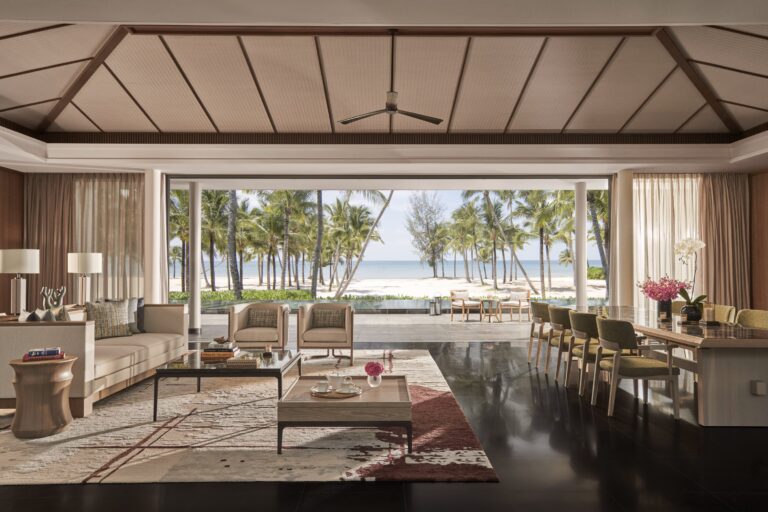
La Mamounia has 135 rooms, 71 suites and three private riads, with interior details such as wood, zellige, carved stone and mashrabiya patterns.
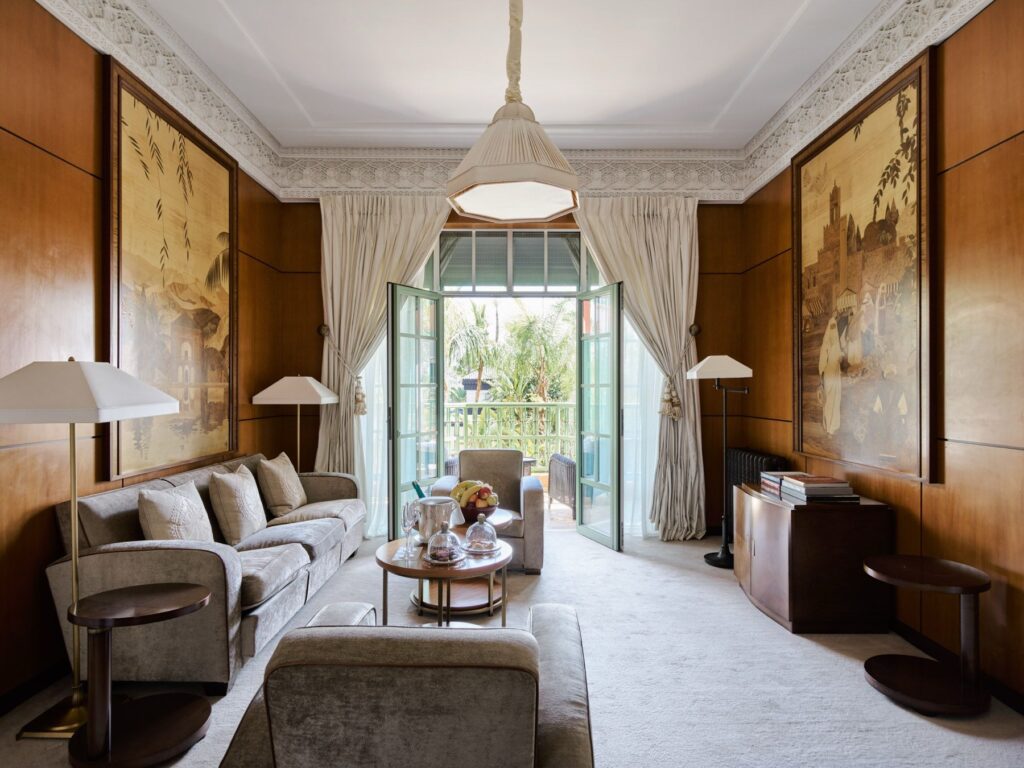
A suite sitting room.
Deluxe Room
Deluxe Rooms range from 30 to 45 m², with views of the Koutoubia tower, the garden or the pool. The outlook is worth considering when choosing a room, alongside its size and layout.
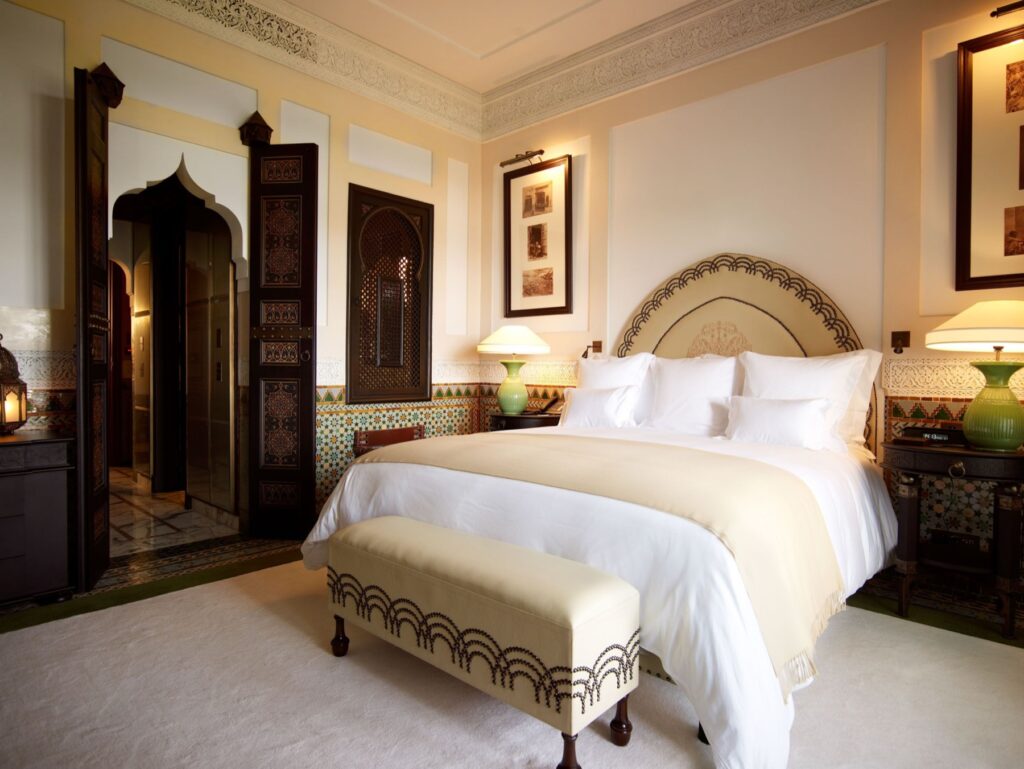
A Deluxe Room.
Park Suite
The Park Suite has a separate bedroom and living room, overlooking the garden. It suits guests who want more living space and expect to spend more time at the hotel.
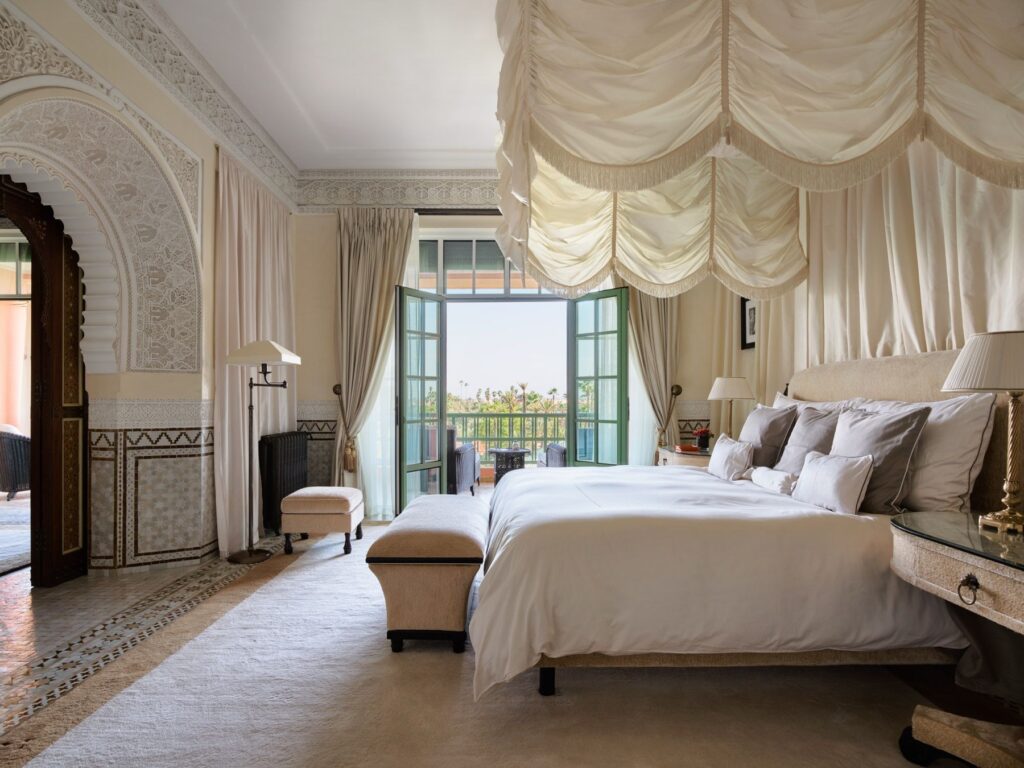
A suite bedroom.
Private Riad
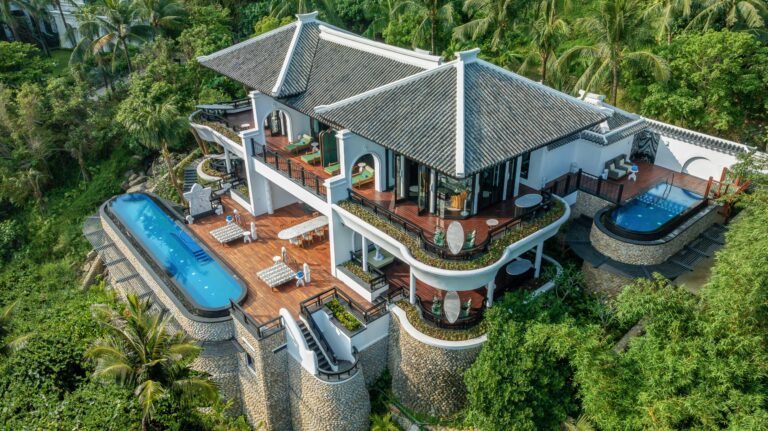
The three Private Riads stand in the garden. Each measures approximately 700 m², with three bedrooms, a living room, a dining area, a private pool and terrace.
The layout centres on a patio inspired by Moroccan houses, with a private entrance and butler service. This suits families or groups seeking greater privacy.
Dining
Le Marocain focuses on Moroccan cuisine, continuing the hotel’s connection with local culture.
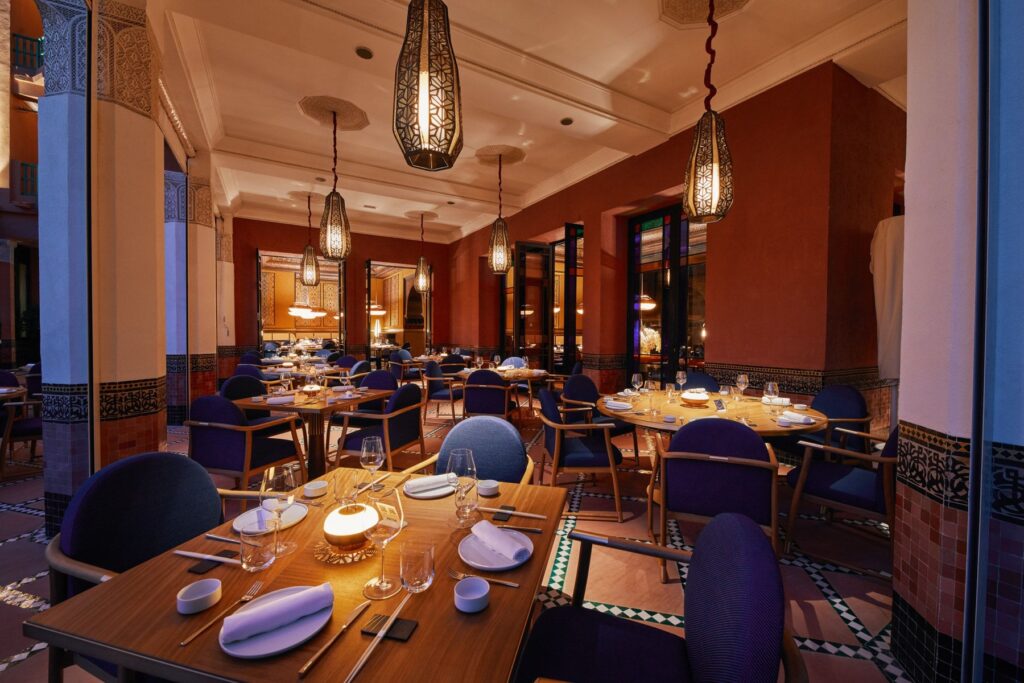
L’Asiatique.
L’Asiatique par Jean-Georges introduces Asian flavours, while L’Italien par Simone Zanoni brings Italian cuisine into a setting inspired by a winter garden.
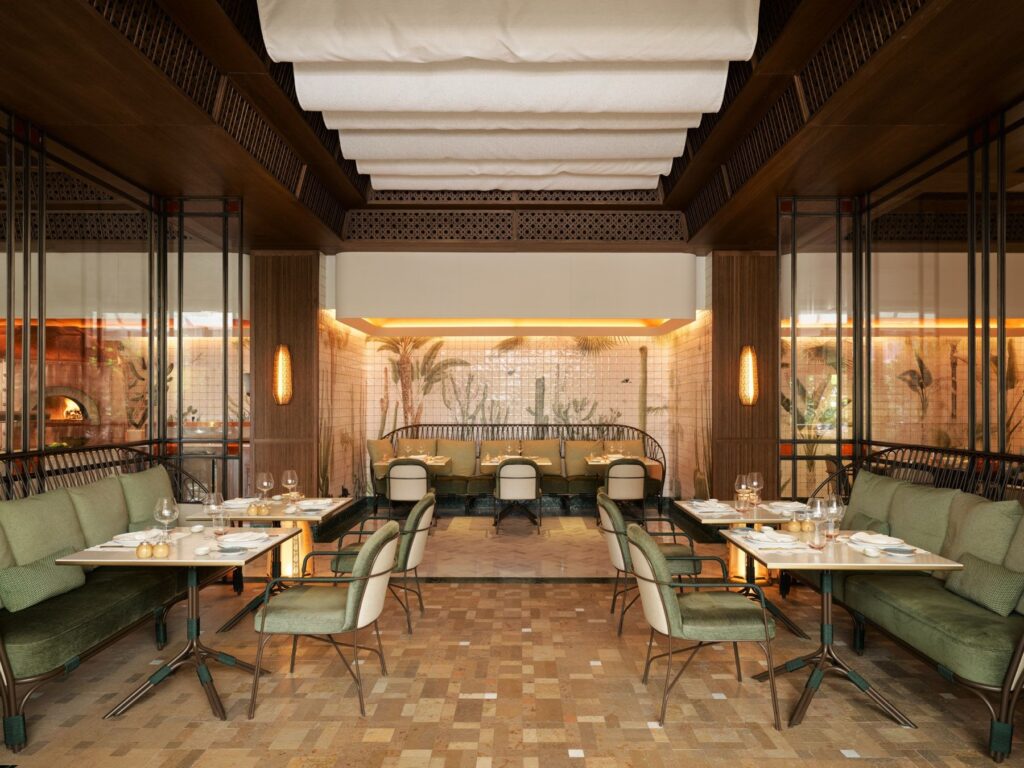
L’Italien.
Pierre Hermé’s spaces for tea and pastries offer another option for afternoons spent at the hotel. Beyond the hotel, traditional food can be bought from stands in Marrakech’s Jemaa el-Fna square well into the night.
Wellness
La Mamounia Spa measures approximately 2,500 m², with a traditional hammam, treatment rooms, an indoor pool and a relaxation area.
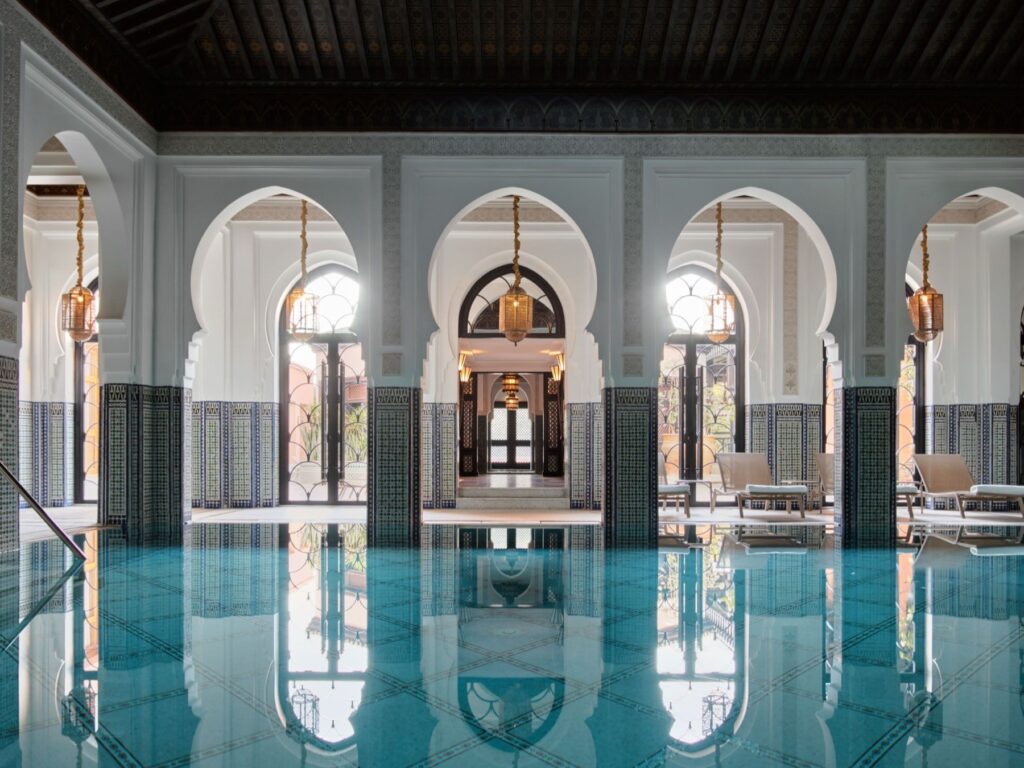
The spa pool.
Yahya’s metalwork and lighting design also feature in the spa, alongside decorative details inspired by Morocco.
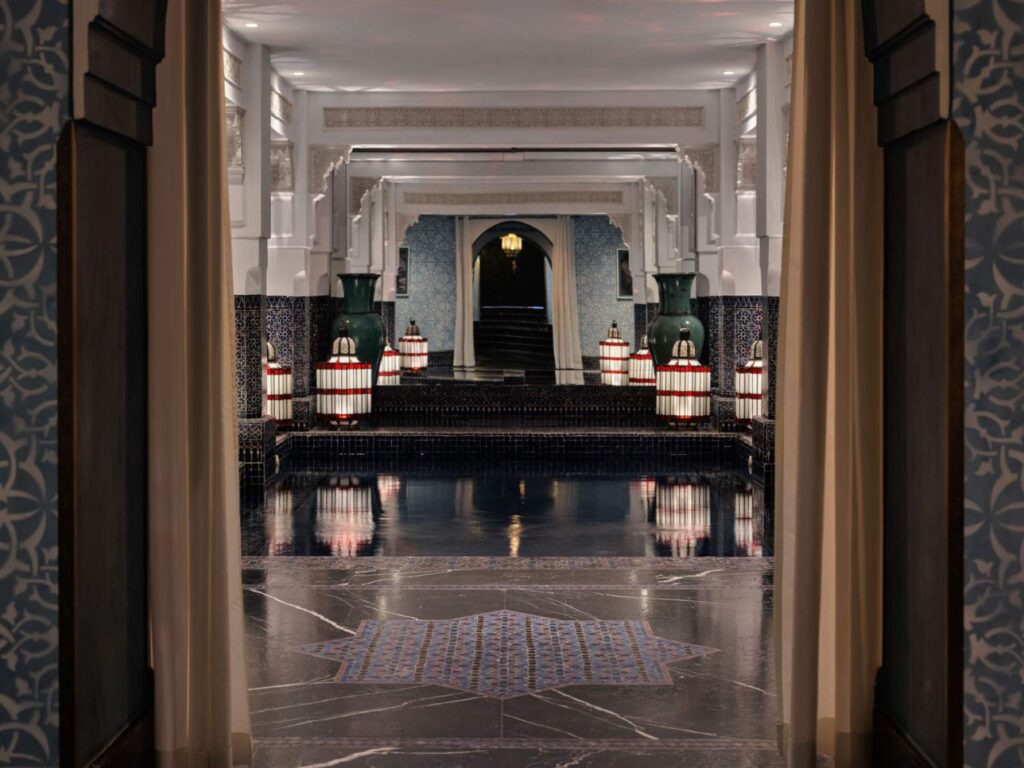
Lanterns by the spa pool.
Gardens & Experiences
The hotel grounds also have a tennis court, outdoor areas for relaxation and a vegetable garden that supplies some ingredients to the restaurants.
Traveleak’s Take
La Mamounia suits travellers seeking a historic hotel connected to Marrakech’s culture, along with greenery and places to rest away from the pace of the streets.
The eighteenth-century garden, Jacques Garcia’s interiors, Yahya’s metalwork and Jouin Manku’s designs can all be explored within the grounds.
When choosing a room, a garden view is worth considering. For families or groups seeking greater privacy, the private riads offer a different kind of stay.
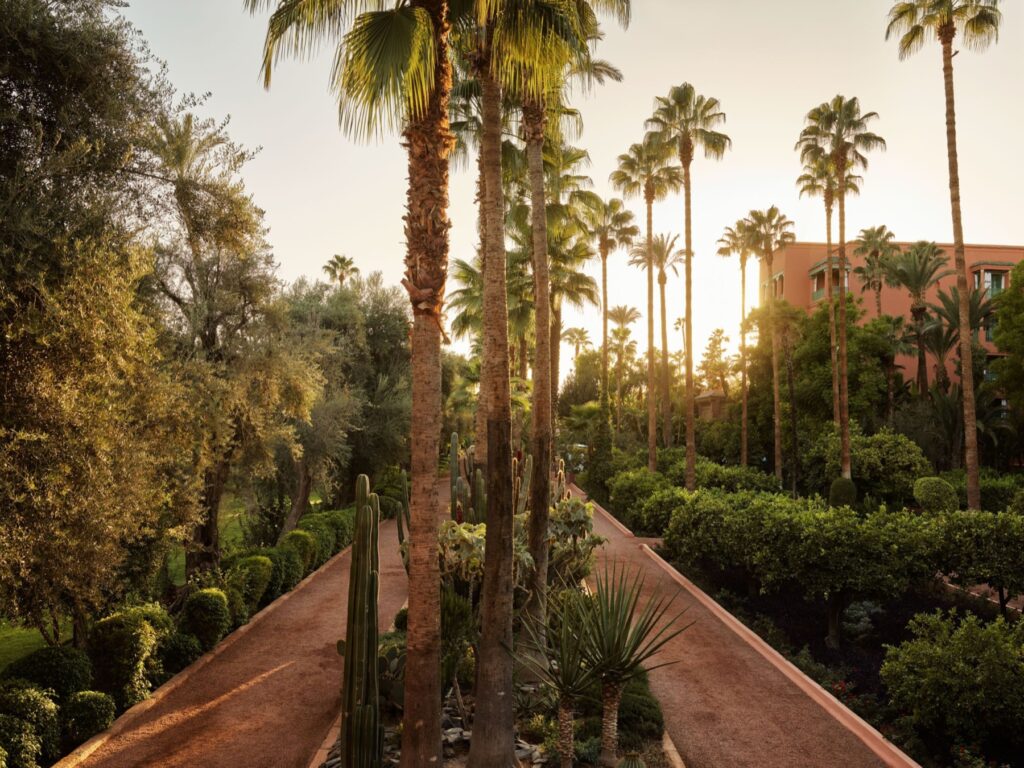
A palm-lined path.
Image source: La Mamounia
Essential Information
- Location
- Avenue Bab Jdid, Marrakech-Medina, Morocco
- Accommodation
- 135 rooms, 71 suites and three private riads.
- Dining
- Le Marocain, L'Asiatique par Jean-Georges, L'Italien par Simone Zanoni and Pierre Hermé's spaces for tea and pastries.
- Wellness
- 2,500 m² spa, hammam and indoor pool.
Location Map
 © OpenStreetMap contributors
Contact
Avenue Bab Jdid, Marrakech 40000, MoroccoOfficial Website mamounia.com/en
Rates via Trip.com
Some links on this page are affiliate links. If you make a booking through them, Traveleak may earn a small commission at no additional cost to you.