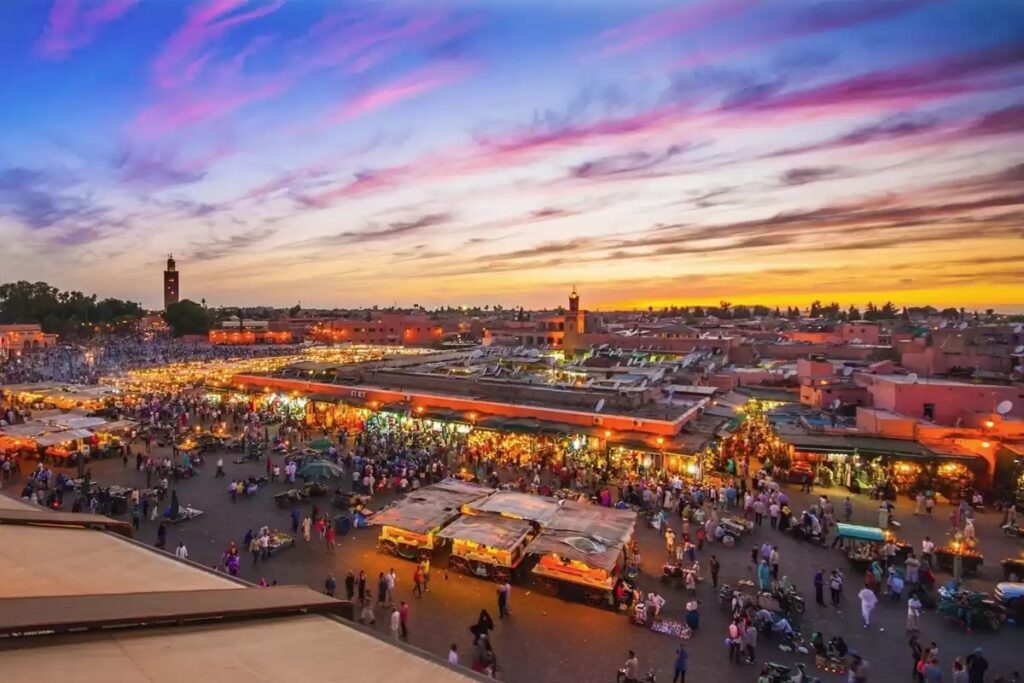
As evening approaches, Jemaa el-Fna takes on a different character. Food stalls appear, grills begin operating and rows of tables are arranged around the cooking areas.
Here, diners might sit down to a bowl of harira, order grilled meat skewers or try babbouche, a Moroccan dish of snails cooked in a seasoned broth.
Jemaa el-Fna is also a setting for many of Marrakech’s cultural traditions. Vendors, musicians and storytellers contribute to the life of the square, where dinner becomes one activity among many as the evening unfolds.
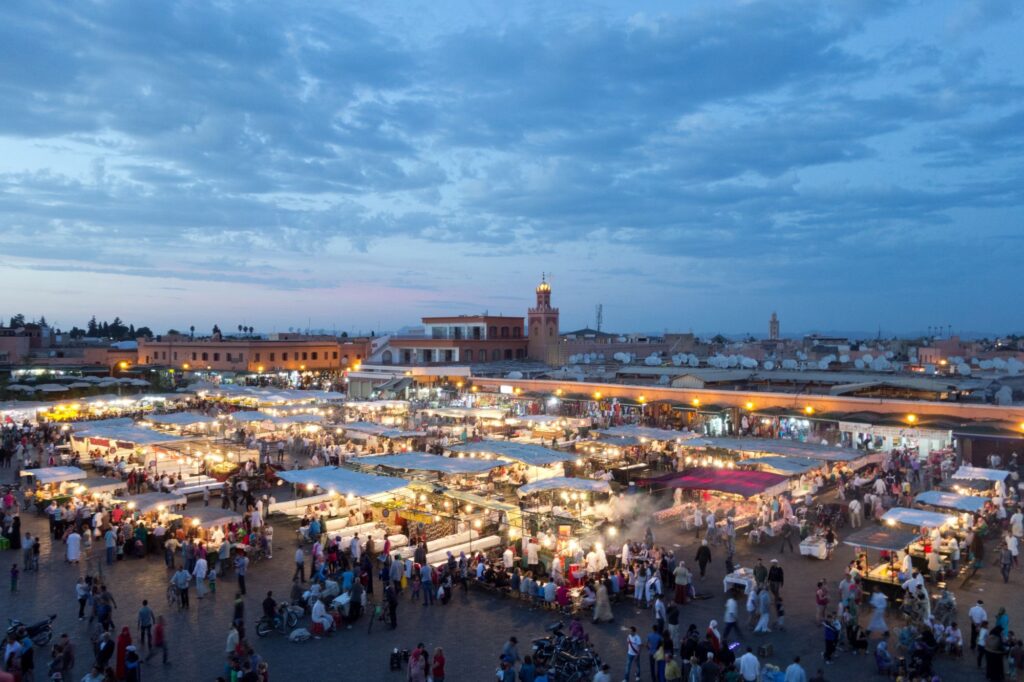
Jemaa el-Fna at dusk.
When the Kitchens Arrive in the Square
Jemaa el-Fna lies within Marrakech’s medina. During the day, the square is a place for trade, gatherings and street activities. As afternoon gives way to evening, outdoor food stalls become an increasingly prominent part of the scene.
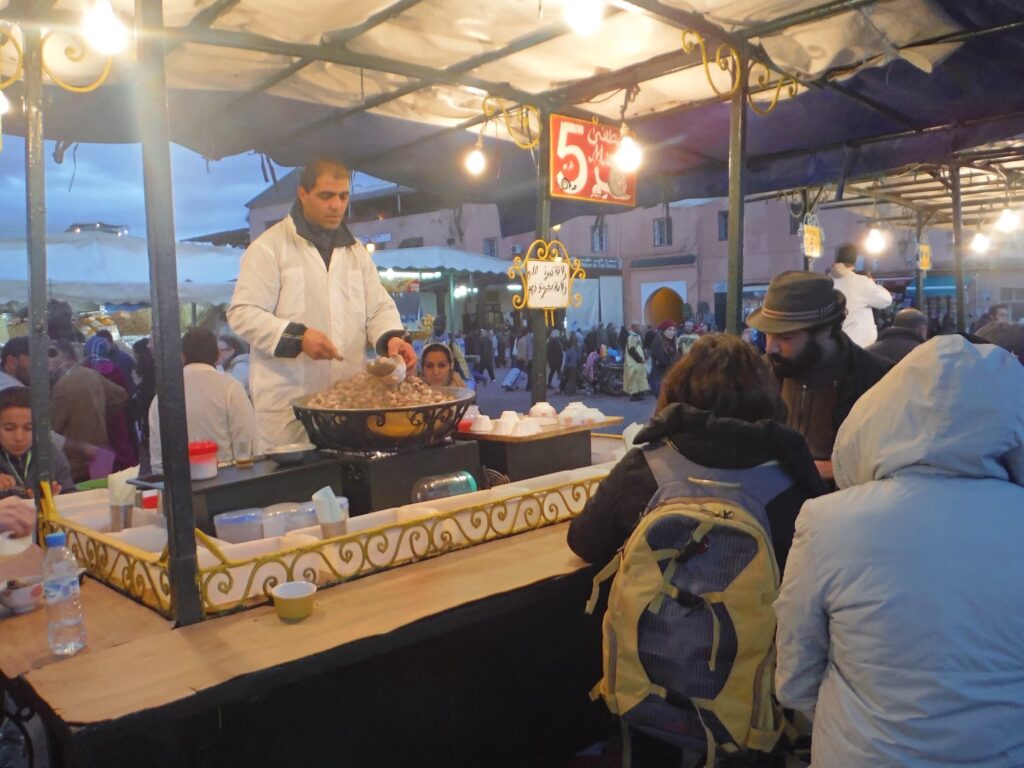
A snail stall in Jemaa el-Fna.
The Moroccan National Tourist Office describes this transformation as one of Jemaa el-Fna’s defining features, with the square becoming an open-air dining area after dark.
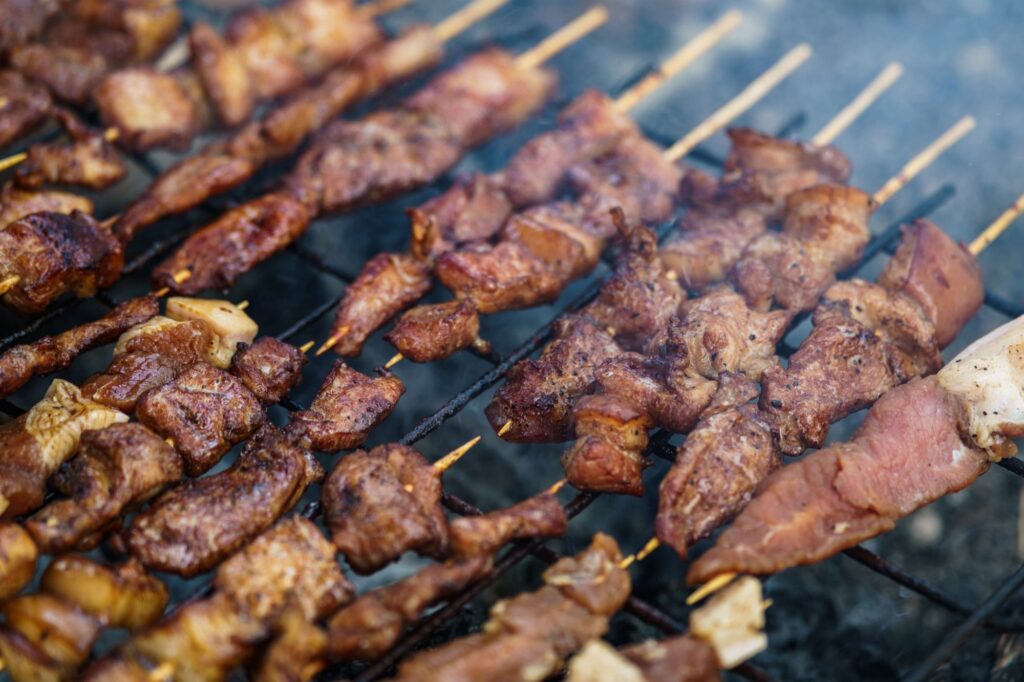
Meat skewers on a grill.
Different stalls specialise in different foods. Some focus on grilled meats, while others serve soup and other Moroccan dishes. Diners sit at tables near the cooking areas as vendors prepare their orders.
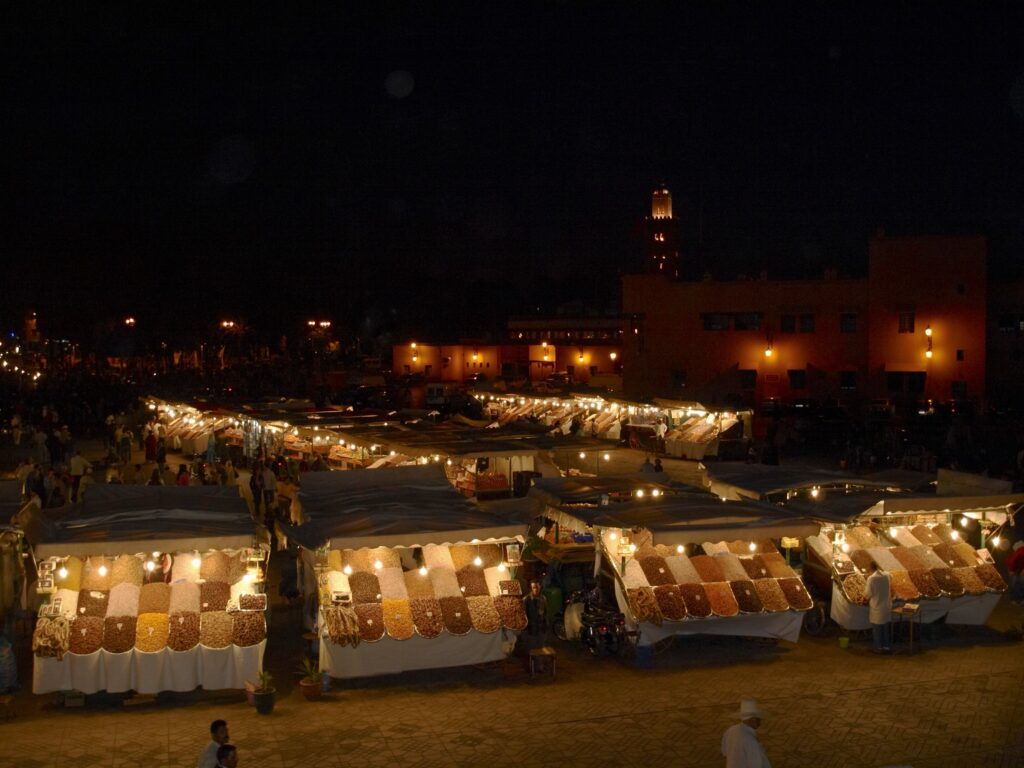
Food stalls in Jemaa el-Fna at night.
Grilled meat skewers are among the foods commonly associated with the square’s evening dining scene. The choice of meat and method of preparation vary between stalls.
There is no single menu for Jemaa el-Fna. Each stall offers its own selection and prices, so it is useful to confirm what is being ordered and how much it costs beforehand.
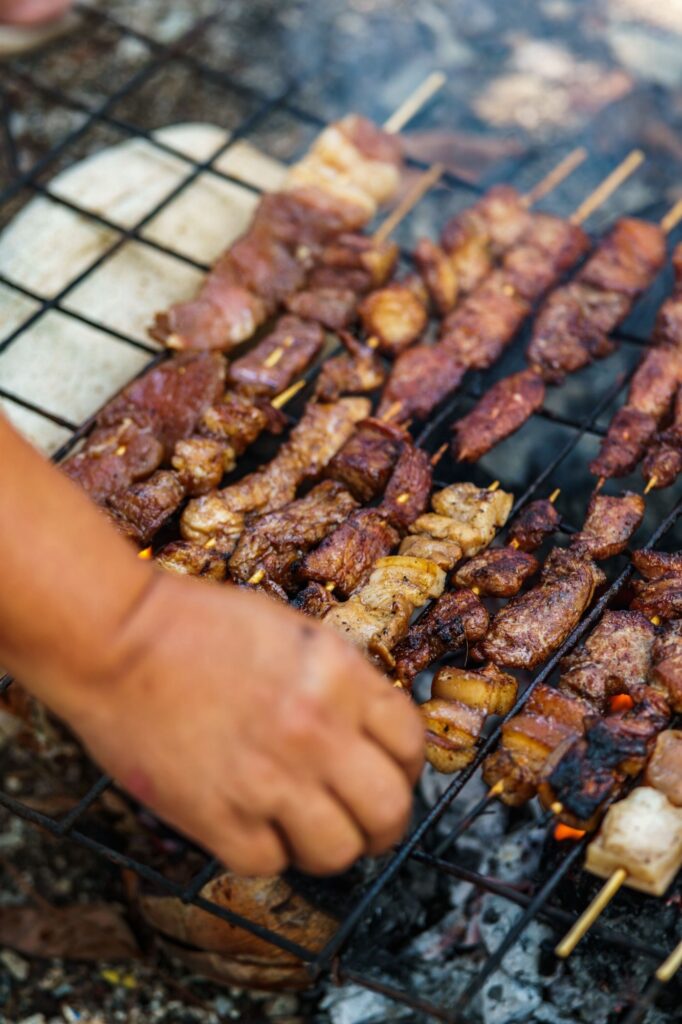
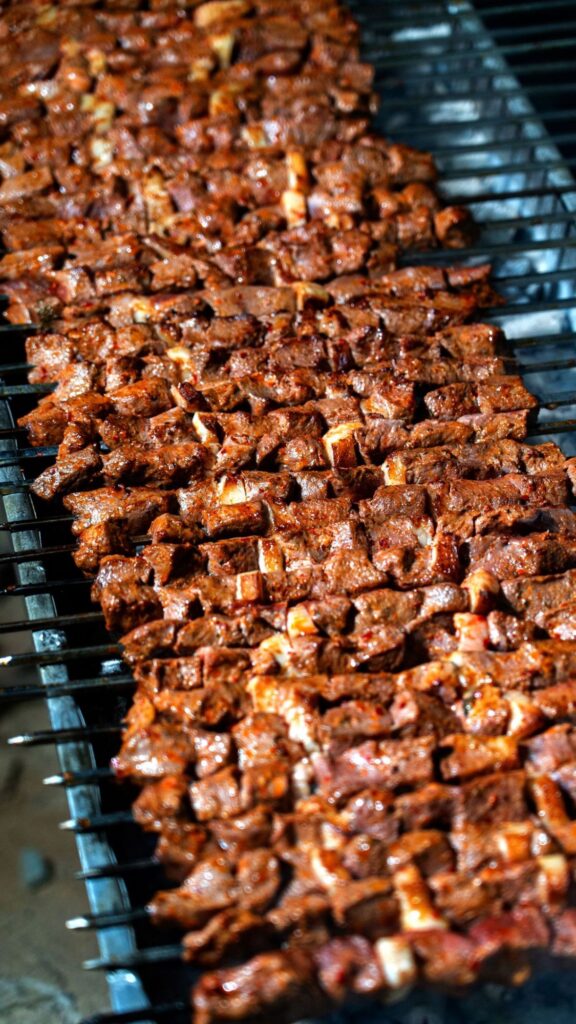
Skewers on a grill.
A Bowl of Harira and Other Moroccan Flavours
Beyond the grills, harira offers a different way to begin a meal.
This traditional Moroccan soup is commonly prepared with tomatoes, lentils, chickpeas and spices. Recipes vary between cooks and regions, but legumes and a seasoned broth are familiar elements.
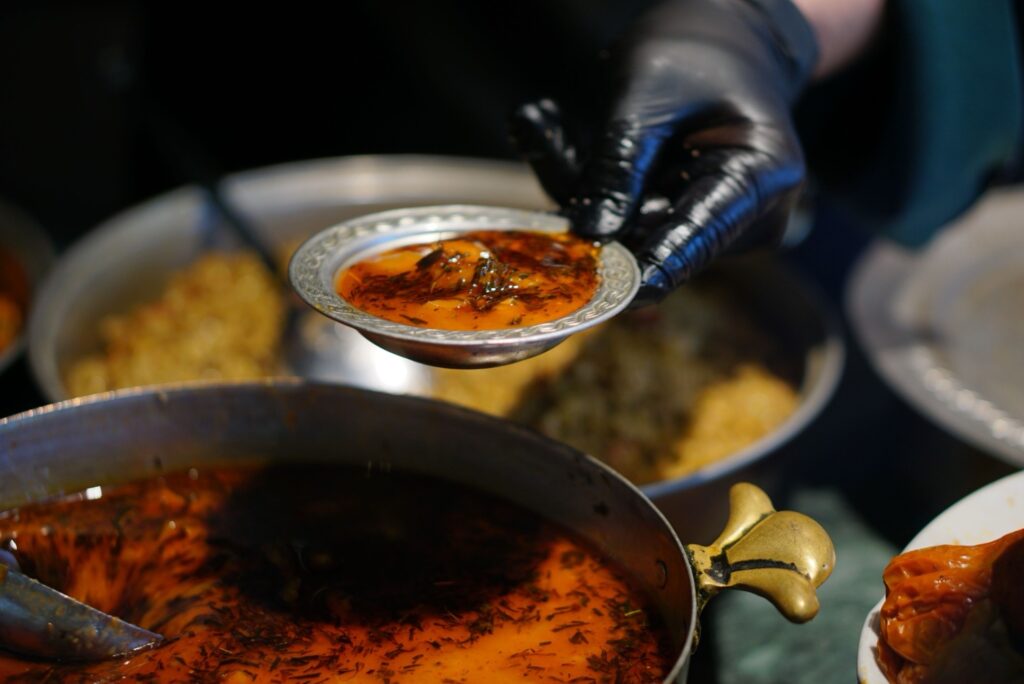
A bowl of soup served from a pot.
Harira is usually served hot, sometimes accompanied by bread. A bowl can be a first course before moving on to other foods available around the square.
Another dish associated with Jemaa el-Fna is babbouche, or snails cooked in a spiced broth.
Unlike meat cooked over a grill, babbouche is simmered, with the broth forming part of the dish itself. It offers a different preparation from the skewers and other grilled foods served nearby.
The dishes and their preparation can vary from one vendor to another. Harira, babbouche and grilled meats offer a sense of the foods associated with the square rather than a fixed menu available at every stall.
Dinner in Marrakech’s Living Cultural Space
UNESCO recognises the cultural space of Jemaa el-Fna for its association with oral traditions, music and different forms of popular performance.
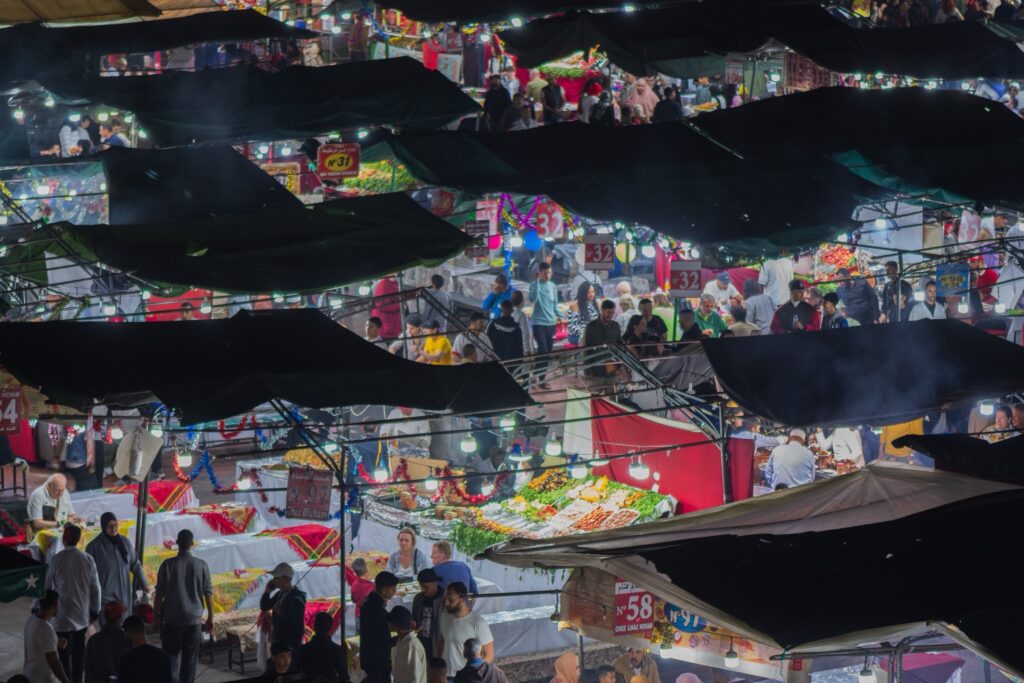
Jemaa el-Fna Square.
Storytellers, musicians and performers form part of the square’s cultural history. Their activities contribute to Jemaa el-Fna’s place in Marrakech’s community life, alongside commerce and food.
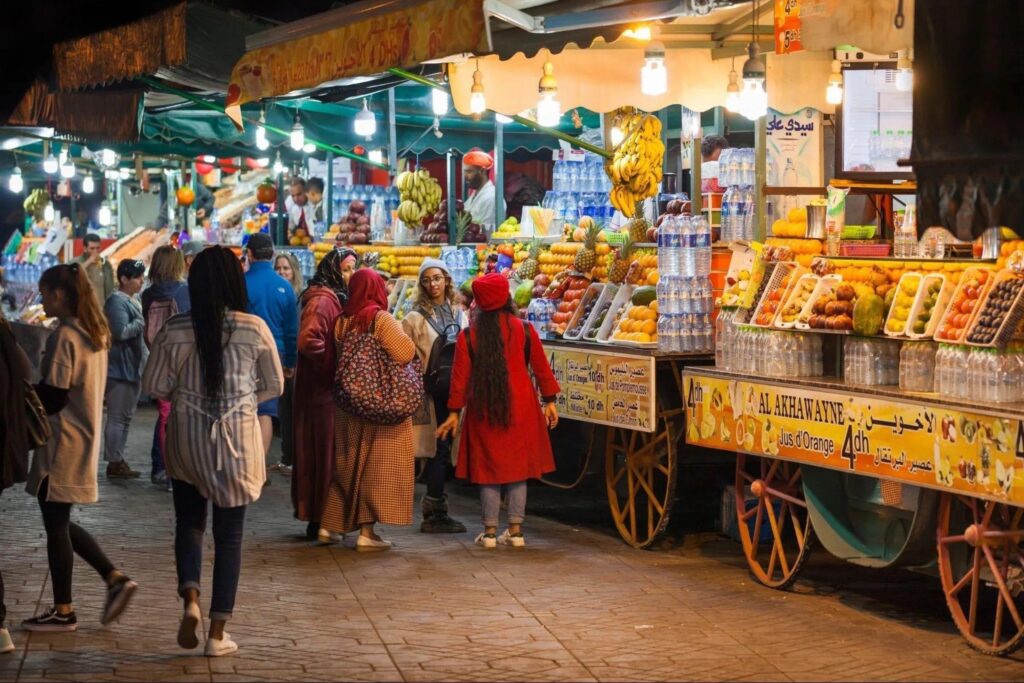
Fruit and juice stalls in Jemaa el-Fna at night.
Dining here therefore takes place in a public space with several purposes, rather than in a restaurant district separated from the everyday life of the city.
Visitors wishing to photograph vendors or performers should ask permission first, respecting the people working and taking part in activities around the square.
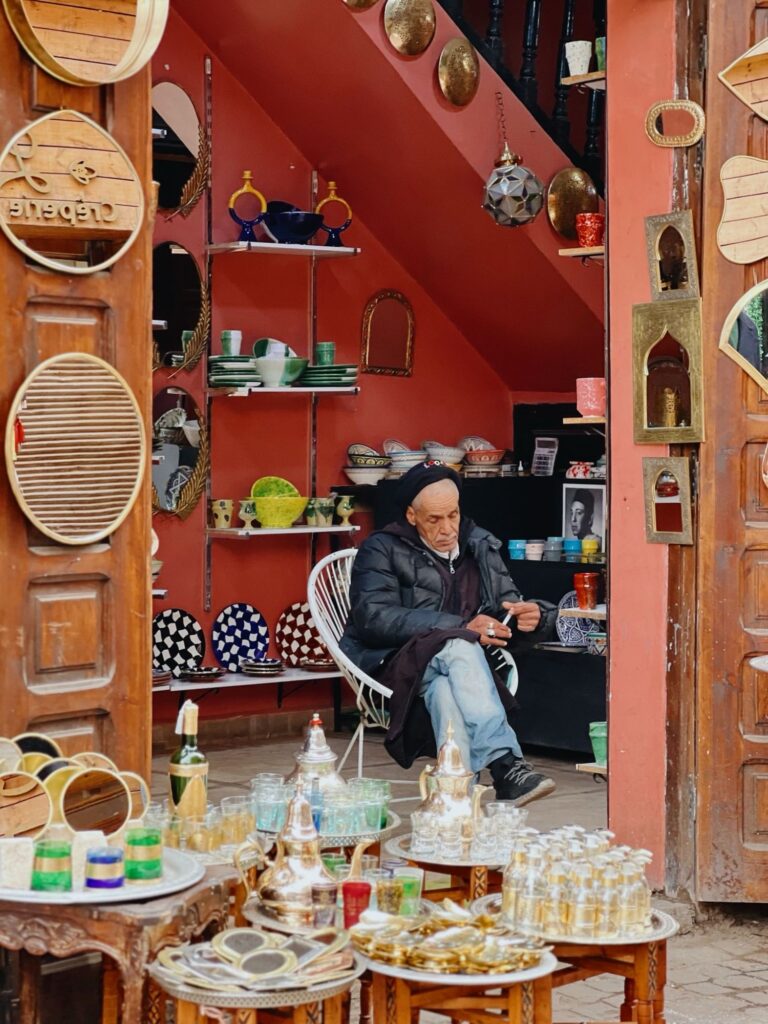
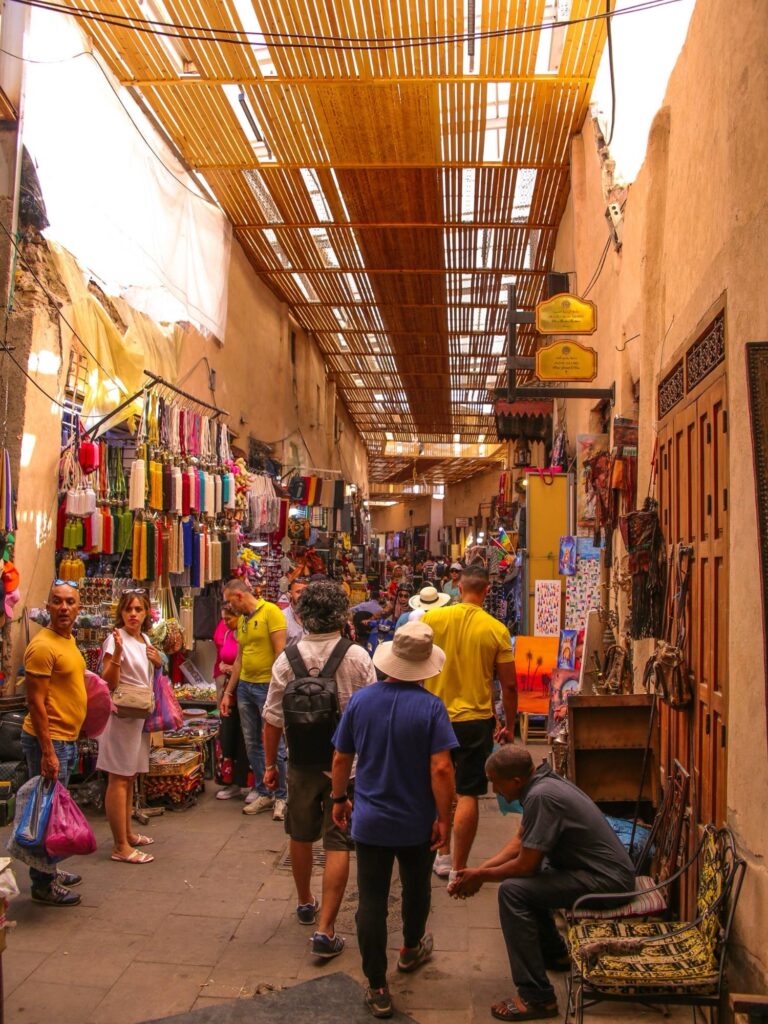
A shop and a covered lane in a souk.
A bowl of harira can be finished in a matter of minutes. The square, meanwhile, is nowhere near the end of its evening.
Sources: Moroccan National Tourist Office · UNESCO
Image source: Wikipedia; Pexels