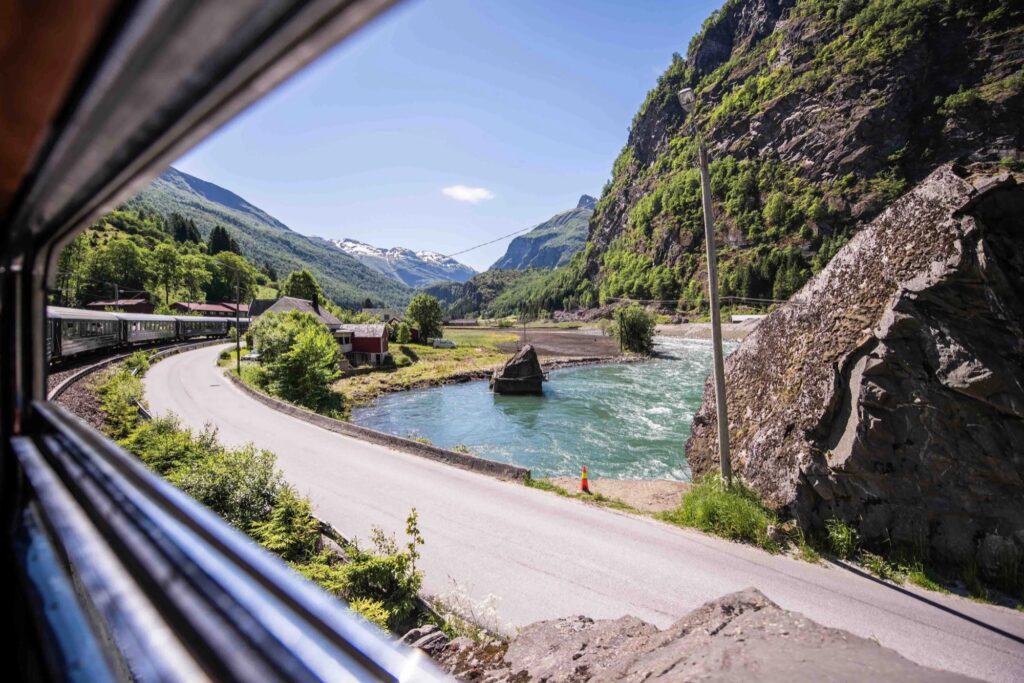
In summer, the train makes a scenic stop at Kjosfossen. Passengers can step onto a small platform to watch the waterfall cascading between steep mountainsides before continuing their journey. It is a brief opportunity to experience the landscape beyond the carriage windows.
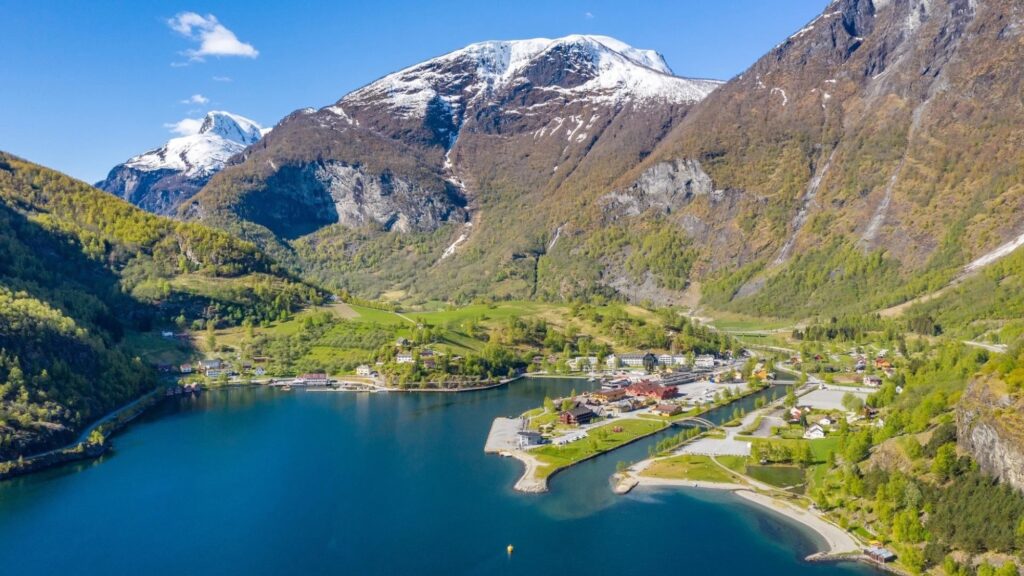
Flåm and Aurlandsfjord seen from above.
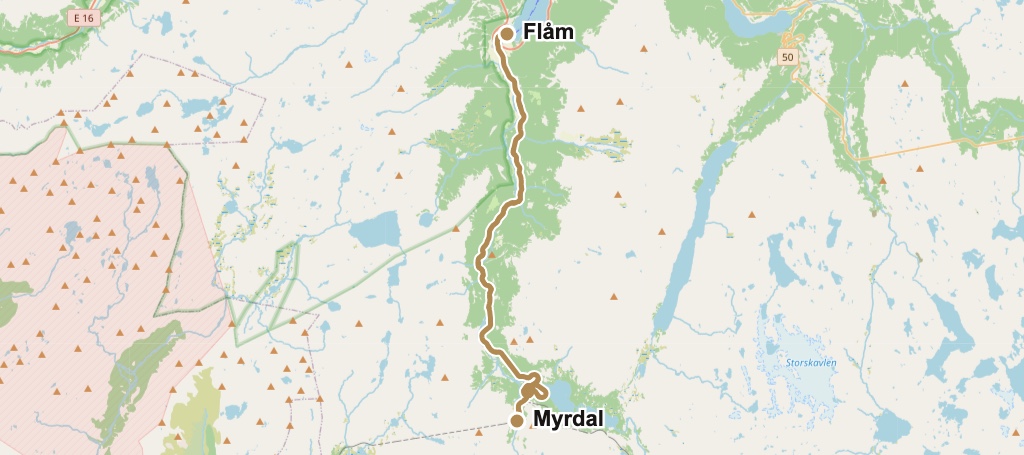
The Flåm Railway is about 20 kilometres long, connecting the village of Flåm on Aurlandsfjord with Myrdal in the mountains above. In roughly an hour, the train climbs more than 860 metres through a landscape of green valleys, rivers and steep mountain slopes.
 © OpenStreetMap contributors
Climbing from the Fjord through Flåmsdalen
Leaving Flåm, the train travels away from the harbour and into the Flåmsdalen valley. Aurlandsfjord gradually disappears from view, replaced by the river Flåmselvi and mountains rising on either side.
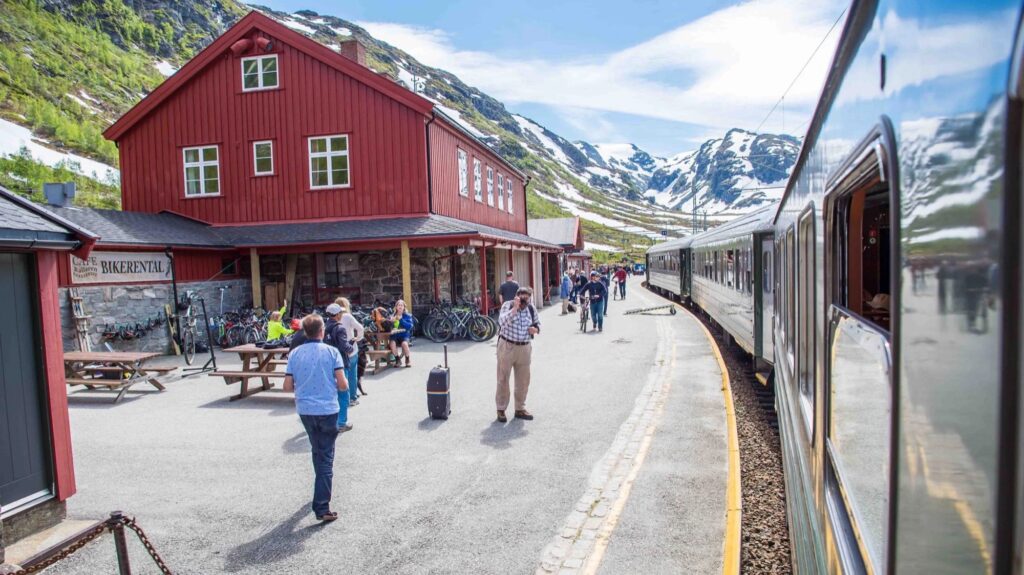
Flåm station.
At first, the railway follows the valley floor, passing small settlements and farmland. As the train climbs, waterfalls begin to appear along the cliffs, including Rjoandefossen. Farms perched on the mountainsides become smaller in the distance.
The view changes as the railway follows the terrain. In places, the tracks run close to the river. Elsewhere, they rise above the valley, offering a view of the route already travelled. Tunnel entrances appear one after another, briefly interrupting the scenery before the train emerges into another stretch of the valley.
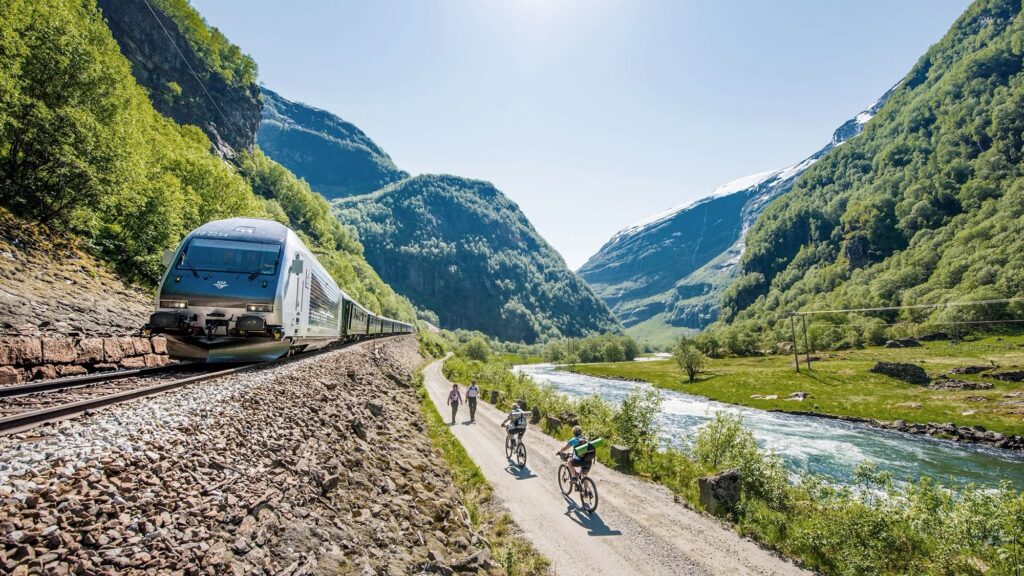
The train in the Flåmsdalen valley.
The railway was originally built to meet the transport needs of the region.
Flåmsbana connected communities beside the fjord with the Bergen railway at Myrdal.
The new railway provided a connection between settlements at water level and the wider rail network higher in the mountains. Today, the engineering behind that connection is part of what draws visitors to Flåm.
Tunnels Through the Mountains
One of Flåmsbana’s defining features is the way the railway negotiates the mountain terrain.
Along the roughly 20-kilometre route are 20 tunnels, 18 of which were excavated largely by hand. The tracks follow the mountainsides, disappear into rock and emerge at different elevations along the valley.
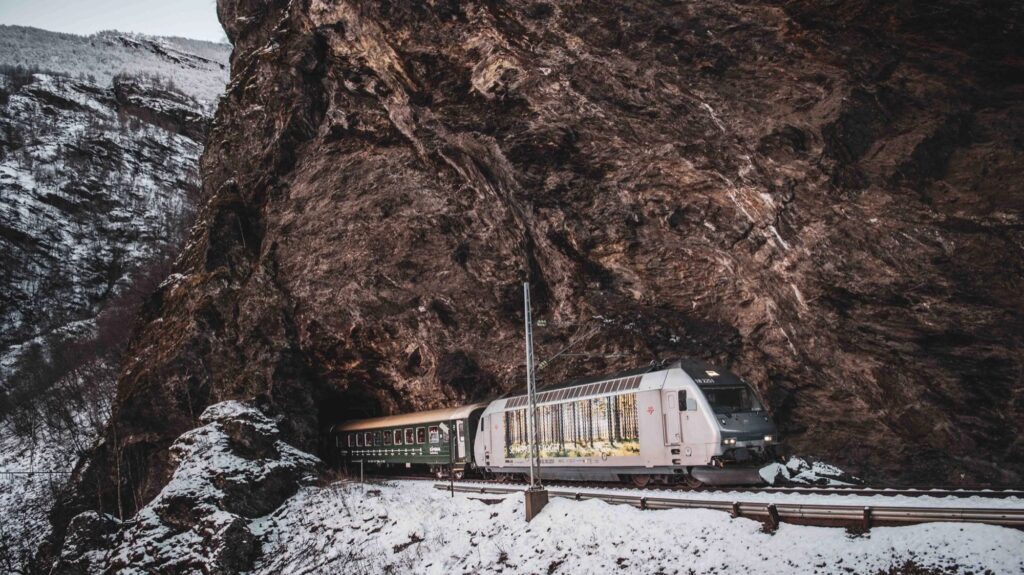
The train leaving a tunnel.
Construction took many years, and regular passenger services began in 1941. The railway was electrified in 1944, around the time the Kjosfossen hydroelectric power station was completed.
Kjosfossen therefore has a place in the railway’s operating history as well as its present-day scenic itinerary.
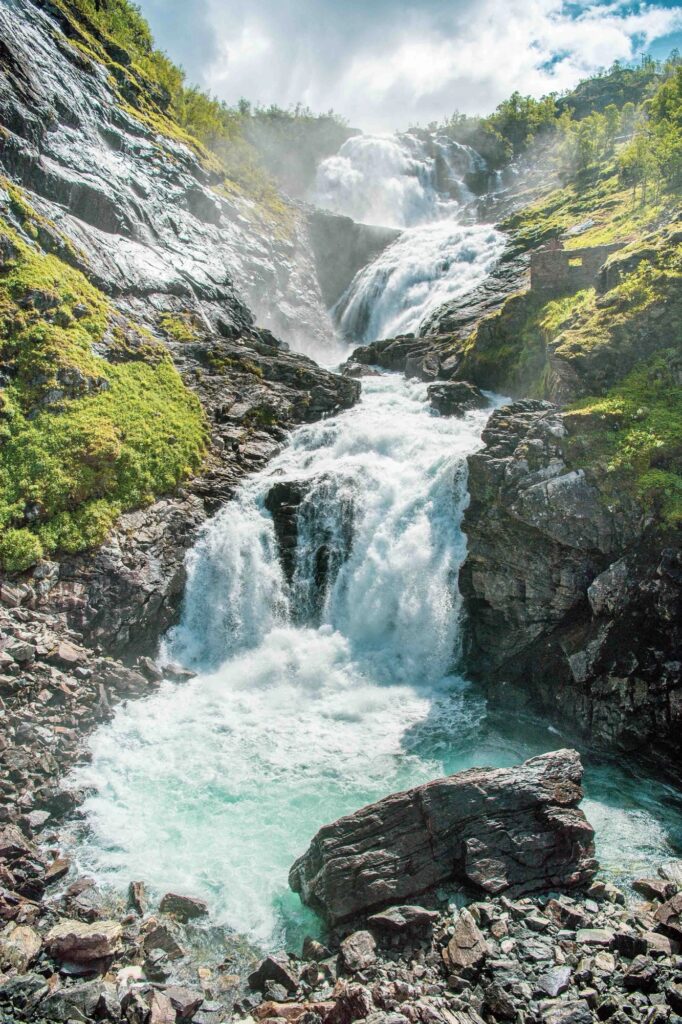
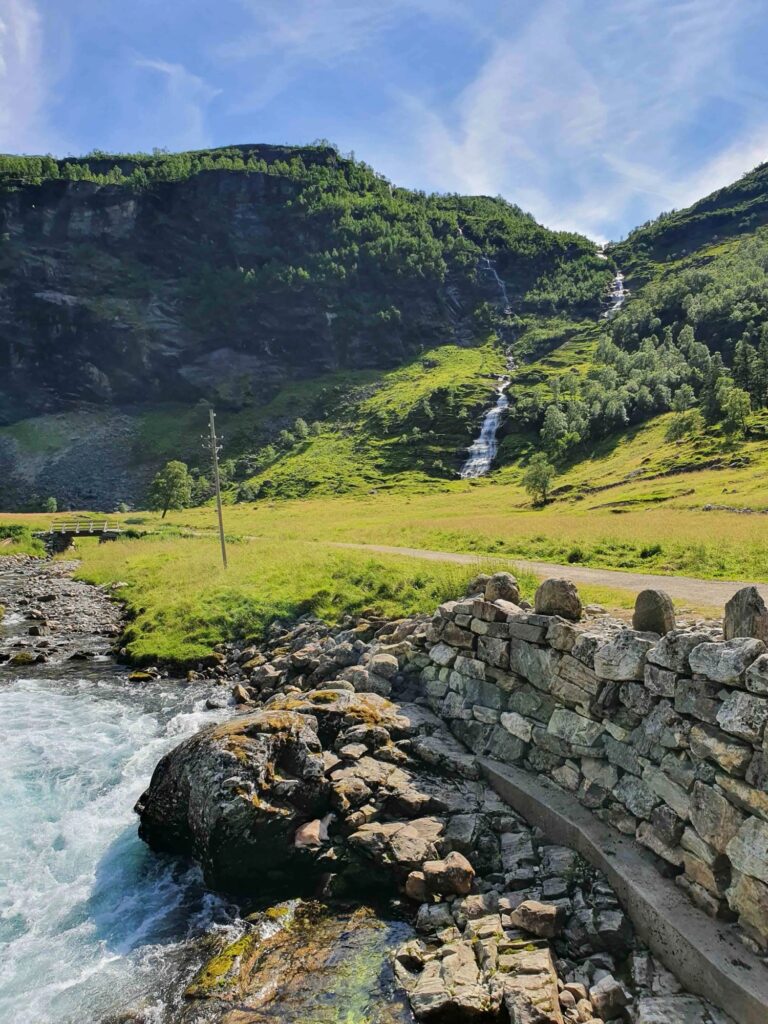
Waterfalls along the railway.
Myrdal, Where the Journey Changes Direction
Beyond Kjosfossen, the train continues into higher mountain country before reaching Myrdal, more than 860 metres above sea level.
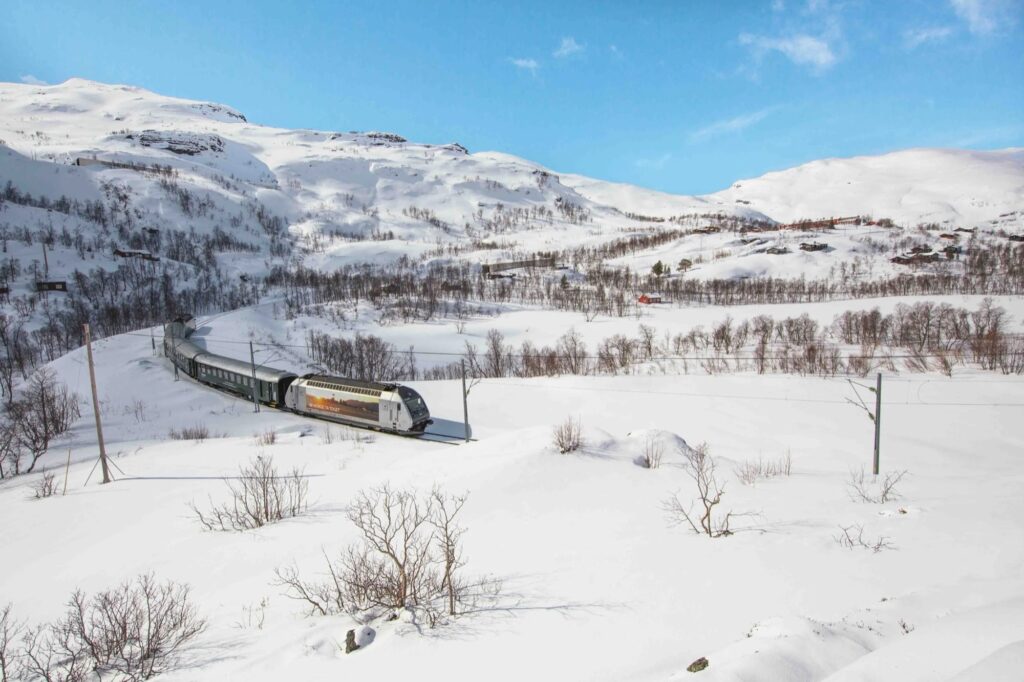
The train on a snow-covered plateau.
Here, Flåmsbana connects with the Bergen railway, allowing passengers to continue to other destinations in Norway, provided they have arranged the necessary tickets and connections.
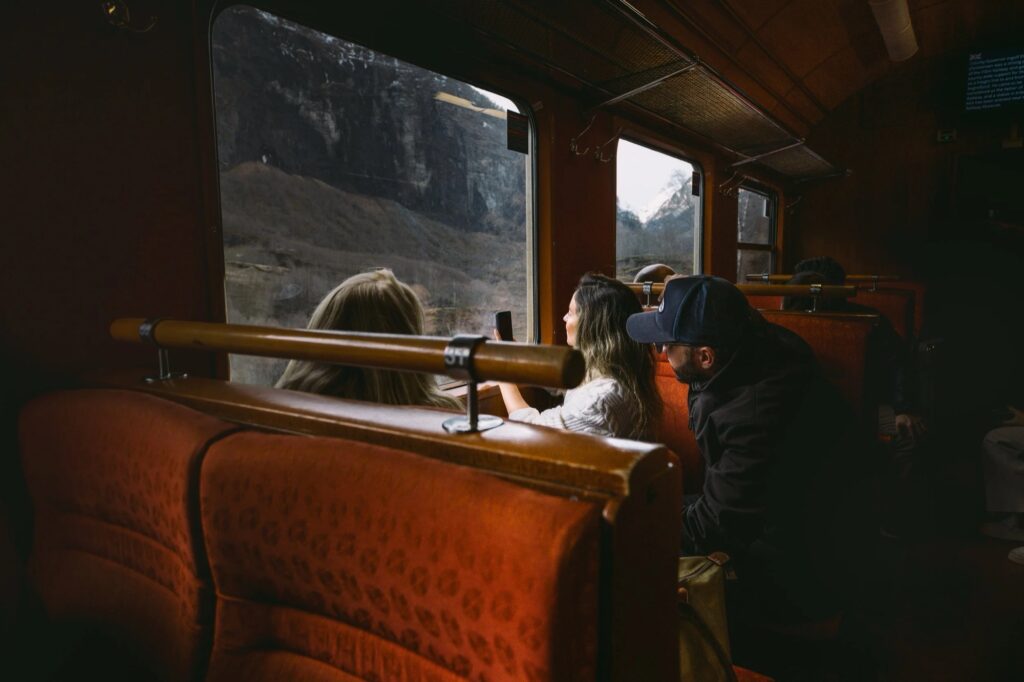
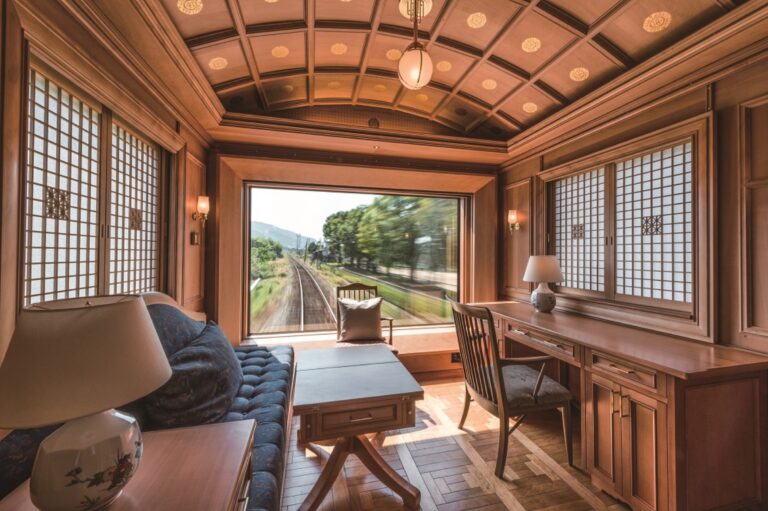
Passengers at the window of a wooden carriage.
There is no direct road access to Myrdal station. Beyond its role as a railway interchange, the area is a starting point for mountain walking routes, offering another way to explore Flåmsdalen.
For passengers making the return trip, the train descends to Flåm along the same railway.
The waterfalls, farms and mountainsides remain familiar, but the perspective changes. The valley that seemed to narrow below the train on the ascent gradually opens out again as the railway approaches the fjord.
Back in Flåm, visitors can explore the Flåm Railway Museum near the station, which traces the construction of the line, the people who built it and its history.
Essential Information
- Operator
- Flåmsbana
- Journey Type
- Scenic Mountain Railway
Reservations & Contact
- Official Website
- en.flamsbana.no
- Reservations
- Flåm Railway: timetables and tickets
Image source: Flåmsbana