The Train
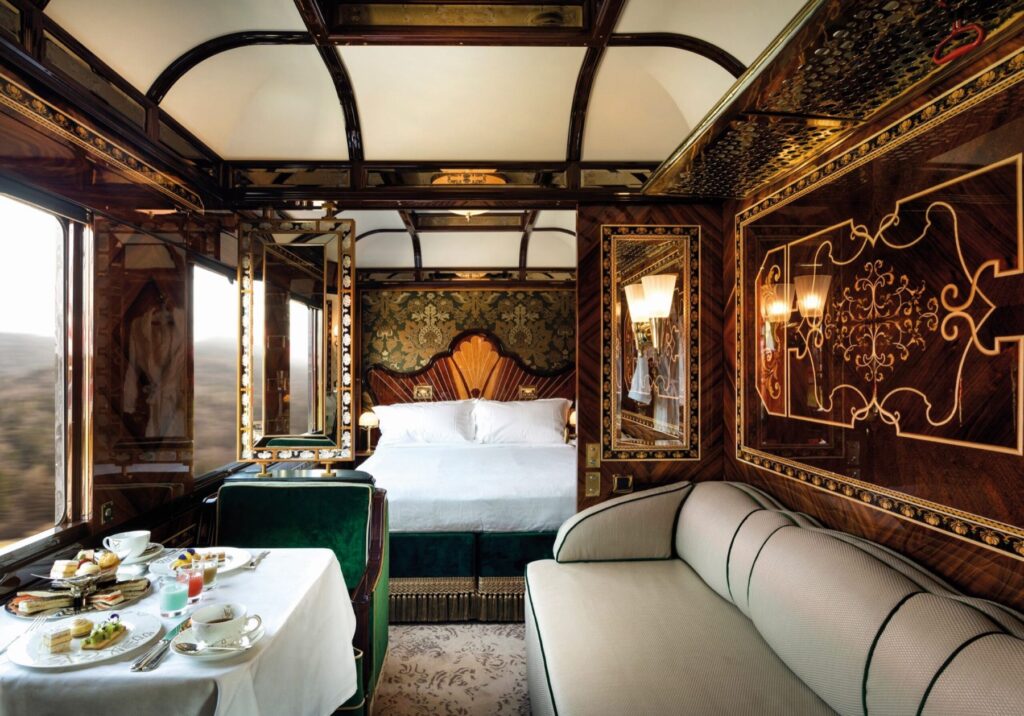
Sleeping Car 3309 was built in 1926, when long-distance rail travel was still an important part of European life. A century later, the carriage remains in service aboard the Venice Simplon-Orient-Express, alongside dining cars, sleeping compartments and communal spaces restored from the golden age of rail travel.
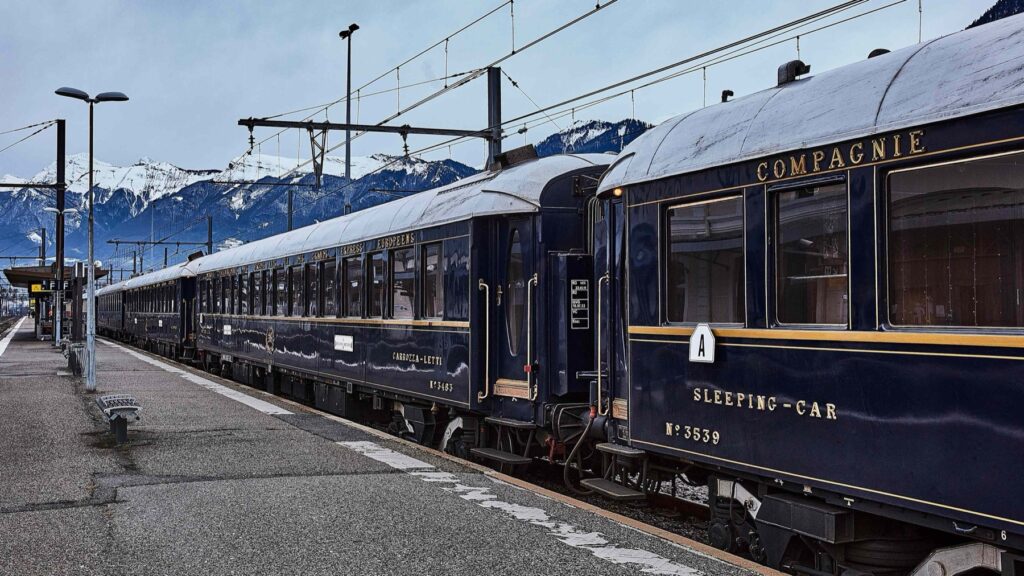
Sleeping cars at a station.
The present-day service began operating in 1982, after businessman James Sherwood brought together and restored a collection of historic carriages. Although its name recalls the legendary Orient Express, it is a separate service, now operated by Belmond. What makes the train distinctive is that these carriages are still in use, rather than preserved solely as museum exhibits.
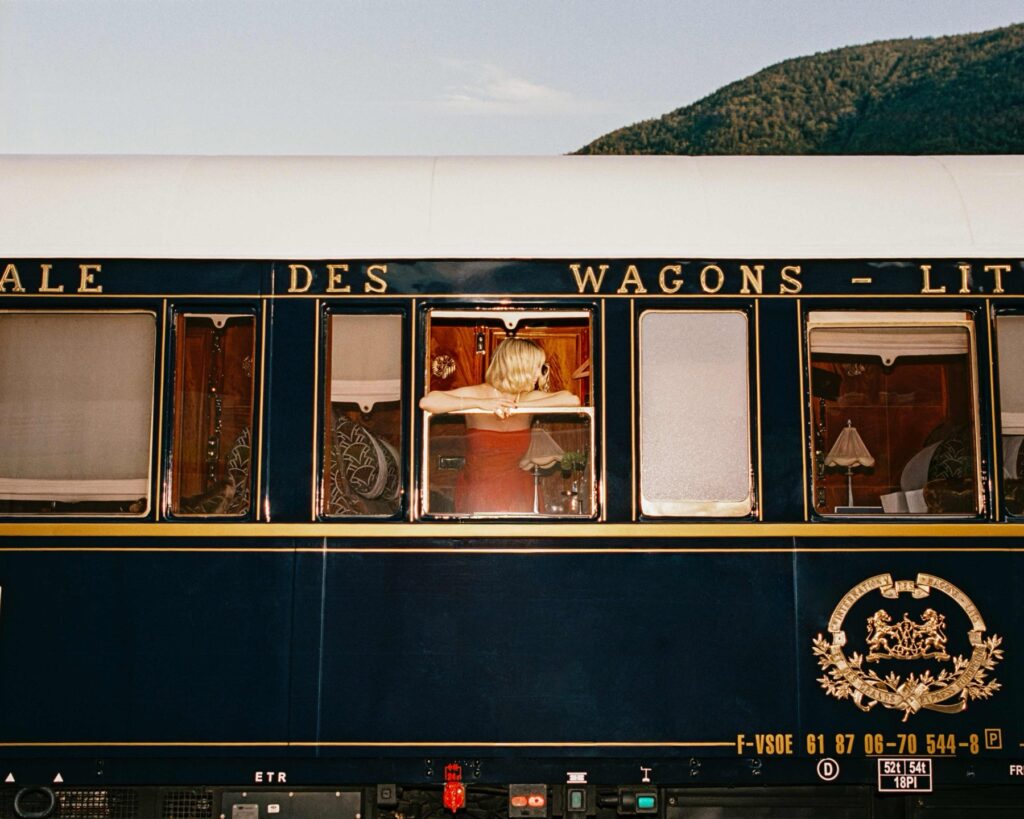
A Wagons-Lits carriage.
The Route
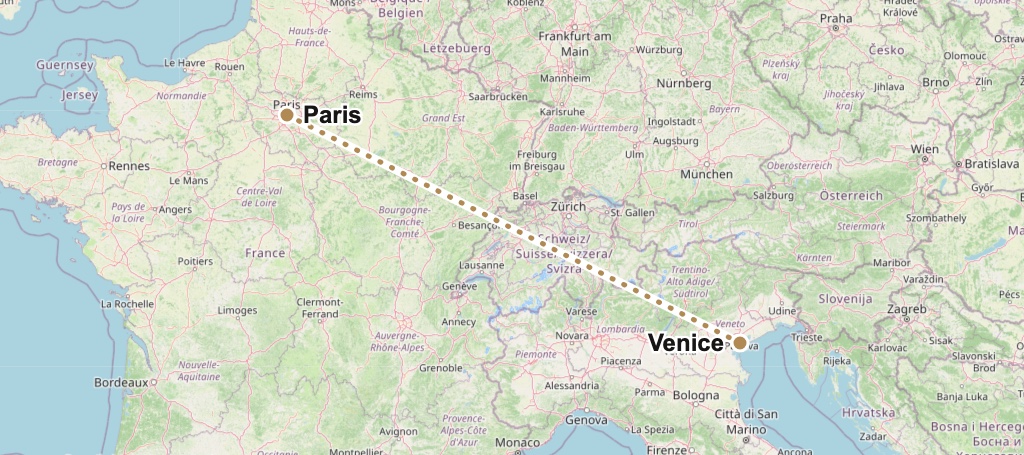
Paris to Venice is among the Venice Simplon-Orient-Express’s best-known journeys. The overnight service connects two cities closely associated with European history and art.
 © OpenStreetMap contributors
The train also operates other itineraries, each with its own duration and departure schedule. On the Paris to Venice journey, passengers spend much of their time exploring the carriages, dining and resting overnight before arriving in the city of canals. Check the route and departure schedule for the selected journey.
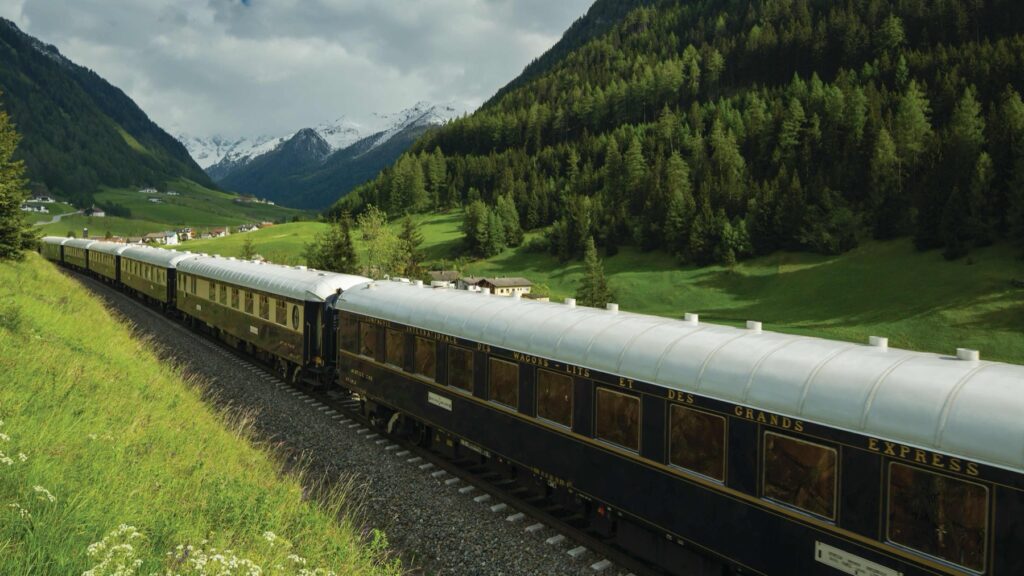
The train in a mountain valley.
Onboard Design
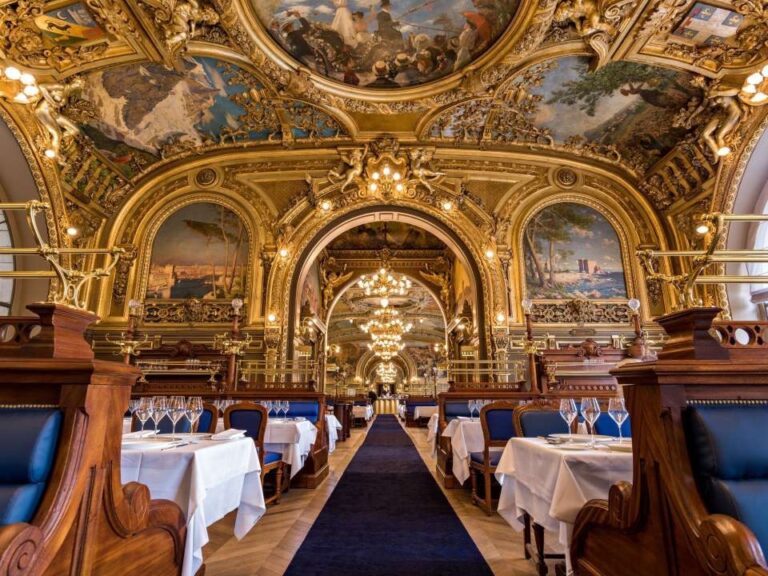
The interiors of the Venice Simplon-Orient-Express retain design details from the early twentieth century. The Côte d’Azur dining car, built in 1929, features decorative glass panels created by René Lalique.
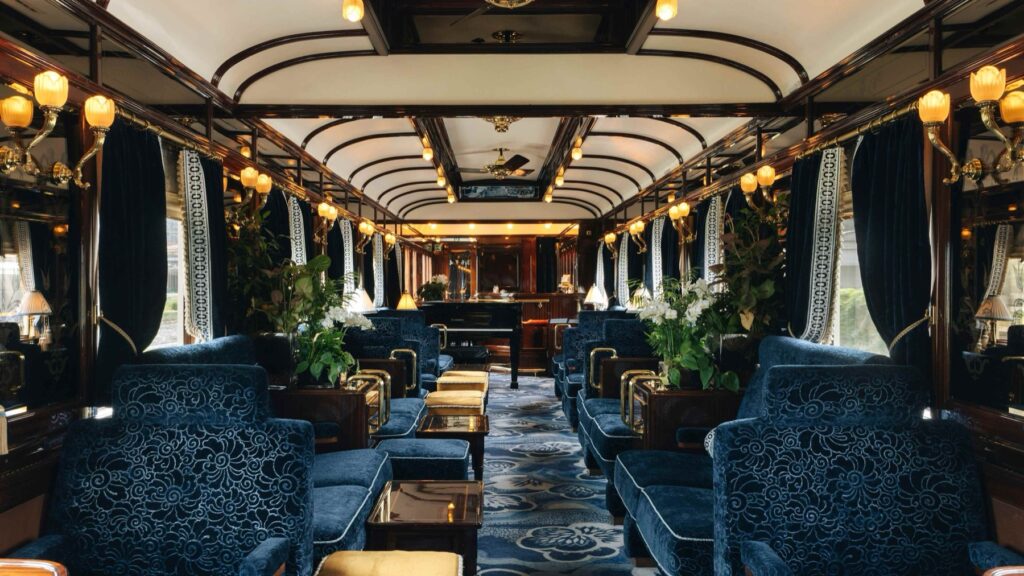
The bar car.
The other two dining cars have distinct interiors. Étoile du Nord is known for its wood marquetry, while L’Oriental features black lacquerwork. Together, their materials and decorative patterns form a collection of Art Deco interiors, preserved and restored for continued use aboard the train.
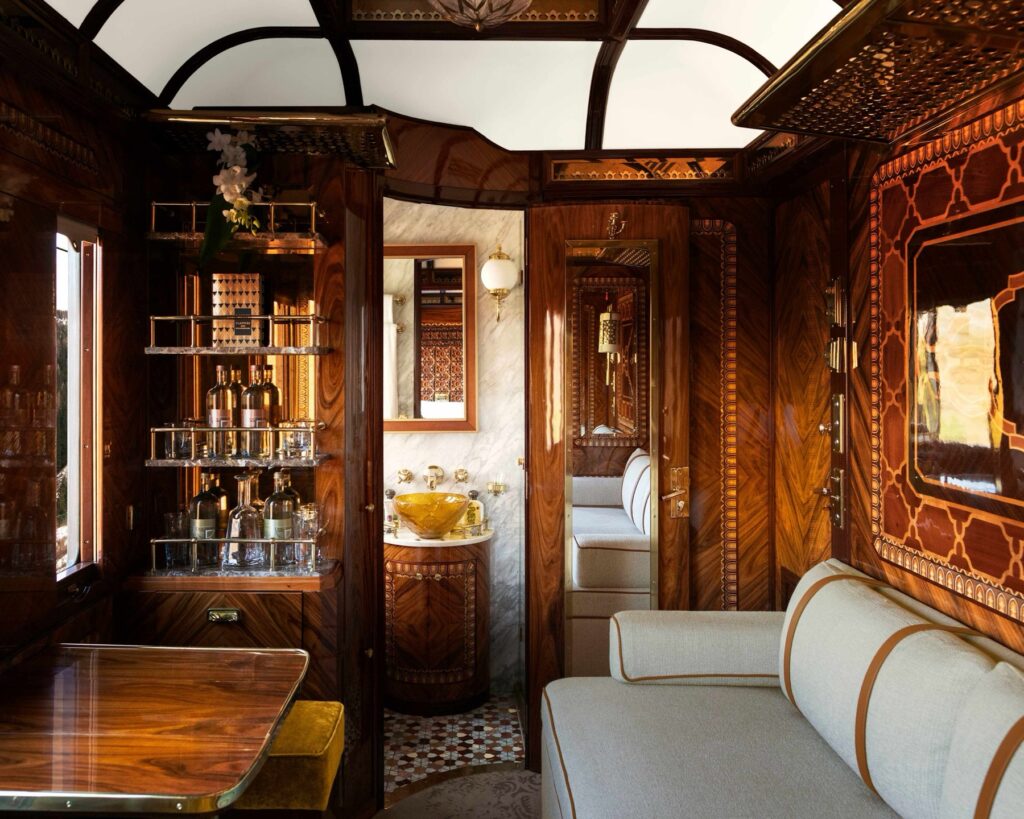
The sitting area of a suite.
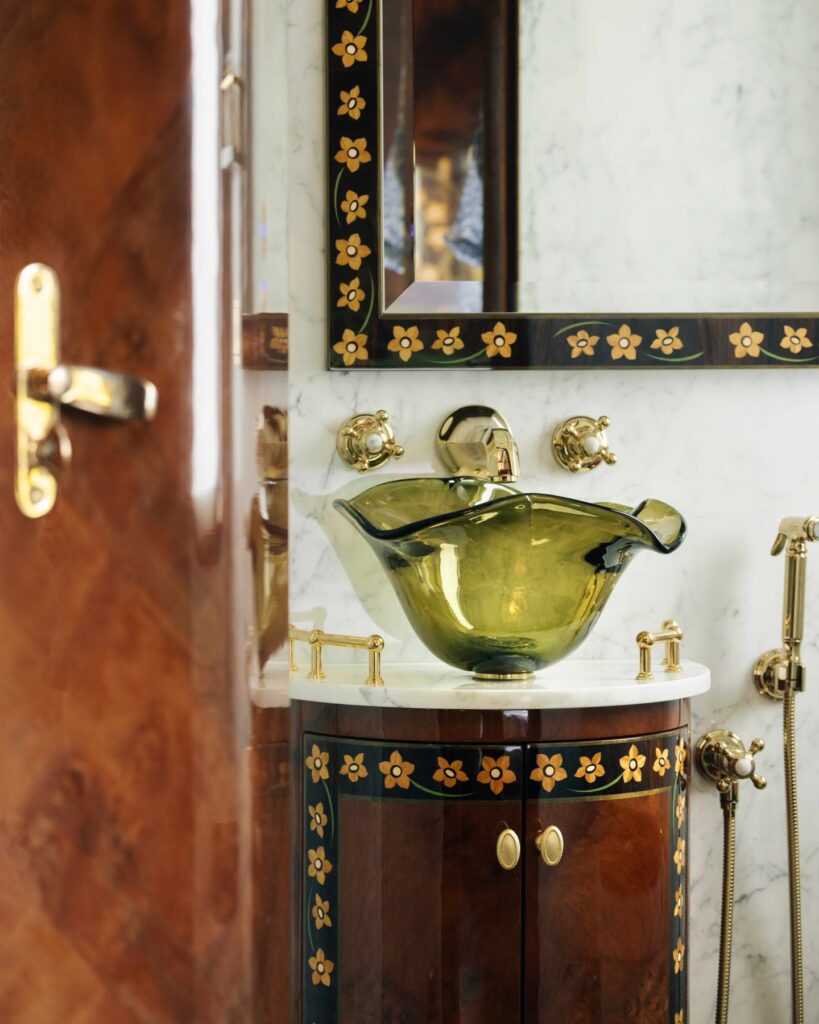
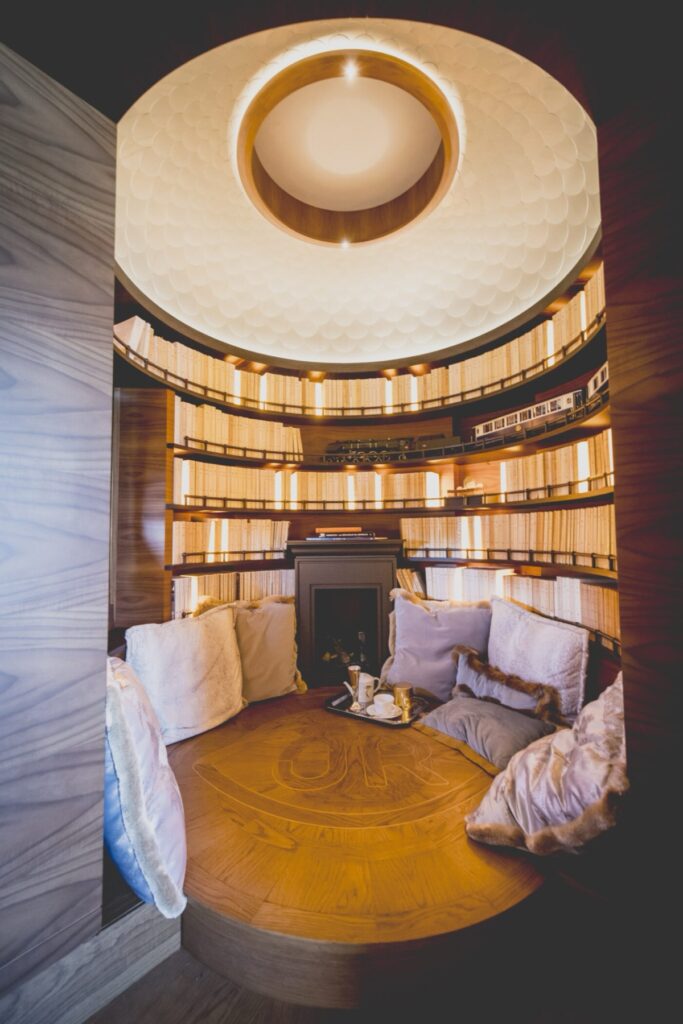
A washbasin with floral marquetry, and a circular library alcove.
Cabins & Suites
The Historic Cabin retains the compact arrangement of a traditional sleeping compartment. During the day, it provides seating; at night, the space is converted into two berths, one above the other. Each compartment has its own washbasin, while shared toilets are located at the end of the carriage.
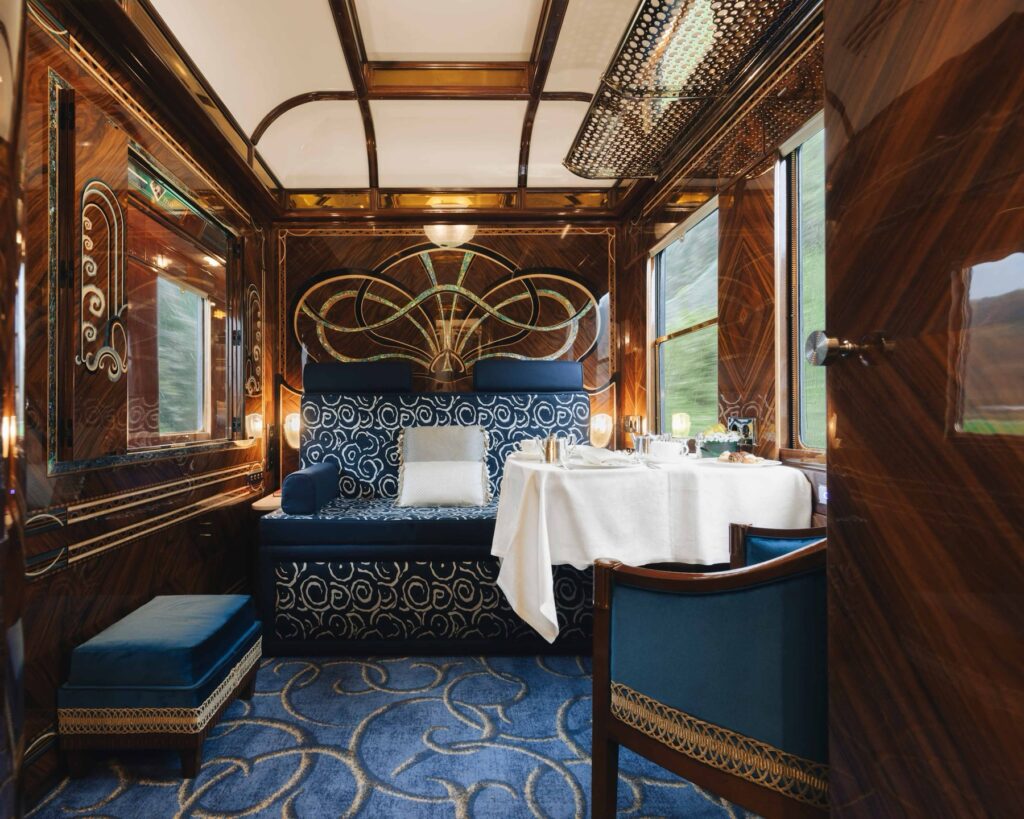
An Art Deco suite.
For passengers seeking more space and additional facilities, the Suite includes a private bathroom, while the Grand Suite provides larger living and sleeping areas. These accommodation options offer different levels of comfort within the train’s historic setting.
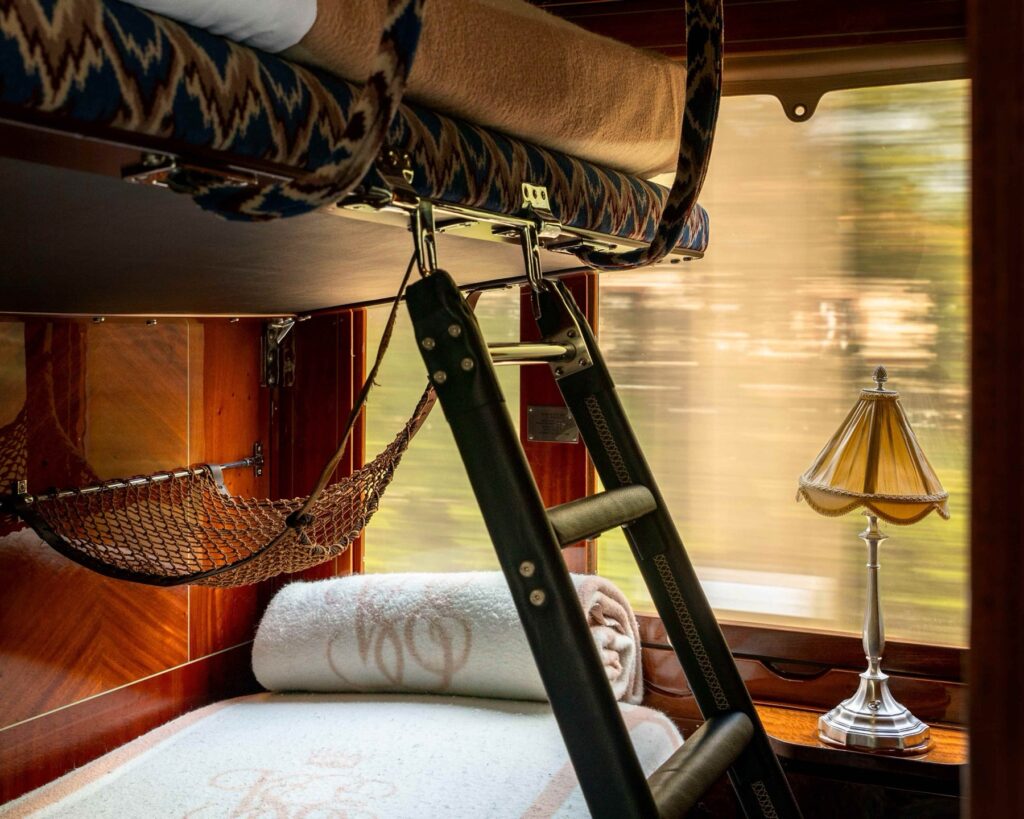
A cabin with bunk beds.
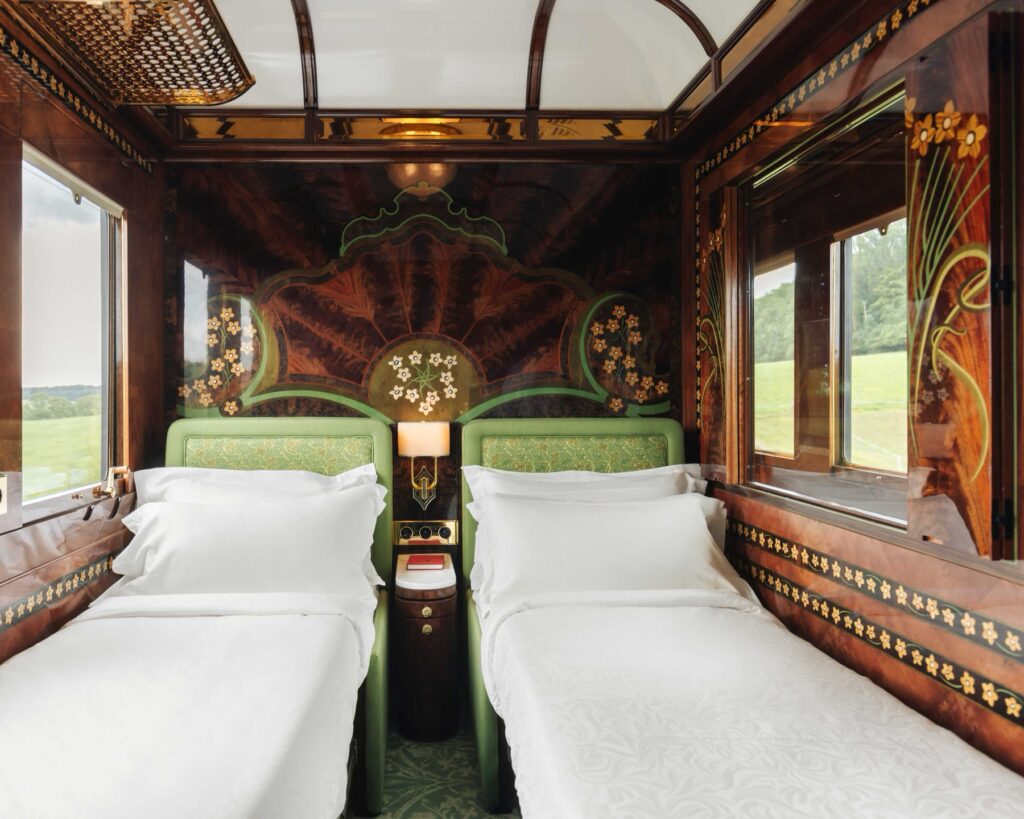
A twin cabin.
Dining
Dining is an important part of the Venice Simplon-Orient-Express experience. Meals are served in three historic dining cars, surrounded by the decorative glass, wood marquetry and lacquerwork for which the train is known.
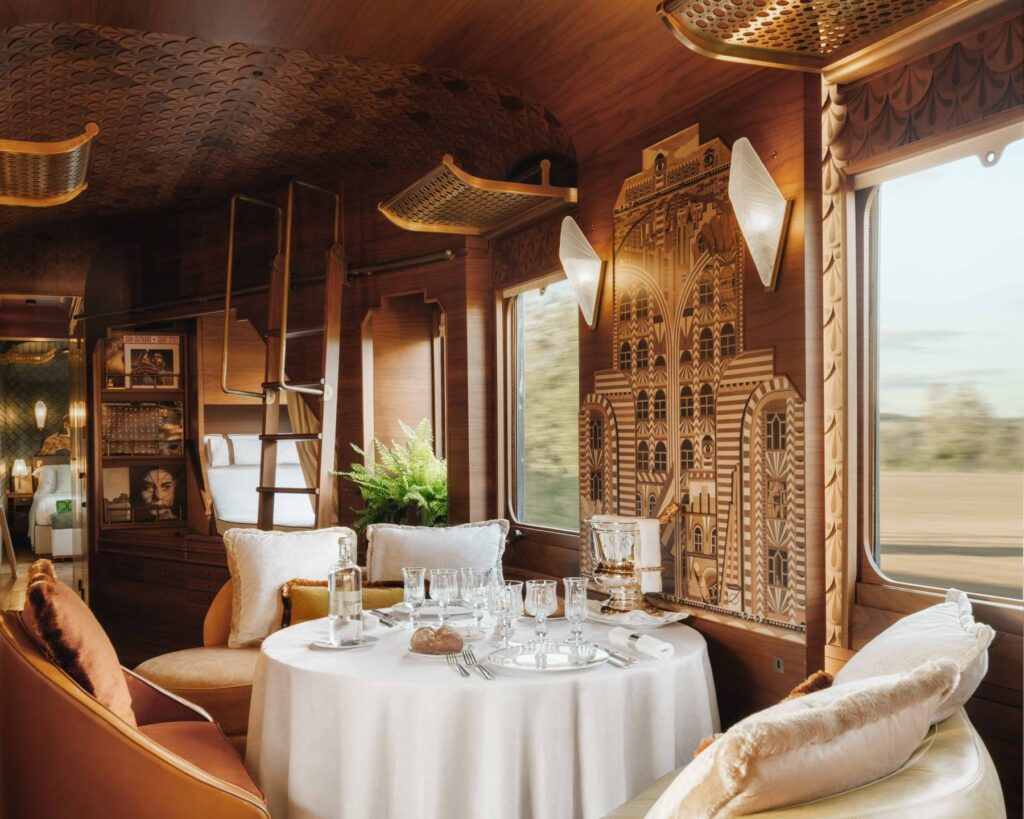
A table laid for a meal.
The menus reflect French culinary influences and vary by journey. Beyond the dining cars, passengers can spend time in Bar Car 3674, with its piano, or enjoy a goûter, a light refreshment served in their private compartment.
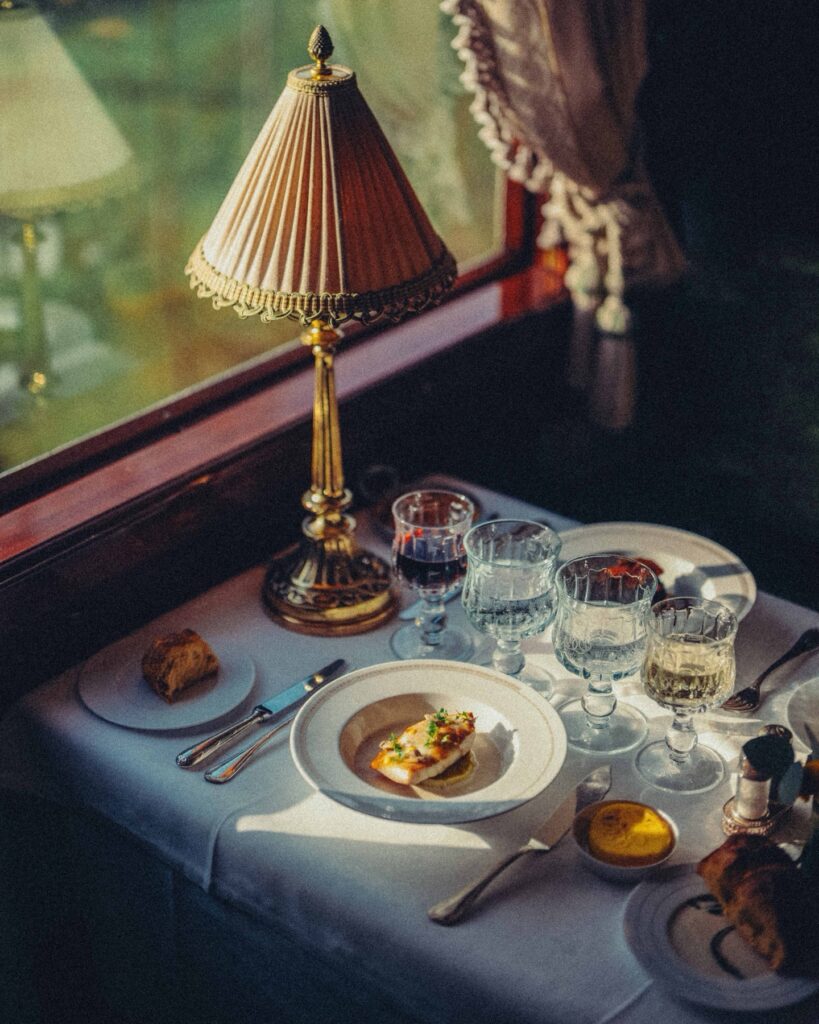
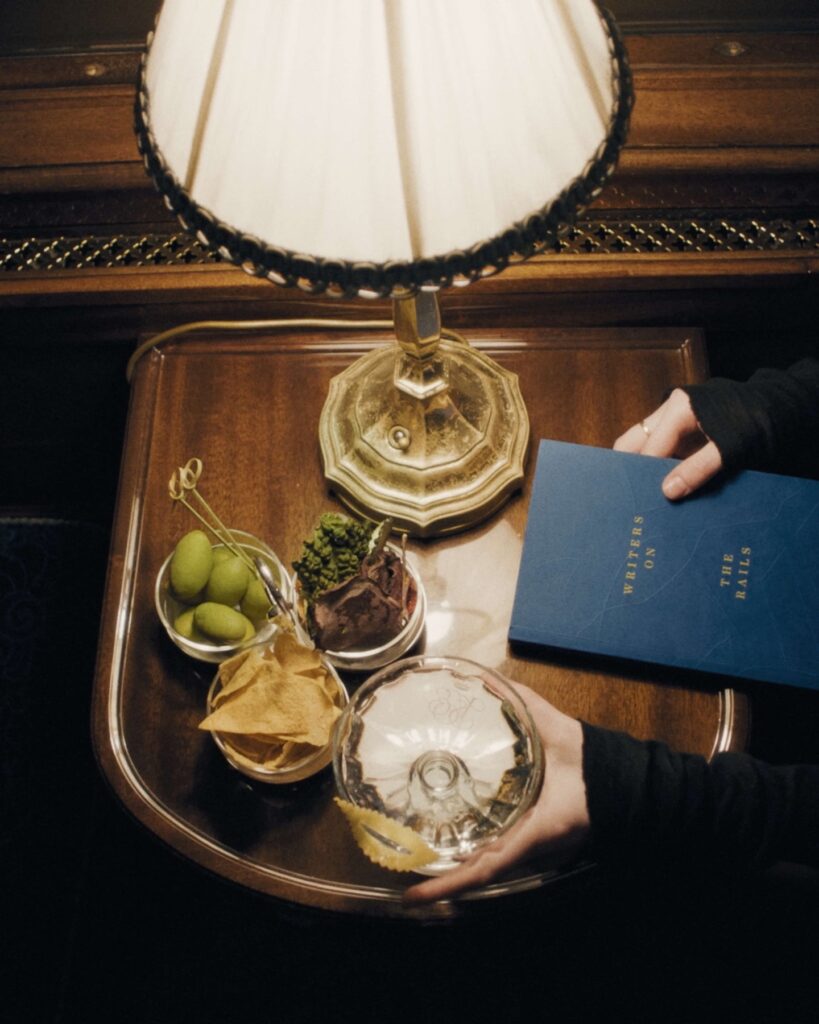
A dinner table and a drinks tray by the window.
The Journey
A night aboard the Venice Simplon-Orient-Express has a different rhythm from a daytime scenic train. Rather than spending the entire journey watching the landscape, passengers have time to explore the historic carriages carrying them across Europe.
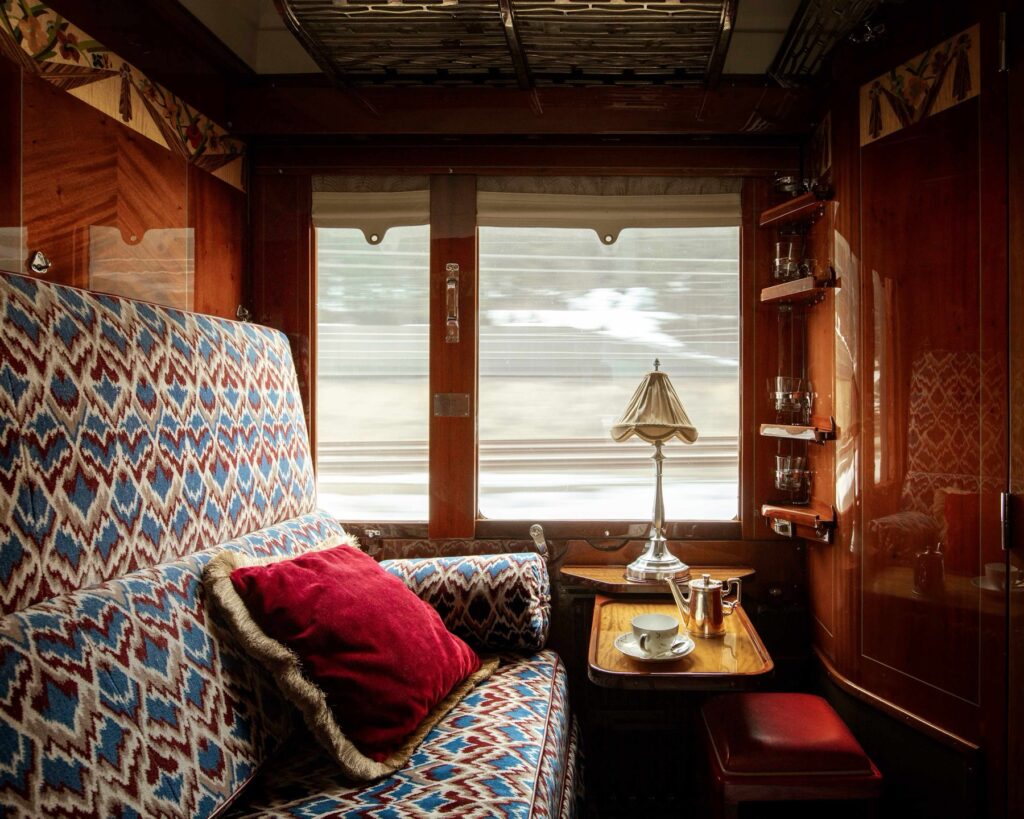
A Historic Cabin by day.
Dinner in a dining car, time spent in the bar and the return to a sleeping compartment as night falls recall something of the routines of luxury rail travel in an earlier era. Nearly a century after they were built, these spaces continue to welcome new generations of passengers.
Traveleak’s Take
The Venice Simplon-Orient-Express draws much of its appeal from historic carriages that remain in service. Their restored interiors, Art Deco details and the routines of life on board give the train a character of its own.
For travellers interested in railway history, architecture and classic rail journeys, it is an experience worth exploring. Before choosing an itinerary, however, it is important to consider the journey’s duration and the differences in facilities between Historic Cabins and Suites.
Essential Information
- Operator
- Belmond
- Cabins
- Historic Cabin, Suite and Grand Suite
- Journey Type
- Overnight Heritage Train
Reservations & Contact
- Official Website
- belmond.com/en/trains/europe/venice-simplon-orient-express
- Reservations
- Venice Simplon-Orient-Express journeys
Image source: Belmond