Half-timbered houses with steep roofs and flower-filled balconies stand close together beside the waterways of Petite France. Small bridges cross the channels, offering views of the old buildings reflected in the water.
The openings beneath some of those roofs once served a practical purpose. Centuries ago, Petite France was home to tanners who lived and worked beside the river. Attic spaces were used to dry hides, while the waterways below supplied water for their workshops.
 © OpenStreetMap contributors
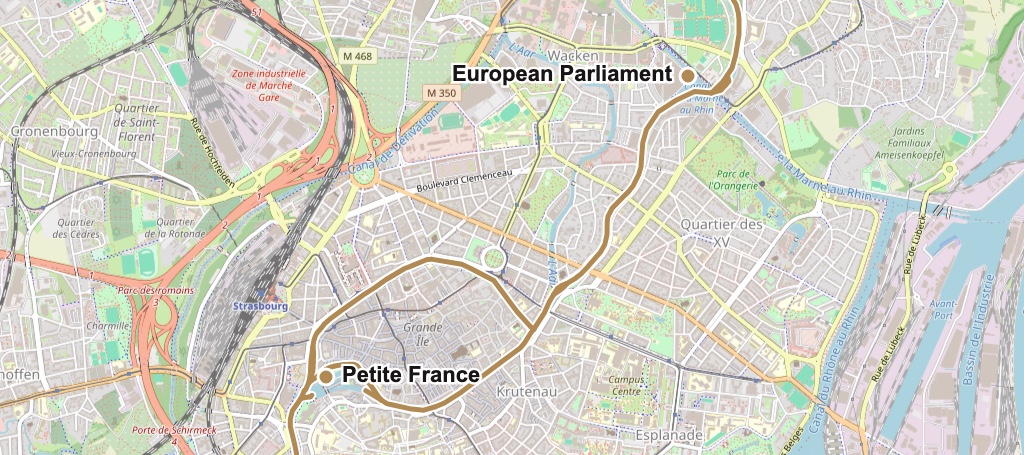
Today, sightseeing boats travel along these same waterways, carrying passengers from the historic quarter to other parts of Strasbourg. Within a short journey, the scenery changes from centuries-old timber-framed houses to broad avenues and modern buildings in a city that plays an important role in European affairs.
Petite France and the Waterways Beneath Its Old Rooftops
Batorama is one of the operators offering sightseeing cruises on the River Ill in Strasbourg. Its Red Tour lasts approximately 70 minutes, connecting Petite France, Grande Île, Neustadt and the European institutions district.
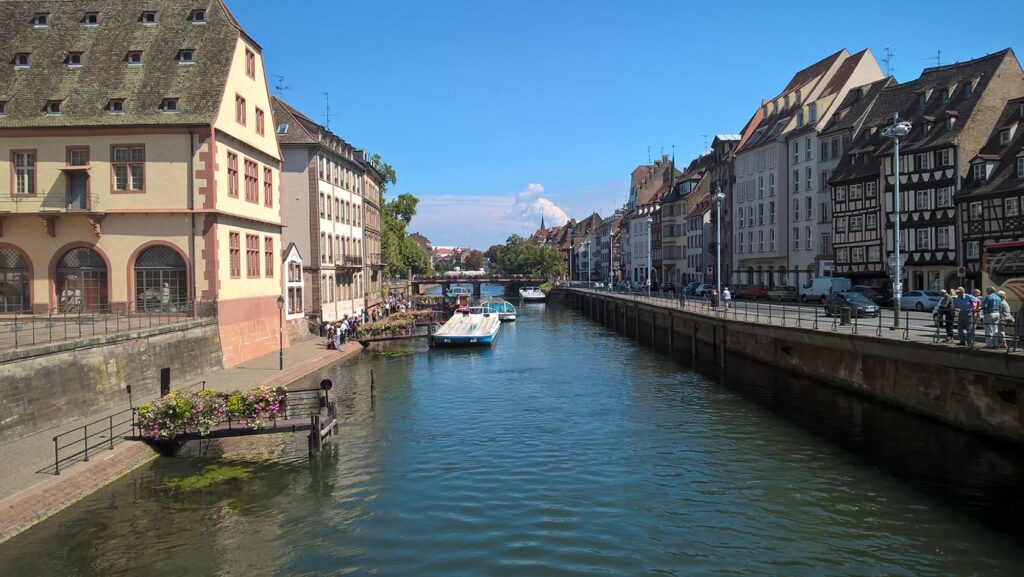
The River Ill between historic houses.
As the boat passes through Petite France, half-timbered houses stand close to the water’s edge. Steep roofs, balconies and windows give the neighbourhood its distinctive appearance. Many of these buildings date from the sixteenth and seventeenth centuries.
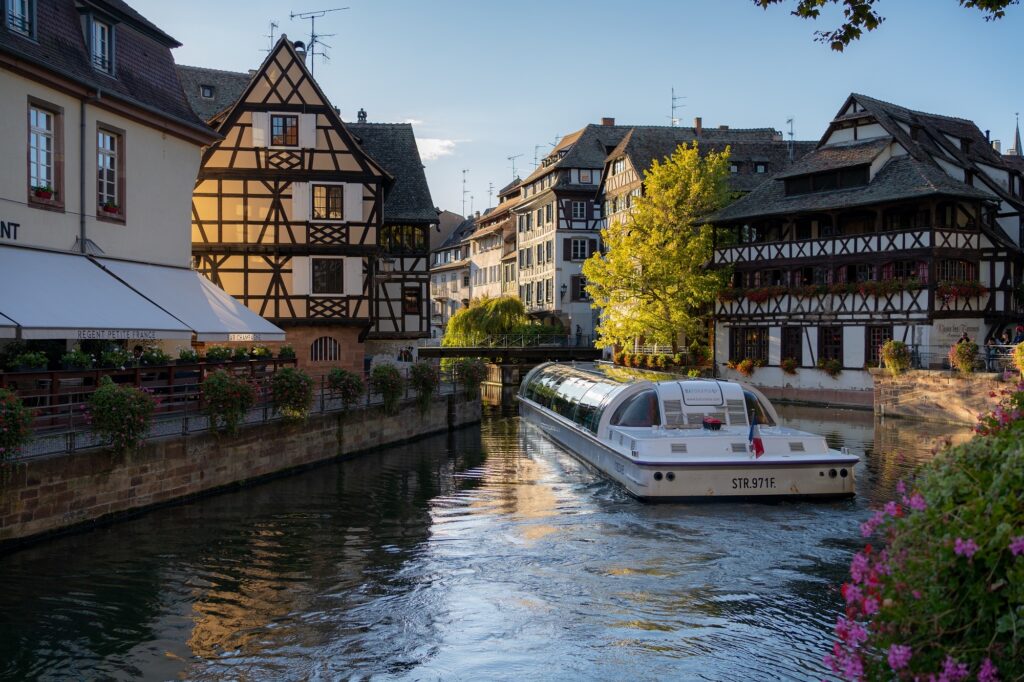
A Batorama boat in Petite France.
The river divides into smaller channels winding between houses, bridges and walkways. In some sections, the banks are close together, allowing passengers to observe architectural details that are less easily seen from the streets above.
Petite France was once home to trades that depended on access to water, including tanning, milling and fishing. Those activities have gradually disappeared from the neighbourhood, but the houses and network of waterways preserve something of Strasbourg’s earlier character.
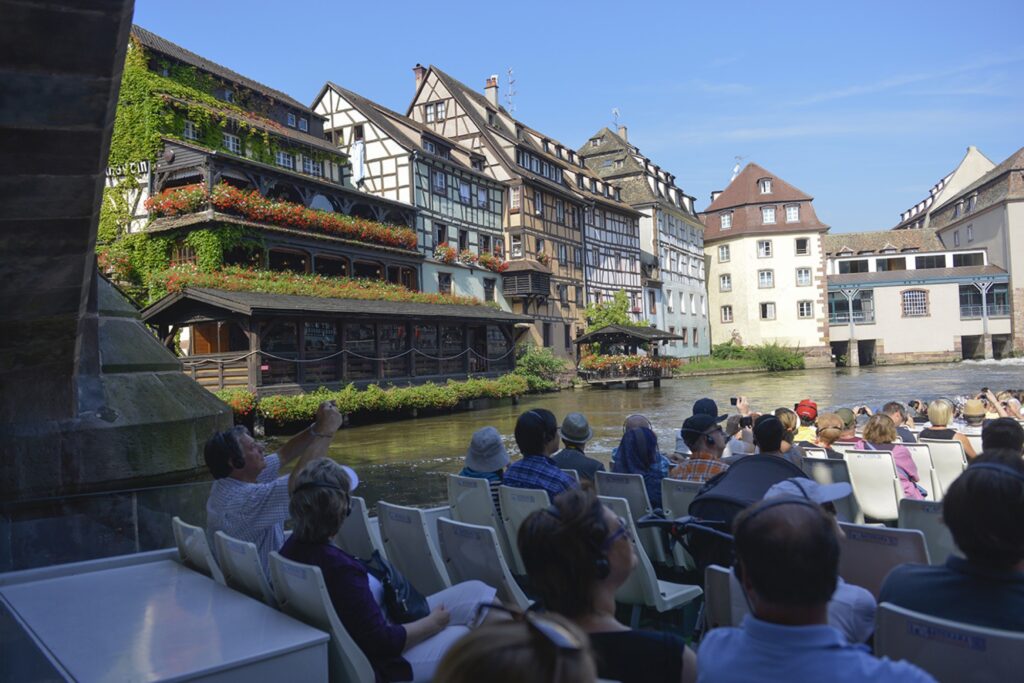
Half-timbered houses seen from the boat.
Nearby stand the Ponts Couverts, a group of bridges and towers that once formed part of the city’s defences. The name means “Covered Bridges”, although their roofs were removed in the eighteenth century.
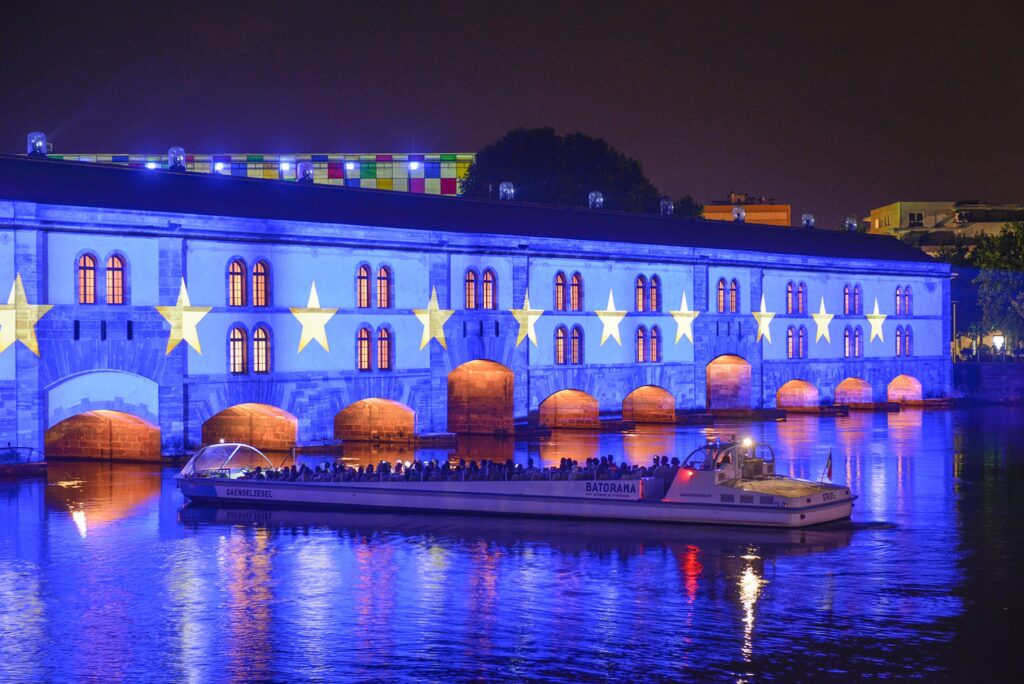
Close to the bridges is Barrage Vauban, a structure built for defence, using the control of water to help protect the city when necessary.
The canals once supported local livelihoods, while bridges and structures beside the water helped defend Strasbourg. Today, passengers can observe these different aspects of its history from a boat travelling through the waterways.
Through the Locks to Another Side of Strasbourg
One feature of Batorama’s Red Tour is the passage through two locks along the sightseeing route.
As the boat enters a lock, the gates close and the water level is adjusted so that the vessel can continue at a different elevation. This is a familiar process in inland navigation, but it also gives visitors an opportunity to see how water levels are managed within the city.
Leaving the historic quarter, the journey continues towards Neustadt, an urban district developed in the late nineteenth and early twentieth centuries, when Strasbourg was part of the German Empire.
The scenery here differs considerably from Petite France. In place of timber-framed houses close to the water are larger buildings, broad avenues and architecture reflecting a period of urban expansion.
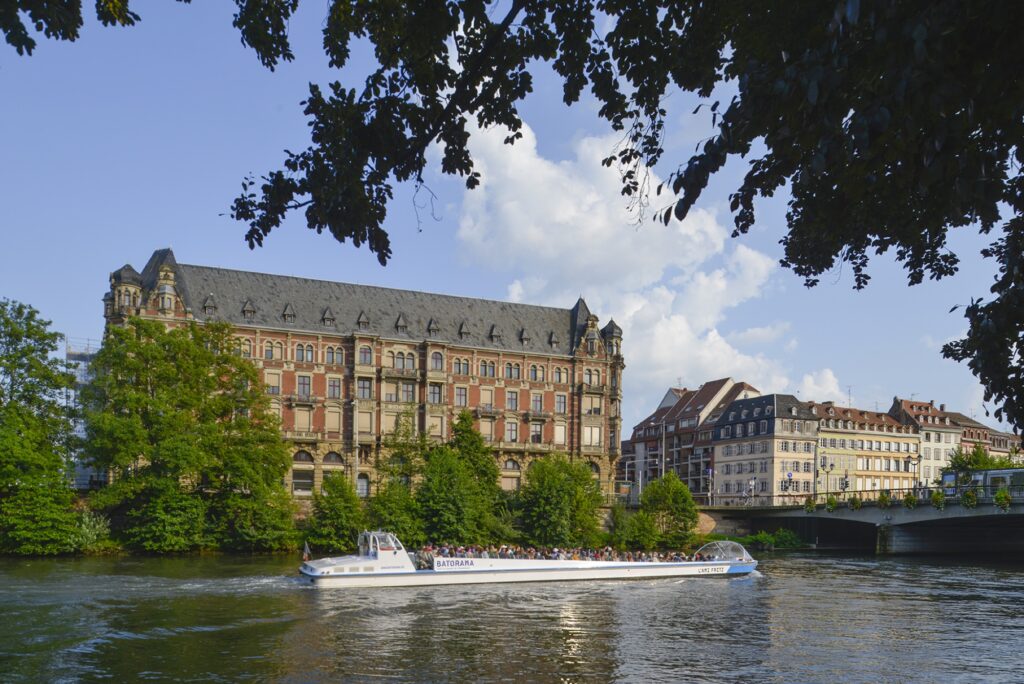
A Batorama boat on the River Ill.
Neustadt is also an important part of Strasbourg’s architectural heritage. In 2017, UNESCO extended the city’s World Heritage listing to include part of Neustadt, alongside the previously inscribed Grande Île.
From the boat, the transition between these districts becomes apparent. Strasbourg has medieval streets and historic riverside houses, as well as urban areas built during later periods of development.
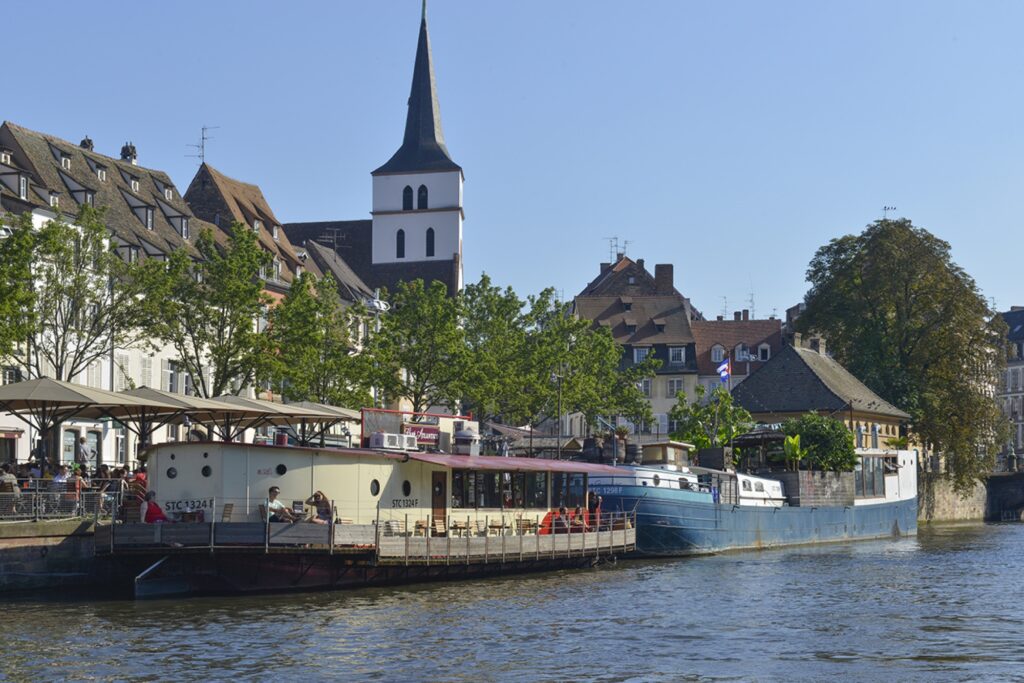
The banks of the River Ill.
From Historic Houses to the European Quarter
The next part of the journey takes passengers towards the district housing several European institutions, where Strasbourg presents a more modern appearance.
Among the notable buildings are the European Parliament, the Council of Europe and the European Court of Human Rights. These institutions reflect Strasbourg’s role in European political, legal and international cooperation.
Seen from the river, the modern buildings provide a clear contrast with Petite France. Large architectural forms, glass façades and open spaces surrounding the institutions offer another view of the city.
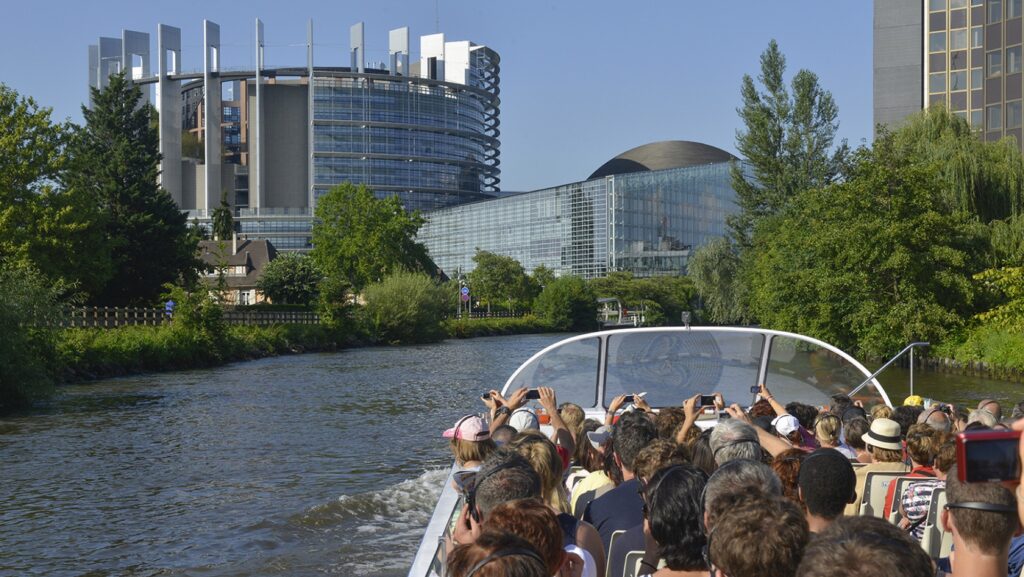
The European Parliament seen from the boat.
The sightseeing cruise passes these buildings and introduces them from the outside. Visitors wishing to enter the European Parliament or other institutions should check their separate visitor programmes and admission arrangements.
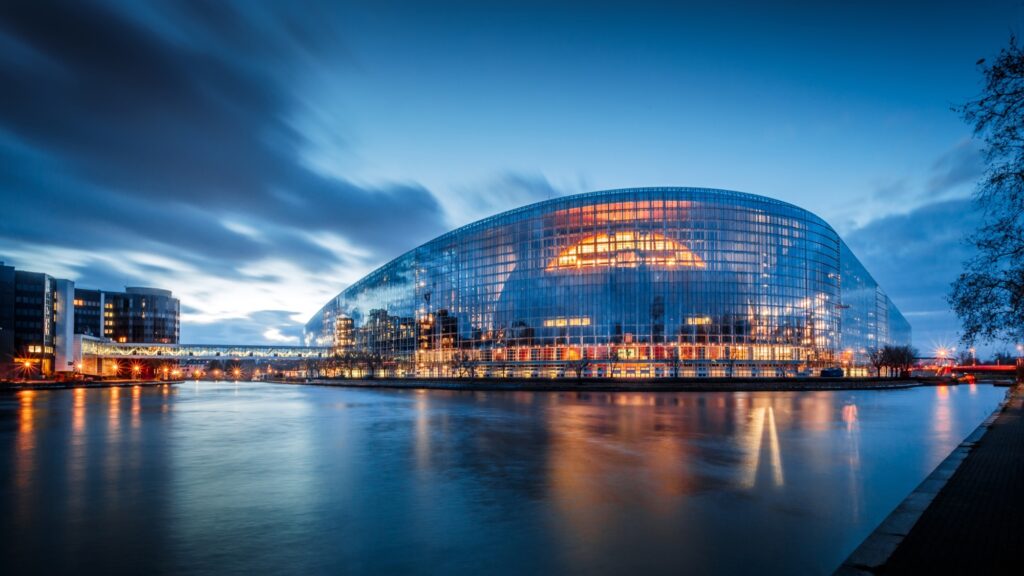
The European Parliament at dusk.
At approximately 70 minutes, the Red Tour offers an introduction to Strasbourg, particularly for visitors deciding which areas they would like to explore further.
After the cruise, passengers can return to Petite France to walk across its small bridges, stop at a waterside café or spend more time exploring Neustadt and its architecture.
Back in Petite France, the half-timbered houses remain among the most noticeable features of the neighbourhood. After a journey along the Ill, however, the openings beneath their steep roofs may recall another story. The streets that now attract visitors for their historic architecture were once places of work, where tanners carried out their trade beside the same waterways that sightseeing boats travel today.
Boarding may be in the Cathédrale or Quai au Sable area, depending on the programme and operating schedule. Check the specific tour, departure point, timetable and route before booking. Other shorter cruises may not cover all the areas described above.
Essential Information
- Cruise Line
- Batorama, Red Tour
- Journey Type
- City River Sightseeing Cruise
Reservations & Contact
- Official Website
- batorama.com/en
- Reservations
- Batorama Red Tour
Image source: Batorama