The Ship
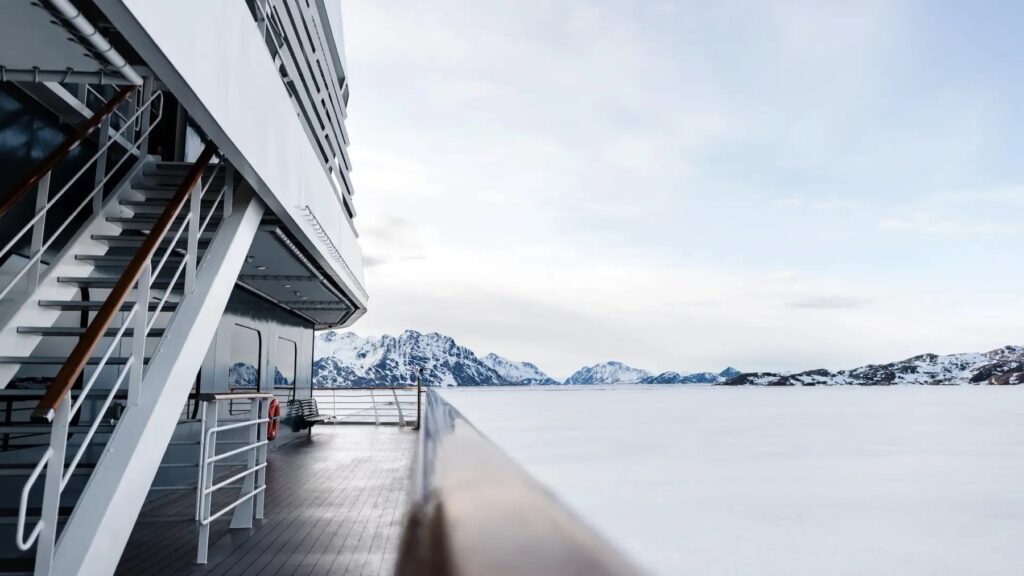
In ice-covered waters, a ship cannot always follow its planned route. Wind, weather and drifting sea ice may require the crew to change course. In these conditions, the ability to navigate through ice becomes as important as the destination itself.
Le Commandant Charcot is a polar expedition ship operated by Ponant. Delivered in 2021, the vessel was designed to operate in demanding conditions. It measures approximately 150 metres in length, with 123 cabins accommodating up to 245 passengers. Its Polar Class 2 classification indicates a capability to operate in sea ice, subject to specific technical and operational limits. The ship is named after French polar explorer Jean-Baptiste Charcot.
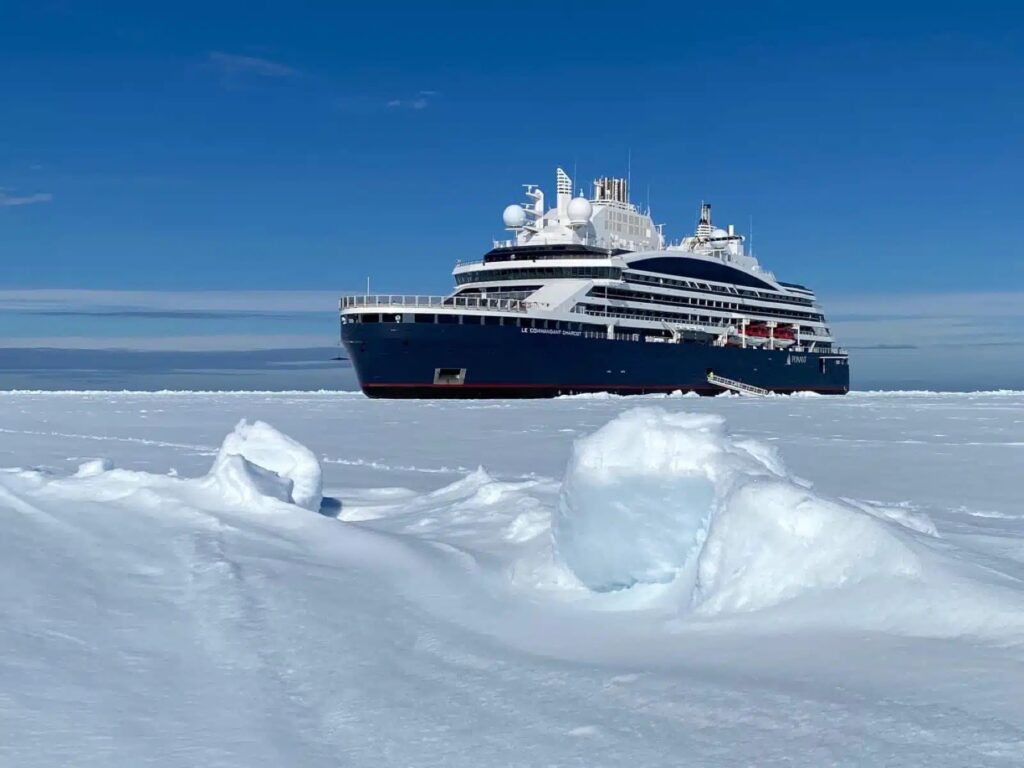
Le Commandant Charcot in sea ice.
Another feature is its hybrid propulsion system, combining liquefied natural gas (LNG) and electric power. This technology does not, however, make the vessel emission-free. Operating in polar waters still requires strict safety and environmental protection procedures.
Alongside passenger expeditions, Le Commandant Charcot is equipped with laboratories to support scientific research.
The Route
Le Commandant Charcot undertakes voyages to remote waters, including the Arctic and Antarctica. Each programme has its own itinerary, duration and expedition objectives.
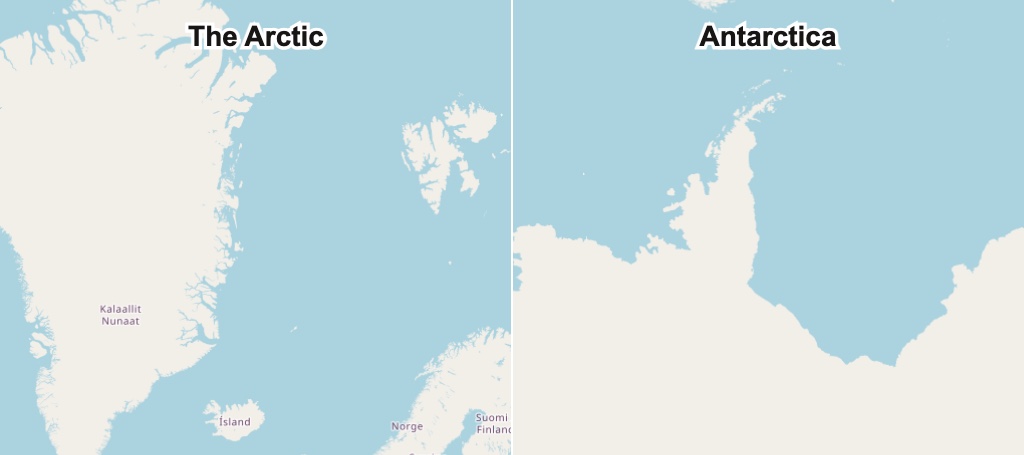 © OpenStreetMap contributors
In the Arctic, the landscape may include sea ice, remote archipelagos and coastlines exposed to challenging natural conditions. Voyages to Antarctica introduce passengers to a different environment, with extensive ice formations, icebergs and the waters surrounding the continent.
Onboard Design
Le Commandant Charcot combines passenger accommodation with facilities designed for expeditions and scientific research.
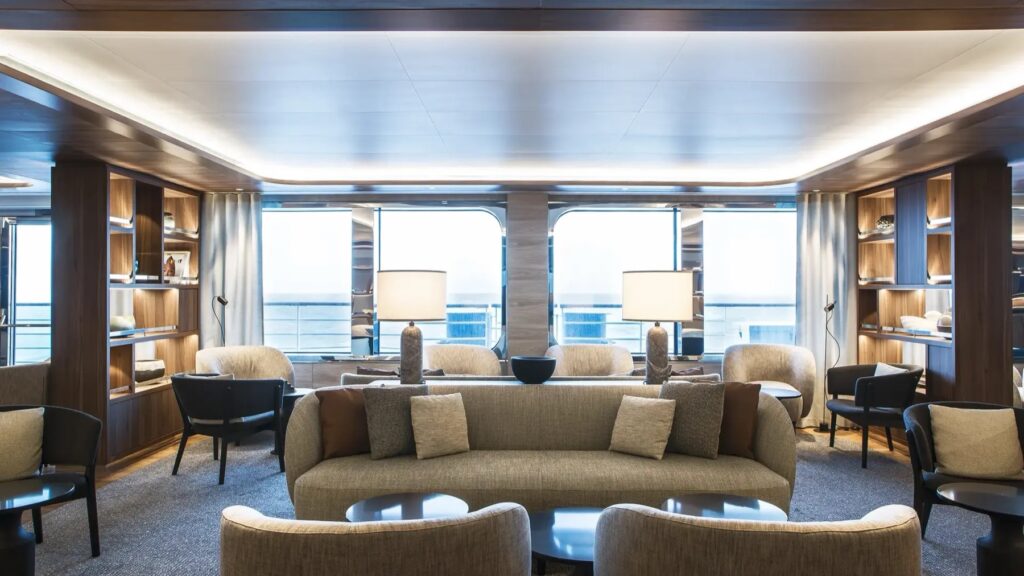
The main lounge.
Alongside suites, restaurants and observation areas, the ship has spaces dedicated to scientific work. Having these facilities on board allows research to be carried out during voyages to remote waters, far from land.
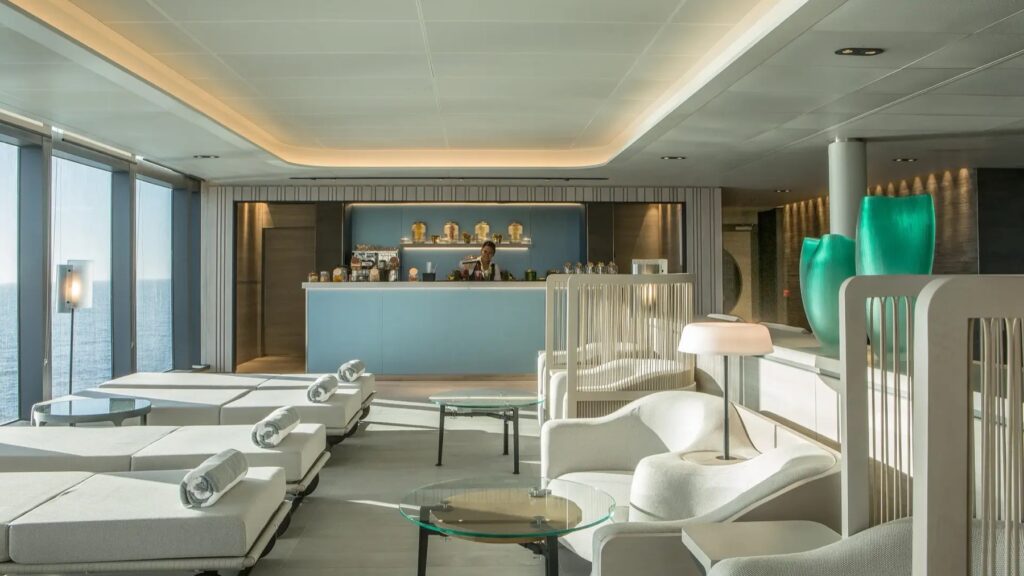
The indoor pool.
Observation areas are also important on polar journeys. Drifting ice, snow-covered coastlines and changing sea conditions can provide views worth watching, even on days when passengers cannot go ashore.
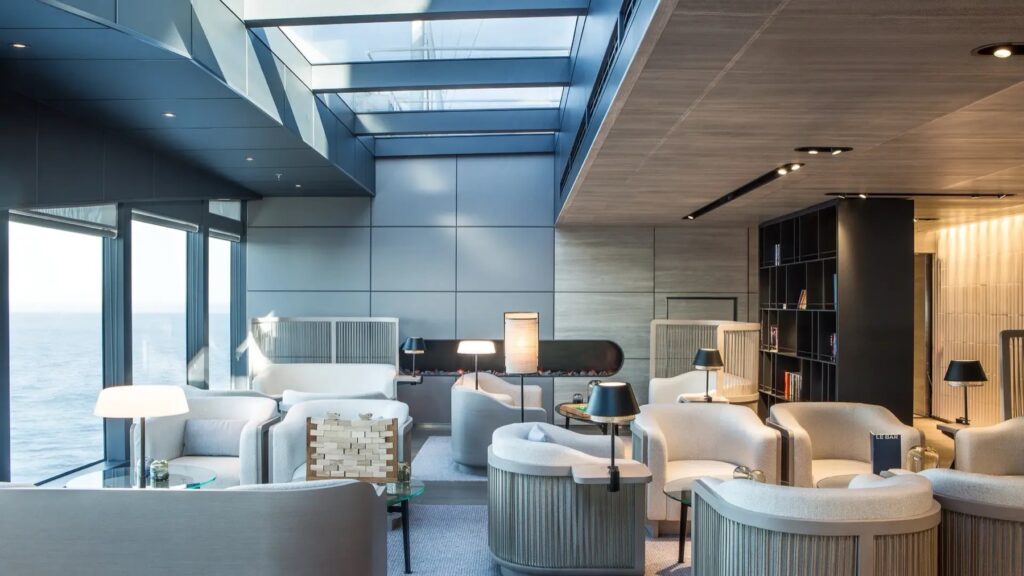
The Anori observation lounge.
Suites and Dining
The suites aboard the ship are spacious and well-appointed, each with a private balcony or terrace overlooking the sea. The Owner’s Suite stands out with 115 m² of interior space opening onto a private terrace of 186 m², larger than the suite itself, with a seating area and a whirlpool bath. Balcony staterooms offer 20 m² of interior space, connected to a private 5 m² balcony through floor-to-ceiling sliding glass doors.
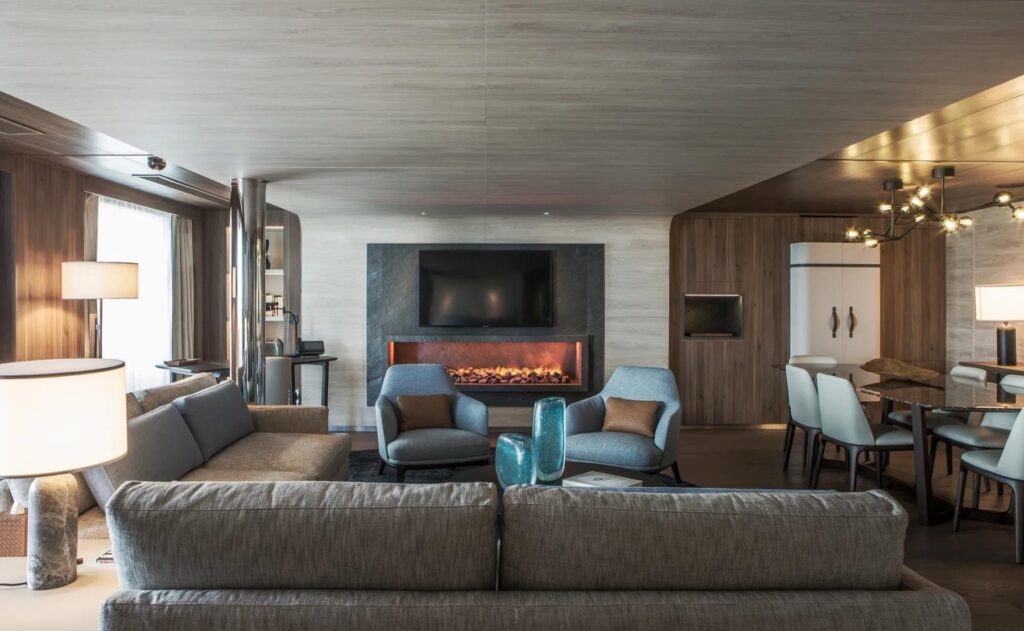
The Owner’s Suite sitting room.
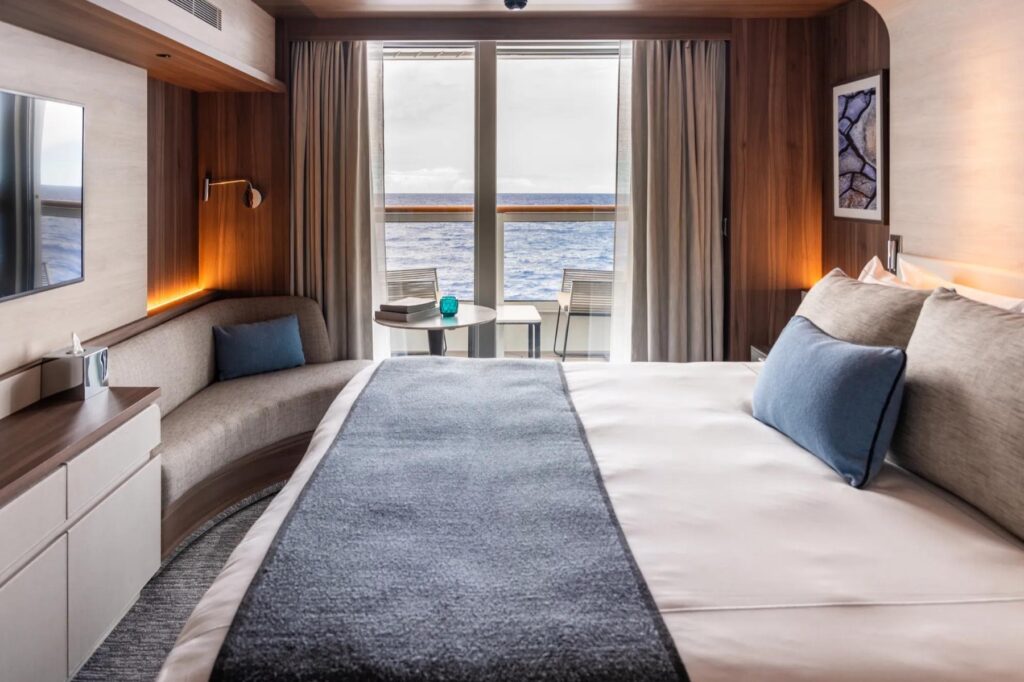
A balcony stateroom.
Nuna, on Deck 5, serves contemporary French cuisine à la carte, developed with the involvement of Alain Ducasse. PONANT works with Ducasse Conseil on recipe development and the training of its culinary and restaurant service teams.
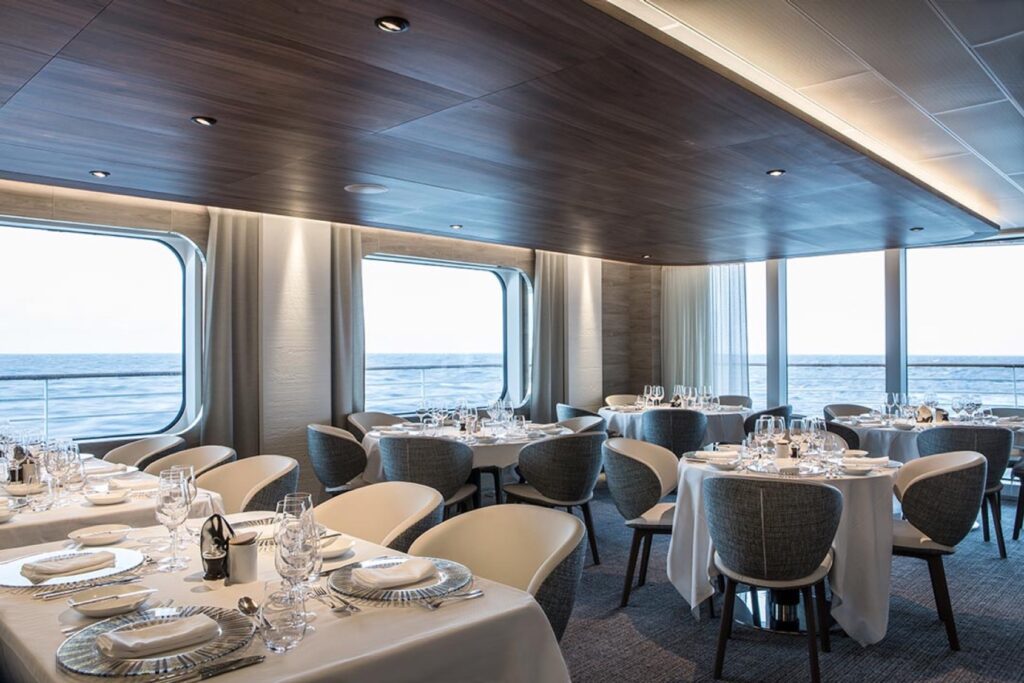
A dining room with sea views.
Before the ship’s maiden voyage, members of the culinary and restaurant teams spent four days at Hôtel de Paris Monte-Carlo. There, they toured the kitchens and observed service at Le Grill and Louis XV-Alain Ducasse, two restaurants within the hotel.

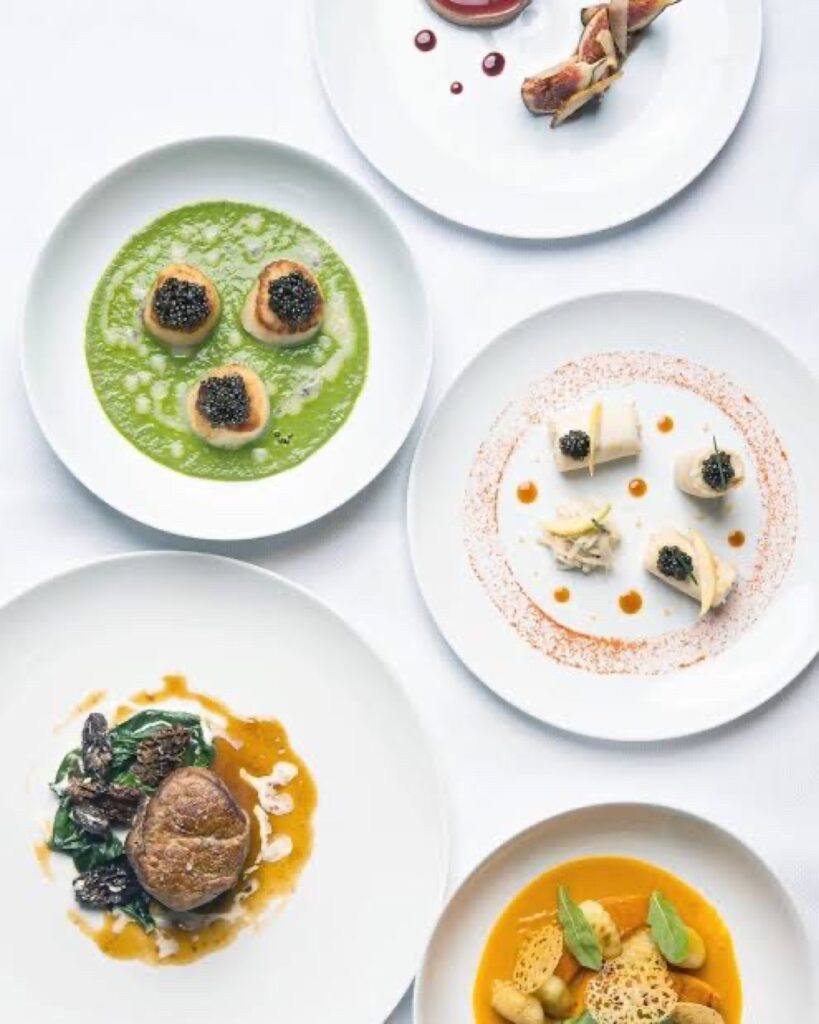
A chef plating a dish, and a selection of plated dishes.
Sila, on Deck 9, offers a more relaxed dining atmosphere, serving a buffet at lunch and themed dinners.
Science and Polar Exploration
Le Commandant Charcot has two laboratories, together with facilities supporting the processing and storage of scientific data.
One is a wet laboratory, where samples and equipment used in marine environmental research can be handled. An opening in the ship’s hull allows seawater to be sampled directly. Ponant also provides a science officer on board to support researchers.
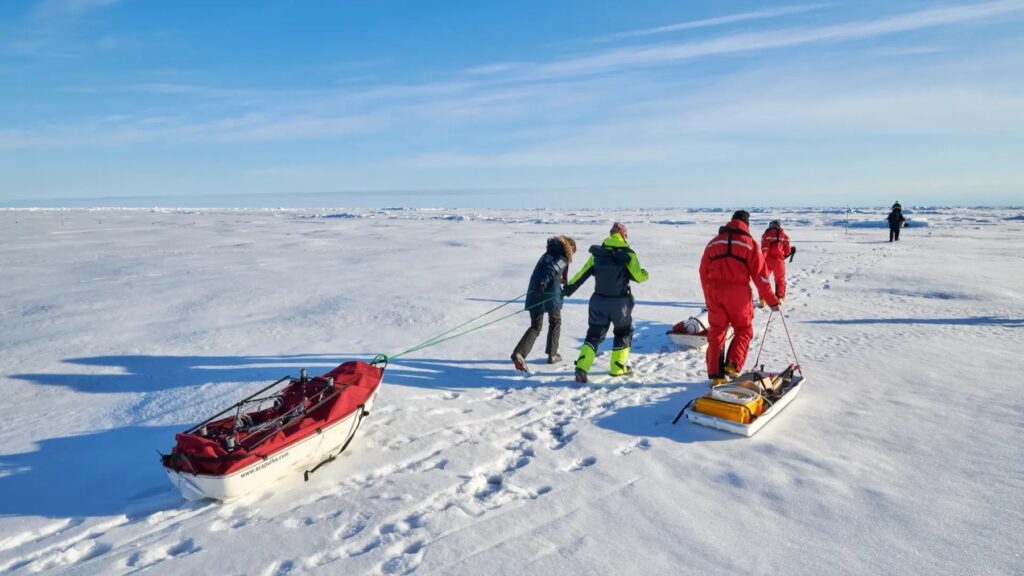
People pulling sleds across the sea ice.
Depending on the research programme, activities may include collecting water samples, measuring environmental conditions and processing scientific data.
The presence of scientists offers another perspective on the waters through which the ship travels.
Polar exploration differs from cruising with a fixed schedule of port calls. Sea ice can shift, weather conditions can change quickly and a planned landing site may no longer be suitable when the ship approaches.
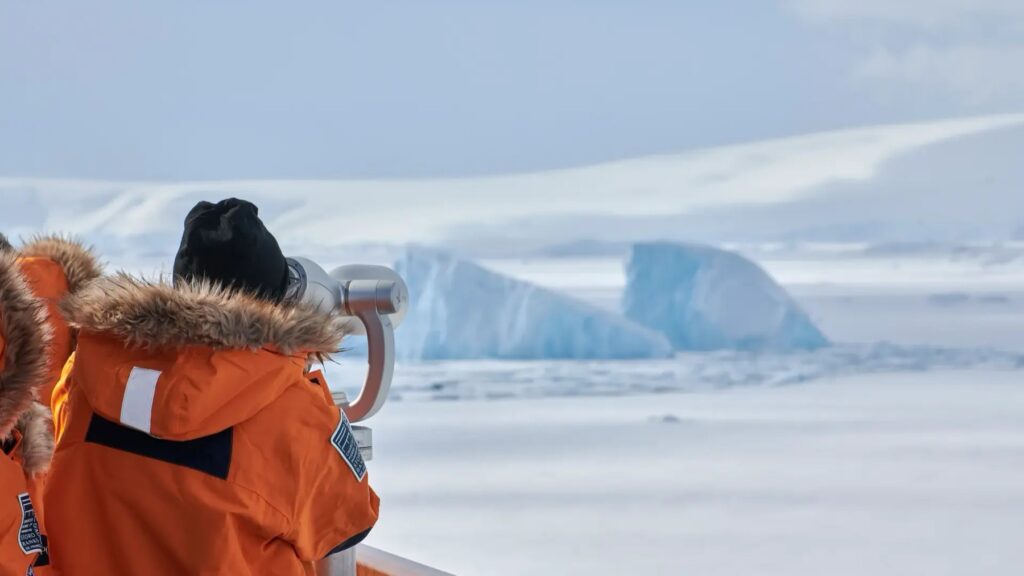
Watching icebergs from the deck.
Operating in this environment requires particular standards of ship design, equipment and procedures. The International Maritime Organization’s Polar Code sets requirements relating to safety, training, emergency response and environmental protection in polar waters.
Polar Class 2 describes a technical capability of the ship. It does not mean that Le Commandant Charcot can reach any location under all ice conditions.
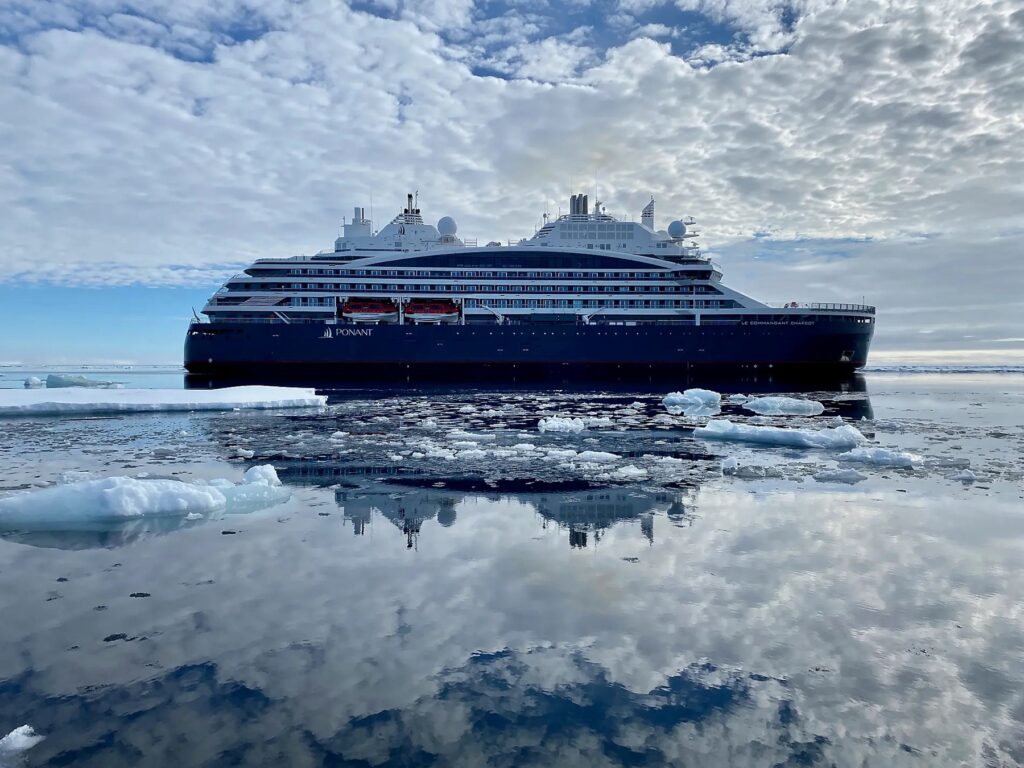
Le Commandant Charcot among sea ice.
The Journey
A voyage aboard Le Commandant Charcot may take passengers through waters scattered with drifting ice, past snow-covered coastlines and into landscapes that change with the weather.
Days on board offer opportunities to observe nature, learn about polar environments and take part in expedition activities according to the programme. When conditions permit, excursions may allow passengers to explore locations where access is authorised.
In Antarctica, shore activities must comply with rules protecting the environment and wildlife. Passengers must follow the expedition team’s instructions, keep appropriate distances from wildlife and respect site-specific access restrictions.
On days when passengers cannot leave the ship, time is spent observing sea ice or learning more about the region being explored.
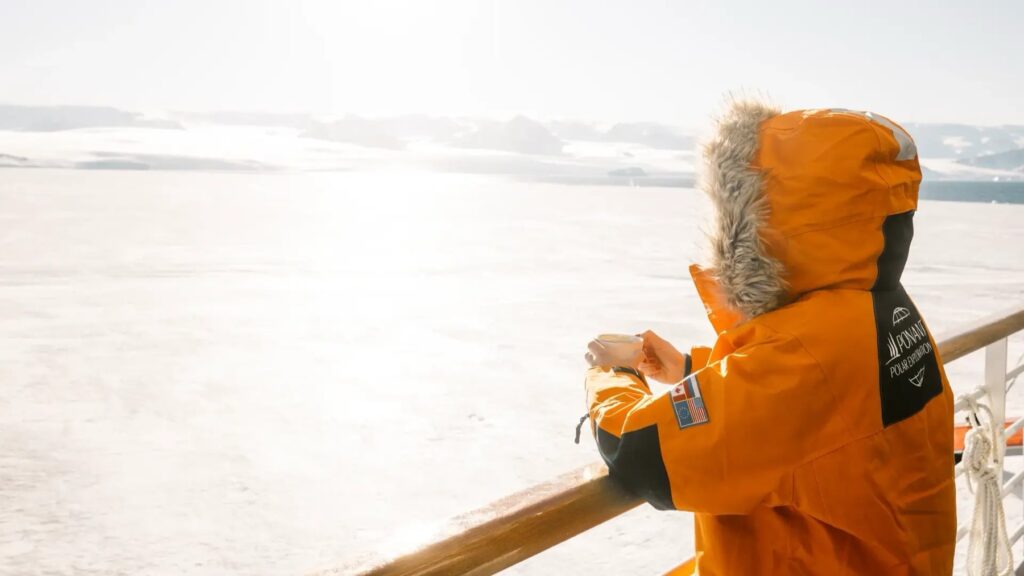
A passenger at the ship’s railing.
Traveleak’s Take
Le Commandant Charcot is distinctive for its combination of sea ice operating capability and facilities supporting scientific research.
For travellers interested in nature, geography and remote regions, its voyages offer opportunities to discover polar landscapes and learn how researchers study these environments.
It is not a choice for travellers who want a fixed itinerary at every location.
When considering a voyage on Le Commandant Charcot, the region, season and nature of the itinerary are important factors. The Arctic and Antarctica offer different landscapes, ecosystems and experiences.
Essential Information
- Cruise Line
- Ponant
- Cabins
- 123 cabins, up to 245 passengers
- Journey Type
- Polar Expedition Cruise
Reservations & Contact
- Official Website
- en.ponant.com/cruise-ships/le-commandant-charcot
- Reservations
- Ponant: Le Commandant Charcot
Image source: PONANT; Marriott