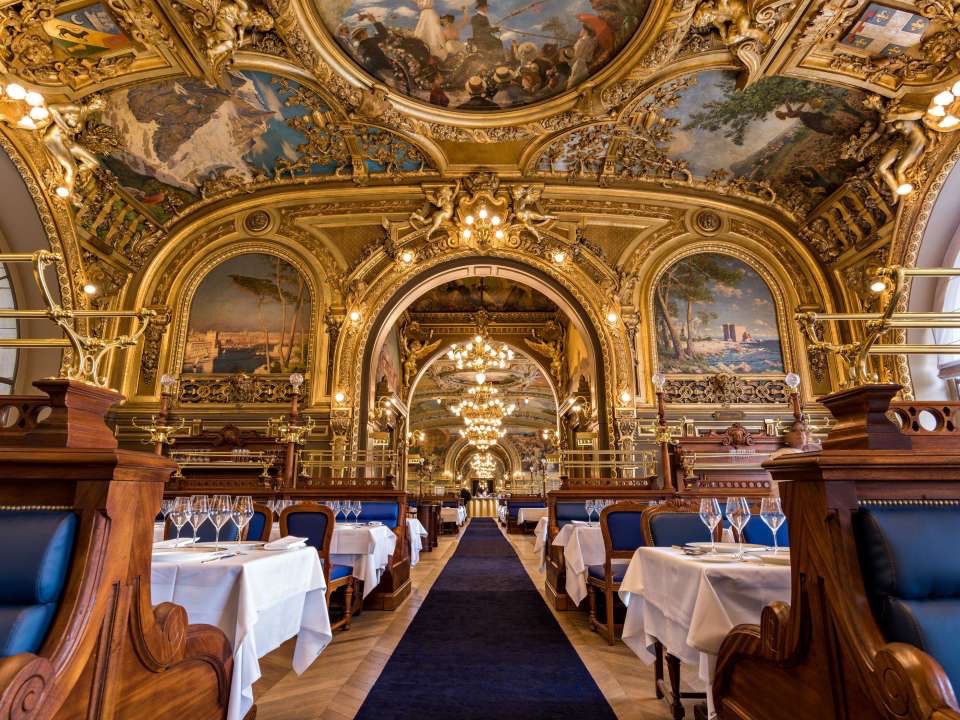
At Gare de Lyon, travellers usually look up to check the departure boards. At Le Train Bleu, their attention may instead turn to the paintings overhead, framed by chandeliers, gilded details and rows of leather banquettes.
The setting feels closer to a grand reception room than a restaurant inside a railway station. Yet Le Train Bleu’s history began with the development of Gare de Lyon itself at the start of the twentieth century.
Today, French dishes are still served beneath those painted ceilings, including roast leg of lamb carved from a trolley in the dining room.
A Dining Room from the Belle Époque
Le Train Bleu traces its origins to Gare de Lyon’s former railway buffet, built as Paris prepared for the 1900 Exposition Universelle and inaugurated in 1901.
Architect Marius Toudoire, whose work on Gare de Lyon included its distinctive façade and clock tower, was also associated with the restaurant’s design.
Inside, large paintings extend across the ceilings and upper walls, accompanied by chandeliers, gilded ornamentation, wood panelling and leather seating. The rooms retain the decorative character of the Belle Époque, with architectural details preserved across generations.
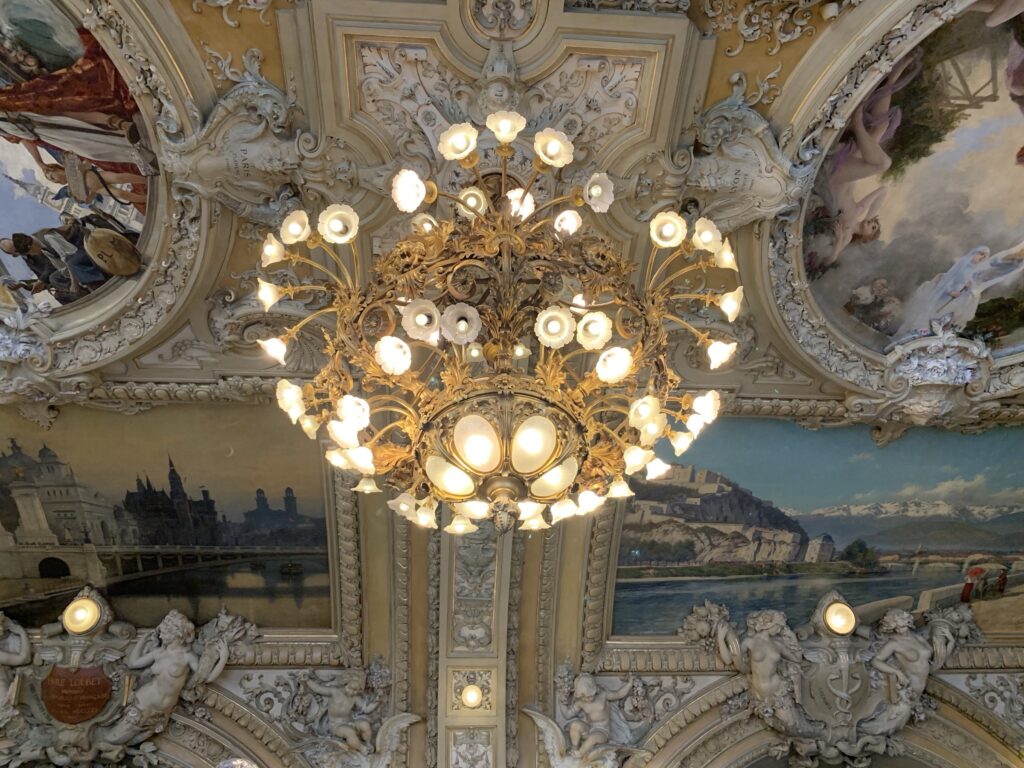
The painted ceiling and chandeliers of Le Train Bleu.
The restaurant adopted the name Le Train Bleu in 1963, recalling the famous railway service connecting northern France with the Mediterranean coast. In 1972, its historic rooms and decorative interiors received protected historic monument status.
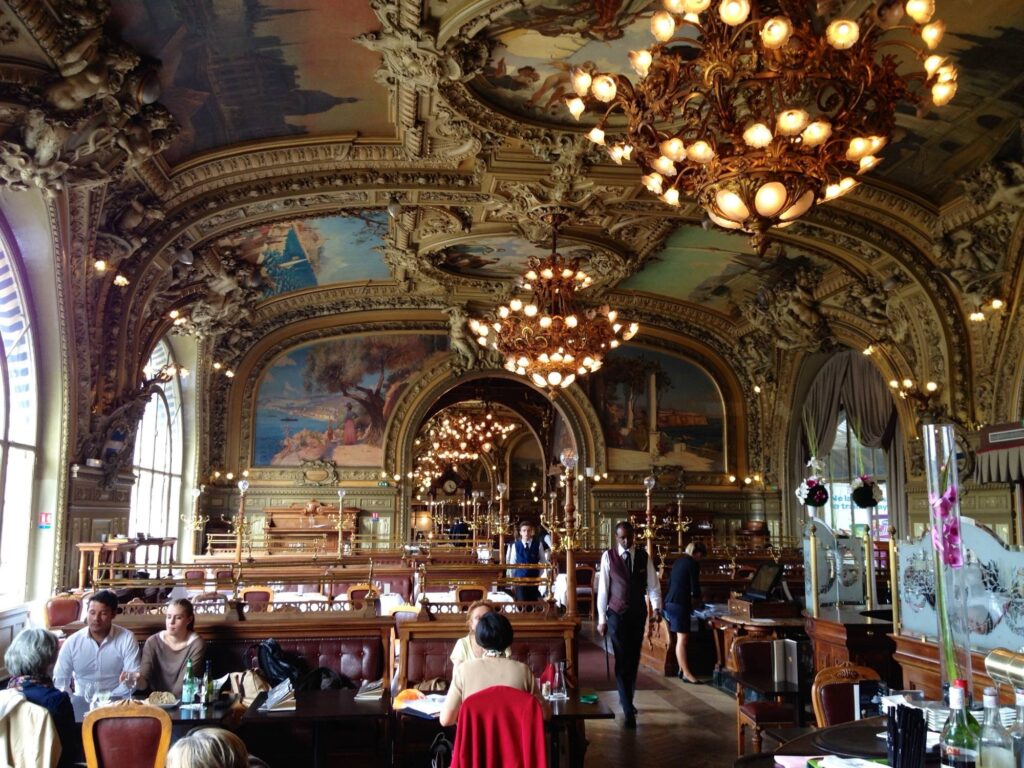
The dining room of Le Train Bleu, with its painted ceilings and chandeliers.
As Gare de Lyon has continued to evolve with the demands of railway travel, these dining rooms have retained many features from their earliest years.
When the Carving Trolley Arrives
Beneath the paintings, Le Train Bleu serves French cuisine built around traditional dishes and regional ingredients.
One of its signature preparations is roast leg of lamb, carved from a trolley. Staff bring the trolley into the dining room, slice the meat and portion it before serving. Part of the preparation takes place in front of diners rather than entirely behind the kitchen doors.
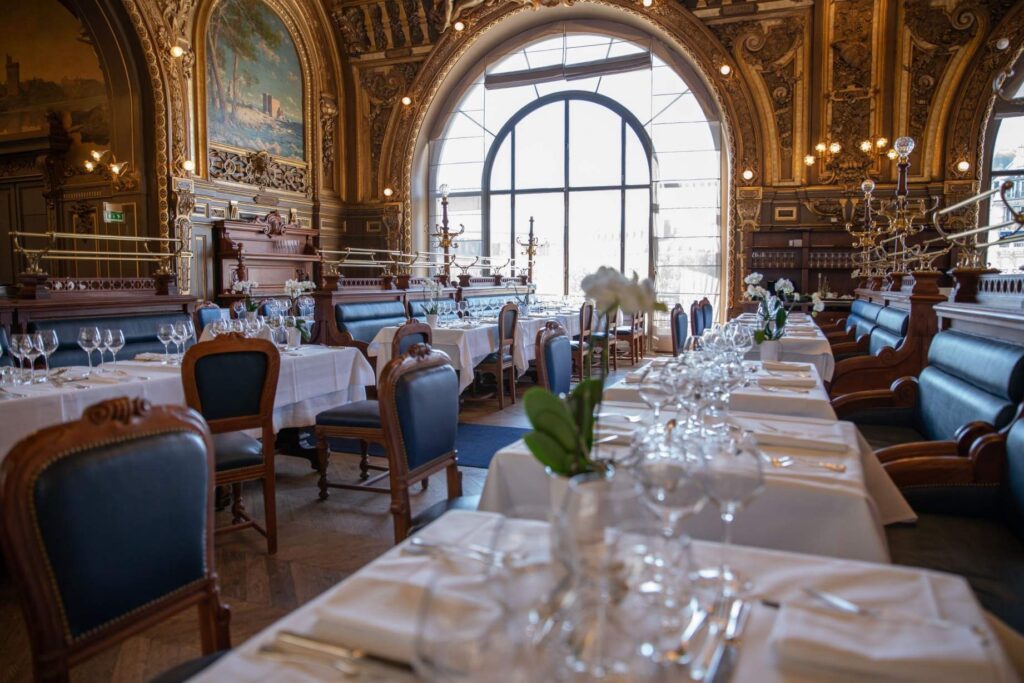
The main dining room of Le Train Bleu and its arched window.
The lamb is accompanied by gratin dauphinois, a potato dish associated with France’s Dauphiné region. According to the restaurant’s description, its version contains neither cheese nor eggs. Thinly sliced potatoes are cooked with cream and baked to make an accompaniment to the roast meat.
Menus previously published by the restaurant have also featured fish dishes, beef tartare and rum baba with citrus flavours, served with whipped vanilla cream. These examples offer a sense of the kitchen’s repertoire rather than a fixed selection available throughout the year.
At Le Train Bleu, the lamb trolley has a particular role. It brings part of the kitchen’s work into the dining room, allowing carving and serving to take place among the tables of this historic interior.
A Meal Between Train Journeys
Le Train Bleu sits within Gare de Lyon, but diners do not need a train ticket to eat here. Lunch or dinner can be a reason to visit the station in its own right.
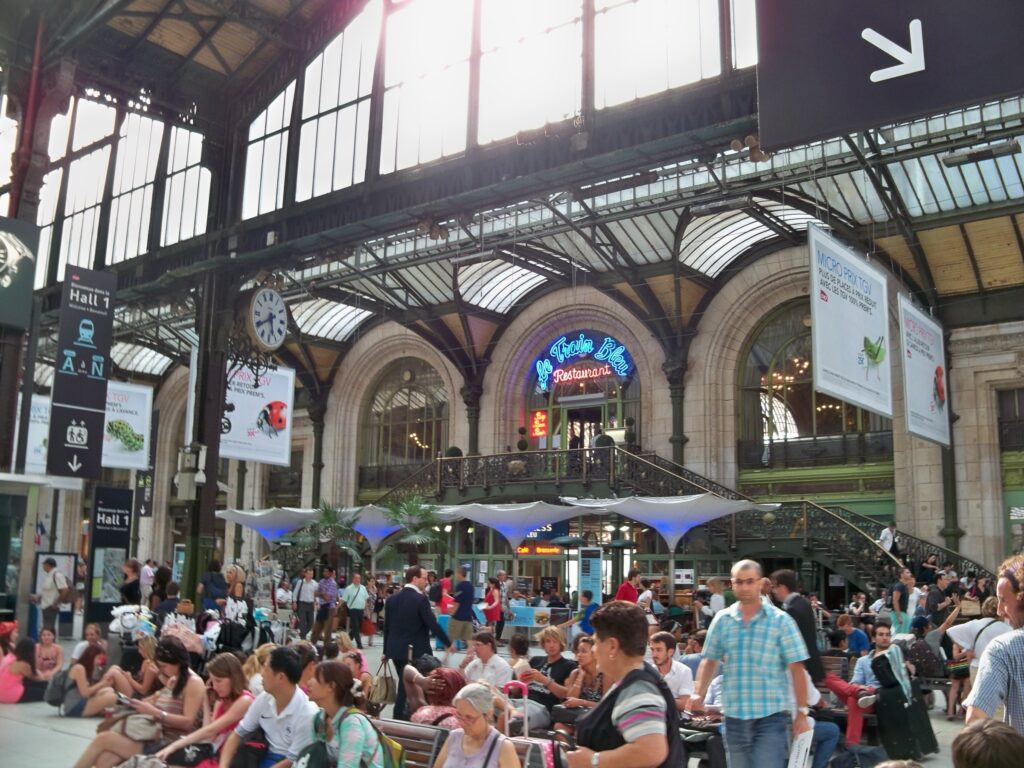
The entrance to Le Train Bleu at Gare de Lyon.
The restaurant has a main dining area for full meals and a separate lounge bar with a different style of service. Booking a table for lunch or dinner is therefore not quite the same as stopping by the bar, even though both occupy the same address.
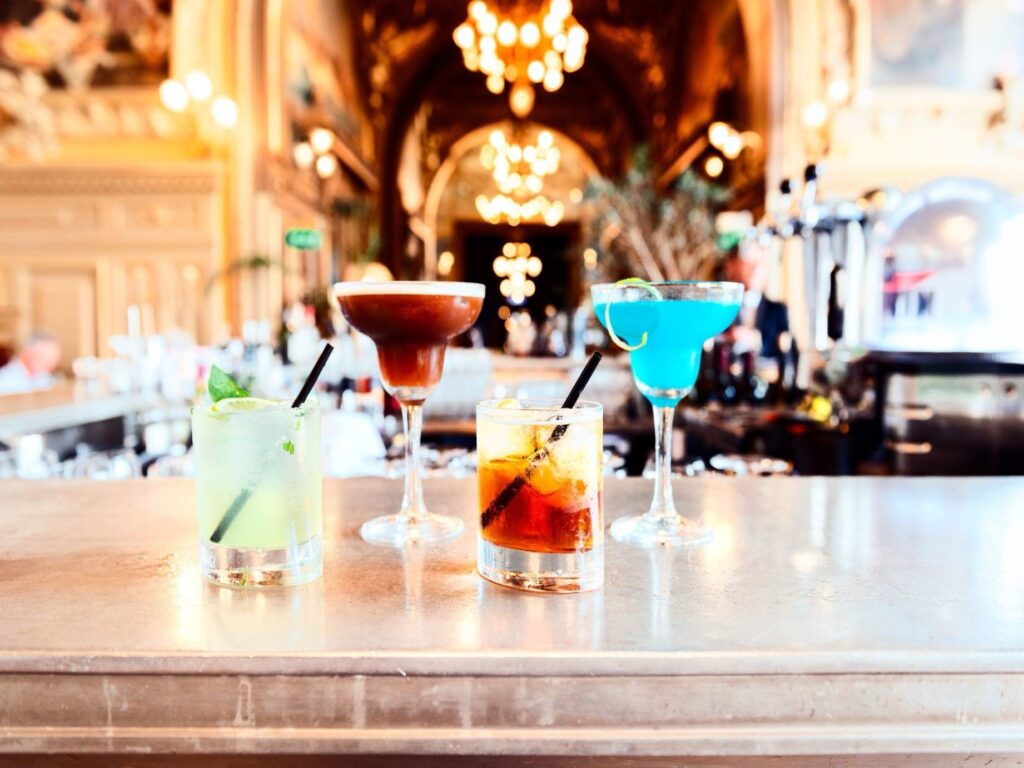
Cocktails on the bar at Le Train Bleu.
For travellers combining a meal with a train journey, the time needed for service is worth considering. This is a sit-down restaurant rather than a station counter designed for a quick takeaway before departure.
Reservations should be made through the official website or a booking service linked by the restaurant. Le Train Bleu also warns visitors about fraudulent reservation websites, making it important to use a verified booking channel.
Le Train Bleu exists between two rhythms of time. Beyond the dining room, Gare de Lyon continues with its arriving and departing trains. Inside, paintings from the early twentieth century remain overhead, while the lamb trolley continues its work beside the tables.
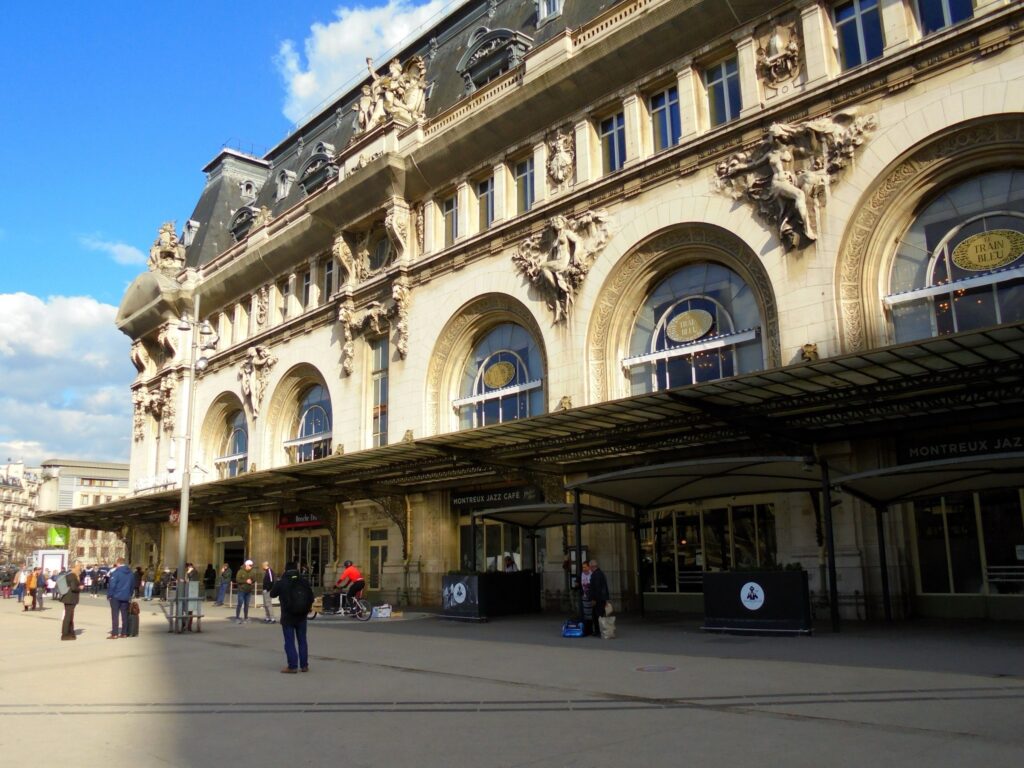
The windows of Le Train Bleu seen from the forecourt of Gare de Lyon.
Sources: Le Train Bleu
Image source: Le Train Bleu; Wikipedia