At Katz’s Delicatessen, a pastrami sandwich begins long before anyone approaches the counter. The beef is cured, seasoned, smoked and cooked further before a carver picks up a knife. After weeks of preparation, the hot pastrami is piled between two slices of rye bread, often with little more than a touch of mustard.
The restaurant stands at 205 East Houston Street, at the corner of Ludlow Street, on Manhattan’s Lower East Side. It is the address long associated with Katz’s, where meat is still carved by hand when customers order.
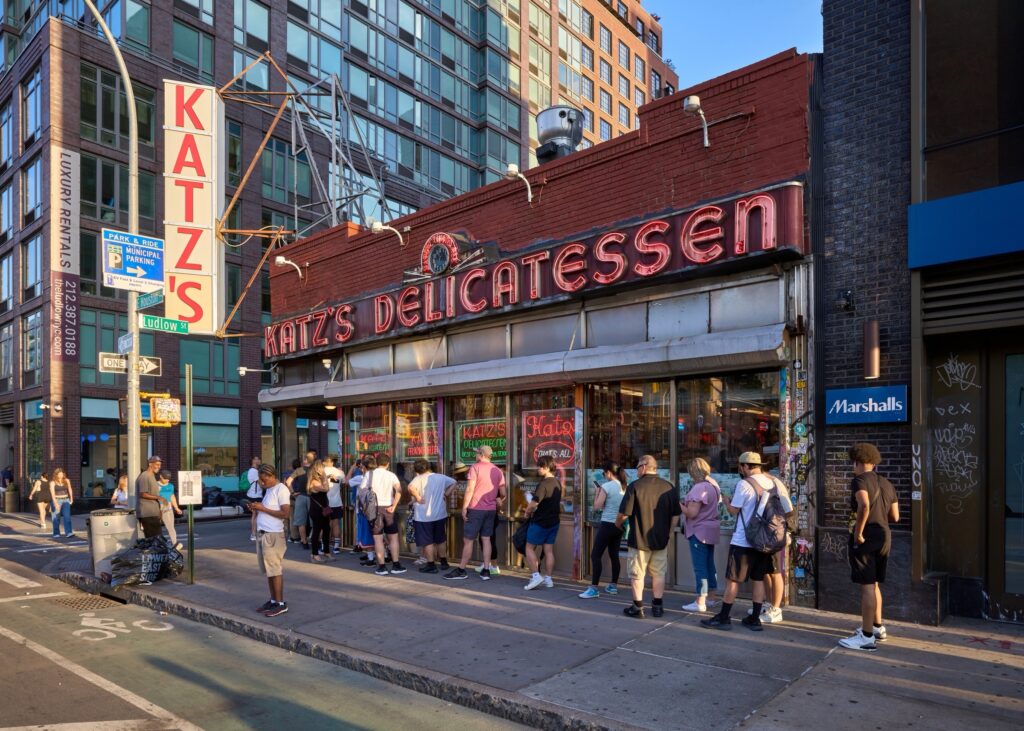
The façade of Katz’s Delicatessen on East Houston Street.
Katz’s also has a history closely tied to the neighbourhood’s immigrant communities and a distinctive ordering system: customers receive a paper ticket on entering and keep it until they pay.
From Beef to Pastrami Sandwich
Katz’s uses beef navel, a cut from the lower belly, to make its pastrami. According to the restaurant’s published process, the meat spends several weeks in a seasoned brine before being coated with spices and smoked.
Smoking creates the dark exterior and distinctive flavour, but the meat is not served immediately. Katz’s continues cooking it until tender, reducing some of its saltiness, before holding it hot with steam at the counter until an order comes in.
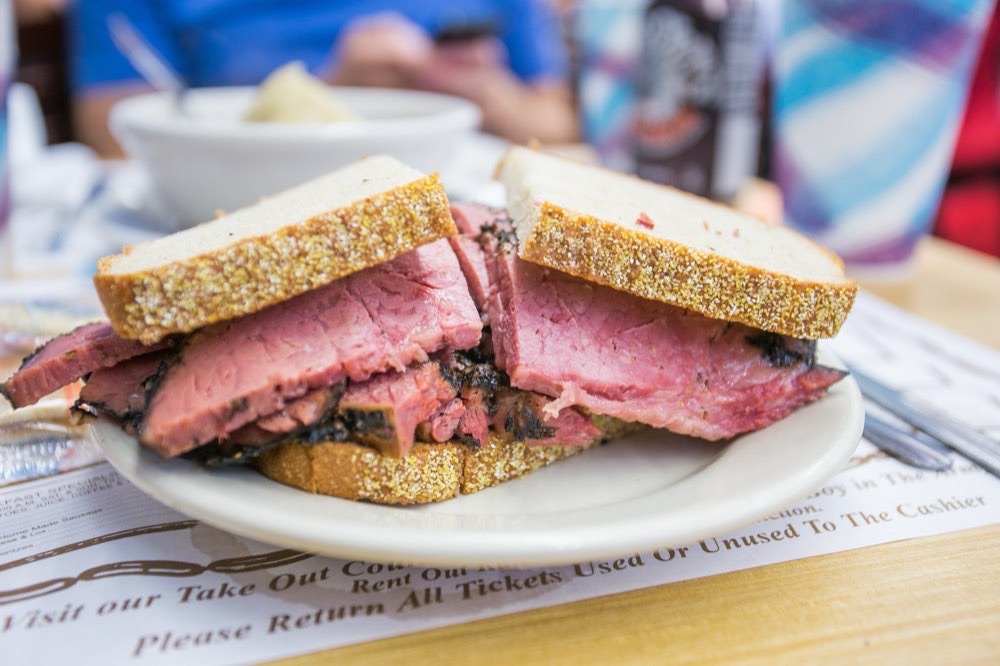
Hand-carved pastrami at Katz’s.
The lengthy preparation contrasts with the final steps that take place in front of customers. A carver takes the hot meat, cuts it by hand and layers the slices into a sandwich.
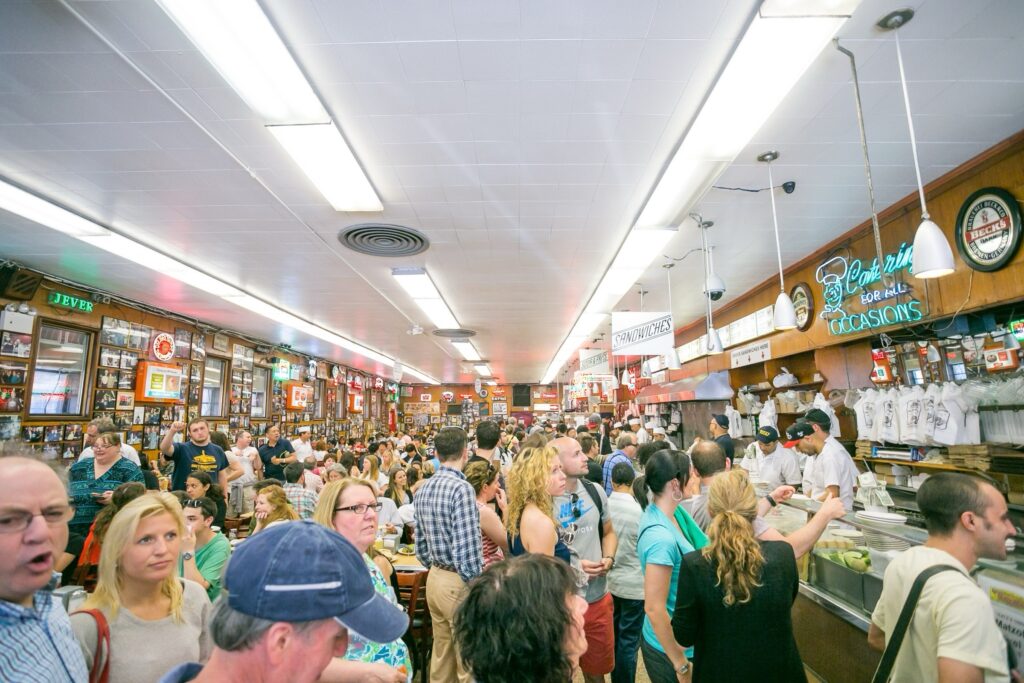
The line inside Katz’s Delicatessen.
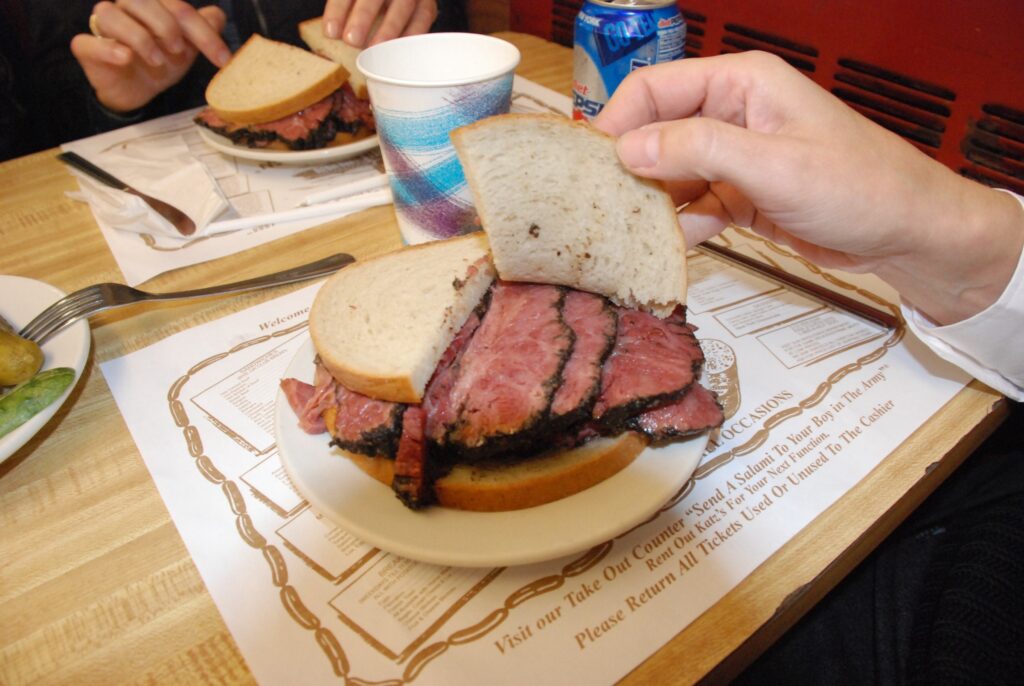
Katz’s serves its pastrami sandwiches on seedless rye bread with deli mustard. Pickles provide a crisp, tangy accompaniment.
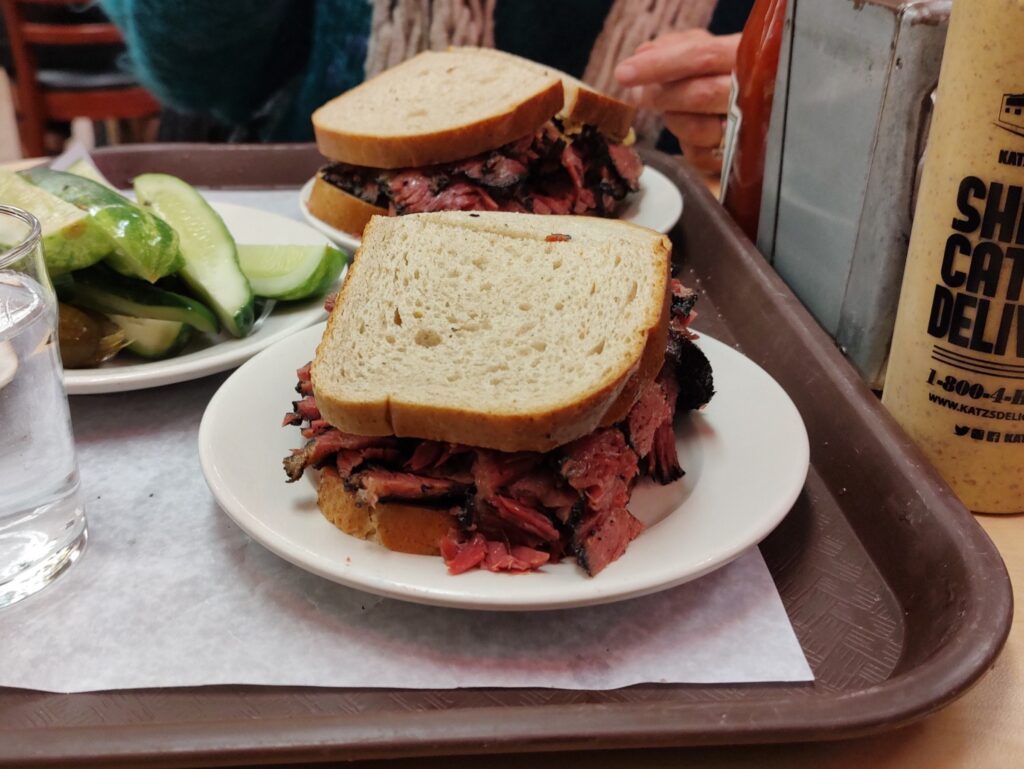
A pastrami sandwich at Katz’s.
The menu also includes corned beef, brisket, matzo ball soup and other deli staples.
A Delicatessen in Lower East Side History
Katz’s history dates to 1888, when the Iceland brothers established the original business. Willy Katz joined in 1903, followed by Benny Katz in 1910, who acquired the Iceland brothers’ interest. The Katz name gradually became the sole name of the delicatessen.
Through changes in ownership, the business remained part of the Lower East Side, a neighbourhood that was home to many of New York’s immigrant communities in the early twentieth century. Katz’s also became connected with the area’s Jewish cultural history.
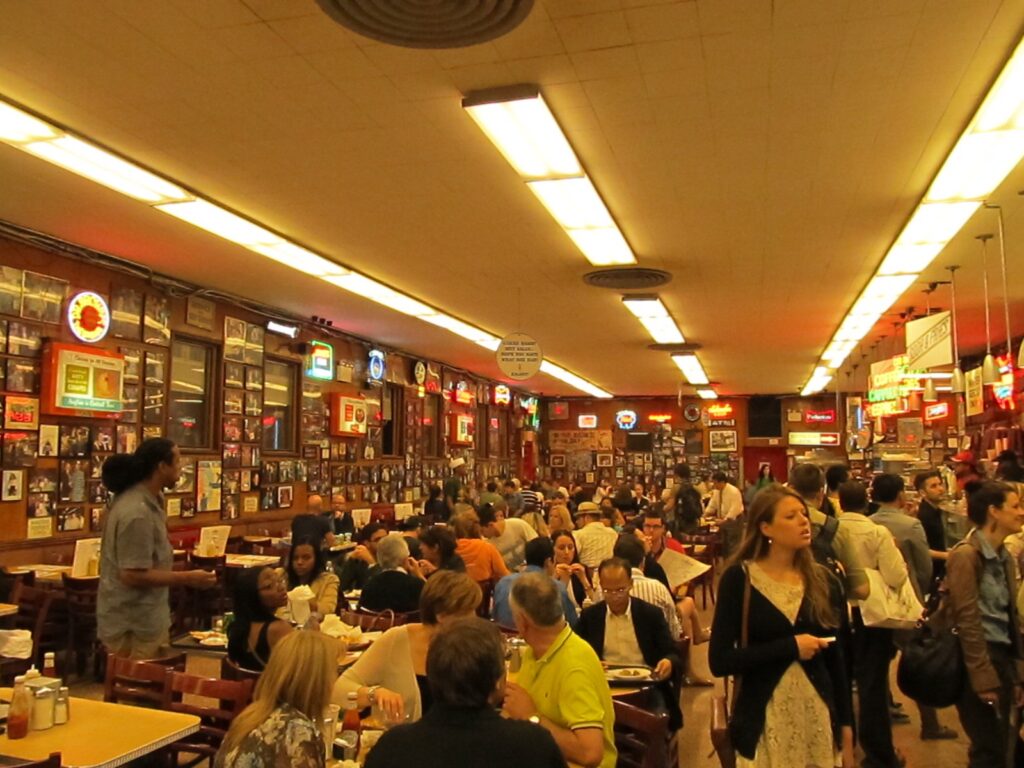
Inside Katz’s Delicatessen.
According to historical accounts shared by the restaurant, Katz’s was once a gathering place for actors, singers and comedians from the Yiddish theatre scene. Photographs on the walls today preserve glimpses of the people who have visited over the years.
Another story dates to the Second World War. When the sons of the family that owned the delicatessen entered military service, the family sent them salami. The tradition gave rise to the enduring slogan: “Send a salami to your boy in the army.”
The Paper Ticket and a Visit to Katz’s
One detail that can surprise first-time visitors is the paper ticket handed out at the entrance.
Katz’s uses the ticket to keep track of food ordered at the counter. Staff mark it as customers collect their orders, and diners retain it throughout the meal before presenting it when they pay, following the restaurant’s instructions.
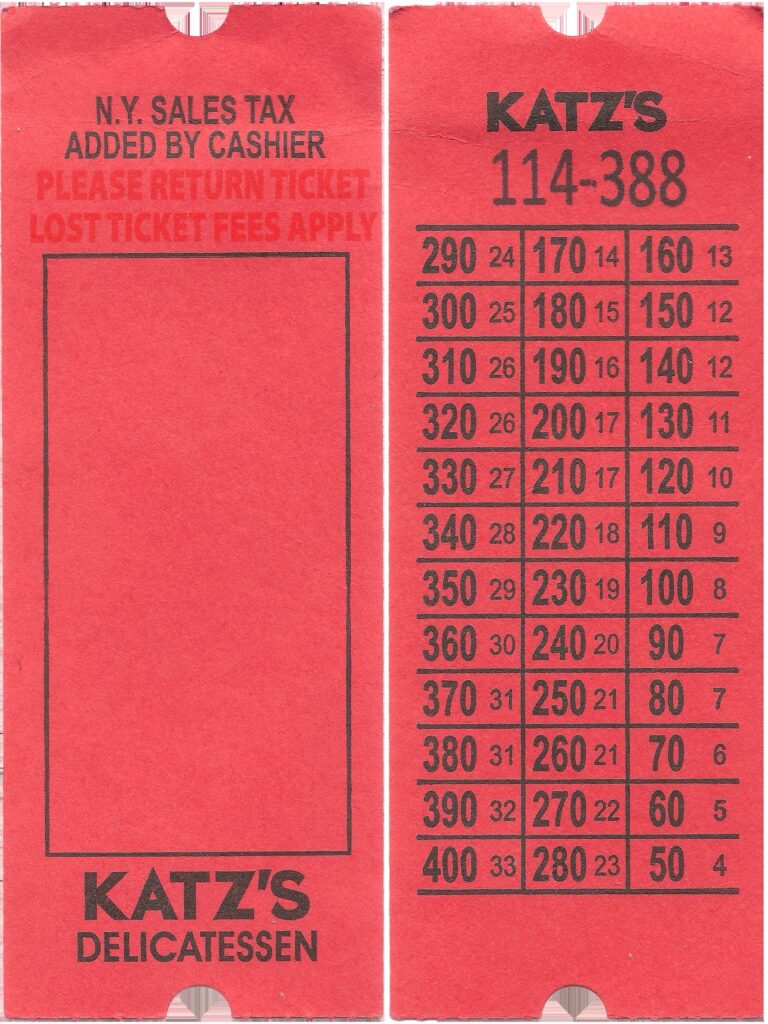
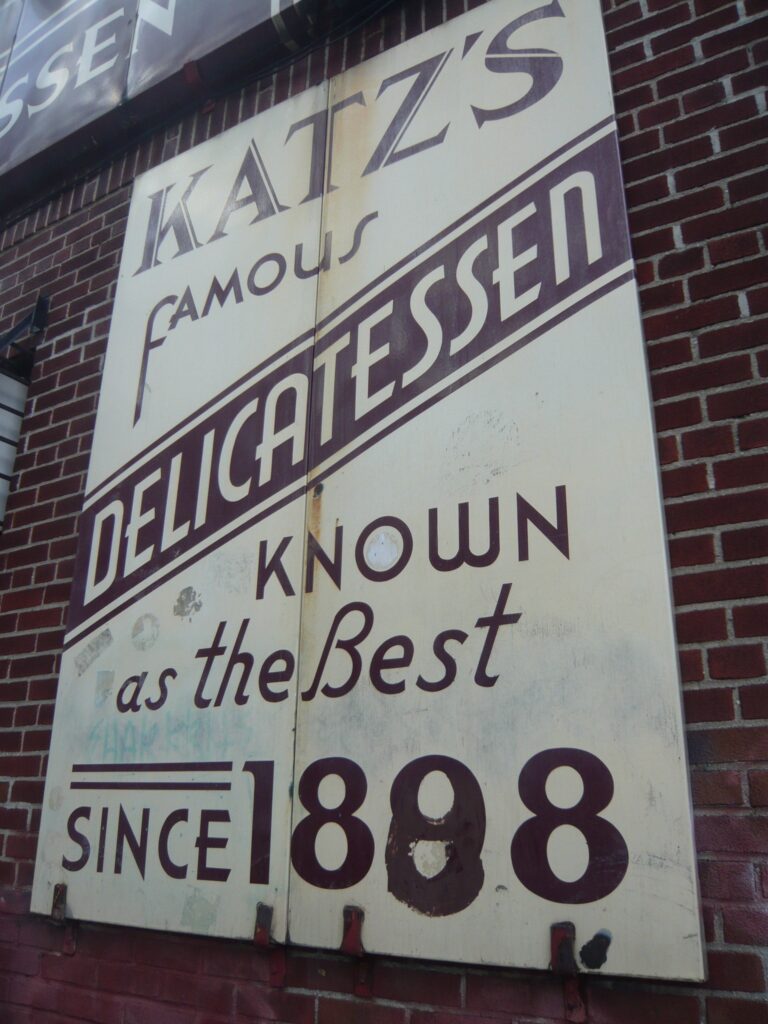
A paper ticket and the sign at Katz’s Delicatessen.
This differs from restaurants where customers order, eat and receive a bill at their table. At Katz’s, the ticket is part of the way counter service and payment are organised, and has become a recognisable feature of the experience.
The carving counter is a natural starting point for visitors who have come specifically for pastrami. Other service options are also available, so first-time customers can follow the signs or ask staff how to order.
Opening hours may vary on public holidays. It is worth checking the current arrangements for the Houston Street location before visiting.
At Katz’s, pastrami takes weeks to prepare before it is carved and tucked into rye bread. The sandwich itself may disappear in a fraction of that time. The little paper ticket, meanwhile, stays with the customer until the very end of the visit.
Sources: Katz’s Delicatessen
Image source: Wikipedia