The Train
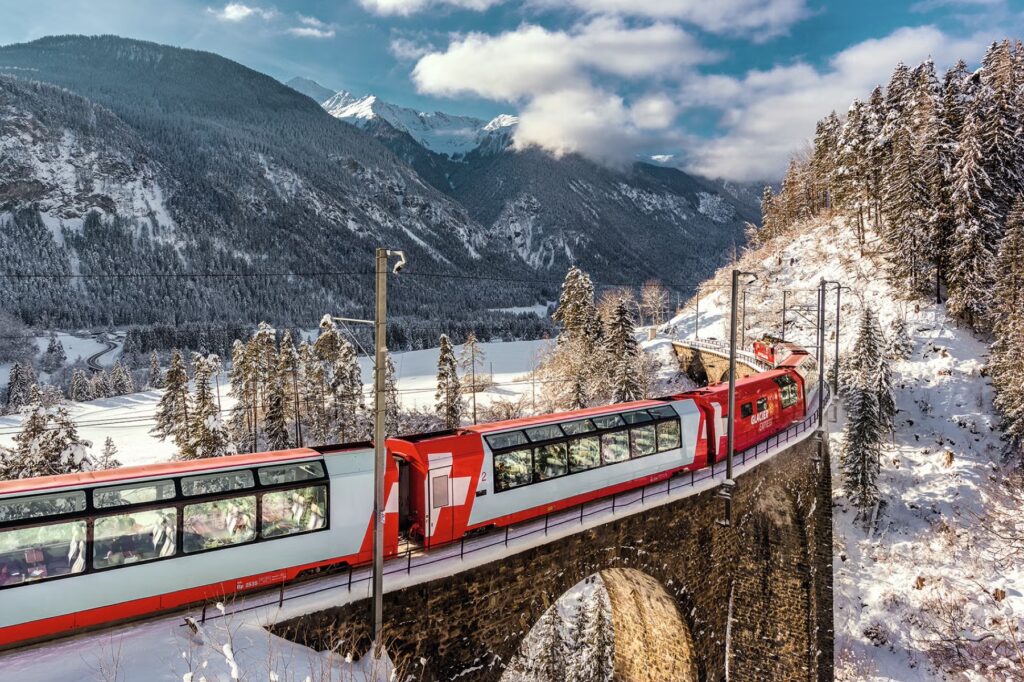
At the Oberalp Pass, the Glacier Express reaches an altitude of 2,033 metres above sea level. Mountain slopes stretch out on either side as the train follows the contours of the terrain towards the valleys below.
First introduced in 1930, the Glacier Express connects two of Switzerland’s best-known mountain resorts through a network of Alpine railways. Along the way, the train crosses high mountain passes, follows gorges and travels over engineering works built to negotiate the Alpine terrain.
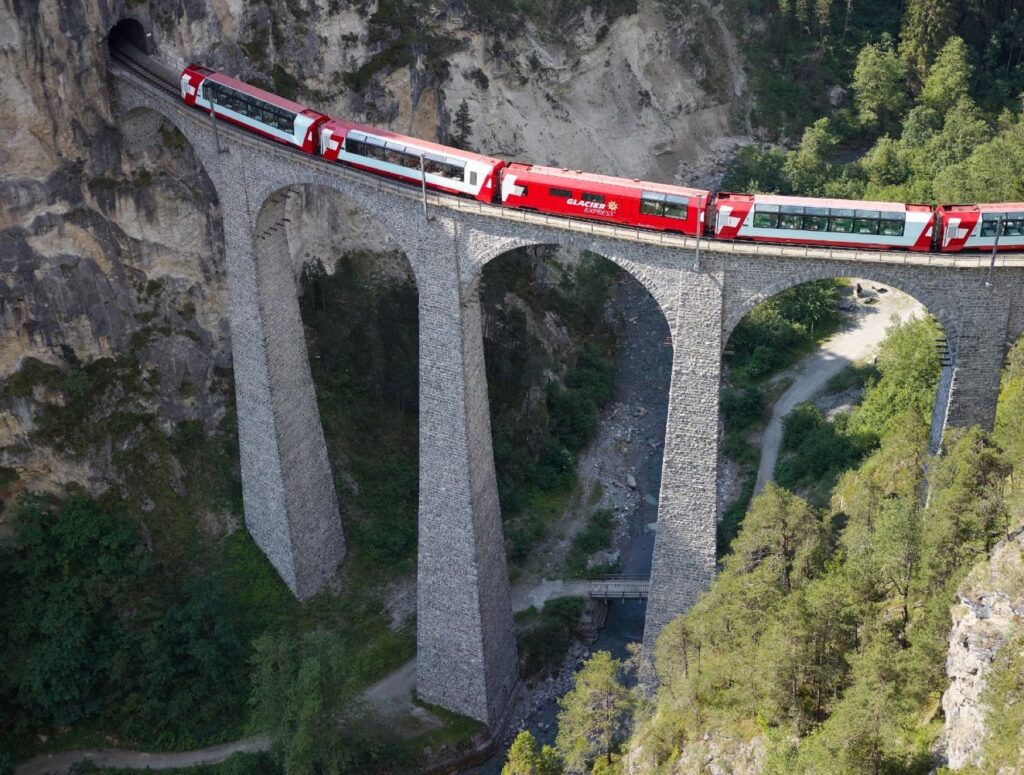
The Landwasser Viaduct.
The full route between Zermatt and St. Moritz covers approximately 291 kilometres and takes nearly eight hours. Its operator describes it as “the world’s slowest express train”.
The word Express might raise a smile. On this particular railway, however, the time spent travelling is part of the appeal.
The Route
Zermatt lies beneath the Matterhorn, one of Switzerland’s most recognisable mountains. From here, the Glacier Express travels through Brig and Andermatt before reaching the Oberalp Pass, the highest point along the route.
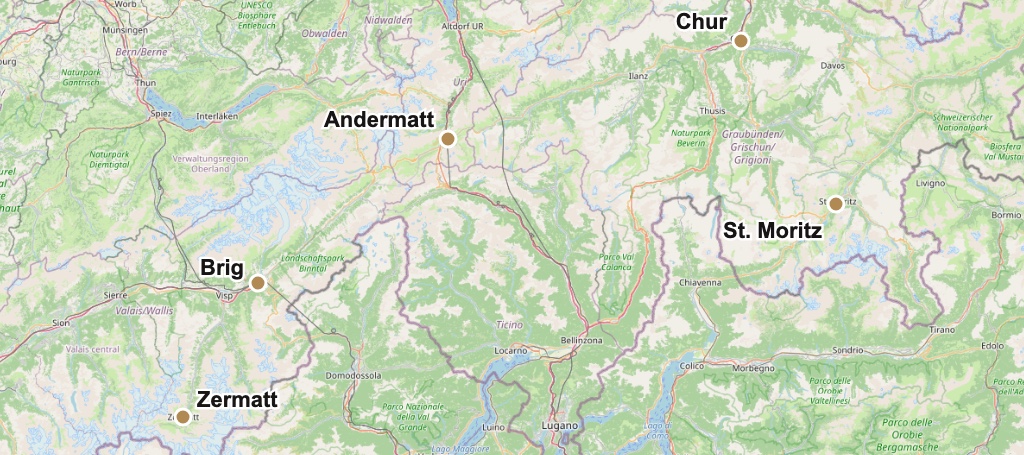 © OpenStreetMap contributors
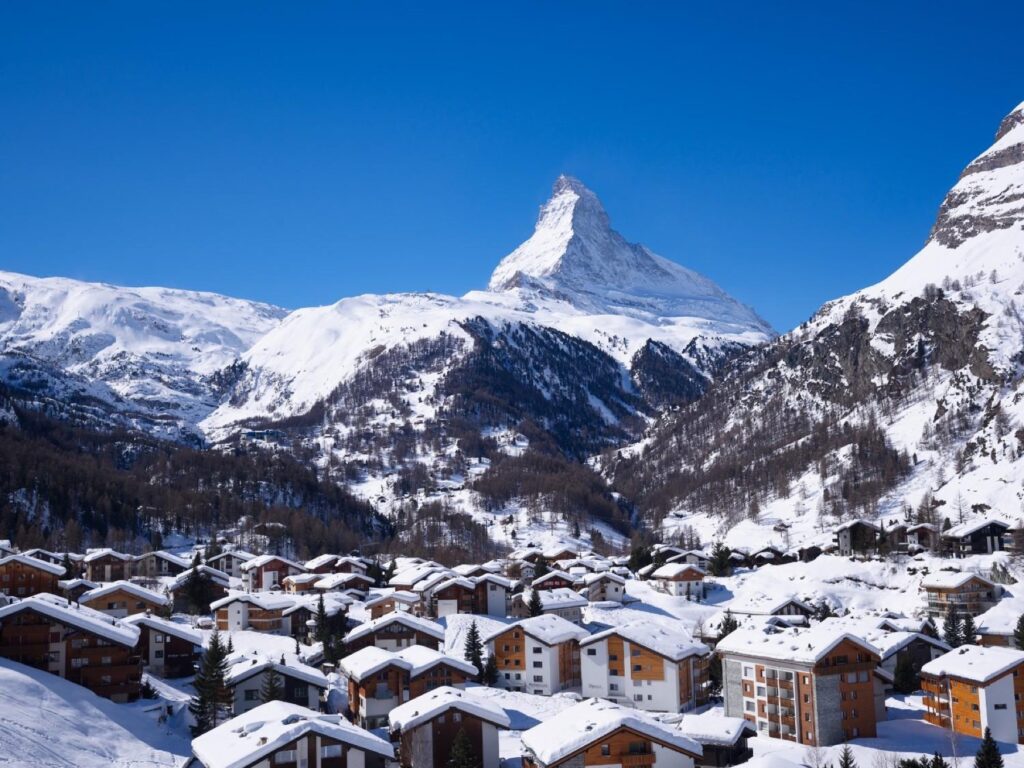
Zermatt and the Matterhorn in winter.
The landscape changes considerably along the way. Broad valleys, meadows and mountain villages gradually give way to higher slopes. In places, the railway runs between steep mountainsides. Elsewhere, the view opens towards the valleys far below.
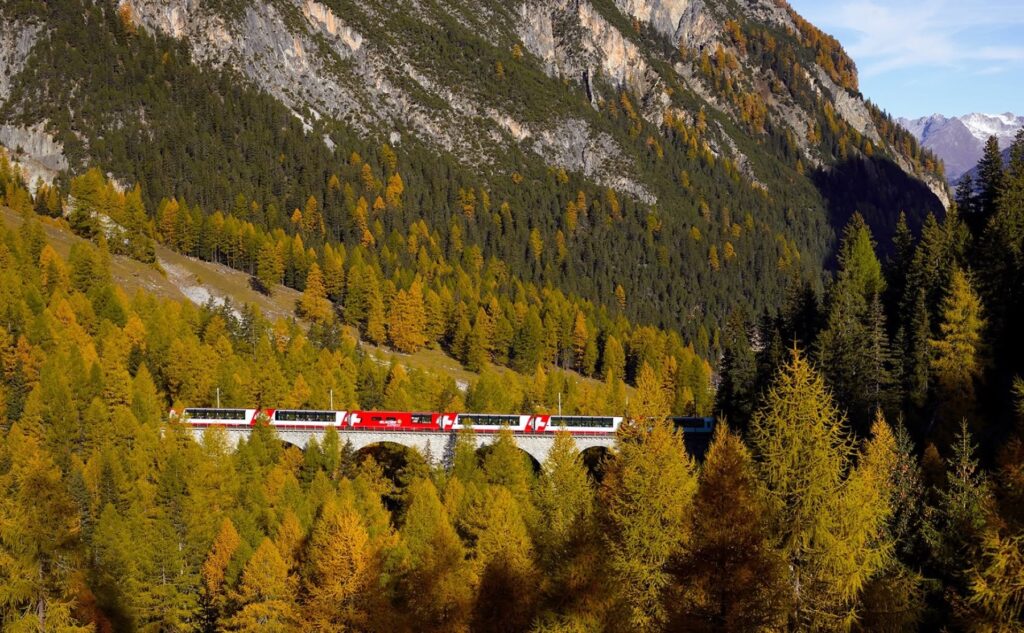
The Glacier Express among autumn larches.
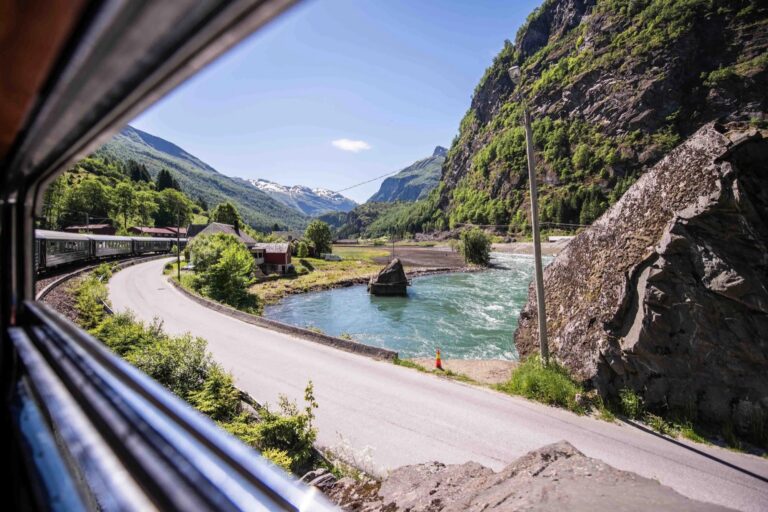
Beyond Oberalp, the train continues towards the Rhine Gorge, where the Rhine flows between pale rock formations. The railway follows the river through the gorge, creating one of the journey’s most distinctive scenic stretches.
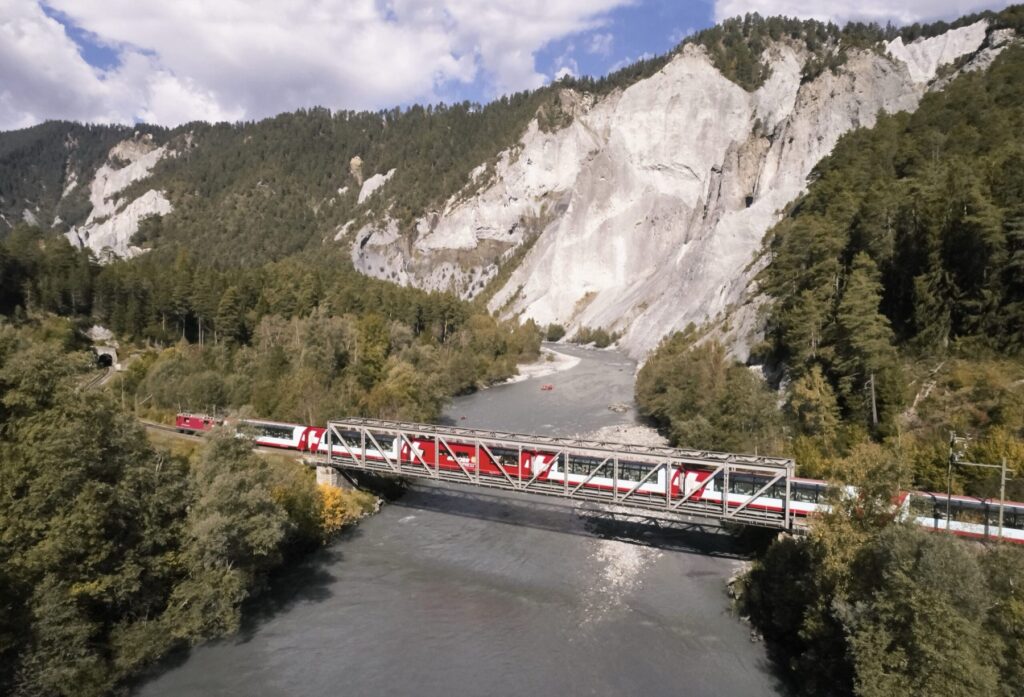
The Rhine Gorge.
From Chur, the route continues towards St. Moritz along the Albula Railway, where bridges and tunnels form an integral part of the mountain landscape.
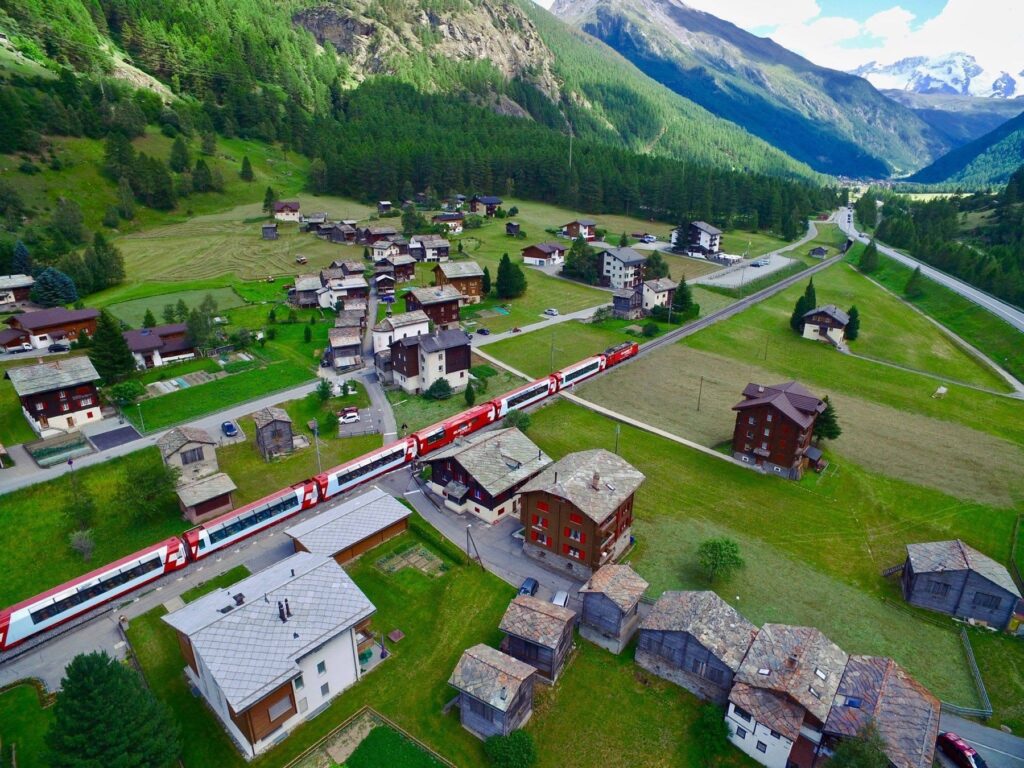
The train passing through a mountain village.
The most recognisable of these structures is the Landwasser Viaduct. Six stone arches carry the railway across a valley before the line enters a tunnel cut into the mountainside. The viaduct belongs to the Albula line, part of the UNESCO-listed Rhaetian Railway heritage site.
Landwasser is often photographed from a distance, with a train curving across the stone arches against a backdrop of forested mountains. From inside the carriage, the perspective is quite different. Passengers cross the viaduct itself before the train enters the tunnel.
This is one of the defining qualities of the Glacier Express. Passengers need not leave the train to visit each landmark. The valleys, gorges, bridges and tunnels are all part of the railway itself.
Life Onboard
The Glacier Express is designed for daytime travel, with passenger accommodation centred on enjoying the scenery along the route.
Both First and Second Class feature panoramic carriages. Large windows extend towards the roof, offering expansive views, particularly where the train passes through narrow valleys or alongside steep mountain slopes.
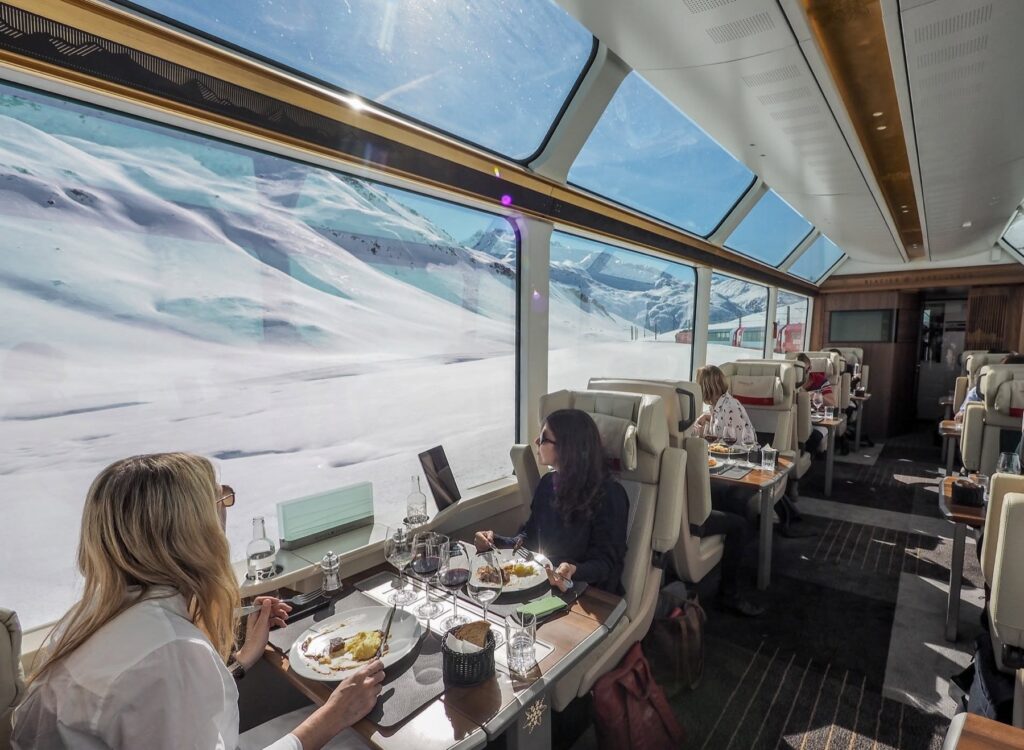
Dining in a panoramic carriage.
Meals are served at passengers’ seats, allowing them to dine while the landscape continues to unfold outside. Alongside First and Second Class, the train offers Excellence Class, with dedicated service and more upscale dining.
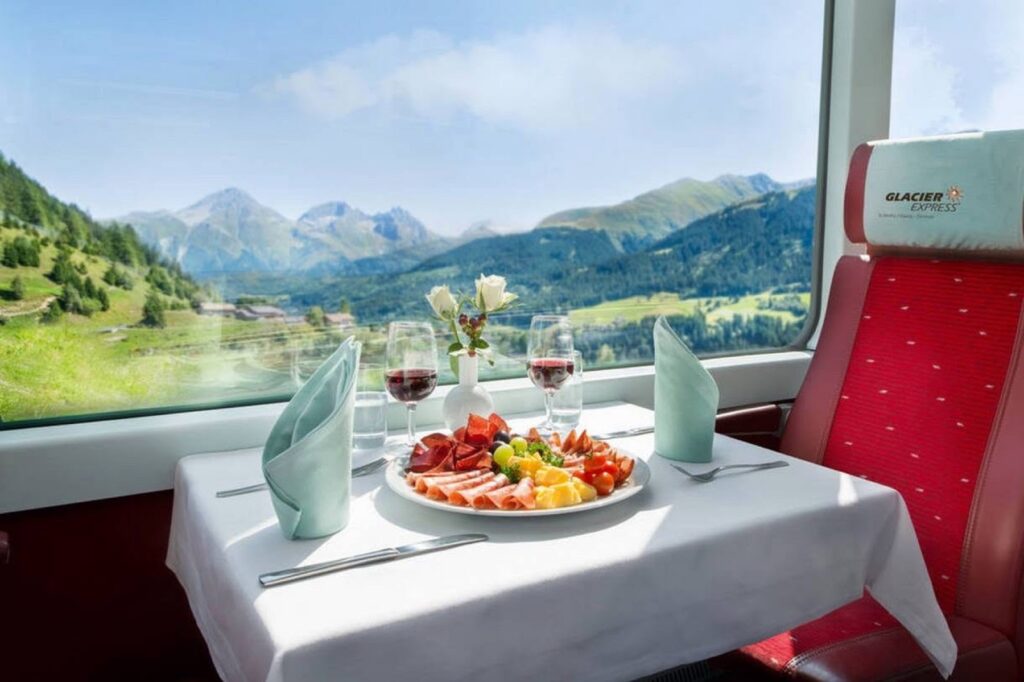
A table by the window.
Nearly eight hours onboard leaves ample time for lunch, conversation and long stretches spent simply watching the scenery pass.
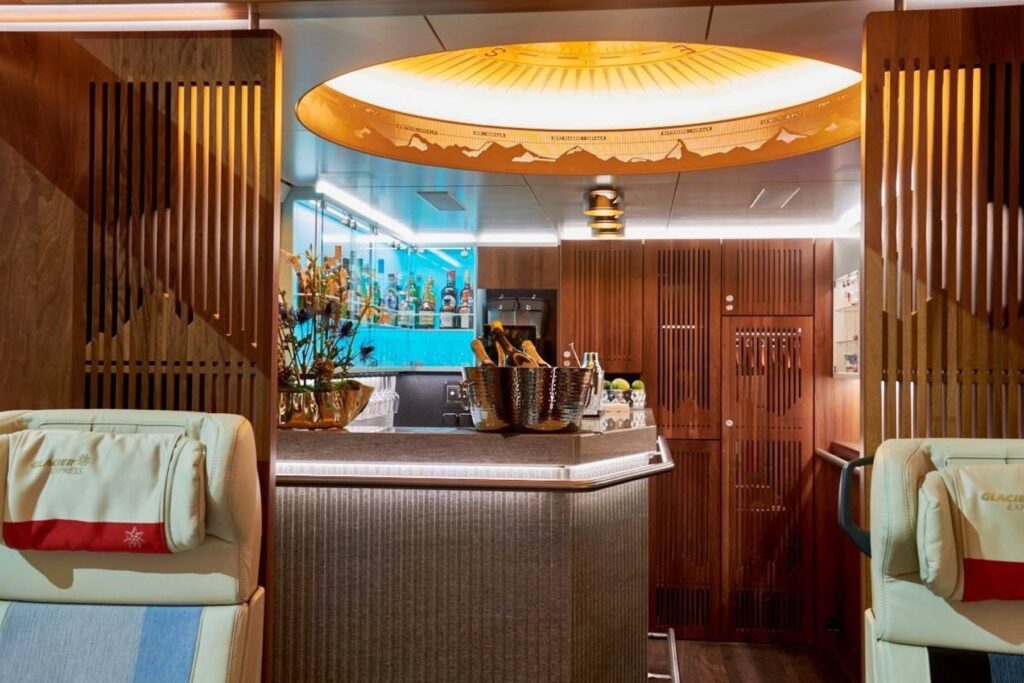
The bar.
Traveleak’s Take
The Glacier Express is well suited to travellers who want to spend much of a day discovering the Swiss Alps by rail, from high mountain passes to some of the region’s best-known bridges and tunnels.
Much of the experience lies just beyond the window.
Essential Information
- Operator
- Glacier Express AG
- Cabins
- Second Class, First Class and Excellence Class
- Journey Type
- Scenic Train Journey
Reservations & Contact
- Official Website
- glacierexpress.ch/en
- Reservations
- Glacier Express
Image source: Glacier Express