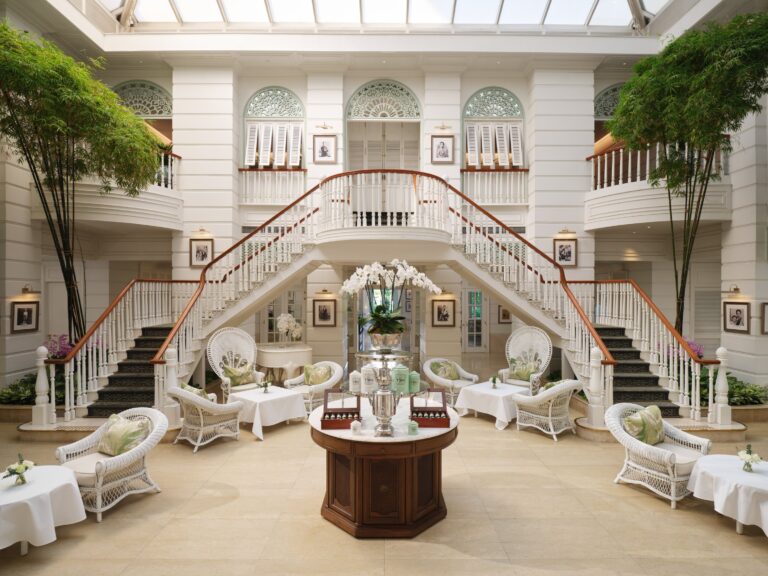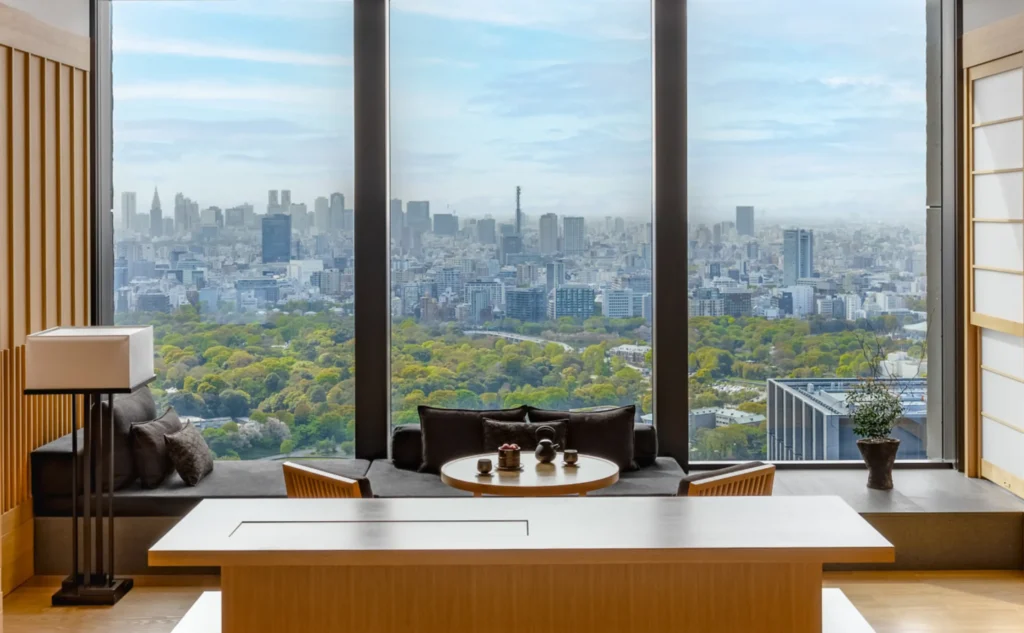
As the lift ascends through the office floors of Otemachi Tower, the city gradually recedes. The space opens into the hotel lobby, where light filters through panels of washi paper onto a small garden, a water feature and natural wooden surfaces. Outside, Tokyo continues at its usual pace. Inside, the architecture evokes the stillness of a traditional ryokan.
Opened in 2014, Aman Tokyo marked the brand’s first move into a major city. Rather than seeking seclusion in a natural setting, the hotel creates a sense of separation from urban life on the upper floors of an office tower.
The Backstory
Before Aman Tokyo, the Aman brand was primarily associated with relatively small resorts, where architecture was closely connected to the surrounding landscape and local character. Amanpuri, the first Aman resort, opened in Phuket in 1988 on a former coconut plantation. Developing a hotel in central Tokyo presented a different setting for the brand.
The hotel was designed by Kerry Hill Architects, a practice responsible for several earlier Aman properties. Aman Tokyo was the sixth hotel the firm designed for the brand. Kerry Hill Architects also designed Aman Kyoto, a ryokan-inspired retreat in northern Kyoto that opened in 2019.
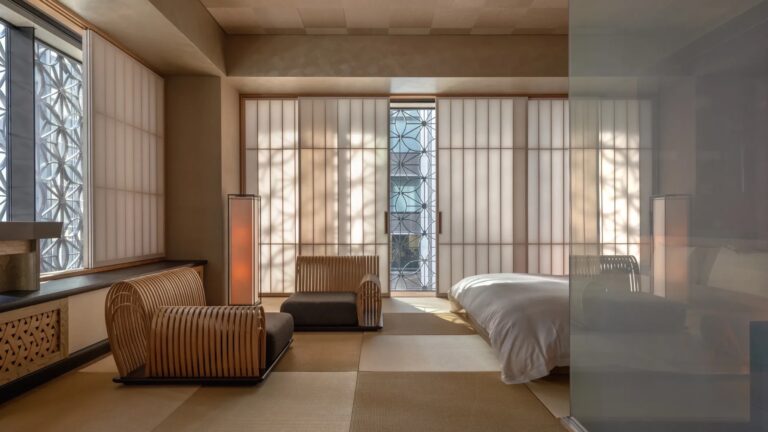
References to traditional architecture appear throughout the property, from the shoji-inspired structure of the lobby to washi paper, natural materials and a space recalling the traditional engawa. These elements are incorporated into a contemporary setting high above the streets of Tokyo.
The Setting
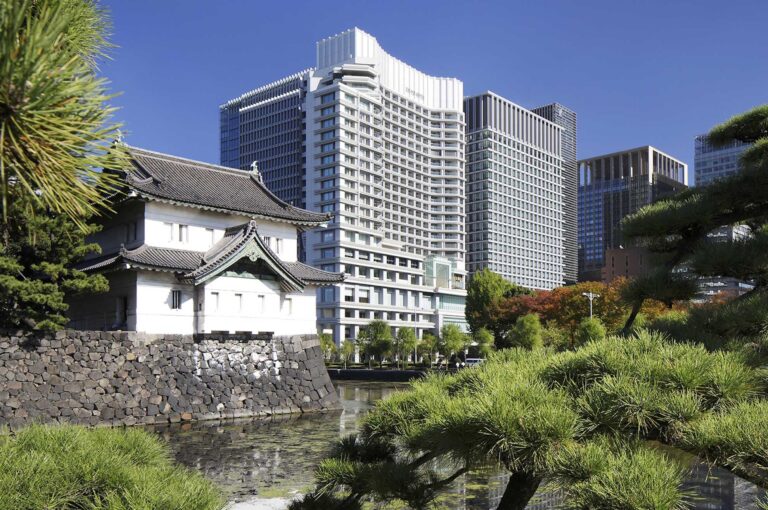
Aman Tokyo occupies the top six floors of Otemachi Tower in Otemachi, Chiyoda. Designed by Kohn Pedersen Fox, the tower stands near the Imperial Palace grounds and Tokyo Station.
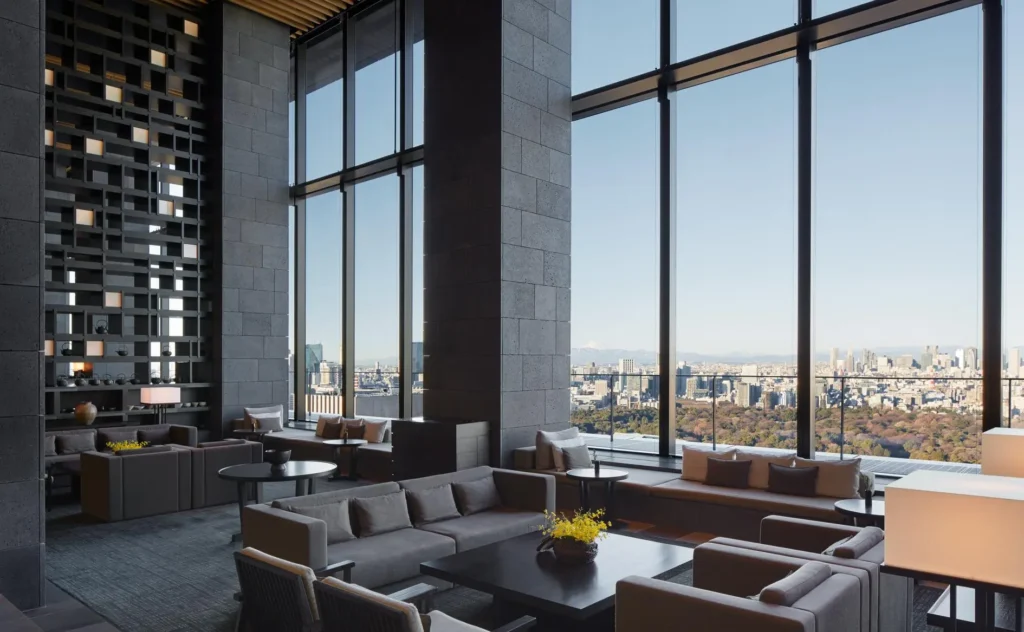
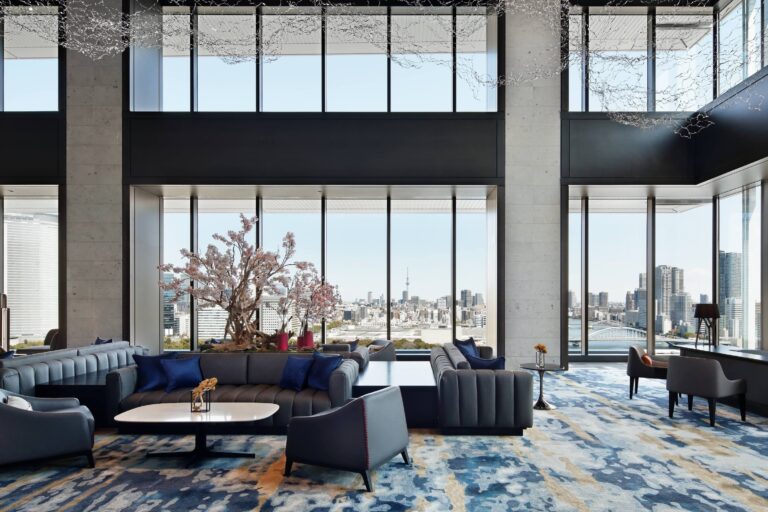
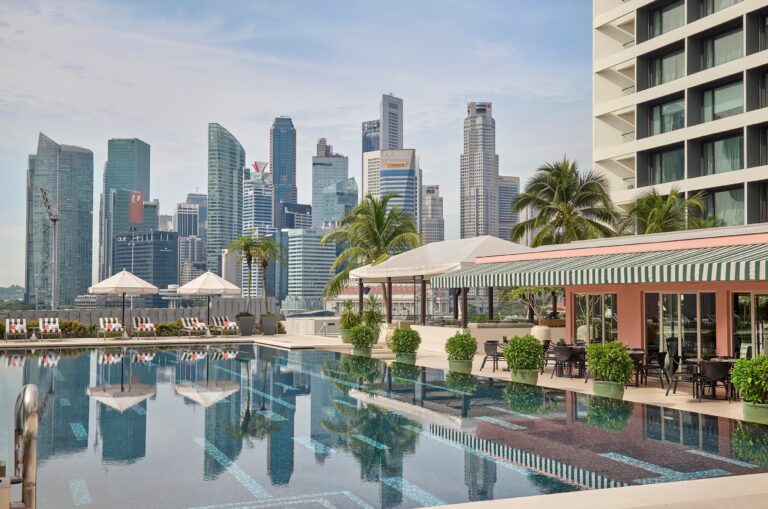
Tokyo skyline seen from the lounge
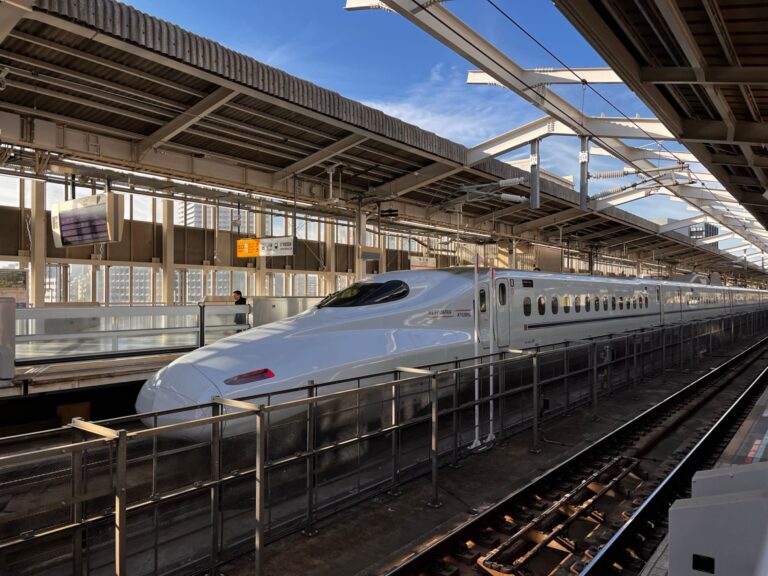
Otemachi is a business district characterised by office towers and corporate headquarters. The hotel connects directly to Otemachi Station, where five underground railway lines intersect, providing convenient access to other parts of the city. Also in Otemachi, HOSHINOYA Tokyo draws on the ryokan tradition, with tatami flooring throughout and an onsen open to the sky.
The location also shapes the experience of staying here. The immediate surroundings have the character of a financial district, while Tokyo’s shopping streets, restaurants and attractions can be reached by public transport.
Architecture & Design
The architectural centrepiece of Aman Tokyo is its nearly 30-metre-high lobby, conceived as an enormous lantern. Translucent washi paper panels are arranged over a wooden framework reminiscent of shoji screens, allowing light to enter the space softly and evenly.
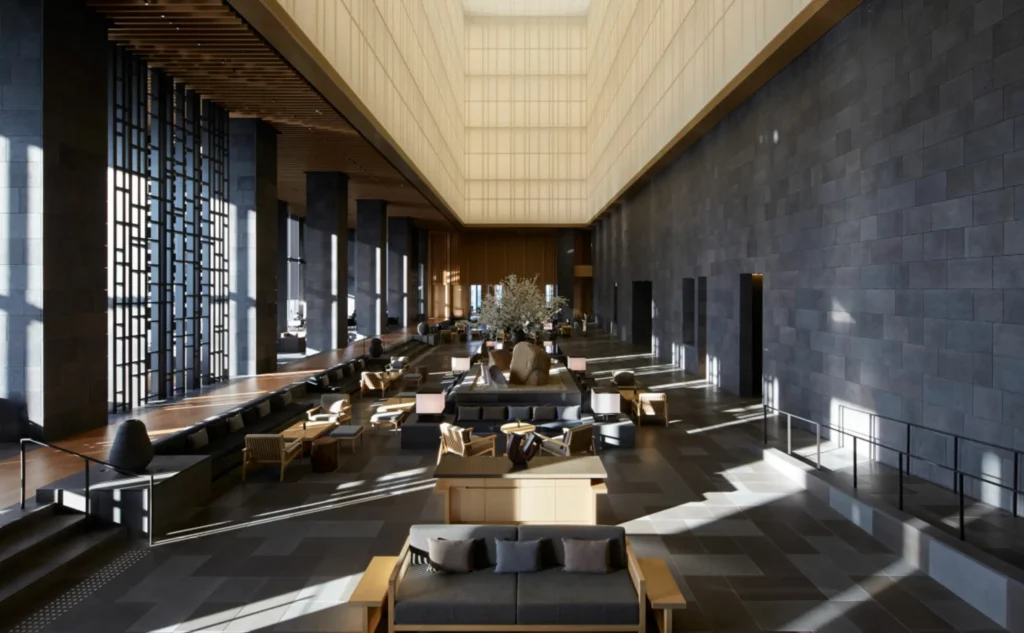
The lobby under a paper ceiling
Beneath this soaring volume are an indoor garden, a water feature, ikebana arrangements and a wooden platform inspired by the engawa, the veranda-like transitional space between the interior and garden of a traditional Japanese home.
The contrast between the glass and aluminium tower outside and the hotel’s interior is particularly evident here. One belongs to modern office architecture, while the other draws on materials and forms associated with traditional design.
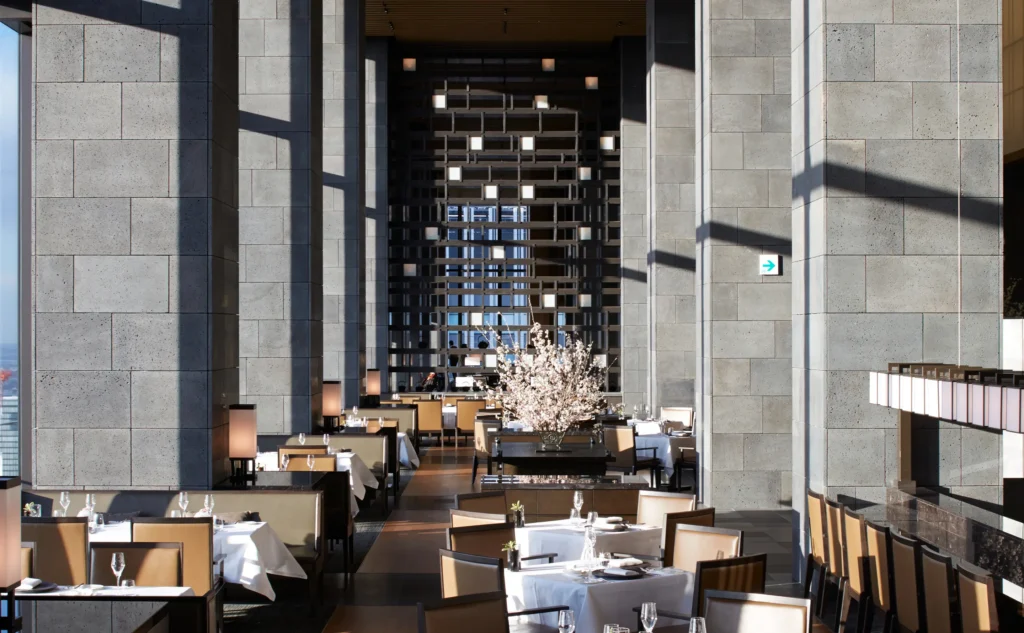
A dining room of stone columns
Wood, stone, washi paper and textiles continue throughout the hotel. Camphor wood and natural stone surfaces form the principal material palette, while light and open space bring balance to the architectural details.
The interiors do not rely on elaborate decoration. Much of their appeal lies in the proportions, the arrangement of materials and the way natural light changes throughout the day.
Rooms & Suites
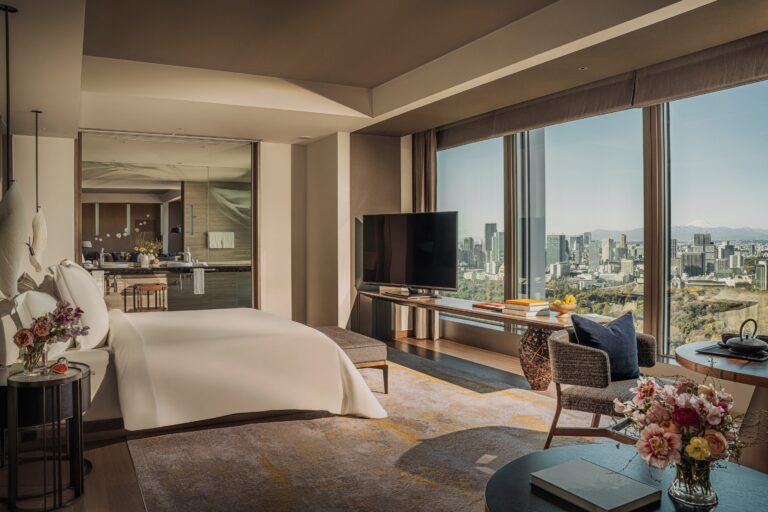
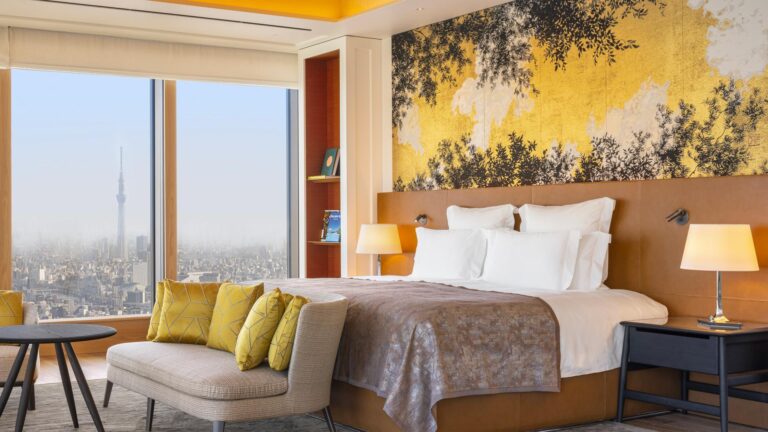
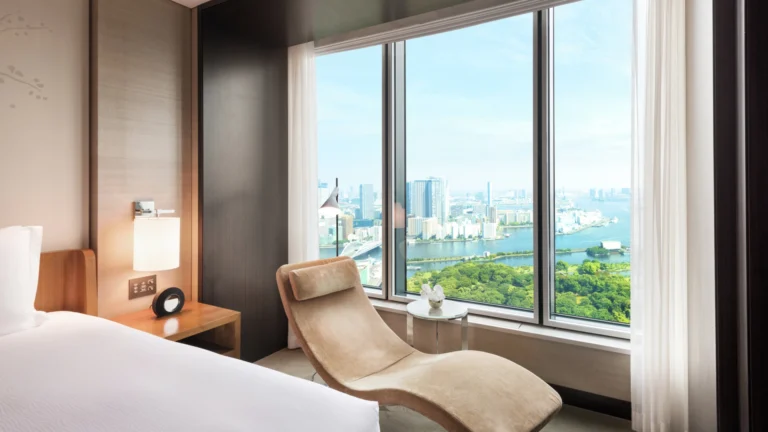
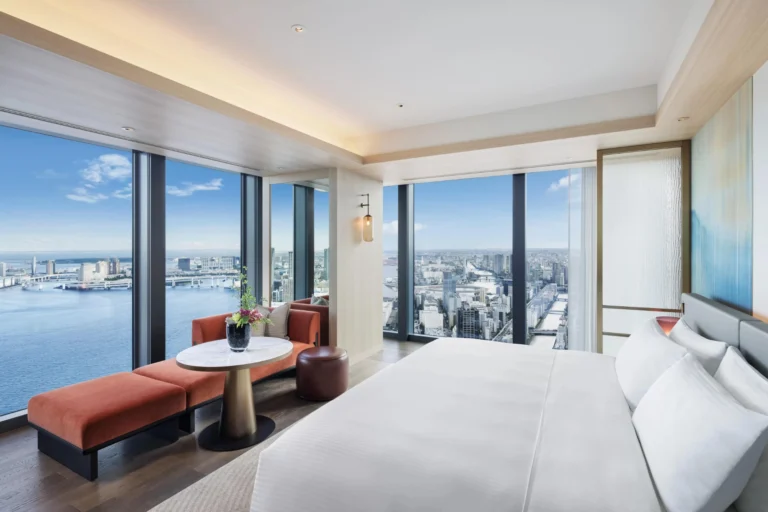
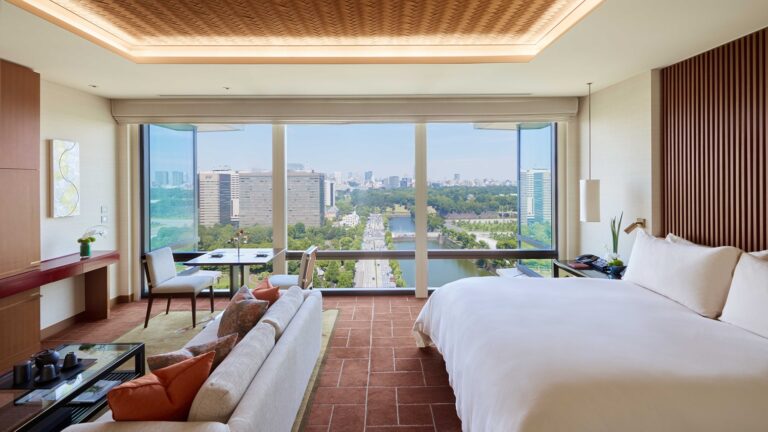
Aman Tokyo has 84 rooms and suites, designed with generous space, wood, stone and details inspired by traditional Japanese homes.
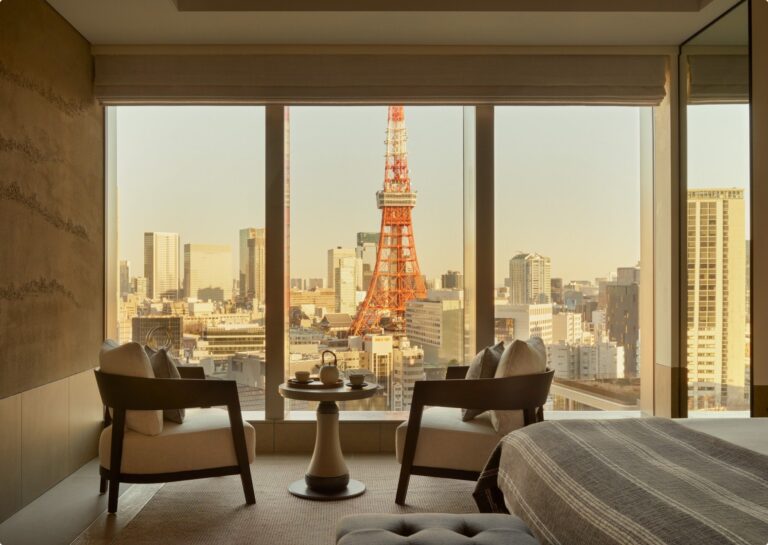
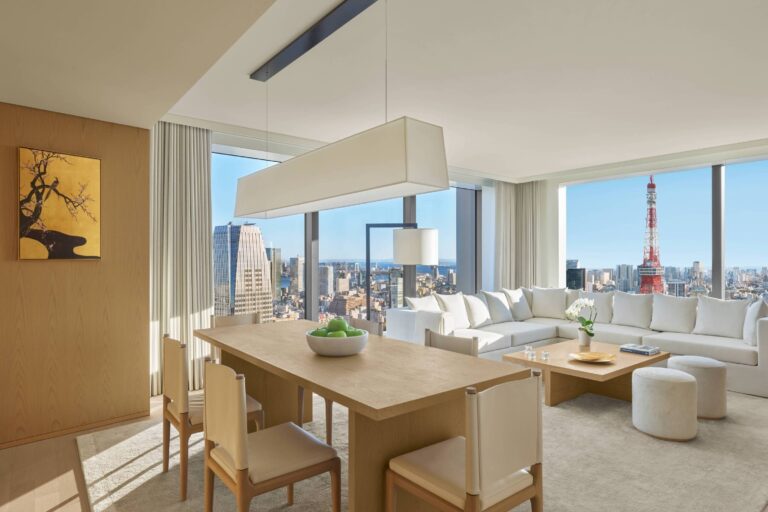
The suite categories differ in size, layout and outlook. At 157 m², the Aman Suite is the hotel’s largest, while the Grand Suite measures 141 m². The Panorama Suite, offering up to 139 m², occupies the corners of the tower and provides expansive views across the city.
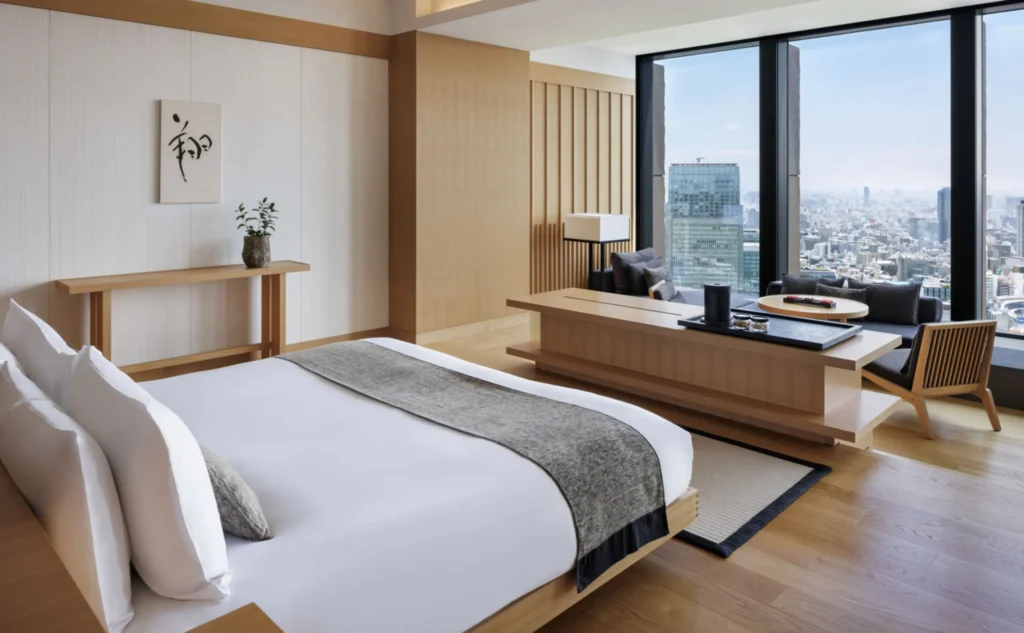
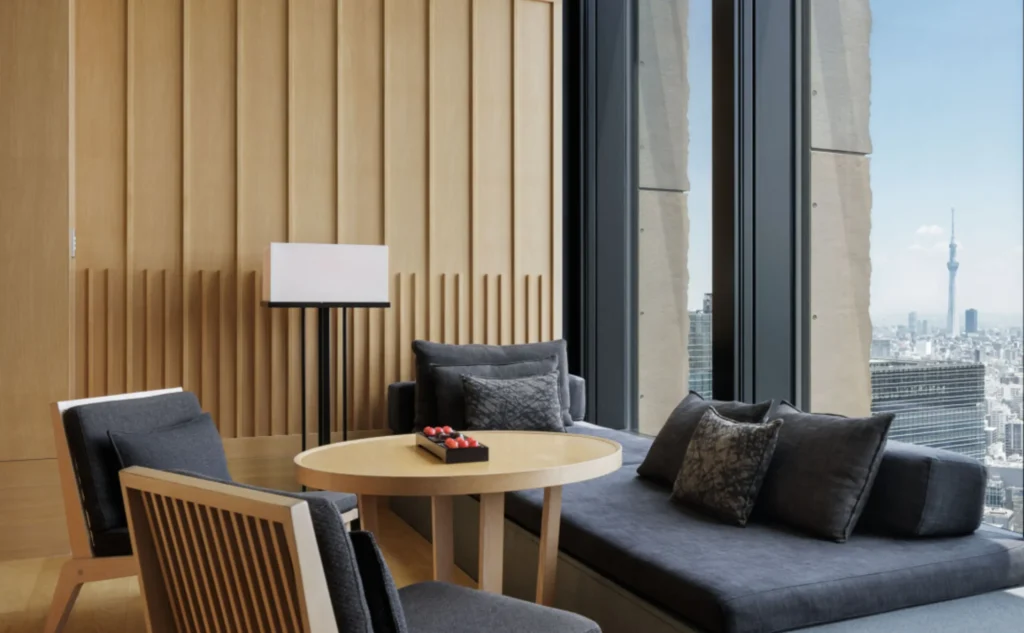
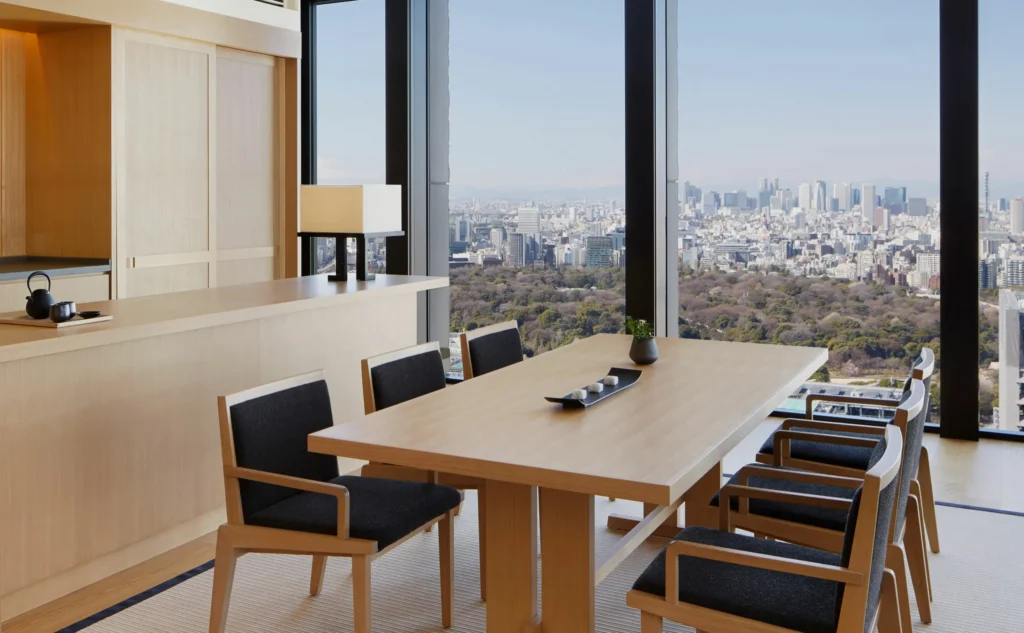
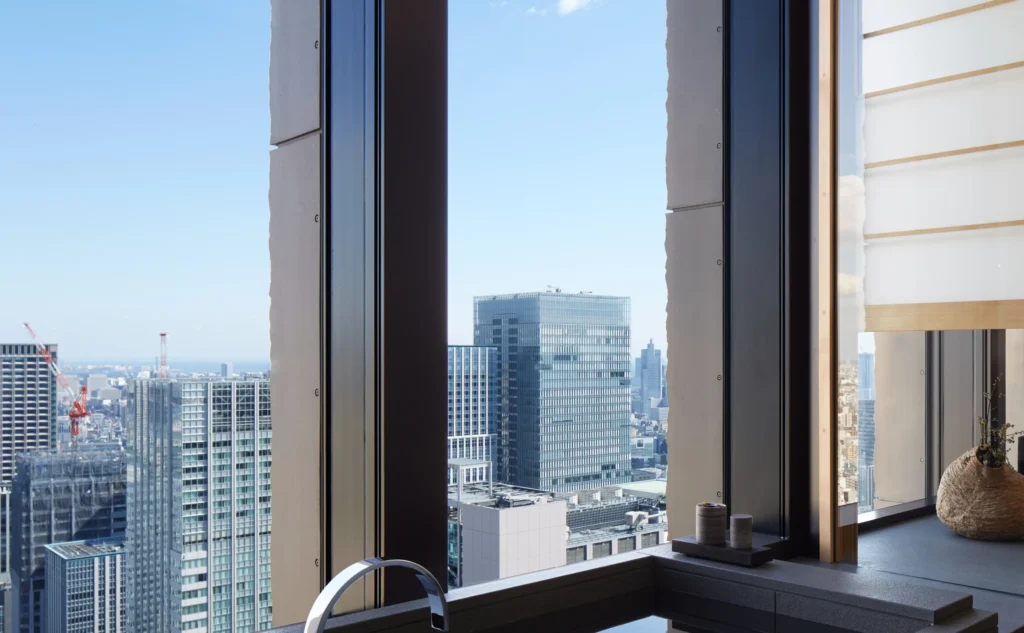
Many suites have a deep furo soaking bath, bringing a traditional bathing practice into contemporary accommodation.
From the upper floors of Otemachi Tower, some suites overlook the Imperial Palace Gardens. On clear days, Mount Fuji may also be visible in the distance.
Room orientation is therefore worth considering when booking, particularly for guests interested in seeing Tokyo at different times of day.
Dining
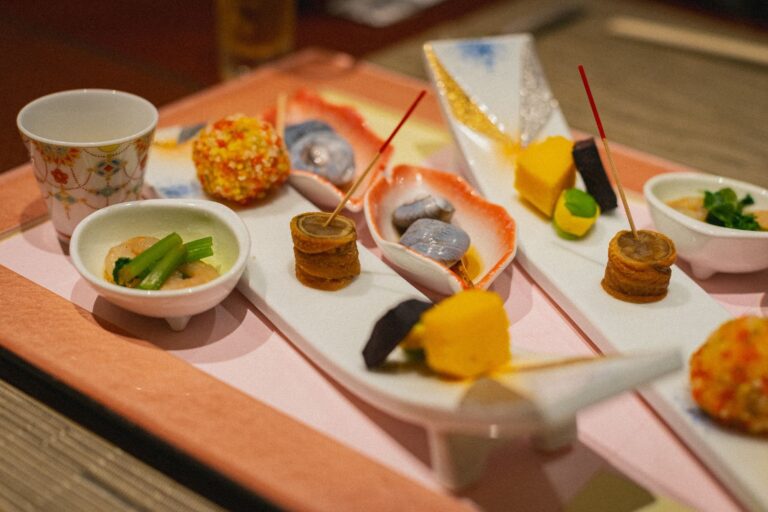
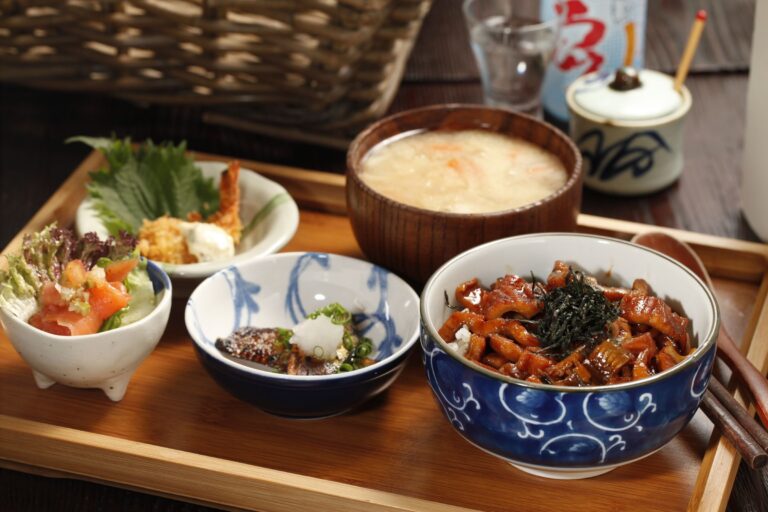
Dining at Aman Tokyo ranges from Italian cuisine to traditional Japanese sushi.
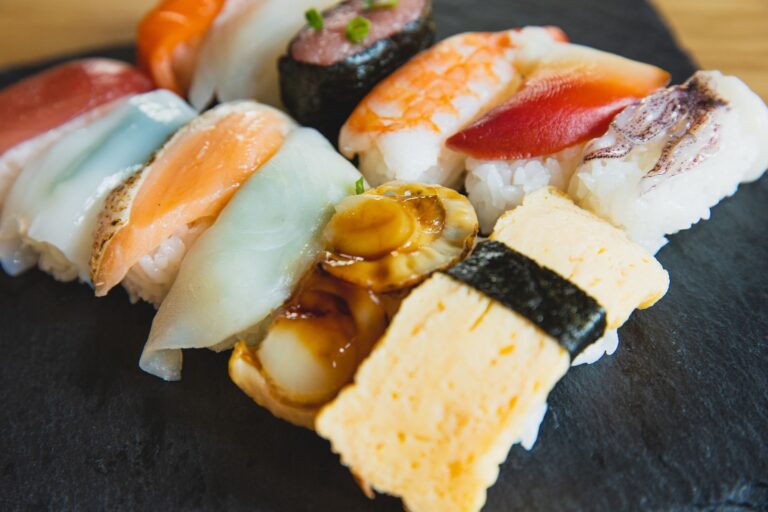
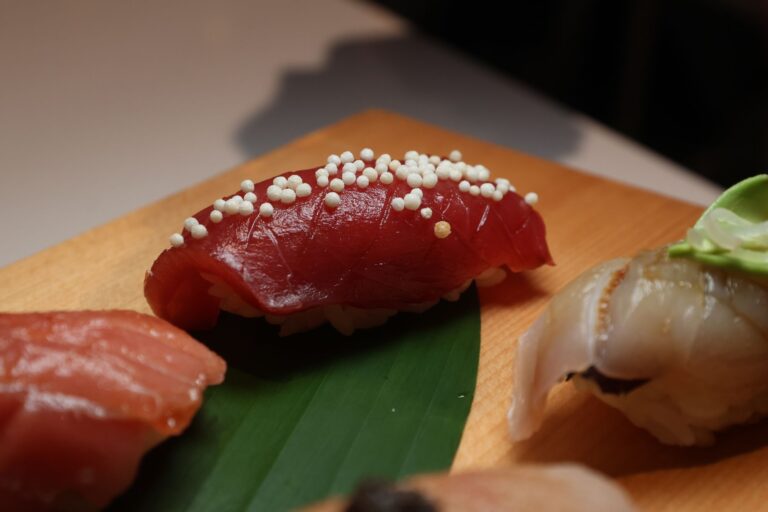
Arva serves Italian cuisine inspired by southern Italy. Musashi by Aman focuses on Edomae sushi served omakase-style, in a bright, intimate setting around a hinoki wood counter.
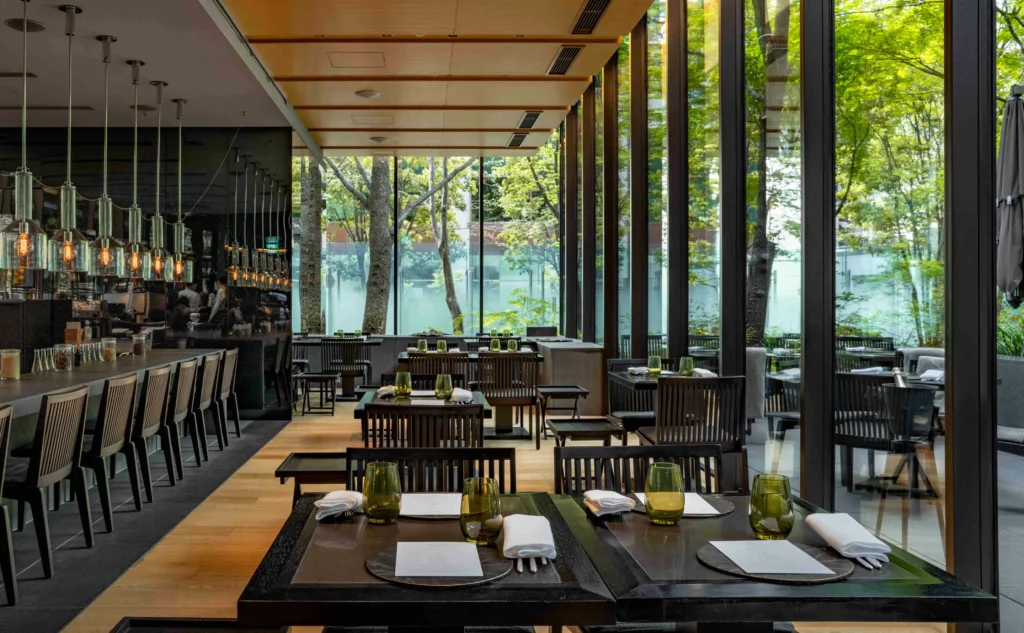
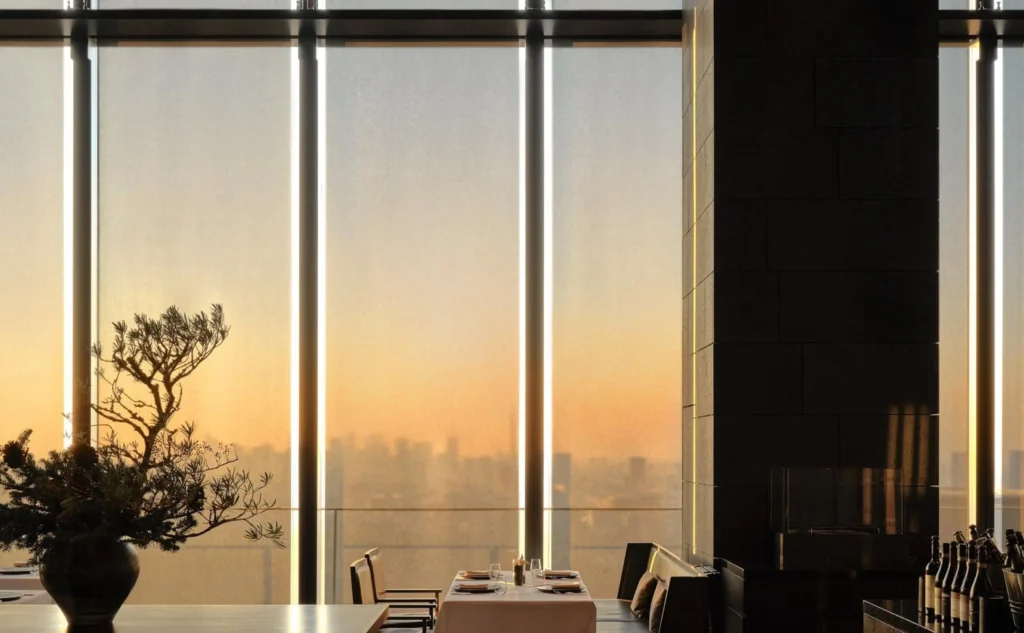
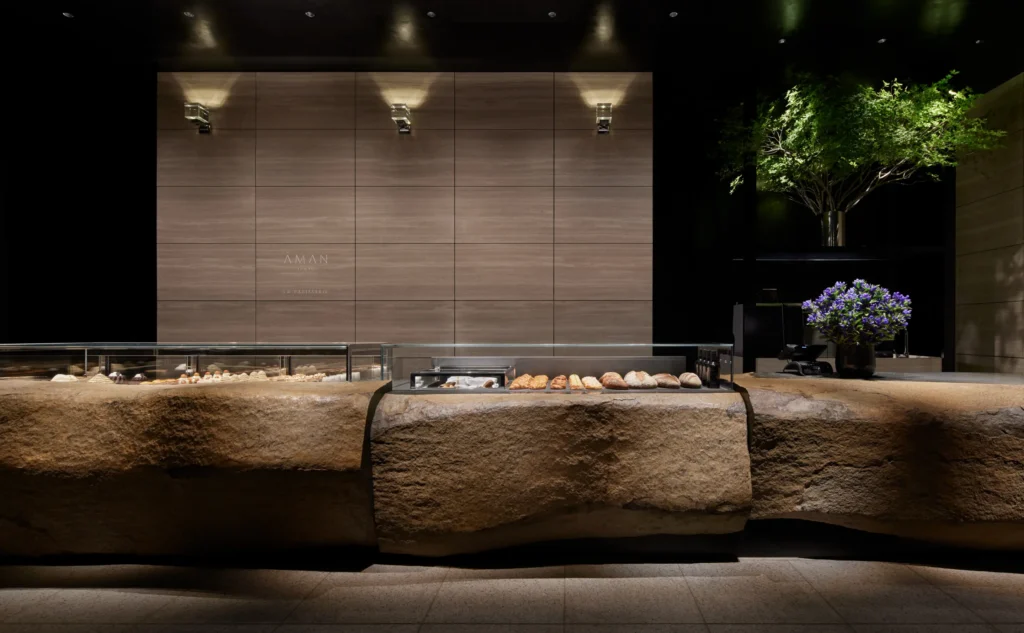
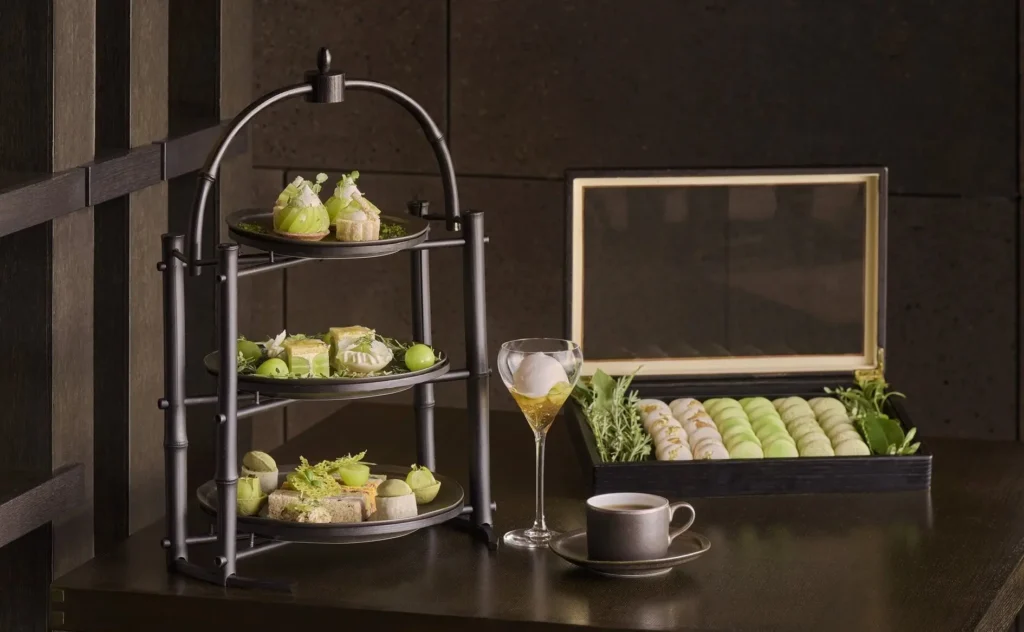
Elsewhere, The Lounge serves seasonal afternoon tea and cocktails. The Café sits among the greenery of Otemachi Forest at the foot of the tower, while La Pâtisserie is the hotel’s pastry shop on basement level B2.
Wellness
Aman Spa extends across two floors, covering approximately 2,500 m². The facilities include eight treatment rooms, a traditional Japanese bathing area, steam rooms and a 30-metre heated indoor swimming pool overlooking Tokyo’s skyline.
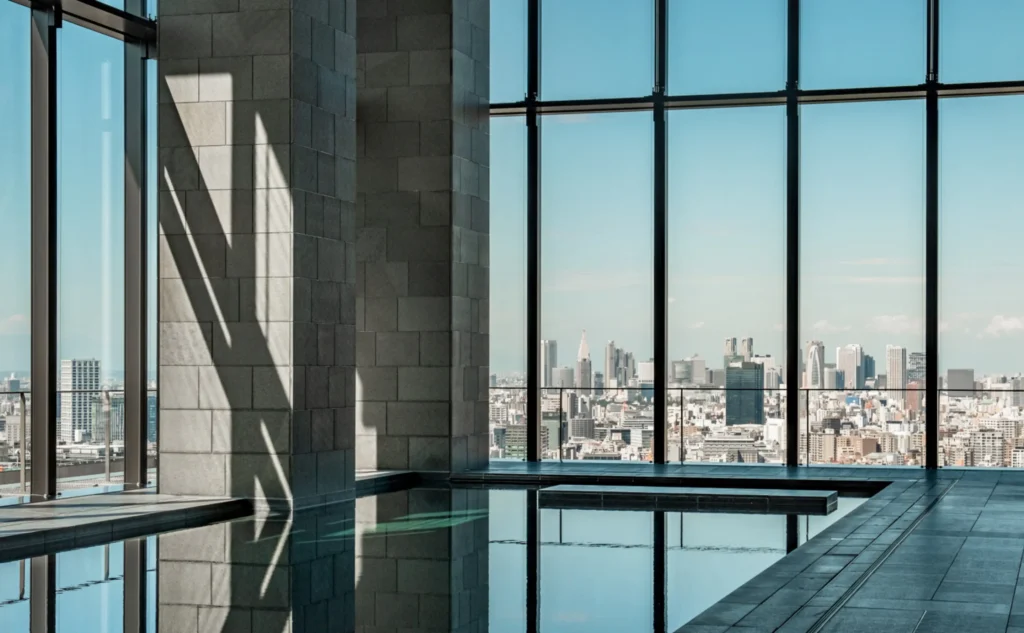
The indoor pool above Tokyo
Japanese cultural traditions are also reflected in the wellness experiences. One of the rituals introduced by the hotel is Misogi, a form of water purification associated with Shinto tradition.
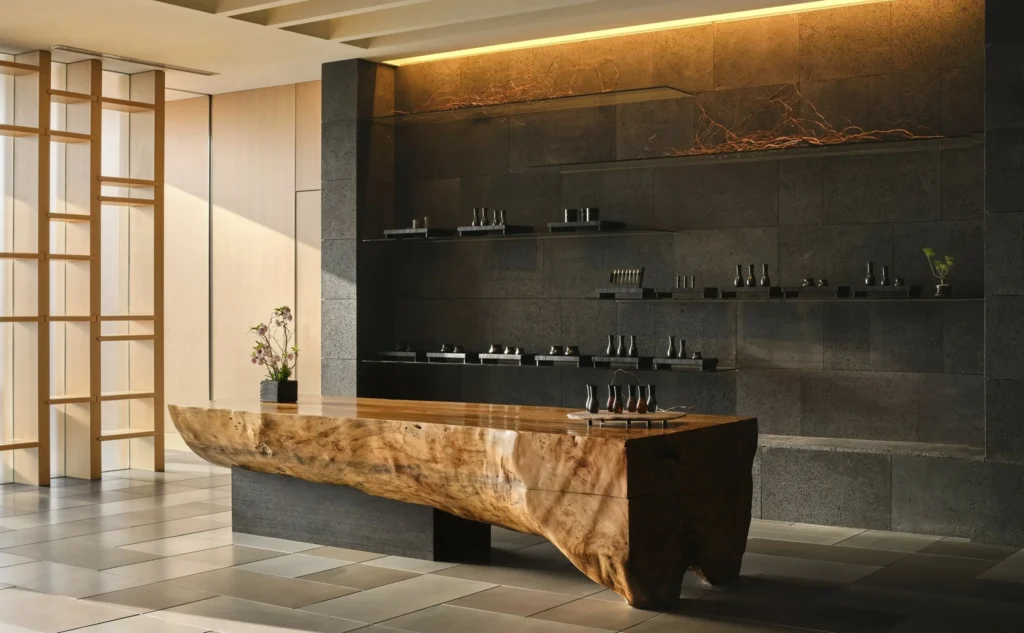
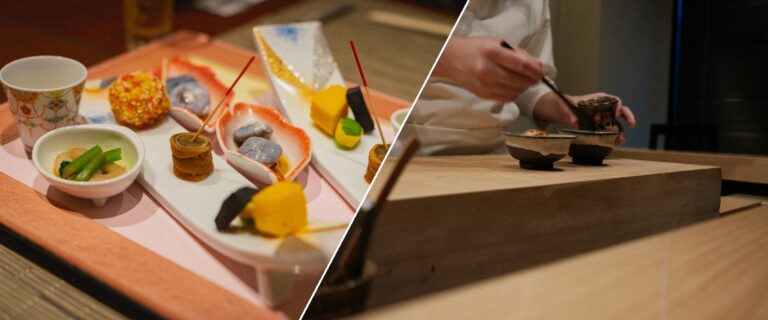
A timber counter in the spa
Treatments also incorporate ingredients such as camphor, kuromoji powder and Japanese clay. Alongside body therapies, the wellness programme includes activities such as zazen meditation and acupuncture.
Services & Experiences
Beyond the hotel’s facilities, Aman Tokyo introduces private experiences designed to help guests explore the culture and everyday life of the city.
Activities may include a visit to the Imperial Palace grounds through Ote-mon Gate, an introduction to the martial art of iaido, observing a training session at a sumo stable or taking a sunset cruise along the Sumida River.
For guests interested in the cuisine, the hotel also offers a private nigiri-making class at the hinoki wood counter of Musashi by Aman.
These experiences extend a stay beyond Otemachi, connecting guests with different aspects of Tokyo’s culture. Schedules and availability should be confirmed directly with the hotel.
Traveleak’s Take
Aman Tokyo is well suited to travellers seeking a peaceful hotel environment without sacrificing convenient access to the city. Its Otemachi location particularly suits guests who value transport connections over staying directly among Tokyo’s busiest shopping and entertainment districts.
In Traveleak’s view, the hotel’s most distinctive quality is the way traditional materials and architectural forms are incorporated into a modern high-rise building.
From the nearly 30-metre-high lobby to the use of washi, shoji, wood, stone and light, Aman Tokyo creates a contrast between the quiet interior of the hotel and the busy financial district below.
More hotels in Tokyo on Traveleak:
Park Hyatt Tokyo · Bulgari Hotel Tokyo
Palace Hotel Tokyo · Janu Tokyo
Four Seasons Hotel Tokyo at Otemachi · The Tokyo EDITION, Toranomon
mesm Tokyo · HOSHINOYA Tokyo
Image source: Aman
Essential Information
- Location
- Otemachi Tower, 1-5-6 Otemachi, Chiyoda-ku, Tokyo 100-0004, Japan
- Accommodation
- 84 rooms and suites.
- Dining
- Arva, Musashi by Aman, The Lounge, The Café, La Pâtisserie.
- Wellness
- Aman Spa, approximately 2,500 m², with a 30-metre indoor swimming pool and fitness facilities.
- Getting there
- Direct connection to Otemachi Station; approximately 40 minutes by car from Haneda Airport and 60 minutes from Narita Airport, depending on traffic.
Location Map
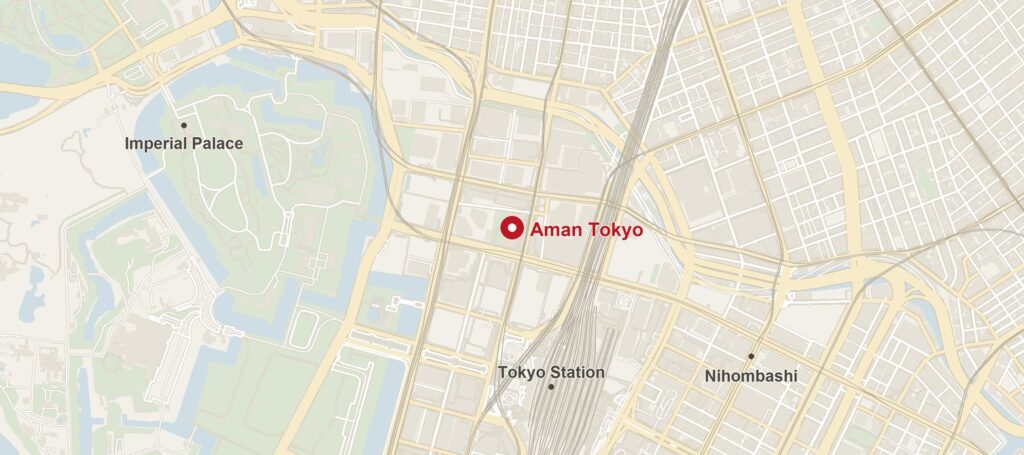 © OpenStreetMap contributors
Contact
Otemachi Tower, 1-5-6 Otemachi, Chiyoda-ku, Tokyo 100-0004, JapanOfficial Website aman.com/hotels/aman-tokyo
Rates via Trip.com
Some links on this page are affiliate links. If you make a booking through them, Traveleak may earn a small commission at no additional cost to you.