A flight across the Pacific does more than bring passengers to another city. Sometimes, it changes how they reach destinations farther away.
From Hong Kong, Cathay Pacific already serves established US gateways such as Los Angeles, San Francisco and New York. Its nonstop service to Dallas Fort Worth adds a direct connection to North Texas, a region previously outside the airline’s nonstop passenger network.
For travellers heading to Dallas or Fort Worth, the advantage is straightforward: no need to change aircraft at another American airport. For those travelling beyond Texas, Dallas plays a different role. It offers access to an extensive network of onward flights across the United States and the Americas.
A New Cathay Route, a Restored Connection
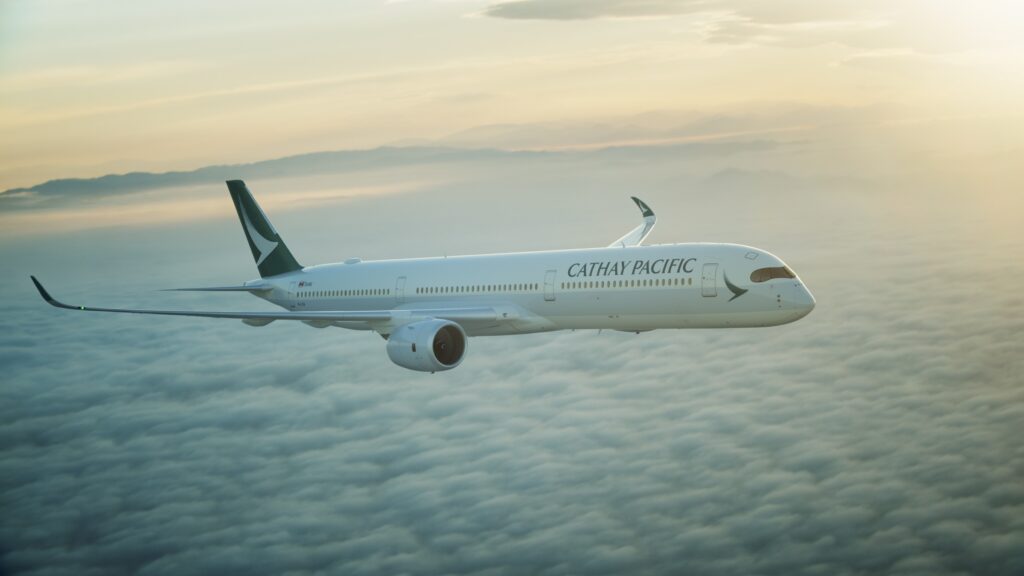
On 24 April 2025, Cathay Pacific launched nonstop passenger flights between Hong Kong and Dallas Fort Worth using the Airbus A350-1000. The initial schedule offered four round trips per week.
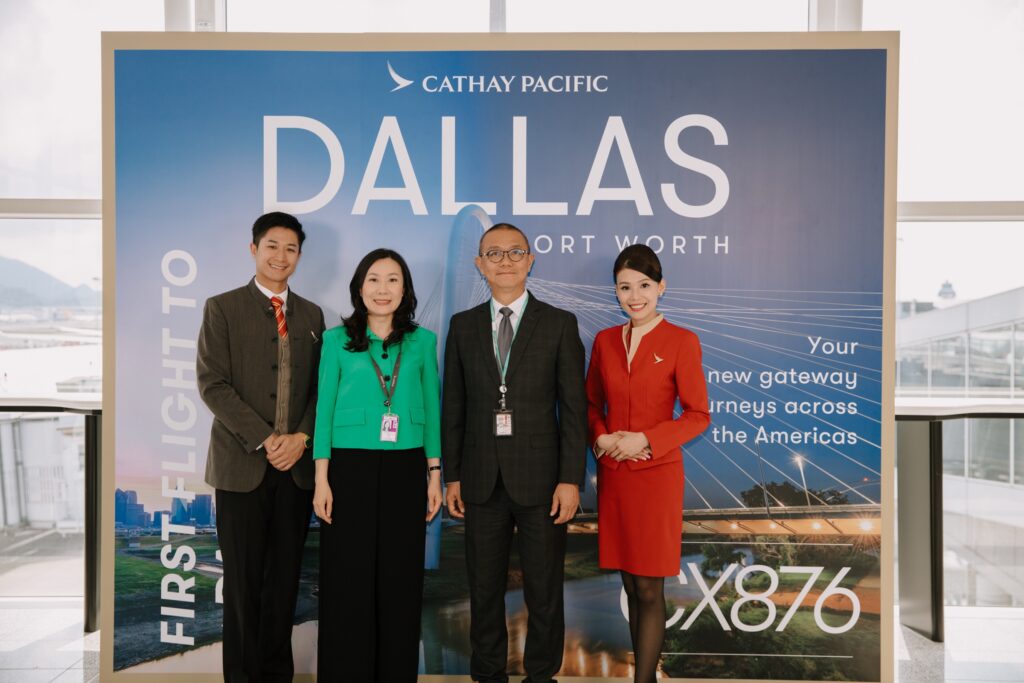
The Hong Kong to Dallas route ceremony at Hong Kong International Airport, April 2025.
It was Cathay’s first passenger service on the route, though not the first nonstop connection between the two airports. According to Dallas Fort Worth International Airport, the launch restored a link that had been absent since 2020.
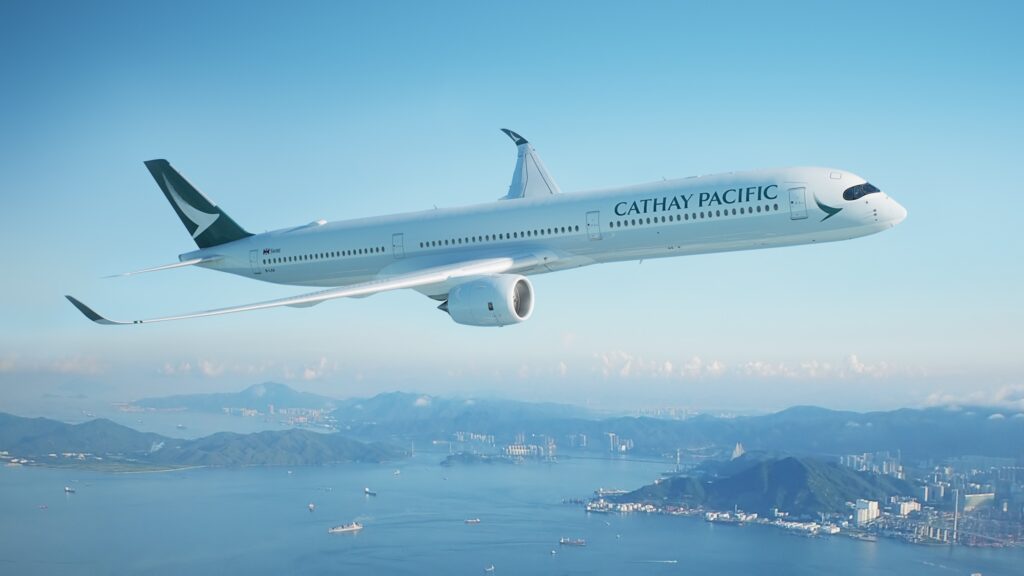
A Cathay Pacific A350-1000 against a Hong Kong backdrop.
The distinction matters. For Cathay Pacific, Dallas became a new destination in its passenger network. For DFW, Hong Kong returned as a city accessible without an intermediate stop.
Cathay introduced the service with its A350-1000, configured with Business, Premium Economy and Economy cabins. The widebody aircraft is designed for long-haul operations, making it suited to the considerable distance between Hong Kong and North Texas.
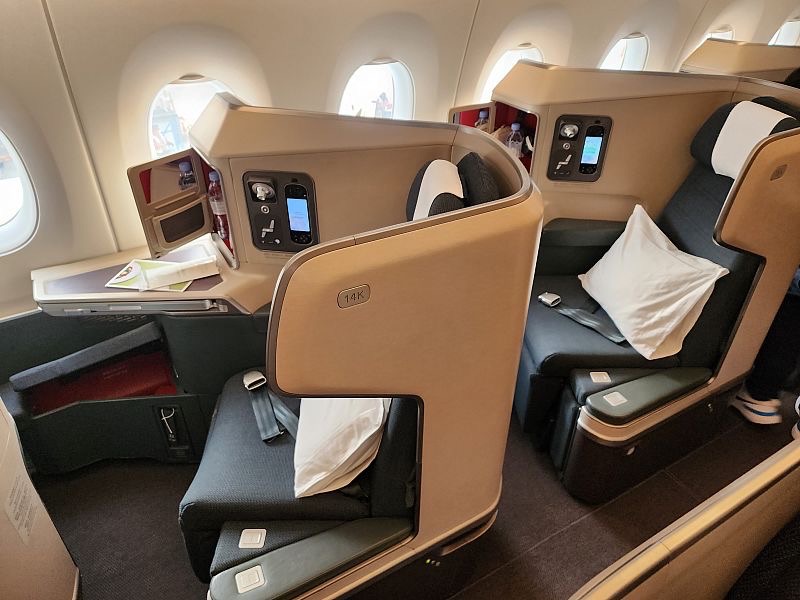
Business Class on a Cathay Pacific A350 (seat 14K).
Flight frequencies and aircraft assignments may change with seasonal schedules and operational requirements. The launch programme therefore provides a record of how the route began, rather than a guarantee of what passengers will find on every departure.
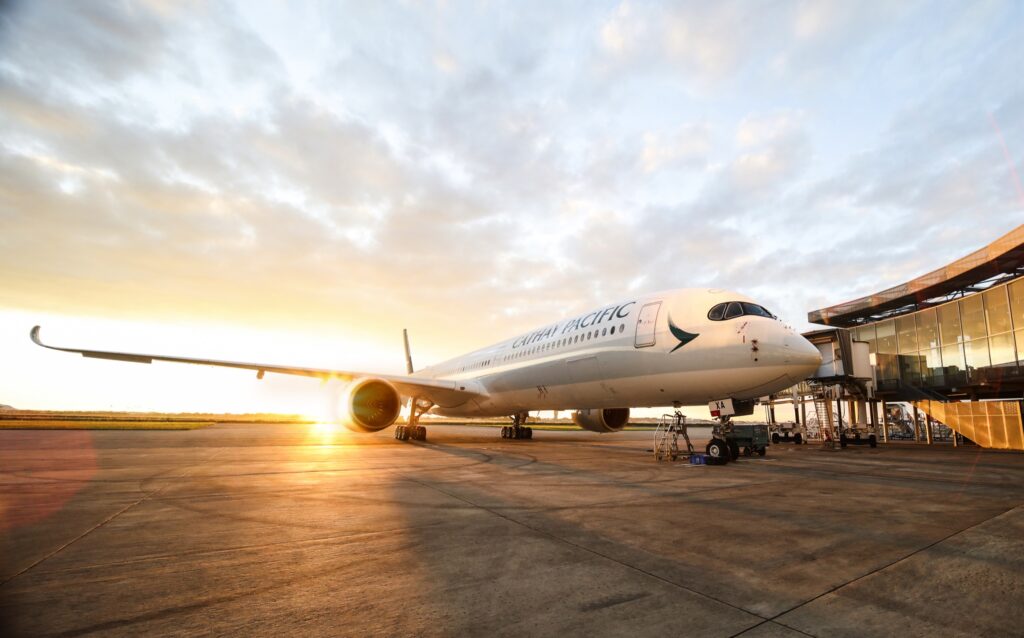
A Cathay Pacific A350-1000 at the jet bridge in afternoon light.
Two Afternoons Across the Pacific
In Cathay Pacific’s April 2025 launch schedule, the flight departed Hong Kong in the afternoon and arrived at Dallas Fort Worth in the afternoon of the same calendar day, after approximately 15 hours of travel.
The local times printed on the ticket appeared surprisingly close together. Between them, however, lay a long transpacific journey, with much of the difference concealed by the time zones.
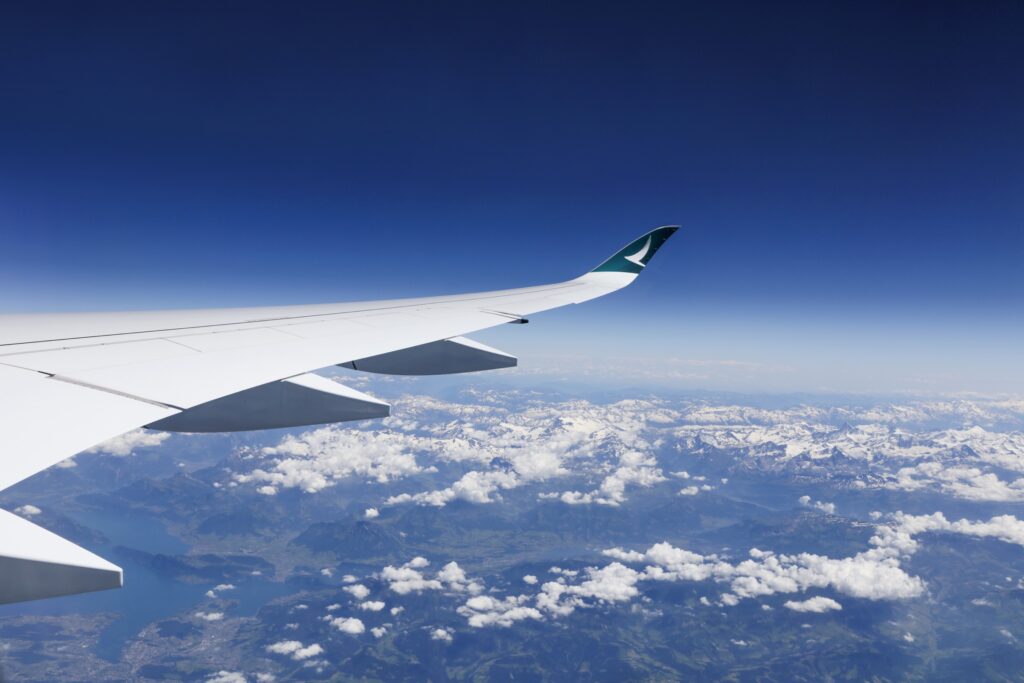
The wing and winglet of a Cathay Pacific A350-1000 above the clouds.
The return journey followed a different pattern. Under the original schedule, the flight left Dallas at night and reached Hong Kong early in the morning two calendar days later, with a planned duration of approximately 16 hours and 40 minutes.
The same pair of cities could therefore produce two rather different experiences of time. In one direction, passengers arrived while the afternoon was still unfolding. In the other, the calendar had advanced considerably before the flight ended.
On a journey of this length, arrival time matters when arranging accommodation and ground transport. These timings describe the original 2025 schedule, however, not a fixed timetable for future flights.
Dallas as Both Destination and Connection
Dallas Fort Worth is a major aviation hub in the United States. The airport serves the Dallas and Fort Worth metropolitan area while connecting travellers to numerous domestic and international destinations.
For passengers visiting North Texas, the Hong Kong service can complete the airborne portion of the journey at DFW. After immigration and baggage collection, they can continue to a hotel, business meeting or nearby city by road.
For travellers heading farther away, the airport becomes a connection point.
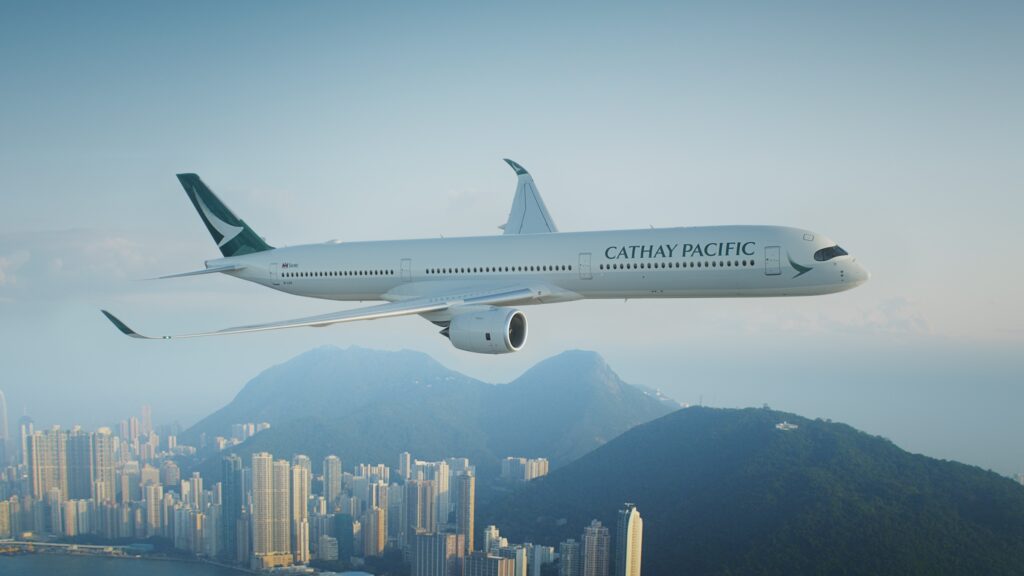
A Cathay Pacific A350-1000 with mountains and a city below.
In announcing the route, Cathay Pacific highlighted onward travel opportunities within the United States and to destinations in Central and South America. Dallas therefore serves not only as an additional destination but also as another option for planning journeys between Asia and other parts of the Americas.
That does not mean travelling through Dallas will always be faster or more convenient. Total journey time depends on connecting schedules, the final destination and the procedures involved in entering the United States.
An additional international gateway nevertheless gives travellers more choice. Not every itinerary needs to be organised around the familiar connecting points on America’s West or East Coast.
For someone travelling to Texas, Dallas Fort Worth is where the long flight ends. For another passenger, it is where the next part of the journey begins. The same service from Hong Kong can have different value depending on where each traveller is ultimately going.
And that is what makes the connection noteworthy: not only the distance covered by an Airbus A350-1000, but also the places passengers can reach after landing.
Sources: Cathay Pacific · Dallas Fort Worth International Airport
Image source: Cathay Pacific