On 2 February 1954, a Douglas DC-6B named City of Tokyo operated Japan Airlines’ first international service, departing Haneda for San Francisco via Wake Island and Honolulu. The journey took around 31 hours, a duration difficult to imagine for passengers accustomed to today’s transpacific flights.
Japan Airlines, better known as JAL, had been established only a few years earlier. The international route marked an important step as Japan reconnected with the world after the war. Subsequent flights carried passengers to distant cities while also giving the country a growing presence in international aviation.
More than seven decades later, JAL has changed repeatedly. Yet the question remains an interesting one: how much of a country’s character can an airline convey before its passengers arrive?
From the Crane Emblem to a Second Beginning
JAL was founded in 1951 as Japan rebuilt civilian aviation after the war. Its earliest services relied on leased aircraft and operational support from Northwest Airlines. Within a few years, the carrier had crossed the Pacific, before expanding further with the arrival of the jet age.
The crane emblem known as Tsurumaru became one of the airline’s most recognisable symbols. But JAL’s history is not an uninterrupted story of expansion.
In 2010, severe financial difficulties led the company into court-supervised reorganisation. Its operations were reduced, management practices were overhauled, and JAL returned to the Tokyo Stock Exchange in 2012.
That history adds another dimension to its identity. Modern JAL is not simply preserving the legacy of an established airline. It is also a company that has had to rebuild itself and reconsider how it serves passengers in a changing aviation industry.
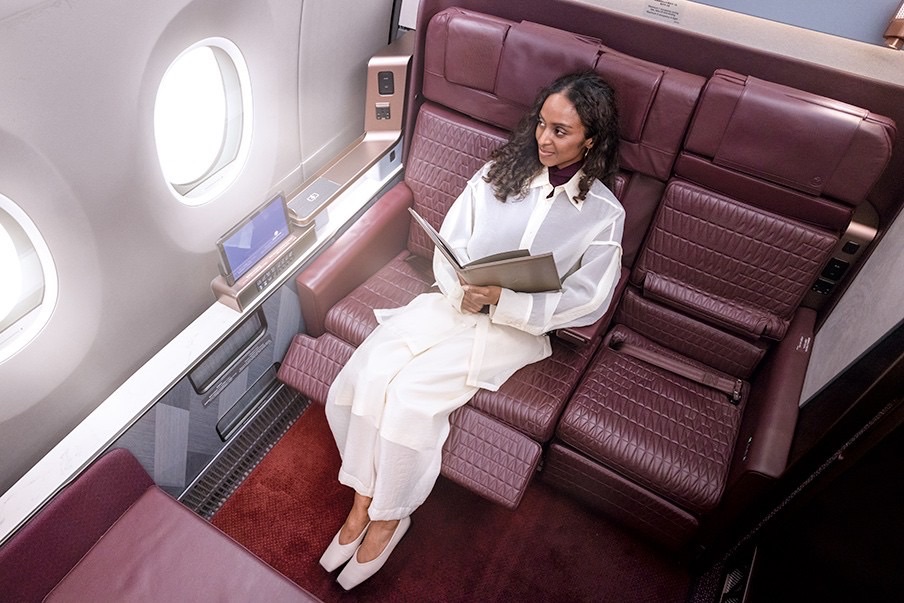
A First Class suite sofa on JAL’s A350-1000.
Attention to Detail Beyond First Class
One way to understand JAL is to look at the choices it makes throughout the journey, rather than only at the front of an aircraft.
At Haneda, the JAL SMART AIRPORT programme introduced automated check-in and baggage-drop facilities in 2020. The automation was intended to make airport procedures faster, with a stated goal of completing baggage drop in five minutes or less. It is a less conspicuous change than a new private suite, but one that touches the departure experience of many passengers.
On board, some of the most revealing decisions concern Economy Class. On selected Boeing 787 configurations fitted with SKY WIDER seating, JAL uses an eight-abreast, 2-4-2 layout instead of the nine seats commonly found across many other 787 cabins. The additional space does not turn Economy into Business Class, but seat width makes a tangible difference on a long flight.
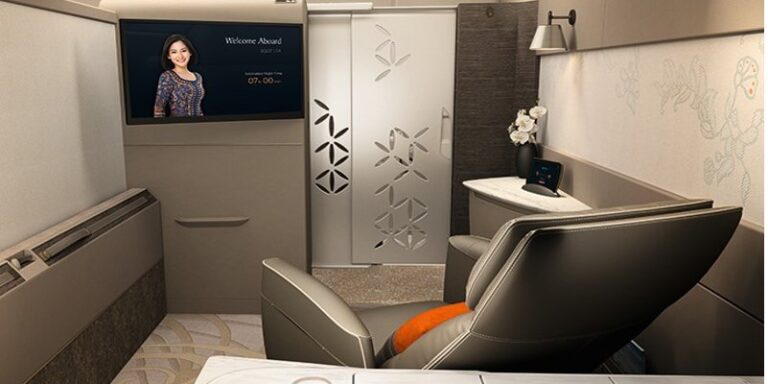
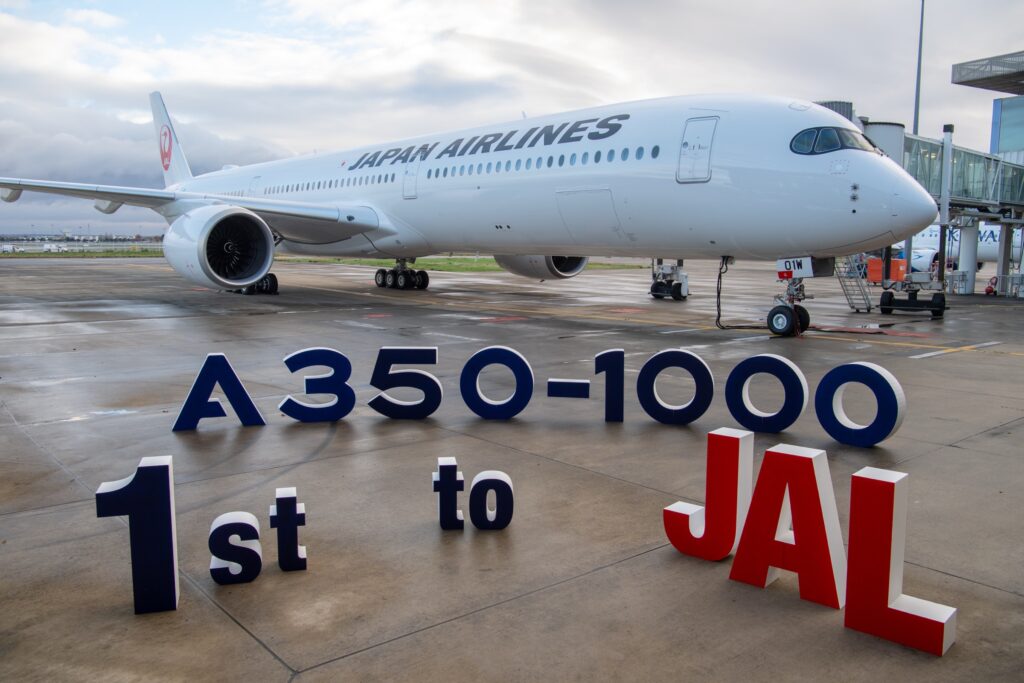
At the other end of its offering, JAL introduced the Airbus A350-1000 on international services in January 2024, beginning with the Haneda to New York JFK route. Its new-generation cabins bring changes to privacy, entertainment and the use of personal space. The aircraft, however, is only one part of the fleet. Passengers still need to check the aircraft and seating configuration assigned to their particular flight.

The bed and screen in a First Class suite on JAL’s A350-1000.
JAL’s role also extends beyond international arrivals. Its domestic network connects major cities with regional destinations and islands across Japan. For travellers, the airline’s significance lies not only in getting them to Tokyo or Osaka, but also in the journeys that follow.
Japan at the Table, with Room for Choice
Dining remains one of the clearest ways for JAL to express its Japanese identity, and not only in First Class.
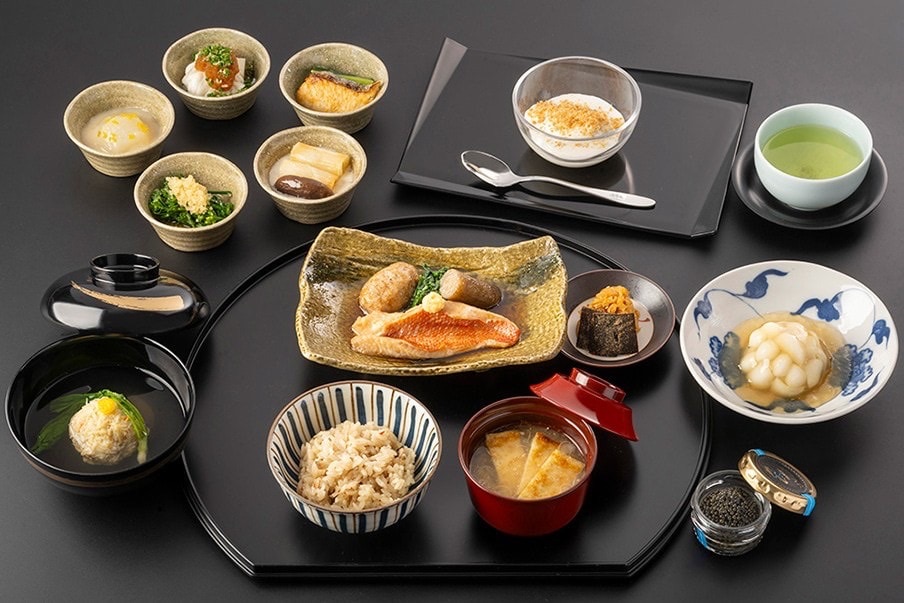
A Japanese meal from JAL’s First Class page.
In an international service update announced in February 2026 and introduced in stages from March, the airline expanded its collaborations with Japanese chefs, introduced changes to Business Class meal service and developed new dining options for Premium Economy and Economy passengers. Its beverage programme also placed greater emphasis on Japanese teas and non-alcoholic choices.
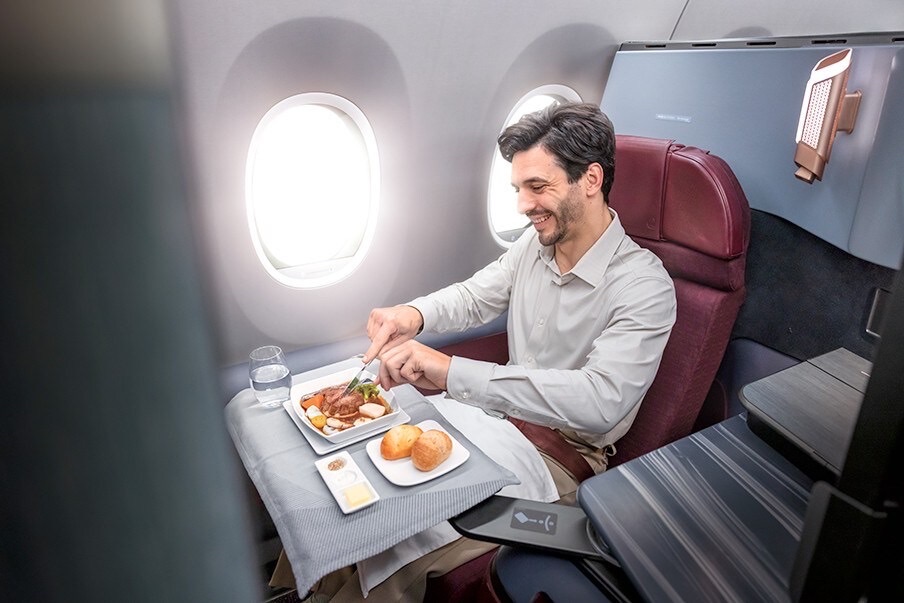
A passenger dining in Business Class on JAL’s A350-1000.
The range matters. One traveller may want to try Japanese-inspired dishes, while another may prefer something closer to the cuisine of the destination or a familiar meal. Presenting a country’s culture does not require everyone to eat the same thing.

A selection of wines from JAL’s Business Class page.
Menus and onboard services still vary by route, cabin and travel date. A dish featured in JAL’s dining programme should never be assumed to appear on every departure.
From a 31-hour journey across the Pacific to contemporary cabins and a wider choice of meals, the way JAL presents Japan has changed substantially. What carries through is not one unchanging ritual, but an effort to give the journey a recognisable sense of place.
For a passenger bound for Japan, that introduction may begin well before landing.
Sources: Japan Airlines · Airways Magazine · Aviation Wire · The Points Guy · Airline Geeks
Image source: Japan Airlines; Airbus