Sometimes, the difference between two pho shops is clear from the first spoonful of broth. At one, the natural sweetness of beef and bones stands out. At another, the aromas of star anise, cinnamon and roasted ginger are more pronounced. The basic ingredients may be the same, but each kitchen’s approach can produce a distinctly different bowl.
In Vietnam, pho is often eaten for breakfast, though it is just as familiar at lunch or dinner.
Inside a Bowl of Pho
For beef pho, the broth is simmered with beef bones and cuts of meat, along with roasted onion and ginger. Spices such as star anise, cinnamon and cloves add their distinctive aromas. The onion and ginger are often roasted until their outer layers are lightly charred before being added to the pot.
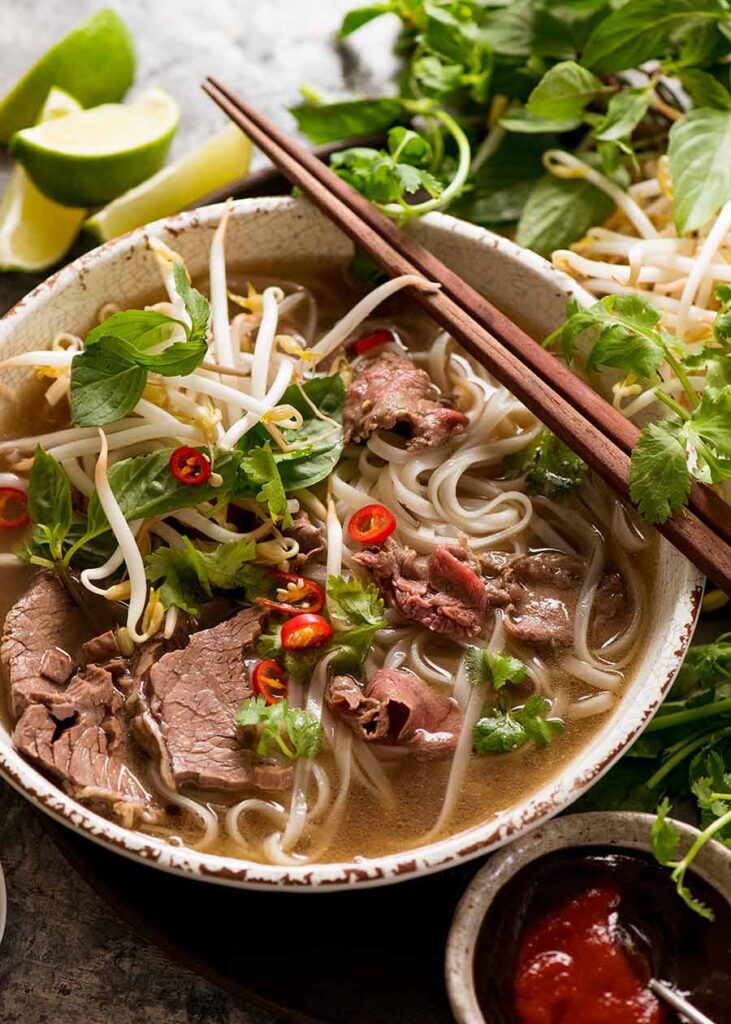
Beef pho with its herbs and lime.
Chicken pho takes a different approach. Its broth is made with chicken meat and bones, usually with onion and ginger. The cooked chicken is then chopped or shredded and served with the rice noodles. Seasoning varies from one kitchen to another.
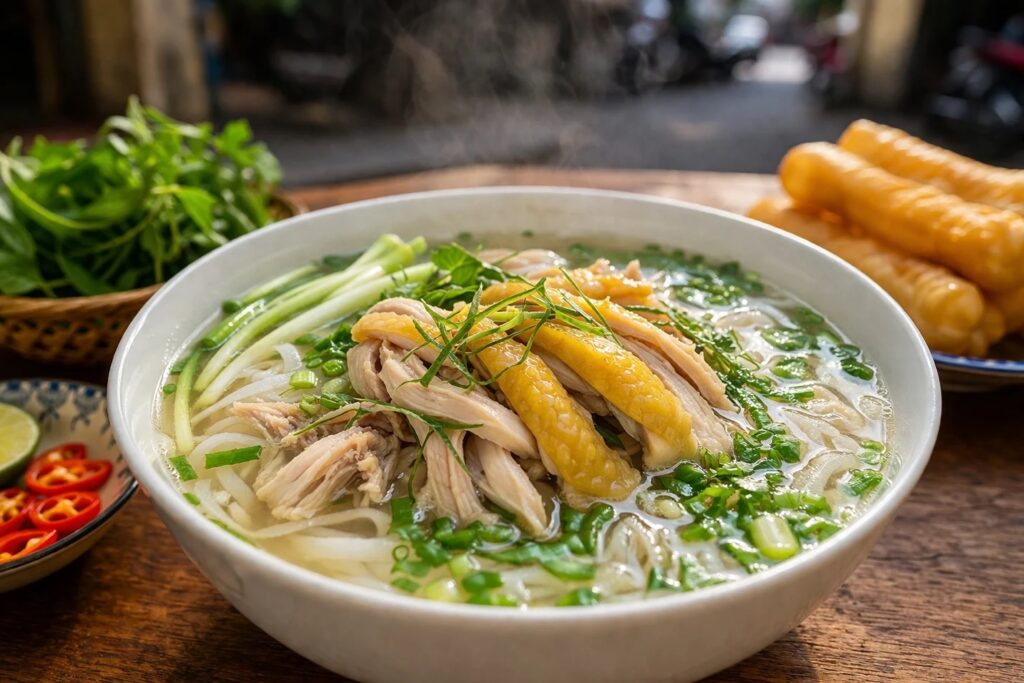
Chicken pho.
Pho noodles are made from rice, with a flat shape and soft texture. Before serving, they are usually briefly blanched, placed in a bowl with the meat, spring onions and coriander, then covered with hot broth. Thinly sliced onion is also a common topping.
From Hanoi to Southern Vietnam
Hanoi-style pho typically comes with fewer accompanying herbs than its southern counterpart. The bowl is mainly made up of rice noodles, meat, onions, herbs and broth.
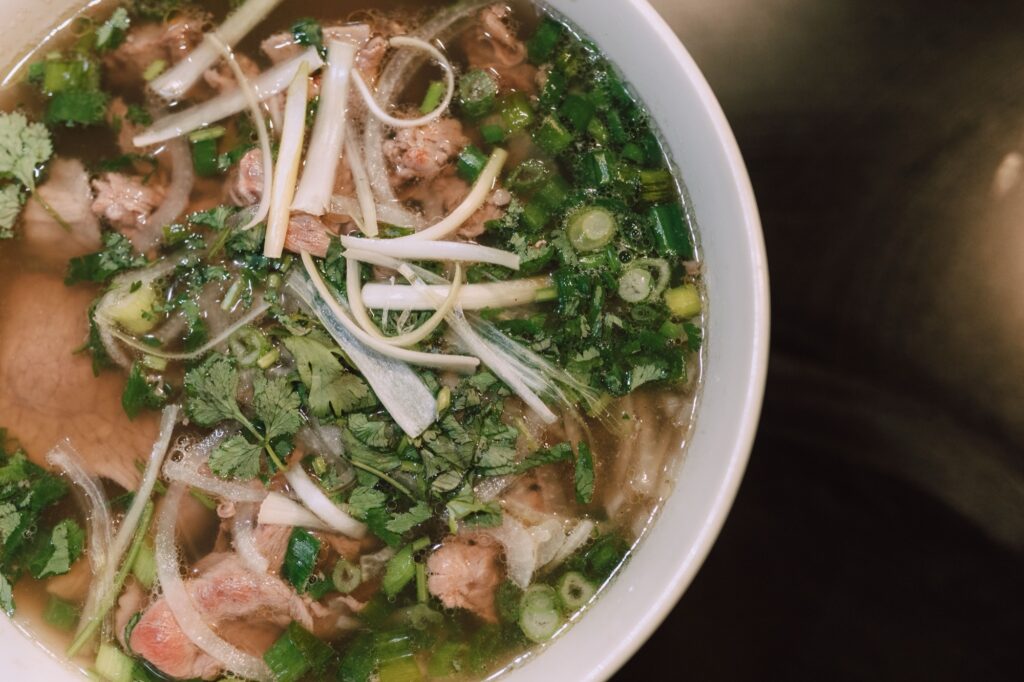
Pho topped with spring onion and herbs.
In southern Vietnam, pho often comes with more accompaniments. The broth tends to be sweeter, while a separate plate of fresh herbs, sometimes including Thai basil, may be served alongside lime and fresh chilli. Hoisin sauce and chilli sauce are also commonly available for diners to add according to their preferences.
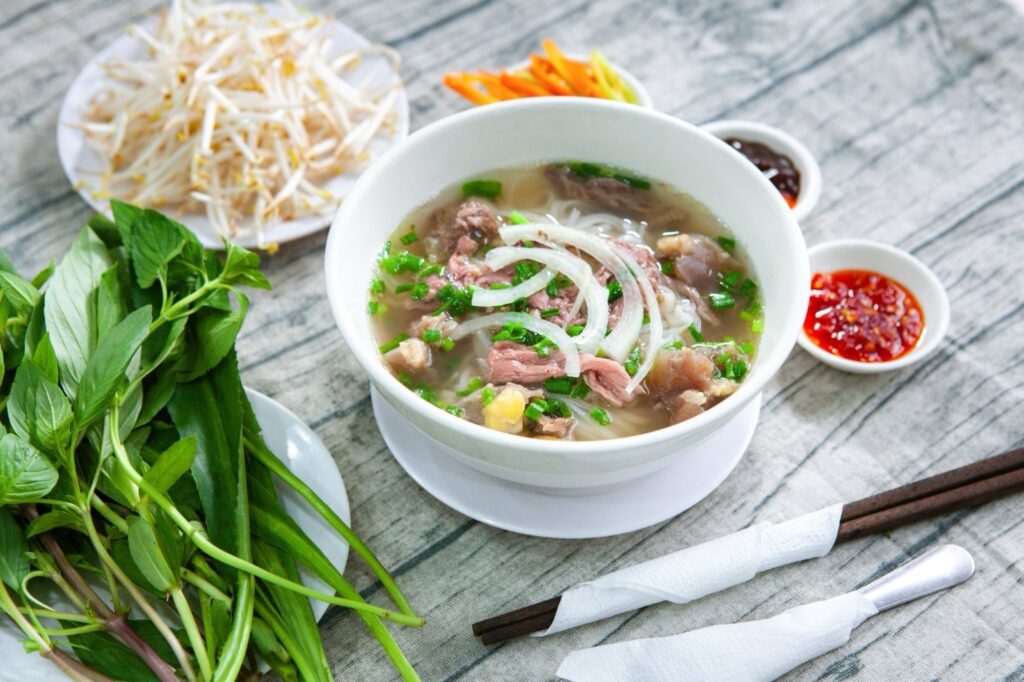
Pho served with a plate of herbs and bean sprouts.
Even within the same city, pho shops may differ in how they season their broth, select their meat and serve their herbs. Regional styles offer a useful guide to some common differences, but they are not fixed rules followed by every kitchen.
Choosing Your Beef
If you are visiting a beef pho shop for the first time, the names on the menu may take a little getting used to. Two of the most common choices are tái and chín, although many shops also offer beef tendon, tripe and beef meatballs.
Tái refers to thinly sliced raw beef placed in the bowl before hot broth is poured over it, cooking the meat briefly. Chín refers to beef that has already been cooked before being added to the bowl. If you prefer your beef fully cooked, it is worth making that clear when ordering.
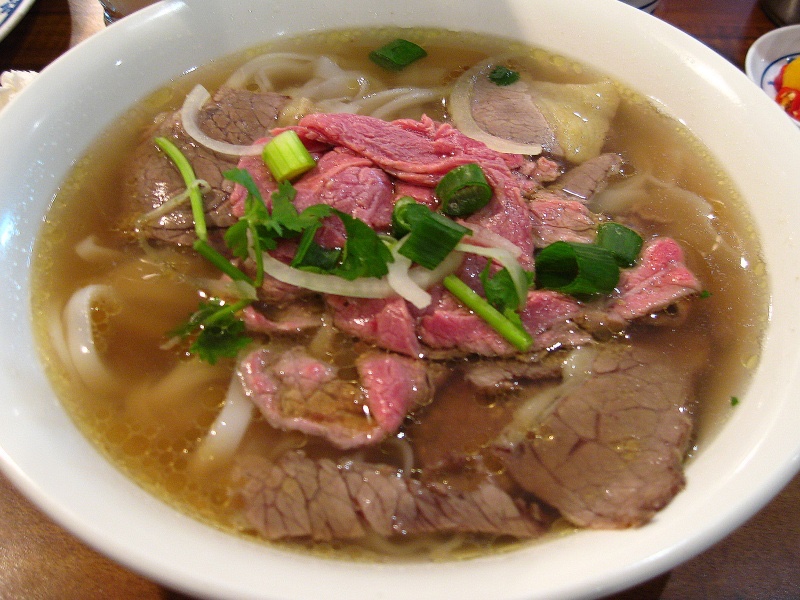
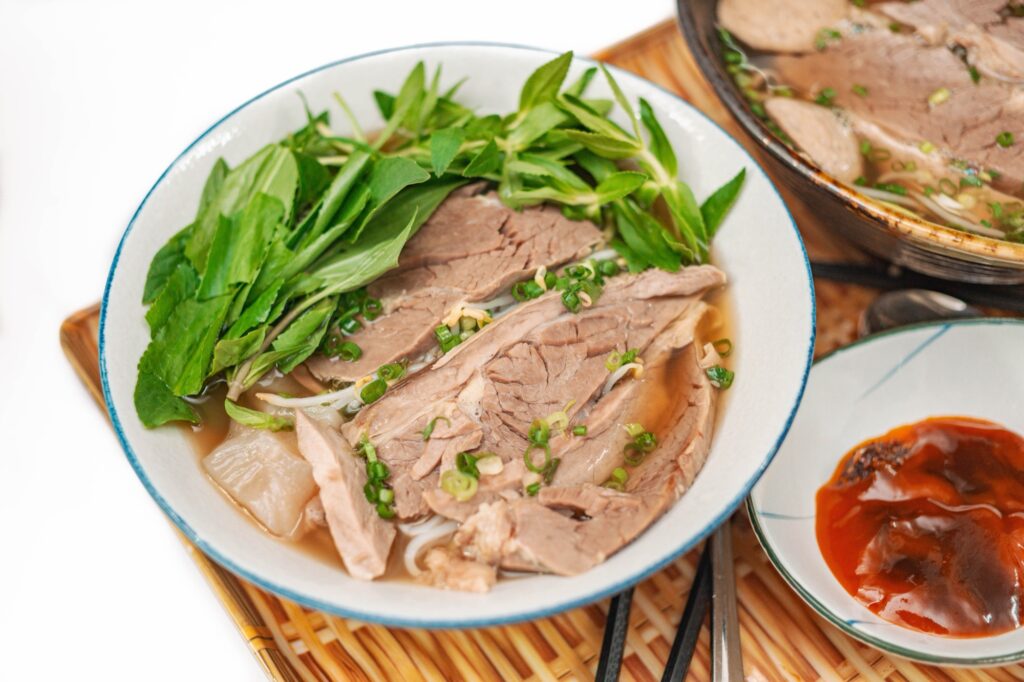
Pho with sliced beef.
Beef tendon, tripe and meatballs offer alternatives to the usual sliced beef. Some shops allow you to combine different types of meat in one bowl, such as tái and chín.
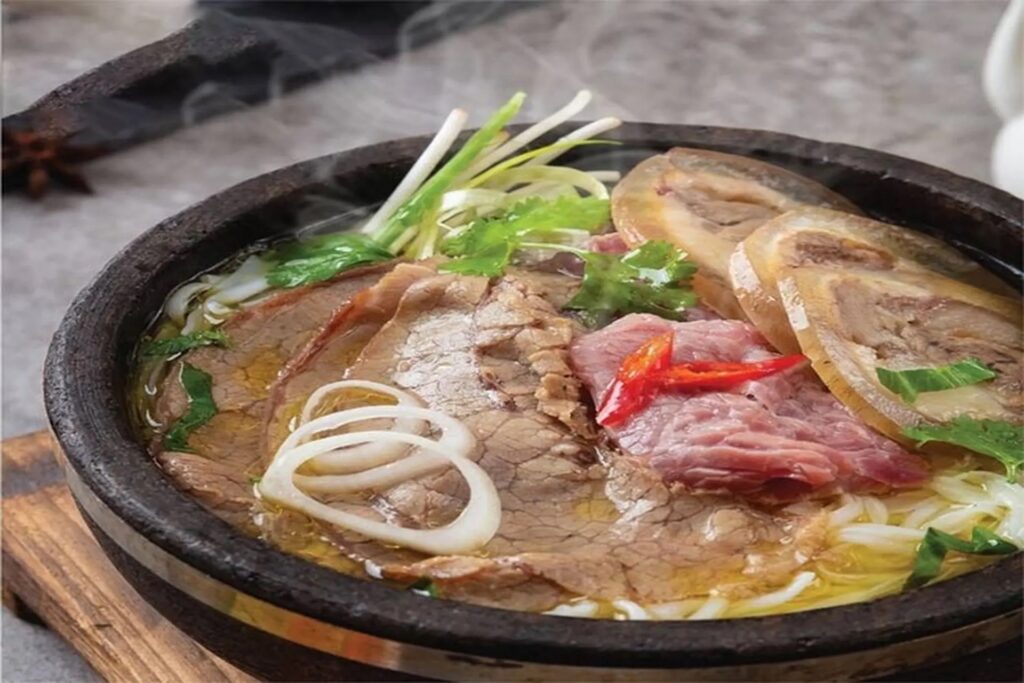
Pho with wagyu beef.
For a first taste of pho, there is no need to order every type of meat. A bowl of phở chín or chicken pho is a straightforward place to start.
Fresh Herbs, Lime and Seasoning
When your pho arrives, try a spoonful of the broth before adding anything. It has already been seasoned during cooking, and squeezing lime or stirring chilli sauce directly into the bowl will change its original flavour.
Lime adds acidity, chilli brings heat, and fresh herbs contribute their own aromas. If herbs are served separately, you can choose what you like and add a little at a time as you eat.
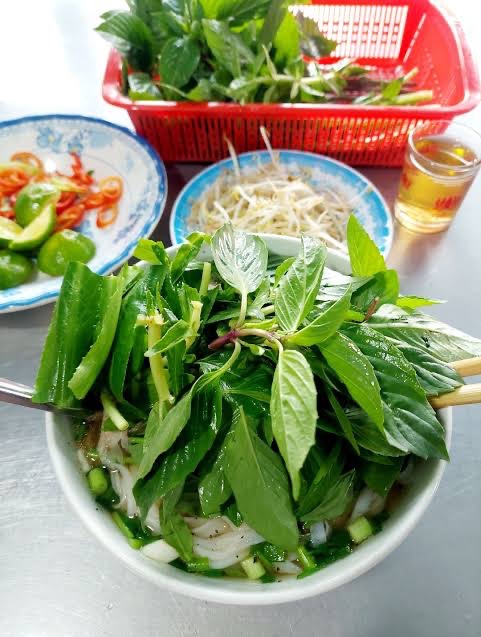
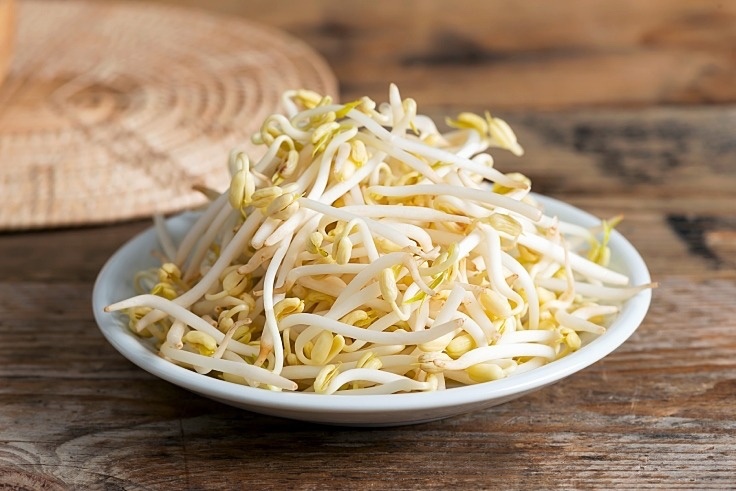
Pho with fresh herbs and bean sprouts.
With hoisin sauce and chilli sauce, some diners mix them directly into the broth, while others keep them on the side for dipping the meat. If you are unfamiliar with either, try a little with a piece of meat before deciding whether to add any to your bowl.
Image credit: Wikipedia