In Hanoi, bun cha is a popular choice for lunch. Walk past a bun cha stall where pork is grilling over charcoal, and you may catch the aroma before you even see the place. On the grill, the meat gradually turns golden brown, the fat begins to sizzle and the edges develop a slight char. If you are already hungry, that smell does very little for your patience.
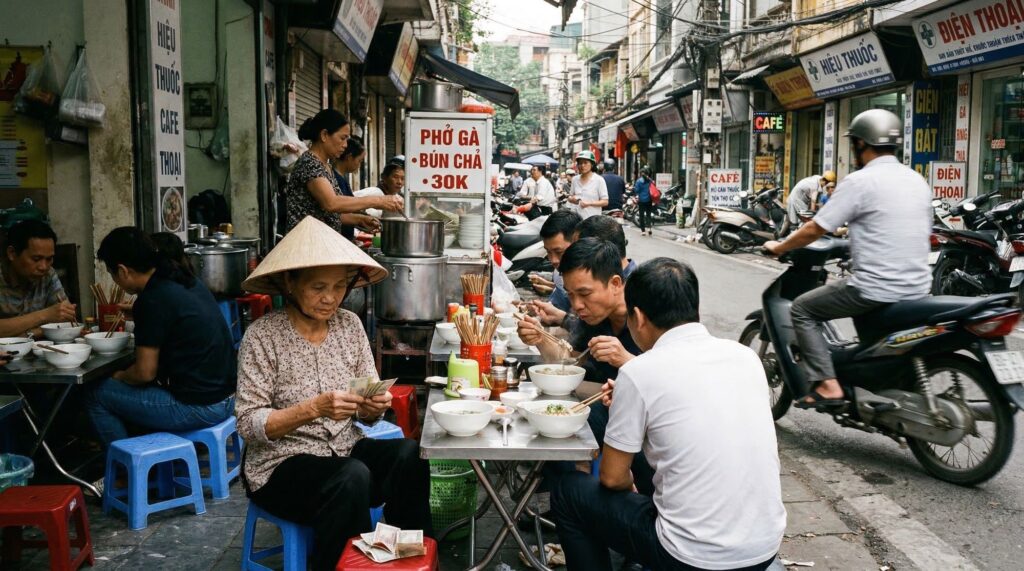
People eating at a Hanoi street eatery.
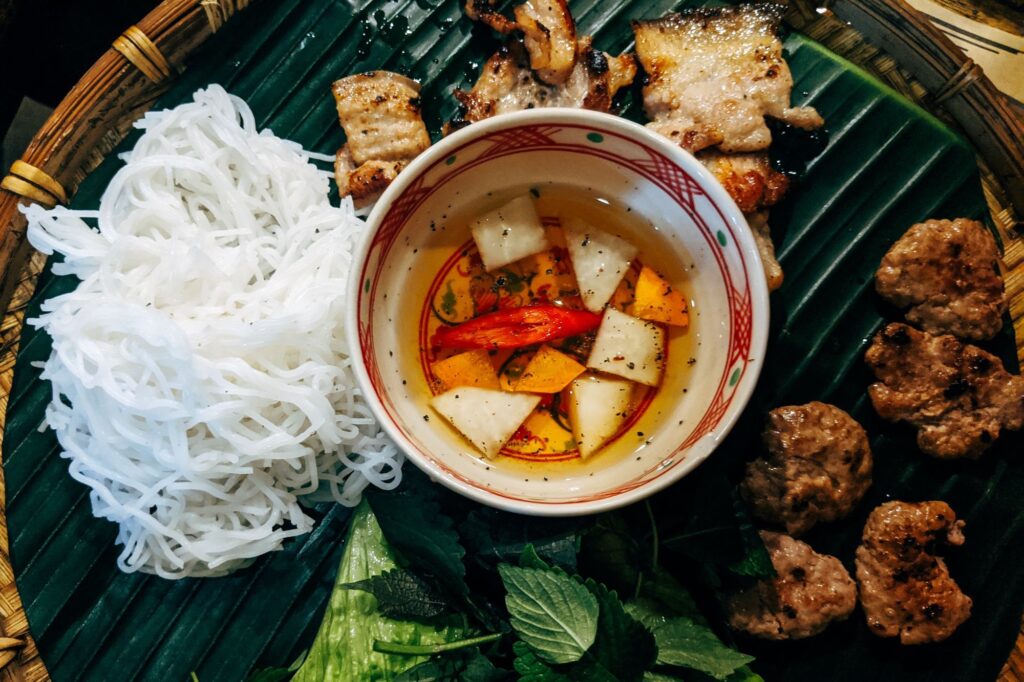
A serving of bun cha usually includes grilled pork, white rice vermicelli, fresh greens and a bowl of fish sauce based dipping sauce, often with pickled vegetables. The noodles and greens arrive separately, taking up a fair amount of space on the table. But most of the ingredients eventually come together in the dipping sauce, combined according to each diner’s taste.
Sliced Pork and Pork Patties
A serving of bun cha typically includes two kinds of grilled pork: chả miếng, made from slices of pork, and chả viên, small patties of minced pork.
For chả miếng, pork belly is a common choice. Its alternating layers of lean meat and fat give it a richer flavour. As the pork grills, the fat renders, helping the meat stay tender while adding aroma and lightly crisp edges.
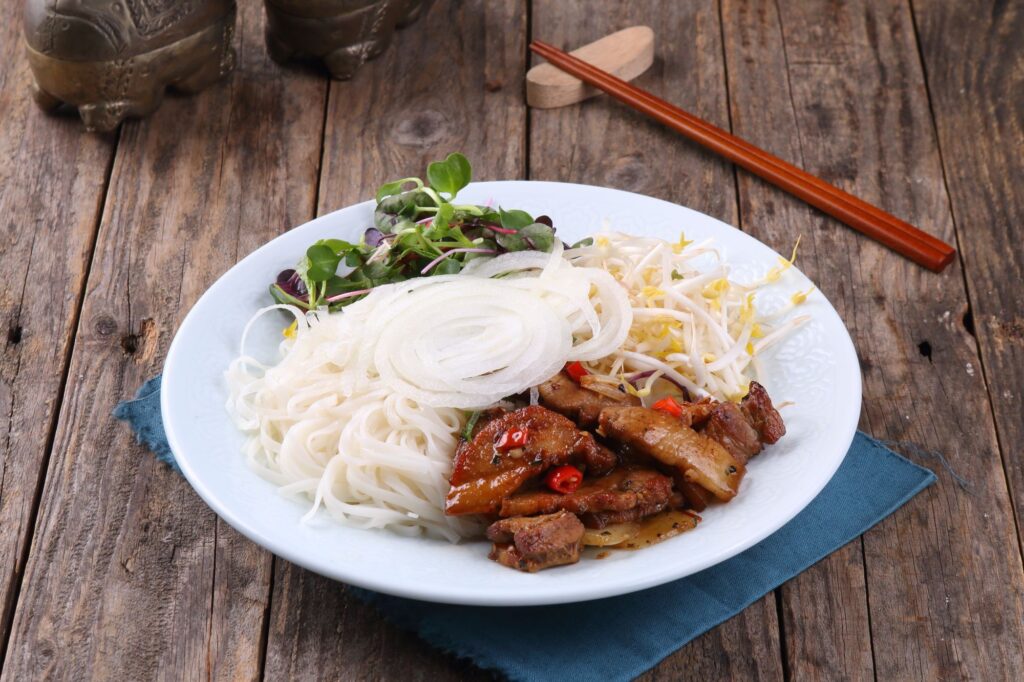
Grilled pork with noodles and herbs.
Chả viên is made from minced pork mixed with some fat to keep it moist during cooking. The meat is usually shaped into small portions and gently flattened rather than rolled into tight balls. This gives more of the surface direct exposure to the heat, allowing the outside to brown while the centre remains tender.
The pork is commonly marinated with fish sauce, sugar, shallots and black pepper. Some cooks also add caramel sauce to give the meat a deeper colour. The balance of seasonings varies from one recipe to another. Over the charcoal grill, the cook must manage the heat and turn the meat to prevent the outside from burning before the inside is properly cooked.
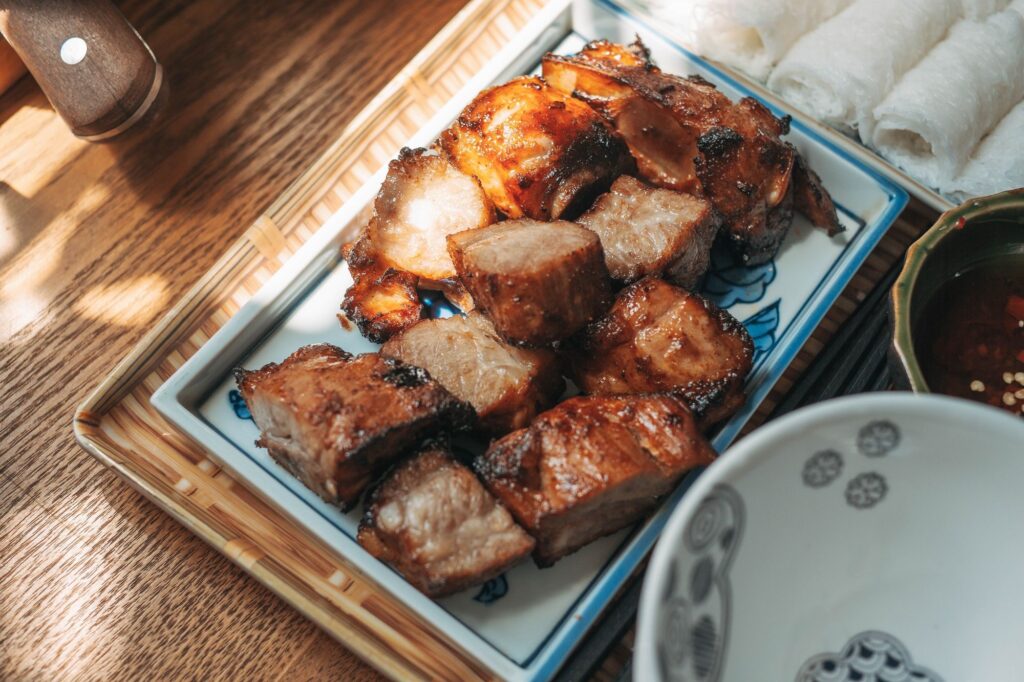
Slices of grilled pork on a tray.
When grilled just right, chả miếng has tender lean meat interspersed with rich layers of fat, sometimes with slightly charred edges. Chả viên tends to have a more even, tender texture, with the seasonings distributed throughout the minced pork. Although both are cooked over the same grill, they offer noticeably different experiences with each bite.
The Dipping Sauce That Brings Everything Together
The dipping sauce is an essential part of bun cha. Fish sauce is diluted with water, then combined with sugar and vinegar or lime juice to create a balance of sweet, sour and savoury flavours. It needs enough flavour to complement the relatively mild noodles and greens, while remaining gentle enough to enjoy throughout the meal.
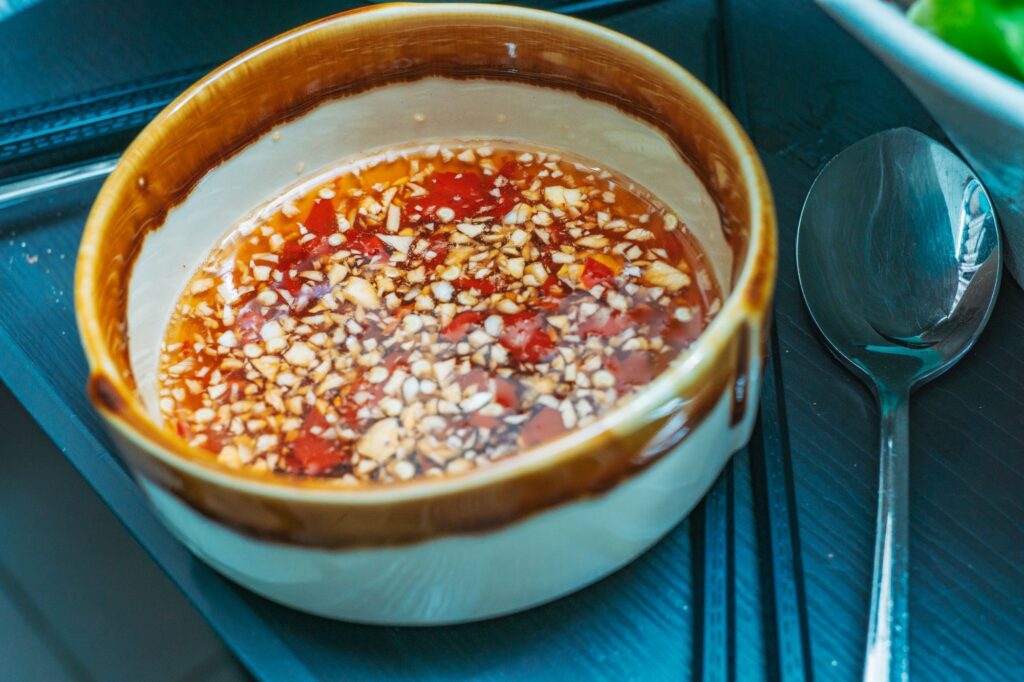
A bowl of chilli dipping sauce.
There is no single fixed ratio. Some versions lean towards sweetness, others have a more pronounced tang, while some retain a stronger fish sauce flavour. The balance between these elements helps give each serving its own character.
The grilled pork is usually placed directly into the bowl of dipping sauce. As the meal progresses, juices from the meat and its smoky grilled flavours mingle with the sauce. The sauce may be served warm, with the rice noodles and fresh greens alongside it.
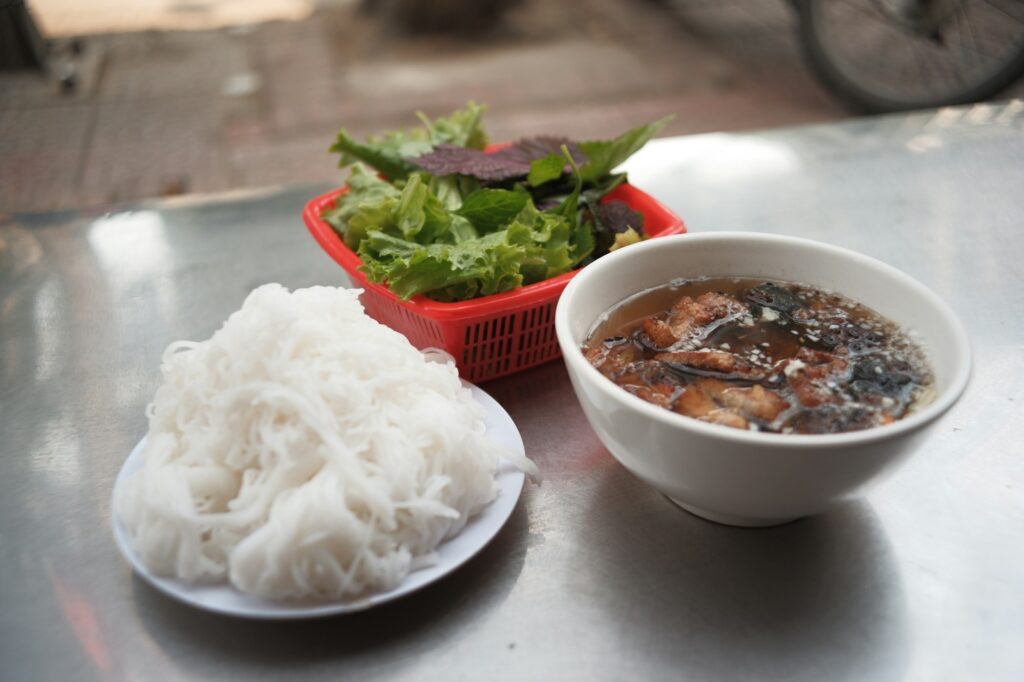
Rice noodles, herbs and a bowl of dipping sauce.
The bowl also commonly contains pickled vegetables, particularly thin slices of green papaya and carrot. Kohlrabi is another possible addition. Their crisp texture and sweet and sour flavour help balance the richness of the grilled pork, especially the fattier slices.
Garlic and fresh chillies may already be added to the sauce or provided separately. If you enjoy spicy food, you can adjust the heat to your liking. It is worth tasting the sauce first, though, as its balance of sweetness and acidity may already be just right.
Enjoying Bun Cha Your Way
There is plenty of flexibility in how you eat bun cha. You can start with a small portion of rice vermicelli, dip it into the sauce and enjoy it with a piece of grilled pork and a few fresh leaves.
The plate of greens may include lettuce, perilla, Vietnamese balm and other herbs. Lettuce adds freshness and a gentle crunch, while perilla and Vietnamese balm bring their own distinctive aromas. If these herbs are unfamiliar, try them individually before combining them with the pork and noodles.
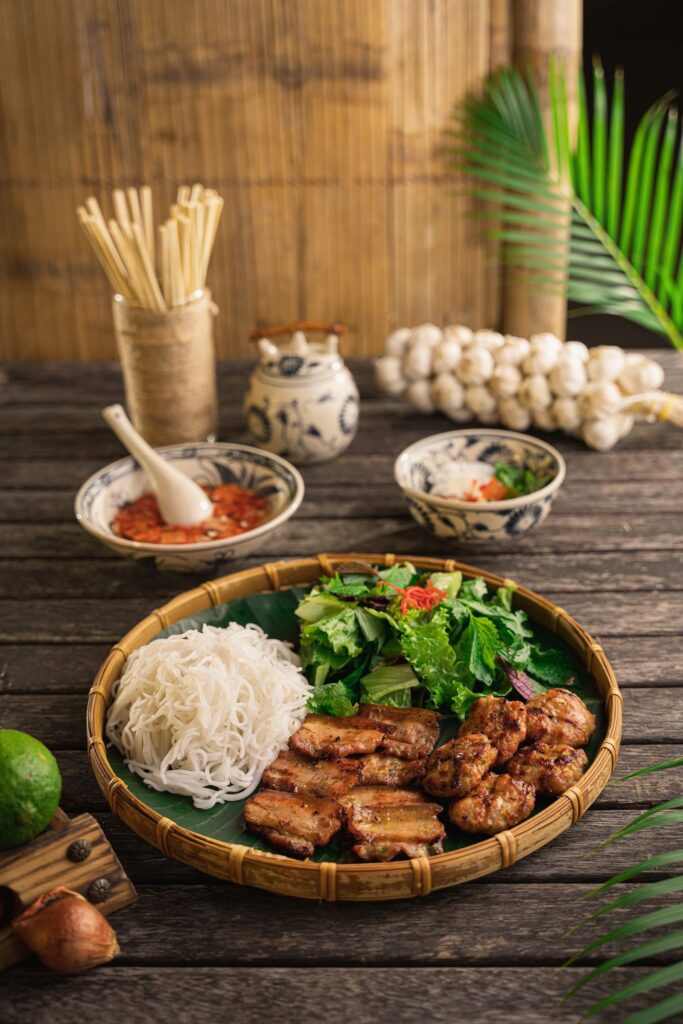
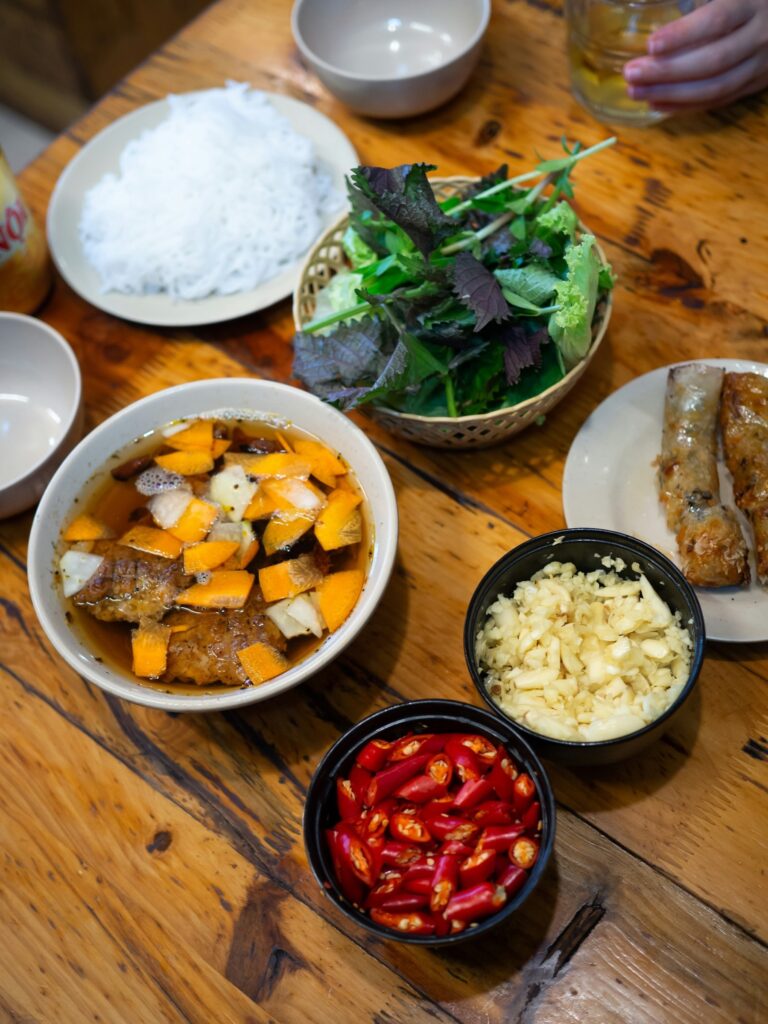
Herbs, noodles and a dipping sauce.
Adding modest portions of noodles and greens as you go also keeps the dipping bowl from becoming too crowded. You can dip the noodles briefly or leave them a little longer to absorb more flavour. There is no need to put the entire plate of noodles into the bowl at once. After all, the pork and pickles still need some room.
If the restaurant serves nem rán, Vietnamese fried spring rolls, you can order some alongside the grilled pork. Their golden, crispy wrappers offer a different flavour and texture from the two kinds of grilled pork. Dip each piece into the sauce just before eating to keep the wrapper crisp.
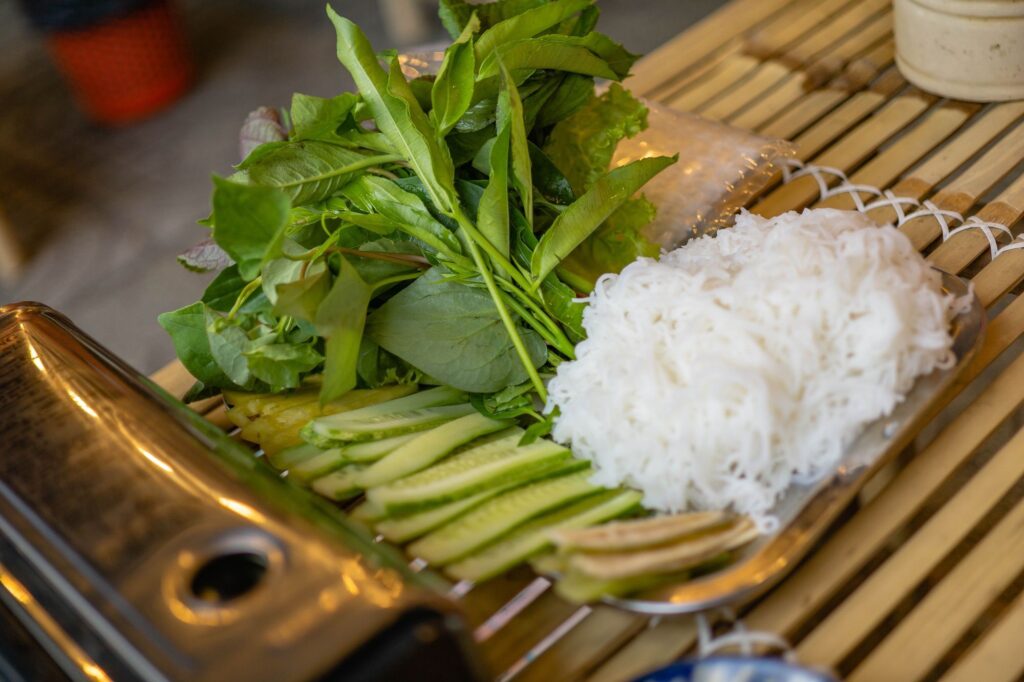
Rice noodles, herbs and cucumber.