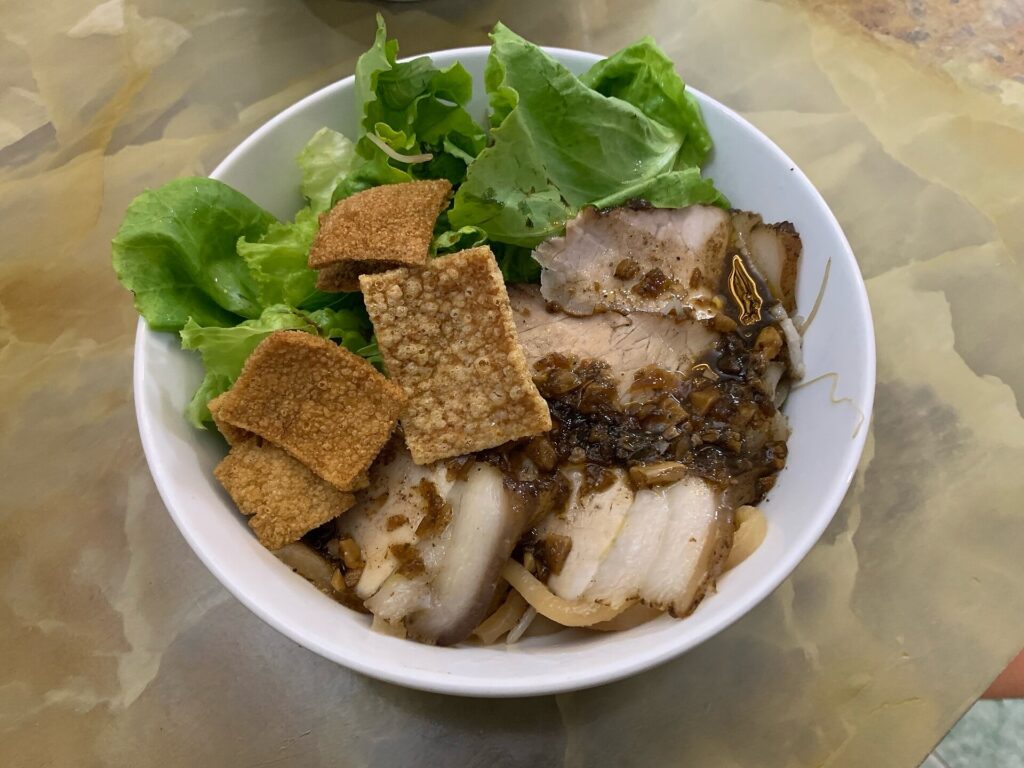
In Hoi An, cao lau is one of those dishes that might leave first-time visitors with a question or two. A bowl arrives filled with golden noodles, slices of pork, fresh greens and crispy toppings, yet there is surprisingly little sauce at the bottom. If you are used to noodle soups with plenty of broth, you might wonder whether the cook has been a little stingy. In fact, that is exactly how cao lau is meant to be served.
What makes the dish distinctive is its thick, firm noodles, quite unlike the soft rice noodles commonly found in pho. Even after being tossed with seasoned pork, greens and savoury sauce, they retain a satisfying chew. For many people, that texture is what makes their first bowl of cao lau particularly memorable.
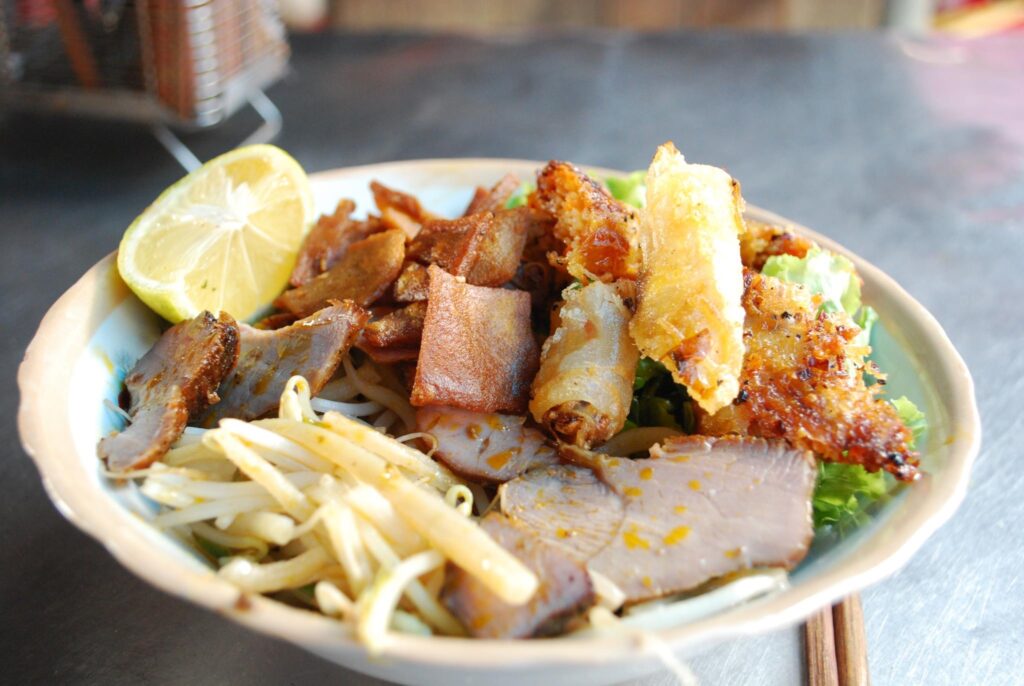
Cao lau with spring rolls and bean sprouts.
What Makes Cao Lau Noodles Different
Cao lau noodles are made from rice, which goes through several stages of preparation, shaping and steaming to develop their distinctive texture. Traditional methods also involve alkaline water made with ash, which helps give the noodles their characteristic firmness and chew.
When people talk about the traditional craft of making cao lau in Hoi An, two ingredients often come up: water from Ba Le Well and wood ash from the Cham Islands. Both have long been associated with the dish and are part of the story behind its preparation. However, noodle-making methods have evolved over time, including the ingredients and equipment used. Not every producer today follows the traditional practices described in those older accounts.
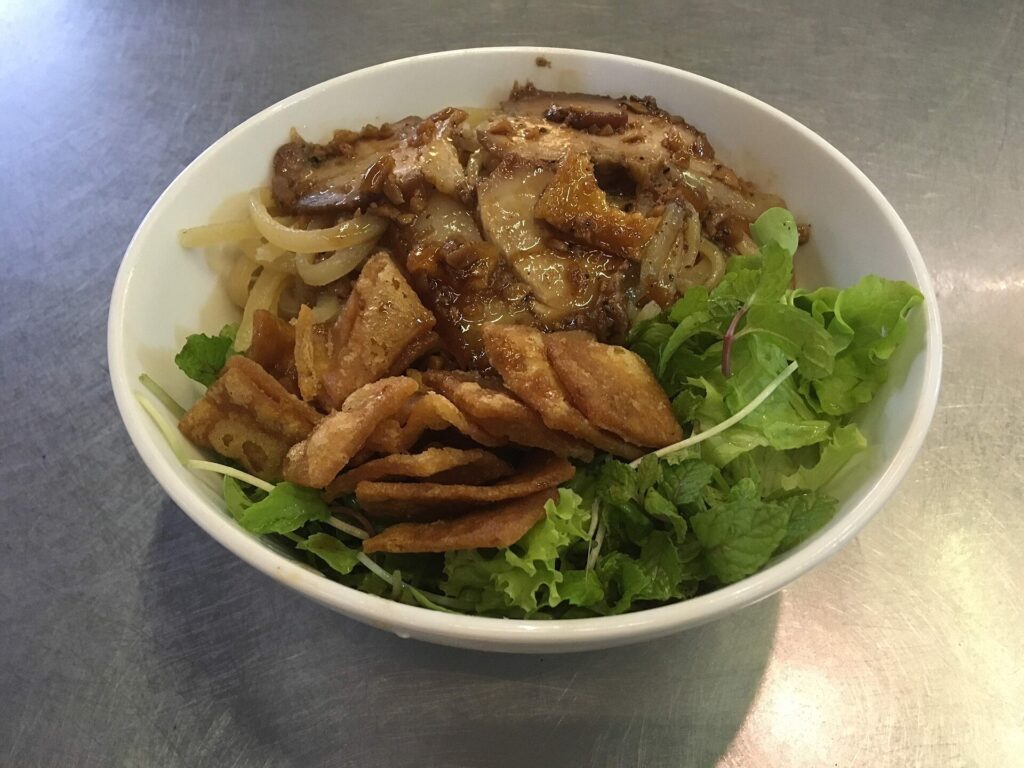
A bowl of cao lau with greens.
Another detail worth knowing is that the restaurants serving cao lau do not necessarily make their own noodles. Producing the noodles and preparing the finished dish can be two separate jobs. Long before the pork and greens are arranged in a bowl, the noodles have already been through quite a process.
The finished noodles generally range from pale yellow to golden brown, with thick strands and a noticeably firm texture. The pork and crispy toppings may catch your attention when the bowl first arrives, but it is the noodles that make cao lau difficult to mistake for anything else.
Seasoned Pork, Savoury Sauce and a Little Crunch
Seasoned pork, commonly known as thịt xíu, is a familiar part of cao lau. The meat is marinated according to each cook’s recipe, cooked until tender and then sliced. Depending on the cut used, the slices may contain different proportions of lean meat and fat, giving them their own balance of tenderness and richness.
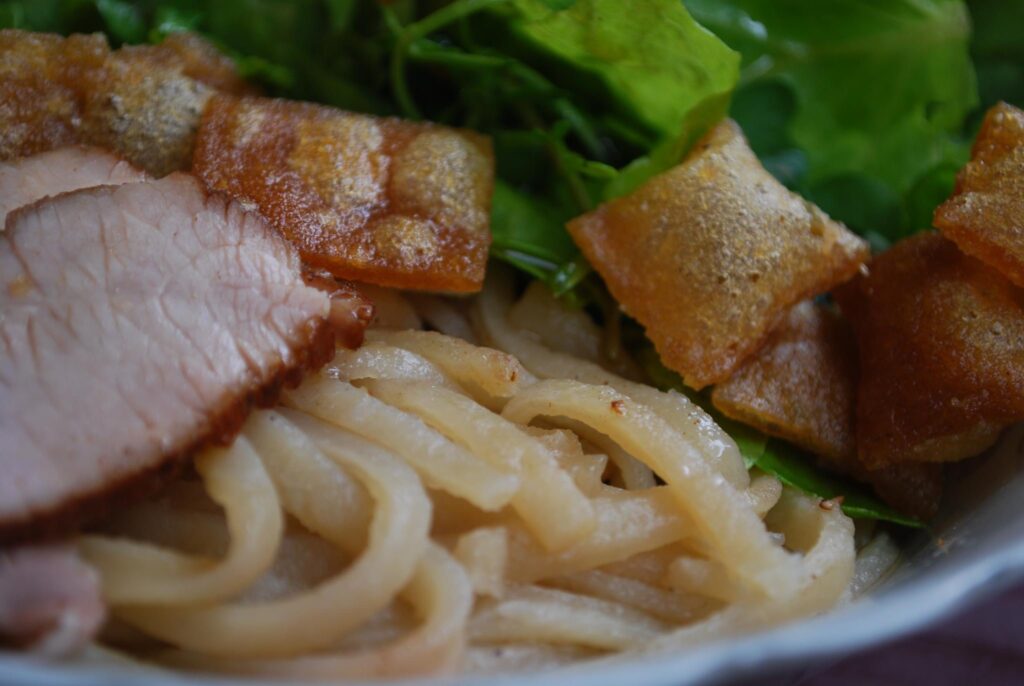
Close view of cao lau with sliced pork.
Some of the cooking juices from the pork are also used as the sauce for the noodles. Richly flavoured, with a slightly sweet and savoury character, the sauce coats the noodles when everything is mixed together. There is no need to fill the bowl with liquid. A modest amount is enough to bring the ingredients together.
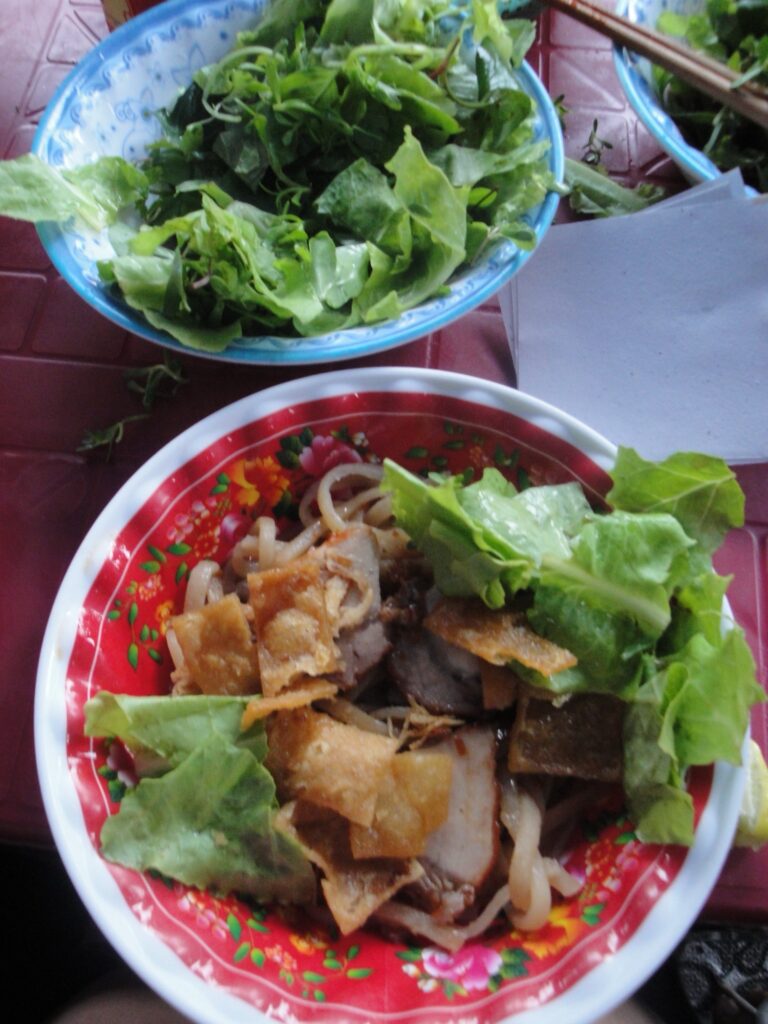
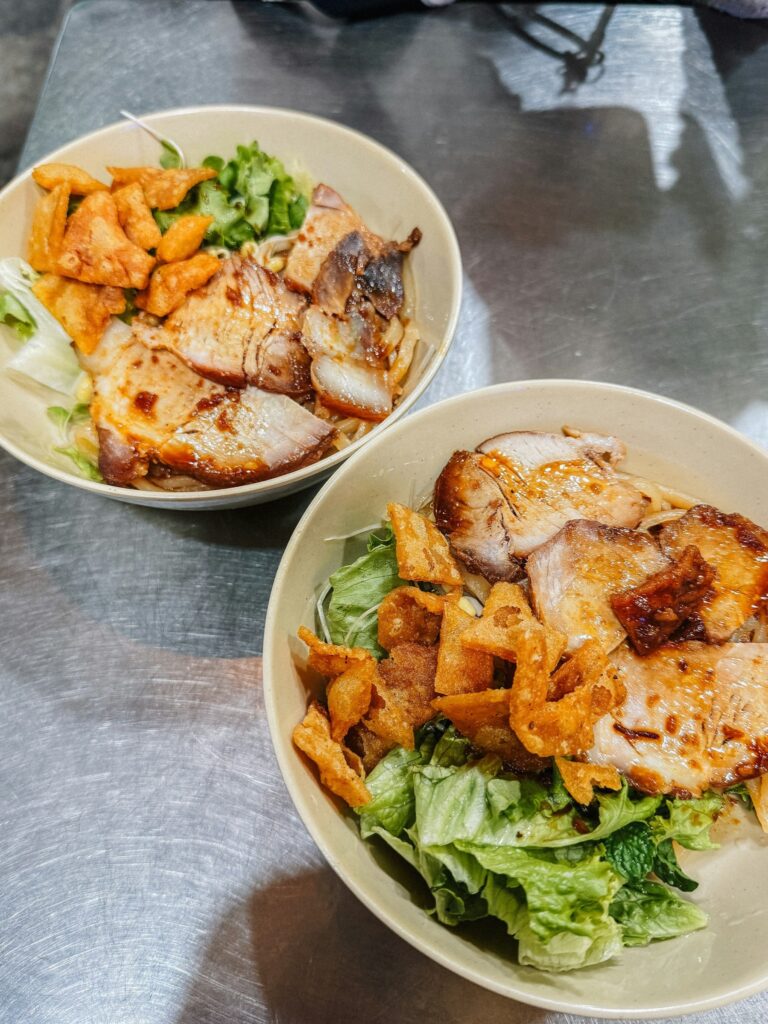
Cao lau with herbs and noodles.
Alongside the pork are golden, crispy toppings. Some versions use crackers made from fried cao lau dough, while crispy pork skin may also be served. Whichever is used, these crunchy pieces provide a pleasing contrast to the firm noodles and tender meat.
If the noodles encourage you to slow down and enjoy their texture, the crispy toppings might just have you reaching for another piece.
Fresh Greens and How to Enjoy Cao Lau
A bowl of cao lau usually comes with bean sprouts, lettuce and a selection of fresh herbs. The bean sprouts may be briefly blanched, while the greens are arranged beneath or alongside the noodles. Their freshness provides a welcome contrast to the rich pork and savoury sauce.
If the greens are tucked beneath the noodles, resist the temptation to pick out all the pork and crispy pieces first. Give everything a gentle toss from the bottom so the greens, noodles and sauce come together. A mouthful with a little of each ingredient offers a better sense of how the different flavours and textures work together.
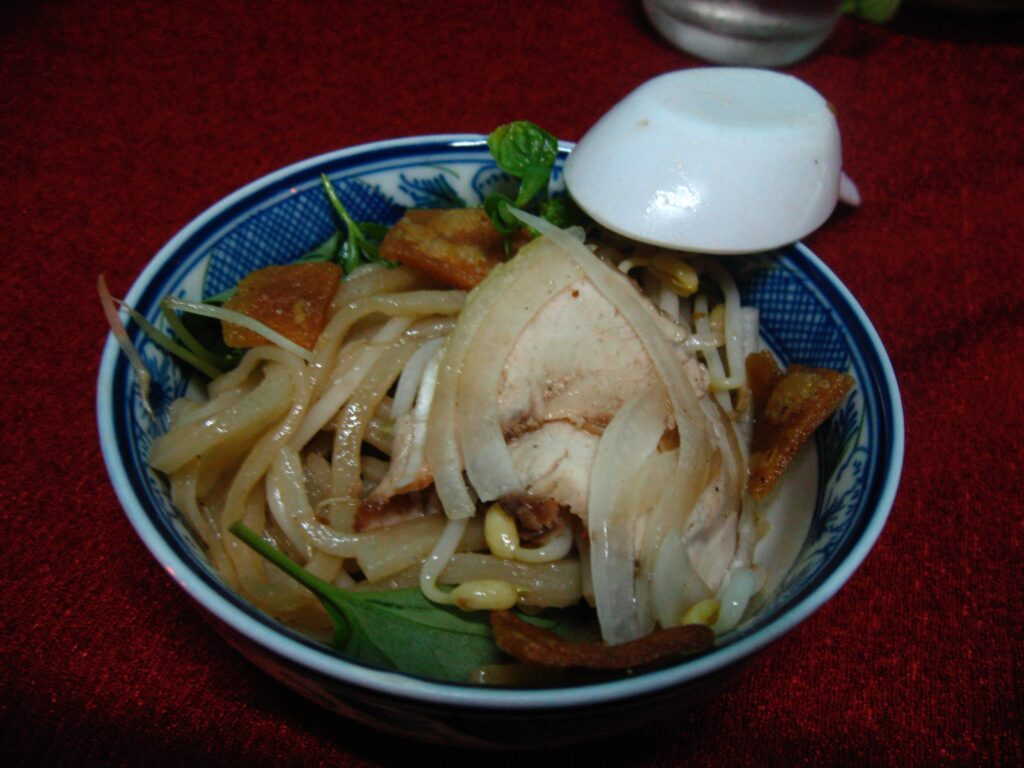
A bowl of cao lau in a patterned bowl.
Lime, fresh chillies or chilli sauce may be served on the side for diners to add as they please. It is worth trying a mouthful before reaching for the condiments. With so little sauce in the bowl, even a small squeeze of lime or a touch of chilli can make a noticeable difference.
Cao lau is best enjoyed while the noodles are still warm, the pork is tender and the crispy toppings have kept their crunch. You can mix a few crunchy pieces into the sauce and save the rest for later. That way, even towards the end of the meal, there is still a little of the noodles’ satisfying chew and the welcome crunch of the toppings.
And if you finish your bowl still wondering why there was so little sauce, that is perfectly fine. At least this time, you will know the cook has not forgotten to add anything.

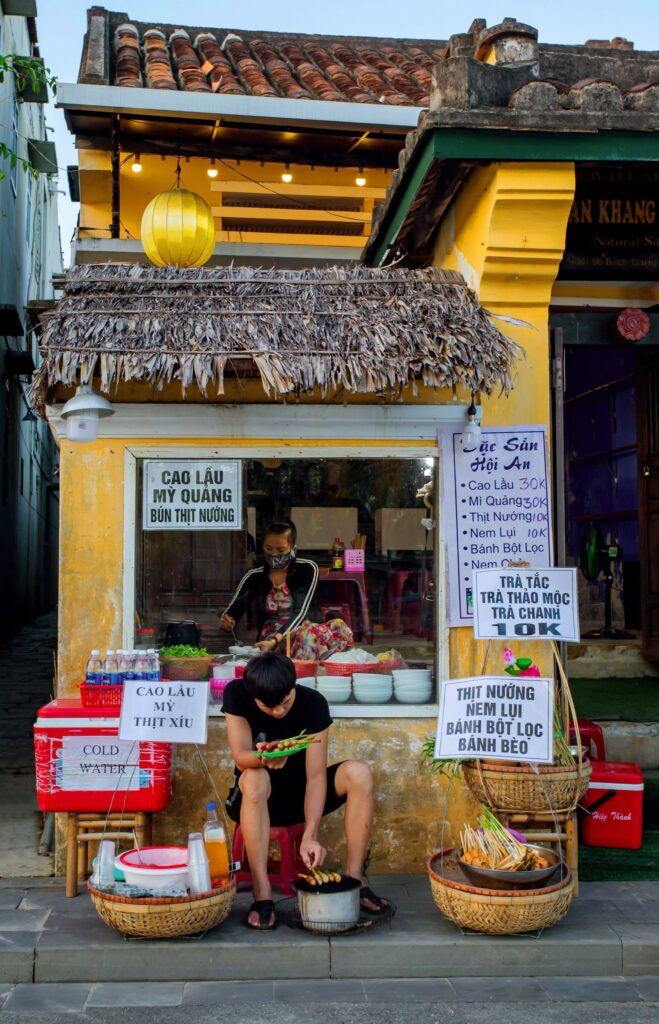
A Hoi An street and a food stall.
Image credit: Wikipedia