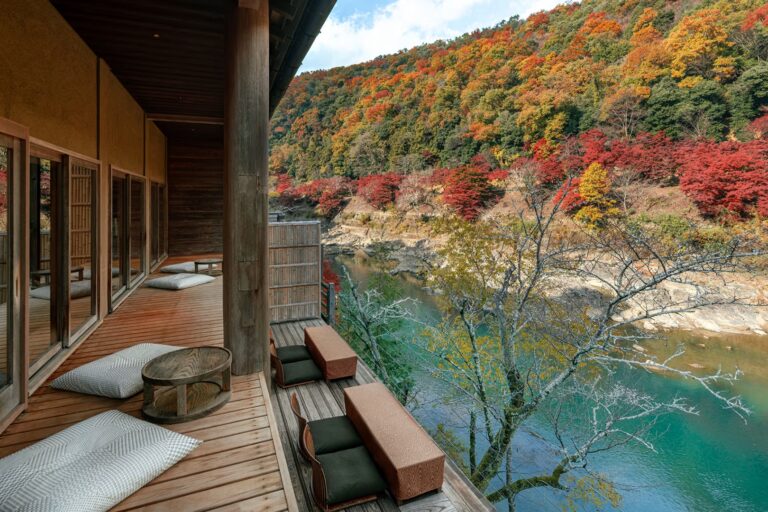
Along Higashiyama’s stone-paved slopes, tiled roofs follow one another, interspersed with wooden houses and long-established gardens. Park Hyatt Kyoto sits within this setting as a series of low-rise buildings that follow the hillside rather than rising above the neighbourhood.
Behind its restrained exterior lies a carefully planned building, where the architects had to find a way to introduce a modern hotel onto a site already occupied by historically significant buildings and gardens.
The Backstory
Park Hyatt Kyoto opened on 30 October 2019, but the story of this site began long before then.
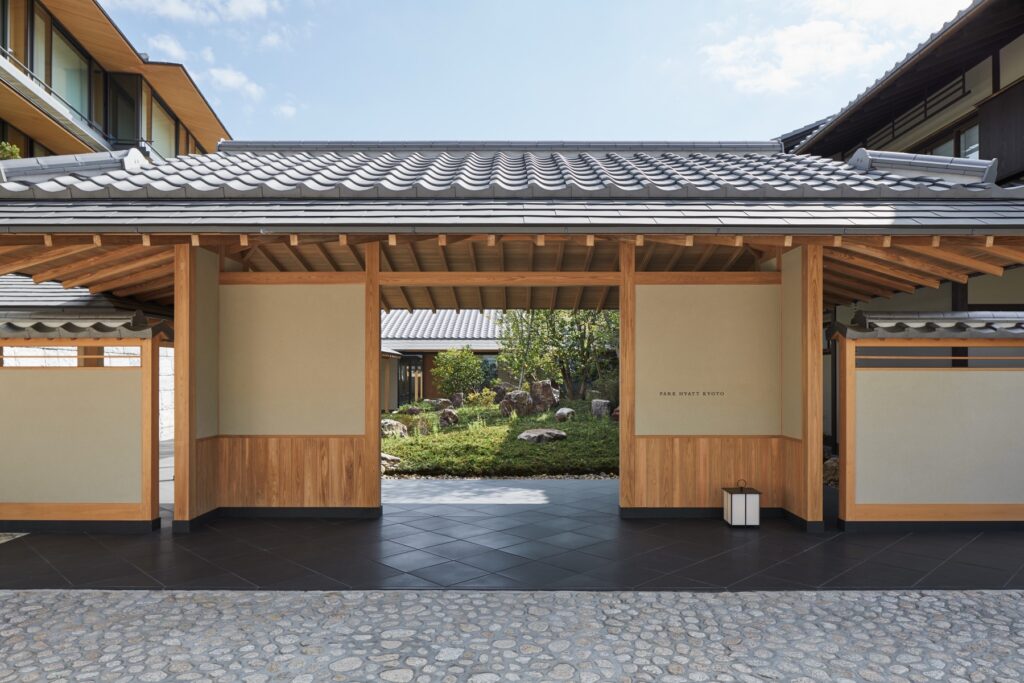
The entrance gate.
The site is linked to Kyoyamato, a restaurant whose history dates back to 1877. The grounds still contain wooden buildings with origins in the Edo period, alongside traditional gardens.
When developing the hotel, Takenaka did not regard the existing buildings as obstacles to be removed. They were preserved and restored, becoming the starting point for the new architectural layout.
The project brought together three names: Takenaka, responsible for architecture and construction; Tony Chi, who developed the interiors with his design team; and Yasuo Kitayama, who contributed to the design of many of the gardens.
The result is a hotel with 70 rooms, nine of them suites, sharing the site with Kyoyamato’s historic spaces. Roofs, corridors and gardens connect the old and new.
The Setting
Park Hyatt Kyoto stands beside Ninenzaka, near Kōdai-ji and on the route towards Kiyomizu-dera. Stone-paved lanes, traditional shops and Higashiyama’s tiled roofs form the scene just beyond the hotel.
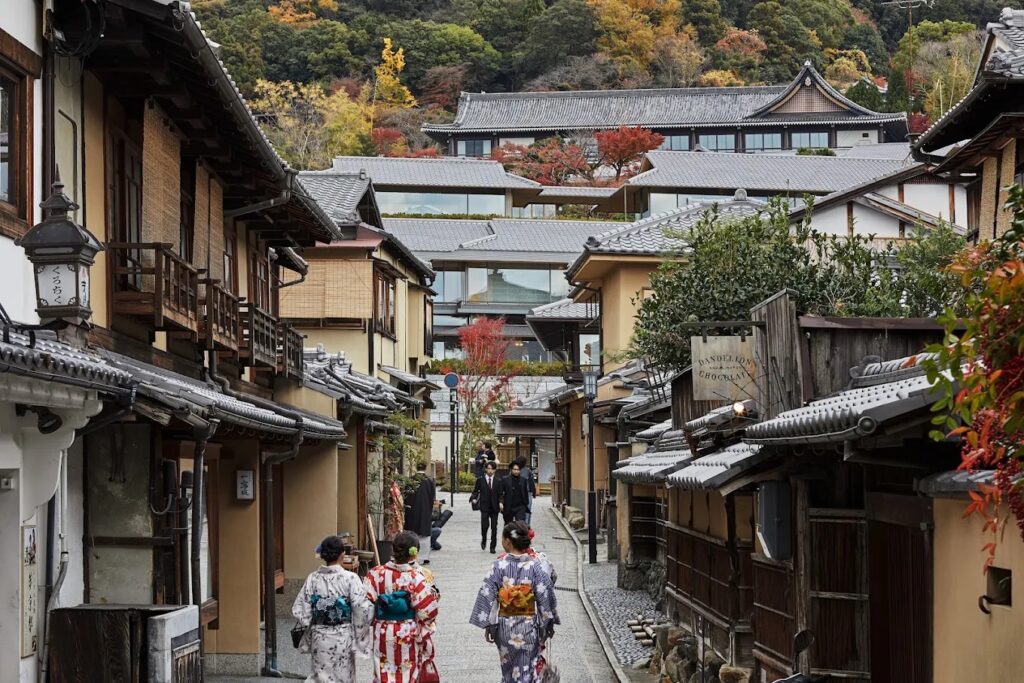
Ninenzaka, with the hotel behind.
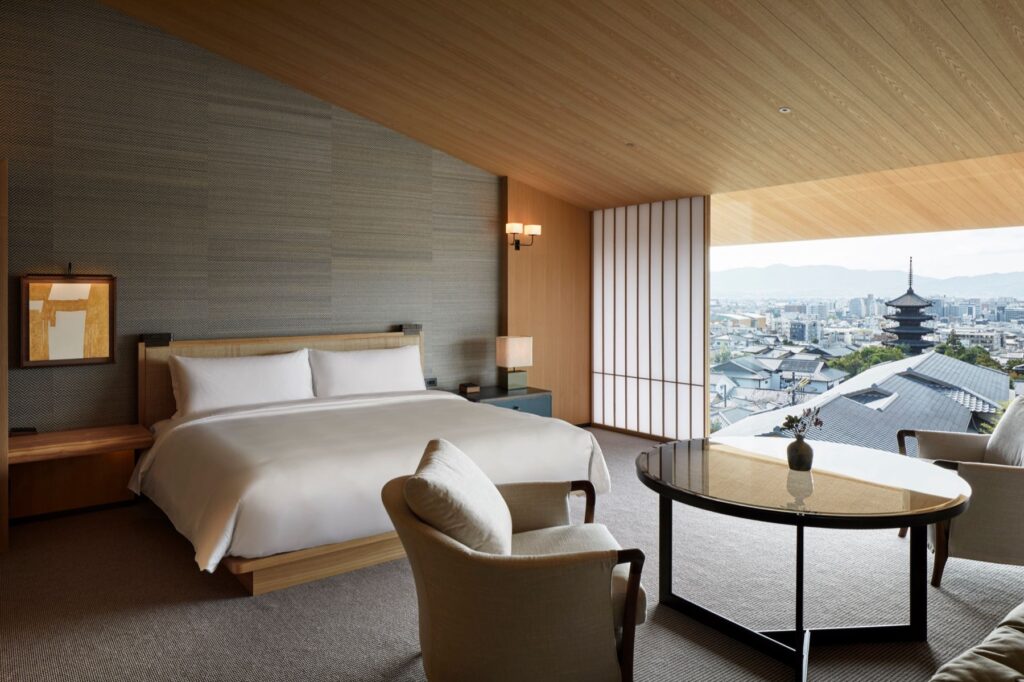
The sloping terrain creates different levels and views. Some rooms look out onto small gardens, while others face Yasaka Pagoda and Kyoto’s rooftops.
The location makes it convenient to explore the neighbourhood on foot, although the slopes and steps are worth considering for guests with particular accessibility needs.
Architecture & Interior Design
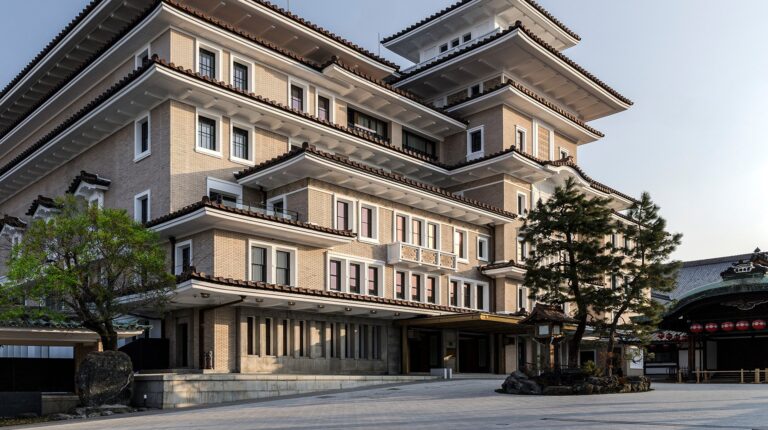
Much of what distinguishes Park Hyatt Kyoto lies in the way the new building sits within historic Higashiyama. To keep its scale appropriate to the neighbourhood, Takenaka placed about 60% of the hotel’s floor area below ground. Above, low-rise buildings follow the terrain, with tiled roofs continuing the rhythm of those around them. Behind that exterior are spaces arranged to meet the needs of a modern hotel.
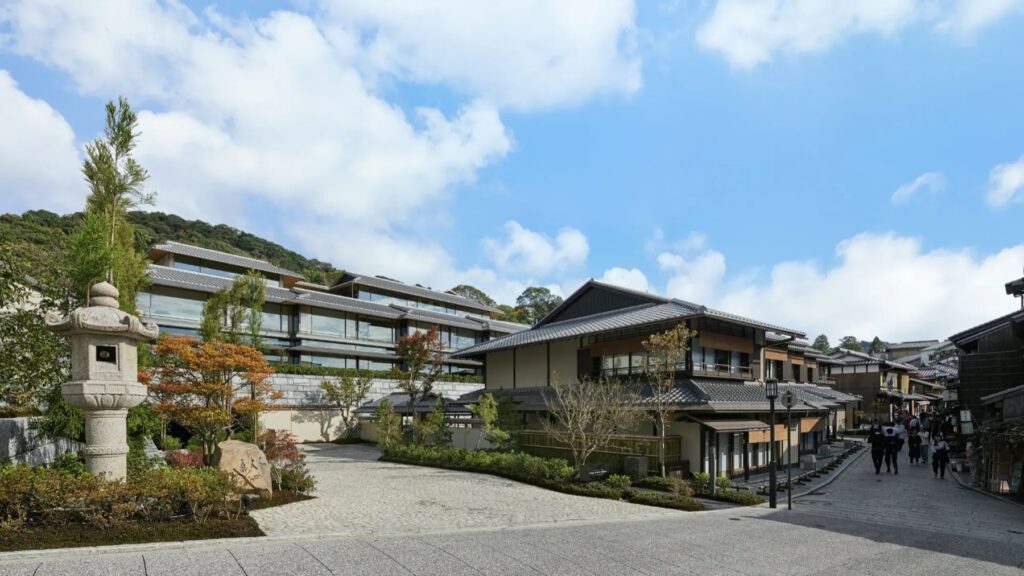
The hotel from Ninenzaka.
The architects also planned the position of the restaurant and bar to avoid blocking the view of Yasaka Pagoda from Sōyōtei, a historic building belonging to Kyoyamato. Sightlines that existed before the hotel were treated as part of what the new design needed to preserve.
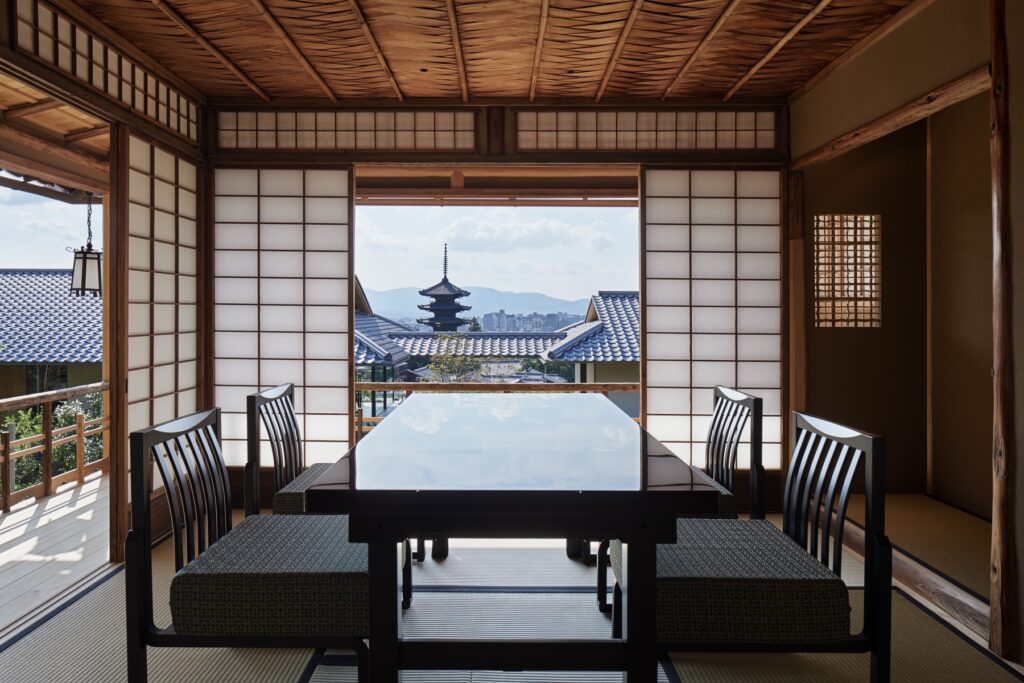
Sōyōtei.
Yasuo Kitayama contributed to the design of many of the gardens on the site. Between the buildings, seasonal plants, stone paving, water and garden lanterns appear along paths, under eaves and in transitional spaces. The architecture and gardens feel like extensions of one another. At times, a small courtyard seen up close can matter as much as a distant panorama of Kyoto.
Inside, Tony Chi continues this approach with natural materials and restrained arrangements. Tamo wood, stone and fabrics are combined with bespoke furniture to create a sense of home rather than the scale of a large hotel. Tony Chi also designed the interiors of Rosewood Hong Kong, a 65-storey tower with a very different character.
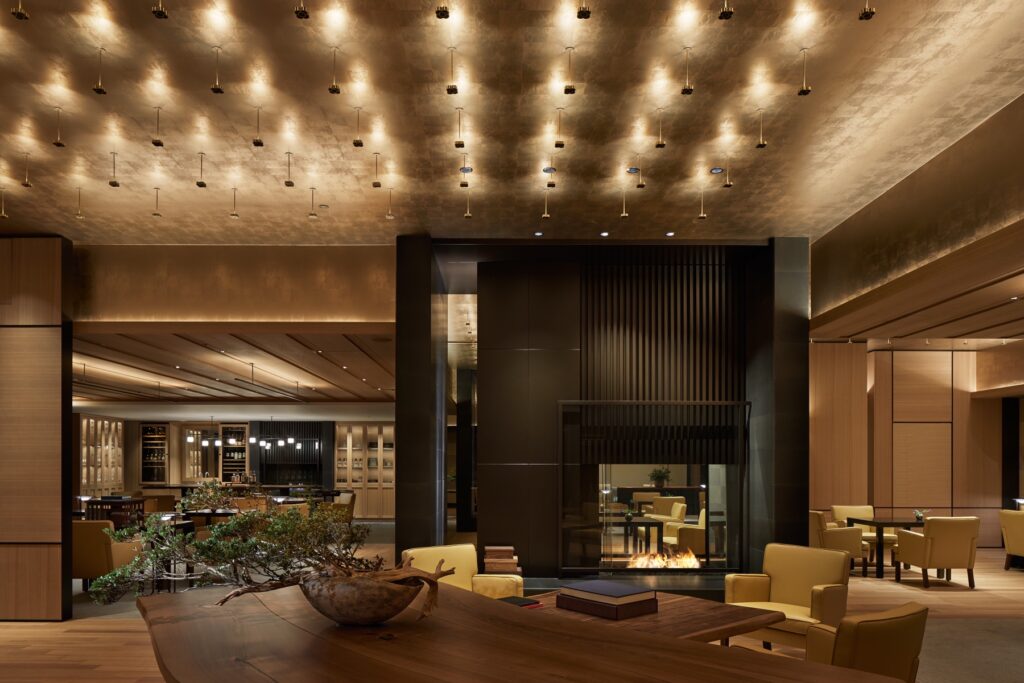
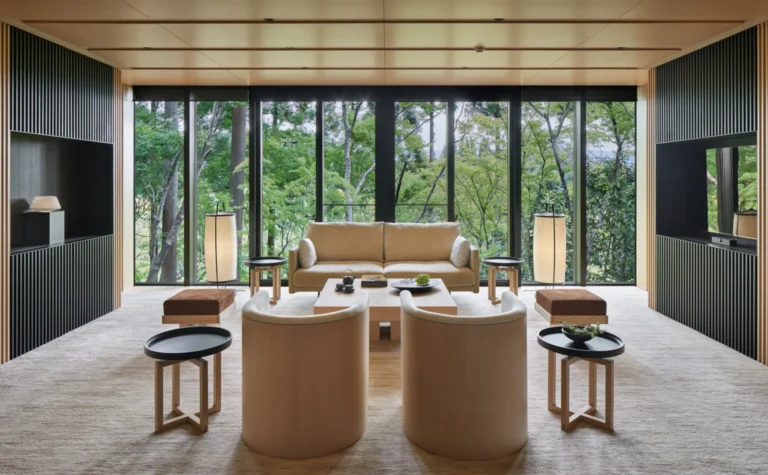
The Living Room.
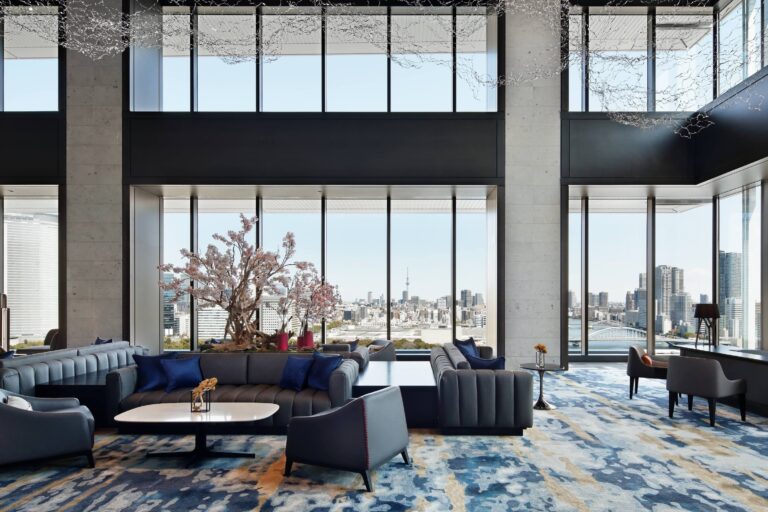
At The Living Room, a gilded ceiling, petal-shaped lamps and a walnut reception counter provide distinctive details. A fireplace and groups of chairs create smaller spaces for reading, drinking tea or conversation.
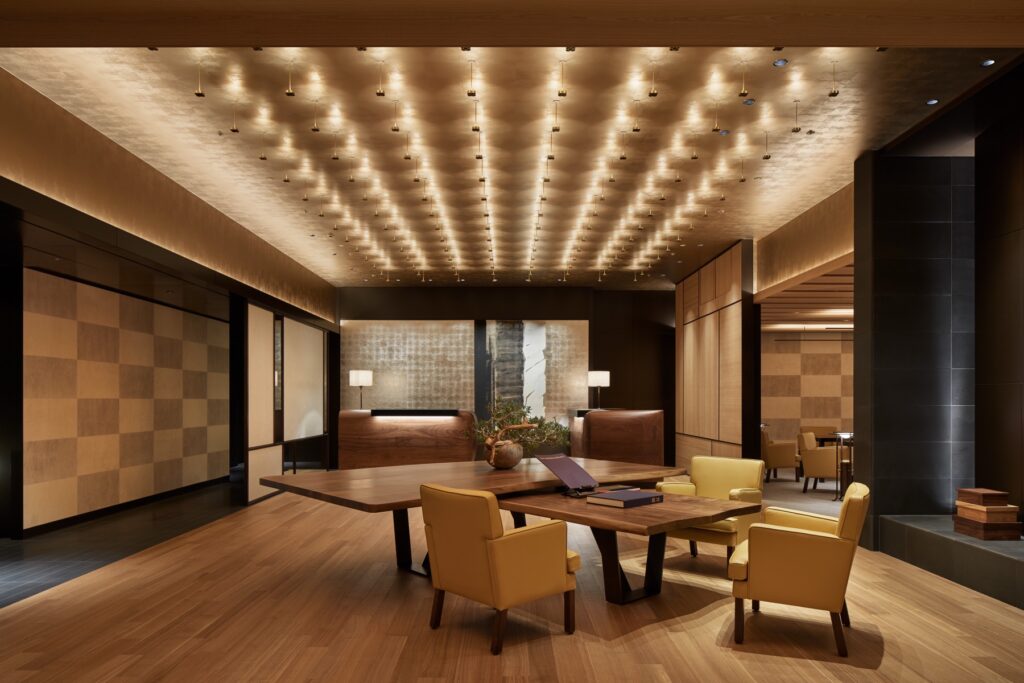
The reception counter.
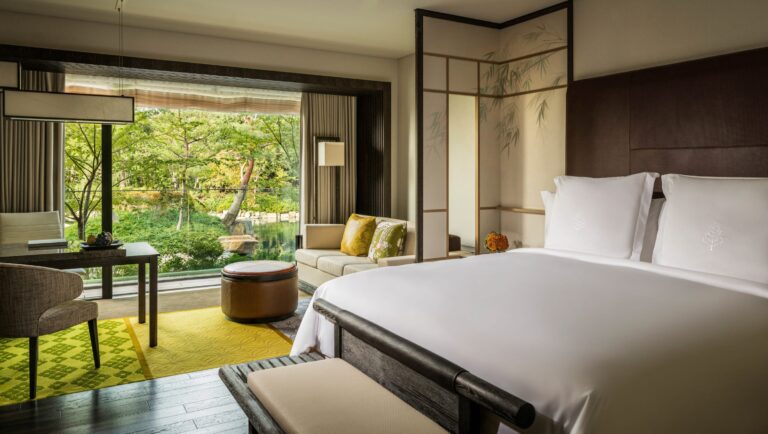
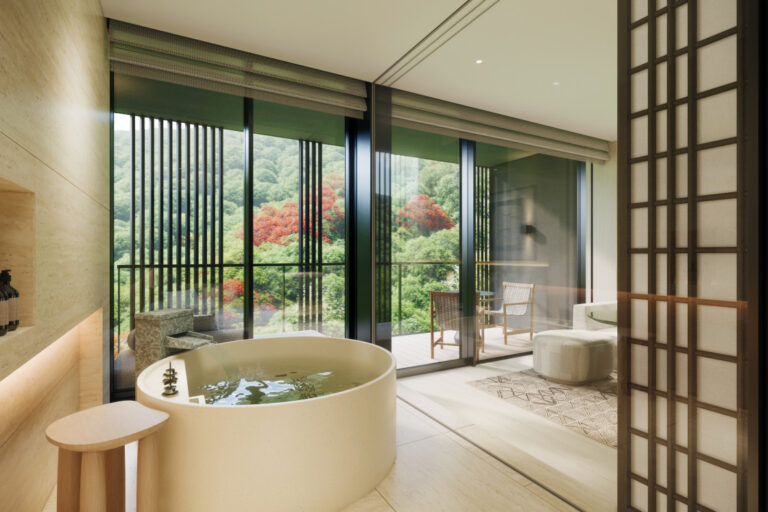
In the guest rooms, desks, benches and bathtubs are placed beside windows overlooking gardens or the old streets. The surroundings enter the view without overwhelming the interiors.
Park Hyatt Kyoto therefore has no need for an oversized lobby or forms intended to impress from a distance. What distinguishes it is how eaves, gardens, materials and historic buildings are brought together.
Rooms & Suites
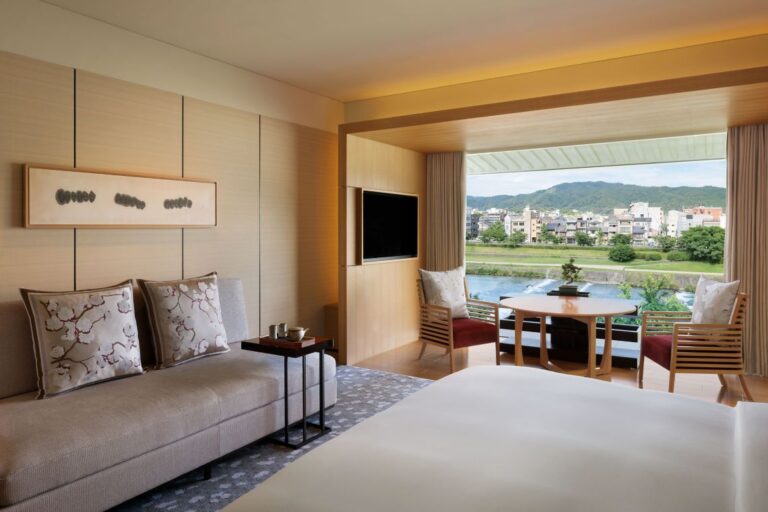
Park Hyatt Kyoto has 70 rooms and suites. Several room categories share the same area of 45 m² yet offer very different views.
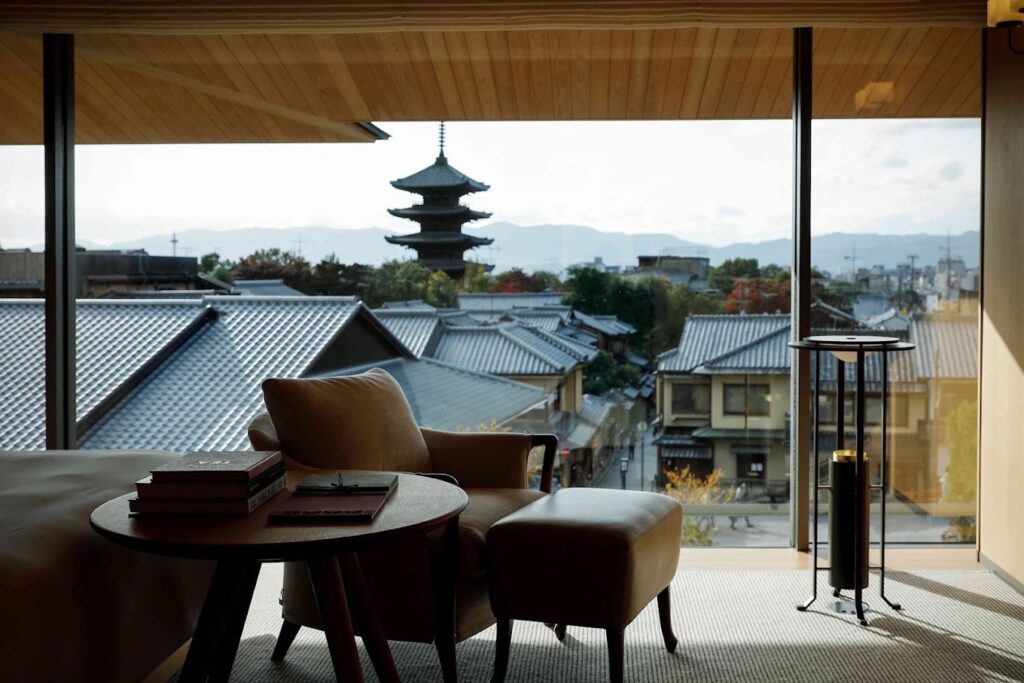
The view from a room.
Garden Terrace
Garden Terrace measures 45 m² and has a tsuboniwa, a small private Japanese garden. Inside are a work area, a long seat and a bathtub.
The small garden brings nature close to where guests rest.
Pagoda View
Also measuring 45 m², Pagoda View looks towards Yasaka Pagoda and Kyoto’s rooftops. While Garden Terrace draws attention to a garden at close range, Pagoda View opens up views of the historic cityscape.
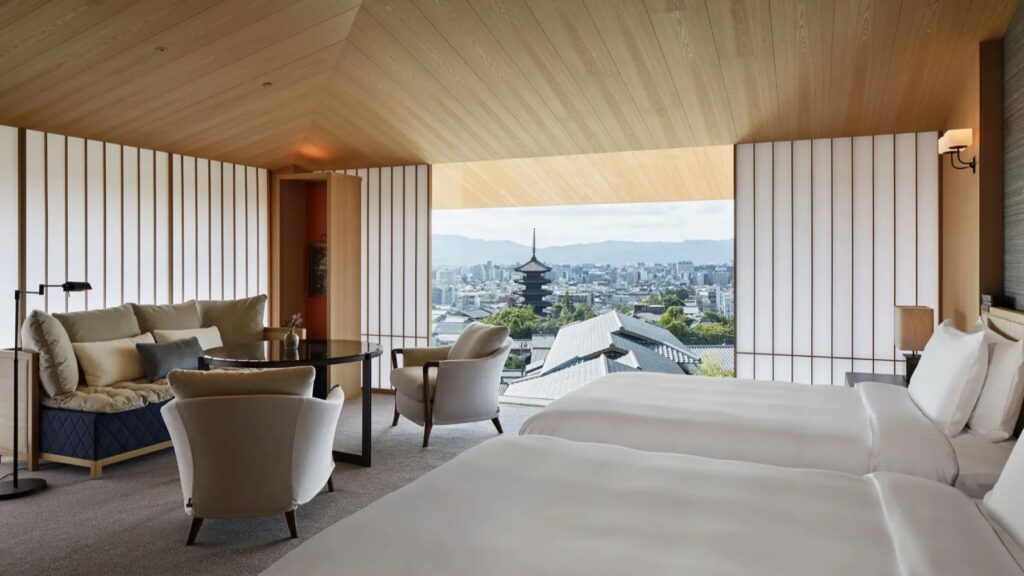
A Pagoda View room.
Pagoda House
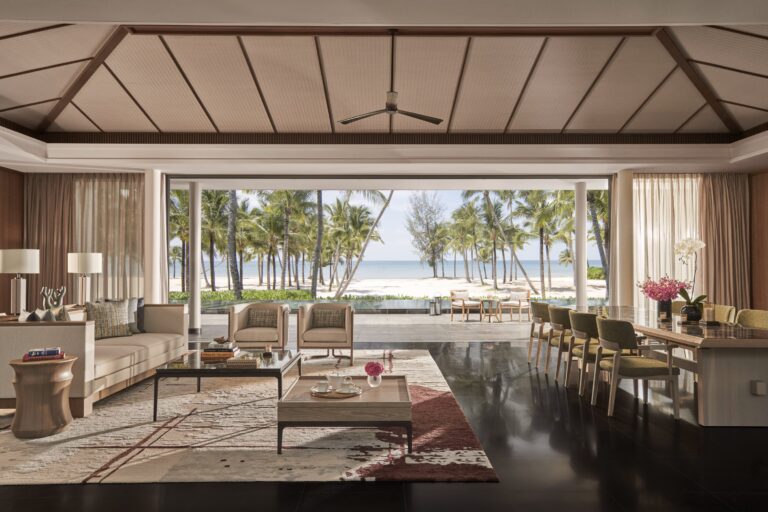
Pagoda House measures 135 m² and sits in the upper part of the grounds, with a living room, bedroom and private kitchen.
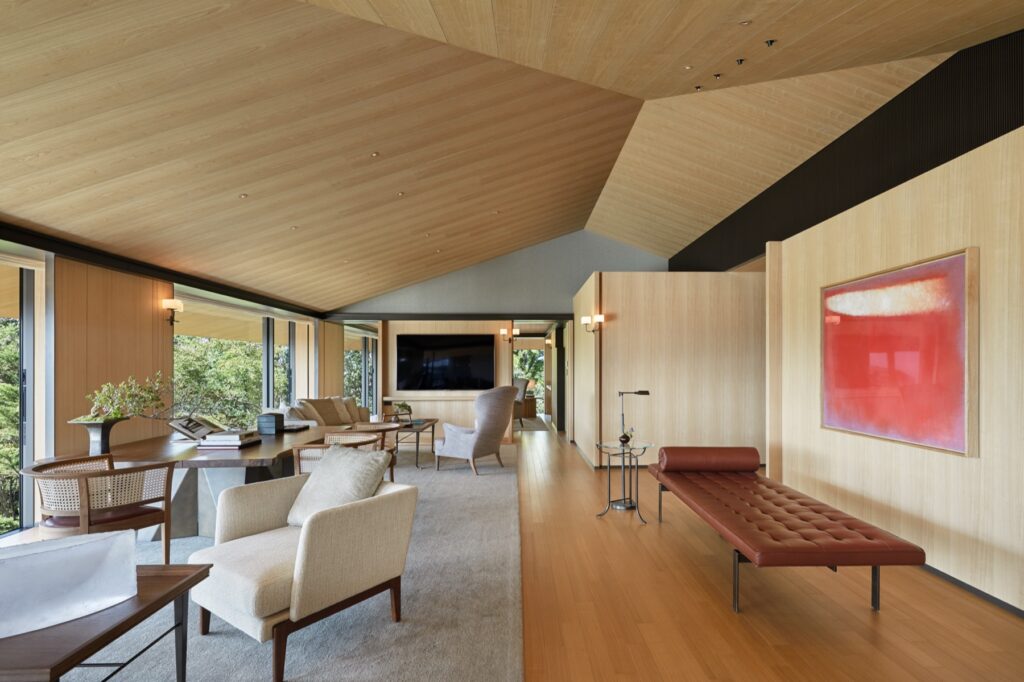
Pagoda House.
From here, views open towards Yasaka Pagoda, the city and the sunset. The larger living space suits guests planning to spend more time at the hotel.
Dining
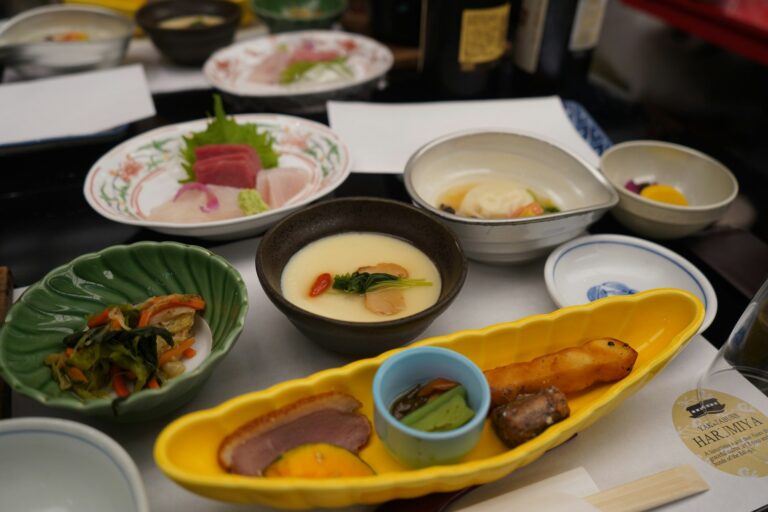
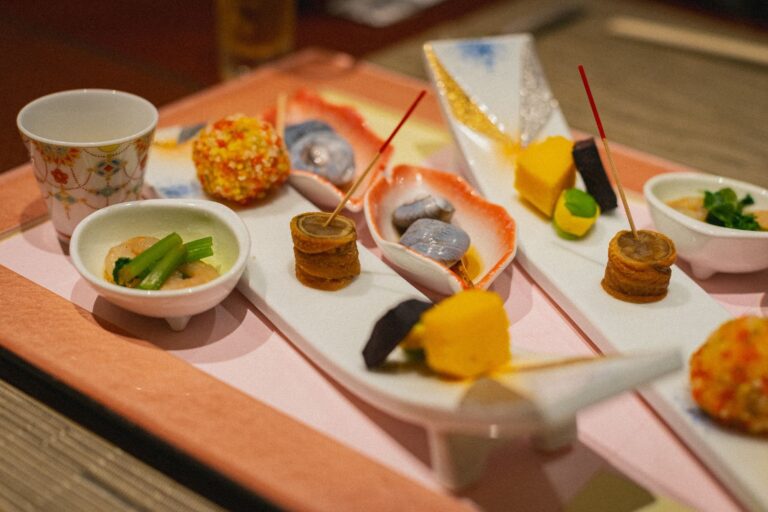
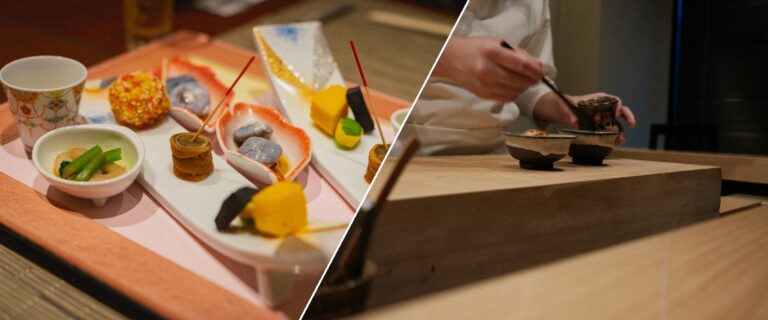
Kyoyamato serves kaiseki in historic spaces, providing a direct link to the history of the site.
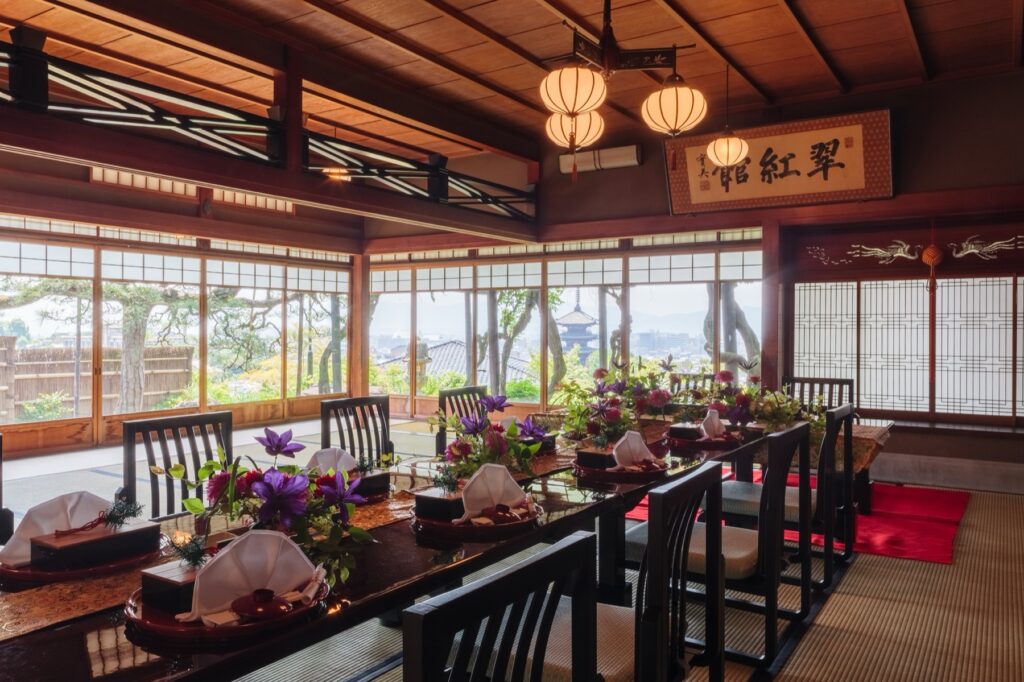
A hall at Kyoyamato.
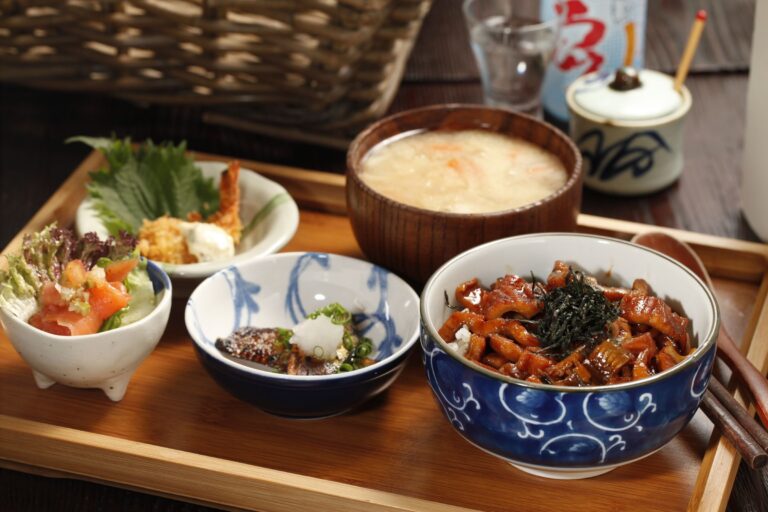
Kyoto Bistro sits along Ninenzaka and serves international dishes and familiar Japanese fare.
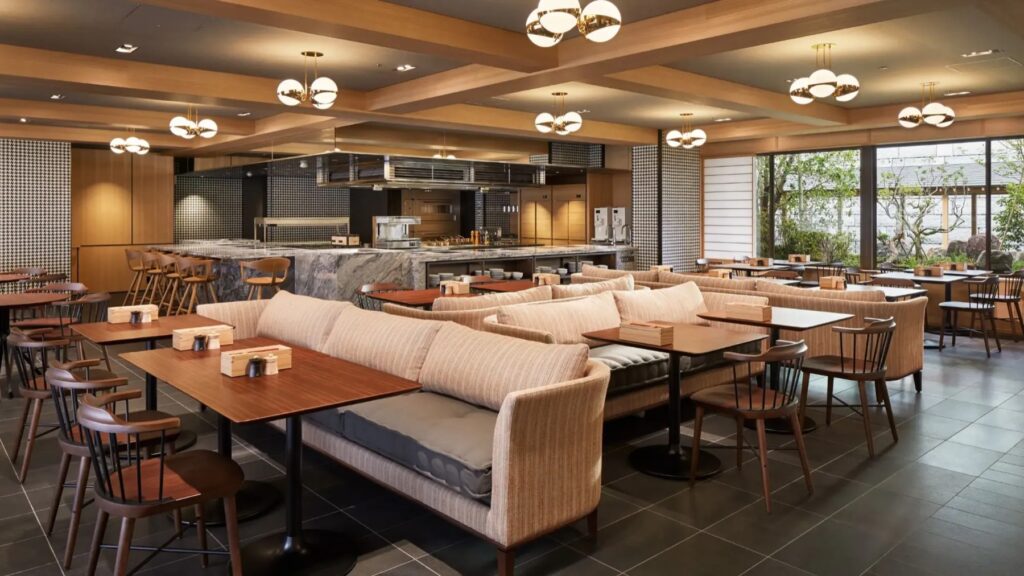
A dining room.
Yasaka offers teppanyaki incorporating French techniques, with windows facing Yasaka Pagoda. Kohaku bar enjoys a similar view, while The Living Room is a place for afternoon tea.

A cocktail at Kohaku.
Wellness
The spa and fitness facilities for hotel guests include a Bath House with hot and cold soaking baths, a dry sauna and a steam room. The hotel has no swimming pool or onsen.
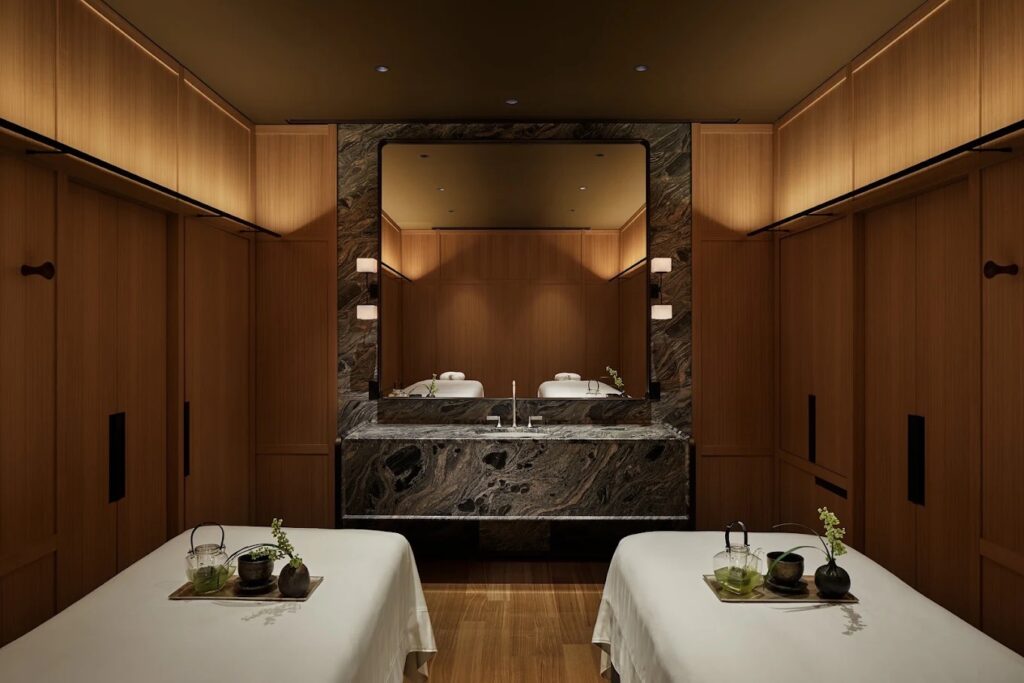
A treatment room.
Culture & Experiences
From Park Hyatt Kyoto, guests can explore Kiyomizu-dera, Kōdai-ji and the streets of Higashiyama. The hotel also offers activities relating to the tea ceremony, meditation and traditional crafts, depending on the programme scheduled.
For those interested in architecture, there is much to discover within the grounds themselves: the positioning of the roofs, a garden appearing beyond a corridor or the way Yasaka Pagoda is preserved within framed views.
Traveleak’s Take
Park Hyatt Kyoto suits travellers who want to stay in a historic neighbourhood of Kyoto and have an interest in architecture and local culture.
The value of Park Hyatt Kyoto lies in its setting within Higashiyama and in how the new building carries forward what existed before it. Takenaka adjusts the architectural scale; Yasuo Kitayama contributes through his garden designs; Tony Chi continues the story through materials and interiors.
When choosing a room, views are worth considering: Garden Terrace brings a garden close at hand, while Pagoda View and Pagoda House draw the eye towards Kyoto’s landscape.
At Park Hyatt Kyoto, what may be most memorable about the design is what the building has chosen not to obscure.
More Park Hyatt hotels on Traveleak: Park Hyatt Saigon, Park Hyatt Sydney, Park Hyatt Tokyo
More hotels in Kyoto on Traveleak:
The Ritz-Carlton, Kyoto · Aman Kyoto
HOSHINOYA Kyoto · Four Seasons Hotel Kyoto
The Imperial Hotel, Kyoto
Image source: Park Hyatt Kyoto
Hotel Profile
- Hotel Group
- Hyatt
- Hotel Brand
- Park Hyatt
- Brand Segment
- LuxuryHyatt portfolio
- Loyalty Programme
- World of Hyatt
Essential Information
- Location
- Ninenzaka, Higashiyama, Kyoto, near Kōdai-ji
- Accommodation
- 70 rooms, including nine suites.
- Dining
- Yasaka, Kyoto Bistro, The Living Room, Kohaku and Kyoyamato.
- Wellness
- Spa, Bath House, sauna, steam room and 24-hour fitness centre. No swimming pool.
- Getting there
- About 3 km from Kyoto Station. From Kansai International Airport, the Haruka Limited Express to Kyoto takes about 90 minutes.
Location Map
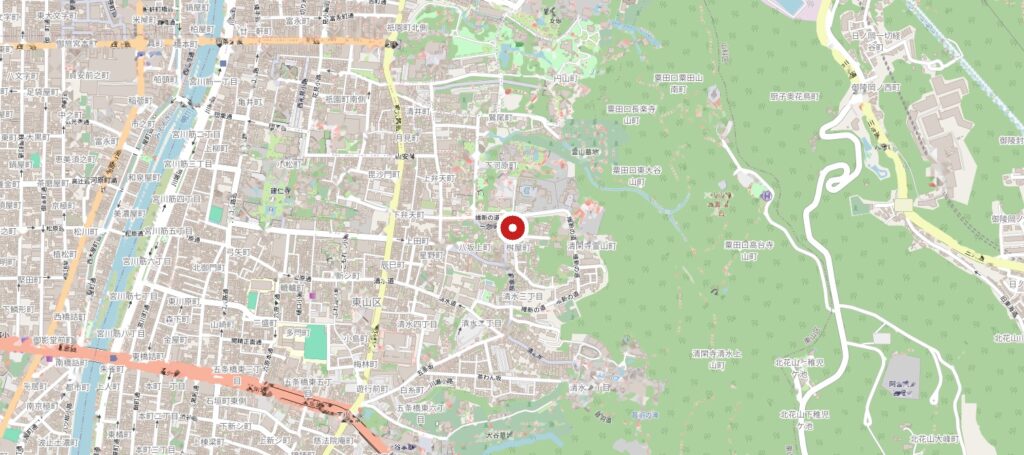 © OpenStreetMap contributors
Contact
360 Kodaiji Masuyacho, Higashiyama-ku, Kyoto 605-0826, JapanOfficial Website hyatt.com/park-hyatt/en-US/itmph-park-hyatt-kyoto
Rates via Trip.com
Compare rates: Booking.com
Some links on this page are affiliate links. If you make a booking through them, Traveleak may earn a small commission at no additional cost to you.