The Train
On 26 March 2024, Vietnam Railways introduced a tourist train service called the Vietnam Central Heritage Train, linking the cities of Hue and Da Nang. The journey combines rail travel with coastal scenery and an introduction to the region’s cultural heritage.
The railway itself has a history stretching back more than a century. Trains travelling between Hue and Da Nang have long passed through Lang Co and crossed the Hai Van mountains, where the tracks follow the slopes, passing over bridges and through tunnels on their way south.
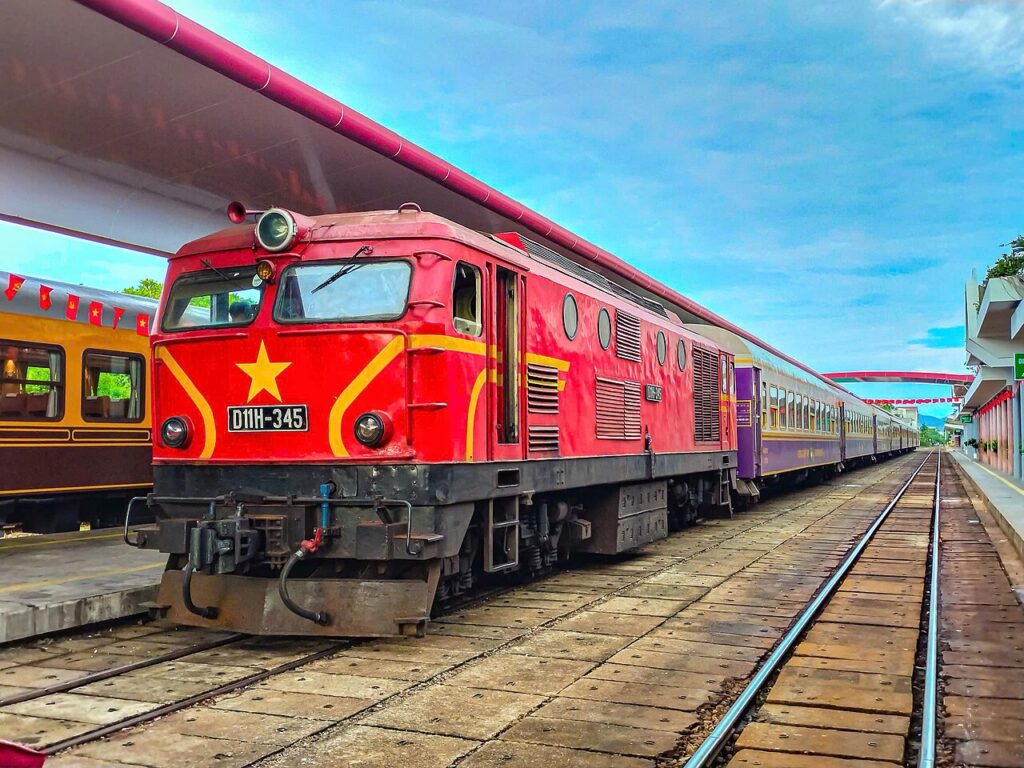
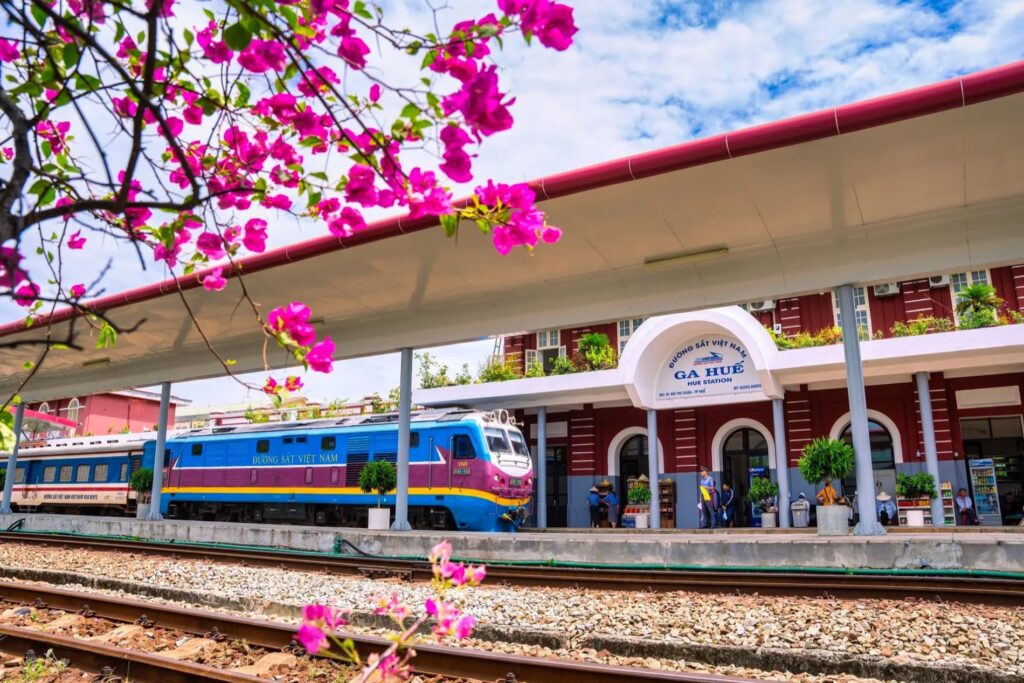
The heritage train at Hue station.
The heritage train has given this established route a new role in regional tourism. Passengers can spend the journey enjoying the scenery and discovering aspects of local culture onboard.
In March 2026, the train was introduced with a new appearance, alongside changes to its interiors and passenger facilities. Design elements inspired by Central Vietnam’s cultural heritage were incorporated into the carriages, adding a regional character to a journey already known for its natural scenery.
The Route
Leaving Hue, the railway heads south through the coastal lowlands before reaching Lang Co at the foot of the Hai Van mountains.
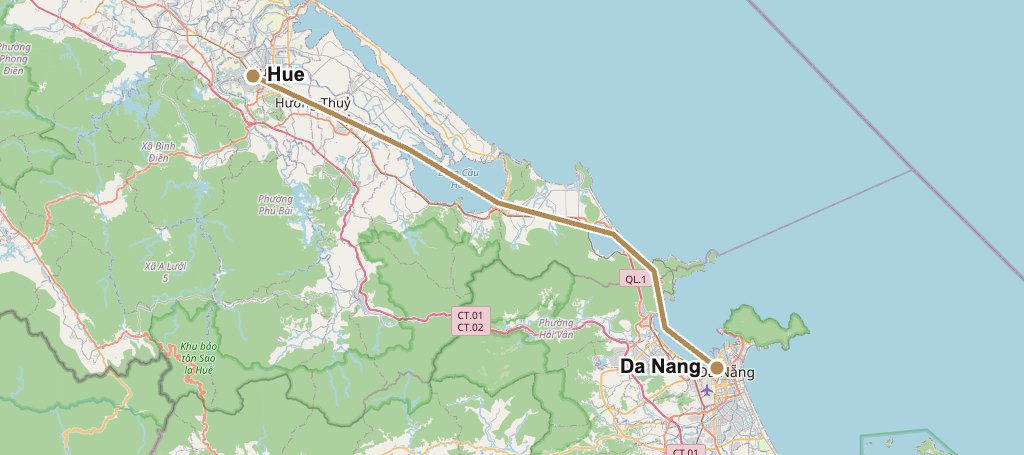 © OpenStreetMap contributors
In 2009, Lang Co Bay was admitted to the Most Beautiful Bays in the World Club. Surrounded by mountains and coastal waters, the bay is known for its long sandy beach, blue waters and nearby lagoon landscape.
Beyond the bay rises the Hai Van mountain range, a natural boundary between two regions with different terrain and climates. Crossing these mountains has long presented a challenge for transport in Central Vietnam.
The railway follows the mountainside, using bridges and tunnels to negotiate the difficult terrain. On the northern slopes of Hai Van, the Don Ca arch bridge is among the structures associated with the construction of the railway in the early twentieth century.
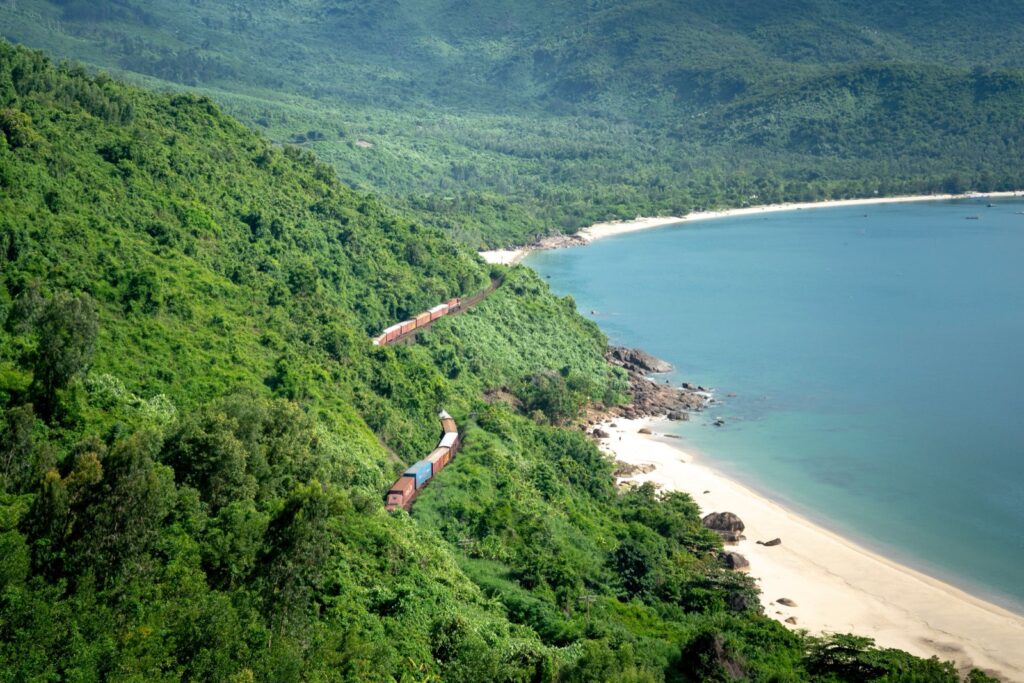
A train winding along a hillside above a bay.
These engineering works were originally built to carry passengers and goods across the mountains. Over time, the mountain railway itself has become one of the attractions of travelling between Hue and Da Nang.
Life Onboard
The heritage train operates as a daytime seated service, with spaces designed for enjoying the scenery and introducing passengers to the culture of Central Vietnam.
In its 2026 design, purple associated with Hue is paired with light grey on the carriage exteriors. Inside, decorative motifs draw inspiration from the region’s architecture and traditional craftsmanship.
The interiors feature inlaid representations of traditional yin-yang roof tiles and lanterns, recalling the heritage of Hue and Hoi An. One was the imperial capital of the Nguyen dynasty; the other preserves the history of a trading port that flourished over several centuries.
These references bring elements of regional culture into the carriages, even though the railway journey itself runs between Hue and Da Nang.
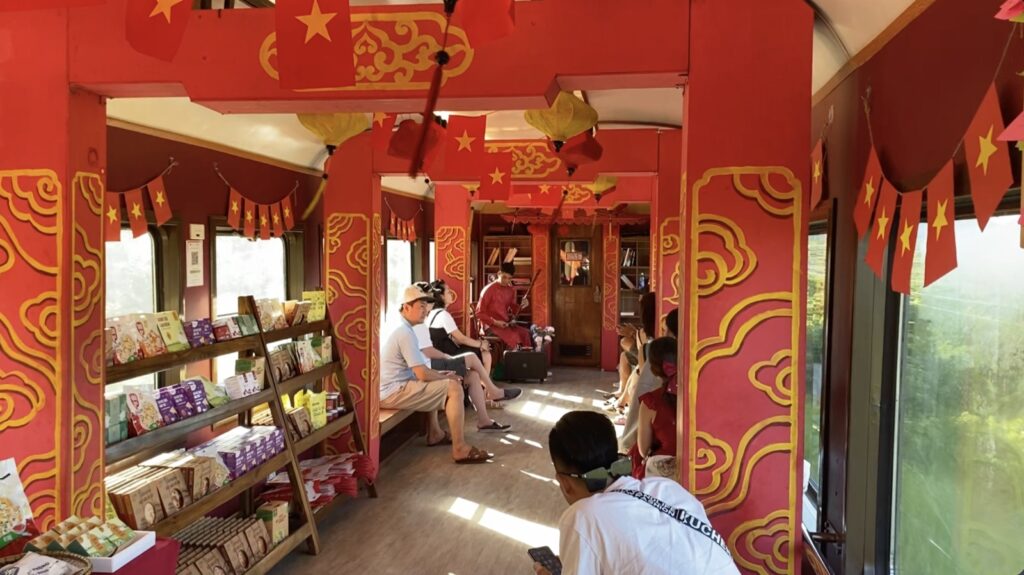
A cultural performance on board.
The soft-seat carriages feature seats that can rotate through 180 degrees. Meanwhile, the VIP carriage has a nostalgic interior inspired by the imperial court of Hue, where passengers can enjoy refreshments and take in the scenery.
A community carriage also provides space for presentations of regional food and local products. These activities offer passengers an opportunity to learn more about Central Vietnam during their time onboard.

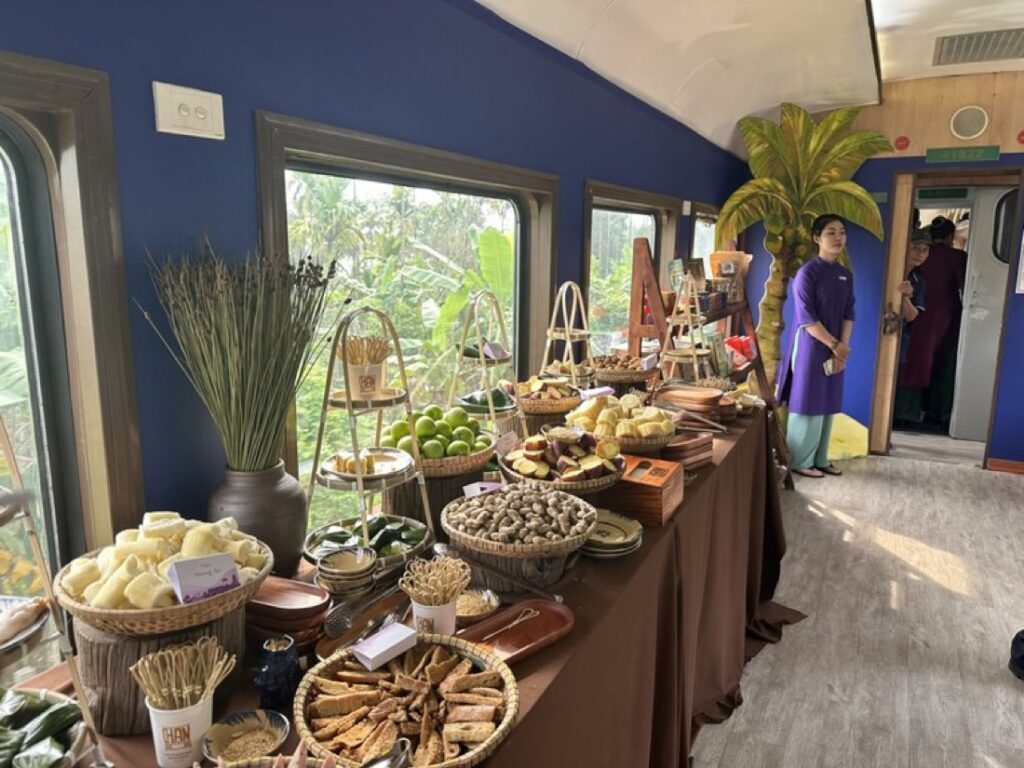
Local dishes presented on board.
The Journey
Leaving Hue station, the train passes residential neighbourhoods, fields and low-lying land south of the city. The landscape gradually changes as the railway approaches Lang Co, where the mountains draw closer to the coast.
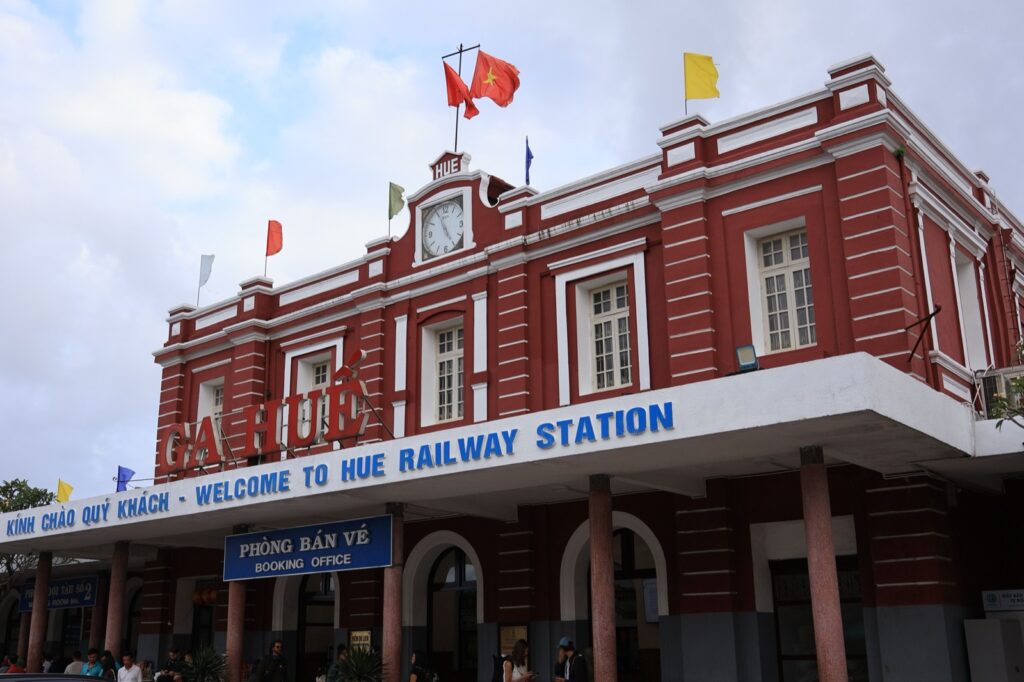
The facade of Hue train station.
Lang Co Bay comes into view beneath the Hai Van mountains. From the windows, passengers can see stretches of water, sandy shores and the slopes surrounding the coastline.
Beyond Lang Co, the train continues onto the mountain railway across Hai Van.
Here, the position of the tracks becomes particularly interesting. In places, the train follows the mountainside with views of the sea below. Elsewhere, the railway curves around the terrain, bringing passengers close to rocky slopes, patches of forest and tunnel entrances.
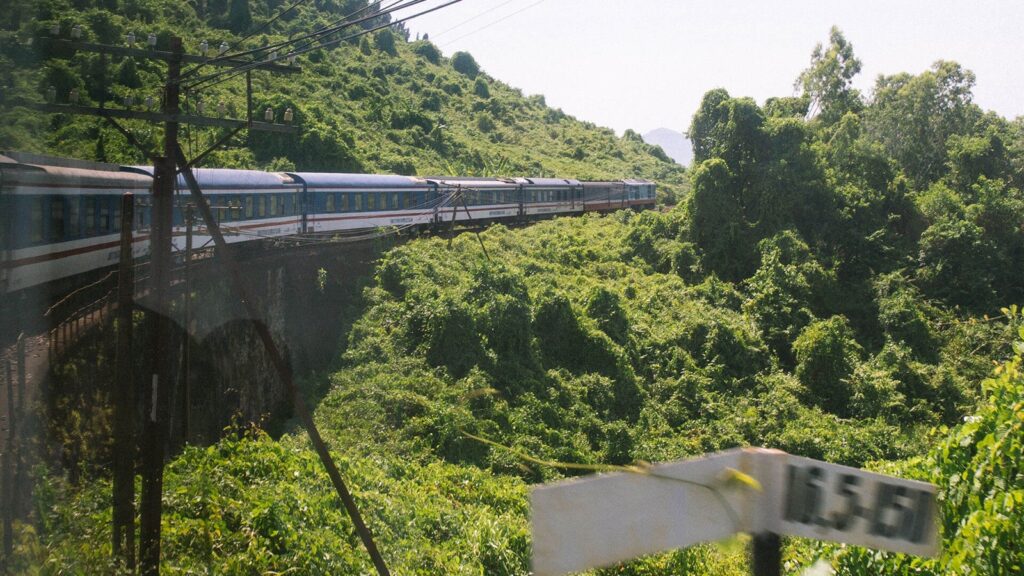
A train crossing a bridge, seen from the carriage window.
The scenery changes with the movement of the train. A stretch of coastline may disappear behind a mountainside, giving way to a valley or a railway bridge crossing the terrain below.
The bridges and tunnels show how the railway was built across the Hai Van mountains.
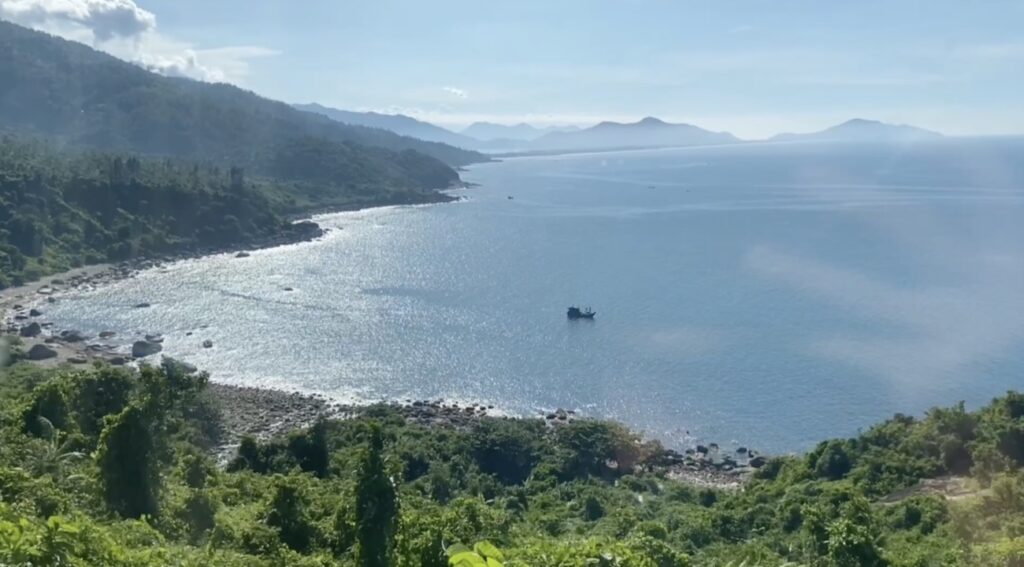
A bay with a small boat, seen from the train window.
From inside the carriage, passengers experience the route from a particular perspective. The entire landscape is rarely visible at once. Instead, the sea, mountains and railway structures appear in succession as the train follows the tracks.
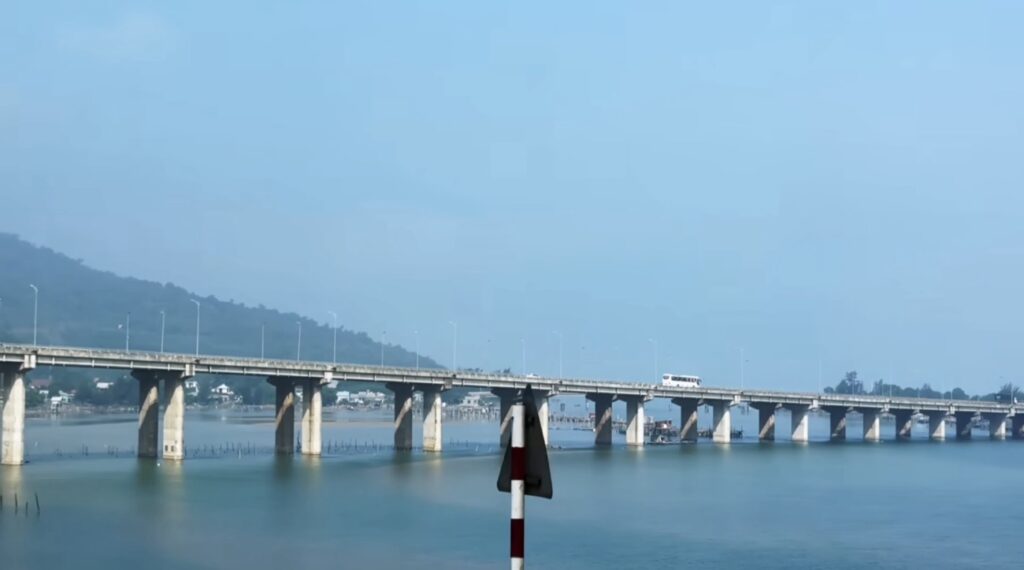
A long bridge over the water, seen from the train window.
After crossing the southern side of Hai Van, the scenery gradually gives way to residential areas and the urban landscape of Da Nang.
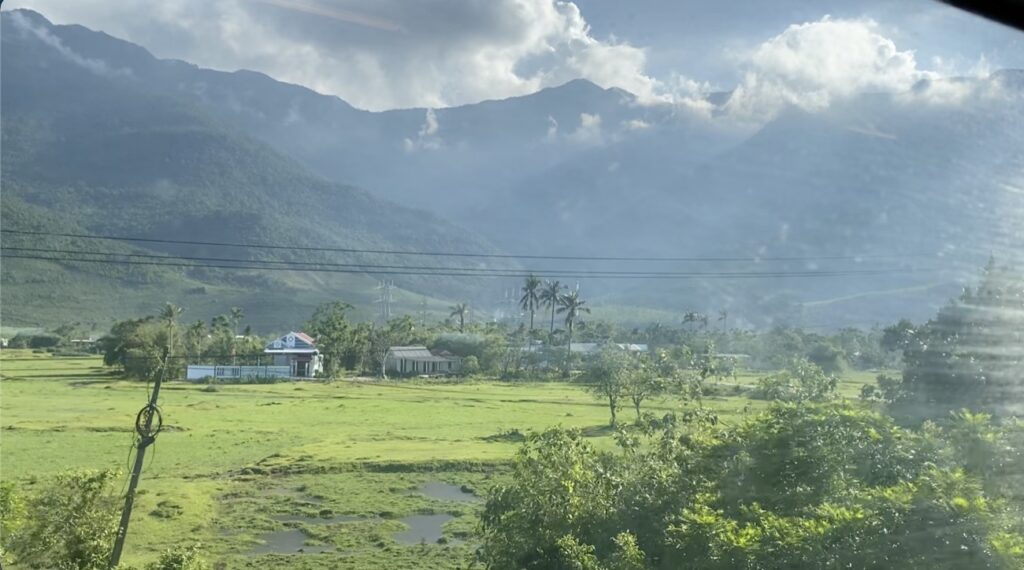
Mountains and fields seen from the train window.
The journey ends in Da Nang, on the other side of the mountains.
Traveleak’s Take
The heritage train is worth considering for travellers interested in the scenery of Lang Co Bay and the Hai Van mountains.
The onboard facilities and cultural elements add to the experience, but the main attraction remains the railway itself, following the mountainside as views of Central Vietnam’s coastline unfold beyond the windows.
Views of the sea may vary depending on the weather and where passengers sit.
Timetables, fares, seating arrangements and onboard services should be checked for the chosen departure date.
Essential Information
- Operator
- Vietnam Railways (VNR)
- Cabins
- Soft-seat carriages and VIP accommodation, depending on the service configuration
- Train Numbers
- Trains HD1 and HD3 from Hue; Trains HD2 and HD4 from Da Nang, according to the reference timetable
- Journey Type
- Scenic Day Train
Reservations & Contact
- Official Website
- ketnoidisan.dsvn.vn
- Reservations
- Vietnam Railways
Image source: Wikimedia Commons; Pexels; Vietnam Railways; ketnoidisan.dsvn.vn