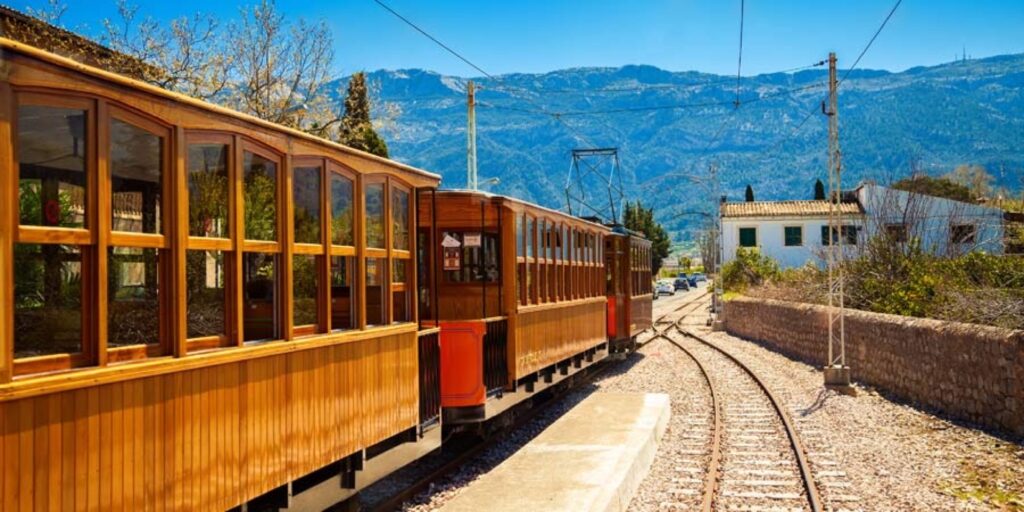
Leaving Palma, the wooden Tren de Sóller makes its way through fields, orchards and the mountain landscape of Mallorca. Ahead lies the Serra de Tramuntana, the mountain range that separates the Sóller valley from the rest of the island.
After approximately an hour, the train reaches Sóller, a town where orange and lemon growing has shaped local life for generations. From here, a wooden tram carries passengers through the streets and gardens towards Port de Sóller, on the Mediterranean coast.
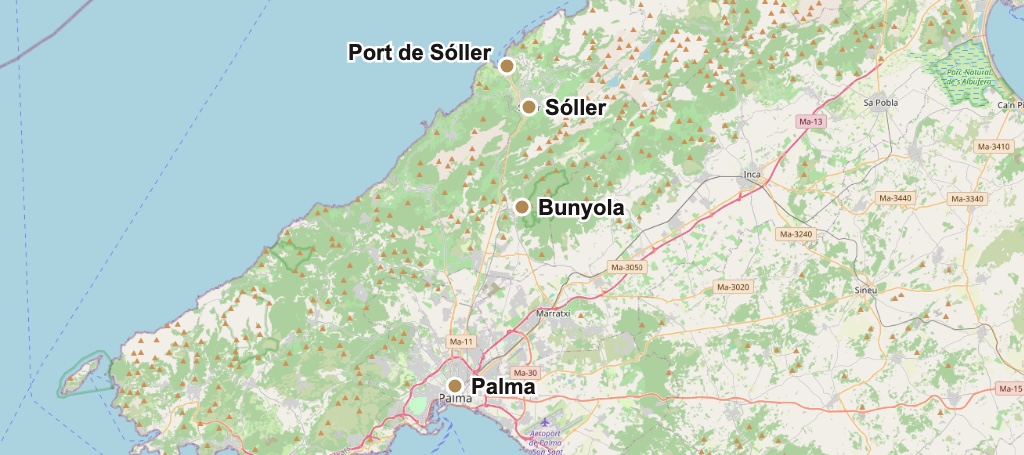 © OpenStreetMap contributors
Together, the two routes trace the transport connections that once supported trade and everyday life in the valley.
Through the Mountains to the Orange Valley
In the early twentieth century, the Serra de Tramuntana presented a considerable obstacle to travel between Sóller and Palma. The valley had its citrus groves and local industries, but transporting goods across the mountains was difficult.
The need for a better connection to Mallorca’s capital led to the construction of the Ferrocarril de Sóller, officially inaugurated on 16 April 1912.
At the time, the railway was a modern transport development, opening a new route for passengers and goods. Electrification followed in 1929, marking another stage in the line’s history.
Today, the carriages still retain their polished wooden interiors, large windows and period details, recalling the early years of rail travel on Mallorca. Much of the journey’s appeal, however, lies in the landscape outside.
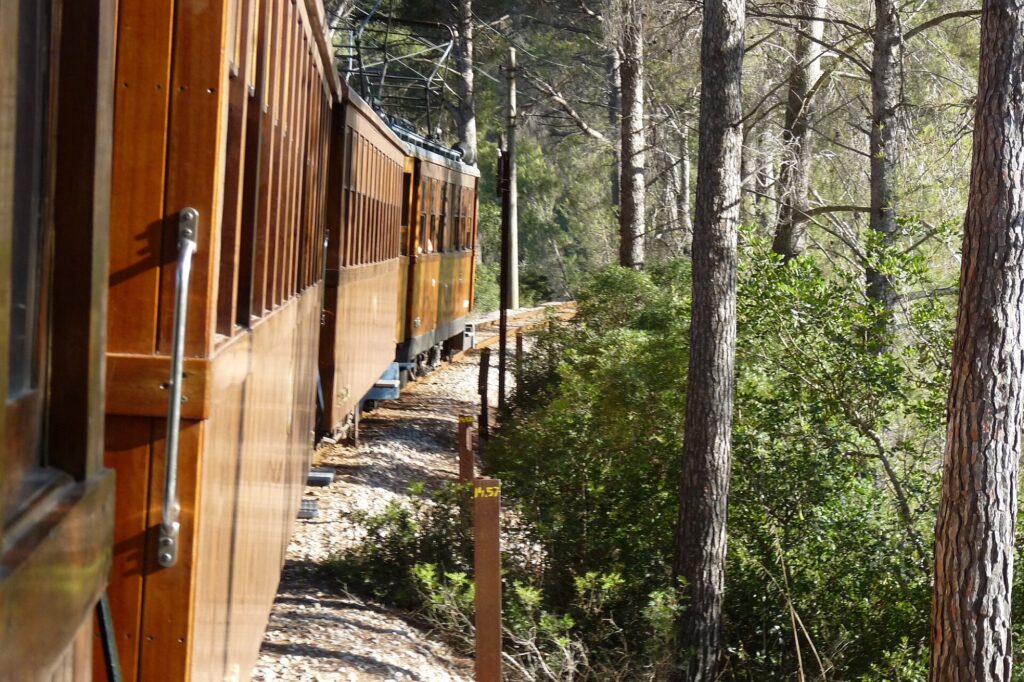
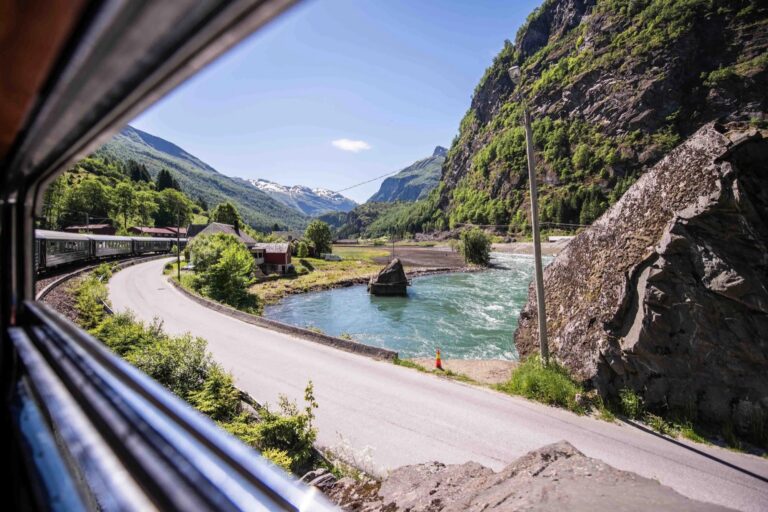
The carriages on the mountain line.
From Palma, the train passes through agricultural land towards Bunyola, where the mountains begin to close in around the tracks. Olive groves and orchards give way to the rocky slopes of the Tramuntana.
Beyond Bunyola, the railway enters a series of tunnels through the mountains, including the Alfàbia tunnel.
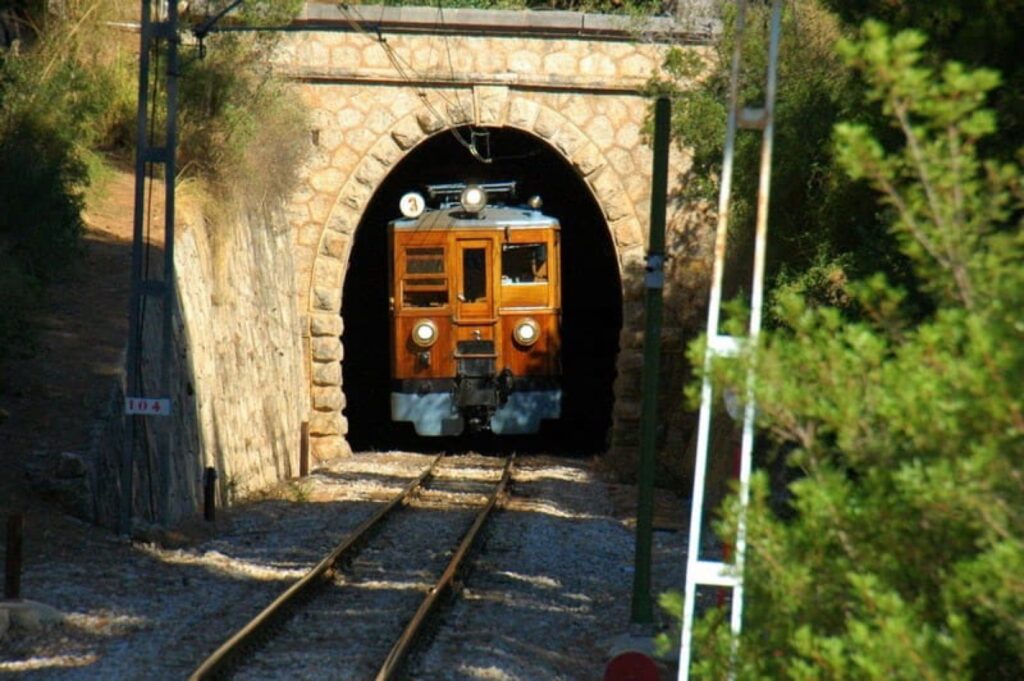
The train leaving a tunnel.
The darkness of the tunnels briefly interrupts the view. When the train emerges, the Sóller valley gradually comes into sight, with its rooftops, orange groves and surrounding mountains.

Orange groves in the valley.
The tracks continue along the mountainside before descending towards the town. The orchards that once helped make the railway necessary are now part of the scenery that draws visitors to the valley.
An Hour Aboard the Wooden Train
Part of Tren de Sóller’s appeal is that a railway built more than a century ago continues to carry passengers through the landscape it was created to connect.
Inside, the wooden interiors and carriage windows recall rail travel in the early twentieth century. Outside, the scenery changes from city streets to farmland, then rocky mountainsides and green valleys.
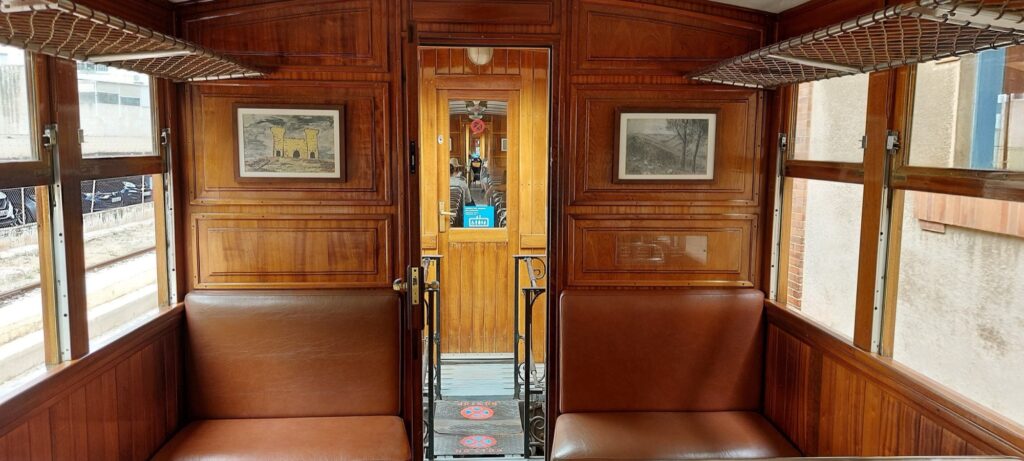
Inside a wooden carriage.
The journey is relatively short, yet it offers a view of Mallorca beyond the beaches for which the island is best known.
On arrival in Sóller, passengers can spend time exploring the town before continuing towards the port. Its square, narrow streets and historic buildings provide a natural break between the two journeys.
The final stretch to the coast is made by tram.
The Tramway from the Valley to the Sea
In 1913, the tramway connecting Sóller with Port de Sóller opened, extending the local transport network from the town to its harbour.
While Tren de Sóller crosses the mountains, the tramway follows a route more closely connected to the town and its surrounding communities.
Wooden tramcars travel through the streets of Sóller, passing the main square and residential neighbourhoods before continuing among the orchards. Over roughly half an hour, the route leads out of the valley towards the bay.
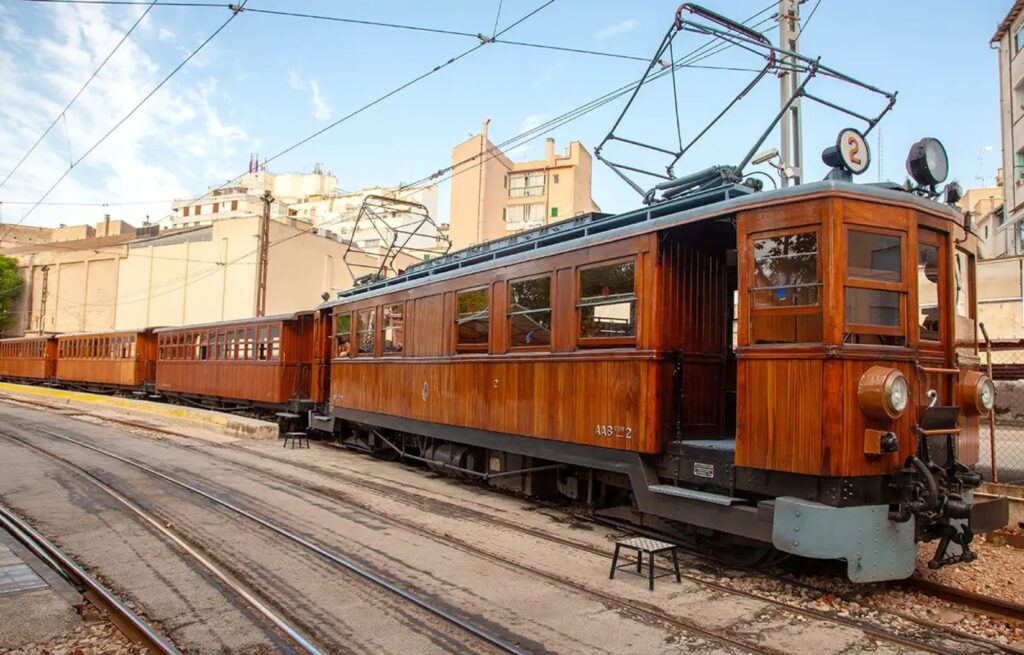
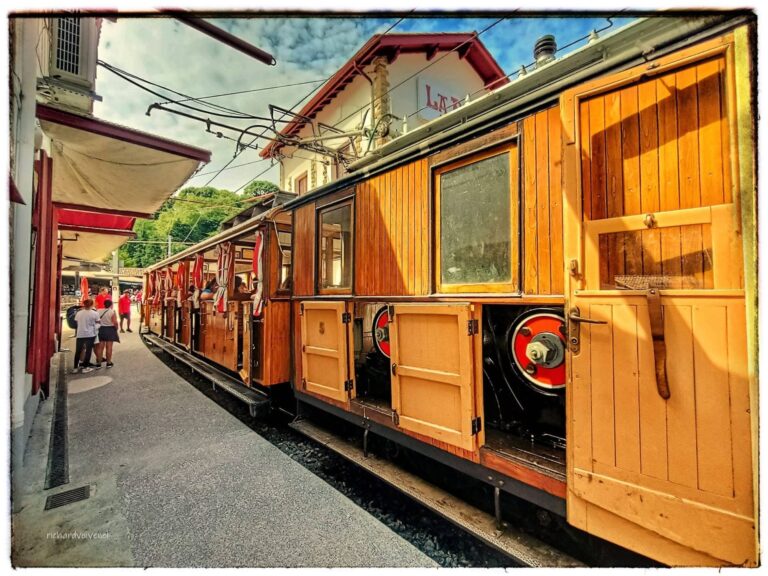
Carriages at the station.
Historically, the tramway also carried goods, supporting trade between the valley and its port.
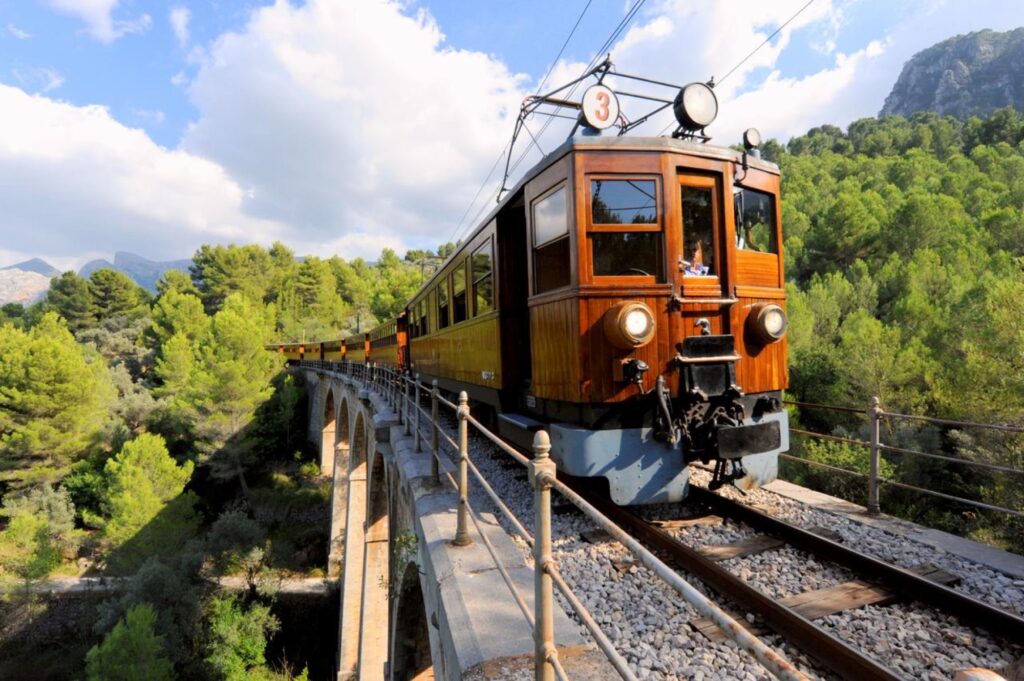
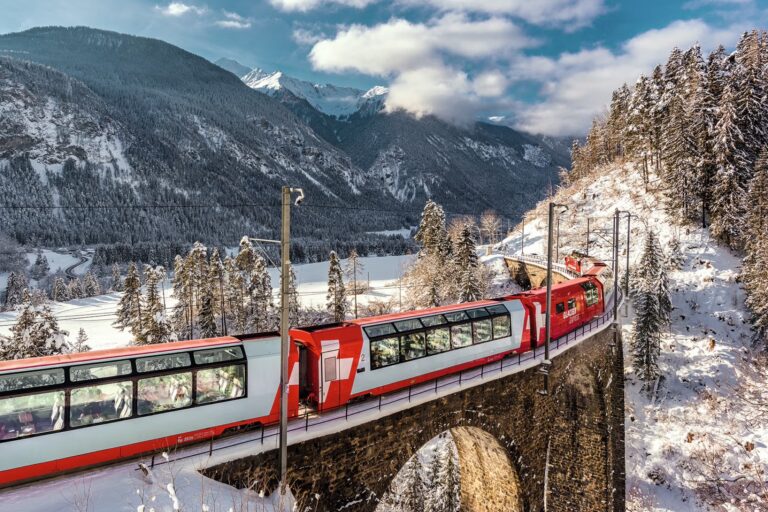
The train on a stone viaduct.
As the tram approaches Port de Sóller, the orchards give way to buildings along the waterfront. The tracks run close to the water, where boats lie at anchor and restaurants overlook the Mediterranean.
Visitors can spend time walking along the harbour, enjoying a meal or sitting by the sea before making the return journey.
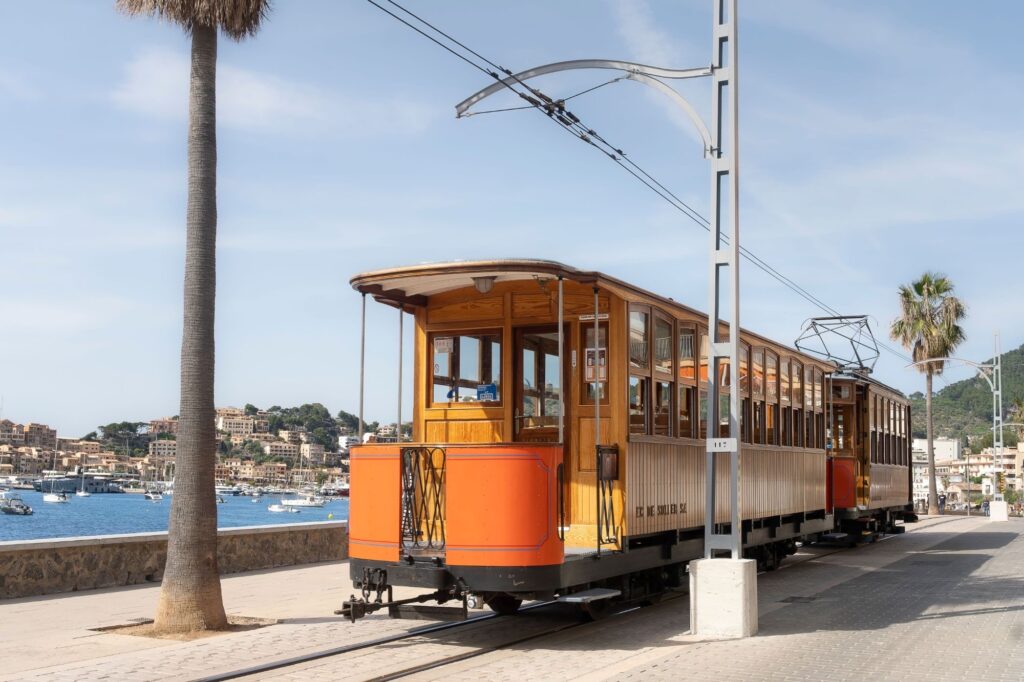
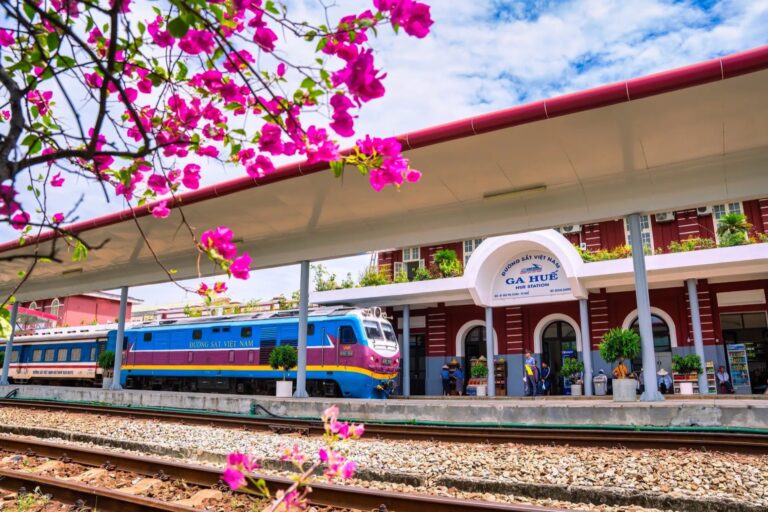
The tram at Port de Sóller.
The Palma to Sóller railway and the Sóller to Port de Sóller tramway are separate journeys. Check ticket options, departure times and combined packages before travelling.
Essential Information
- Operator
- Ferrocarril de Sóller
- Journey Type
- Heritage Railway
Reservations & Contact
- Official Website
- trendesoller.com
Image source: Tren de Sóller; Pexels; Wikimedia