A gilda might be the first bite of an evening in San Sebastián. An olive, a salted anchovy and a pickled pepper are threaded onto a skewer, bringing together salty and tangy flavours in just a few mouthfuls.
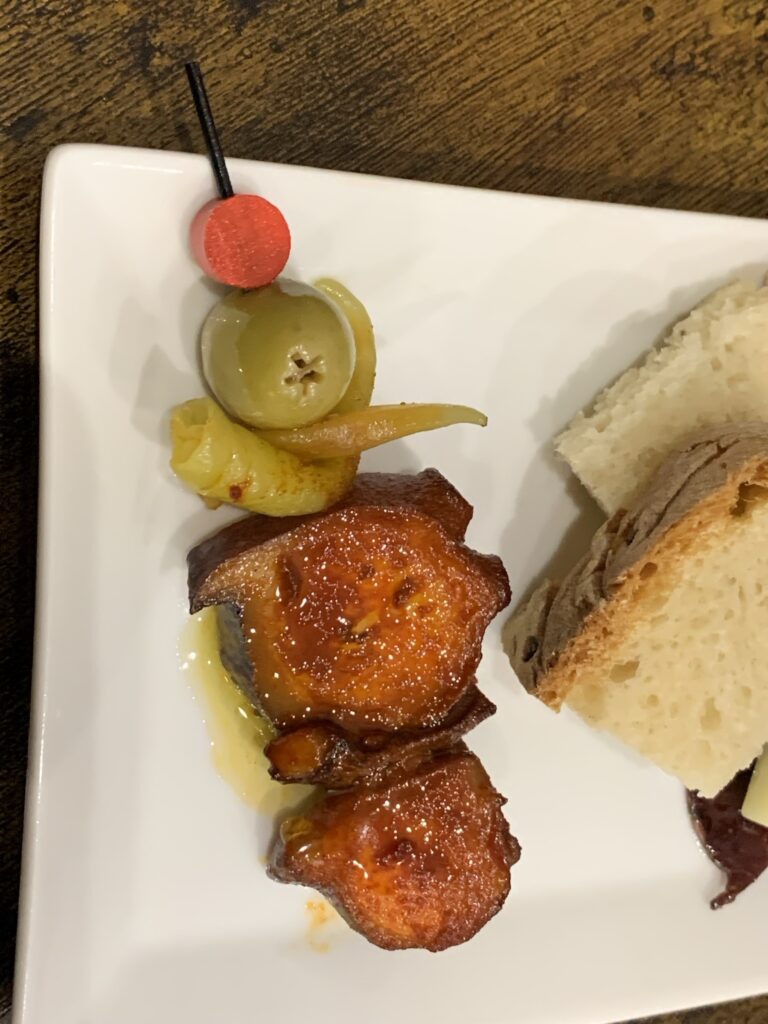
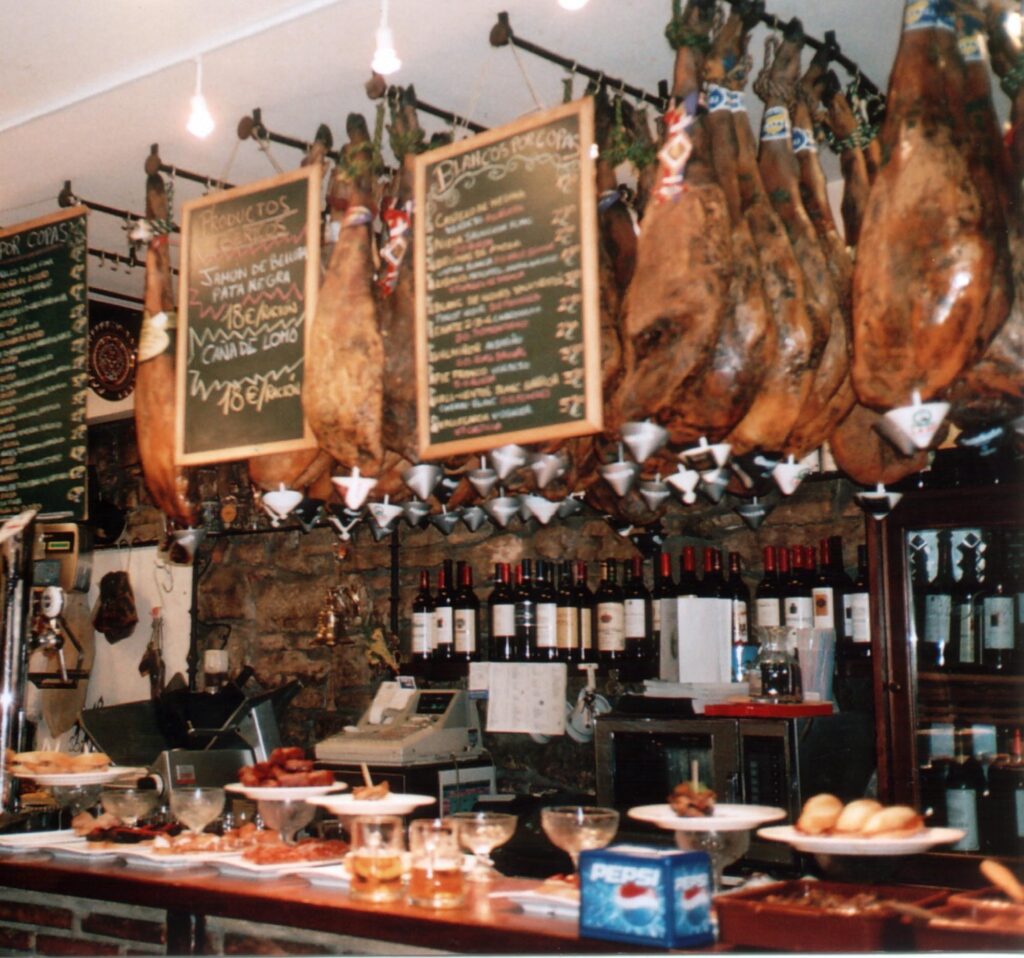
A gilda and a bar in Donostia-San Sebastián.
The next dish might be warm mushrooms, seafood or something freshly prepared in a kitchen. And it need not come from the same bar.
In San Sebastián, also known as Donostia in Basque, eating pintxos is about more than the small dishes themselves. Stopping at one bar, choosing a few bites and continuing to another is part of the city’s food culture.
Small Bites, Not Always on Bread
Pintxos are generally served in small portions at bars across the Basque Country. Some sit on slices of bread, while others come on skewers, small plates or freshly prepared from the kitchen.
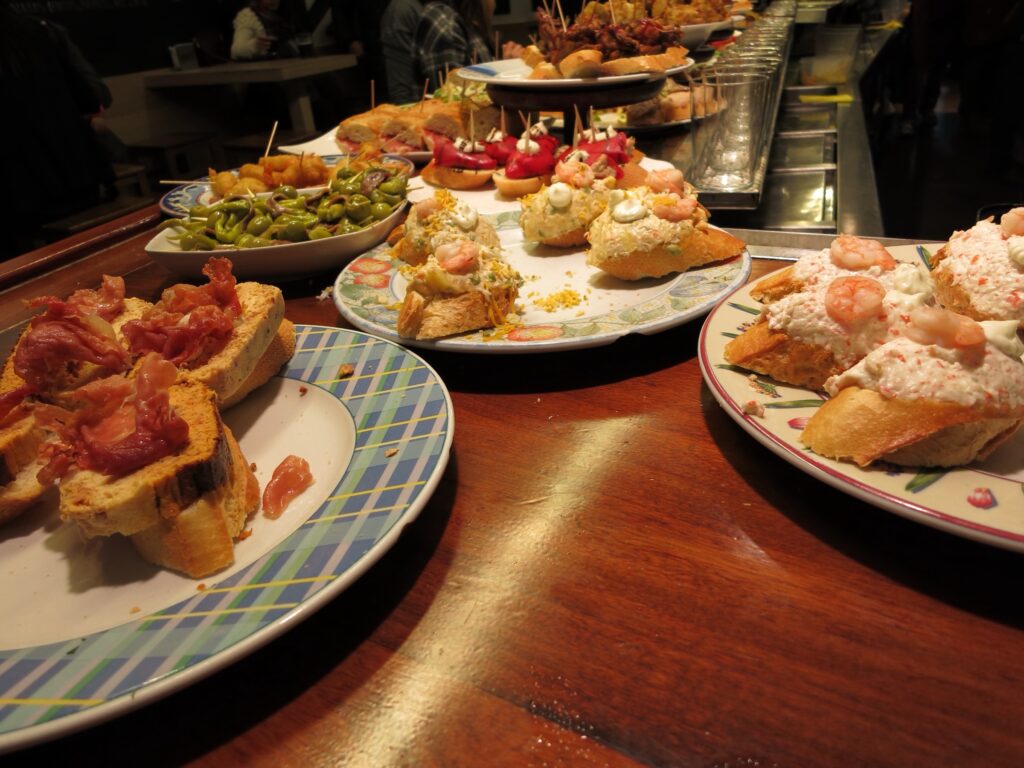
A pintxos bar counter in Donostia.
The gilda is a familiar example. Its olive, salted anchovy and pickled pepper are held together on a skewer, with no bread required.
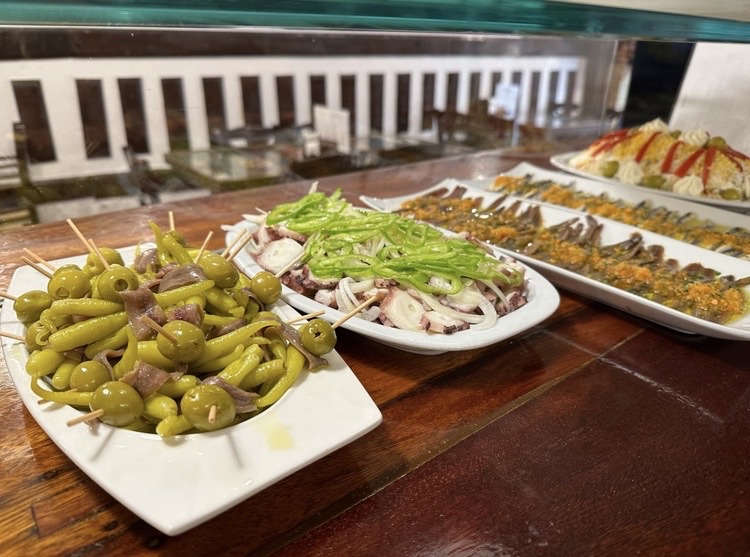
Gildas and other pintxos on a bar counter.
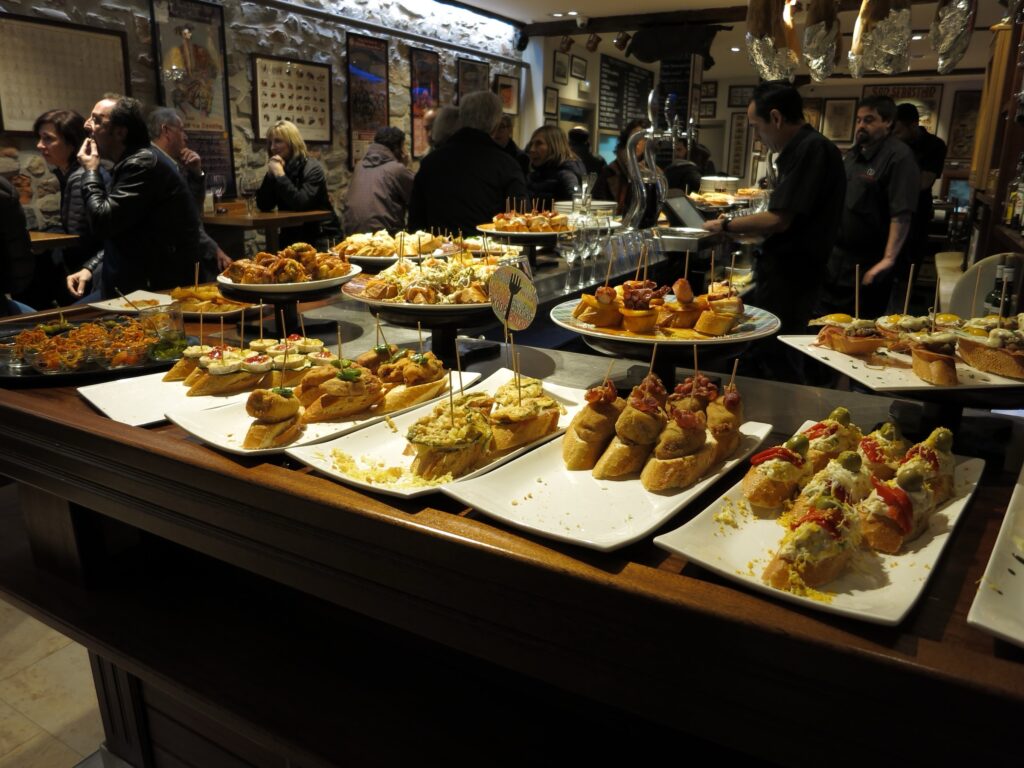
In many bars, cold pintxos are displayed along the counter, allowing customers to see what is available. But the dishes on display do not necessarily represent the entire menu. Some hot preparations are made in the kitchen and served only when ordered.
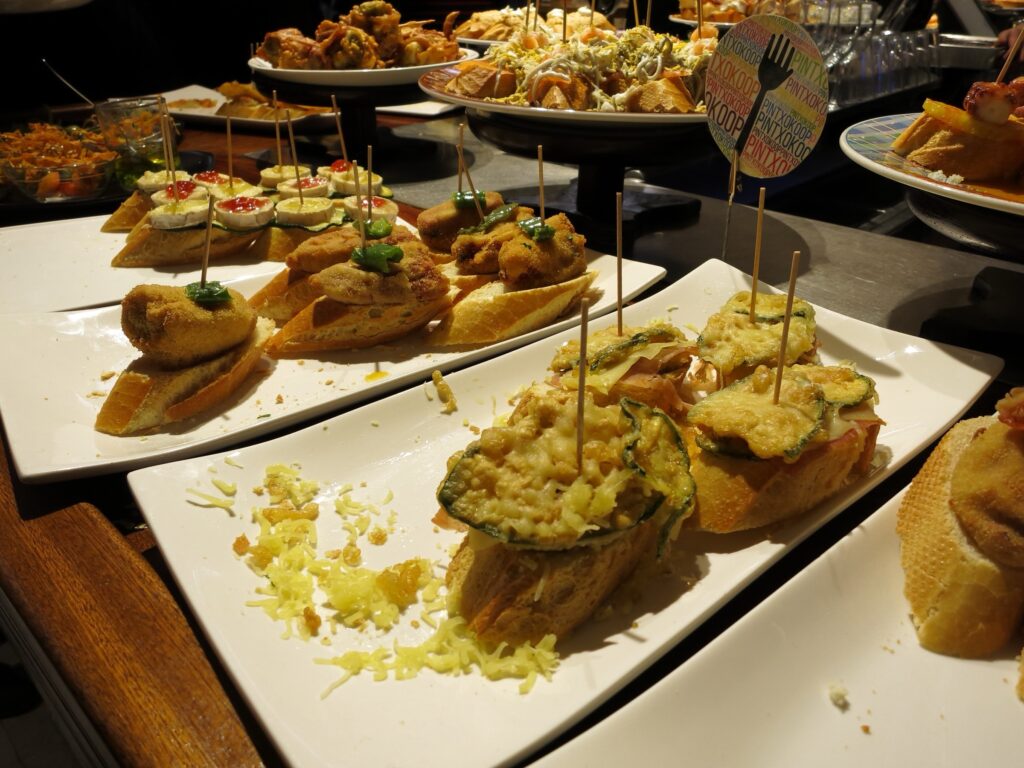
Pintxos on the counter in San Sebastián.
Ordering arrangements also vary between establishments. At some bars, staff serve items from the counter; at others, customers choose from a menu or a board listing the day’s dishes. Hot preparations may require additional time.
Stops in the Old Town
Parte Vieja, San Sebastián’s Old Town, brings numerous pintxos bars together within walking distance of one another.
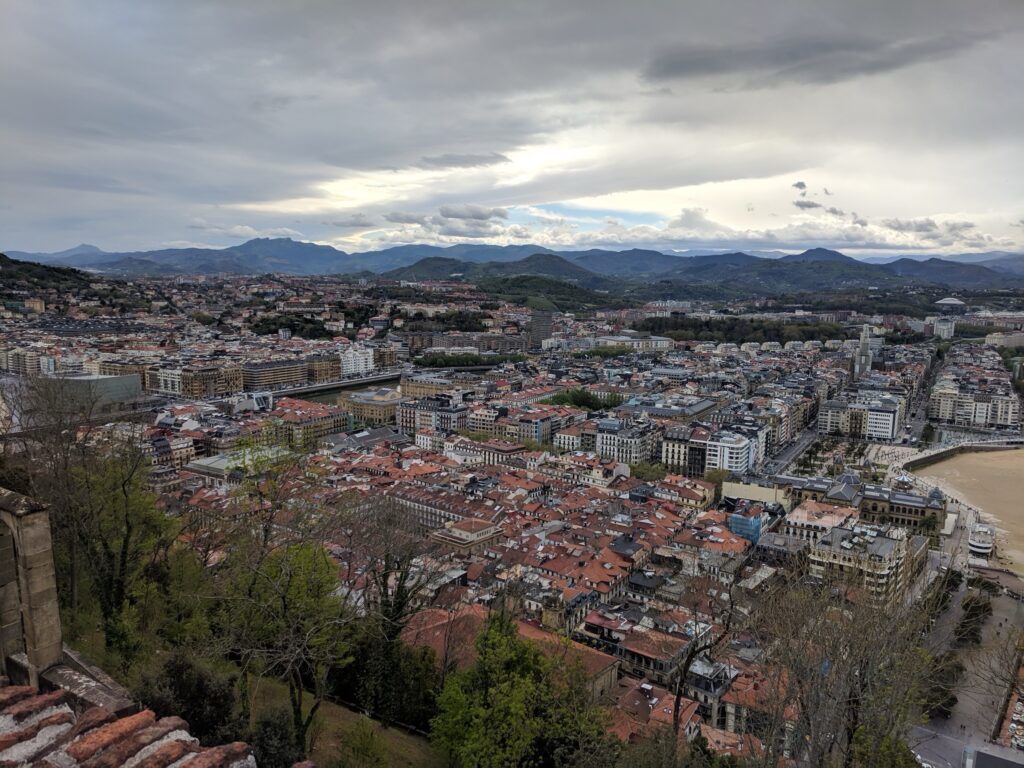
The Old Town of San Sebastián.
Ganbara, on San Jerónimo Street, combines a pintxos bar with a restaurant. Tourism Euskadi highlights its mushroom dishes, alongside other preparations made in the kitchen.
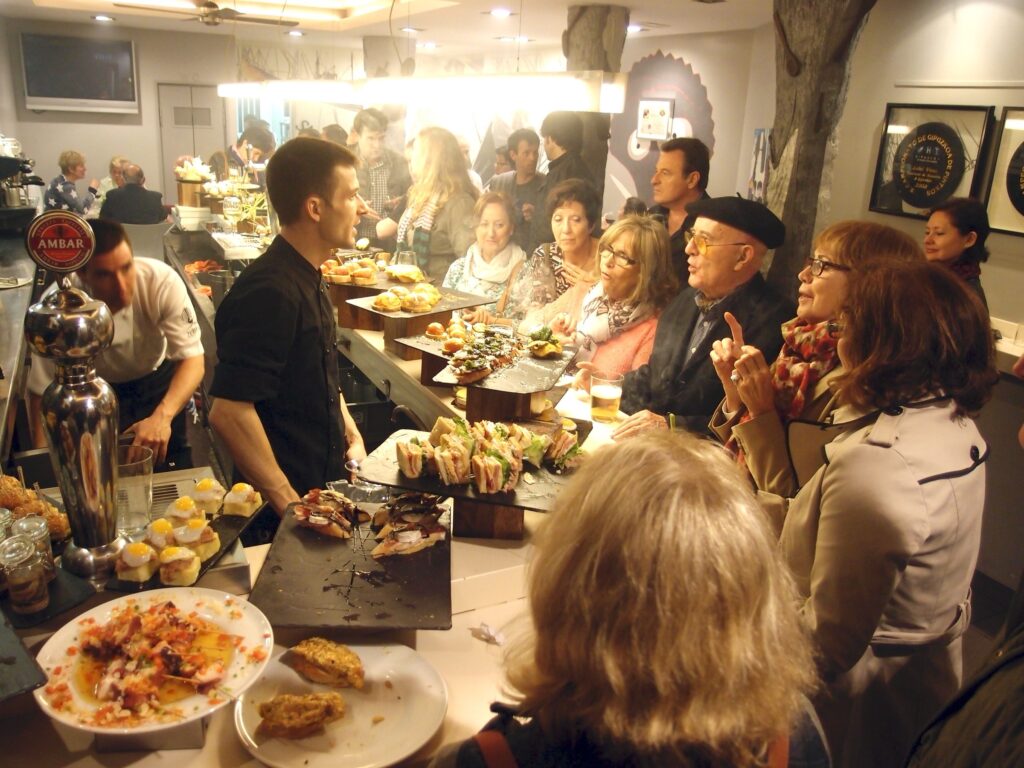
The atmosphere of a pintxos bar in San Sebastián.
La Viña, on Calle 31 de Agosto, offers something different. Alongside its pintxos and restaurant service, it is particularly associated with the baked cheesecake widely known as Basque cheesecake.
A deeply browned top and soft interior are among the familiar characteristics of this style of cake. After savoury dishes at the bars, a slice of cheesecake can provide a sweet ending to the evening.
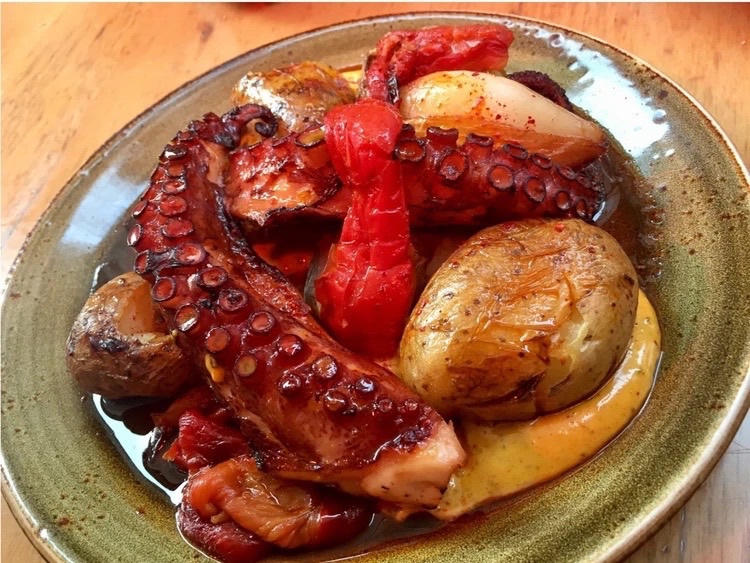
Grilled octopus with potatoes and roasted peppers.
Ganbara and La Viña are just two examples within San Sebastián’s wider network of bars, not stops on a compulsory route. Each has its own menu and service hours.
An Evening Without a Fixed Table
A cold pintxo at the first counter, a freshly cooked dish at another bar and something sweet to finish can come together as a meal without a menu planned from the beginning.
Drinks are also part of Basque bar culture. Txakoli, a wine associated with the Basque Country, cider and small glasses of beer are familiar choices. Alcohol-free drinks fit just as naturally into the experience; moving between bars does not require an alcoholic drink at every stop.
Not every bar serves hot food throughout its opening hours. Kitchen schedules, daily specials and ordering arrangements may differ, making a flexible evening more practical than a timetable planned down to the minute.
By the time dessert arrives, dinner has taken shape across several kitchens, several bars and the short stretches of street between them in San Sebastián’s Old Town.
Sources: Tourism Euskadi · San Sebastián Turismo · La Viña
Image source: Wikipedia