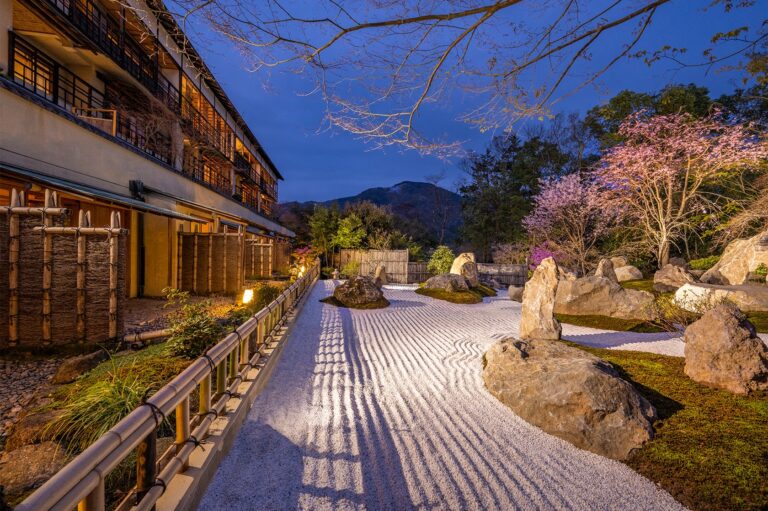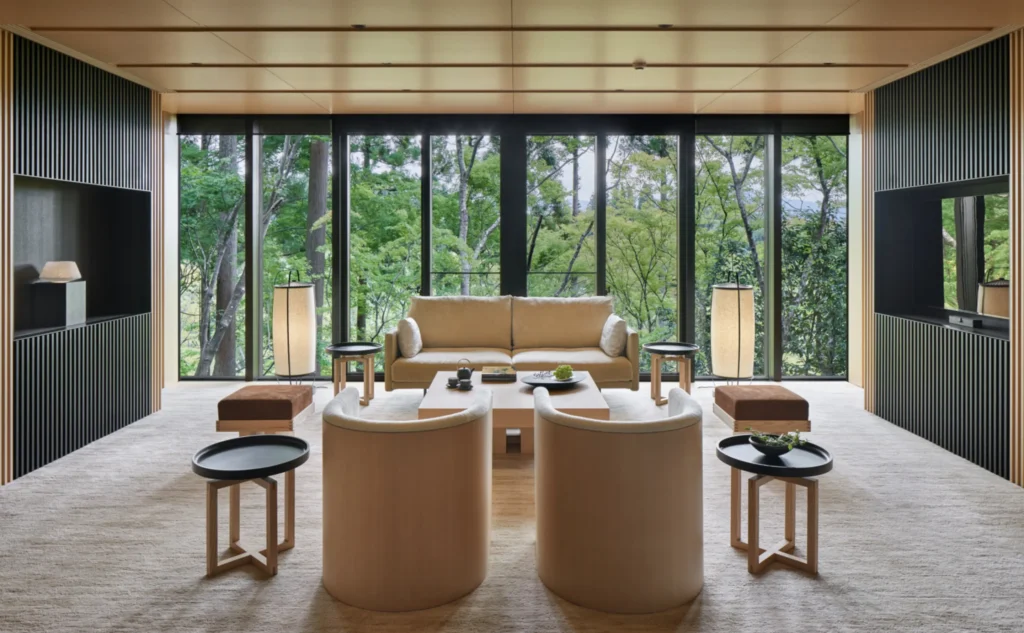
The garden came before the resort. In a secluded valley in Takagamine, terraces were laid out for a textile museum planned by a collector of obi, the traditional sashes worn with kimono. The museum was never built. Today, Aman Kyoto stands among those terraces at the foot of Mount Hidari Daimonji.
Opened on 1 November 2019, Aman Kyoto lies north of the city, close to Kinkaku-ji temple.
The Backstory
The land’s former owner, the collector of obi, had planned a museum dedicated to textile art on the site and selected large granite boulders for the central lawn, treating them as sculptures. The terraces and stones chosen for that project remain part of the landscape in which Aman Kyoto was later built.
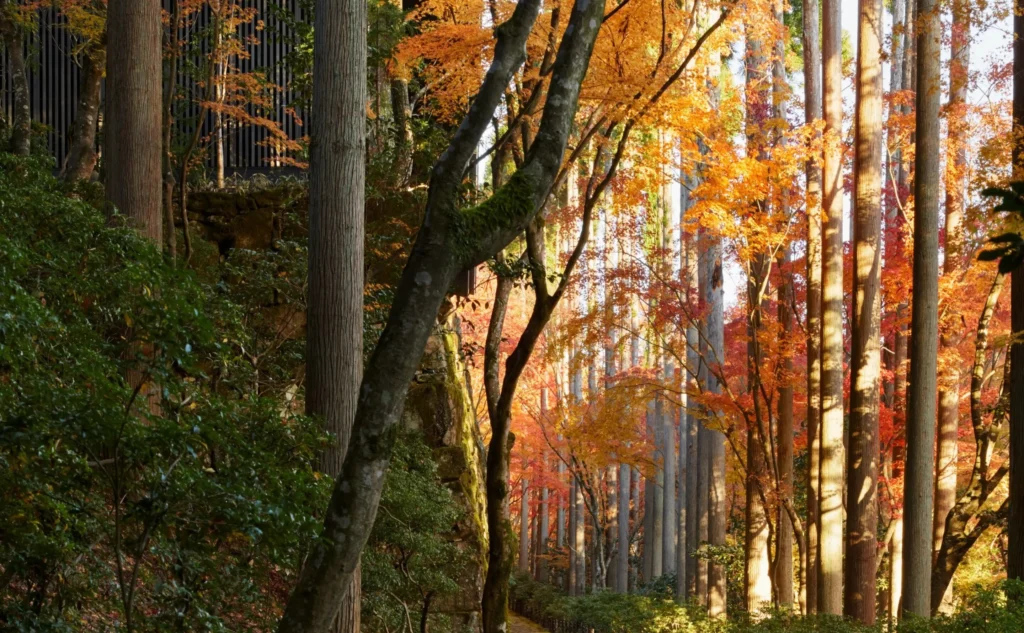
The forest path in autumn
Takagamine has an older artistic history. In the early Edo period, it was home to Hon’ami Koetsu, an influential craftsman and calligrapher. He helped establish the area as a centre for the arts, associated with the creation of an artists’ village in 1615. The resort’s Japanese restaurant, Taka-An, is named in his honour.
The garden is named Kerry Hill Garden in memory of the architect whose practice designed the resort.
The Setting
Aman Kyoto is at 1 Okitayama Washimine-cho in Kita ward, beneath Mount Hidari Daimonji. Its garden lies within ancient woodland.
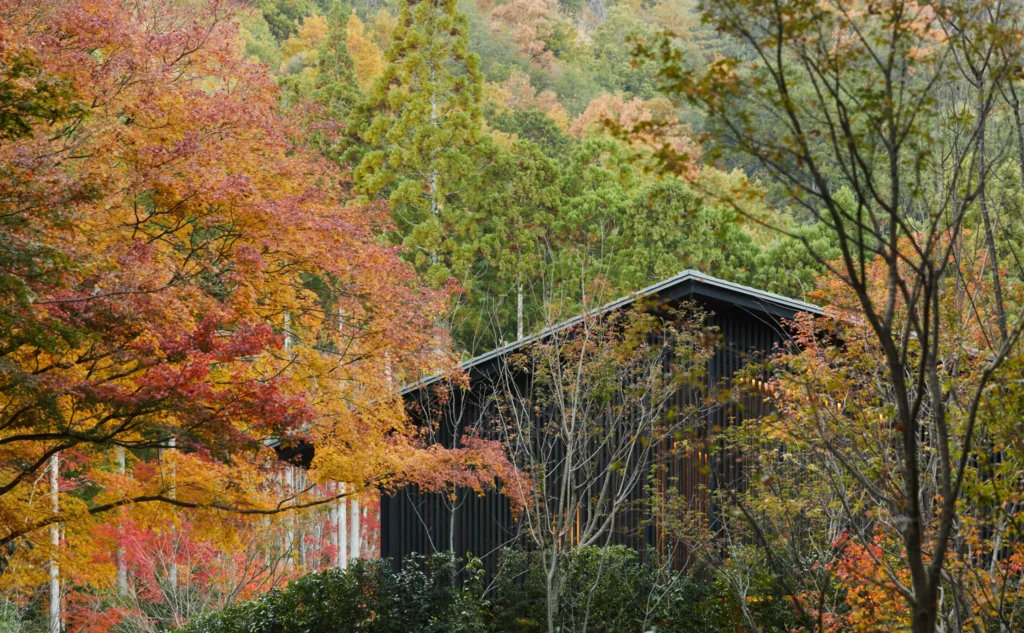
The hillside in autumn
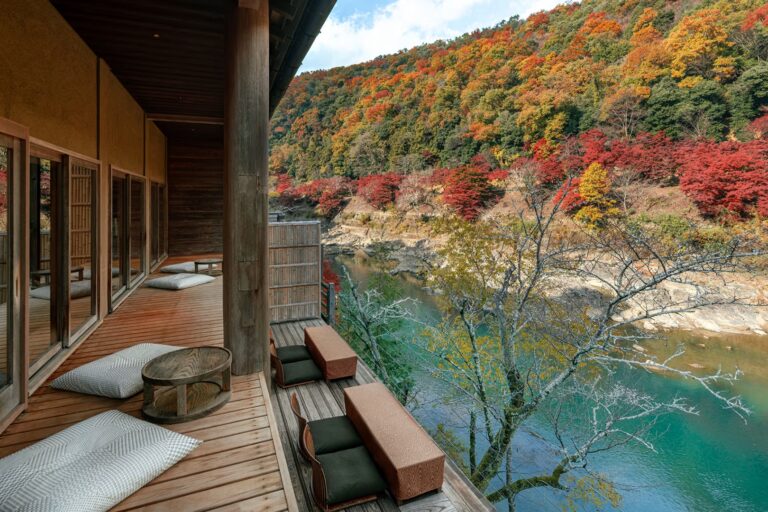
The scenery changes with the seasons: cherry blossoms in spring, red and amber maple leaves in autumn, and snow and camellias in winter.
The resort is close to Kinkaku-ji temple, and 17 UNESCO World Heritage sites can be reached from the property.
The drive from Kyoto Station takes around 30 minutes. The northern location provides seclusion, but guests will need to plan excursions into the city accordingly.
Architecture & Design
Kerry Hill Architects designed Aman Kyoto, continuing the studio’s association with the brand through projects including Aman Tokyo and Amanemu. Kerry Hill conceived the resort as a contemporary retreat inspired by the traditional Japanese ryokan.
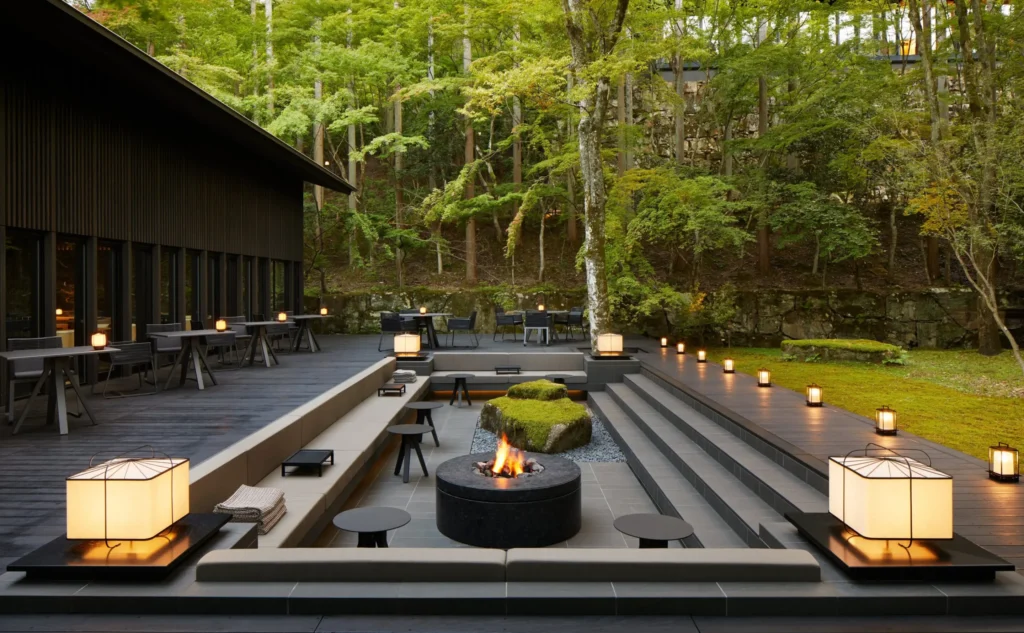
The pavilion terrace
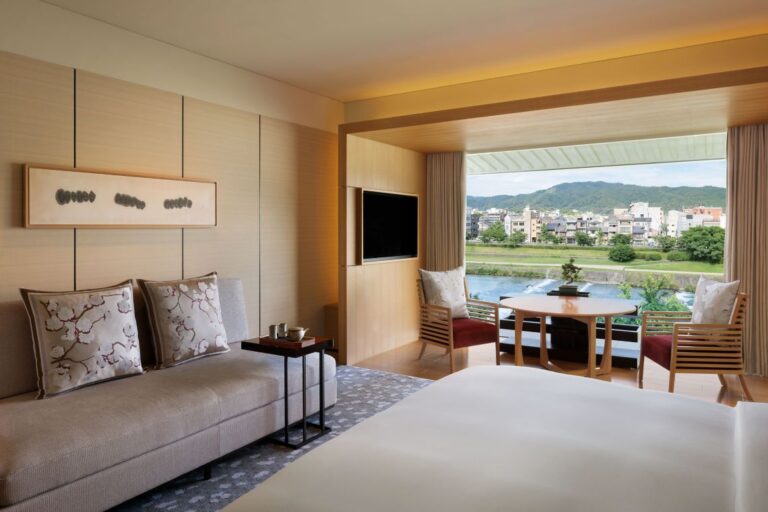
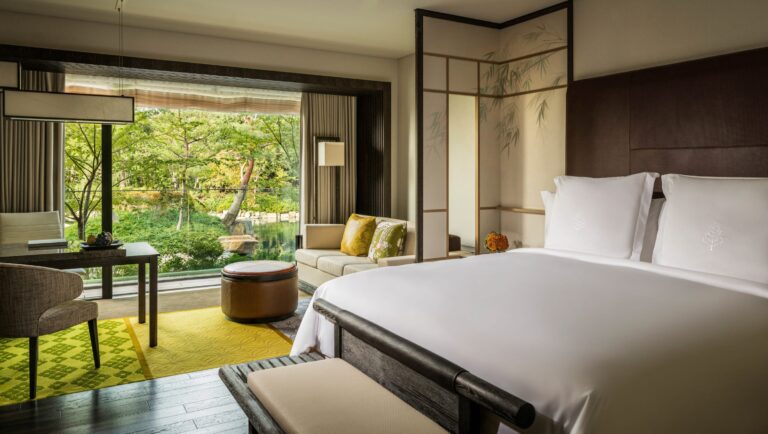
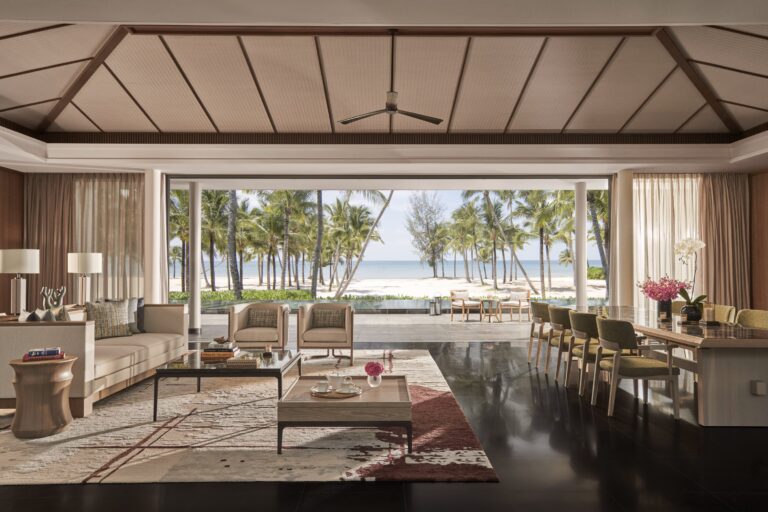
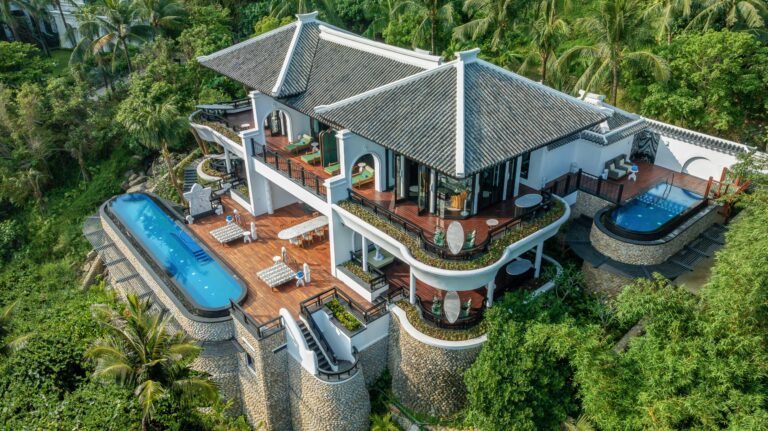
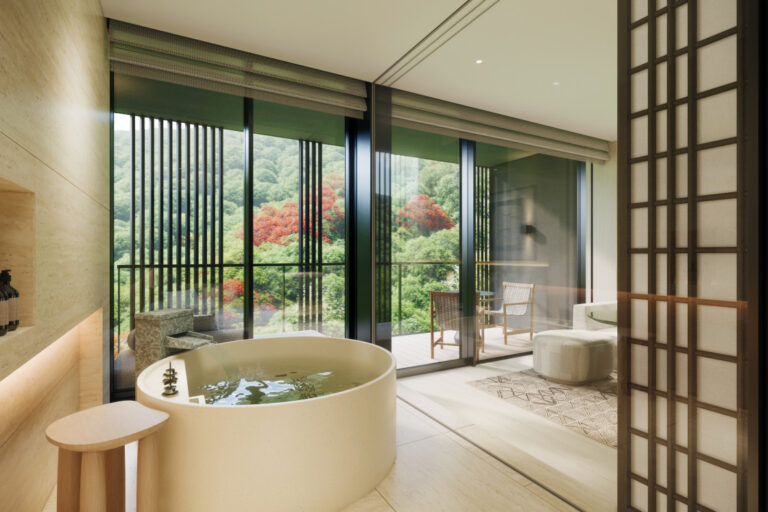
The pavilions have restrained geometric forms and timber latticework. Interiors feature neutral tones, tatami flooring, floor-to-ceiling windows and tokonoma alcoves, drawing on familiar elements of Japanese architecture.
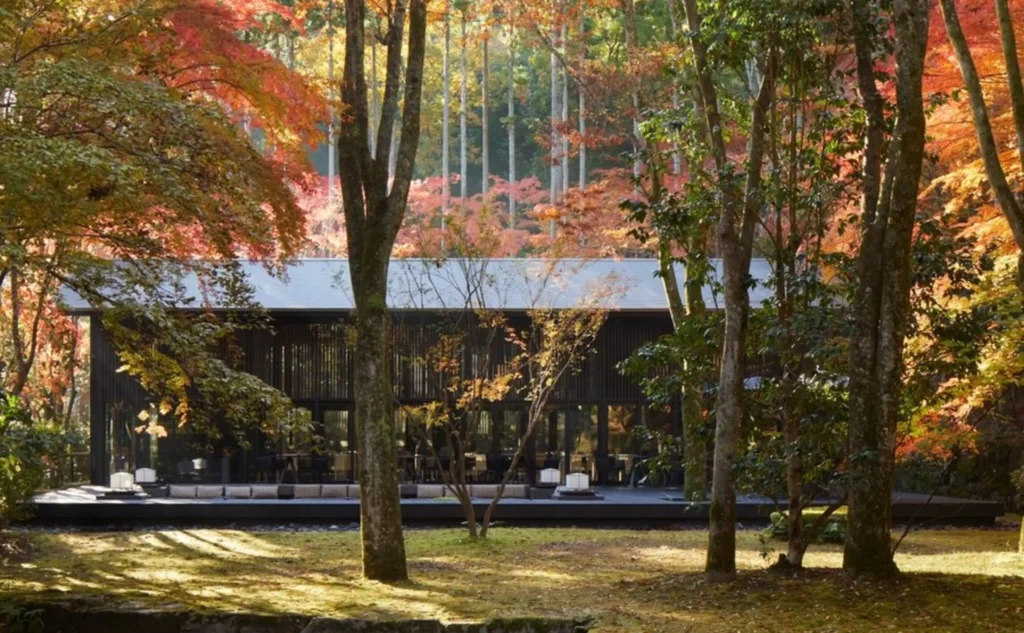
A pavilion among the maples
The Living Pavilion has handmade raku tiles, and the restaurant bespoke ceramic tiles. Each guest room has a large ofuro bath made from hinoki cypress.
The woodland garden also contains Tea House Senkutsu. It was named by Zabosai Sen Soshitsu, the 16th grand master of the Urasenke tea tradition.
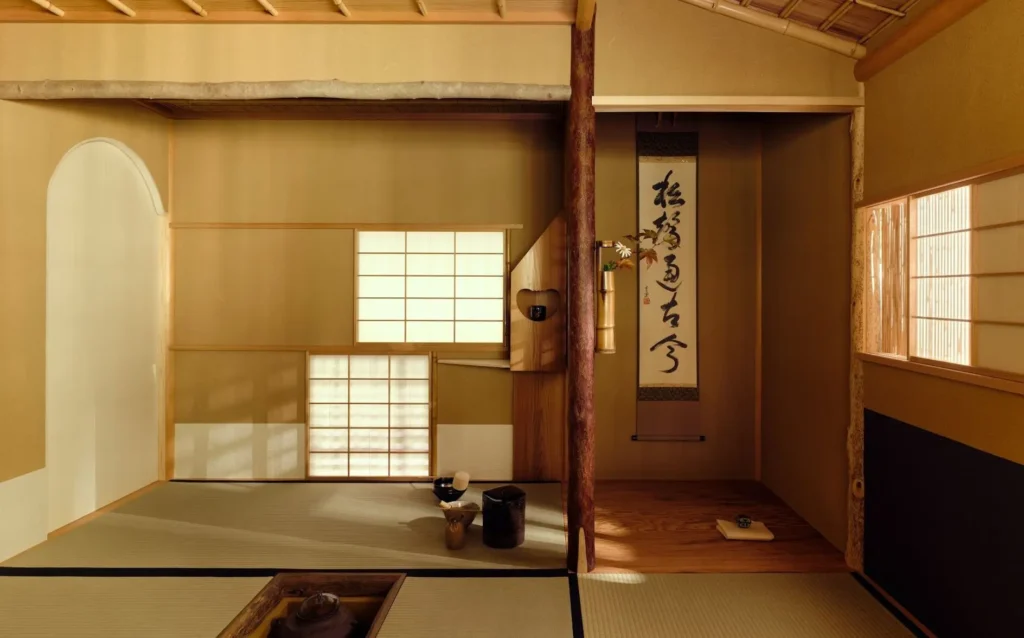
The tea room
Designed by Sen Art Studio and built by Nakamura Sotoji Komuten in the sukiya style, Senkutsu uses Kitayama cedar and earth from Takagamine. It provides a dedicated setting for tea ceremonies alongside the guest pavilions designed by Kerry Hill Architects.
Rooms & Suites
Aman Kyoto has 26 rooms, suites and pavilions, starting at 60 square metres.
Washigamine Pavilion occupies the highest and most secluded position on the grounds. Like Takagamine Pavilion, it has two bedrooms. Takagamine Pavilion faces east, overlooking the garden towards Mount Hiei in the distance.
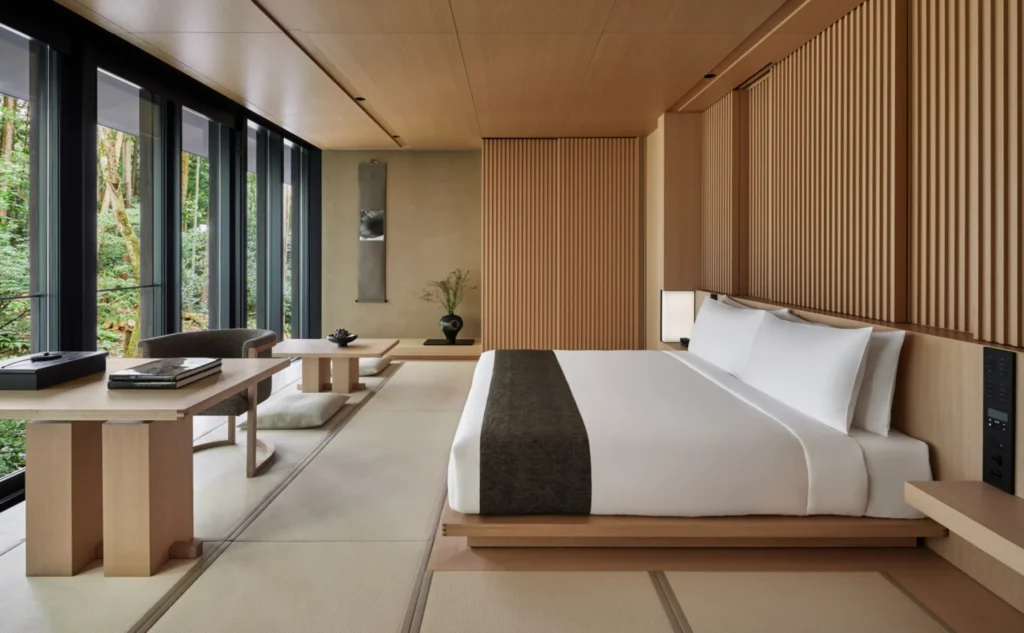
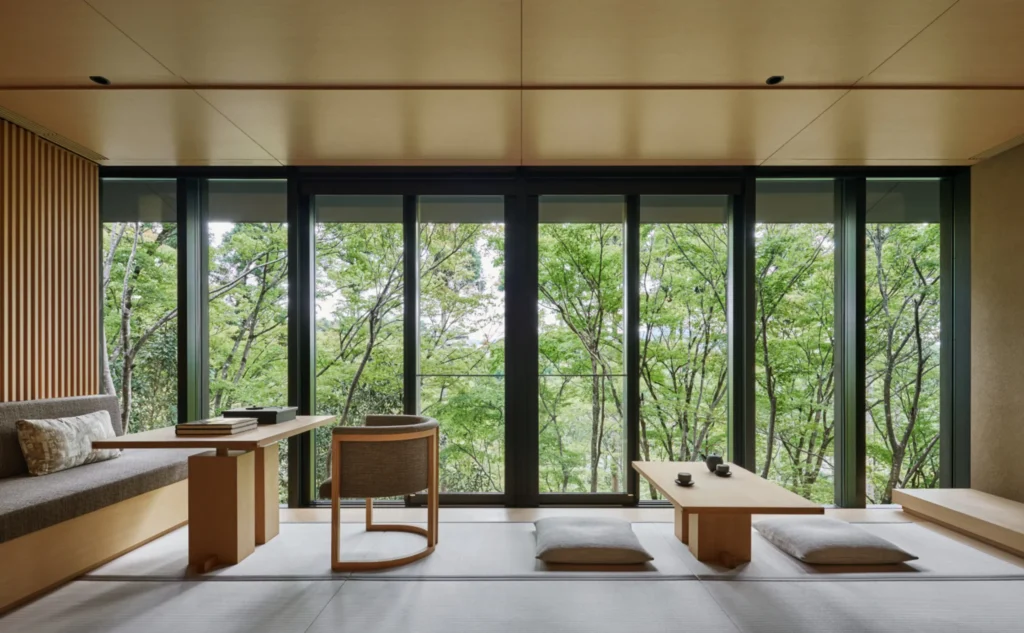
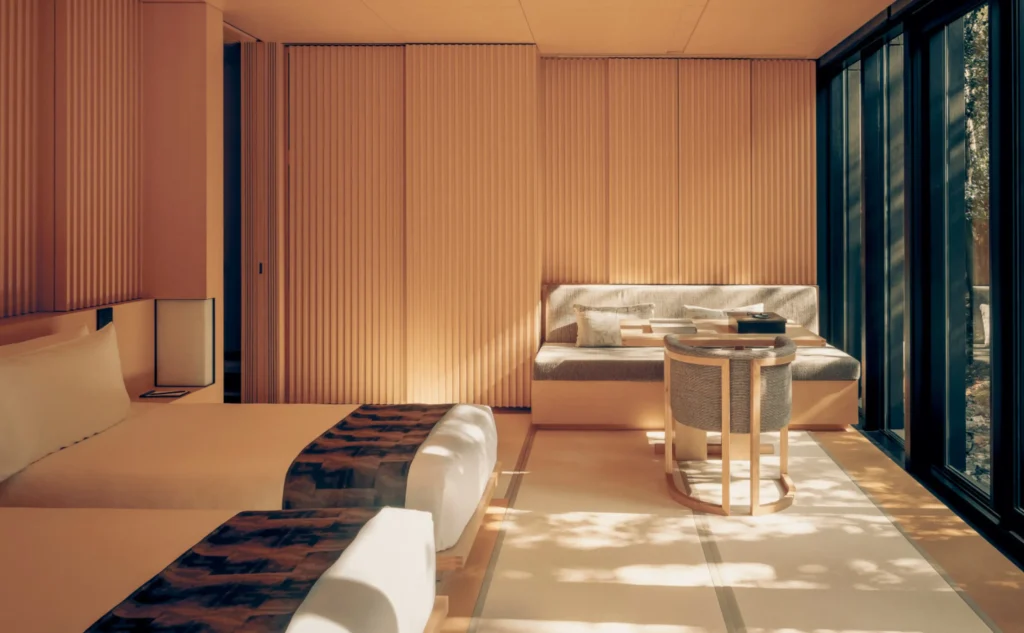
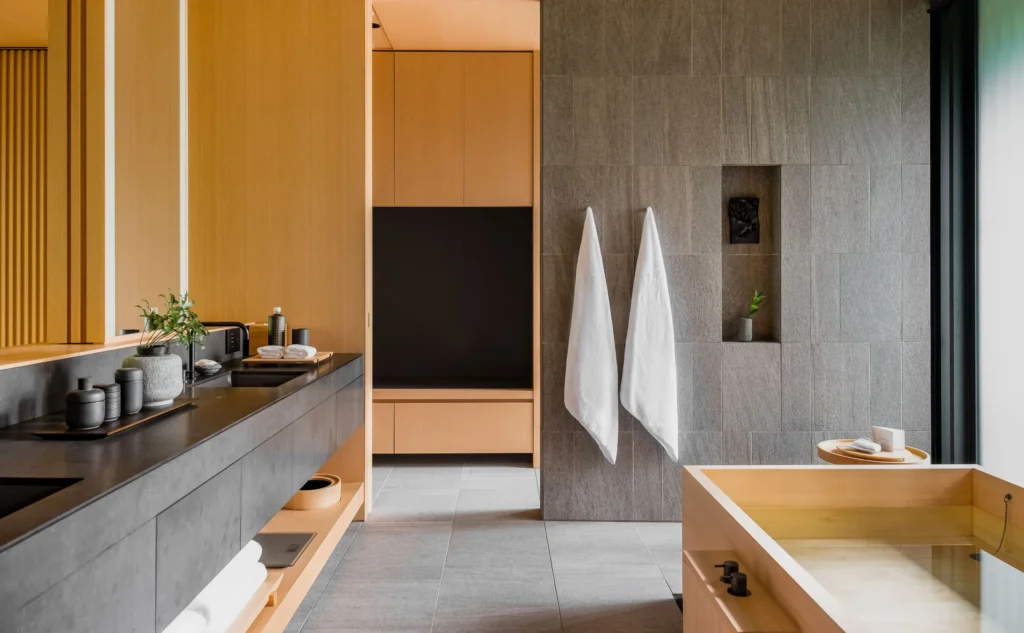
Takagamine Suite has one bedroom and a separate tatami room. Kaede rooms face west towards mature maple trees, while Nara rooms sit among woodland. Susuki and Susuki Terrace face east and receive plenty of natural light.
Depending on the booking conditions, a stay may include daily breakfast, afternoon matcha with seasonal sweets, evening aperitifs, a guided garden tour and access to the onsen. Guests should confirm the specific inclusions before booking.
Dining
Dining at Aman Kyoto centres on two restaurants, each approaching Kyoto‘s ingredients and culinary traditions differently.
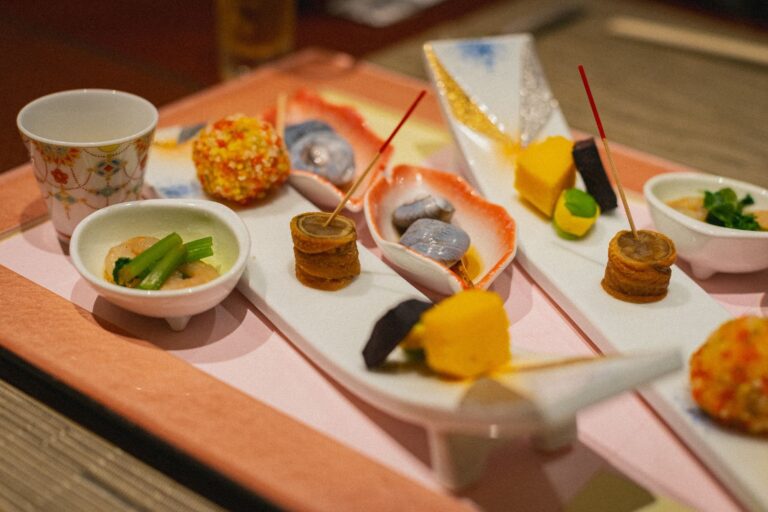
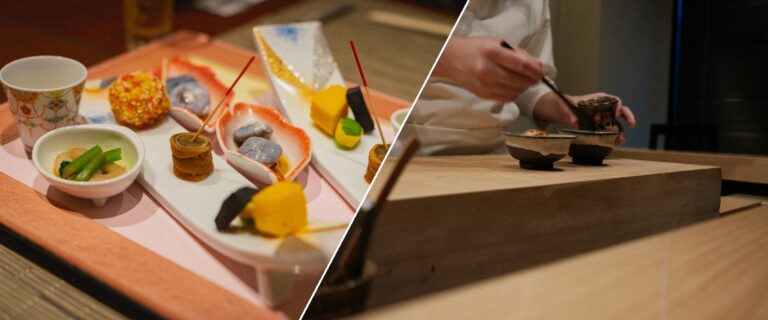
Taka-An serves Japanese omakase, with a seasonal menu prepared by the chef for each guest. The restaurant is named in honour of Hon’ami Koetsu, whose legacy is tied to Takagamine’s artistic history.
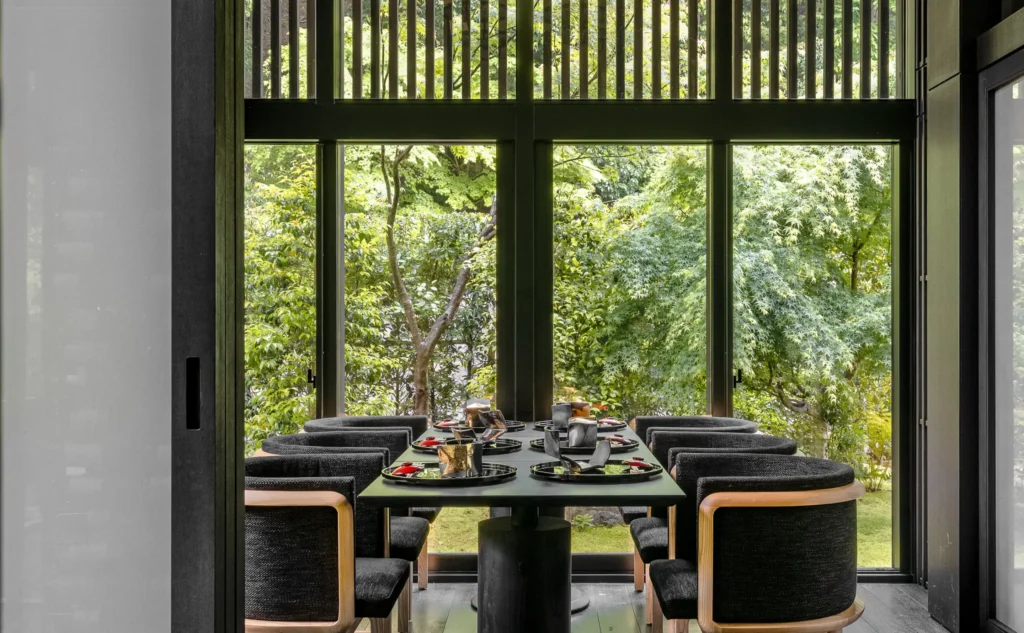
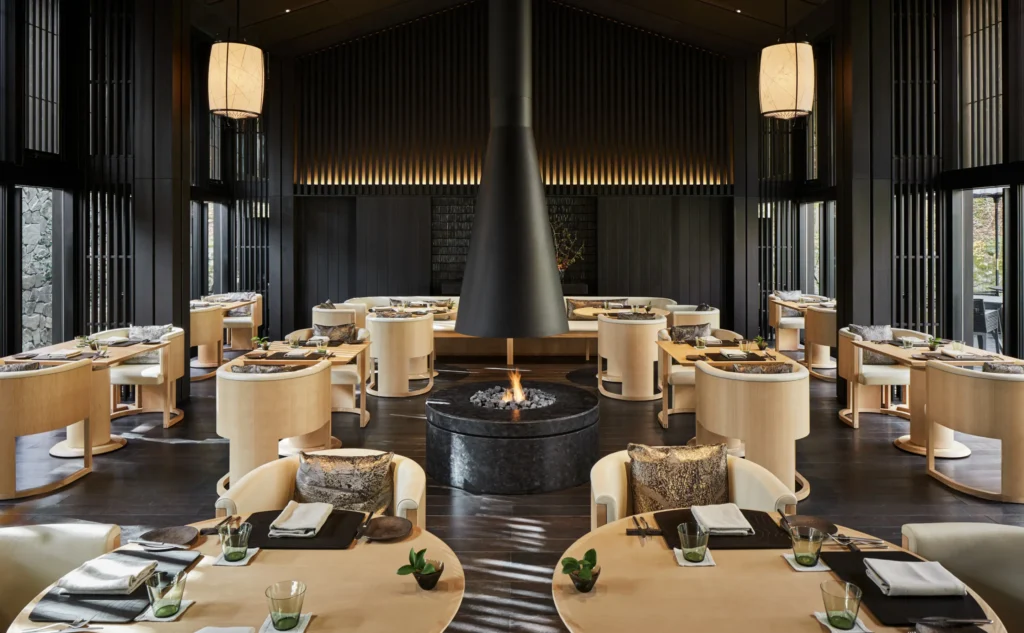
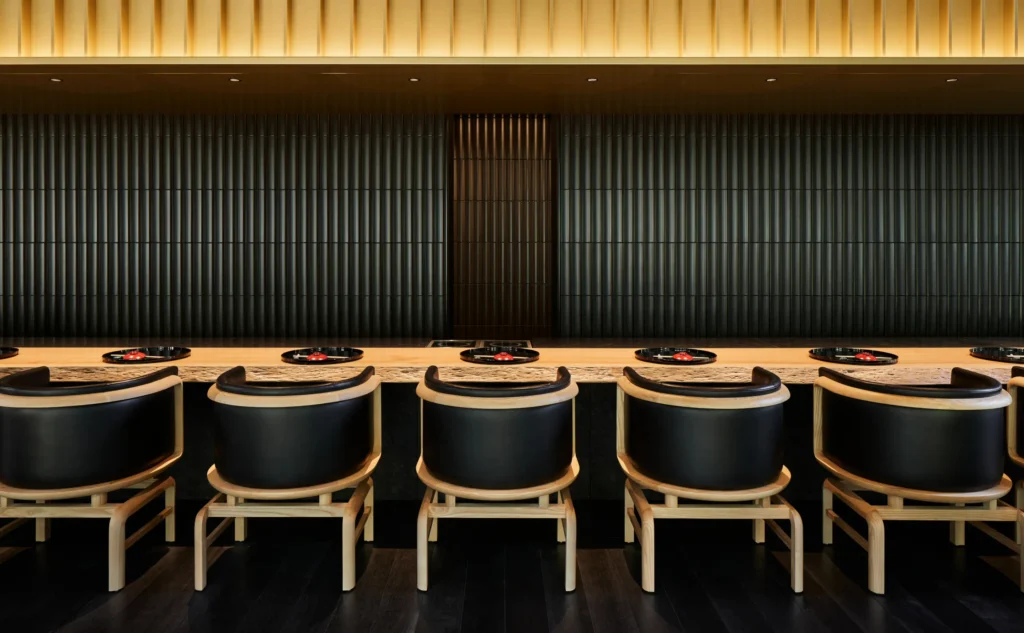
The Living Pavilion by Aman serves Western cuisine inspired by Kyoto alongside à la carte dishes. It has a fireplace and a terrace overlooking the garden. Visitors who are not staying at the resort must reserve a table in advance.
Afternoon tea at the Living Pavilion features more than 20 varieties of tea. The sweets use Western ingredients but are shaped to resemble traditional Japanese confections.
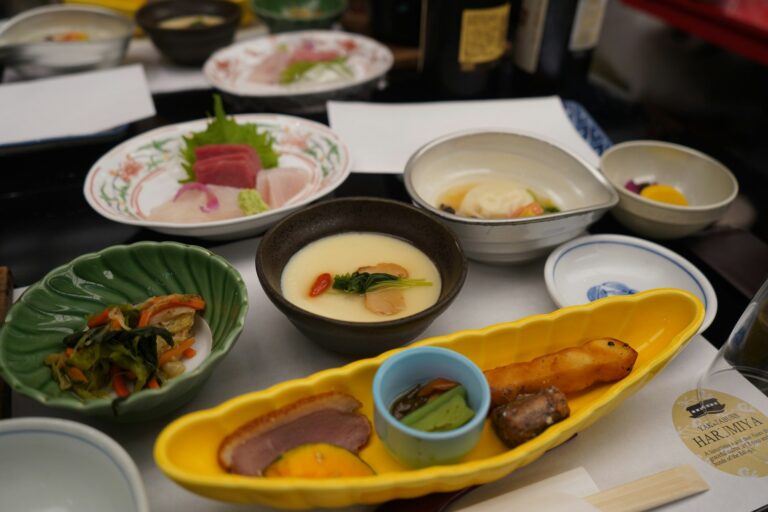
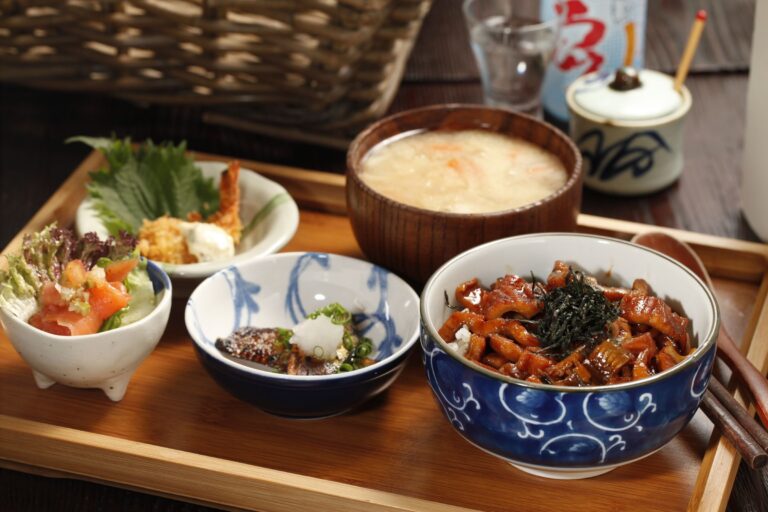
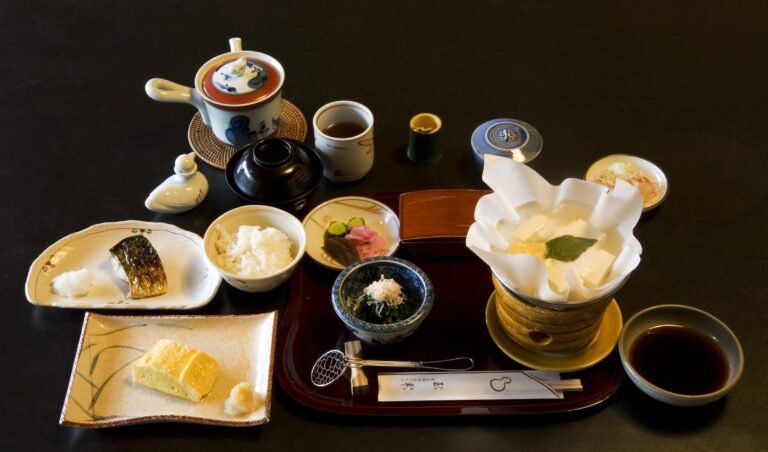
A Kyoto-style breakfast is presented in a wooden box containing small dishes, including sashimi and obanzai. The main course may be Kuroge Wagyu beef or grilled fish, served with clay pot rice or soya milk porridge.
Menus, chefs and service arrangements can change, so guests should check current details with the resort.
Wellness
Aman Spa draws on mineral water flowing near the resort, with indoor and outdoor onsen bathing areas. There are also three private treatment rooms and a relaxation area.
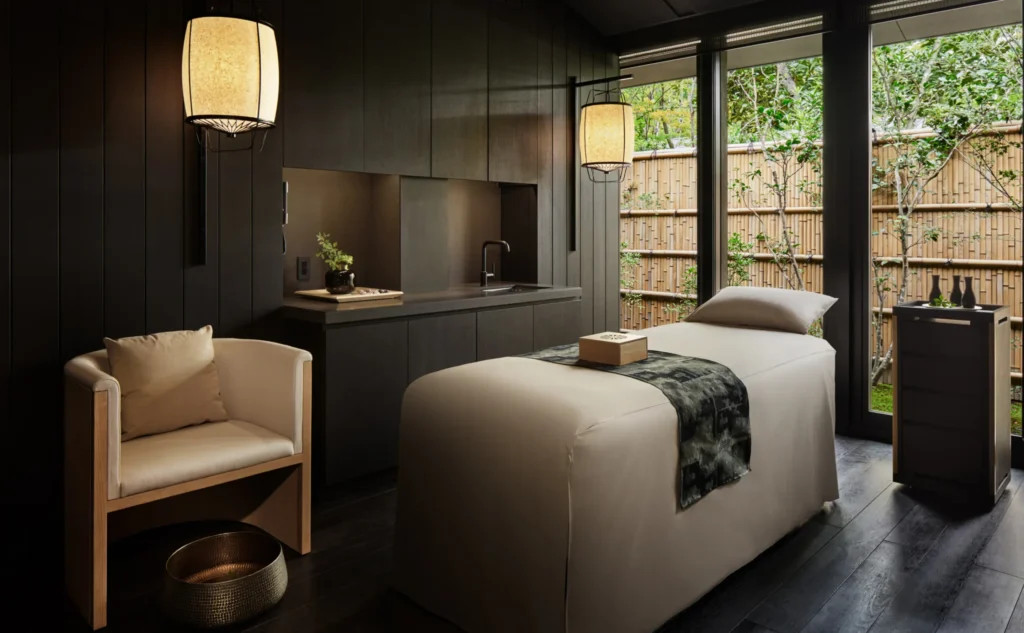
A spa treatment room
Treatments incorporate local ingredients such as Kyoto green tea, Tamba kuromame black beans, sake and cold-pressed camellia oil. Shiatsu is another treatment offered at the spa.
The resort has neither a gym nor a swimming pool. Instead, its wellness programme extends into the garden through yoga, mindfulness meditation and forest bathing.
Services & Experiences
Tea House Senkutsu is central to Aman Kyoto’s cultural experiences. Guests can take part in a tea ceremony in a tatami room or enter the koma tea room through its low doorway, a characteristic feature of Japanese tea house architecture.
Aman also offers afternoon matcha in a chair-seated tea room beside a pond.
Other activities draw on Kyoto traditions, including Zen meditation with a local monk, ikebana with an expert and a miniature garden workshop led by the resort’s gardener.
By private arrangement, guests can visit an ochaya in Kamishichiken to learn about geiko and maiko culture. Bicycles are available for outings into the city, while a Uji tea experience takes guests to a plantation outside Kyoto.
Schedules and participation conditions vary by season. Activities requiring reservations should be confirmed directly with Aman Kyoto.
Traveleak’s Take
Aman Kyoto suits travellers seeking a quiet stay in a woodland garden in northern Kyoto rather than accommodation in the city centre. Its pavilions, onsen and cultural experiences invite guests to spend more time at the resort itself. For a different kind of secluded stay in Kyoto, HOSHINOYA Kyoto was developed from a Meiji-era inn in Arashiyama and is reached by private boat.
What sets it apart is the history of the grounds. Terraces once intended for a textile museum that was never built now surround a retreat designed by Kerry Hill Architects. Contemporary architecture shares the landscape with traces of the former owner’s unrealised plans, giving the property a story that began long before Aman arrived.
The trade-off is location. Guests hoping to walk between central Kyoto’s restaurants and shops may find it inconvenient. There is also no gym or swimming pool, an important consideration for those who value these facilities.
Another Aman on Traveleak: Amanpuri
More hotels in Kyoto on Traveleak:
Four Seasons Hotel Kyoto · The Ritz-Carlton, Kyoto
Park Hyatt Kyoto · HOSHINOYA Kyoto
The Imperial Hotel, Kyoto
Image source: Aman Kyoto
Essential Information
- Location
- 1 Okitayama Washimine-cho, Kita-ku, Kyoto 603-8458, Japan
- Accommodation
- 26 rooms, suites and pavilions, from 60 square metres.
- Dining
- Taka-An, The Living Pavilion by Aman.
- Wellness
- Aman Spa with indoor and outdoor onsen and three treatment rooms; no gym or swimming pool.
- Getting there
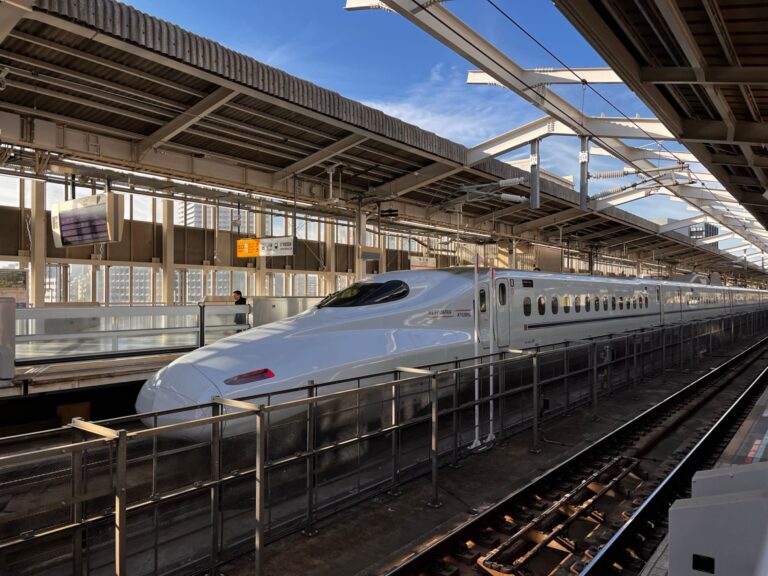
- Approximately 30 minutes by car from Kyoto Station; around two hours by car from Kansai International Airport, or an 80-minute express train to Kyoto Station followed by a 30-minute drive.
Location Map
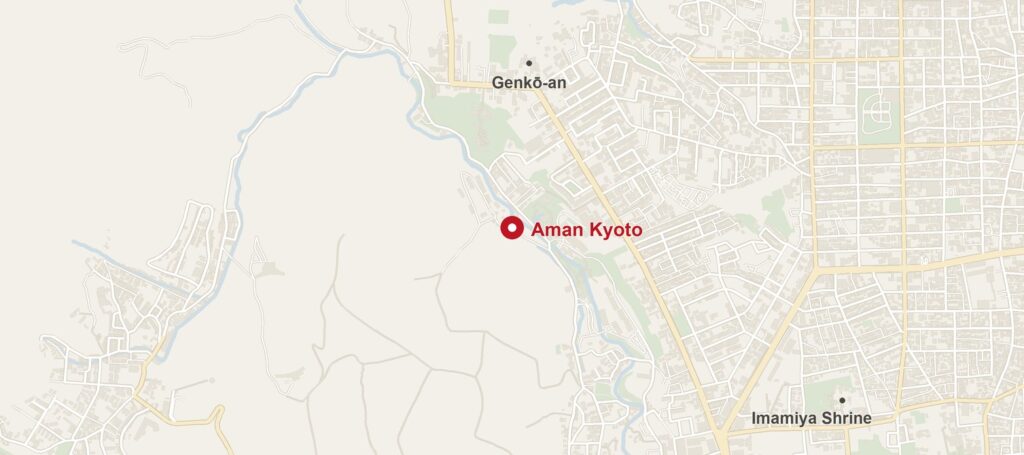 © OpenStreetMap contributors
Contact
1 Okitayama Washimine-cho, Kita-ku, Kyoto 603-8458, JapanOfficial Website aman.com/resorts/aman-kyoto
Rates via Trip.com
Some links on this page are affiliate links. If you make a booking through them, Traveleak may earn a small commission at no additional cost to you.