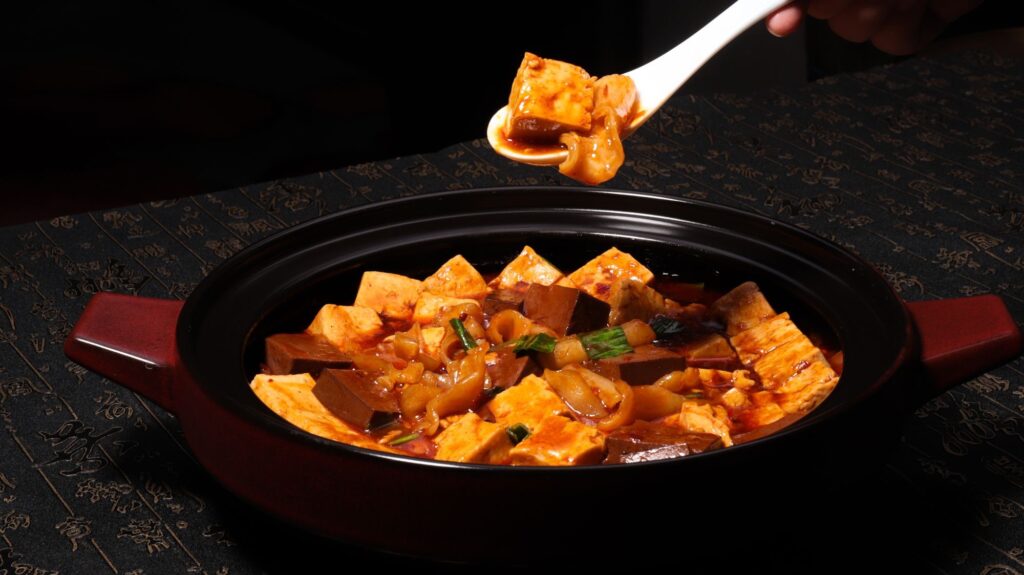
Mapo tofu is a Sichuan dish made with pieces of tofu simmered in a richly seasoned, spicy sauce, often with minced meat. Red oil surrounds the sauce, small pieces of meat sit between the pale tofu cubes, and a dusting of ground Sichuan peppercorns may finish the dish. It is commonly served with steamed white rice, a welcome companion to such bold flavours.
The red sauce may suggest that chilli is the main attraction. But take a bite and there is more to discover: the deep savouriness of fermented bean paste, fragrant minced meat, soft tofu and a rather unusual sensation on the tongue.
Chilli Heat and the Tingle of Sichuan Peppercorns
The combination of chilli heat and the tingling sensation produced by Sichuan peppercorns is known as málà. In Chinese, má refers to the numbing, tingling feeling, while là describes the heat of chilli. They are two different sensations, and one does not necessarily have to be as strong as the other.
Sichuan peppercorns also contribute their own distinctive aroma. They may be ground and sprinkled over the finished dish, while the amounts of chilli and peppercorns vary according to the recipe.
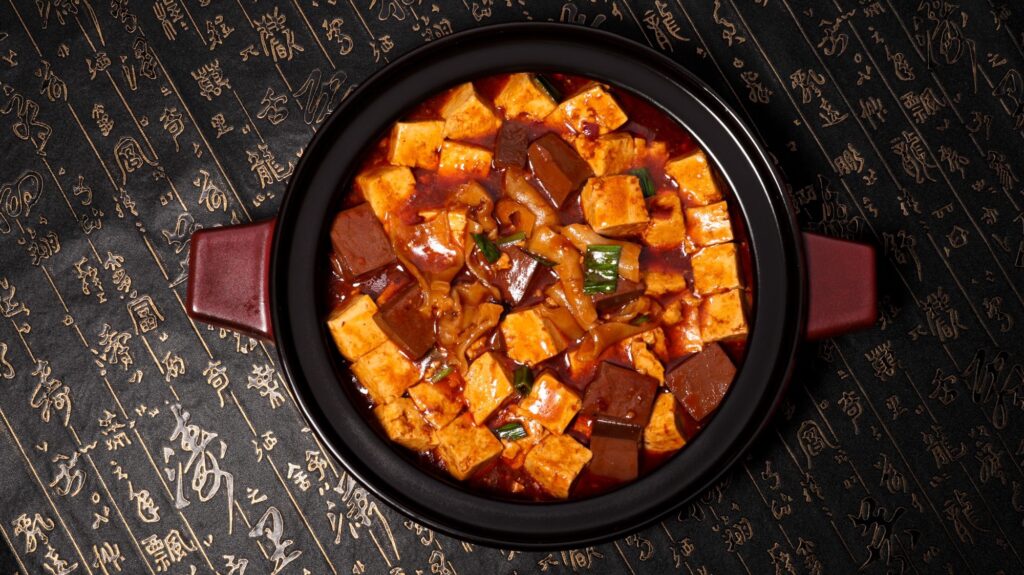
Mapo tofu in a pot with a red sauce.
If you are not comfortable with spicy food, you can ask for less chilli. If you would also prefer a milder tingling sensation, ask for fewer Sichuan peppercorns. Simply requesting “less spicy” may not be quite enough. Your tongue might still be tingling even when the chilli heat is relatively gentle.
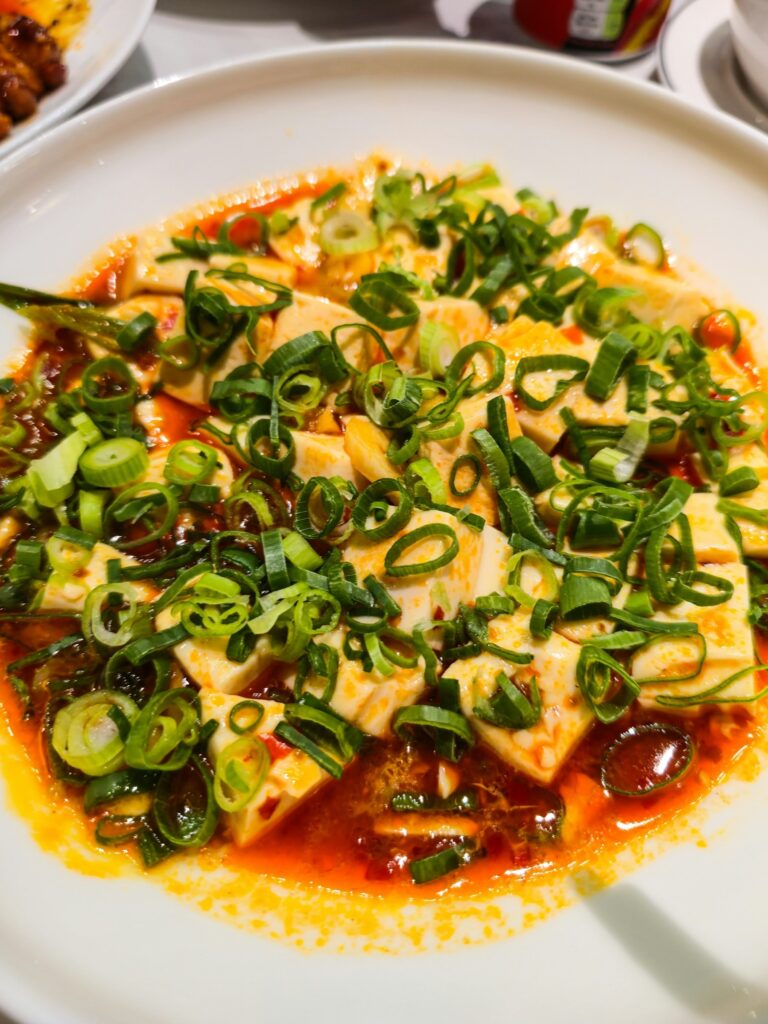
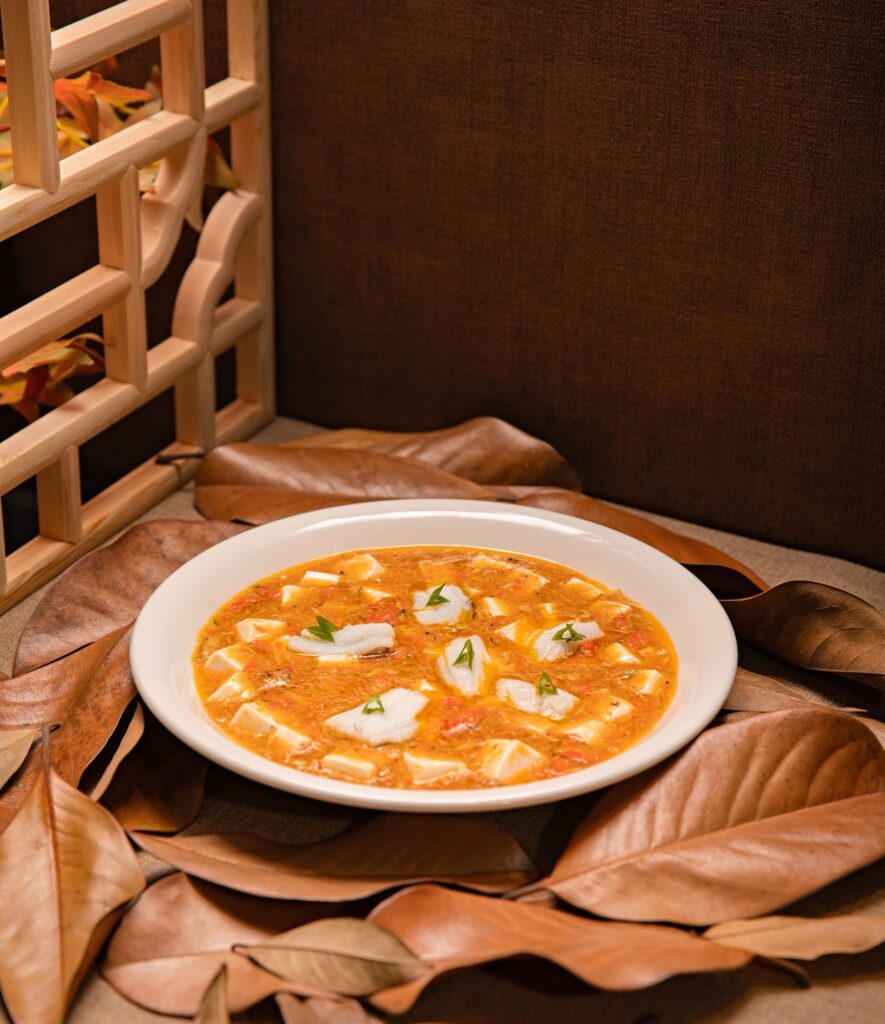
Mapo tofu in red chilli sauce.
The Sauce Beneath the Red Oil
An important ingredient in mapo tofu is Sichuan-style doubanjiang, a fermented paste made from broad beans and chillies. It brings saltiness, depth and some of the dish’s heat. One particularly well-known variety is Pixian doubanjiang, a fermented chilli bean paste associated with Sichuan cooking.
When fried in oil, the paste releases its aroma and helps give the sauce its characteristic red colour. Some recipes also use douchi, fermented black soybeans. Unlike doubanjiang, douchi adds its own concentrated savouriness and fermented aroma. Garlic, ginger, green garlic or spring onions may also be included, depending on the cook.
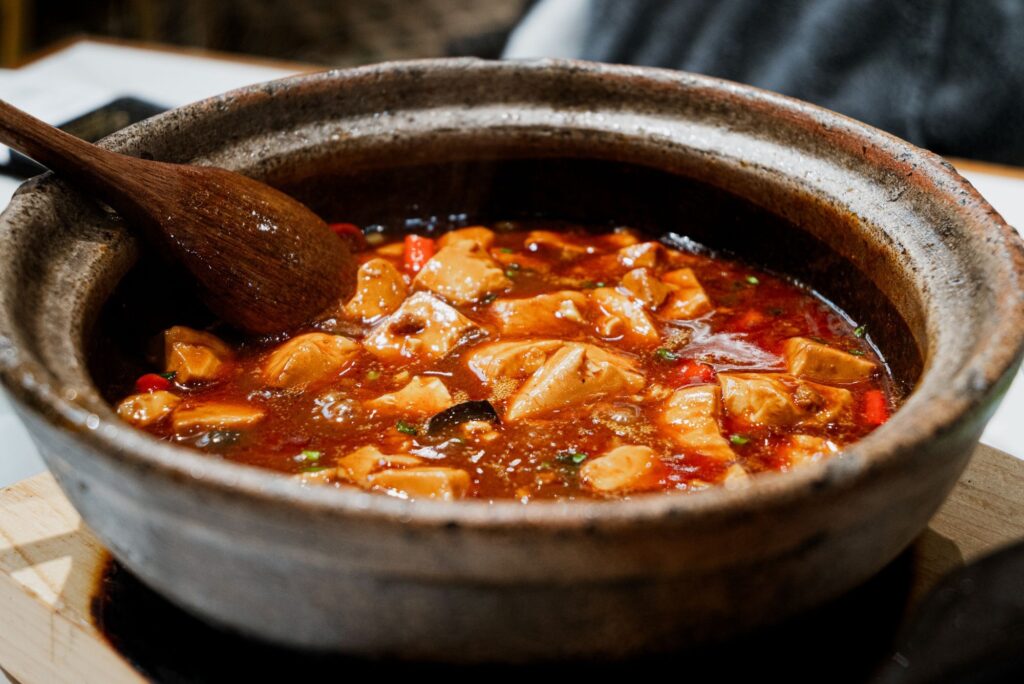
Mapo tofu in a clay pot.
Together, these ingredients give the sauce more than just heat. Saltiness, fragrant seasonings and the richness of fermented beans all contribute to the dish’s layered flavour.
Minced beef features in traditional Sichuan versions of mapo tofu, while minced pork is also used. The meat is cooked until browned and fragrant, leaving small, savoury pieces scattered among the soft tofu. It adds another texture to the dish and contributes flavour to the sauce.
Soft Tofu, Rich Sauce and Steamed Rice
The tofu should be soft enough to enjoy easily while still holding its shape when served. Depending on the recipe, cooks may use soft tofu or a slightly firmer variety. It is usually handled gently during cooking to prevent the pieces from breaking apart.
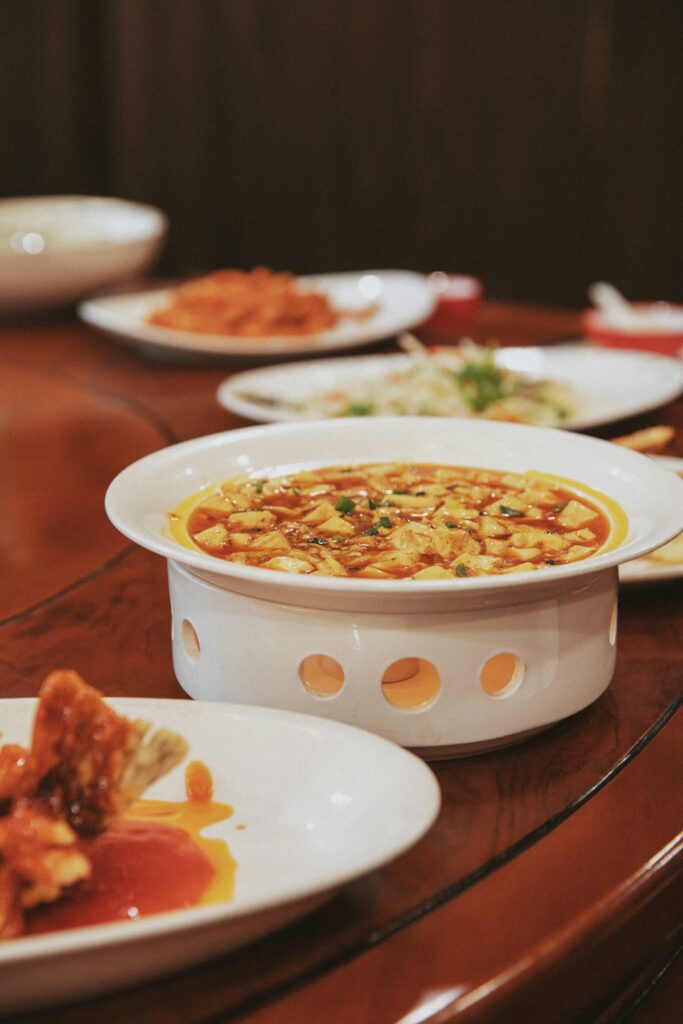
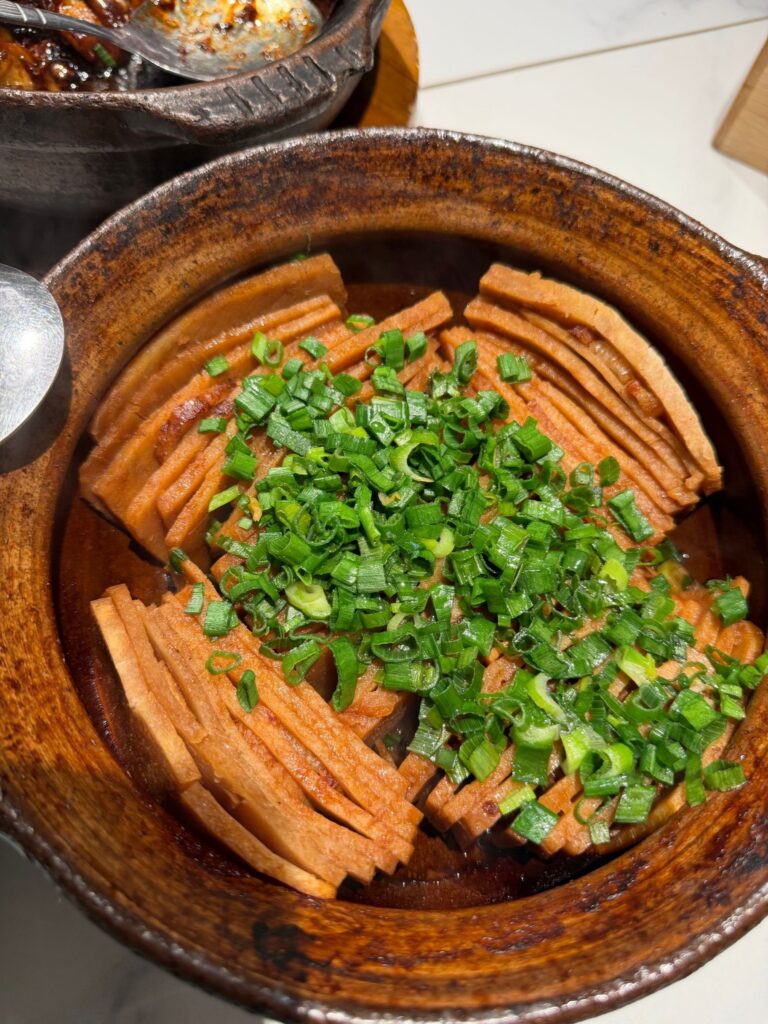
Mapo tofu in a bowl and a clay pot.
The sauce may be thickened with a little starch so that it clings to the tofu. When served, the richly seasoned sauce coats the pale cubes, with small pieces of meat and seasonings nestled between them. The tofu itself is mild and tender, providing a contrast to the bold flavours surrounding it.
Steamed white rice is a familiar accompaniment to mapo tofu. Spoon some tofu, meat and sauce over the rice and let the grains absorb the savoury mixture. The rice also helps soften the intensity of the chilli heat and tingling peppercorns, particularly for anyone new to Sichuan food.
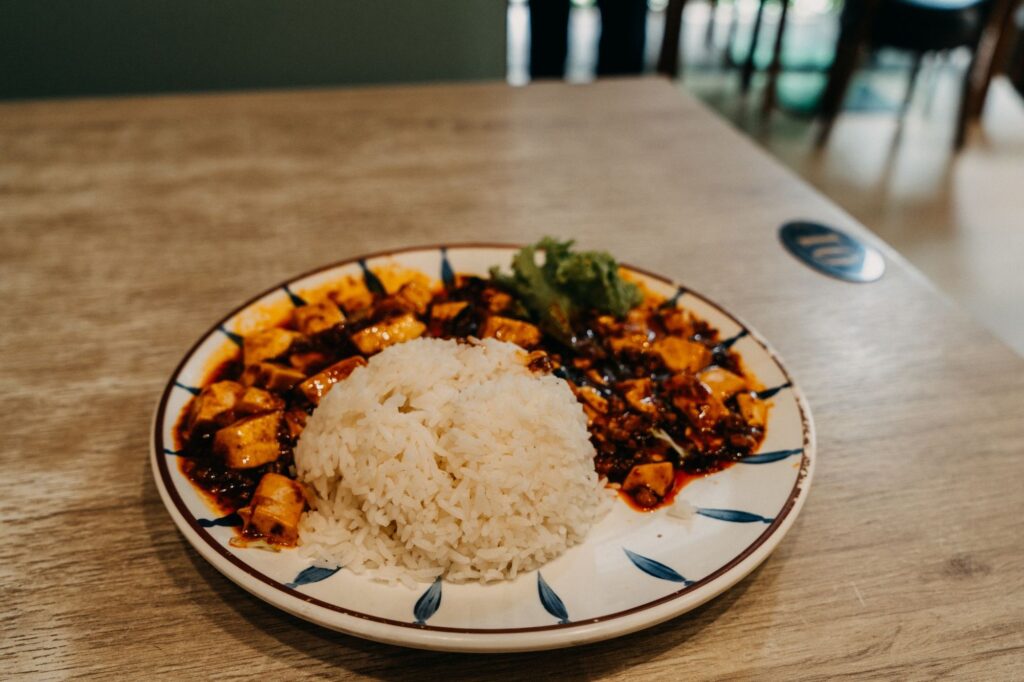
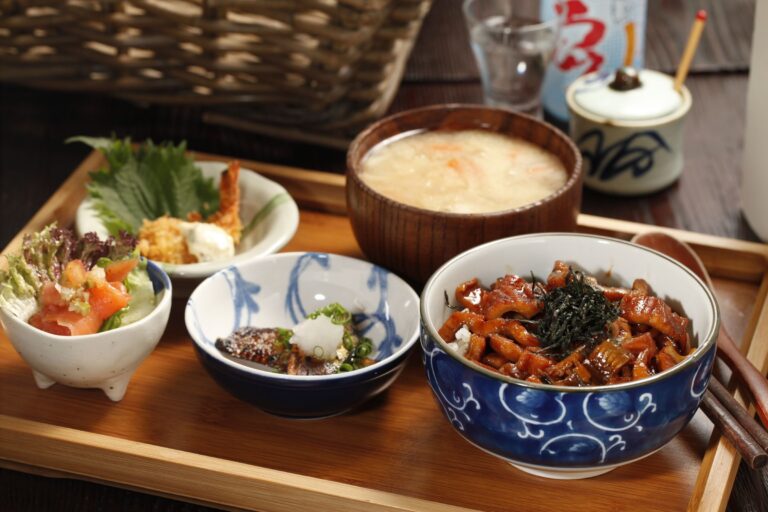
Mapo tofu served with rice and greens.
Mapo tofu is usually enjoyed hot, while the tofu remains tender and the sauce is fragrant. And even after the last bite, the distinctive tingle of Sichuan peppercorns may linger on your tongue for a little while longer.