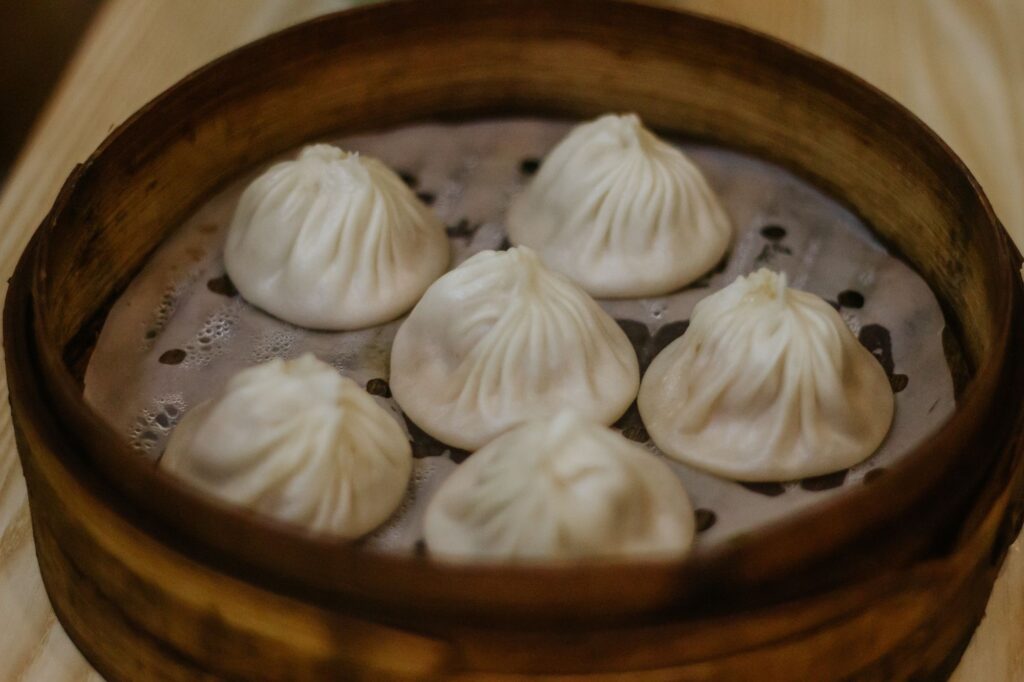
Xiaolongbao are small steamed dumplings with pleated tops, usually filled with pork and soup. When they arrive in a bamboo steamer, each dumpling appears neatly sealed, with no obvious way for liquid to have been poured inside. So how does the soup get there?
Closely associated with Shanghai, xiaolongbao are known for their delicate wrappers and the hot soup hidden within. Small as they look, they require a gentle touch. A little too much pressure can tear the wrapper and send the soup spilling out before you have had a chance to enjoy it.
The Soup Inside the Wrapper
The secret lies in stock that has been chilled into a jelly, known as aspic. Stock made with collagen-rich ingredients, such as pork skin, can set when cooled. The jelly is chopped into small pieces and mixed with minced pork before the dumplings are wrapped. During steaming, it melts into soup, surrounding the cooked filling inside.
This method allows the dumpling maker to enclose both meat and stock in a thin wrapper without having to somehow fold dough around a spoonful of liquid.
The wrapper is made from wheat flour dough, rolled thin and gathered into pleats before being sealed at the top. It needs to be strong enough to hold the filling and soup, yet soft and delicate once steamed.
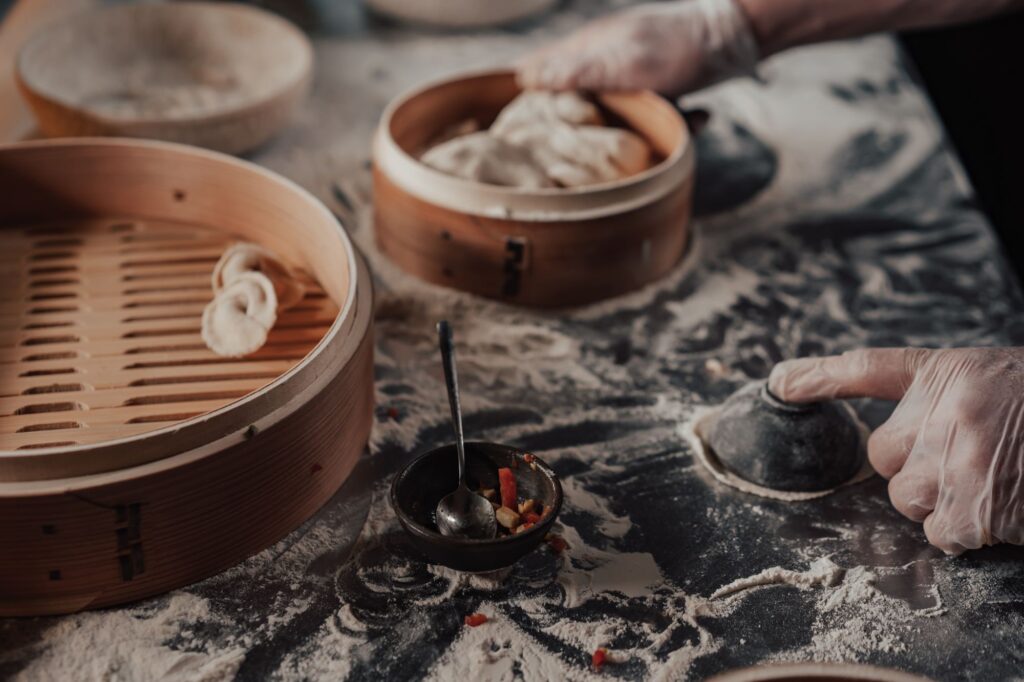
Hands placing dumplings in bamboo steamers.
Pork provides the main filling and its characteristic richness. Ginger, spring onions and other seasonings may be added, depending on the recipe. As the dumpling cooks, the soup takes on the flavours of the meat, while the soft wrapper keeps everything together in one small parcel.
Lifting a Dumpling and Enjoying the Soup
Have a spoon ready before picking up your first xiaolongbao. Use your chopsticks to gently grip the dumpling near its pleated top and lift it from the steamer lining. Avoid squeezing the sides, as the delicate wrapper can tear. Place it on your spoon so that any escaping soup has somewhere to go.
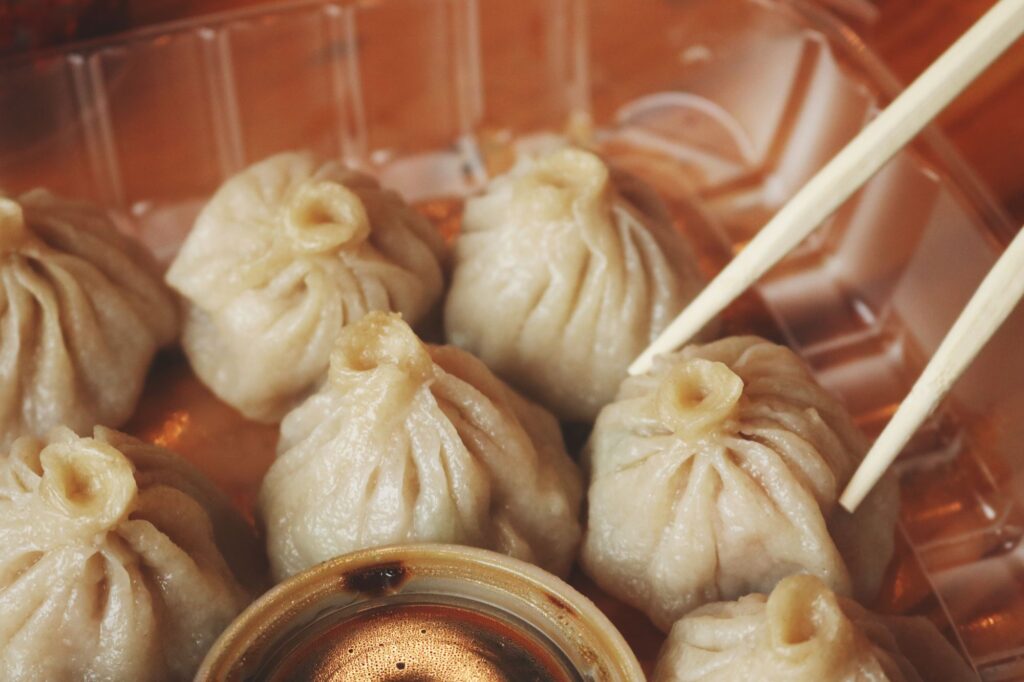
Steamed dumplings with chopsticks and dipping sauce.
One way to begin is to bite a small hole in the side, allowing the steam to escape and giving the soup a moment to cool before sipping it slowly. You can then enjoy the remaining wrapper and filling. Alternatively, let some of the soup flow onto your spoon and sip it from there. Just because the dumpling is small does not mean it is ready to be eaten in one bite straight from the steamer.
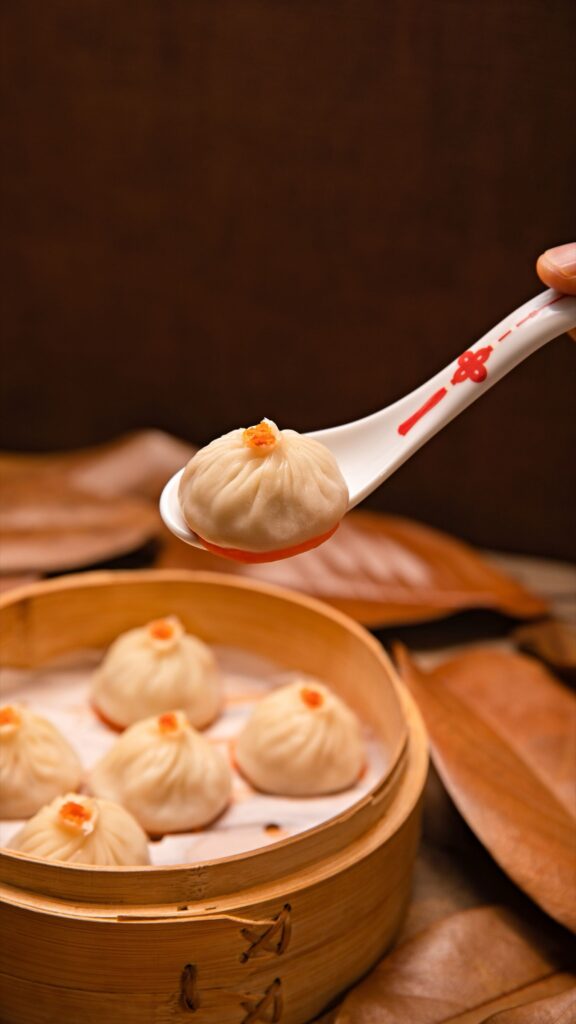
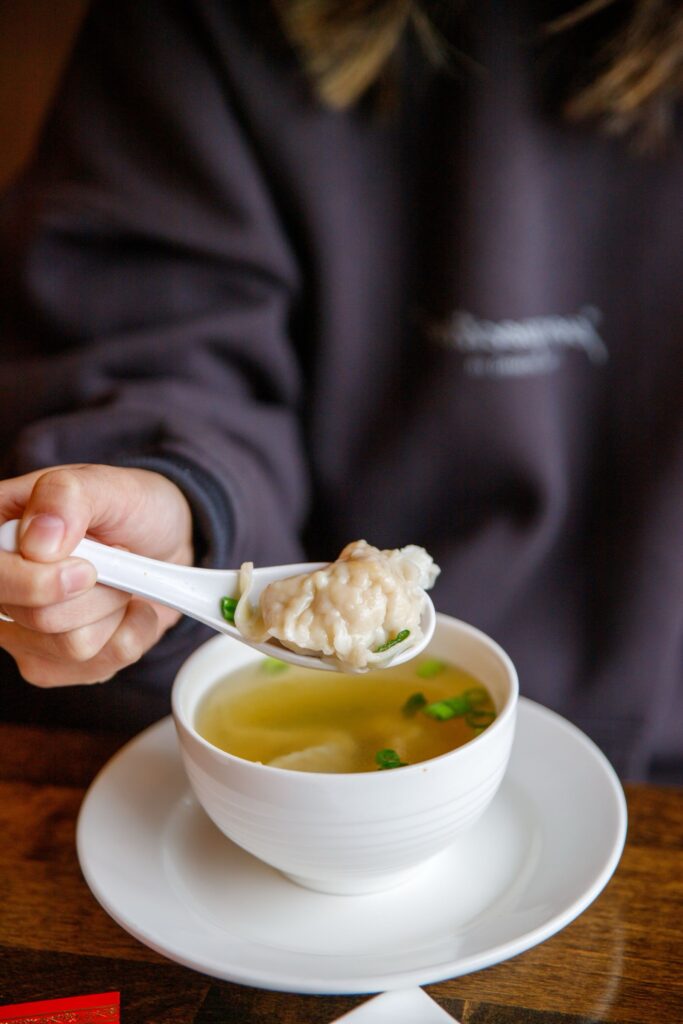
A xiaolongbao on a spoon.
Chinese black vinegar and finely shredded fresh ginger are familiar accompaniments. Zhenjiang vinegar is a popular choice, its acidity balancing the richness of the pork, while ginger adds fragrance and a gentle hint of heat.
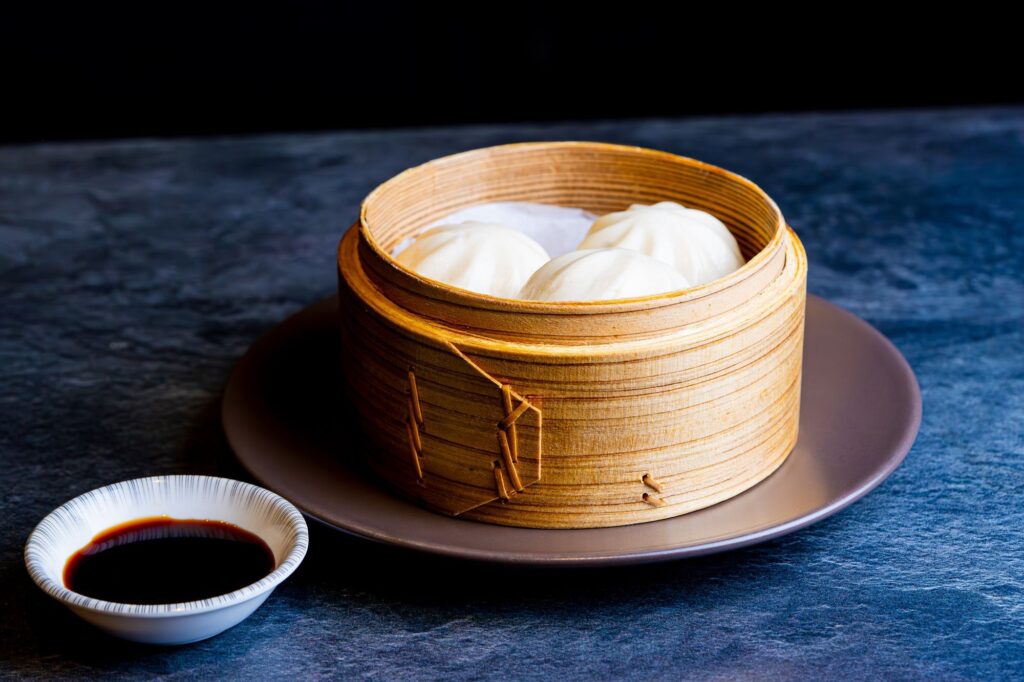
A steamer and a dish of black vinegar.
Try a little at first, either by dipping the dumpling lightly or adding a small amount of vinegar to your spoon. There is no need to use too much from the start, as the soup inside already has its own flavour worth enjoying.
Choosing a Filling and Ordering
Pork is a good place to start. Some restaurants also offer xiaolongbao filled with crab meat or crab roe, sometimes combined with pork for a richer seafood flavour.
If you would like to try a crab version, check the menu description or ask about the ingredients. A crab xiaolongbao does not necessarily contain only crab; pork may still be part of the filling.
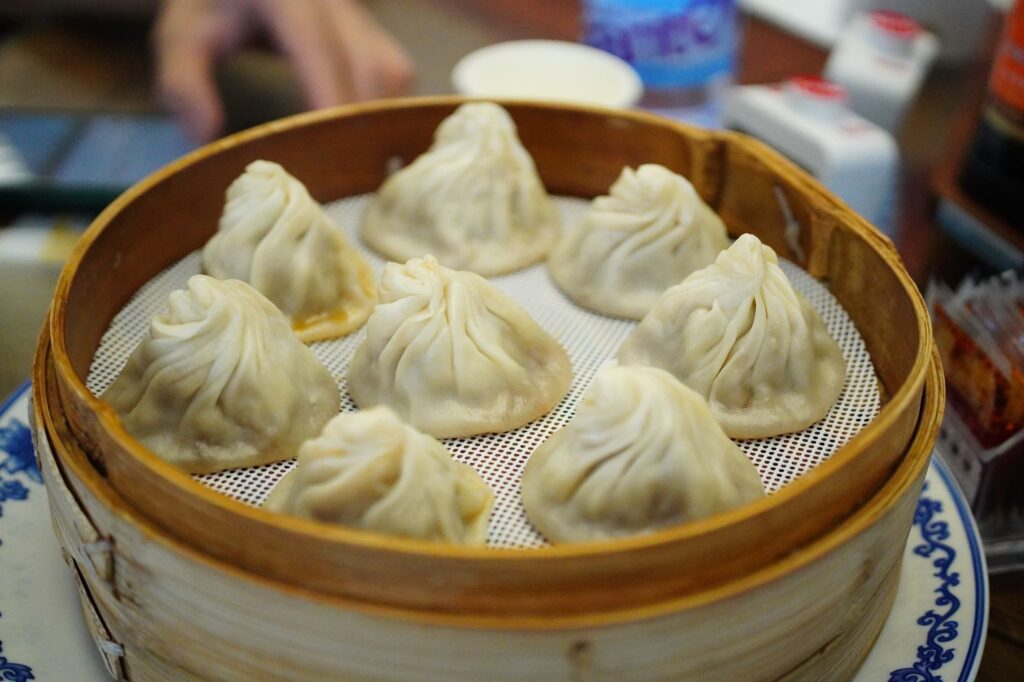
Steamed dumplings in a bamboo basket.
When tasting xiaolongbao, pay attention to more than the amount of soup inside. The softness of the wrapper, the flavour of the meat and the richness of the broth all contribute to the experience.
You can start with a small steamer basket and order more if you wish. Xiaolongbao are best enjoyed soon after steaming, while the wrappers are still soft and the soup retains its flavour.
There is no need to rush, though, especially when that little dumpling is still holding a spoonful of hot soup.
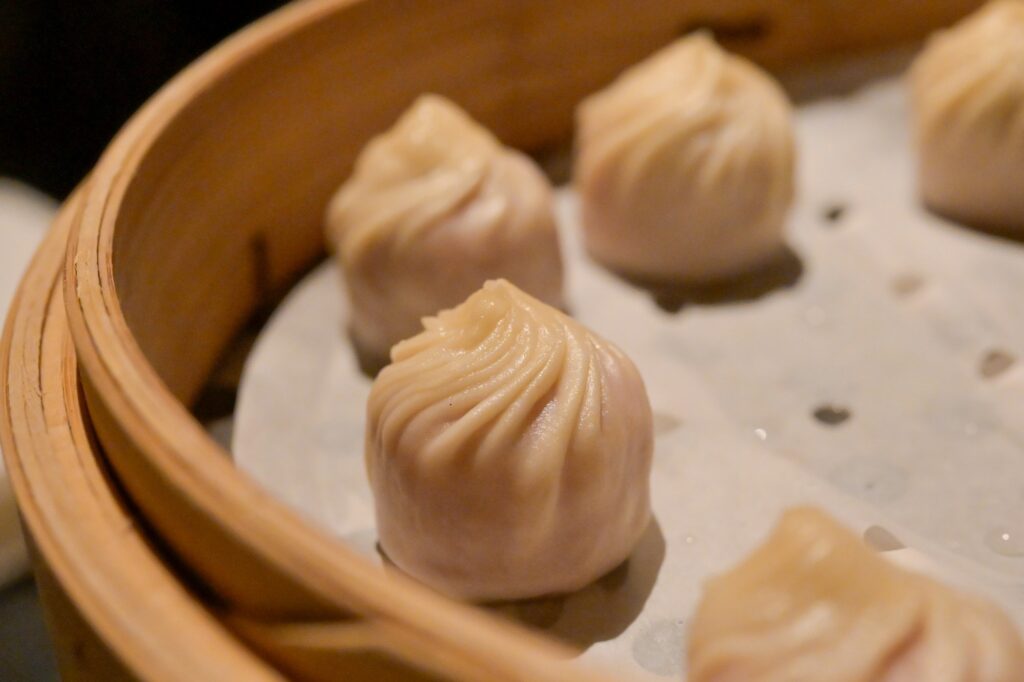
Xiaolongbao in a bamboo steamer.