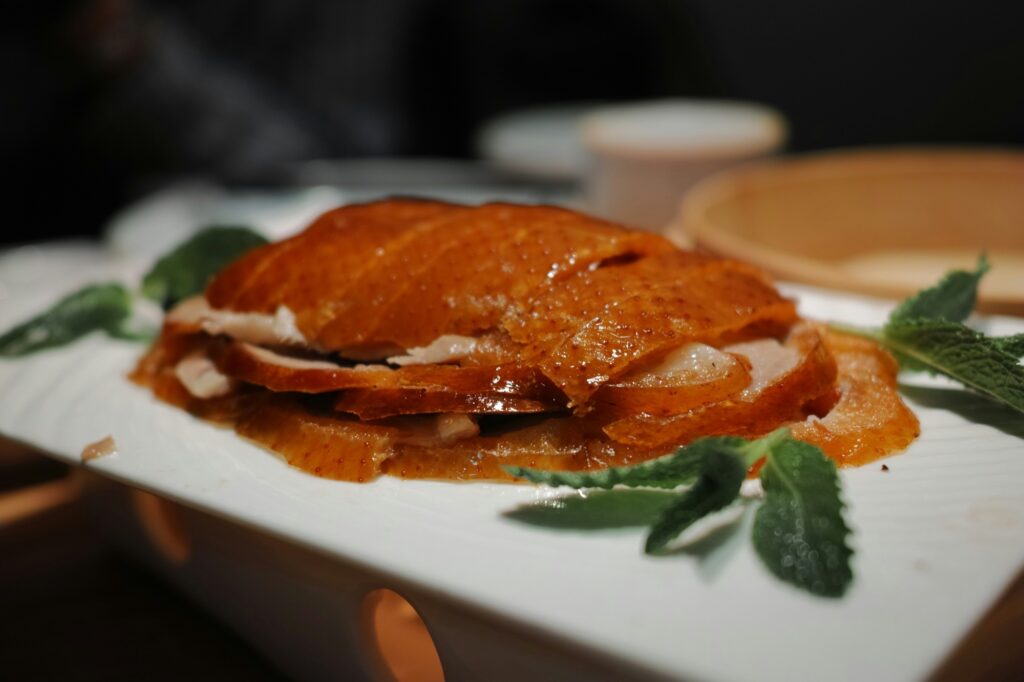
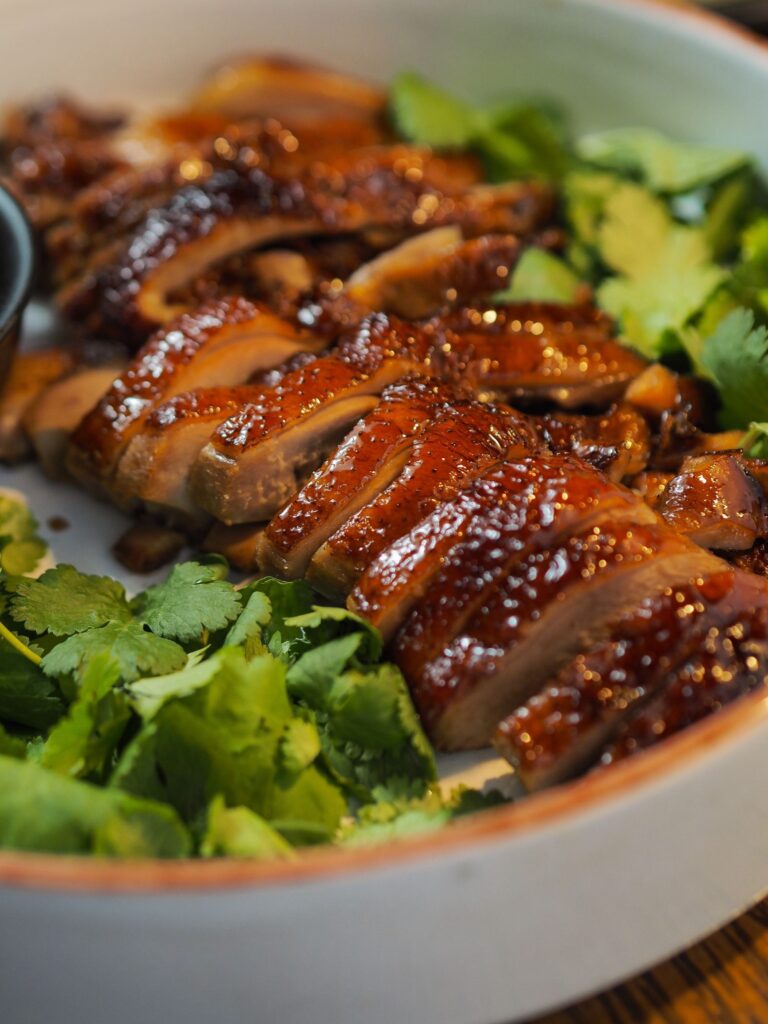
Peking duck is a roasted duck dish served in slices, usually accompanied by thin pancakes, sauce and finely sliced vegetables. Its glossy, reddish brown skin is often the first thing to catch your eye, but there is more to enjoy: tender meat, soft pancakes and the fresh crunch of cucumber. The duck leaves the oven whole, yet by the time it reaches your plate, it becomes a series of little wraps.
Achieving that crisp skin takes considerable preparation before the duck even goes into the oven.
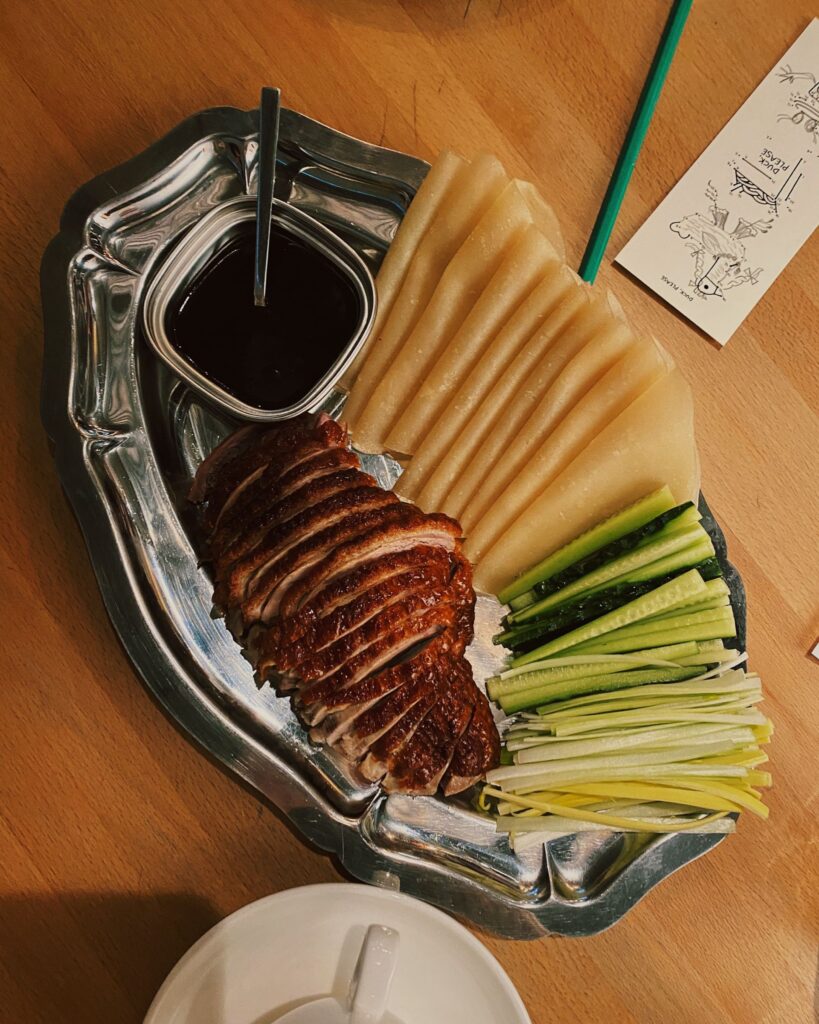
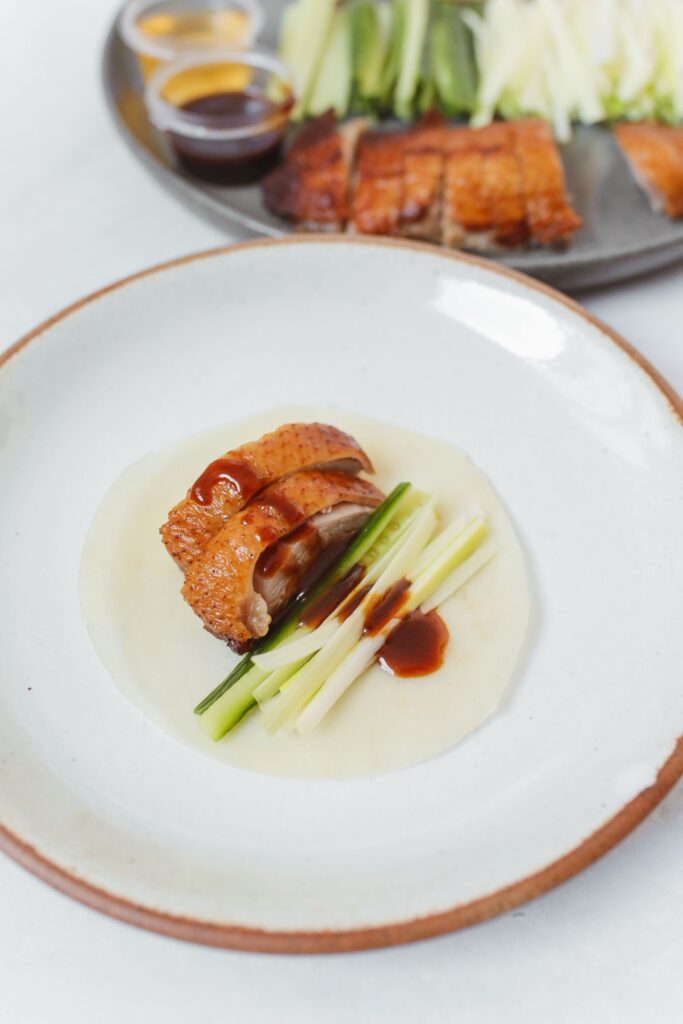
Peking duck with pancakes and cucumber.
Preparing the Skin and Roasting the Duck
In kitchens specialising in Peking duck, air may be pumped between the skin and the meat to separate the two. The skin is then scalded with hot water, coated with a sweet glaze often containing maltose, and left to dry before roasting. Drying reduces moisture on the surface, while the glaze helps develop the skin’s glossy brown colour as it cooks.
There is more than one way to roast Peking duck. In the hanging oven method, ducks are suspended inside an oven with an open front, heated by burning wood. The cook adjusts their positions so they roast evenly. The closed oven method, meanwhile, relies on heat retained inside a preheated oven, without the flames coming into direct contact with the duck during roasting.
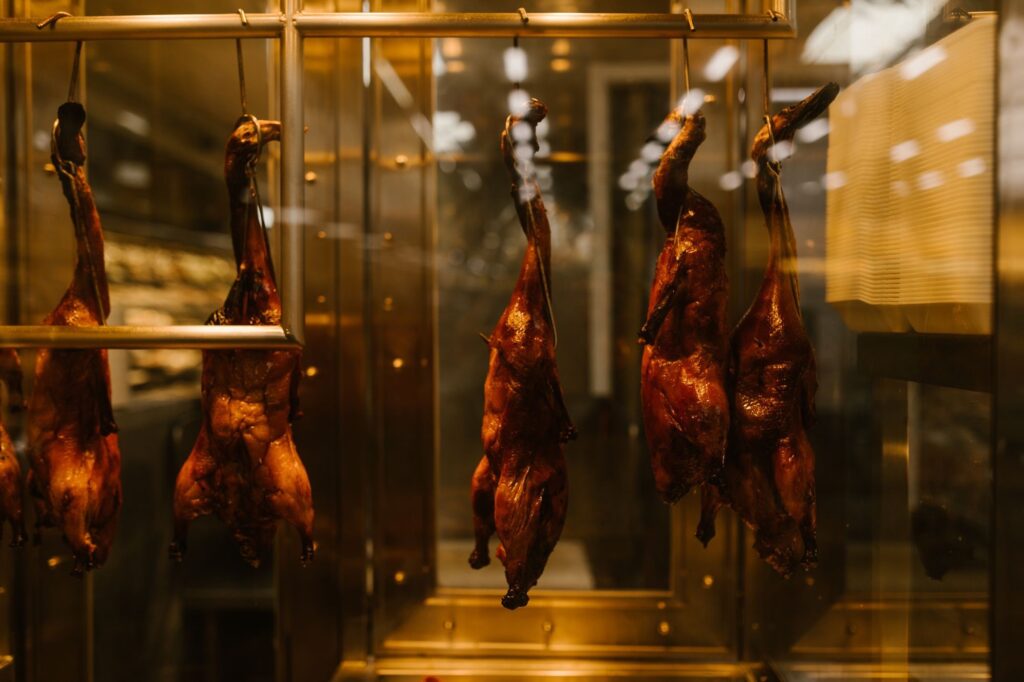
Roast ducks hanging in a glass display.
Both methods aim to produce tender meat and crisp skin, although they manage heat differently. Drying times, glazing mixtures and roasting techniques can also vary from one kitchen to another.
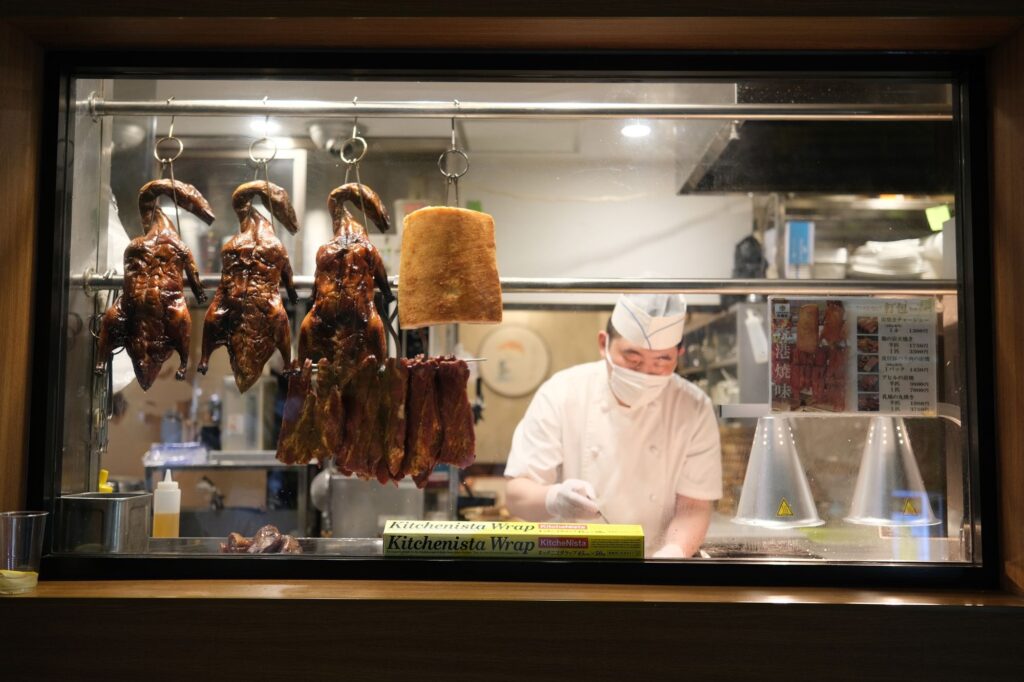
Roast ducks hanging in an open kitchen.
Carving and Serving the Duck
Once roasted, the duck is carved into slices for serving, sometimes right in front of diners. Some restaurants serve the skin separately, while others carve slices with both skin and meat. The skin on its own offers a delicate crunch, while slices with meat underneath are softer and richer. If both are served, it is worth trying each.
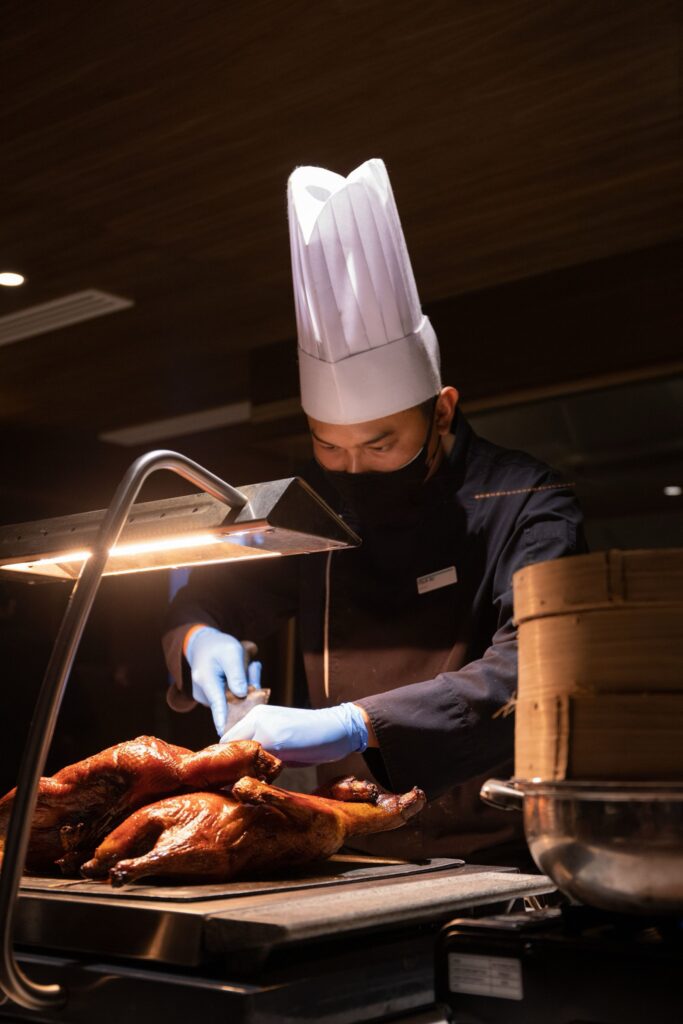
A chef slicing roast duck.
Some restaurants also provide white sugar for dipping pieces of duck skin. If offered, try a little to see how the sweetness works with the crisp skin before moving on to the pancakes.
The remaining duck may be prepared in another way, such as using the bones to make soup. If you would like an additional dish, ask what is included in your order, as preparation methods and extra charges vary between restaurants.
Wrapping and Enjoying Peking Duck
The thin pancakes used for wrapping Peking duck are made from wheat flour and usually served warm so they remain soft and easy to fold.
A traditional accompaniment is tianmianjiang, a dark, savoury sauce with a gentle sweetness. Often translated as sweet bean sauce, it is primarily made from fermented wheat flour. Some restaurants serve hoisin sauce instead, although the two are different condiments.
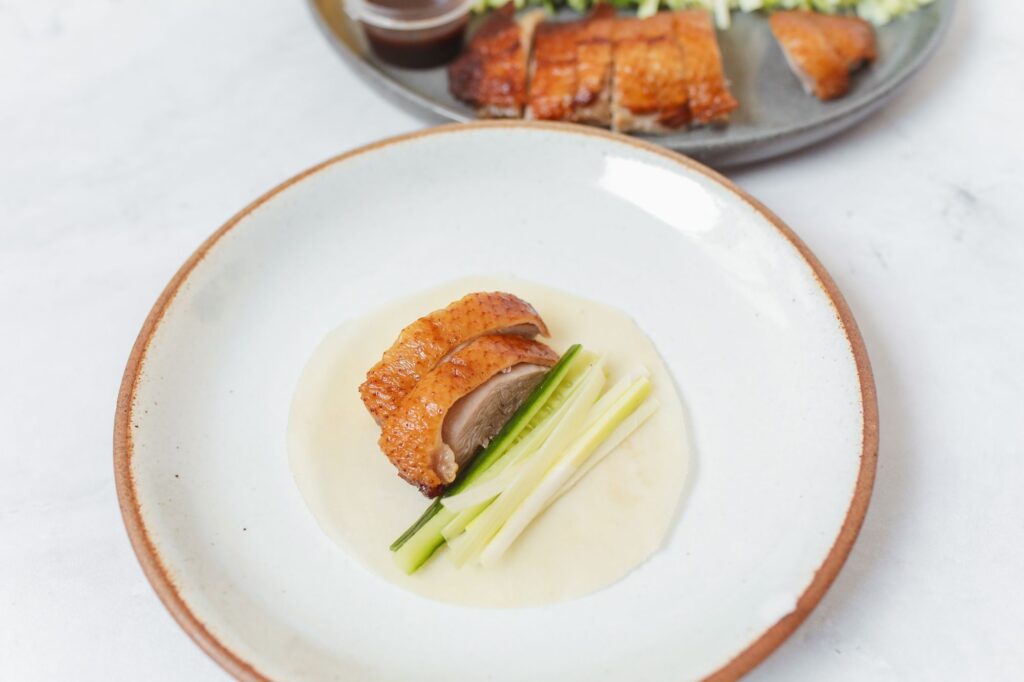
Roast duck on a thin pancake with cucumber.
Spread a little sauce over a pancake, add a few slices of duck, then finish with strips of cucumber and spring onion. Cucumber brings freshness and crunch, while the onion adds a mild sharpness that pairs well with the rich meat. The soft pancake holds everything together in a small, convenient wrap.
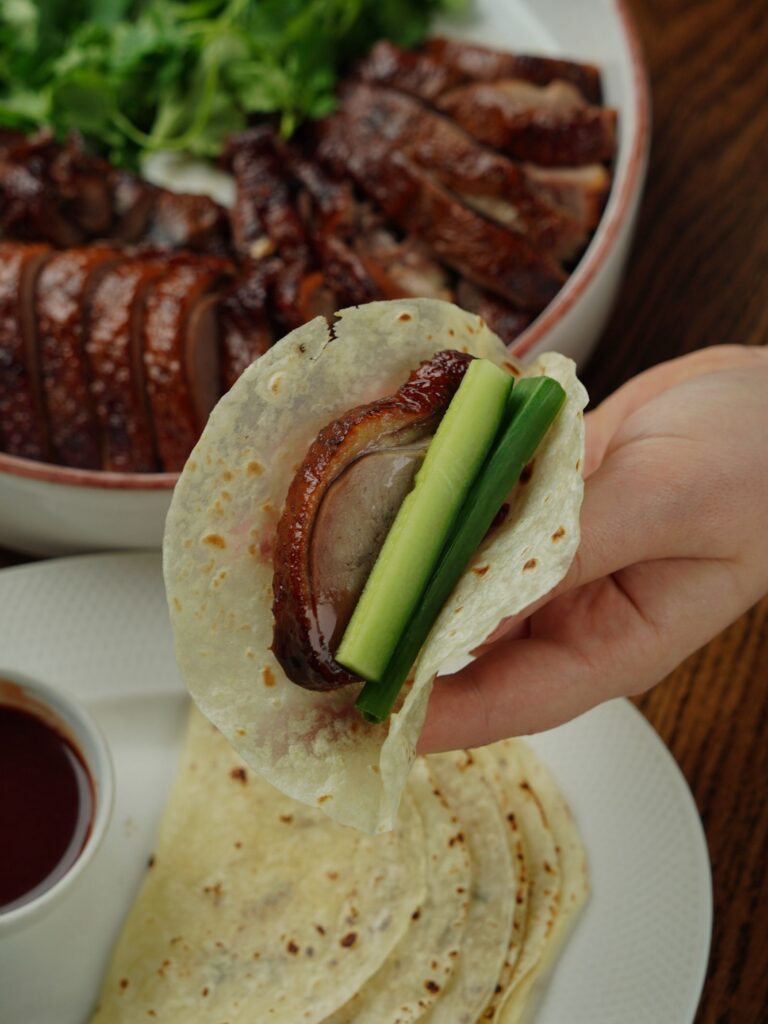
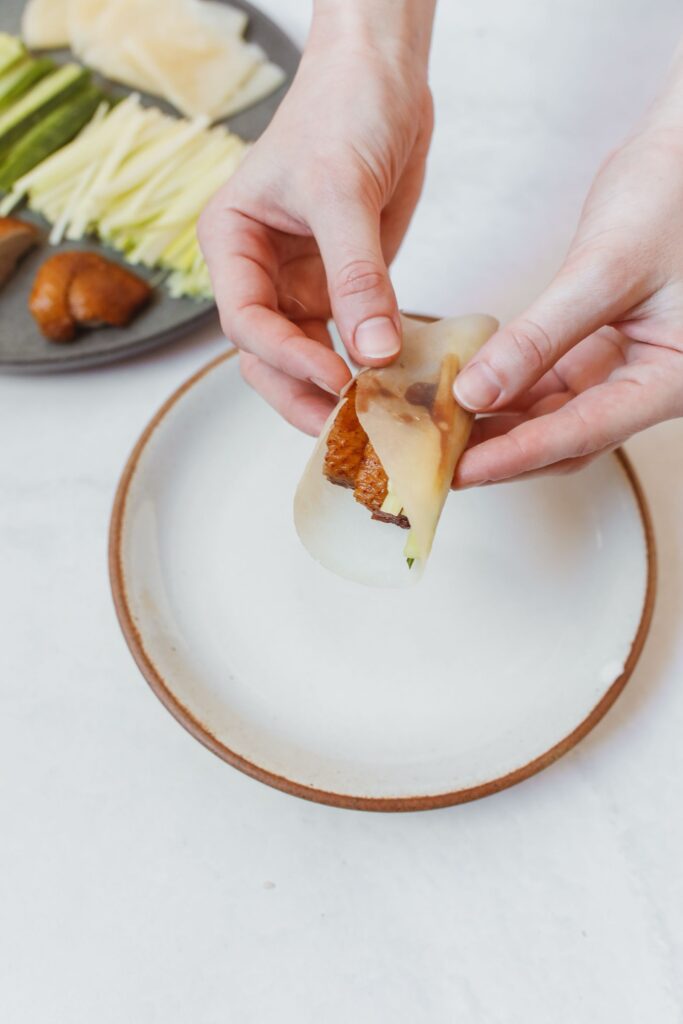
Wrapping duck in a thin pancake.
You can fold the bottom edge upwards and tuck in the sides, or simply roll the pancake into a little parcel. Avoid overfilling it, as the pancake becomes harder to fold, while too much sauce can overwhelm the flavour of the duck.
A few slices of duck, some cucumber and spring onion are usually enough. Save the remaining fillings for your next wrap. There is no need to squeeze everything into the first one.
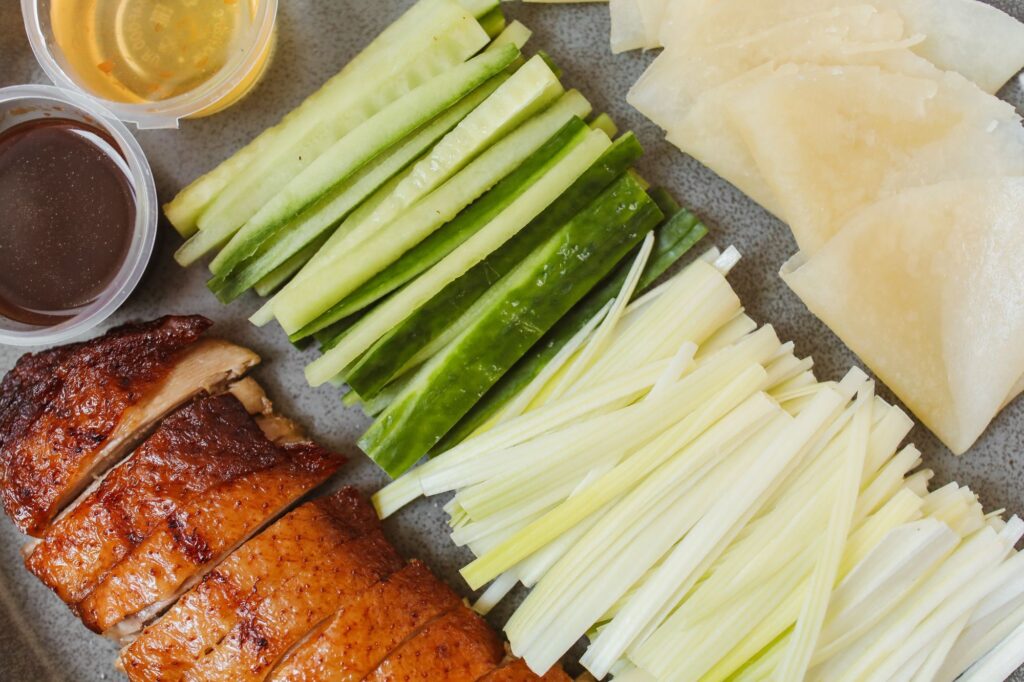
Duck, cucumber, spring onion and sauces.