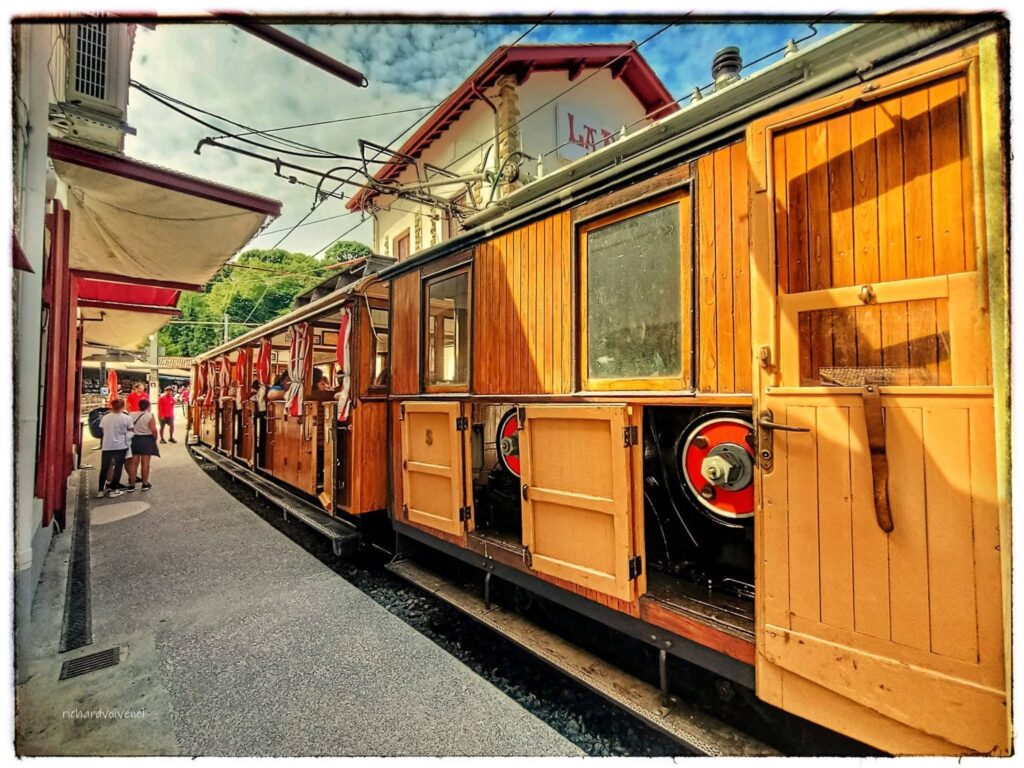
Between the two running rails of Train de la Rhune lies a third, toothed rail. A cogwheel beneath the locomotive engages with its teeth, allowing the train to climb gradients that conventional railways would struggle to negotiate.
From Col de Saint-Ignace station in the French Basque Country, the wooden carriages begin a journey of a little over half an hour up La Rhune. Outside the windows, green hillsides open onto meadows, rocky slopes and grazing animals that passengers may encounter along the way.
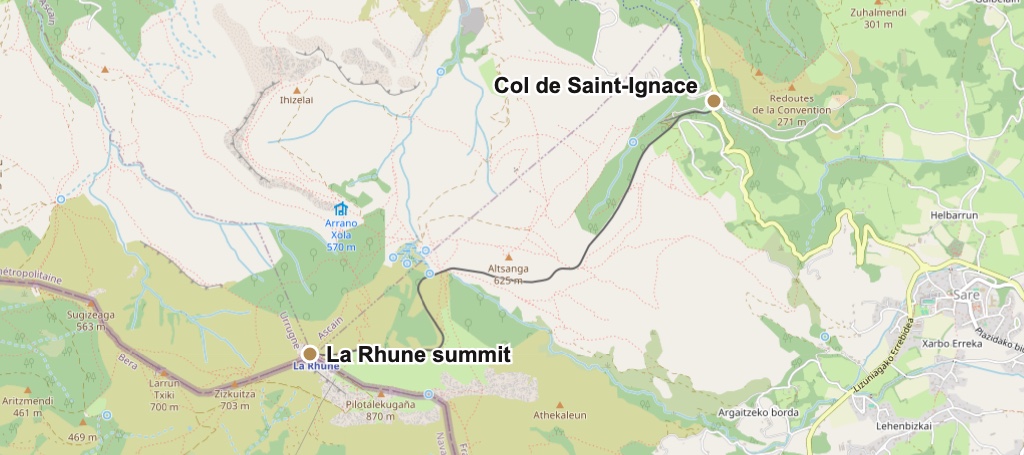 © OpenStreetMap contributors
It is a short journey on a railway that has carried visitors into the mountains for more than a century.
A Century of Mountain Travel by Rack Railway
Train de la Rhune made its inaugural journey on 30 June 1924, providing a new way to reach one of the Basque Country’s best-known mountains.
From the beginning, the railway combined electric traction with a rack-and-pinion system. Rather than relying entirely on the grip between wheels and rails, the locomotive uses a cogwheel mechanism to negotiate the steep gradients.
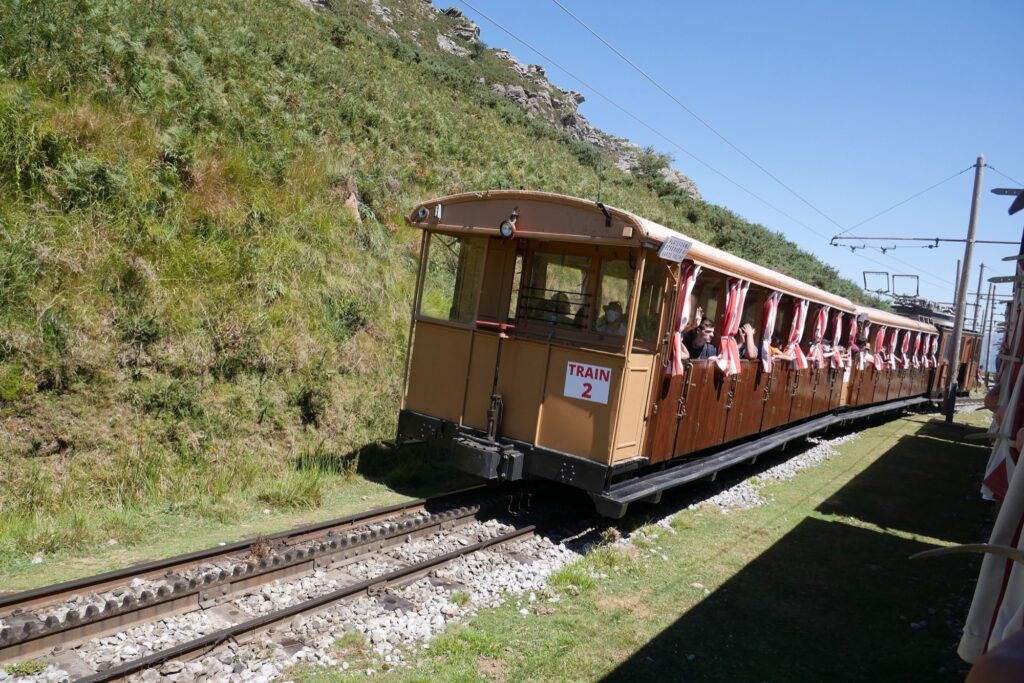
Two trains passing on the mountainside.
The wooden carriages retain an appearance associated with the early days of mountain tourism, with passenger compartments and windows offering views on either side.
The railway infrastructure has continued to be maintained and renewed. The track was replaced in 2023.
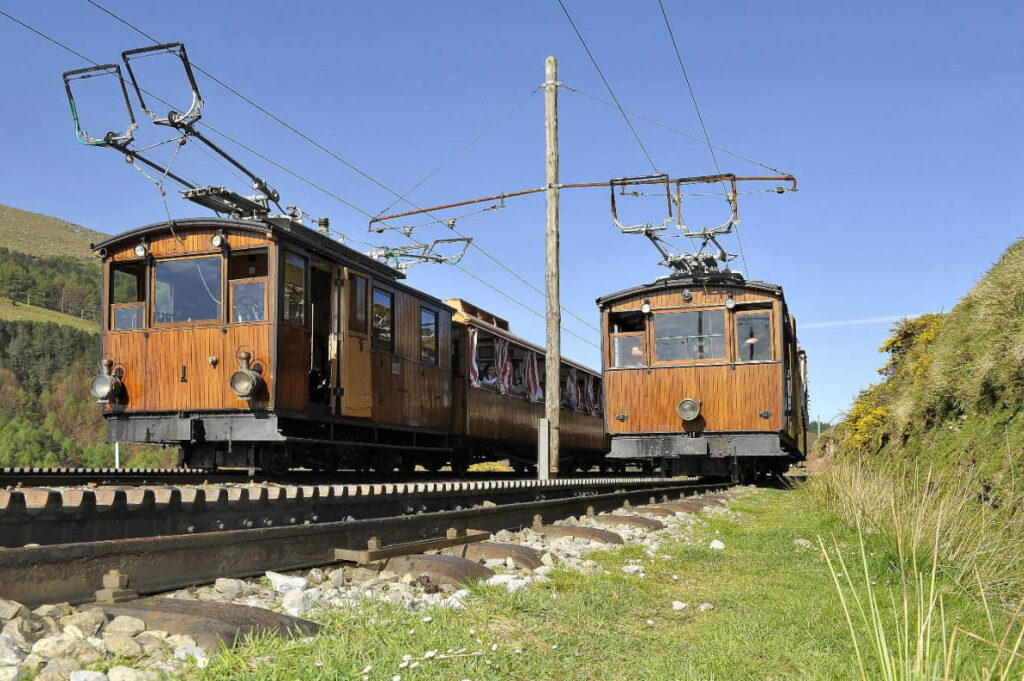
Trains crossing on the line.
The result is a railway whose carriages recall an earlier period, while the infrastructure continues to serve present-day passengers.
As the train climbs, the lower hills gradually give way to open mountain slopes. This is a journey up a single mountain, where the scenery changes with altitude and weather.
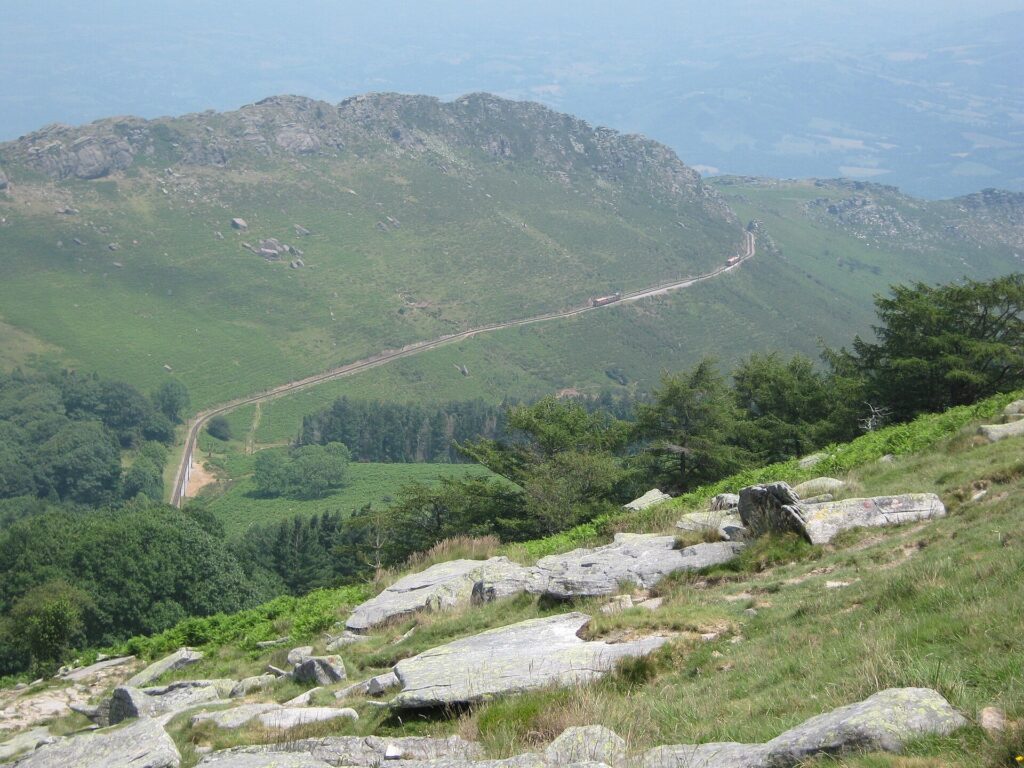
The railway on the mountainside.
The Meadows of the Basque Country
On the slopes of La Rhune, pottok ponies, a small horse breed native to the Basque Country, are a distinctive part of the landscape.
They graze in the mountain pastures alongside flocks of Manech sheep, which are closely associated with local farming traditions. Depending on the time of year and where the animals are grazing, passengers may see them from the train or while walking on the mountain.
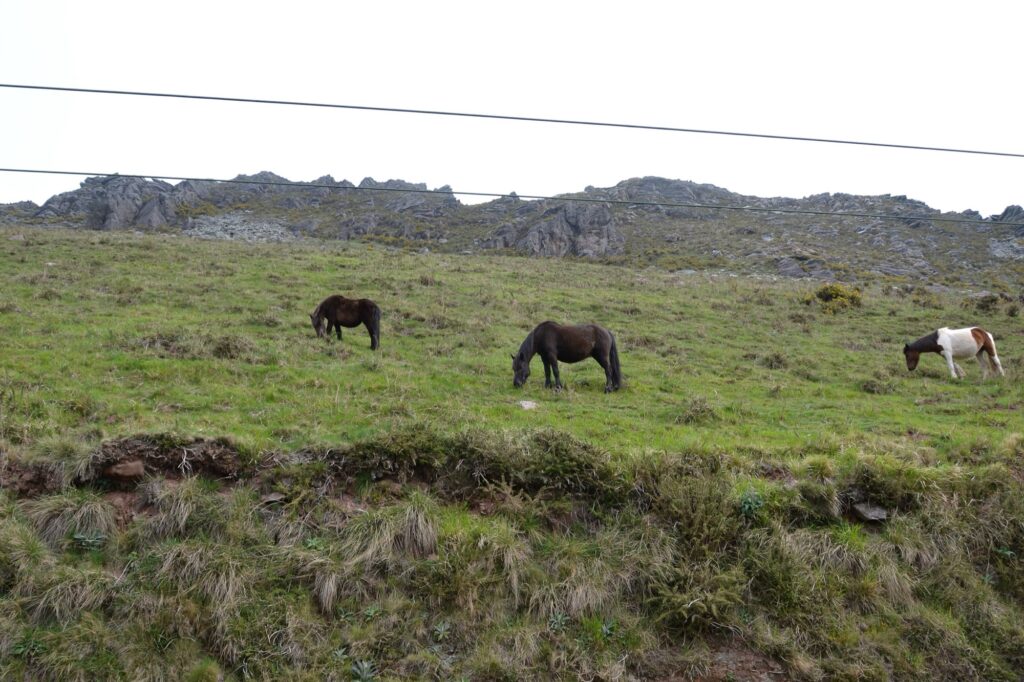
Pottok ponies on the mountain pastures.
These animals are part of a landscape still shaped by pastoral farming. The meadows continue to be used for grazing, maintaining a connection with the agricultural traditions of Basque communities.
Higher up, the grasslands become more open. Mountain slopes extend into the distance, sometimes partly hidden by low clouds. On clear days, the Atlantic horizon begins to appear beyond the hills.
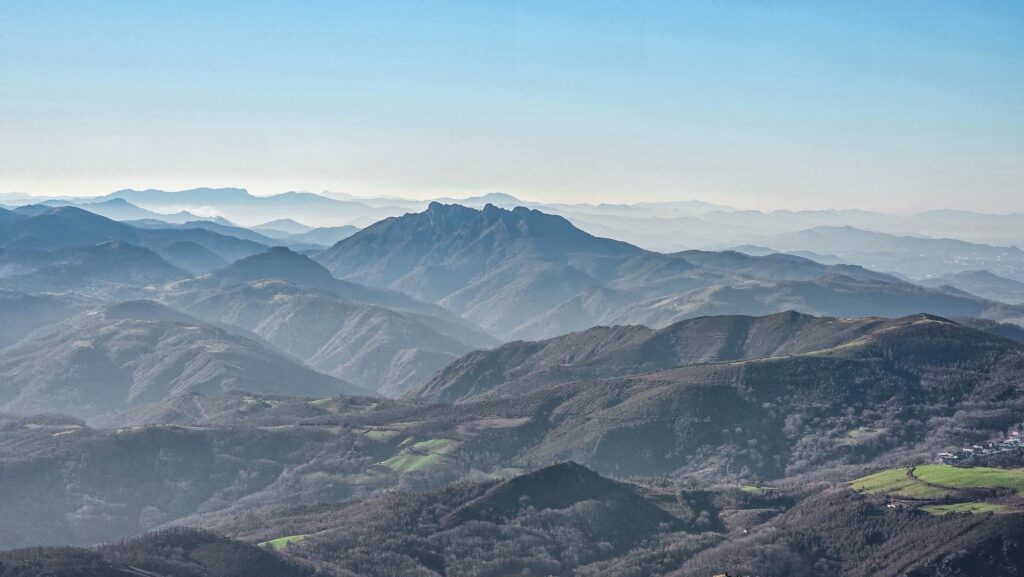
Mountain ranges of the Basque Country.
The area also includes habitats protected under Europe’s Natura 2000 network. Grazing, nature conservation and tourism share this mountain environment.
At the Summit of La Rhune
The train reaches the summit area of La Rhune, approximately 905 metres above sea level.
In favourable weather, visitors can look towards the Basque coastline and the Atlantic Ocean. Hills stretch inland, while the coastline appears in the distance, bringing mountain and sea into the same view.
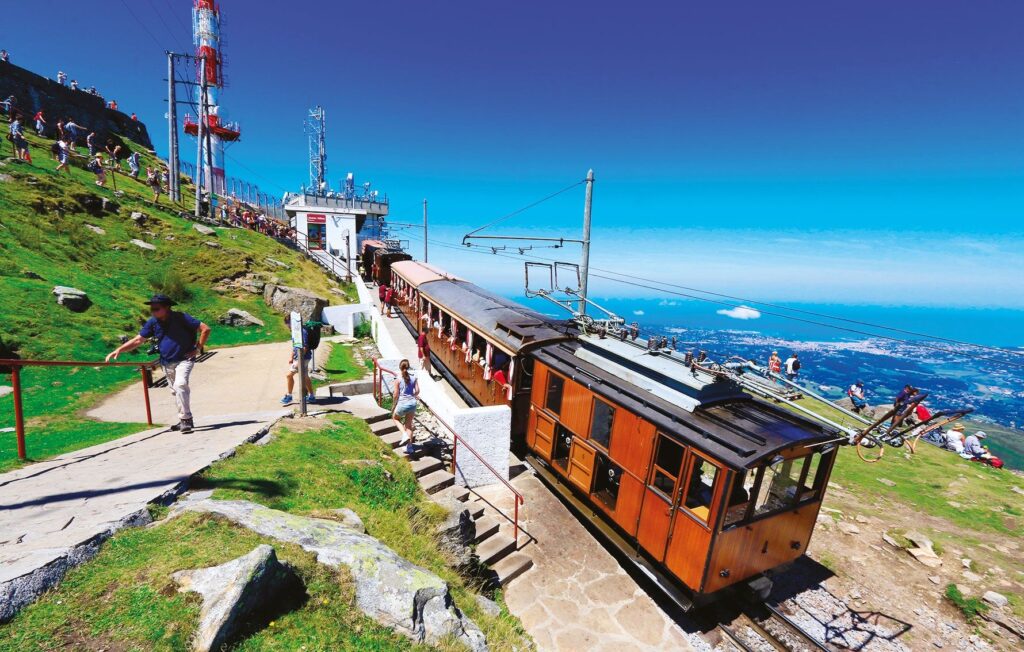
The train at the summit station.
Visibility, however, can change quickly. Cloud and mist may obscure the horizon or leave only parts of the lower slopes visible. The view from the summit is not always the one shown in promotional photographs.
A typical return journey allows passengers some time at the summit to walk, enjoy the scenery and explore the surrounding area before taking the train back down. The length of the stop depends on the operating schedule and ticket arrangements.
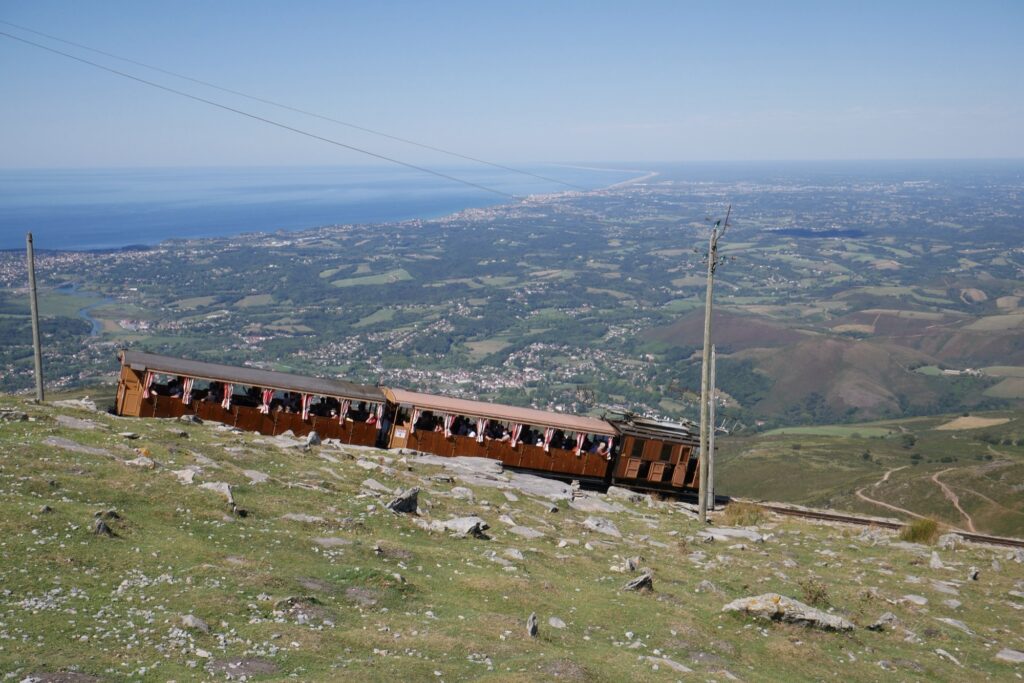
The descent with the Atlantic in the distance.
On the descent, the train follows the same rack railway back to Col de Saint-Ignace. The meadows and mountain slopes passed on the way up now appear from the opposite direction.
Essential Information
- Operator
- Train de la Rhune
- Journey Type
- Rack Railway
Reservations & Contact
- Official Website
- rhune.com/en
Image source: Train de la Rhune; Pays Basque Tourism; Pexels; Wikimedia