Pont Neuf means “New Bridge”, yet it is the oldest surviving bridge in Paris. From the bridge, pedestrians look down towards the Seine. From a boat below, its stone arches rise overhead at the western end of Île de la Cité. The structure is familiar, but the perspective is quite different.
That is part of the appeal of a Seine river cruise. Paris’s bridges, museums and churches appear one after another along the waterfront. Without navigating the busy streets, passengers can see many of the city’s best-known landmarks and discover how the river relates to the city that developed around it.
 © OpenStreetMap contributors
Bridges That Change the View of Paris
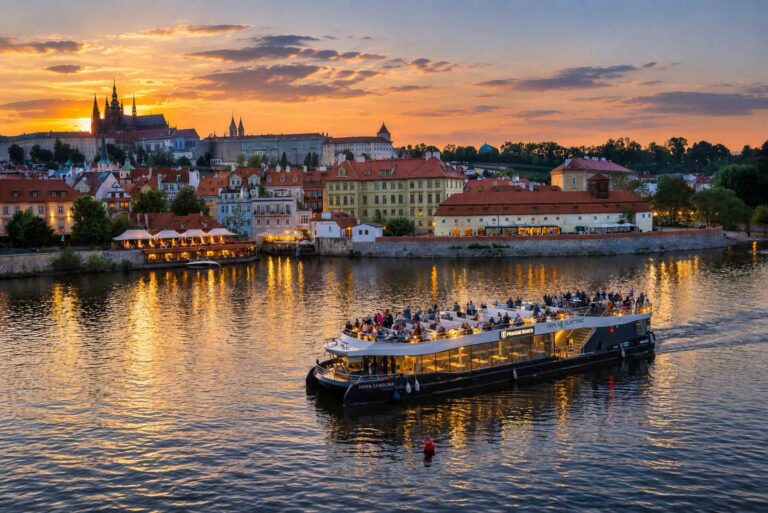
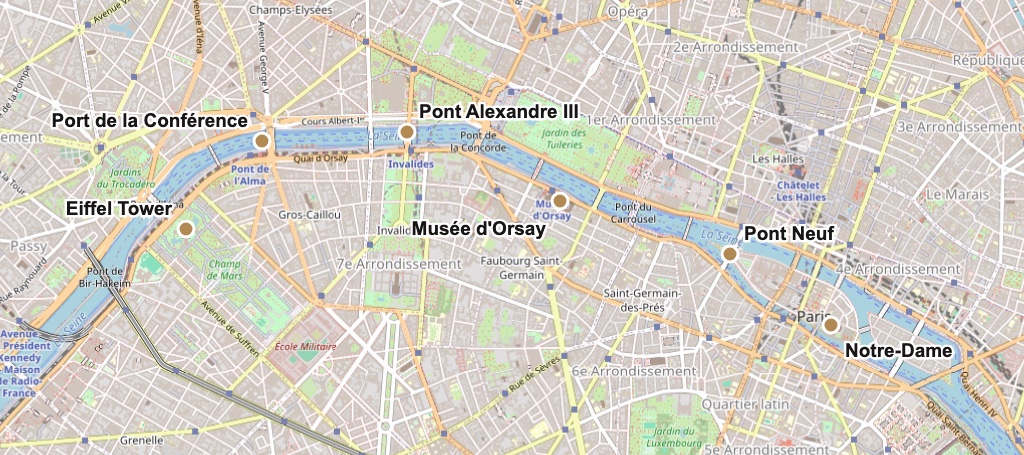
From Port de la Conférence, near Pont de l’Alma, boats operated by Compagnie des Bateaux-Mouches take passengers on a return sightseeing cruise lasting approximately one hour.
On the usual sightseeing route, the boat heads towards Île de la Cité, passing landmarks such as the Louvre, Hôtel de Ville and Conciergerie before turning back. On the return, Musée d’Orsay and the Eiffel Tower come into view.
Between these landmarks are bridges with different architectural styles and histories. As the boat approaches, their arches frame the river ahead. A few minutes later, passengers can look back at the same structures from the other side.
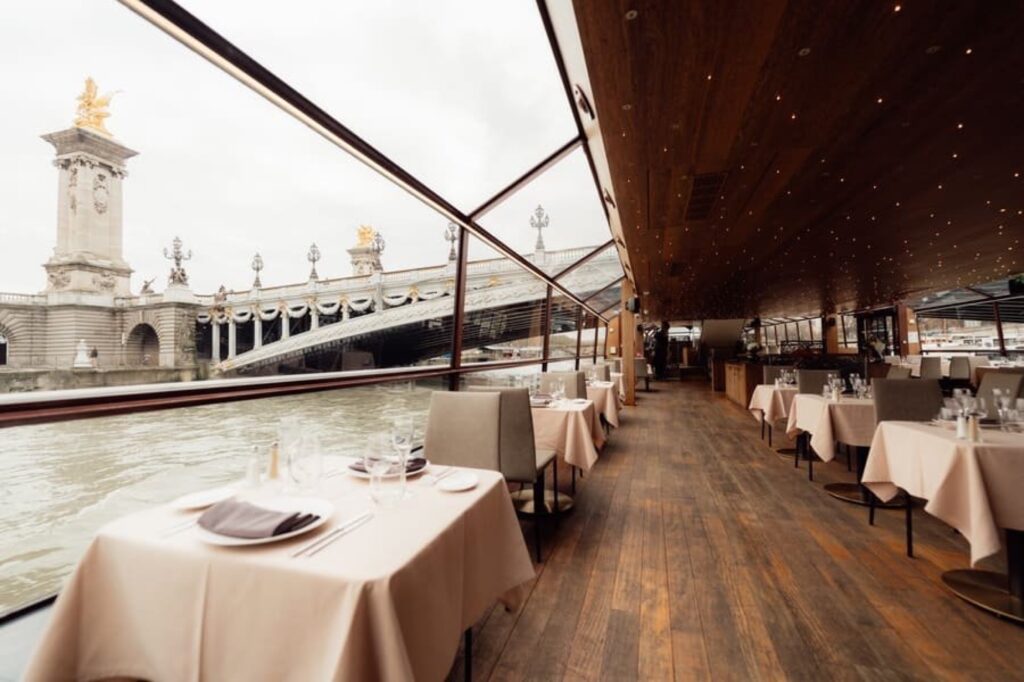
Pont Alexandre III from the boat.
Pont Alexandre III is among the most distinctive. Inaugurated for the 1900 World’s Fair, the bridge features elaborate decoration and a broad metal arch spanning the Seine. From the water, its structure is more clearly visible beneath the bridge, while the columns and sculptures above remain prominent.
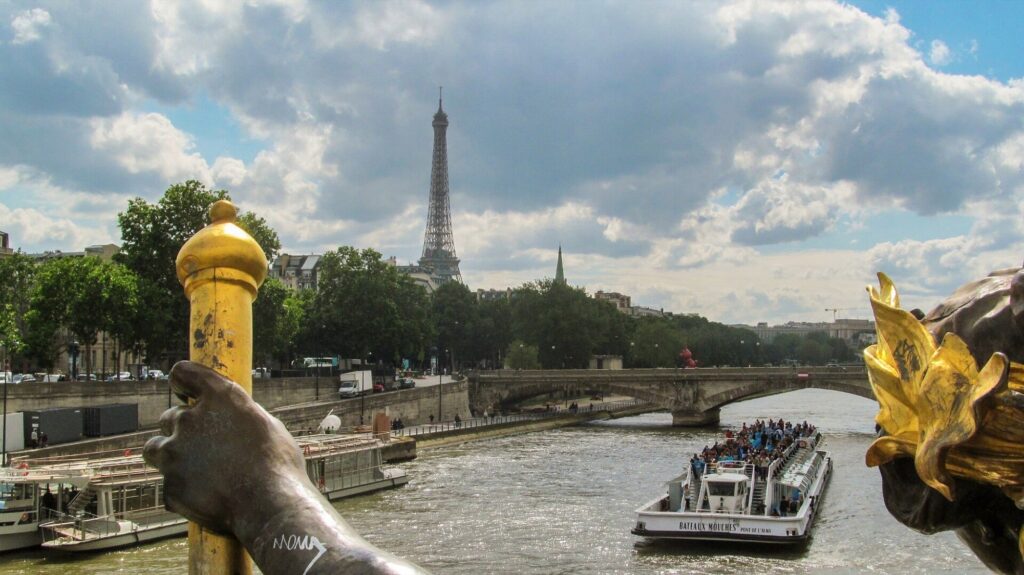
The Seine from Pont Alexandre III.
A Cathedral on an Island, a Museum in a Railway Station
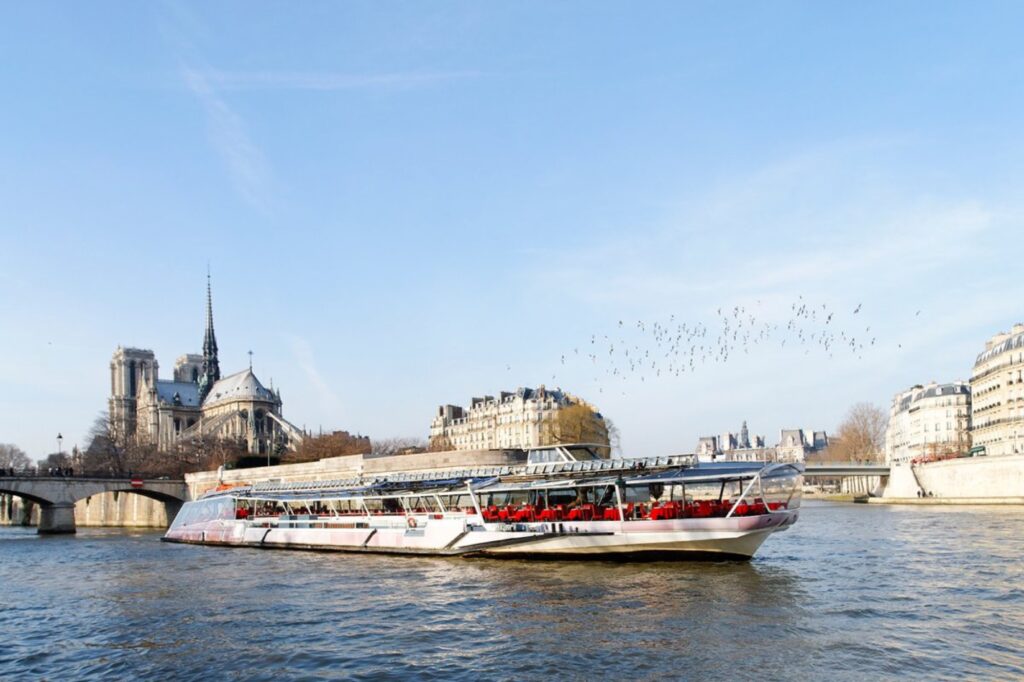
As the boat approaches Île de la Cité, Notre-Dame Cathedral comes into view on the island between two branches of the Seine. From the river, passengers can see the cathedral in relation to the surrounding bridges, embankments and historic buildings, rather than solely from the square in front of it.
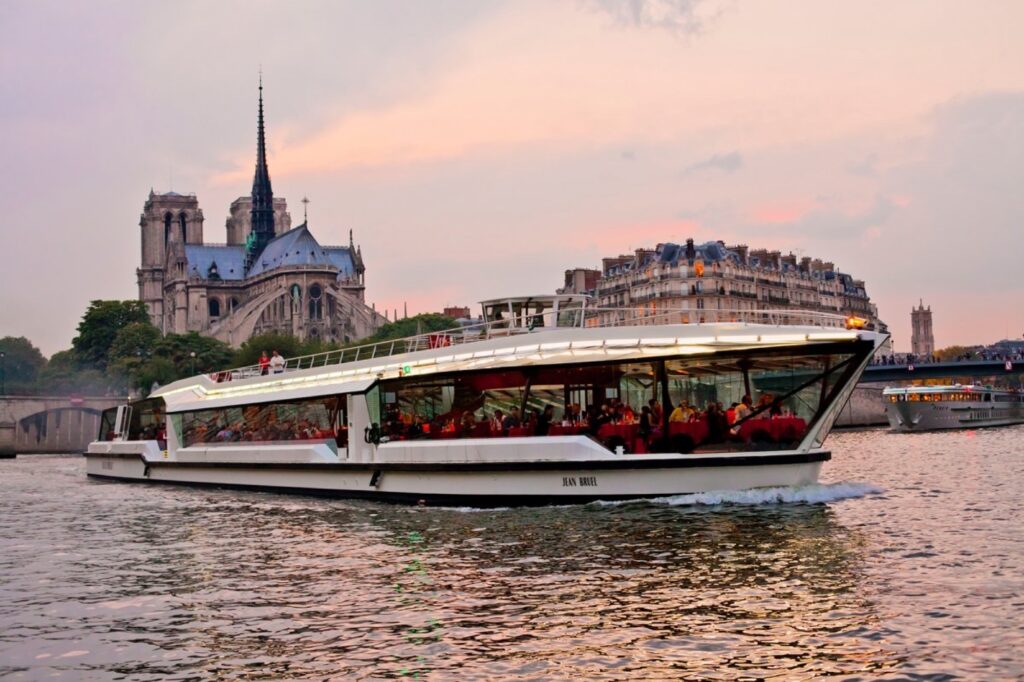
Notre-Dame from the river at dusk.
Île de la Cité has played an important role in the development of Paris. Together with other buildings and riverfront areas, it forms part of Paris, Banks of the Seine, a UNESCO World Heritage Site inscribed in 1991.
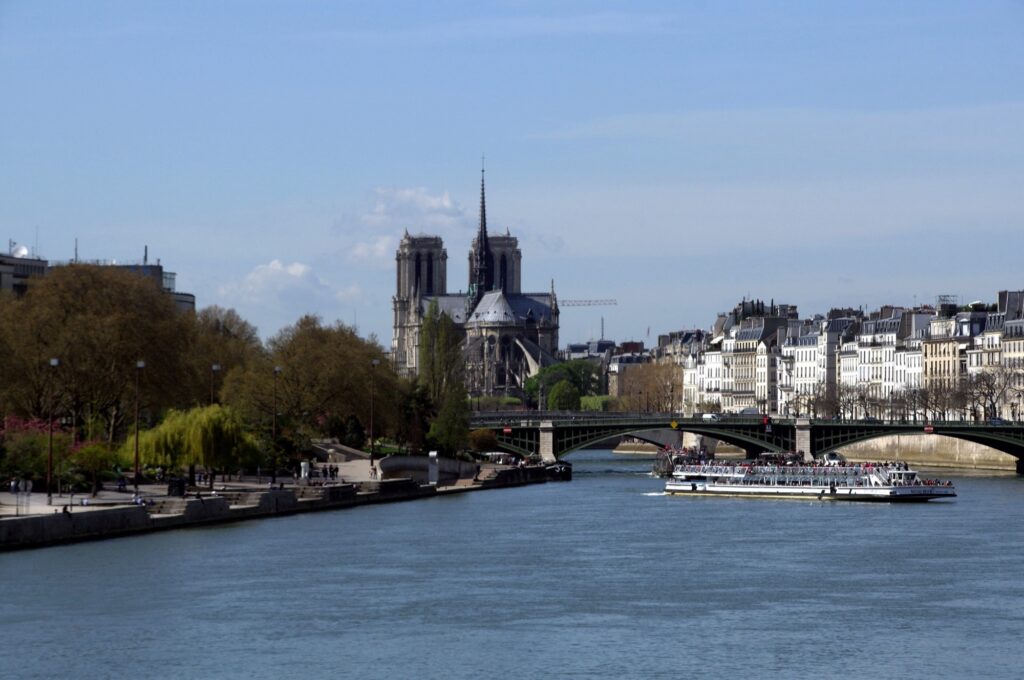
Notre-Dame and Pont de Sully.
Elsewhere along the journey, Musée d’Orsay tells another architectural story.
Before becoming an art museum, the building was a railway station constructed for the 1900 World’s Fair. After several changes in use, it officially opened as a museum in 1986.
Today, passengers travelling along the Seine can see the exterior of the former station, which once welcomed trains bringing visitors to Paris. A transport building from the previous century has become a space for art, while boats continue to travel along the river beside it.
An Hour on the River
Seine river cruises have become a familiar part of visiting Paris. Bateaux-Mouches has operated since 1949.
Today, visitors can choose between sightseeing cruises lasting around an hour and separate lunch or dinner cruises. Each offers a different duration and style of service.
On a standard Bateaux-Mouches sightseeing cruise, the boat departs from and returns to the same landing point. It does not stop to allow passengers to visit landmarks along the way. The journey is intended for viewing the city from the river rather than exploring each site on foot.
After the cruise, visitors can return to Pont Neuf, spend time exploring Île de la Cité or visit the interior of Musée d’Orsay.
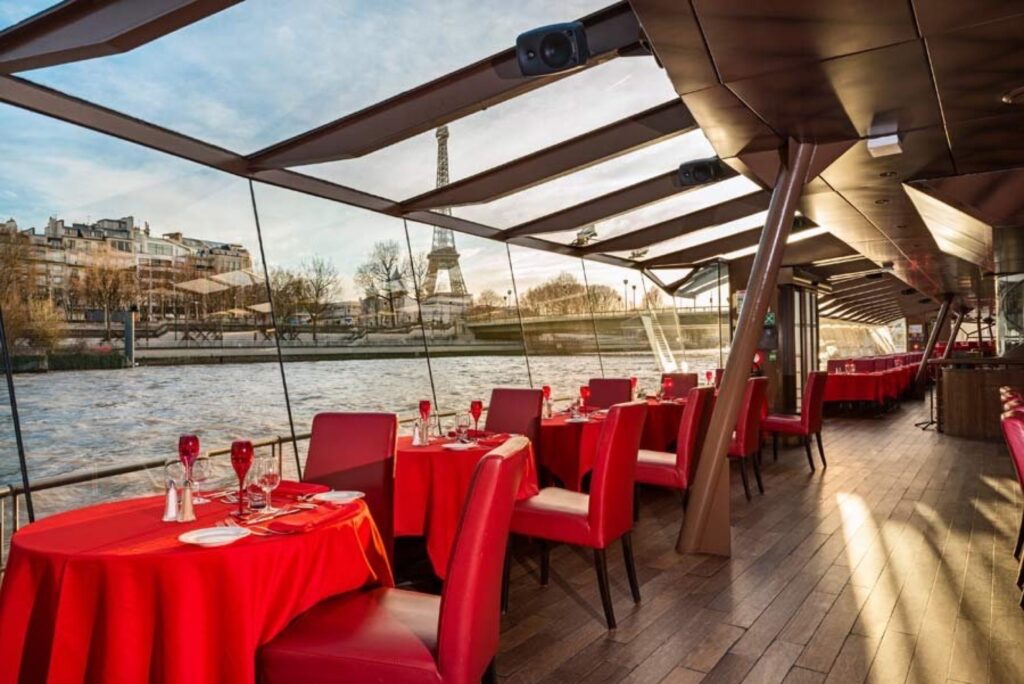
The Eiffel Tower from the boat.
When the boat returns to its landing near Pont de l’Alma, the bridges, cathedral and museums remain where they were. Only the view has changed.
Essential Information
- Cruise Line
- Compagnie des Bateaux-Mouches
- Journey Type
- Sightseeing River Cruise
Reservations & Contact
- Official Website
- bateaux-mouches.fr/en
- Reservations
- Bateaux-Mouches: sightseeing cruise
Image source: Bateaux-Mouches; Wikimedia