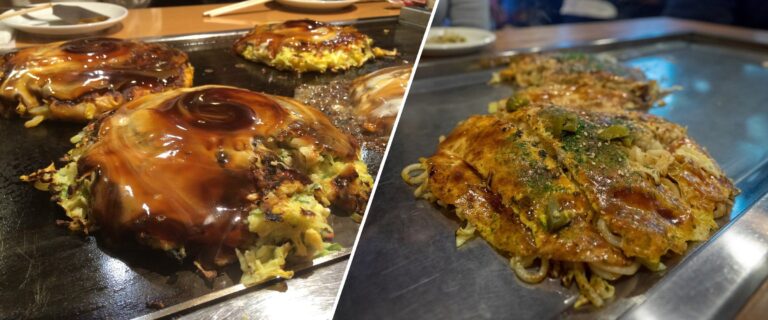
Okonomiyaki is a popular Japanese savoury pancake cooked on a flat iron griddle known as a teppan. Hiroshima-style okonomiyaki is distinguished by its layers of ingredients, which are cooked separately rather than mixed into a single batter. The finished dish is substantial, coated in a glossy brown sauce and usually enjoyed while still hot.
Part of its appeal is watching it take shape. At first, the shredded cabbage forms a surprisingly tall mound, hardly what you would expect to fit inside a pancake. As it cooks, however, the cabbage softens and shrinks, while the other ingredients are prepared and brought together on the griddle.
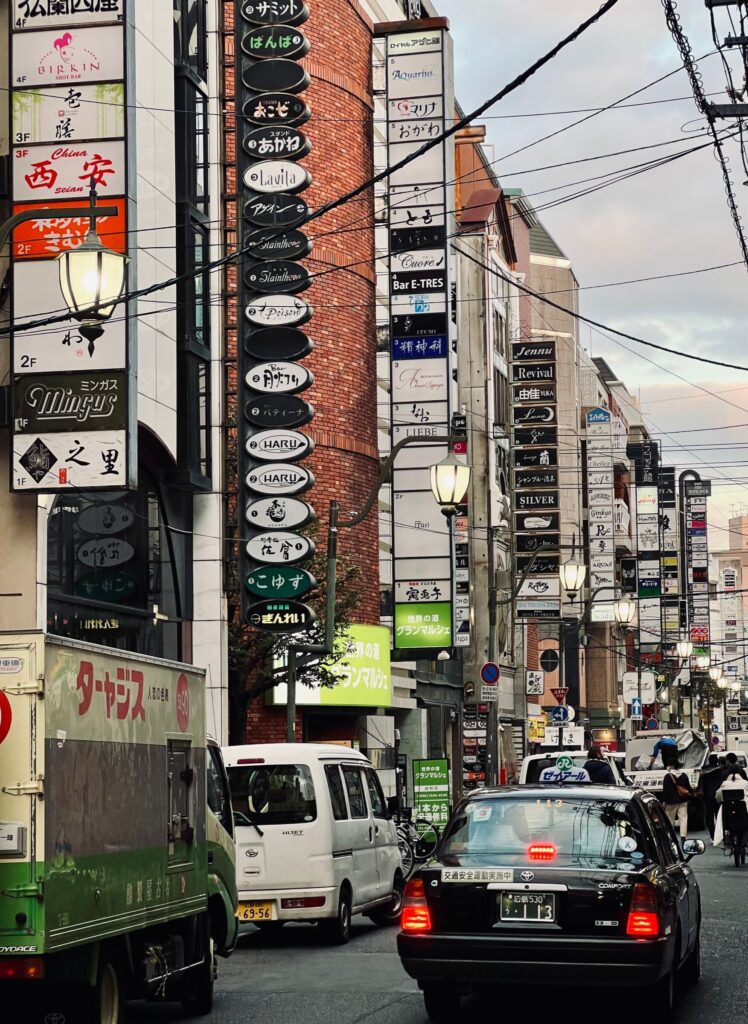
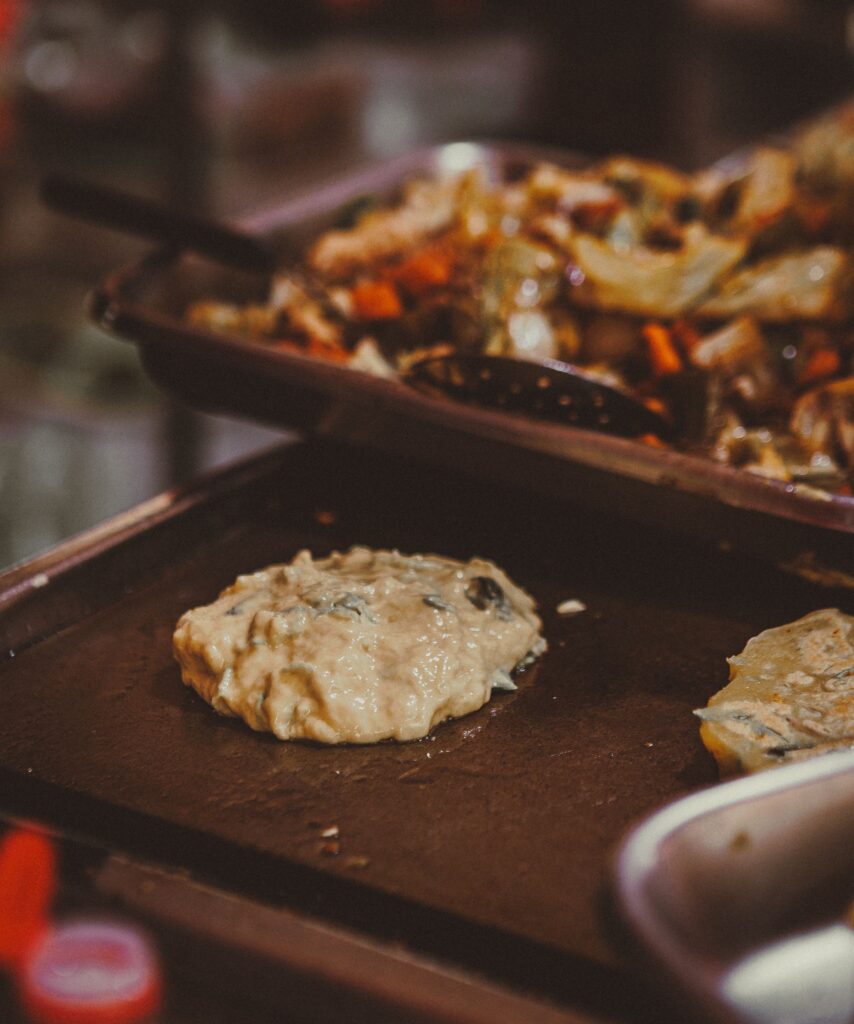
A Hiroshima street and a teppan grill.
Layers on the Griddle
The cook begins by spreading a thin layer of batter across the hot teppan. Usually made with wheat flour and water or stock, it forms a soft pancake base as it cooks. Unlike Osaka-style okonomiyaki, where cabbage is generally mixed into the batter before cooking, the Hiroshima version keeps the ingredients in distinct layers.
A generous mound of shredded cabbage is placed over the batter. Bean sprouts, crispy batter crumbs known as tenkasu, and other ingredients may be added, depending on the recipe. Thin slices of pork, often with some fat attached, go on top.
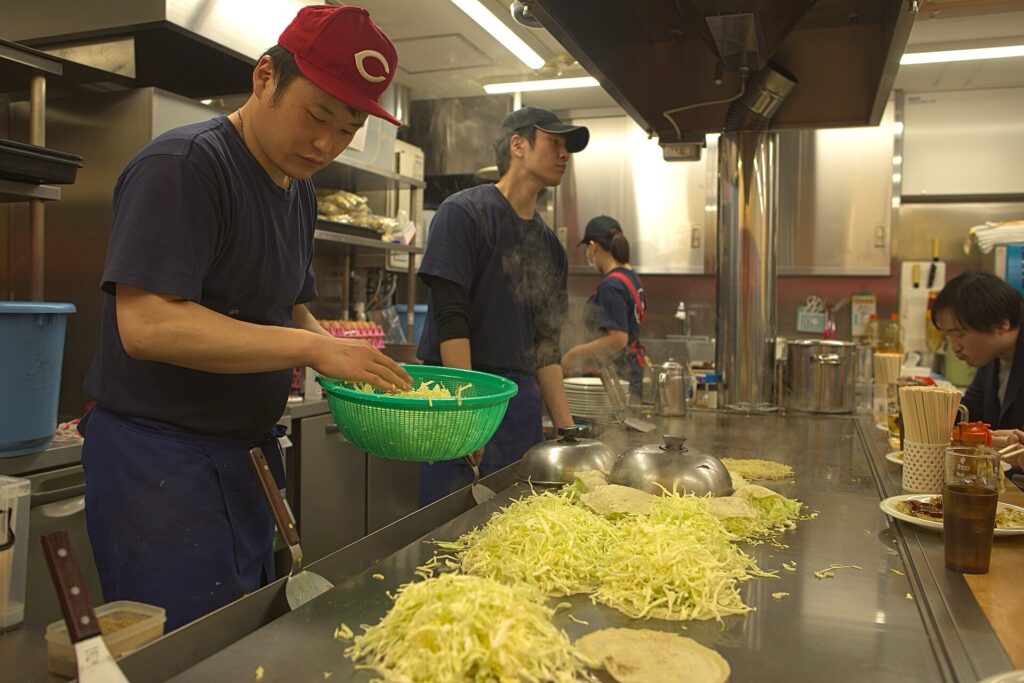
Cooks at an okonomiyaki restaurant.
The layered pancake is then flipped so the pork comes into direct contact with the hot griddle. The cabbage sits between the batter and the meat, gradually softening in the heat and steam. As the vegetables cook down, the pork becomes browned and fragrant.
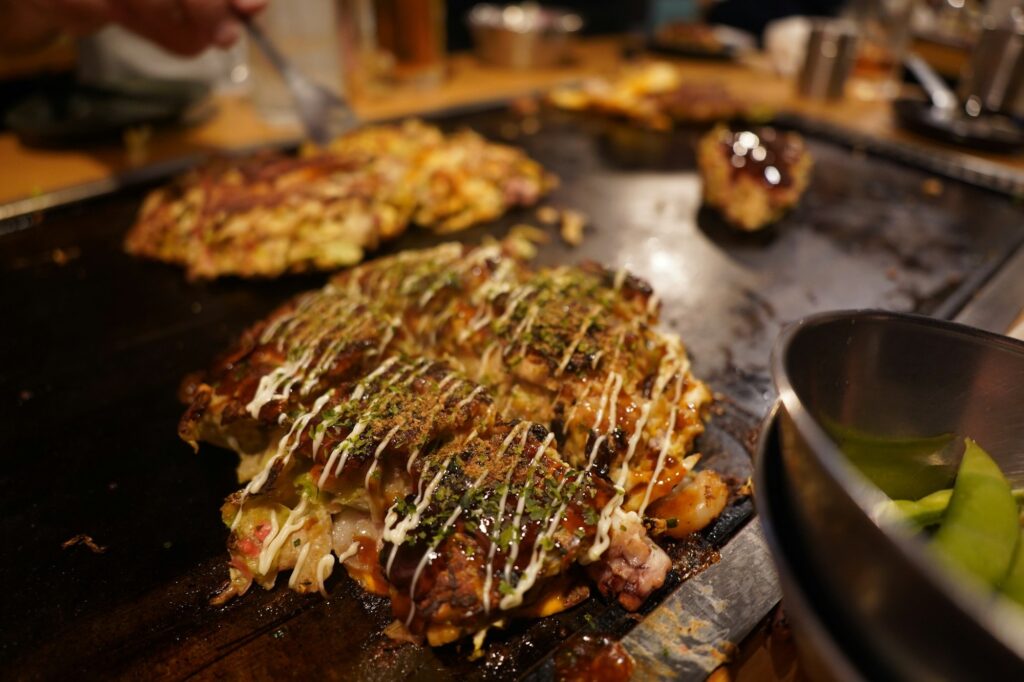
Okonomiyaki cooking on a teppanyaki grill.
The Noodles and Egg Make the Difference
Noodles are a defining ingredient of Hiroshima-style okonomiyaki. Wheat noodles of the kind used for yakisoba are the usual choice, although some places also offer versions made with udon. The noodles are heated or stir-fried on the griddle, sometimes with a little sauce for extra flavour.
Once the noodles are ready, the layered pancake of batter, cabbage and pork is placed on top. The noodles form a separate layer underneath, adding a pleasantly chewy texture and making the dish more filling.
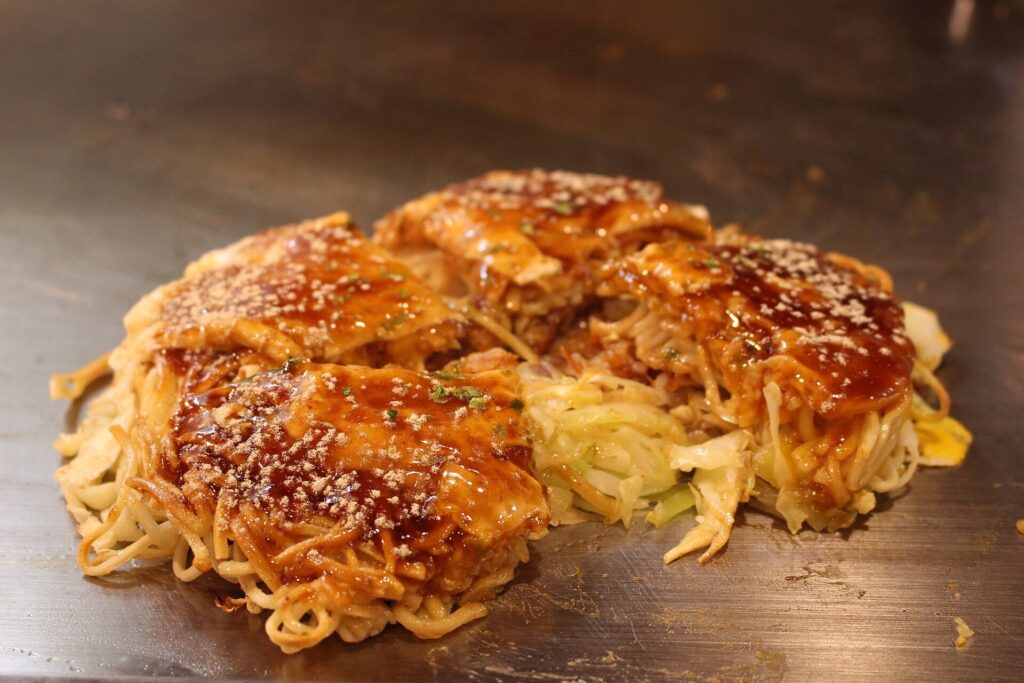
Okonomiyaki on the griddle.
An egg is cracked onto the teppan and spread into a thin round. The pancake and noodles are placed over it, then flipped so the egg forms the top layer of the finished dish.
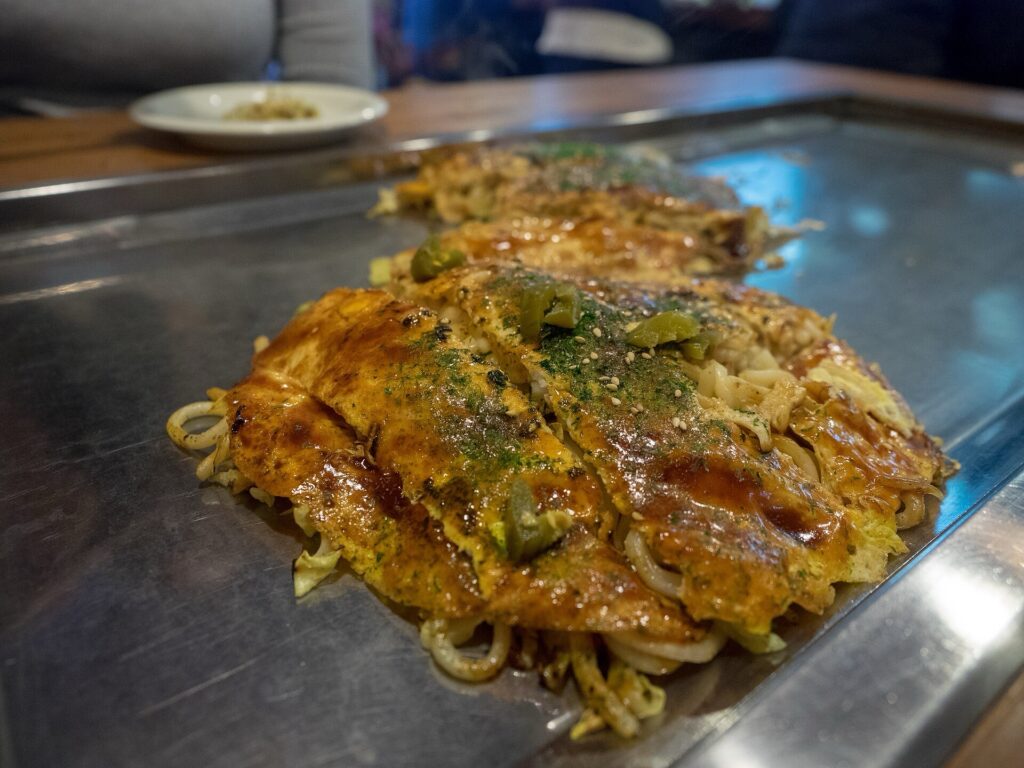
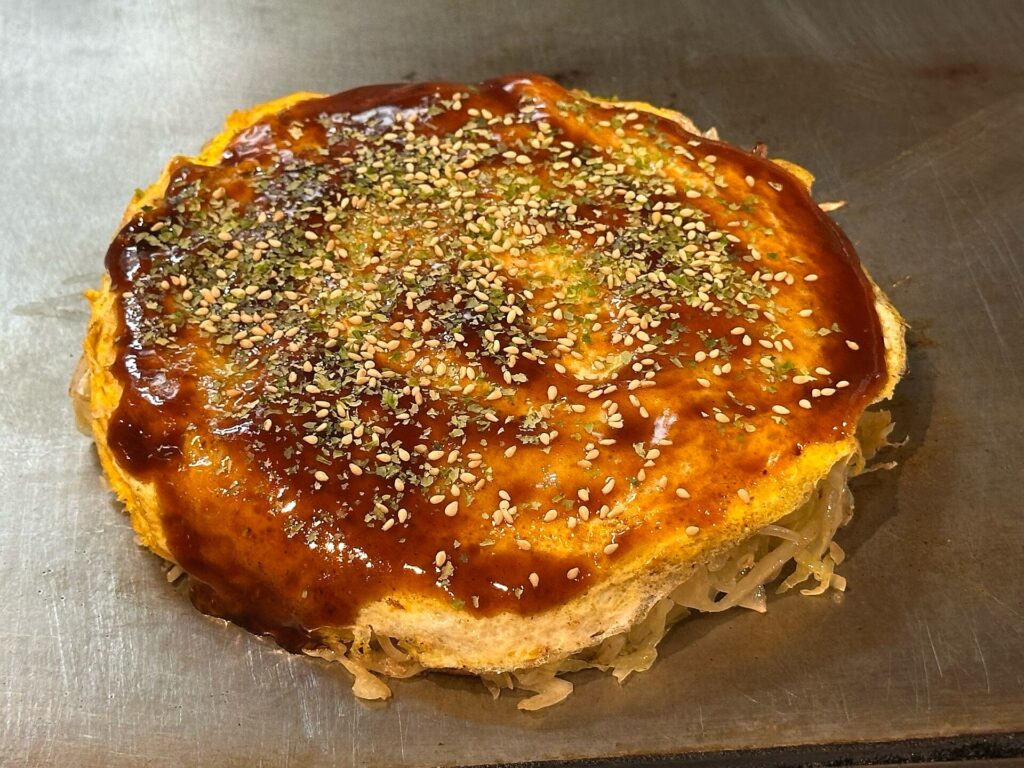
Hiroshima-style okonomiyaki on a steel teppan.
Large metal spatulas help the cook lift and assemble the different sections. The movements may look effortless, but keeping everything together while turning the pancake takes a steady hand.
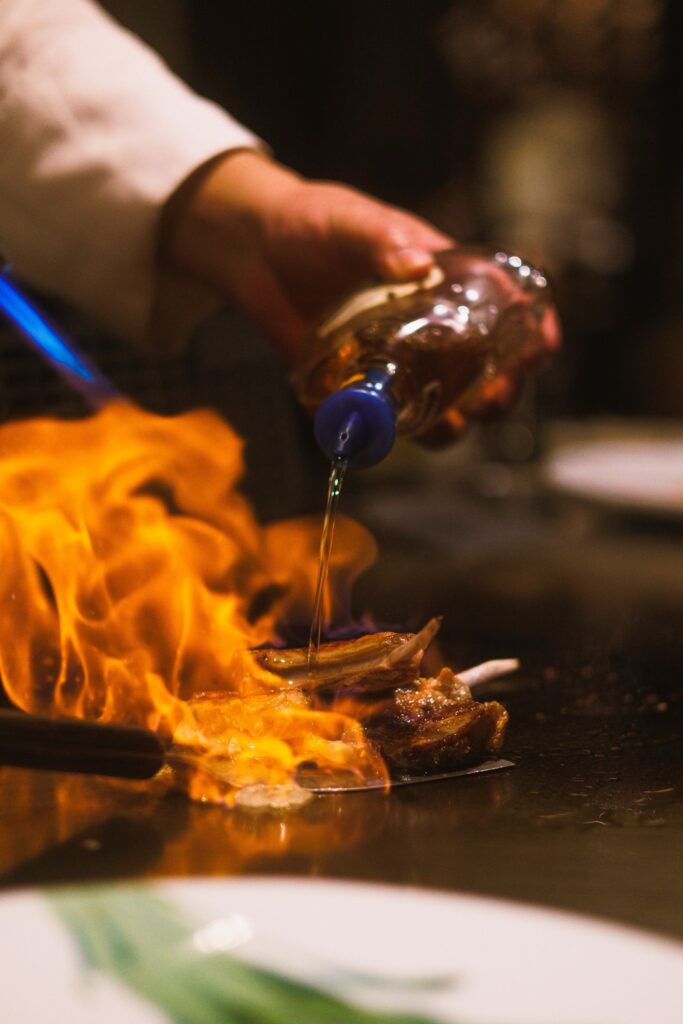
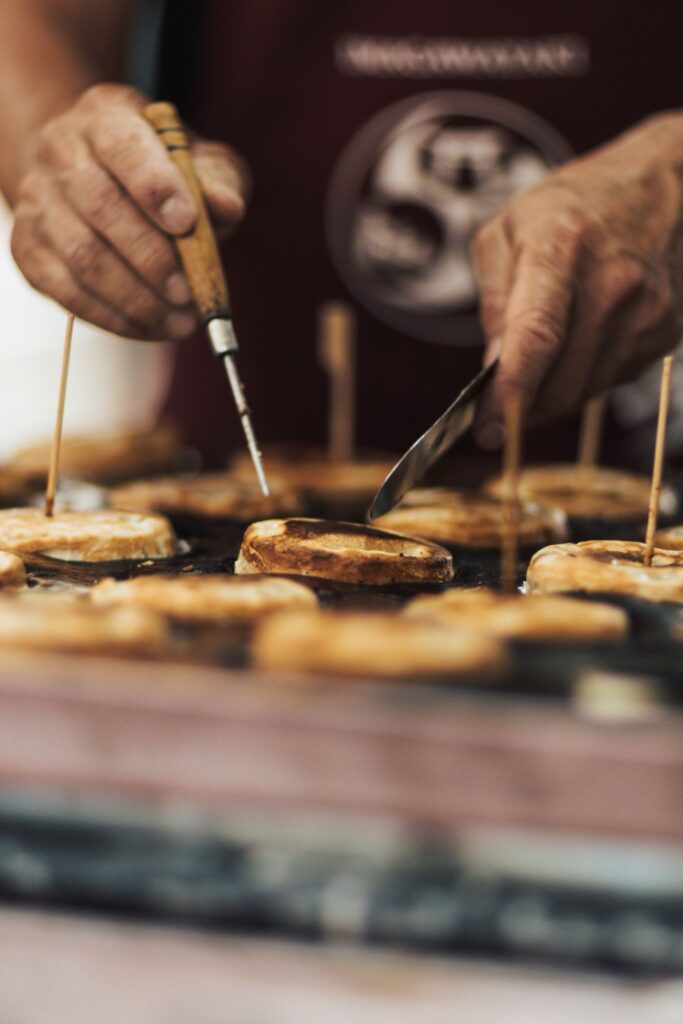
Cooking on a teppan grill.
In each bite, the softened cabbage brings a gentle sweetness, the pork adds richness, and the noodles offer a satisfying chew. The thin layer of egg completes the combination.
The Sauce and How to Enjoy It
Hiroshima-style okonomiyaki is usually finished with a generous coating of dark brown sauce, balancing sweetness, savouriness and a little tang. Brushed over the cooked pancake, it creates the glossy surface that makes the dish so recognisable.
Depending on how it is served, the okonomiyaki may also be topped with aonori, dried green seaweed flakes, chopped spring onions or other seasonings. Some places add mayonnaise, although it is not an essential topping everywhere. The sauce complements the sweetness of the cabbage and the noodles, while the pork brings its own richness from the griddle.
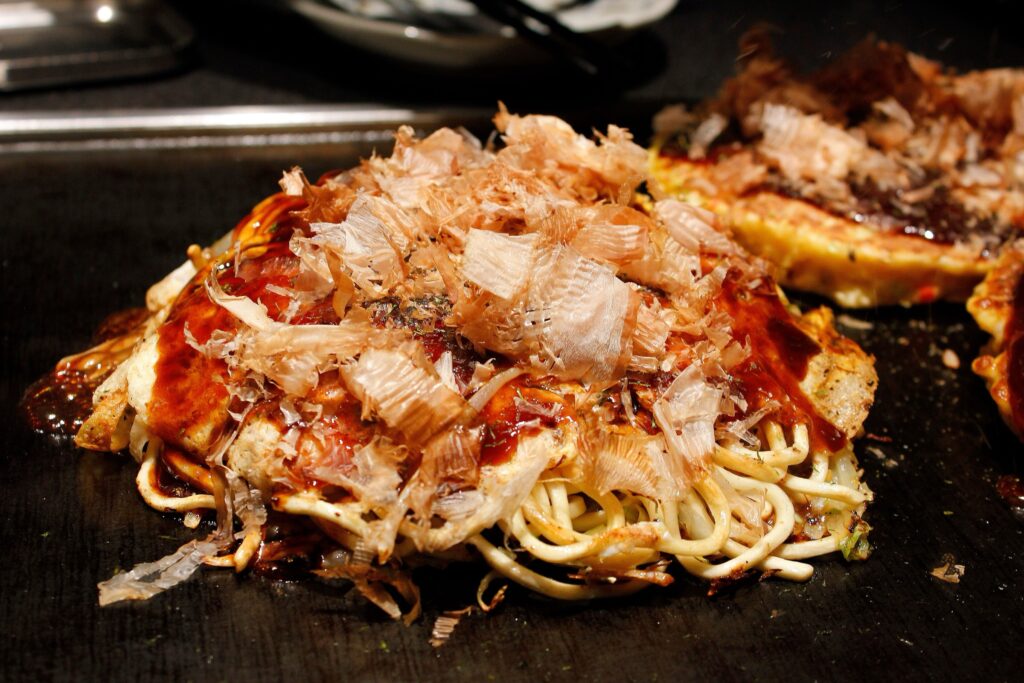
Okonomiyaki topped with bonito flakes and sauce.
At counters with a teppan directly in front of diners, the okonomiyaki may be kept warm on the cooking surface as it is eaten. The cook or diner can use a small metal spatula, called a hera, to cut and lift individual portions. Elsewhere, it may be served on a plate with chopsticks or ordinary utensils.
Start with a piece that includes both cabbage and noodles rather than taking only the sauced egg layer on top. There is also no need to add more sauce immediately, as the dish is generally seasoned before serving.
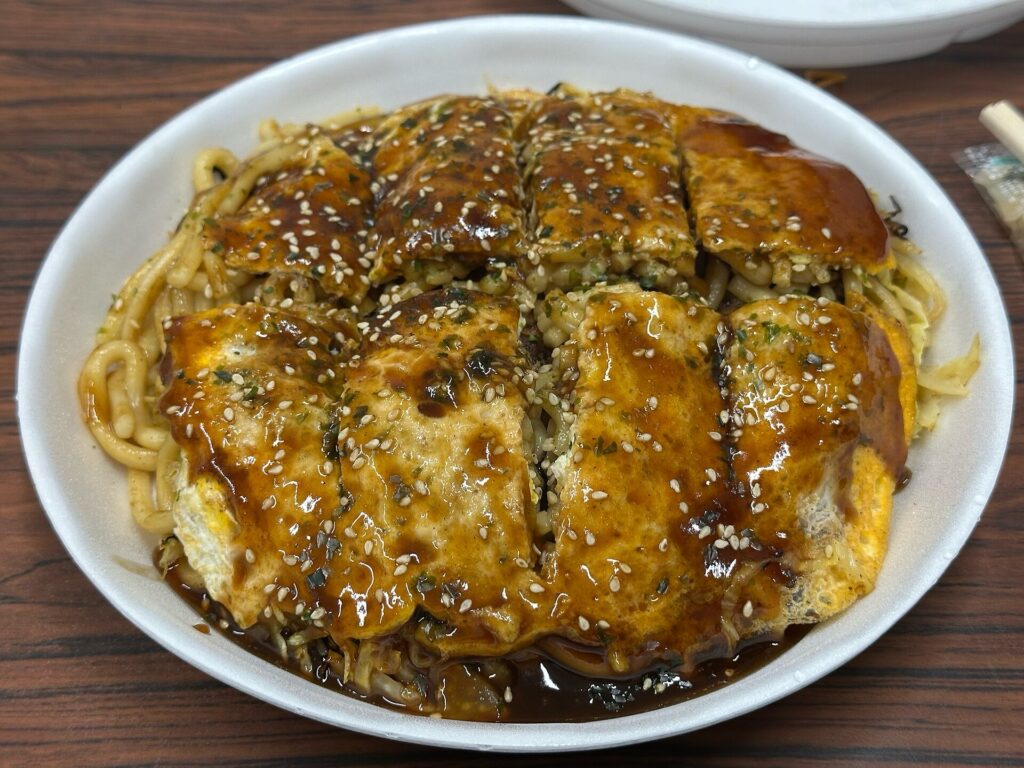
Okonomiyaki cut into pieces on a white tray.
Cut through the finished pancake and the layers become visible: noodles, softened cabbage and pork tucked beneath the egg. What began as a tall mound of cabbage on the griddle now fits neatly into each hot, savoury bite.
Image credit: Wikipedia