At Café Tortoni, hot chocolate and churros offer a good reason to sit down before exploring the history. The marble-topped tables, decorative columns and photographs on the walls will still be there while the drinks are enjoyed.
The café stands at 825 Avenida de Mayo, one of Buenos Aires’ historic avenues. Founded in 1858, Tortoni has witnessed the city’s changing landscape, from the development of the avenue to the years when artists and writers regularly gathered here.
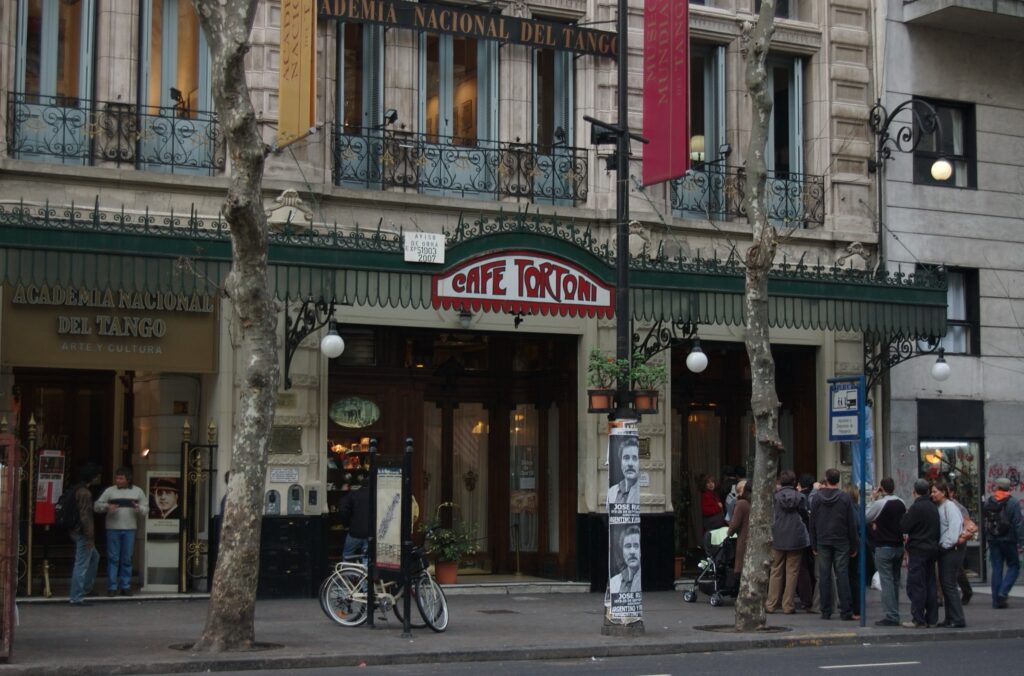
The façade of Café Tortoni on Avenida de Mayo.
Today, Café Tortoni is recognised as one of Buenos Aires’ Bares Notables, a designation given by the city to cafés and bars of historical and cultural significance.
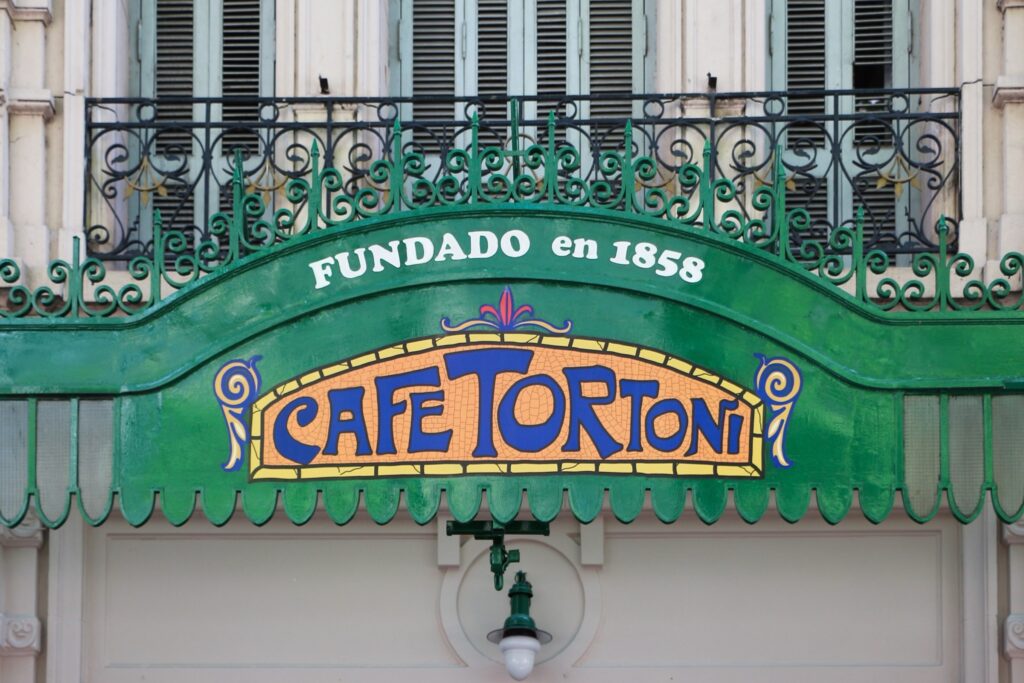
The sign of Café Tortoni.
A Café Through the Changes of Avenida de Mayo
Café Tortoni was founded in 1858, before Avenida de Mayo took on its present form. The business originally operated elsewhere before moving to its current location in 1880.
When Avenida de Mayo opened in the late nineteenth century, the building was adapted to face the new avenue. The design of its frontage is associated with architect Alejandro Christophersen.
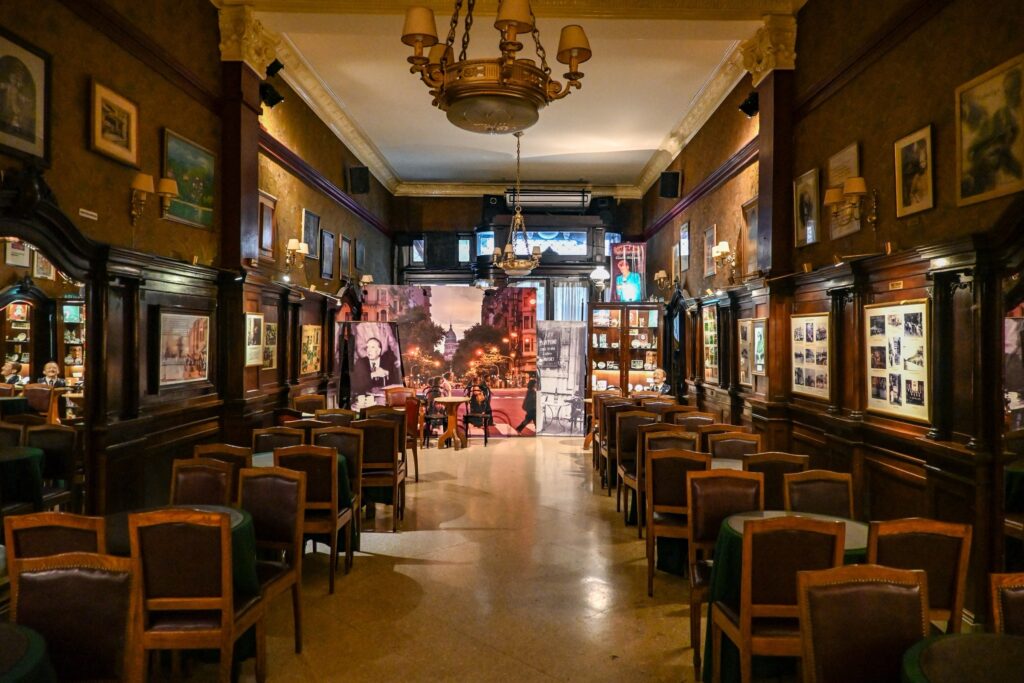
Inside, large columns, stained glass, wood panelling, photographs and marble-topped tables give the café its distinctive appearance.
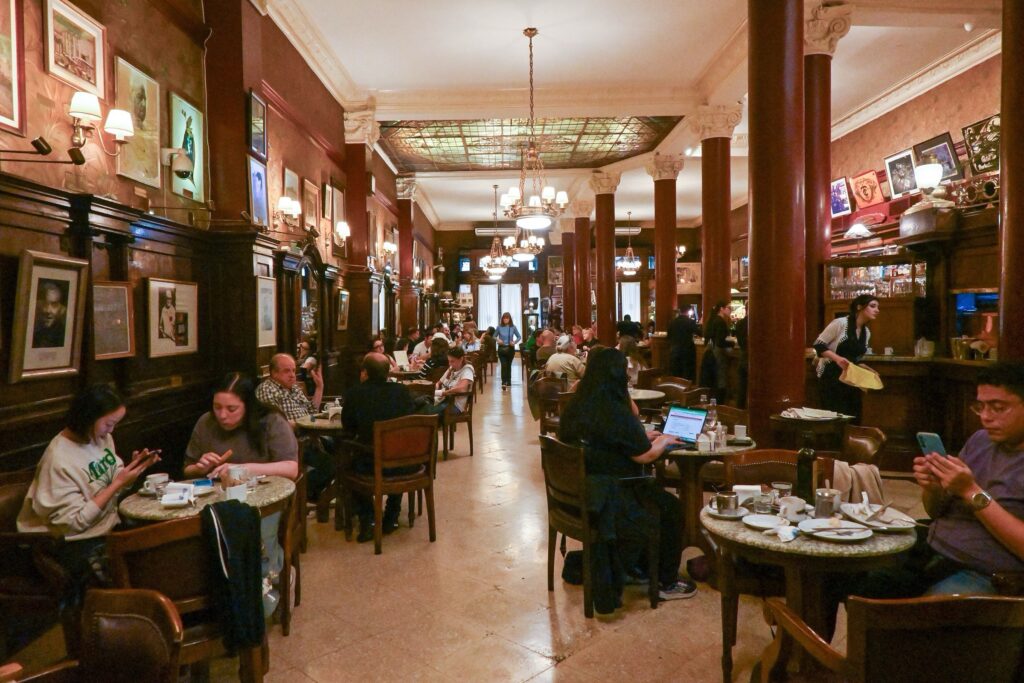
The interior of Café Tortoni.
Café Tortoni also contains several rooms with different purposes. One, named after writer César Tiempo, occupies an area formerly used as a barbershop. It later became a small library, housing historical documents and artefacts.
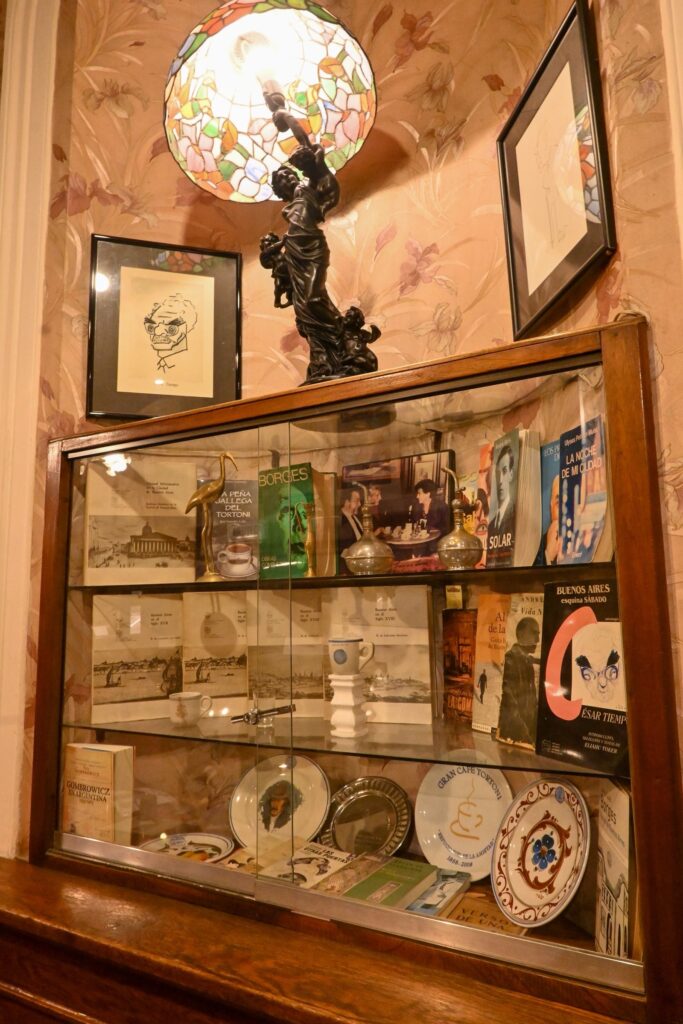
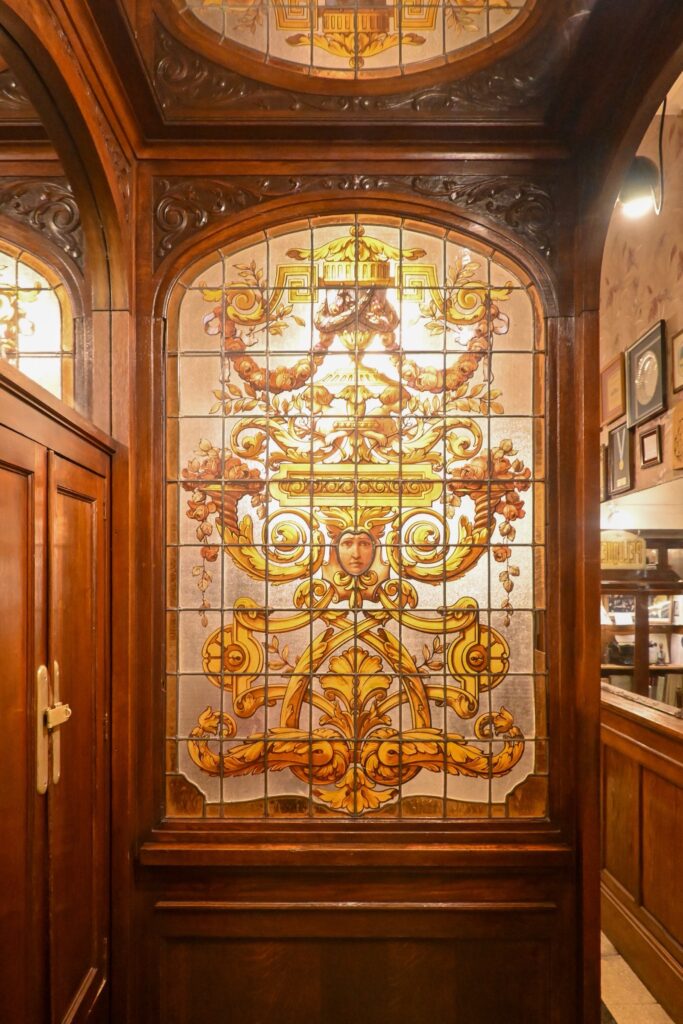
Inside Café Tortoni.
Hot Chocolate, Churros and Familiar Favourites
Among the items Café Tortoni is known for, hot chocolate served with churros remains a familiar choice.
Churros are lengths of fried dough, often enjoyed with a hot drink. A cup of chocolate and a few churros make a light refreshment without the need to order a full meal.
The café also serves coffee and other refreshments. Visitors might stop for a coffee, settle in with chocolate and churros, or stay longer over a meal.
Among the marble tables and old photographs, food and drink remain part of Café Tortoni’s everyday life.
When the Tables Became a Meeting Place for Artists
Café Tortoni has long been associated with Buenos Aires’ cultural life, particularly through the story of its peña, a gathering of people involved in art and literature.
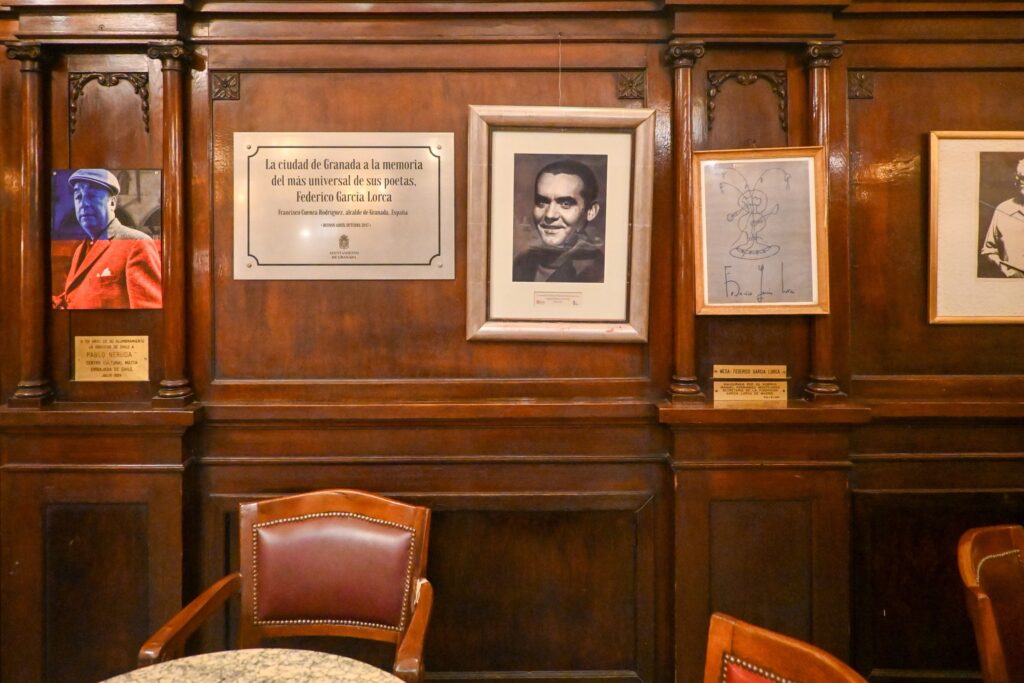
The table dedicated to Federico García Lorca.
Between 1926 and 1943, these meetings brought together artists, writers and others interested in creative pursuits. Painter Benito Quinquela Martín was among the figures closely associated with the group.
Later, the gatherings moved into the café’s basement. The space was used for artistic and literary activities, becoming part of Café Tortoni’s cultural history.
According to the café, the basement later continued to host performances and cultural events. These take place according to a separate programme, so a visit for coffee does not necessarily coincide with a show.
Even when no performance is scheduled, the main café continues to welcome visitors for food and drinks.
When the hot chocolate arrives at the table, the historical stories can recede for a moment. The churros and the hot drinks are already on the table.
Sources: Café Tortoni · Buenos Aires Ciudad
Image credit: Wikimedia Commons (Beatrice Murch; Bernard Gagnon; ProtoplasmaKid)