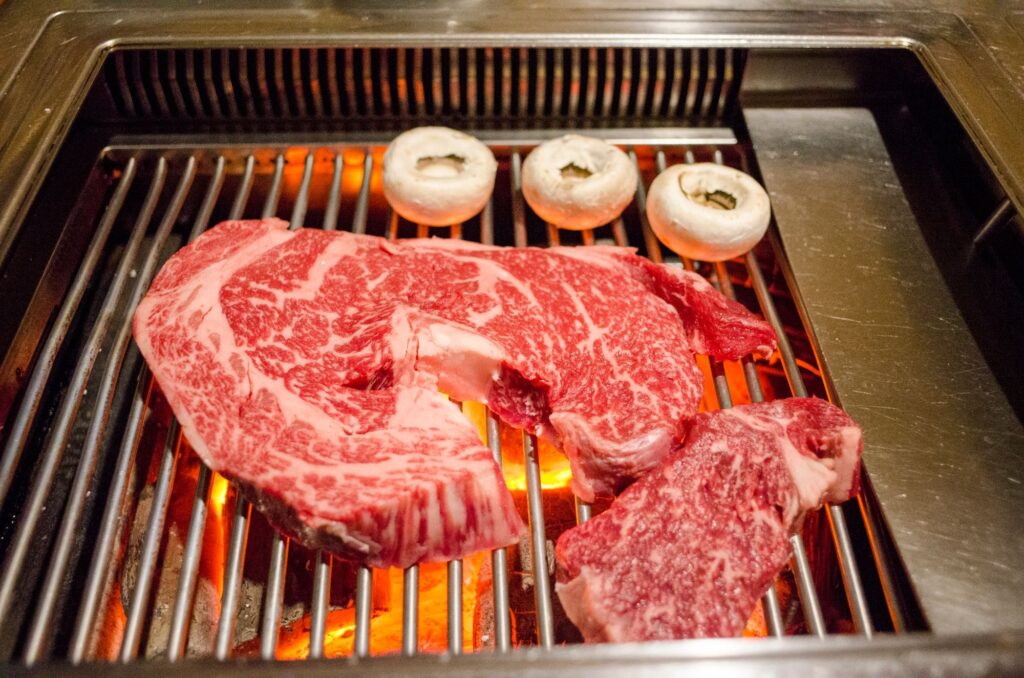
On Japanese restaurant menus, A5 often appears alongside Wagyu as a mark of premium beef. The two characters may suggest a particular breed or a guarantee of exceptional flavour. In fact, A5 is a carcass grade assigned after slaughter, according to Japan’s established grading system.
Understanding the letter and number helps distinguish the assessed quality of beef from its origin, brand and the characteristics of the cut being served.
What Is Wagyu?
Wagyu means Japanese cattle. The term is associated with four principal breeds: Japanese Black, Japanese Brown, Japanese Shorthorn and Japanese Polled, along with specified crosses between them. Japanese Black accounts for the majority of Wagyu production in Japan.
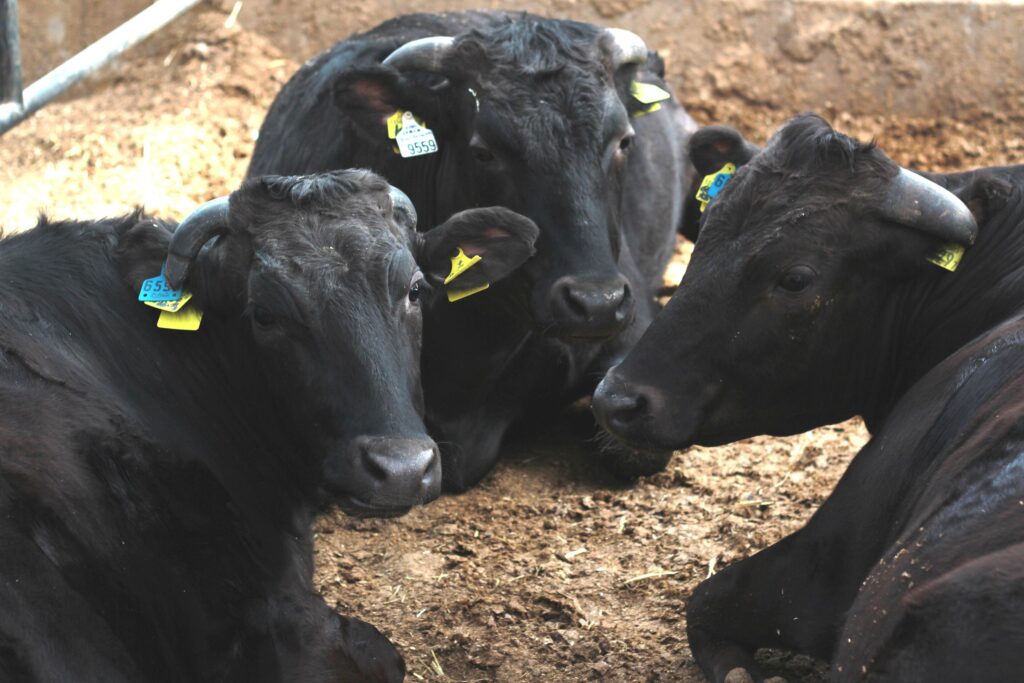
Japanese Black cattle.
The use of the Wagyu label within Japan’s beef labelling system is linked to requirements concerning breed and origin. Individual cattle are registered under ten-digit identification numbers, allowing their history to be traced through breeding, rearing and distribution.
Wagyu is also raised in Australia, the United States and other countries. These herds have Japanese genetic origins but operate under their own breeding and labelling systems. Beef sold internationally as Wagyu therefore does not necessarily come from Japan.
How Did Wagyu Develop?
For centuries, cattle in Japan were primarily used as working animals in agriculture. Beef was not a common part of everyday diets.
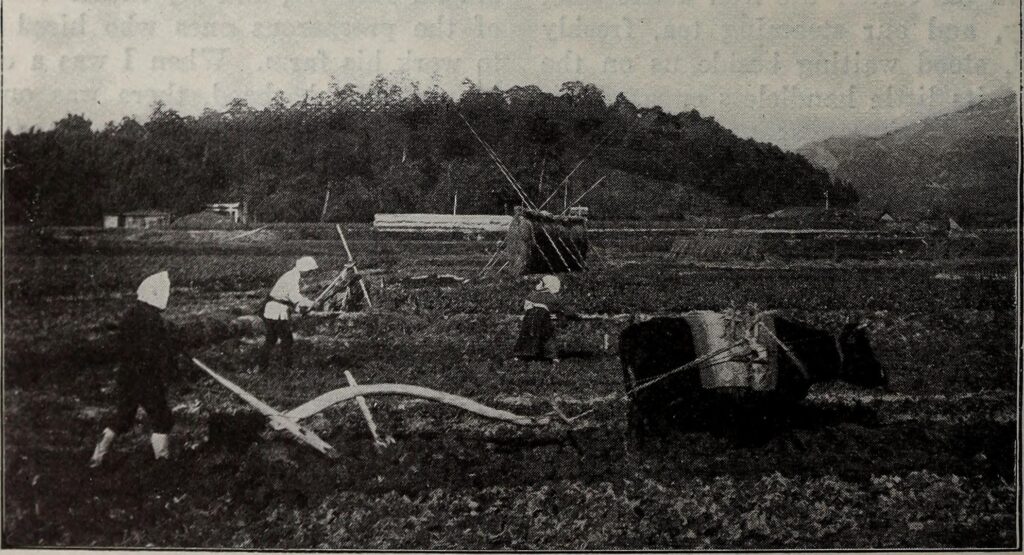
A Japanese farm in 1909.
Following the Meiji Restoration in 1868, Japan began introducing Western cattle breeds and undertaking crossbreeding programmes. Subsequent selective breeding contributed to the development of modern Wagyu.
Japanese Black, Japanese Brown and Japanese Polled were officially recognised in 1944. Japanese Shorthorn followed in 1957.
During the second half of the twentieth century, cattle and genetic material originating in Japan were exported, contributing to the development of Wagyu industries in countries including the United States and Australia.
How Is A5 Determined?
Japan uses a grading system developed by the Japan Meat Grading Association (JMGA). Carcasses are assessed after slaughter, with an examination that includes the cross-section between the sixth and seventh ribs.
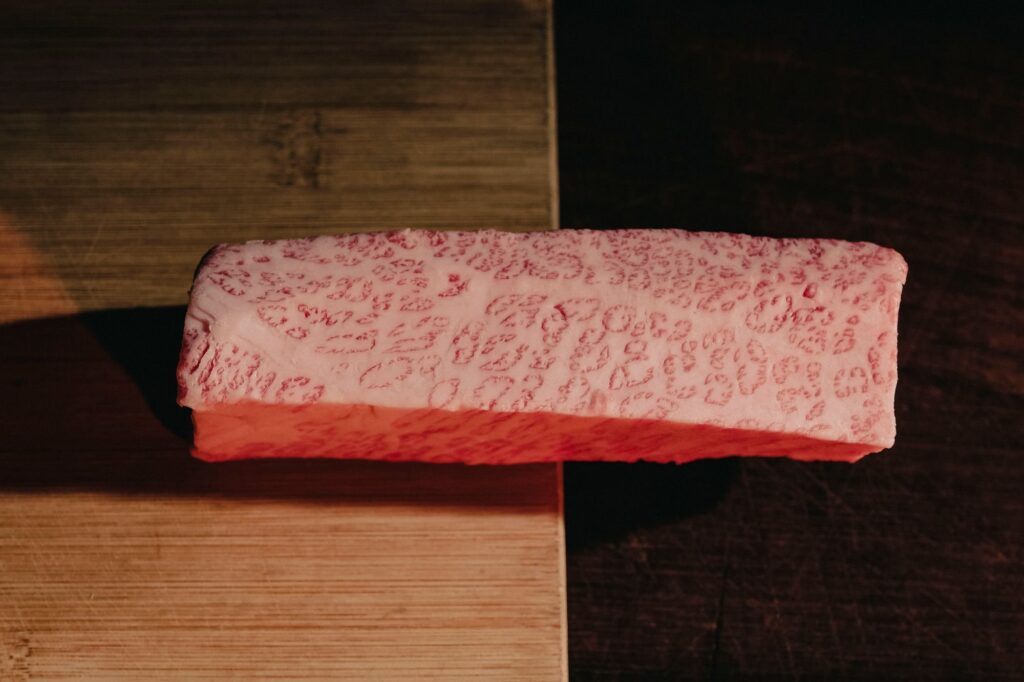
A marbled block of wagyu.
Each grade consists of a letter from A to C and a number from 1 to 5.
The letter A, B or C indicates meat yield. It represents the estimated proportion of recoverable meat from the carcass, calculated using a grading formula. A is the highest yield grade, followed by B and C. It does not mean that the animal produces the greatest absolute quantity of meat.
The number from 1 to 5 indicates meat quality, assessed against four criteria:
- The degree and distribution of marbling.
- Meat colour and brightness.
- Firmness and texture.
- Fat colour, lustre and quality.
Grade 5 is the highest quality level.
Together, these assessments produce 15 possible grades, ranging from A1 to C5. A5 represents the highest combination of yield and quality within the system.
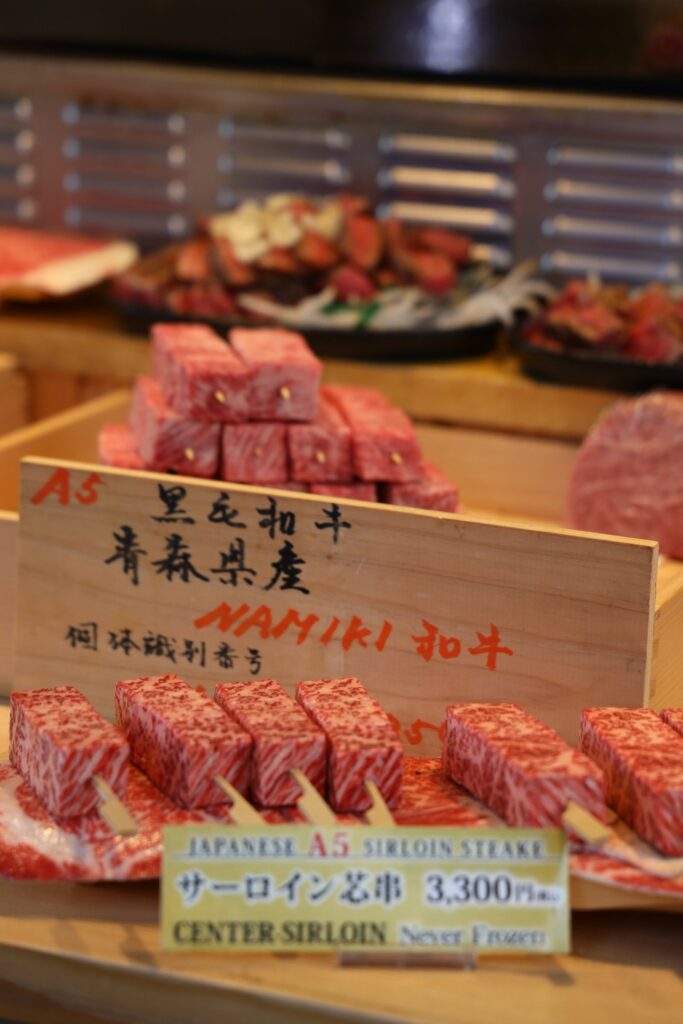
A5 sirloin on sale at a market.
For example, B5 achieves the same quality grade of 5 as A5, but receives a lower yield grade.
Why Does Marbling Matter?
One of Wagyu’s most distinctive characteristics, particularly in Japanese Black cattle, is the fine network of fat distributed within the muscle. In Japanese, this marbling is known as sashi.
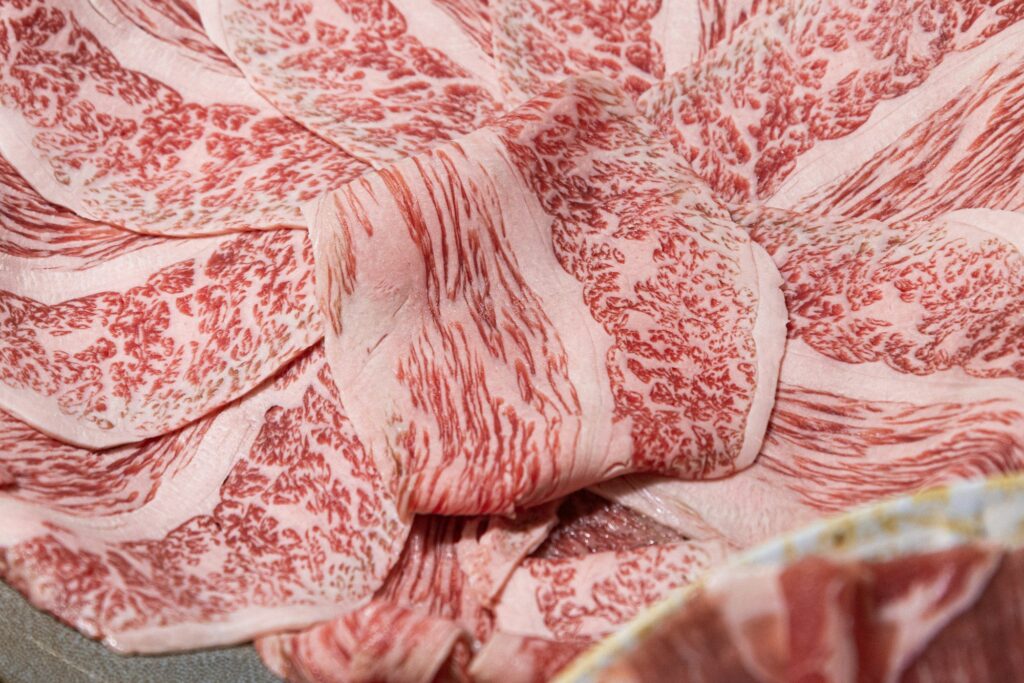
Sashi, the fine marbling of wagyu.
Intramuscular fat is interspersed throughout the lean meat, contributing to its tenderness and rich mouthfeel. Wagyu is also known for a substantial proportion of monounsaturated fatty acids, including oleic acid, which is associated with the softness and melting characteristics of its fat.
When the beef is grilled or seared, this fat influences its texture and the way its flavour is perceived.
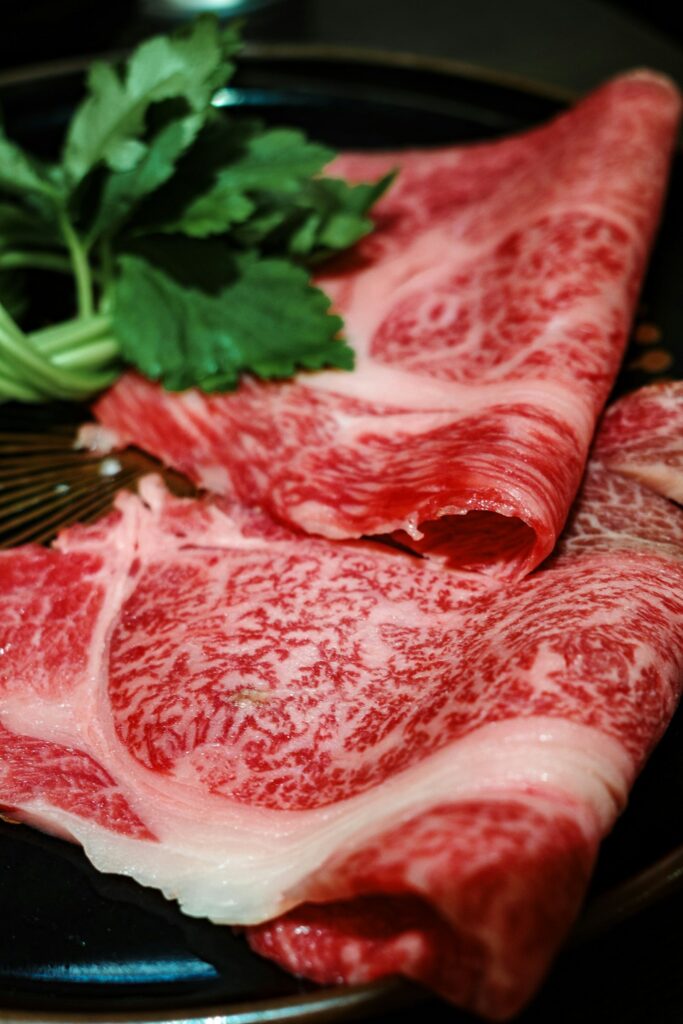
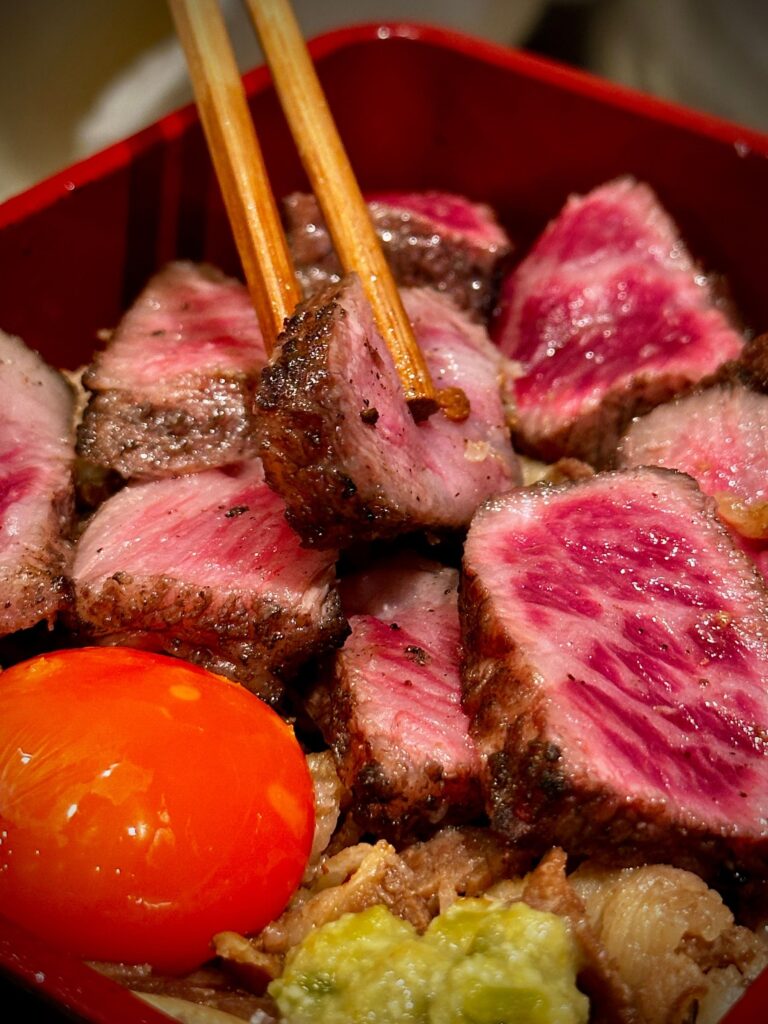
Sliced raw and seared.
Marbling is an important part of the quality assessment, but it is not the only consideration. Colour, firmness, texture and fat characteristics also contribute to the grade. Extensive marbling alone does not automatically qualify a carcass for A5.
Is A5 the Same as Kobe Beef?
A5 and Kobe describe different attributes of beef.
A5 is a grading classification, while Kobe is a beef brand with its own requirements for origin and quality. Kobe beef comes from Tajima-line cattle of the Japanese Black breed raised in Hyogo Prefecture and must meet the brand’s certification standards.
A piece of A5 Wagyu is not automatically Kobe beef.
Japan also has other established regional beef brands, including Matsusaka and Omi. Each is associated with its own origin and product requirements.
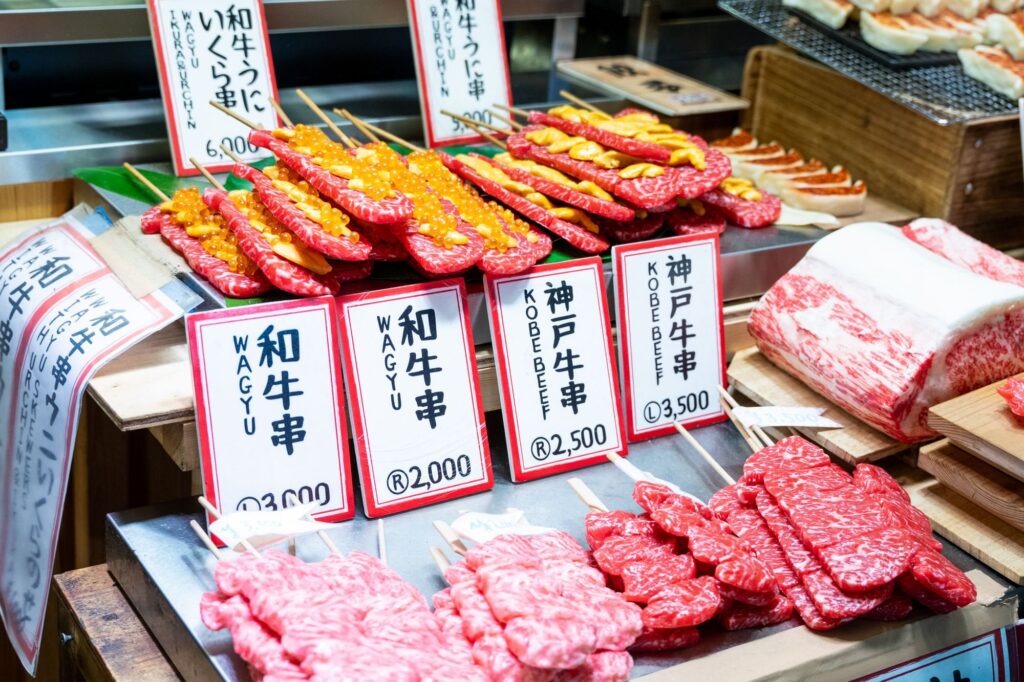
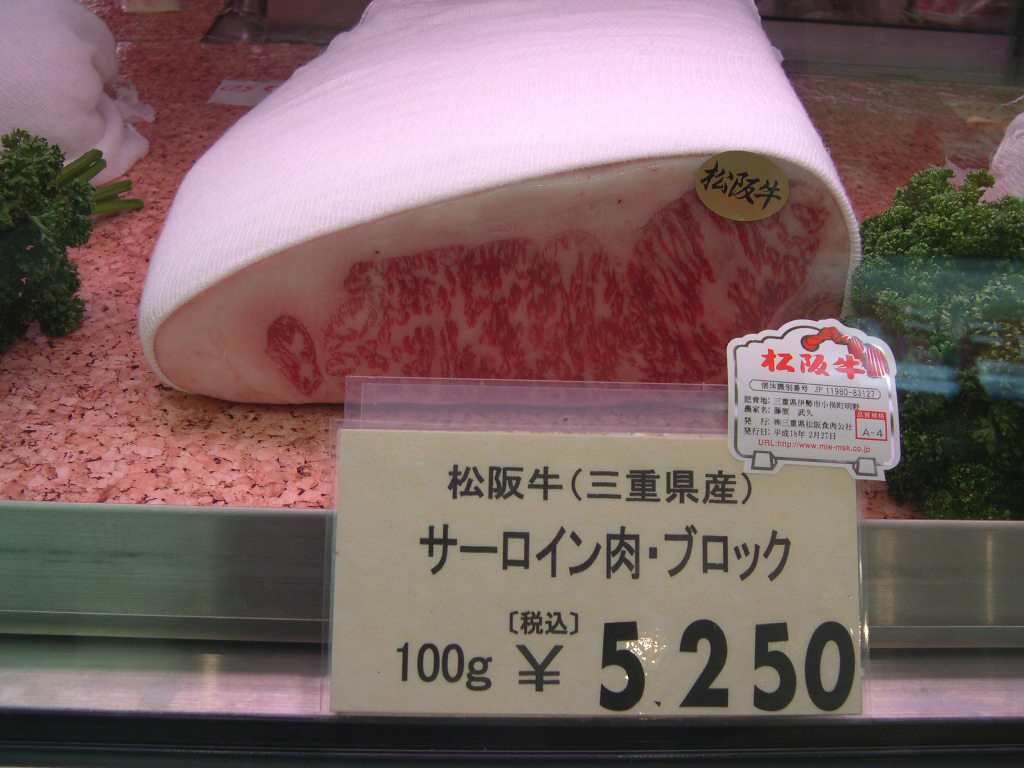
On a menu, a brand name identifies the declared type and provenance of the beef, while A5 provides its grade under the Japanese system.
What Doesn’t A5 Tell You?
A5 describes the assessment of a carcass at a standard inspection point. It is not a grade assigned separately to every cut after butchery, nor is it an evaluation of the finished dish.
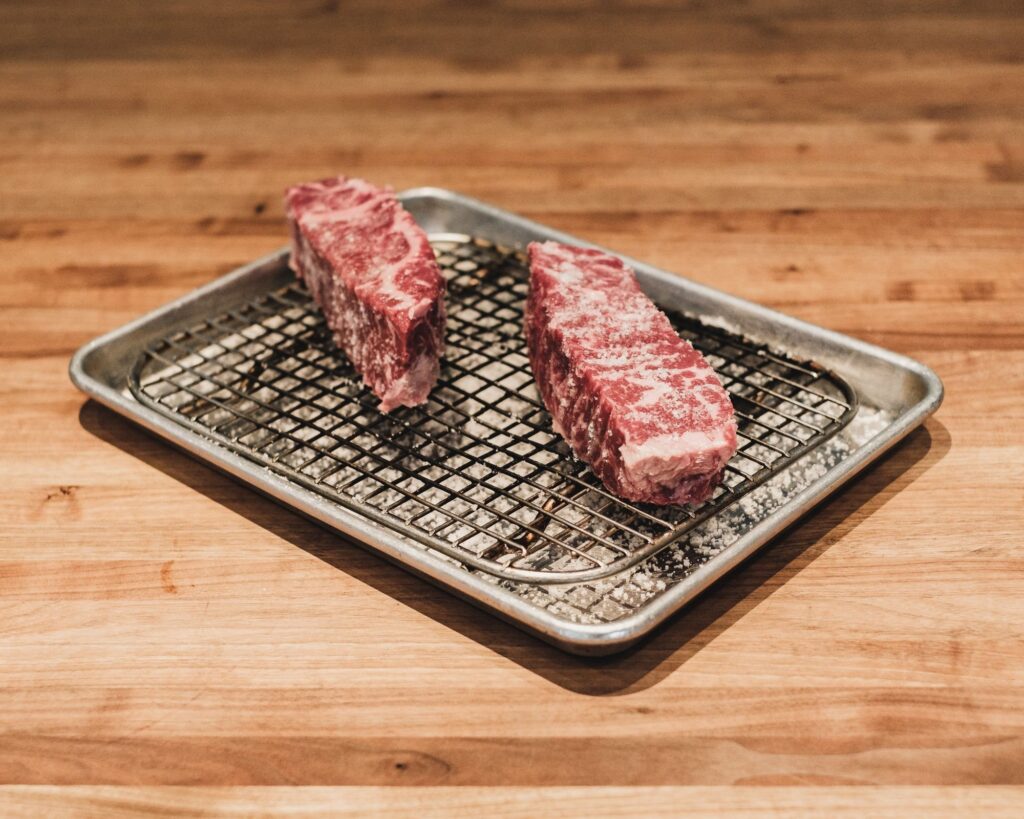
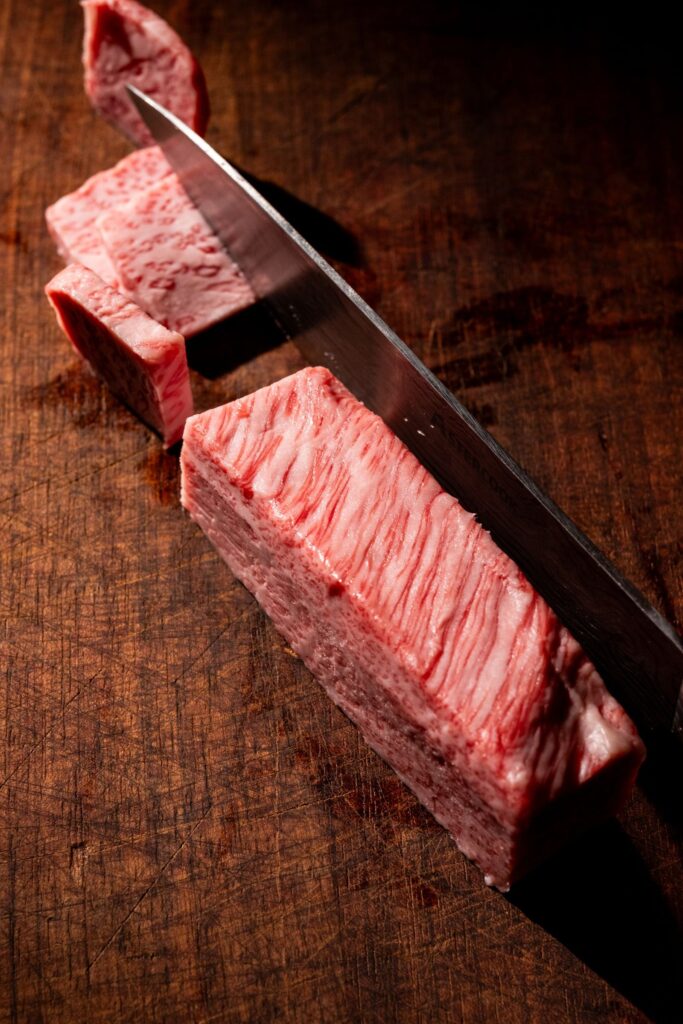
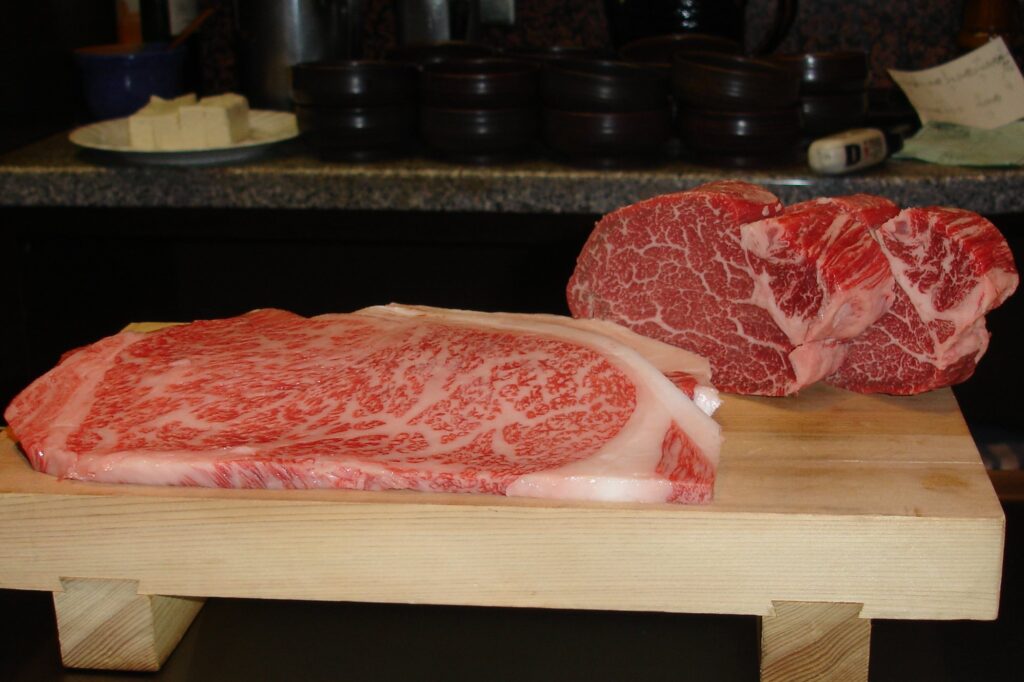
Two cuts, two results.
The designation does not identify the farming region, individual farm, beef brand or particular cut being served. Nor does it guarantee that every A5 dish will taste the same, as different cuts and cooking methods produce different results.
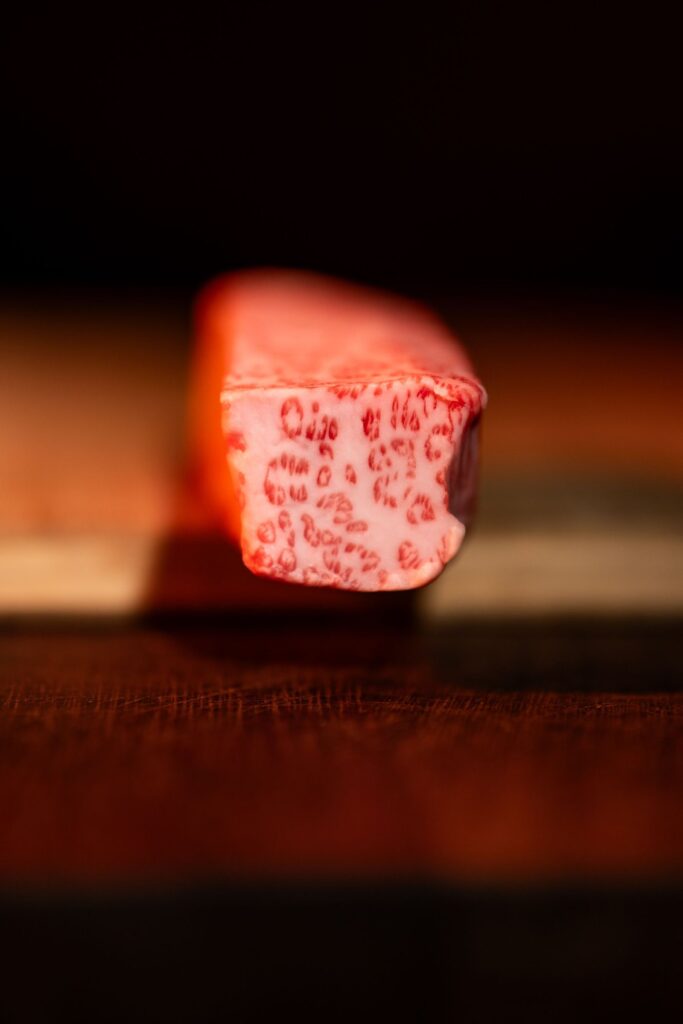
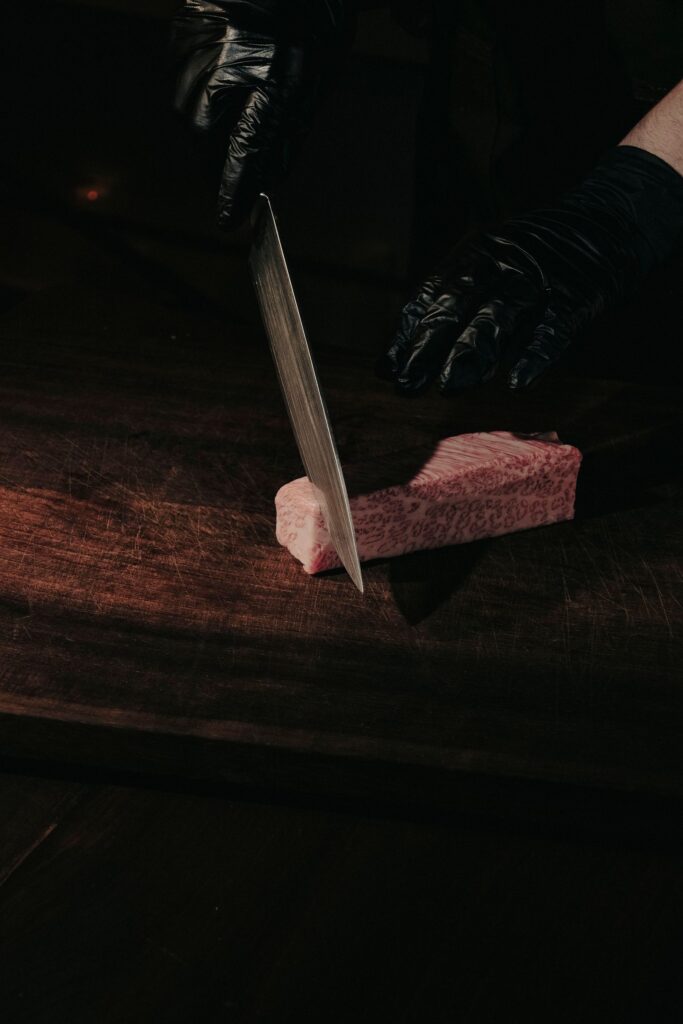
Same grade, different cuts.
When ordering Wagyu, it is worth checking whether the beef comes from Japan or another country, which cut is being served and how it is prepared. For branded beef such as Kobe, provenance and certification are also worth confirming before ordering.
Image credit: Wikimedia Commons (Japanexperterna.se; Orlando G. Calvo)