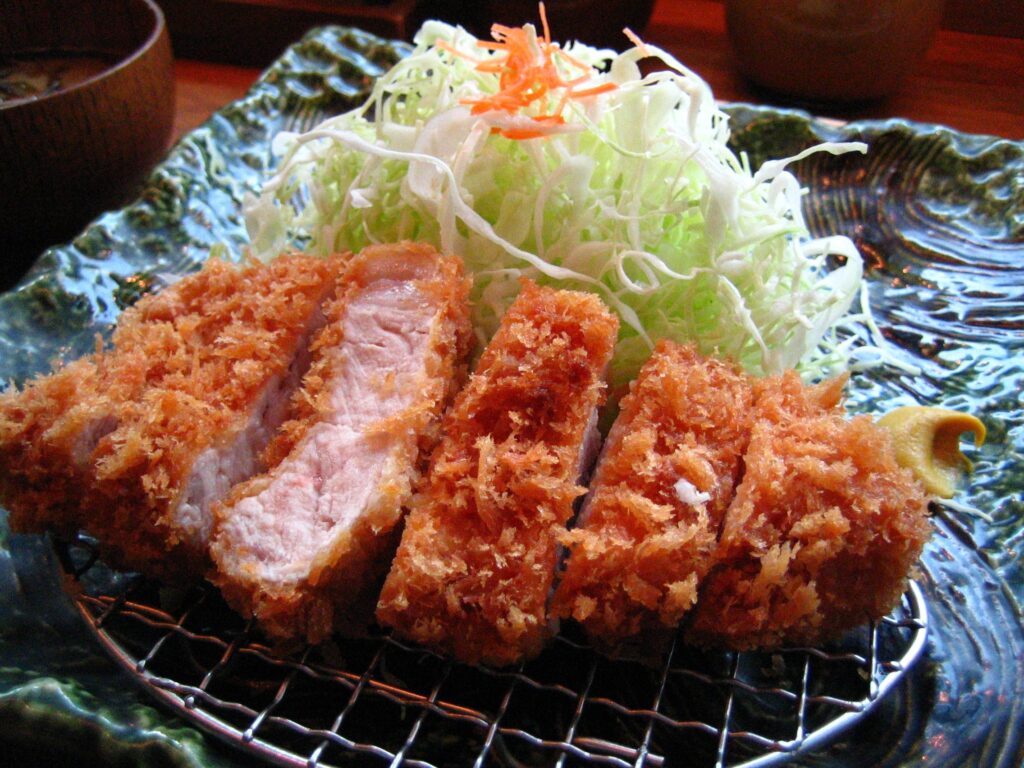
A typical tonkatsu meal features slices of pork encased in a golden, crisp coating, served alongside shredded cabbage, steamed rice and miso soup. The cutlet is sliced before serving so diners can eat it with chopsticks.
Although now closely associated with Japanese cuisine, tonkatsu developed from Western-influenced cutlets introduced during a period when Japan was opening up to foreign trade and adopting new cooking techniques. Over time, the dish evolved in its ingredients, preparation and presentation to suit local dining traditions.
From Western Cutlets to Japanese Tonkatsu
The name tonkatsu combines ton, meaning pork, and katsu, a shortened form of katsuretsu. The word katsuretsu derives from the English cutlet, which in turn traces its origins to the French côtelette.
During the Meiji period (1868 to 1912), Western-influenced dishes became increasingly common in Japan. This style of cooking, known as yoshoku, encompasses dishes of foreign origin adapted to Japanese tastes and dining customs.
Early versions of katsuretsu commonly used beef or veal, drawing inspiration from European breaded cutlets. Pork gradually became the preferred ingredient and the defining feature of tonkatsu.
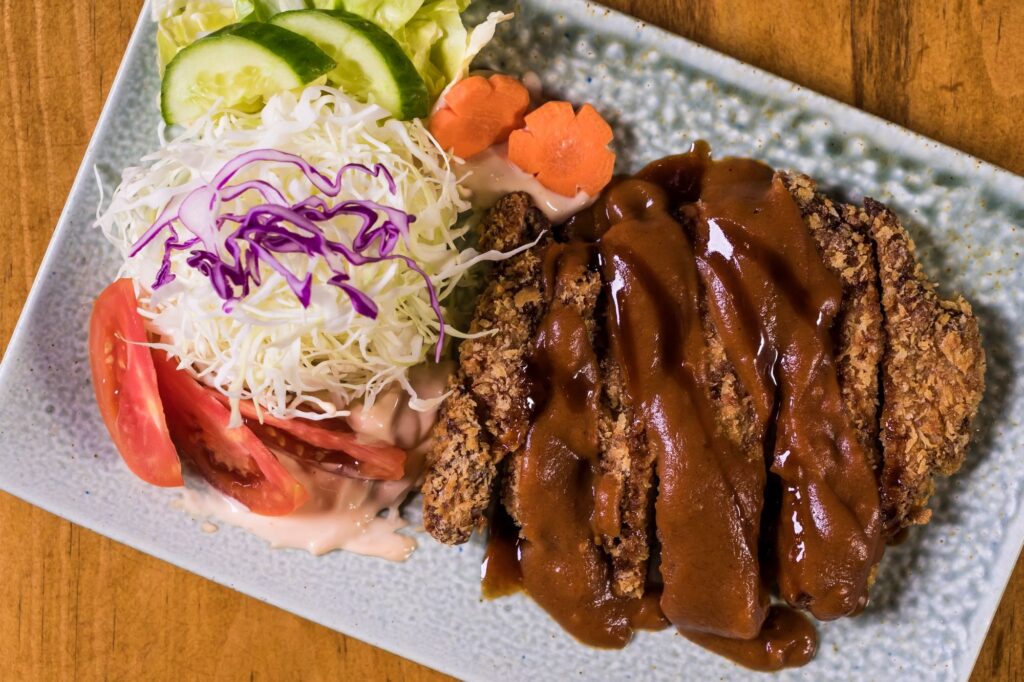
A Western-style cutlet with gravy.
Rengatei, a yoshoku restaurant established in Ginza, Tokyo, in 1895, is frequently mentioned in accounts of the dish’s development. One commonly cited milestone is 1899, when the restaurant began serving a pork version of the cutlet.

Rengatei in Ginza.
Tonkatsu continued to evolve during the early twentieth century, as thicker cuts of breaded, fried pork served with Japanese accompaniments became more familiar. Having begun as a European-influenced dish, it gradually established its own place in Japanese food culture.
Rosu and Hire: Two Common Pork Cuts
Tonkatsu is commonly prepared using two cuts of pork: rosu and hire.
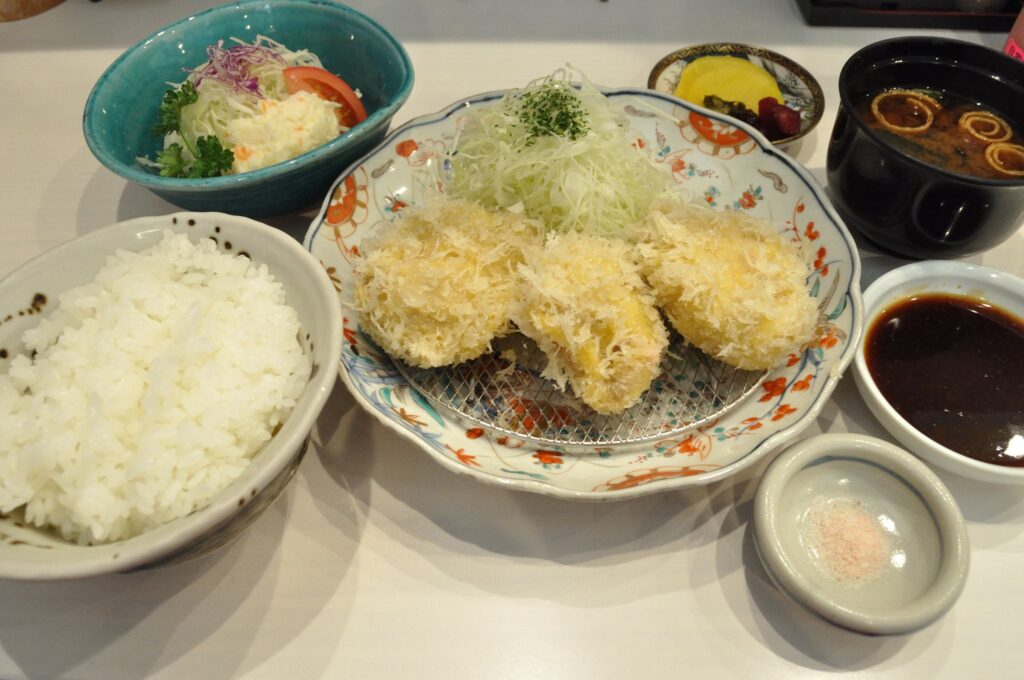
A hire katsu set.
Rosu refers to pork loin, usually with a strip of fat running along one edge. During frying, the fat adds richness and helps the meat retain a juicy texture. It is a suitable choice for diners who enjoy a combination of lean meat and fat.
Hire refers to pork tenderloin, which is leaner than rosu. Hire katsu is often chosen by diners who prefer a cutlet with less fat.
The basic preparation is similar for both cuts. The pork is seasoned with salt and pepper, coated in flour, dipped in beaten egg and covered in panko, Japanese breadcrumbs.
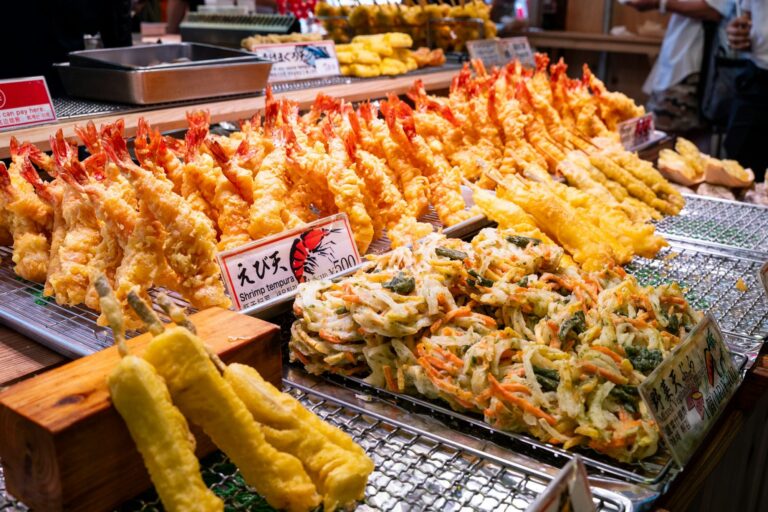
Panko consists of relatively large, light flakes that produce an airy, crisp coating when deep-fried. This also distinguishes tonkatsu from tempura: tonkatsu uses breadcrumbs, while tempura is coated in a liquid batter before frying.
Once cooked, the cutlet is sliced into manageable pieces. The exterior is crisp, while the texture of the meat inside varies according to the cut and cooking method.
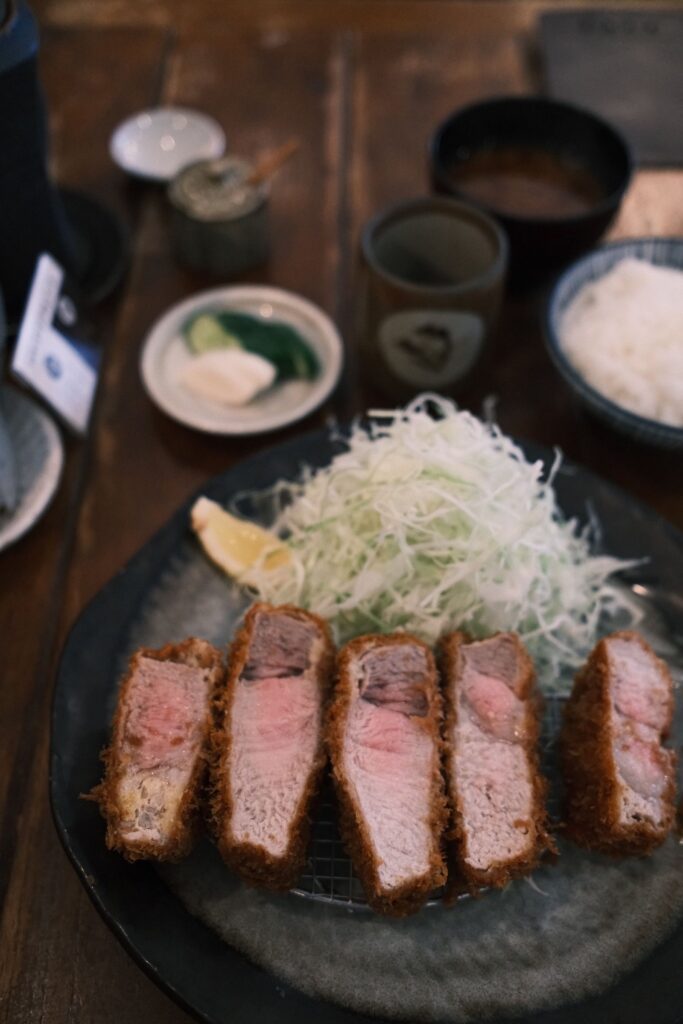
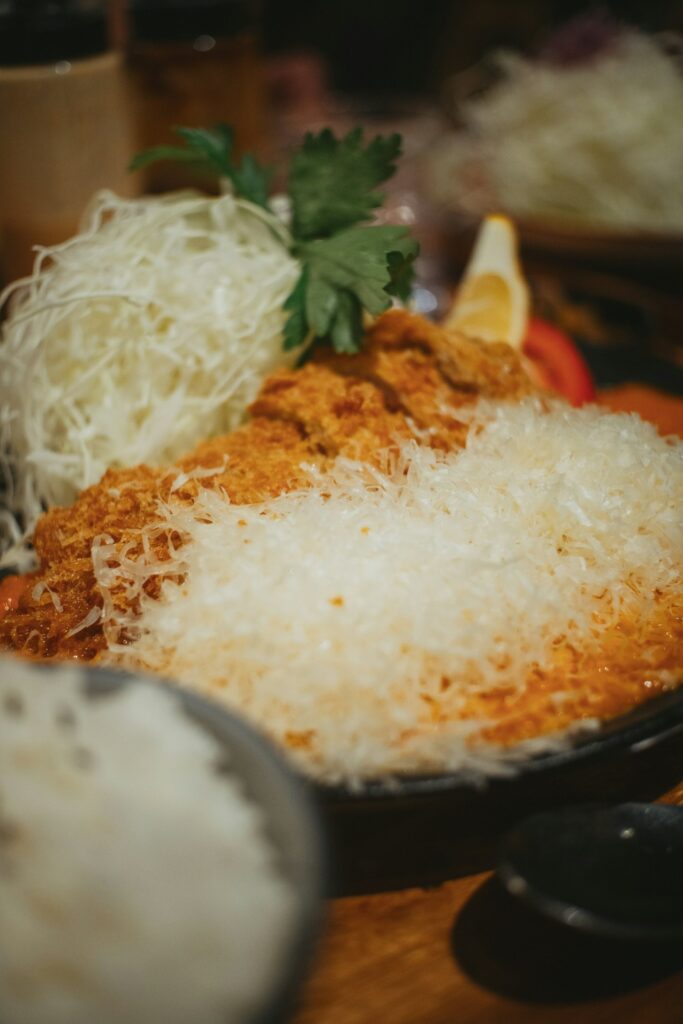
Thick-cut katsu, sliced to serve.
What Comes with a Tonkatsu Set Meal?
Tonkatsu is commonly served as a set meal with shredded cabbage, steamed rice, miso soup and Japanese pickles known as tsukemono.
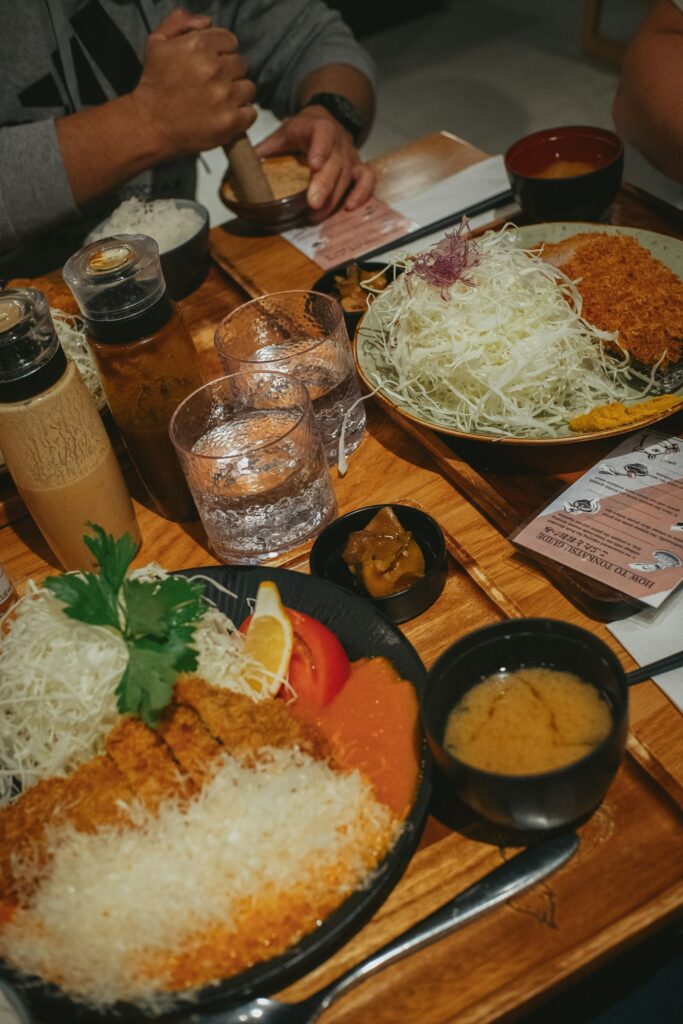
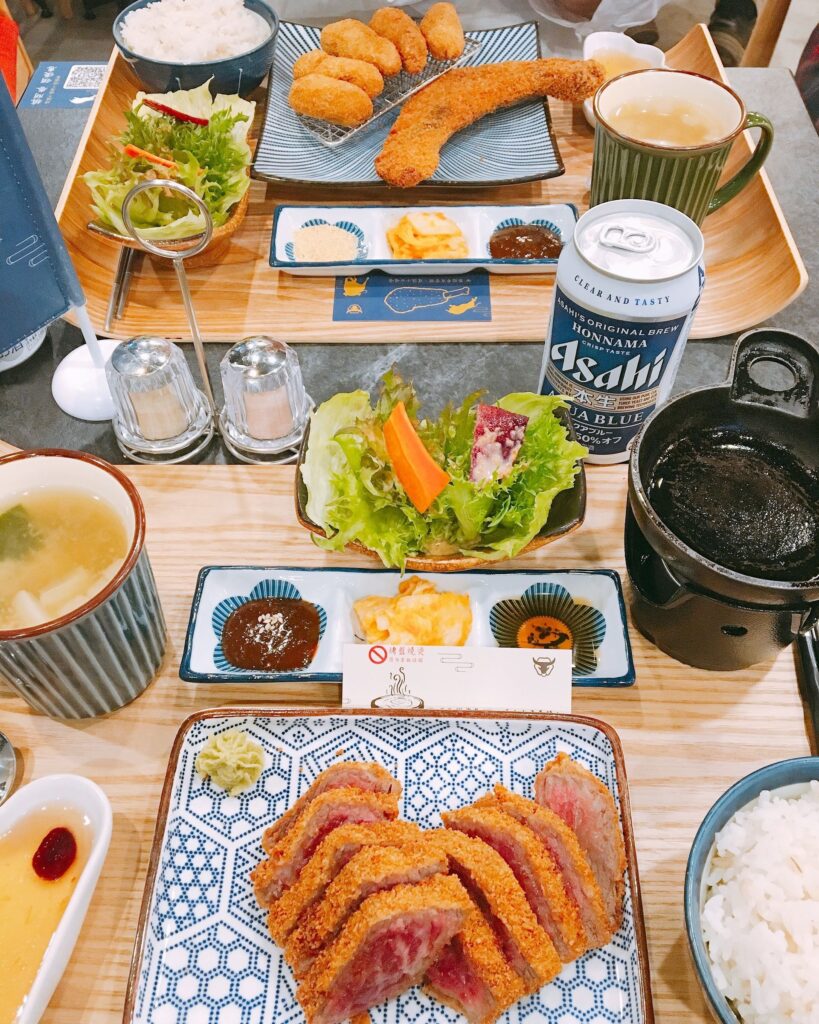
Tonkatsu set meals.
The raw cabbage is finely shredded and placed alongside the cutlet. Its fresh flavour and crisp texture contrast with the panko coating and richness of the pork.
Tonkatsu sauce is another familiar accompaniment. Dark brown and relatively thick, it has a sweet, savoury and slightly tangy flavour, sharing characteristics with Worcestershire-style sauces. Depending on the restaurant, it may be served separately or poured over the cutlet.
Some diners also enjoy tonkatsu with karashi, a pungent Japanese mustard, or a squeeze of lemon. Grated daikon radish and ponzu sauce are other alternatives to conventional tonkatsu sauce.
How to Eat Tonkatsu
Tonkatsu is usually enjoyed soon after frying, while the panko coating remains crisp and the meat is still hot.
As the cutlet is generally sliced before serving, diners can pick up individual pieces with chopsticks. Tonkatsu sauce can be added according to personal preference.
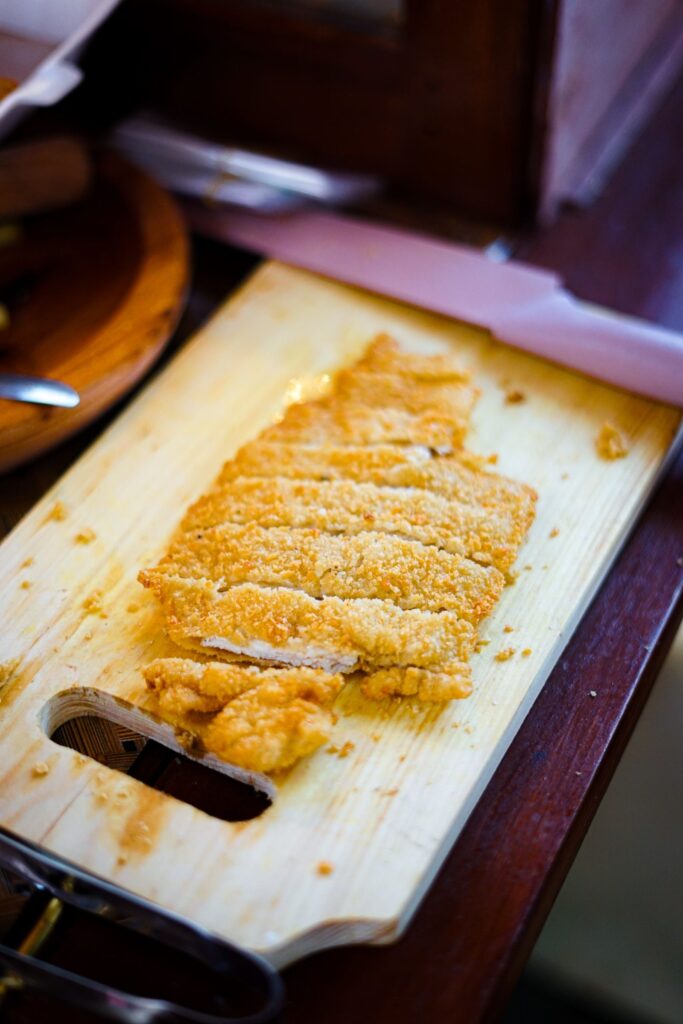
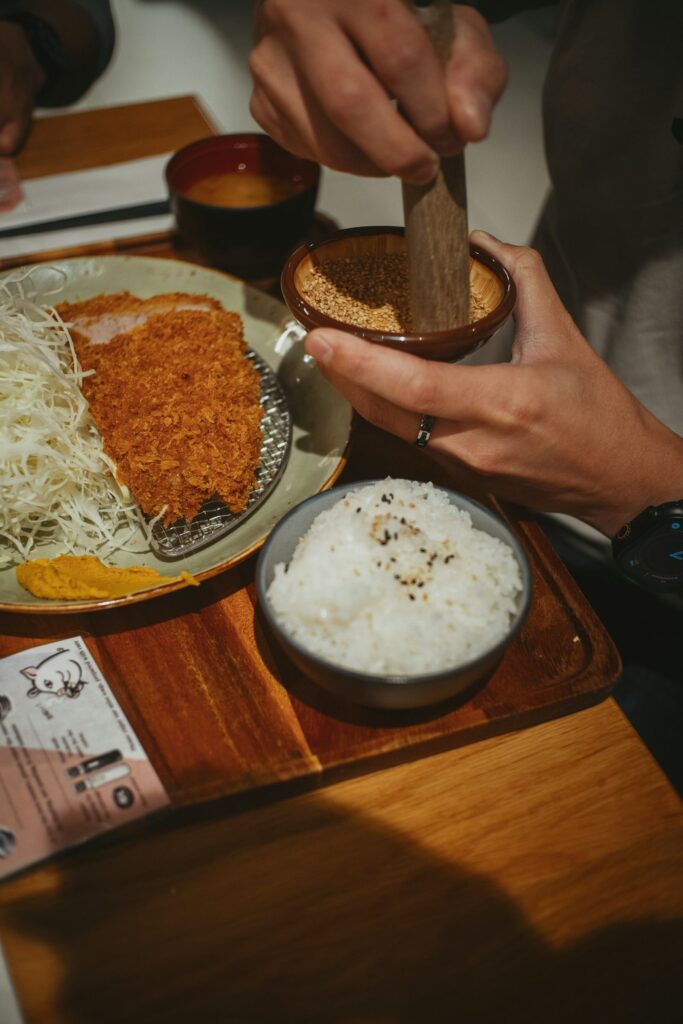
Sliced, ready for chopsticks.
If using karashi, a small amount can be eaten with the pork. The mustard’s sharp heat offers a different flavour from the rich sweetness of tonkatsu sauce.
When ordering, diners can choose between rosu katsu and hire katsu according to whether they prefer a fattier or leaner cut of pork.
Popular Tonkatsu Variations
Japanese cuisine has developed several variations based on the breaded pork cutlet.
Katsudon combines a fried cutlet with egg and seasoned broth, served over rice. Katsu curry pairs slices of breaded cutlet with rice and Japanese curry, creating a substantial meal.
In Nagoya, miso katsu is a well-known variation featuring a sauce made with red miso. Some recipes use Hatcho miso. The deep, savoury character of the miso gives the dish a different flavour from conventional tonkatsu sauce.
Katsu sando is a breaded cutlet sandwich, typically made with soft white bread, sliced pork and sauce. It is a convenient option for a quick meal or takeaway.
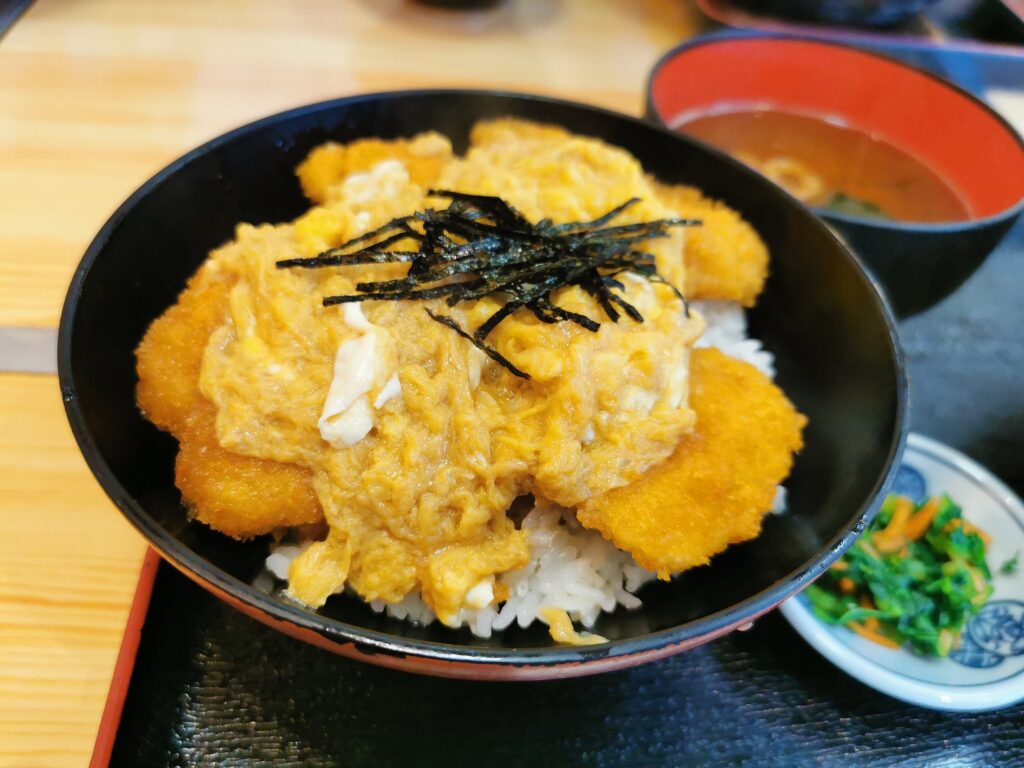
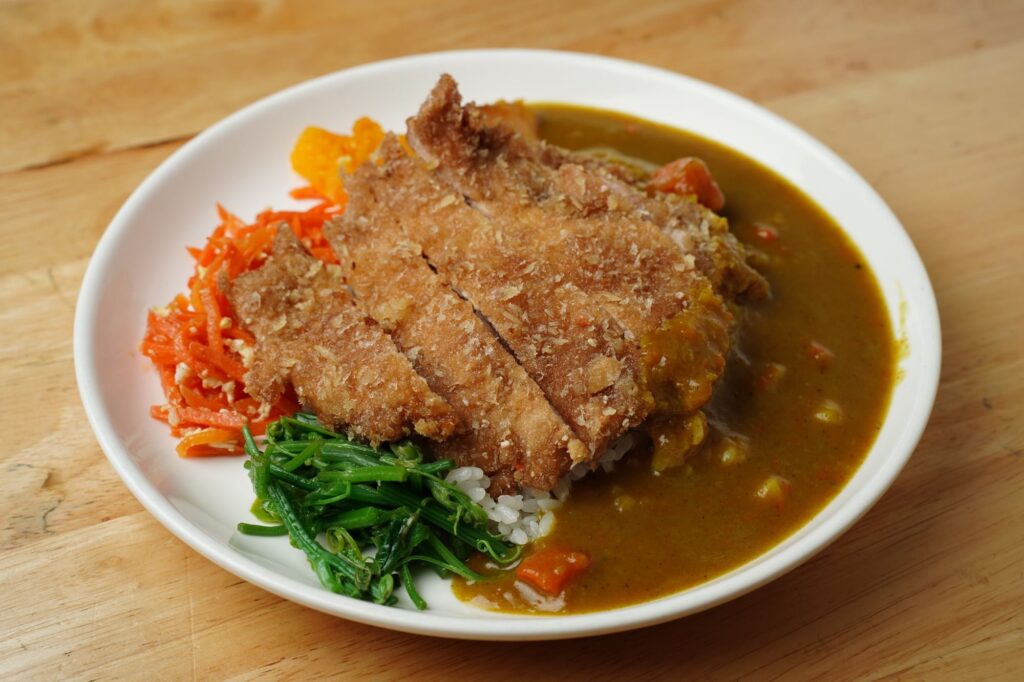
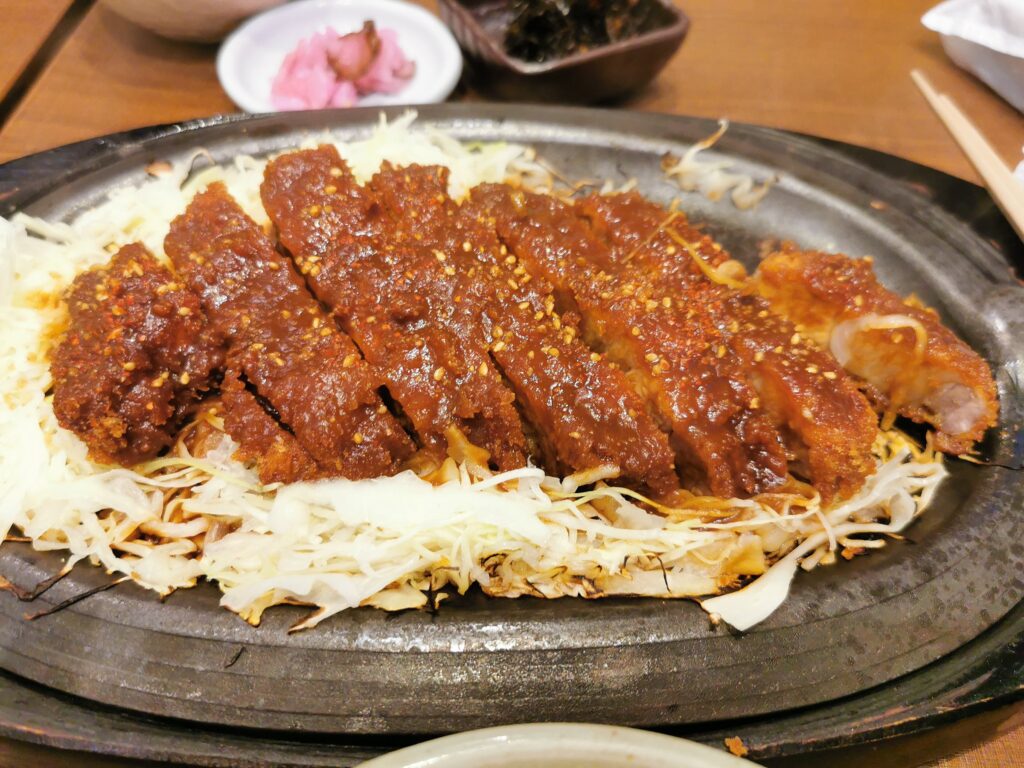
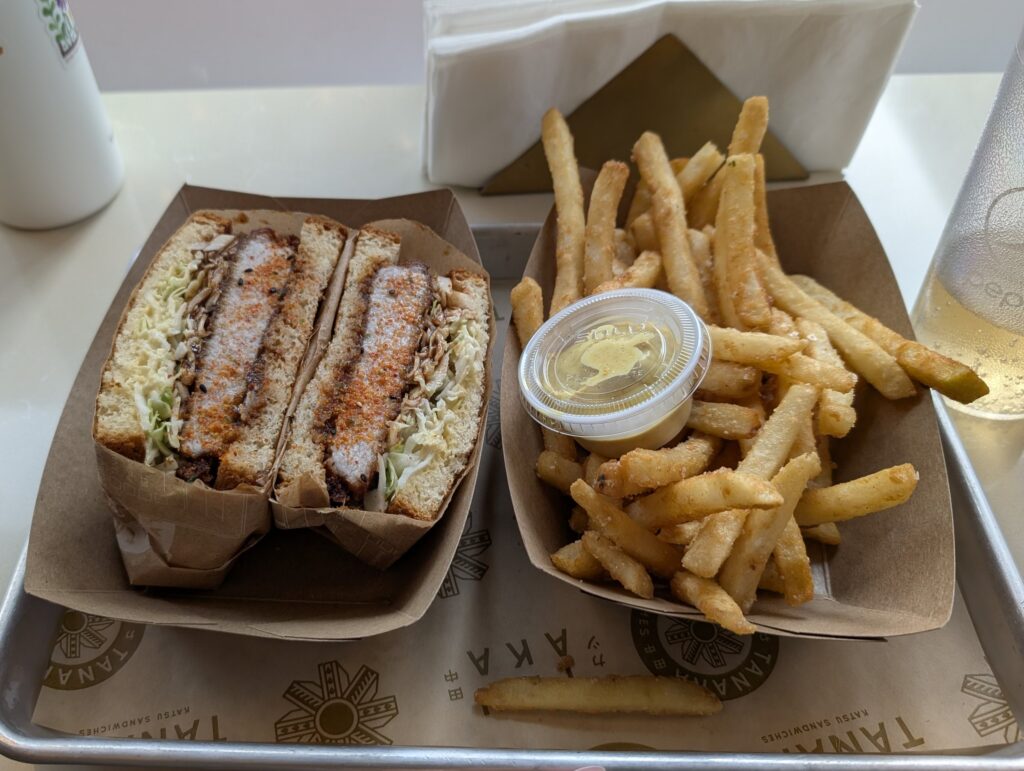
The same panko-coating and deep-frying technique is also used with other ingredients. Chicken katsu is made with chicken, gyu katsu with beef, and menchi katsu with minced meat.
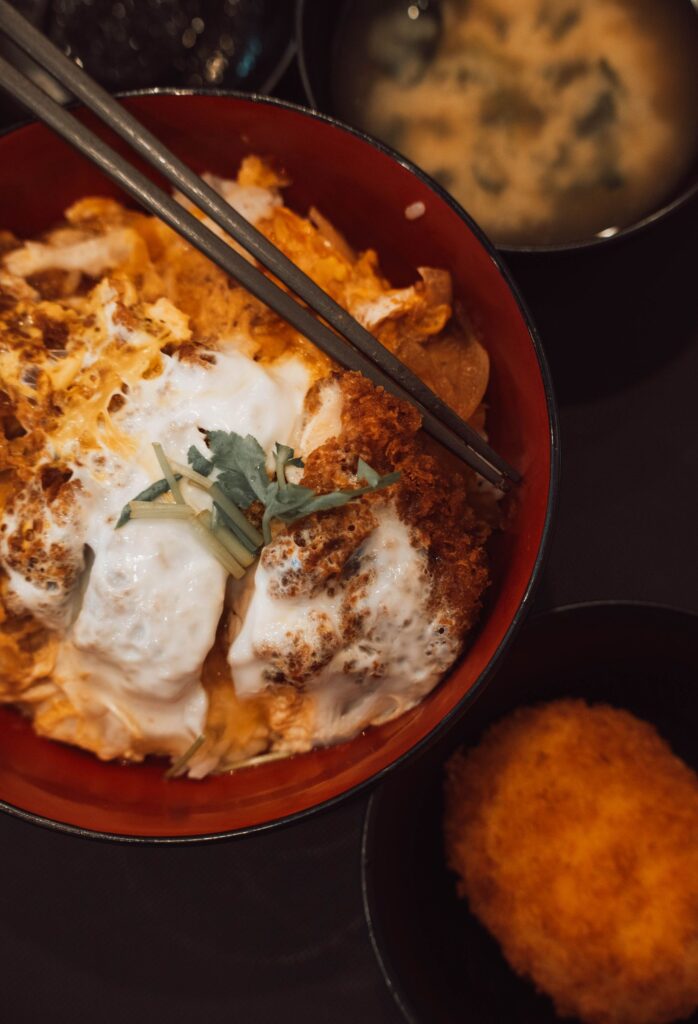
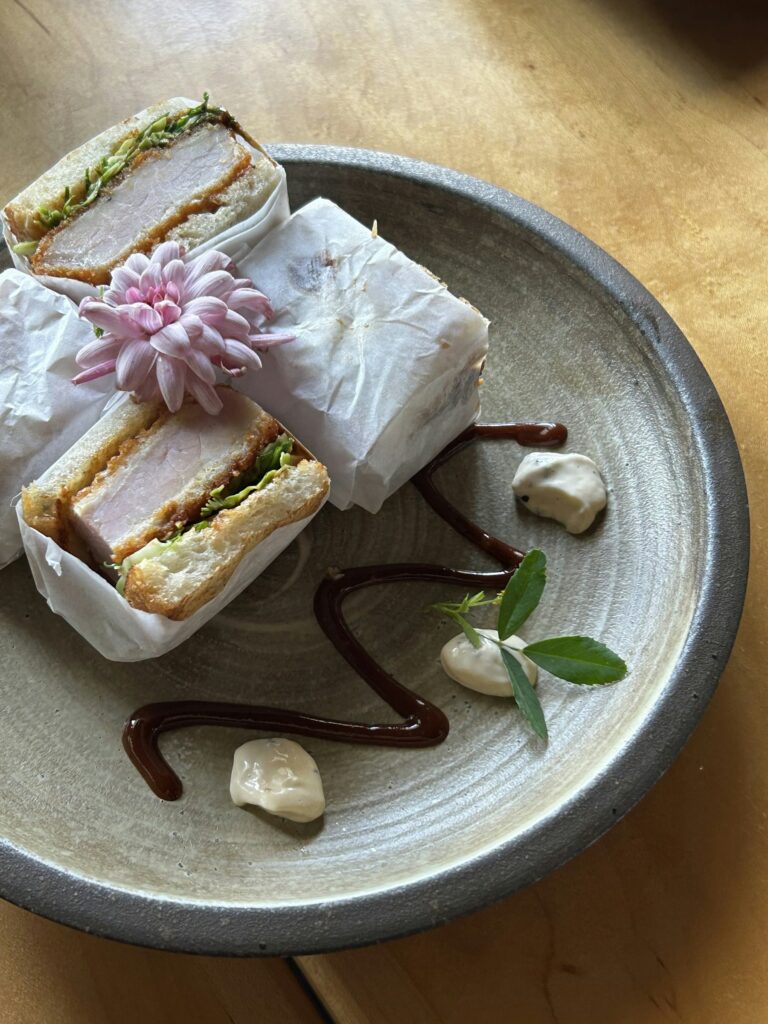
Katsudon and katsu sando.
Image credit: Wikimedia Commons (ayustety; Simon Tsu)