Before it was renamed Tokyo in 1868, Edo was already a densely populated city with street stalls and small restaurants serving its residents. Sushi, tempura and soba flourished in this setting, where food that could be prepared quickly and served conveniently became increasingly popular.
Tokyo’s culinary heritage also includes dishes that emerged later, such as Western-influenced tonkatsu and monjayaki, which is closely associated with the Tsukishima neighbourhood.
Edomae Sushi: A Style Born in Edo
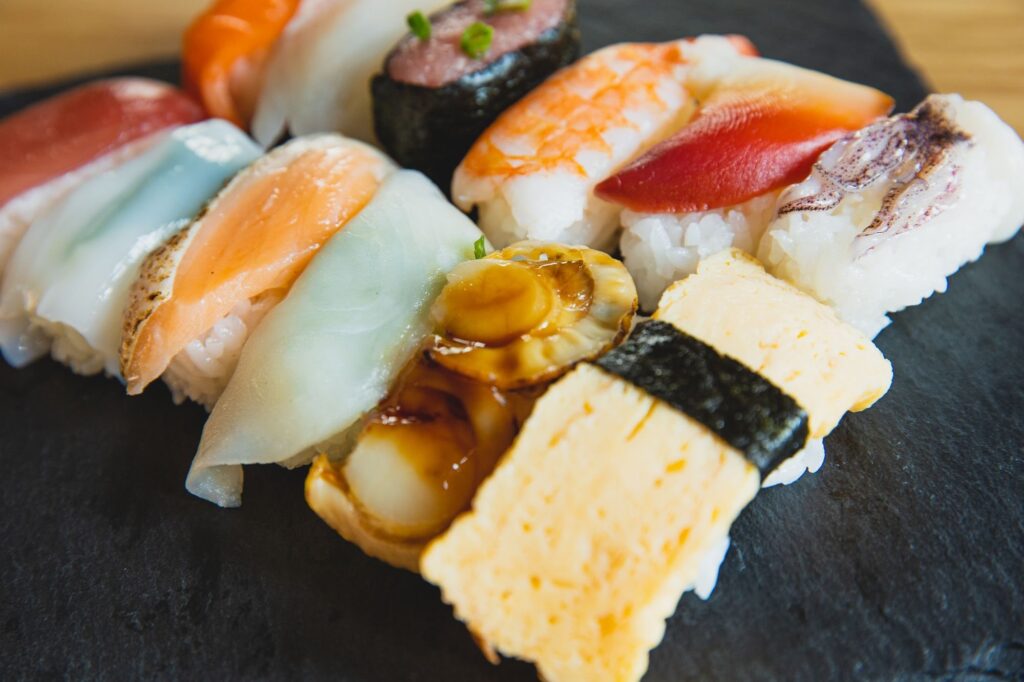
Edomae sushi is one of the culinary traditions most closely connected to Tokyo’s history. The name Edomae originally referred to the waters off Edo, which supplied seafood to the city.
Before refrigeration became widespread, sushi chefs used various methods to prepare and preserve seafood. Fish could be salted, marinated in vinegar or soy sauce, or cooked before being served with rice.
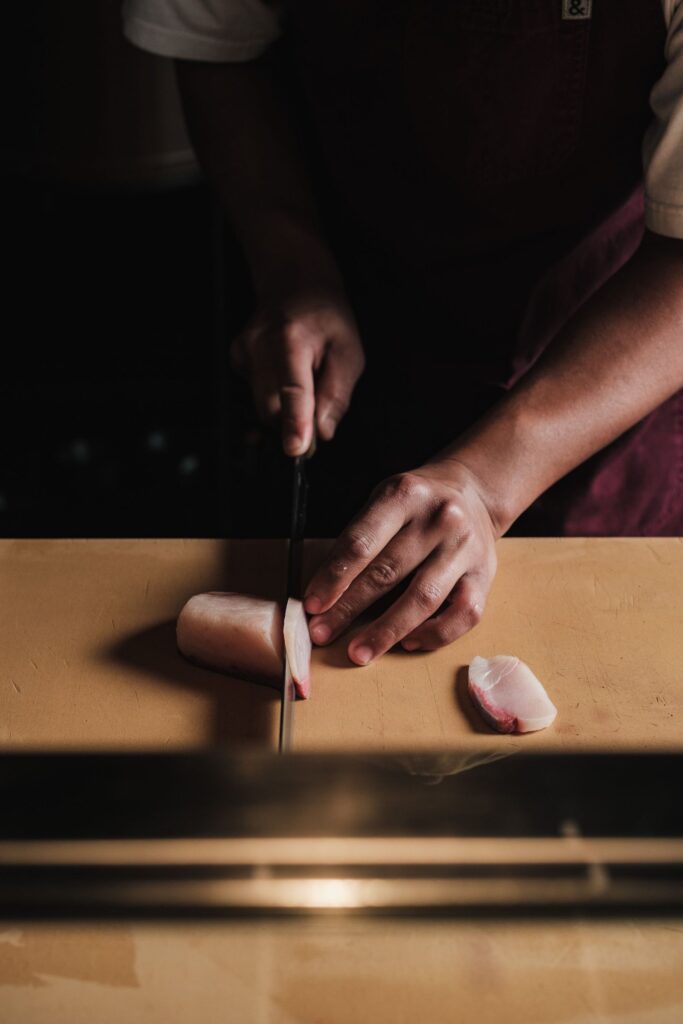
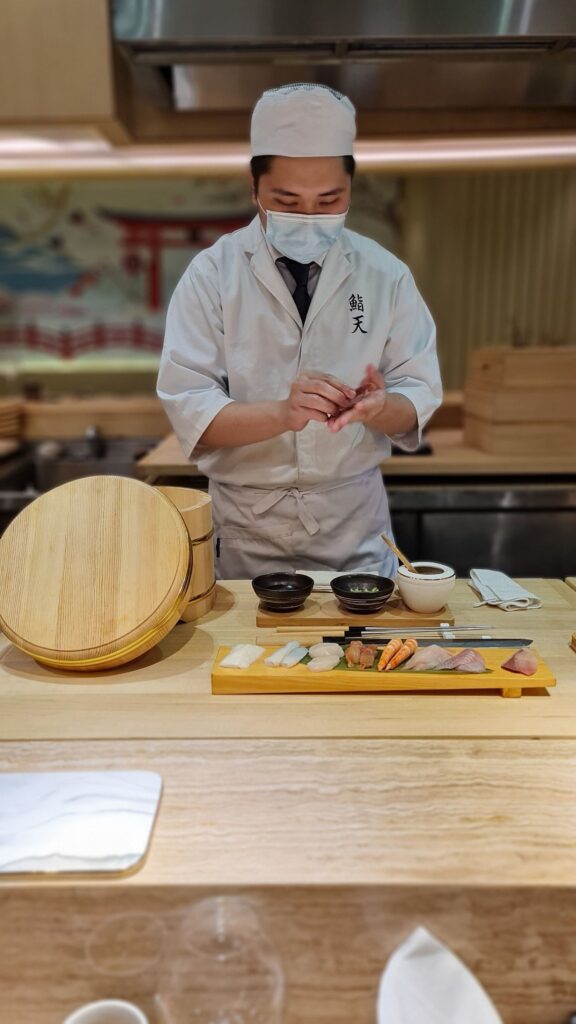
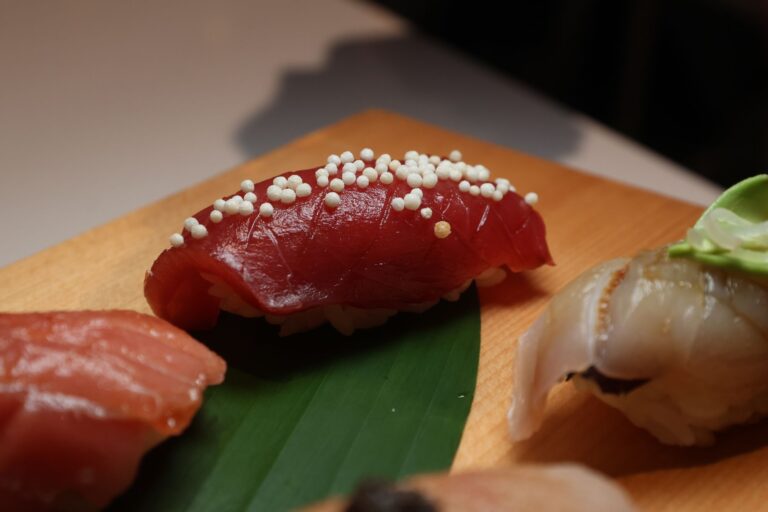
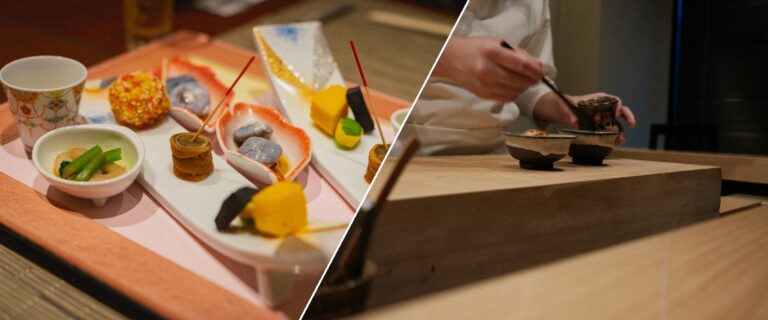
At the sushi counter.
Traditional preparations include kohada, a small fish salted and marinated in vinegar; zuke maguro, tuna marinated in soy sauce; and anago, sea eel that is commonly simmered.
Today, Edomae sushi remains an important part of Tokyo’s sushi culture. At sushi counters, diners can watch chefs prepare and serve individual pieces of nigiri.
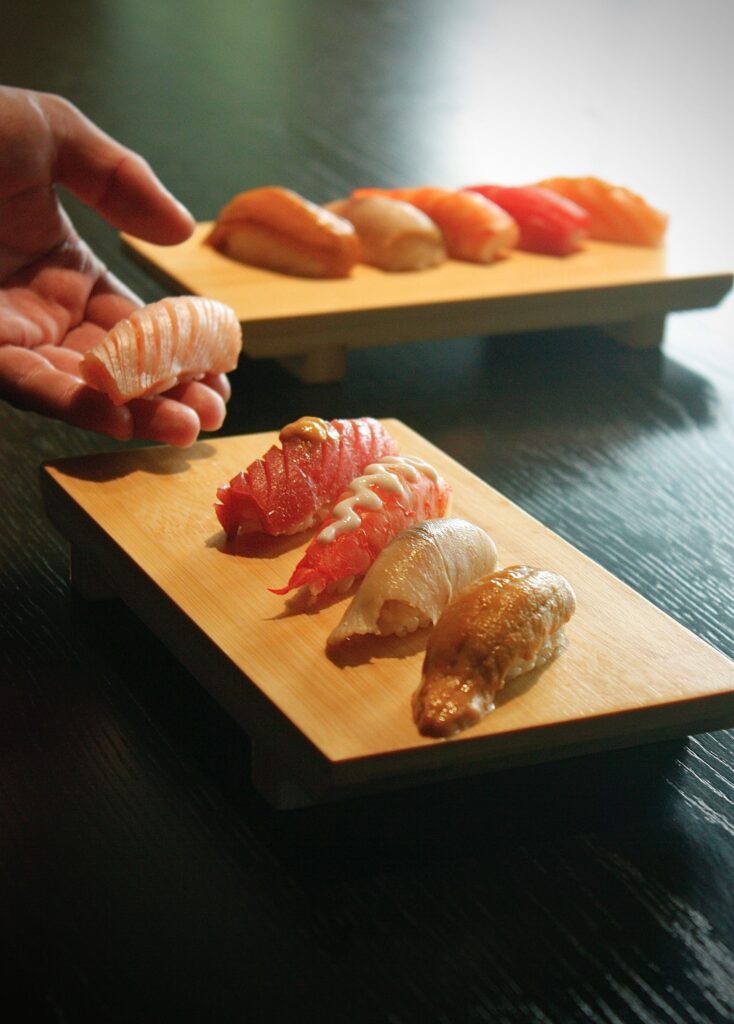
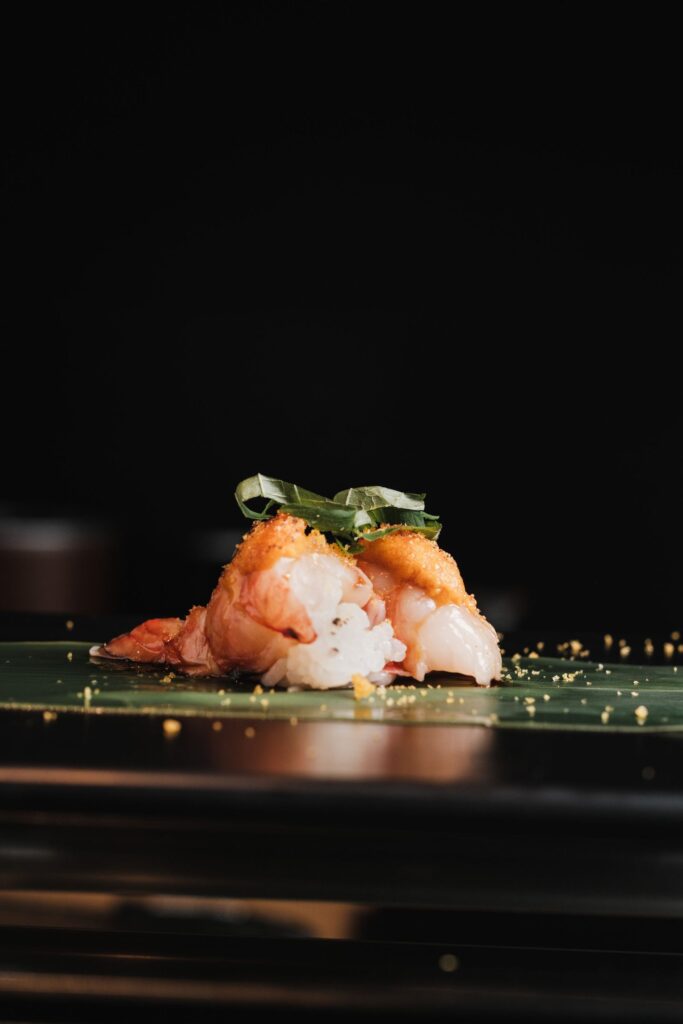
Nigiri served piece by piece.
These traditional seafood preparation techniques are explored in more detail in Traveleak’s guide to Edomae sushi.
Tempura: From Edo Street Stalls to Specialist Restaurants
Tempura consists of seafood or vegetables coated in a thin batter and deep-fried until crisp. In Edo, it became popular at street stalls, particularly near fish markets. Freshly fried seafood was sometimes served on skewers, allowing customers to eat conveniently at the stall.
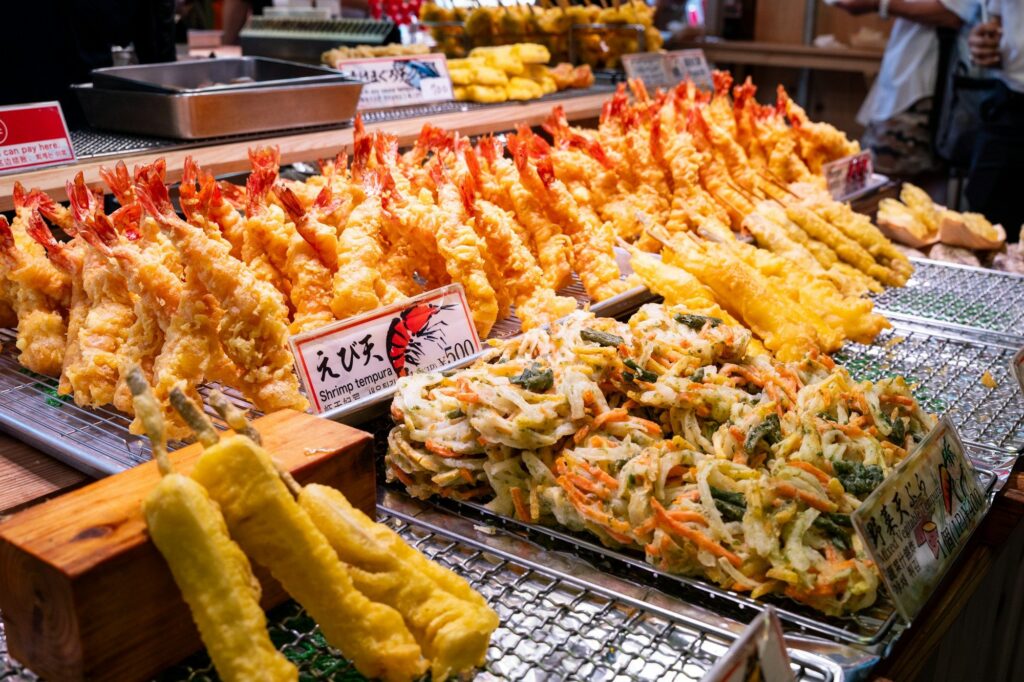
Tempura at a market stall.
Today, Tokyo has specialist tempura restaurants known as tempura-ya. At the counter, chefs fry individual ingredients and serve them as soon as they are ready. Prawns, fish and vegetables may be enjoyed with tentsuyu dipping sauce or salt, depending on the restaurant’s approach.
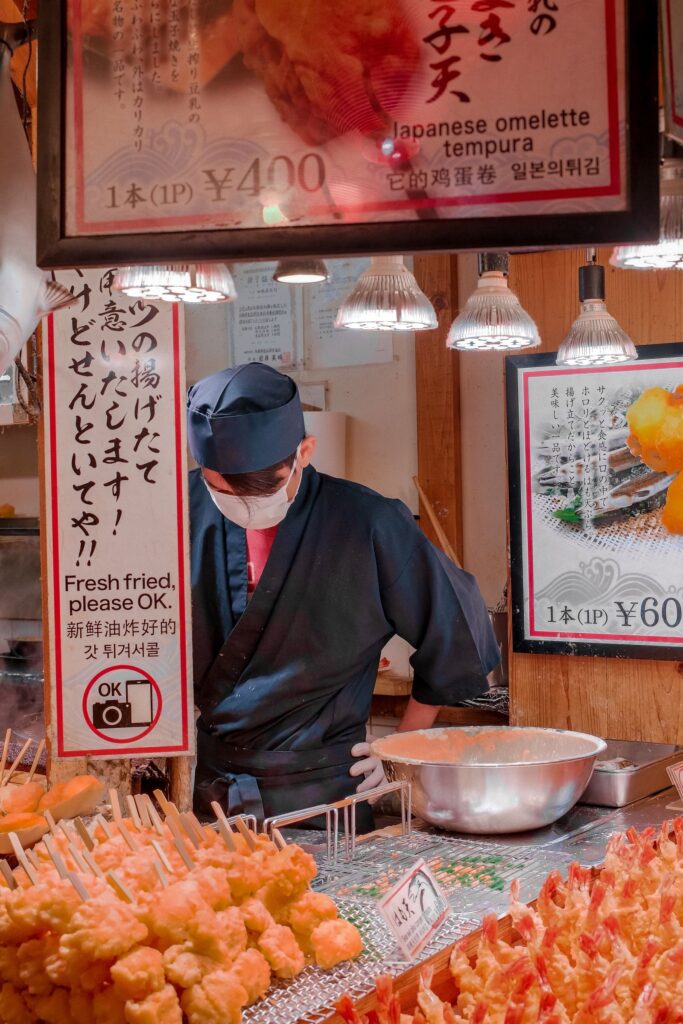
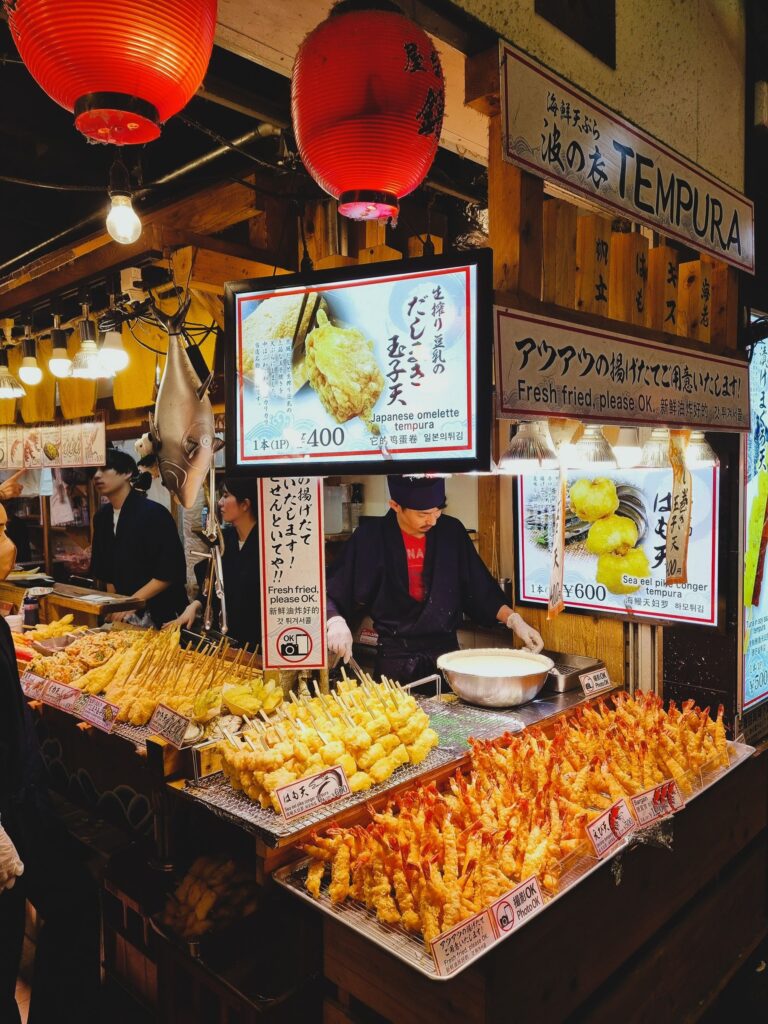
Fried to order.
Soba: Buckwheat Noodles in Everyday Edo Life
Soba, noodles made from buckwheat flour, has a long history in Japan and became an important part of Edo’s dining culture.
Following the Great Fire of Meireki in 1657, soba shops became increasingly common throughout Edo. The noodles became a familiar choice in urban life, served at modest eateries and gradually developing into a distinctive part of the city’s cuisine.
Two popular ways to enjoy soba are zaru soba and kake soba.
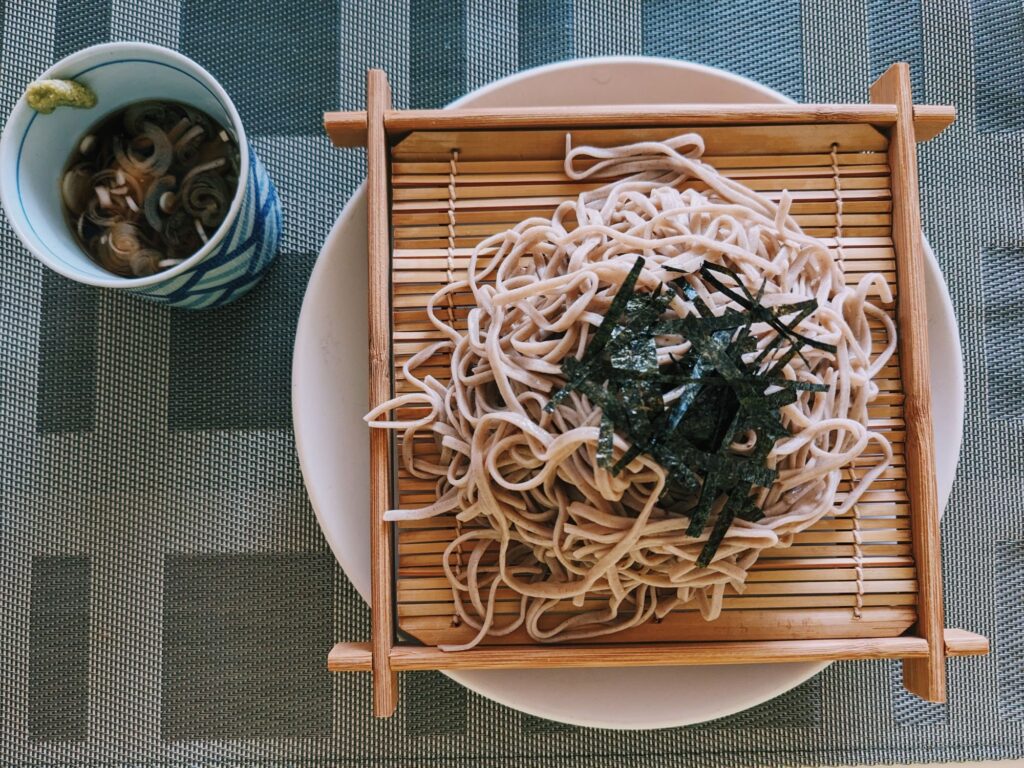
Zaru soba is served cold on a bamboo tray, accompanied by a dipping sauce made from dashi, soy sauce and mirin. Wasabi and spring onions are usually provided separately for diners to add according to taste.
Kake soba is served hot, with the noodles placed directly in broth. The texture of the noodles and the flavour of the broth offer a different experience from cold soba.
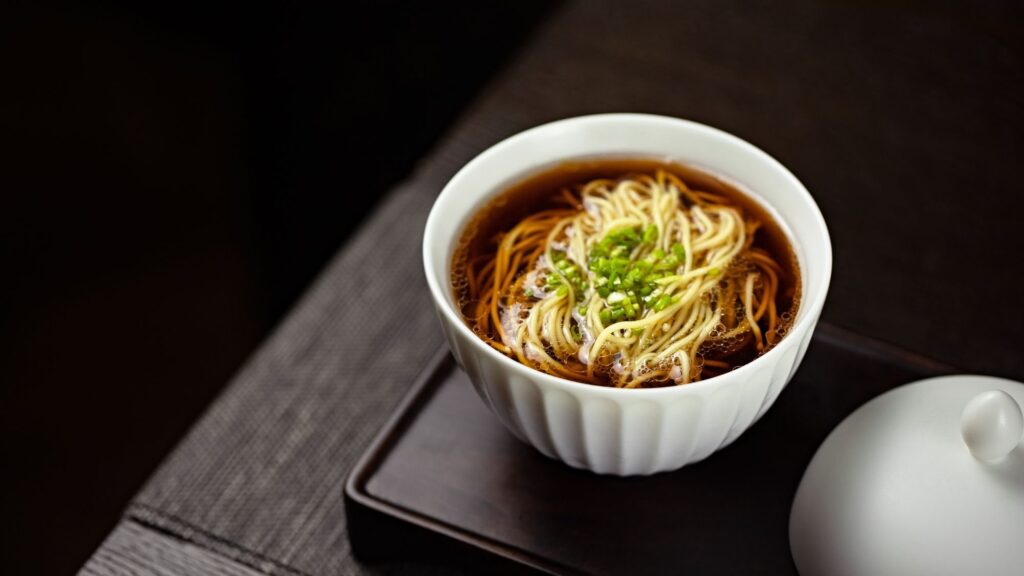
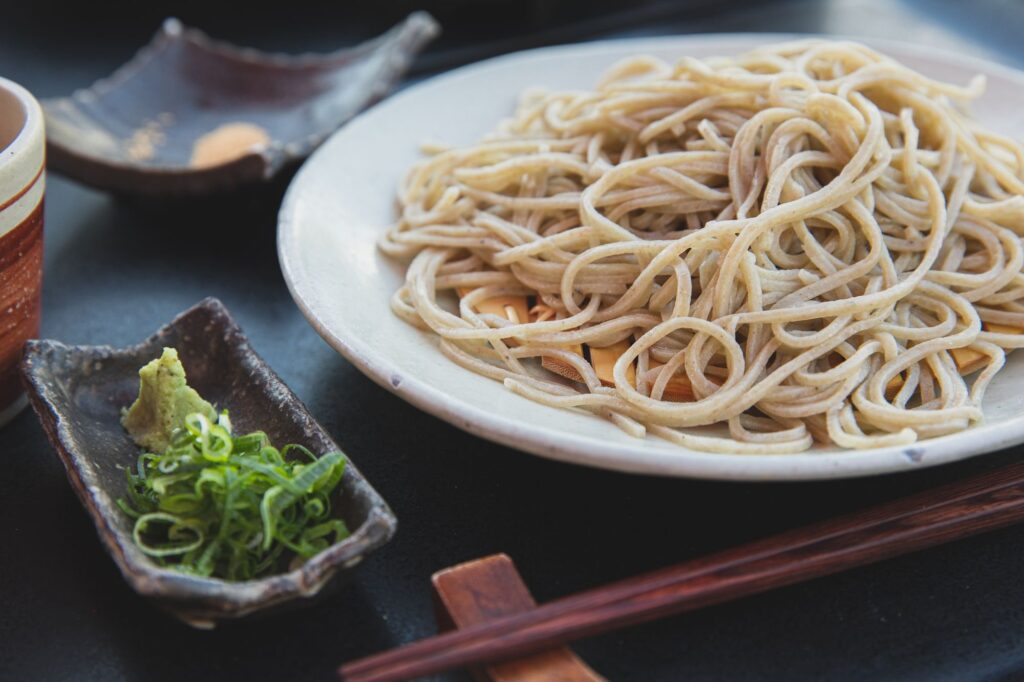
At some soba restaurants, diners are also served sobayu, the water used to cook the noodles, which can be mixed with any remaining dipping sauce after the meal.

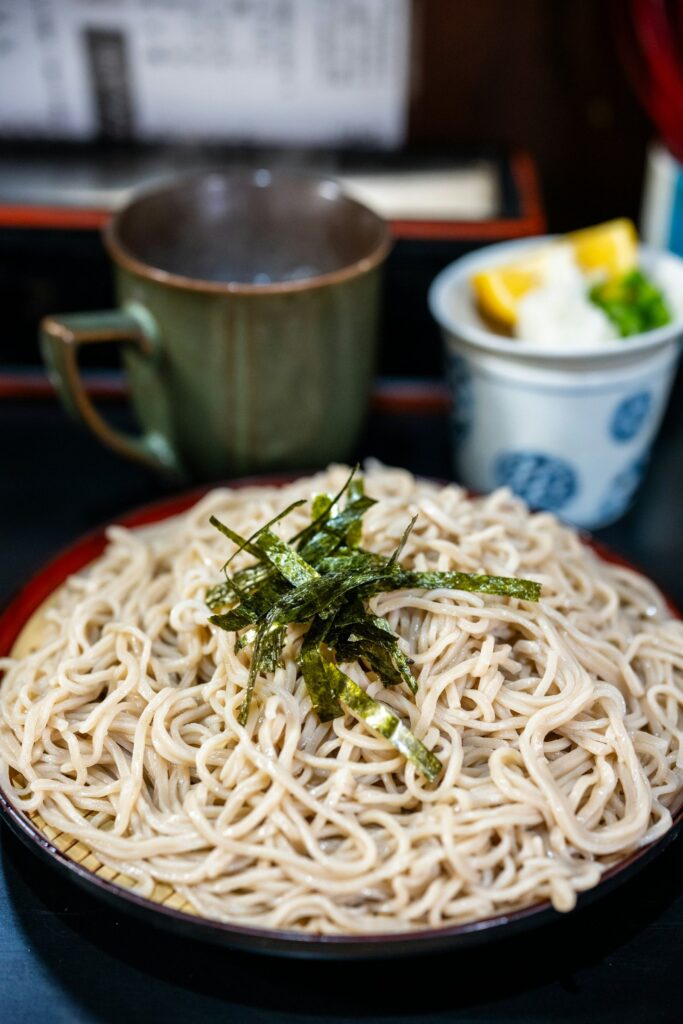
Soba delivery in Tokyo, 1935, and zaru soba today.
Unagi: Grilled Eel in the Kanto Style
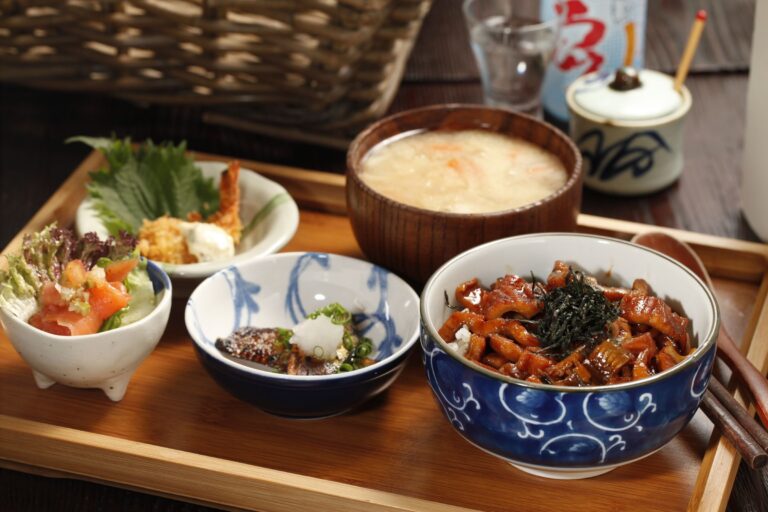
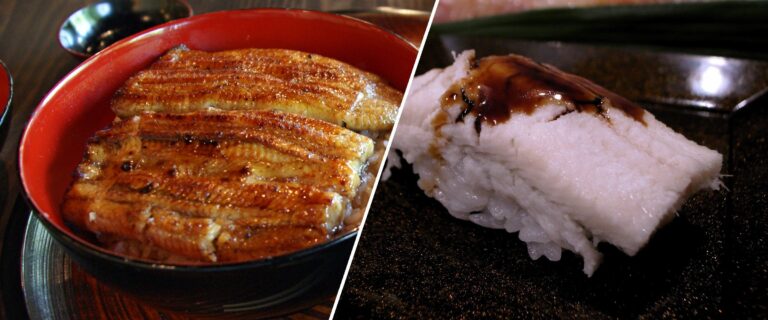
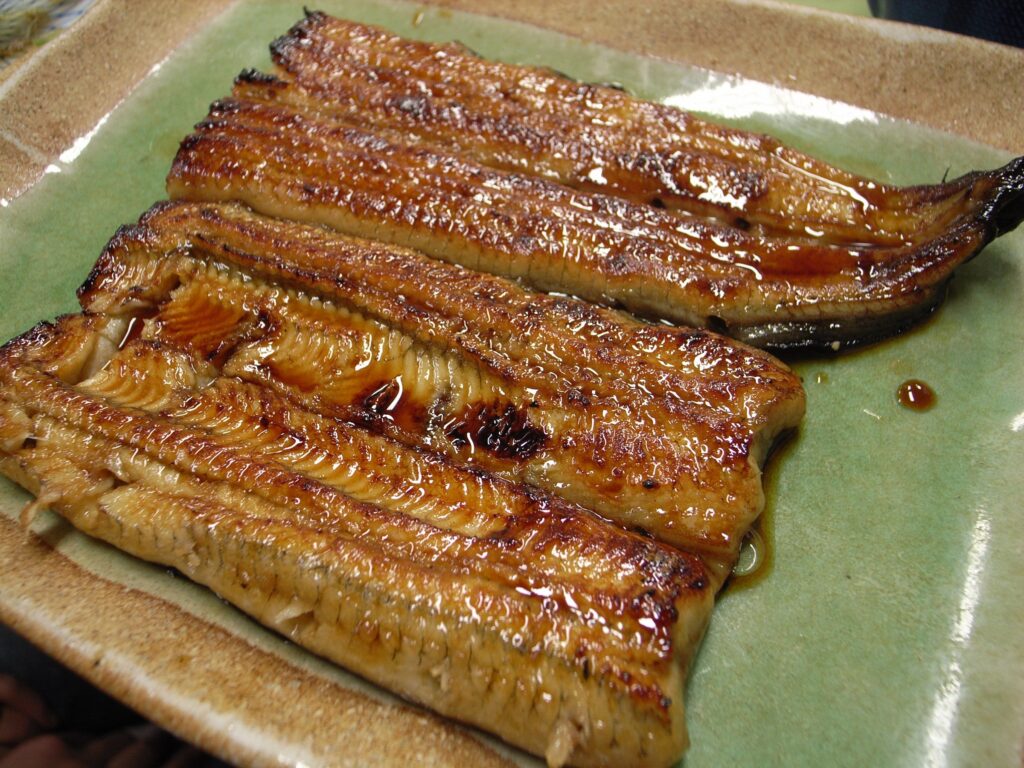
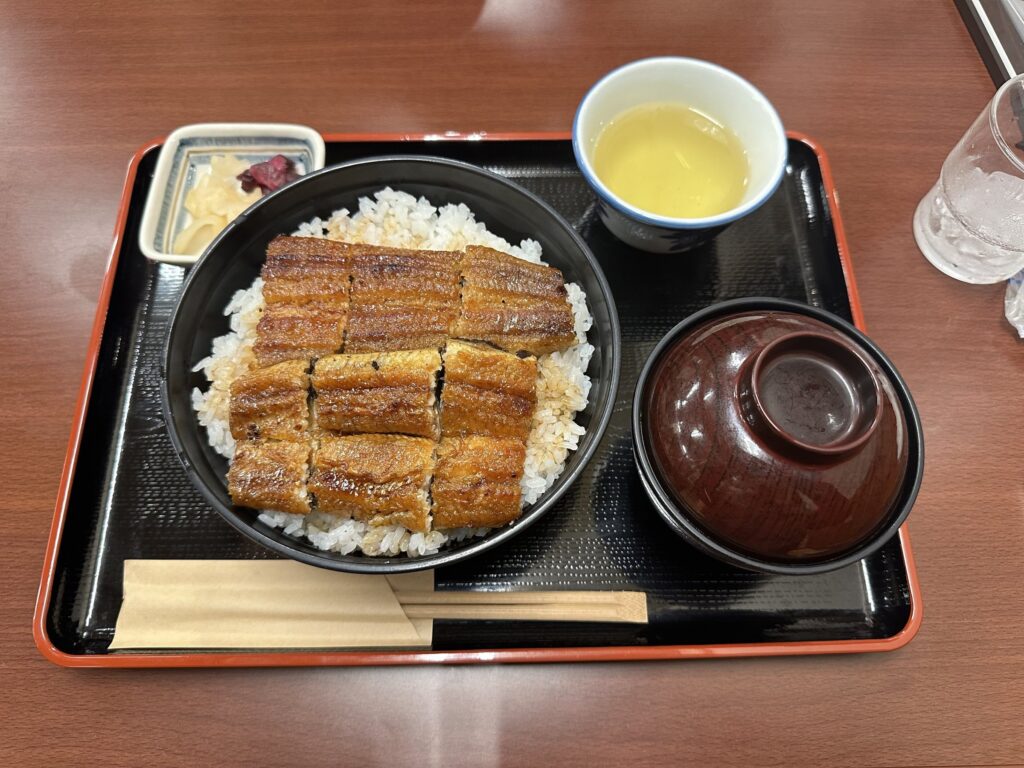
Unagi is freshwater eel, commonly grilled with a soy-based sauce that gives it a distinctive sweet and savoury flavour. In Tokyo, the Kanto style of preparation differs in several respects from the Kansai tradition associated with Osaka and Kyoto.
In the Kanto style, the eel is generally split along the back, grilled without sauce and then steamed before being brushed with sauce and grilled again. The steaming stage gives the flesh a softer texture. In Kansai, the eel is typically split along the belly and grilled directly without steaming.
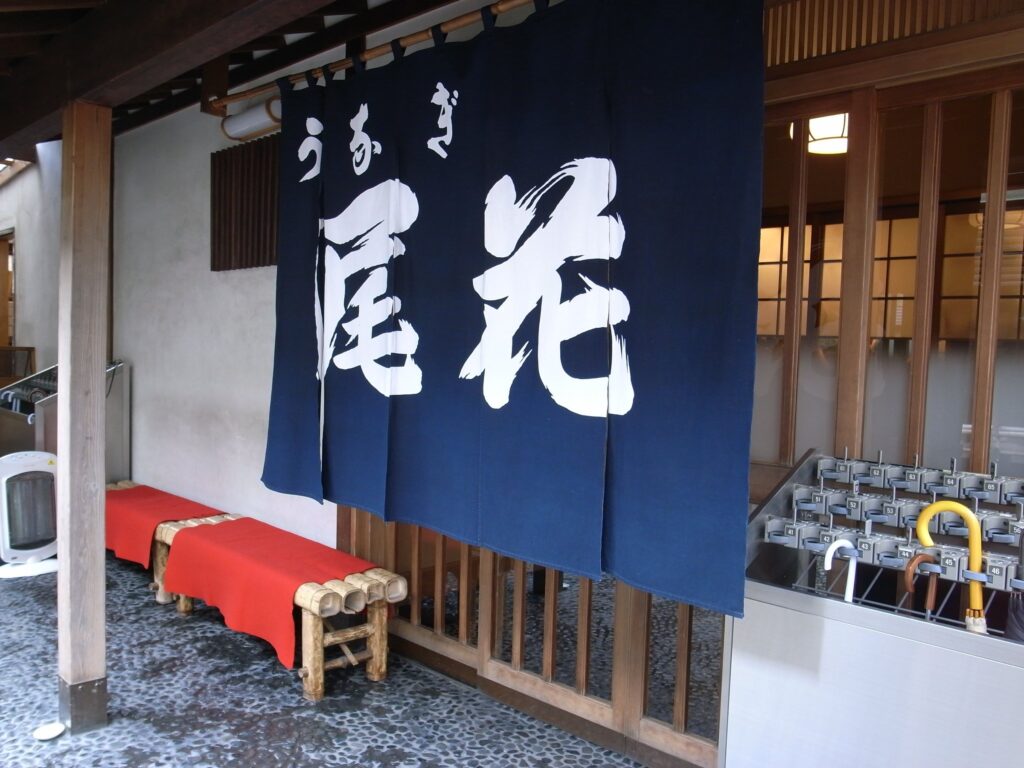
Tonkatsu: A Western Cutlet Becomes a Japanese Speciality
Tonkatsu is a pork cutlet coated in panko breadcrumbs and deep-fried, usually sliced and served with shredded cabbage, rice and miso soup. The dish developed during a period when Japan was adopting and adapting Western-influenced cooking techniques.
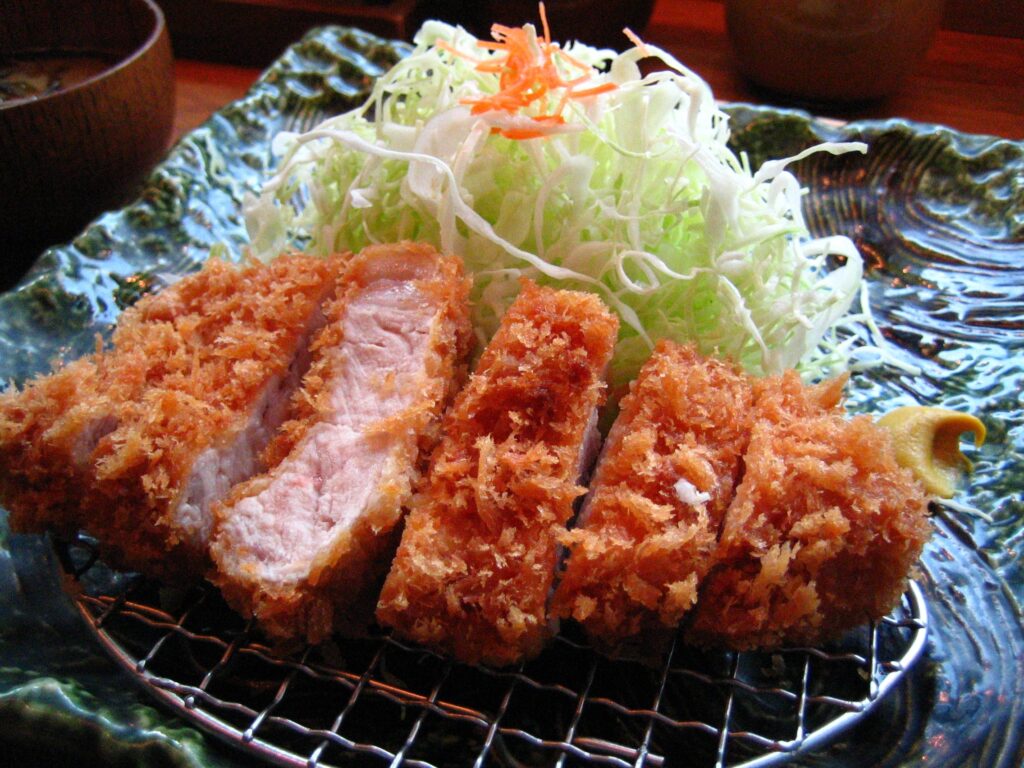
Tonkatsu in Tokyo.
Rengatei, a yoshoku restaurant established in Ginza in 1895, is frequently mentioned in accounts of the development of pork cutlets in Japan, with 1899 commonly cited as a milestone for its pork version. The thicker-cut style of tonkatsu familiar today is also often associated with a development in 1929 in Okachimachi, near Ueno.
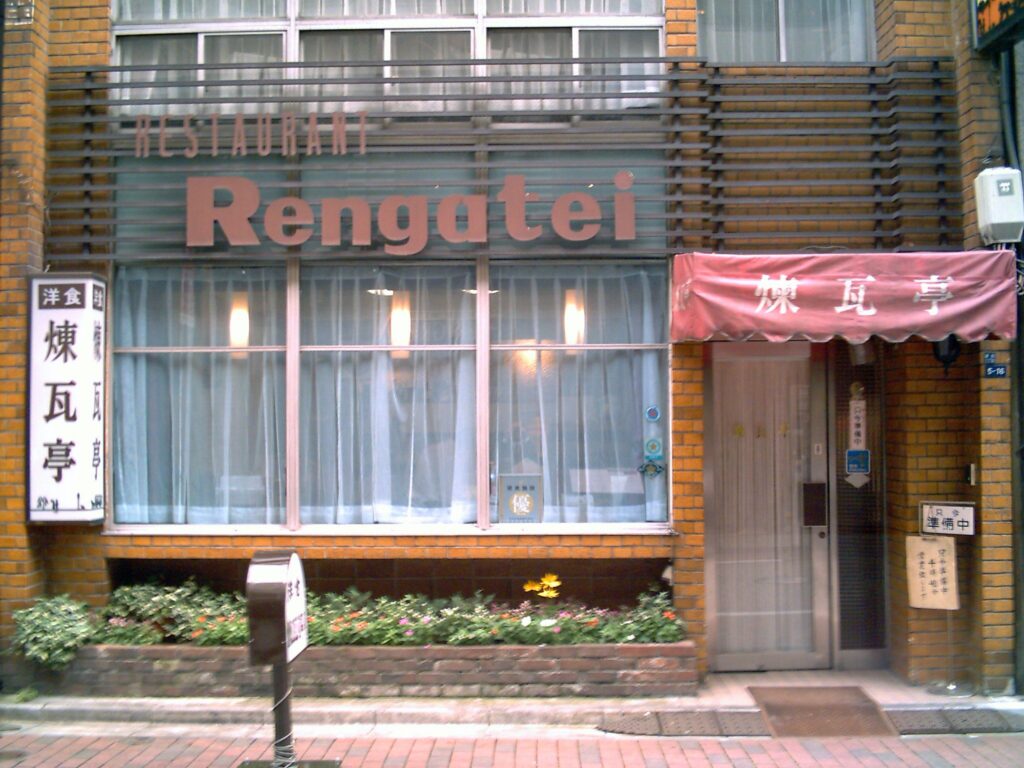
Rengatei in Ginza.
Monjayaki: A Griddle-Cooked Speciality of Tsukishima
Tsukishima is a Tokyo neighbourhood known for monjayaki, a dish related to okonomiyaki but distinguished by its texture.
Monjayaki is made from a thin batter combined with finely chopped ingredients and cooked directly on a hot iron griddle known as a teppan. As it cooks, the mixture retains a softer, more fluid consistency than okonomiyaki.
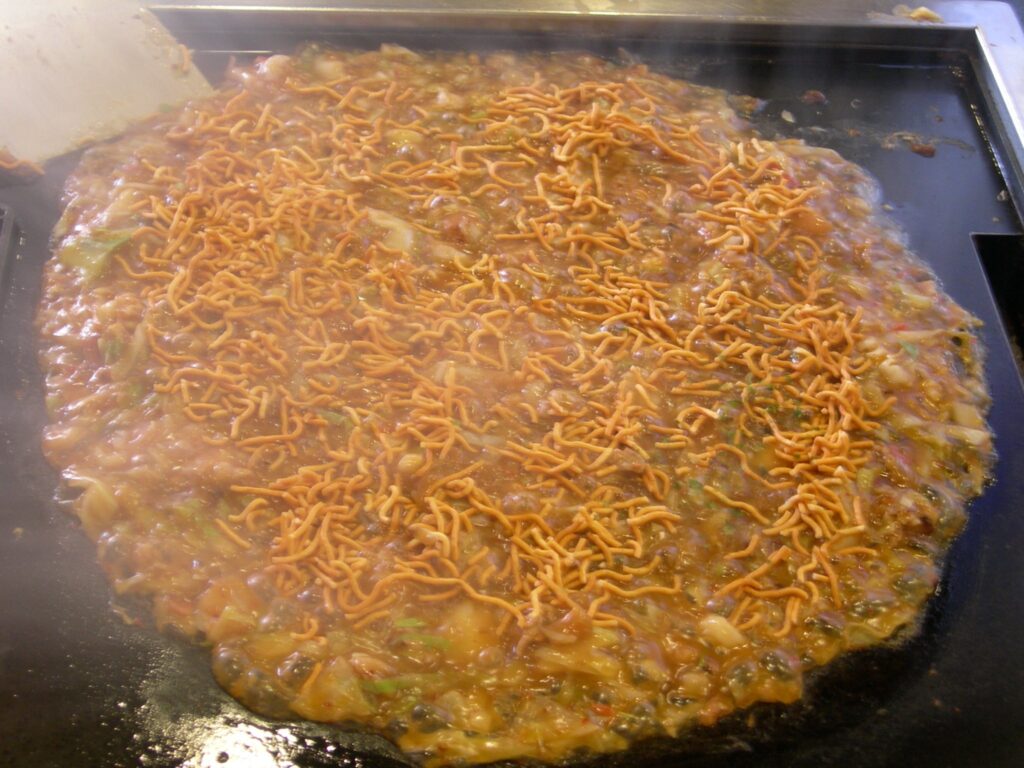
Monjayaki on the griddle.
At many monjayaki restaurants, diners can prepare the dish themselves at the table. The ingredients are mixed and spread across the griddle, then eaten directly from the hot surface in small portions using miniature metal spatulas.
Many establishments in Tsukishima also serve okonomiyaki, giving visitors the opportunity to try two dishes with related cooking methods but different textures.
Tsukudani: A Preserved Food from Tsukudajima
Tsukudani is prepared by simmering ingredients such as small fish, seafood or seaweed in soy sauce and mirin.
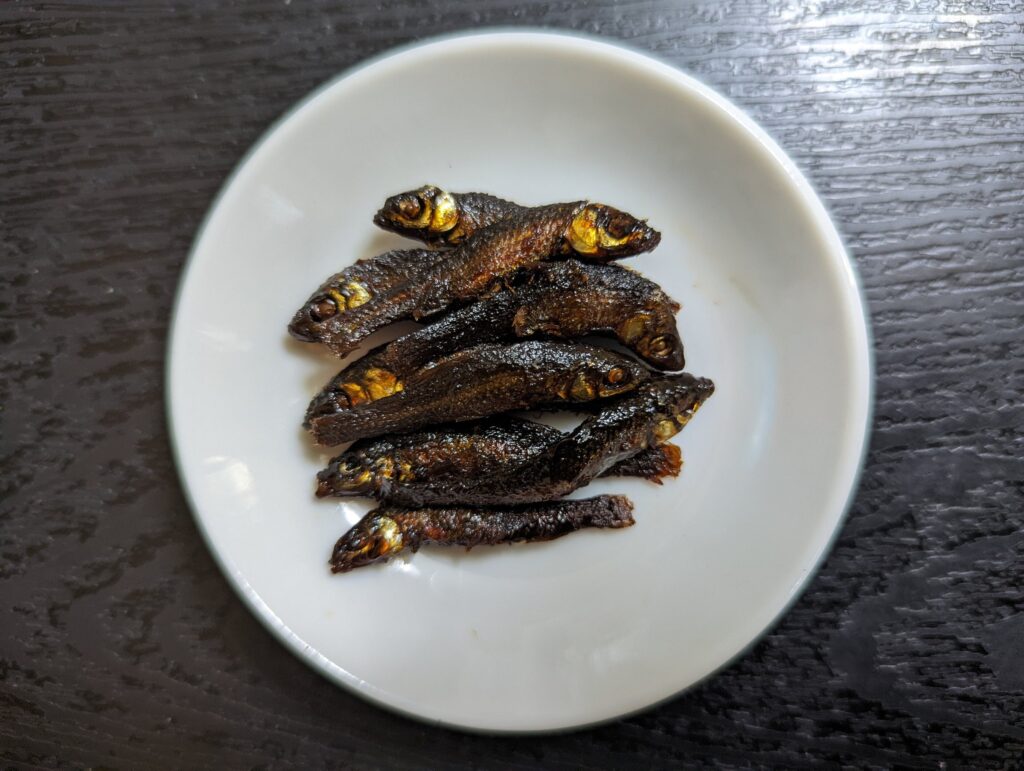
Tsukudani of small fish.
Its name comes from Tsukudajima, an area within present-day Chuo Ward, where the dish has a history dating back to the Edo period.
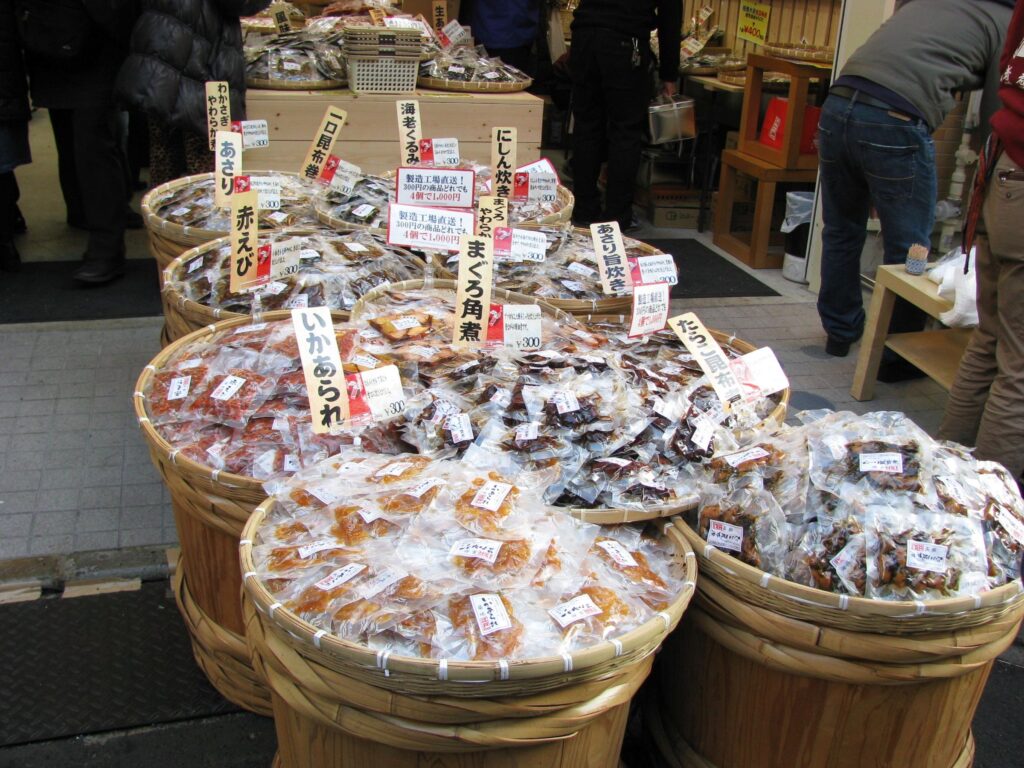
Tsukudani for sale.
Simmering the ingredients with seasonings gives them a concentrated flavour and helps them keep for longer. Tsukudani is usually served in small quantities alongside steamed rice. Depending on the ingredient, it may have a soft or slightly chewy texture, with a characteristic sweet and salty taste.
Tsukiji and Toyosu: Exploring Tokyo’s Food Culture
Beyond restaurants specialising in individual dishes, Tokyo’s food markets offer another way to explore the city’s culinary traditions.
Tsukiji Fish Market opened in 1935 and played a major role in Tokyo’s seafood trade. On 6 October 2018, its inner wholesale market closed as wholesale operations moved to Toyosu.
Tsukiji’s Outer Market continues to operate, with food shops, kitchenware stores and numerous places to eat, including restaurants serving sushi and seafood.
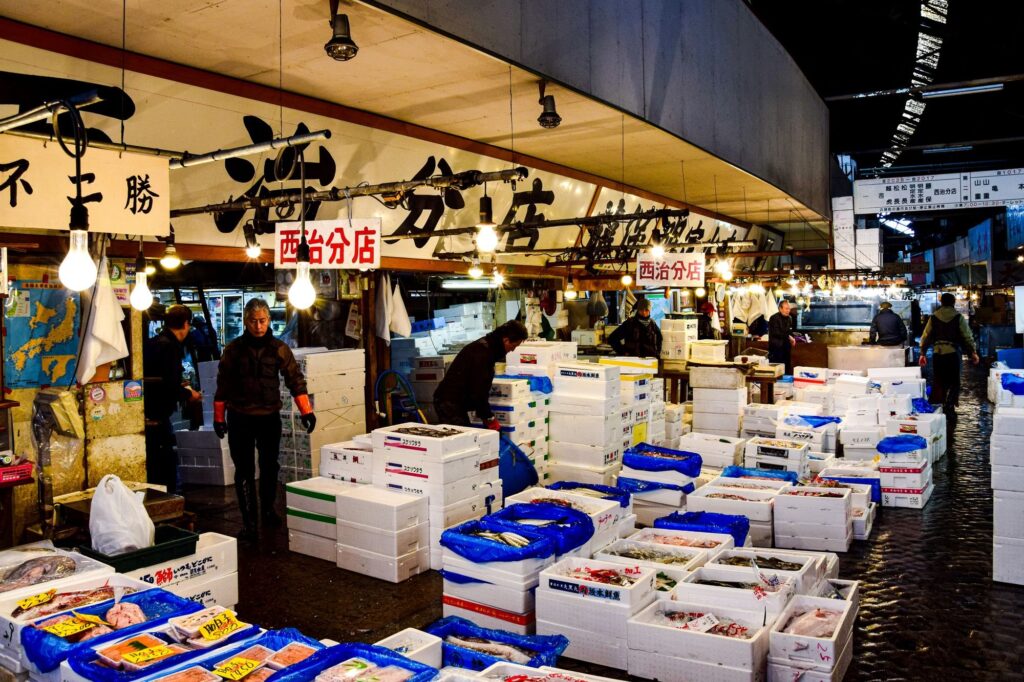
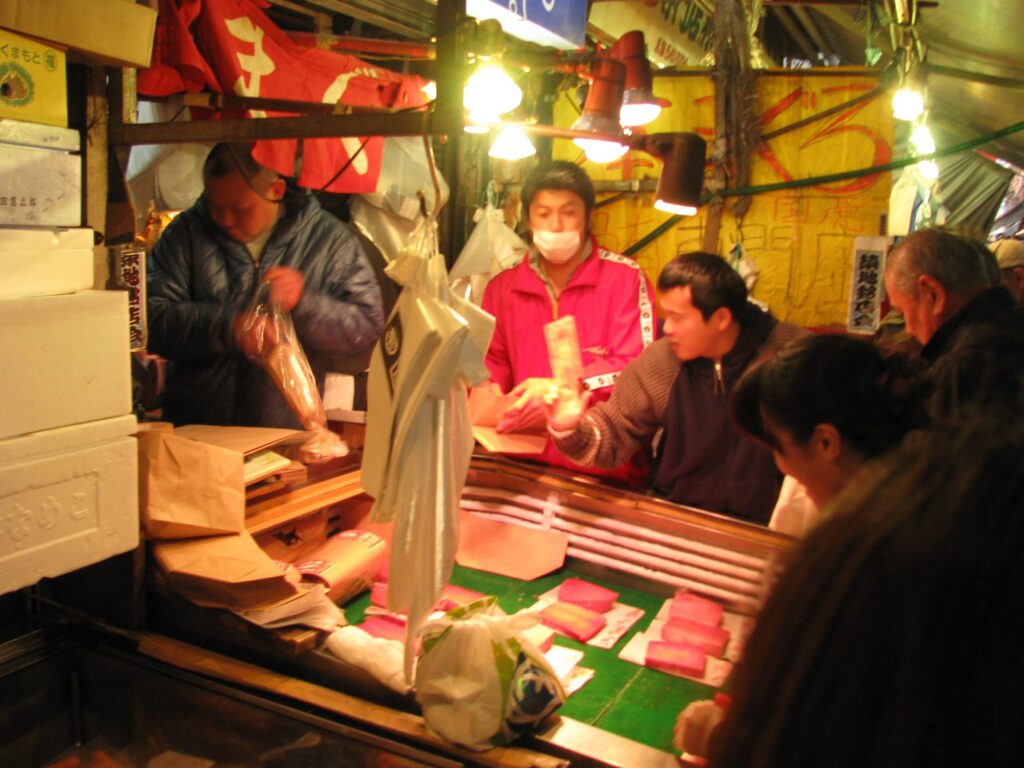
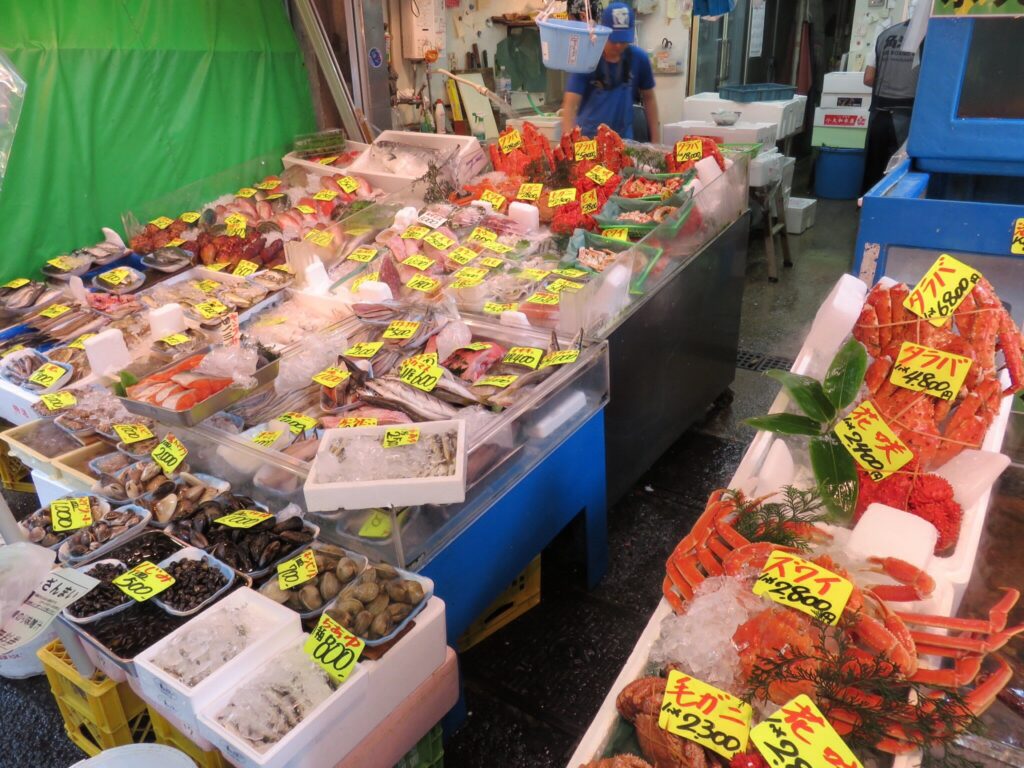
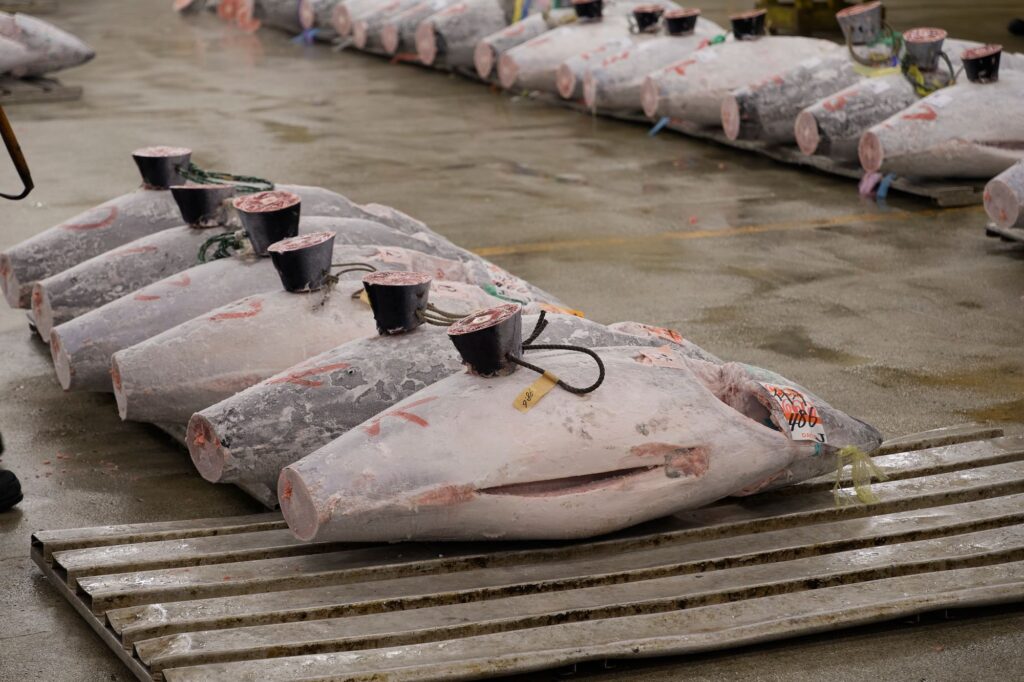
Tsukiji is worth visiting for those interested in exploring the atmosphere of a food market and sampling different dishes in one area. Morning is generally the most convenient time to visit, as many shops close in the early afternoon.
Image credit: Wikimedia Commons (Kossy@FINEDAYS; ノボホショコロトソ; doronko; ayustety; Ogiyoshisan; 大野 一将; Aimaimyi; Aw1805)